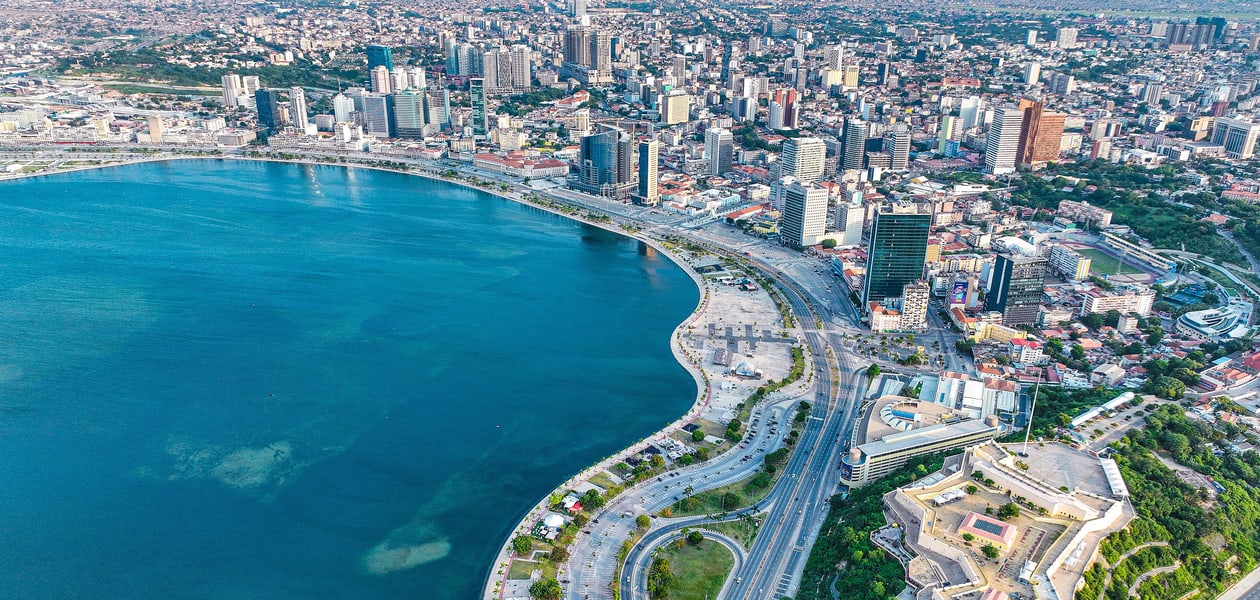
Angola
Iamdelcioborges / Wikimedia Commons · CC BY 4.0 · cropped
Angola is the second-largest of the Portuguese-speaking countries, 1,246,700 km² on the south-western shoulder of Africa with about 36.7 million people and its capital at Luanda. It borders Namibia to the south, Zambia to the east and the Democratic Republic of the Congo to the north and north-east; the separate province of Cabinda sits beyond the Congo River between the DRC and the Republic of the Congo. Behind a long Atlantic coastline the ground climbs sharply up an escarpment onto the Bié plateau, and it is that step from sea level to well over 1,500 m that has shaped every railway in the country.
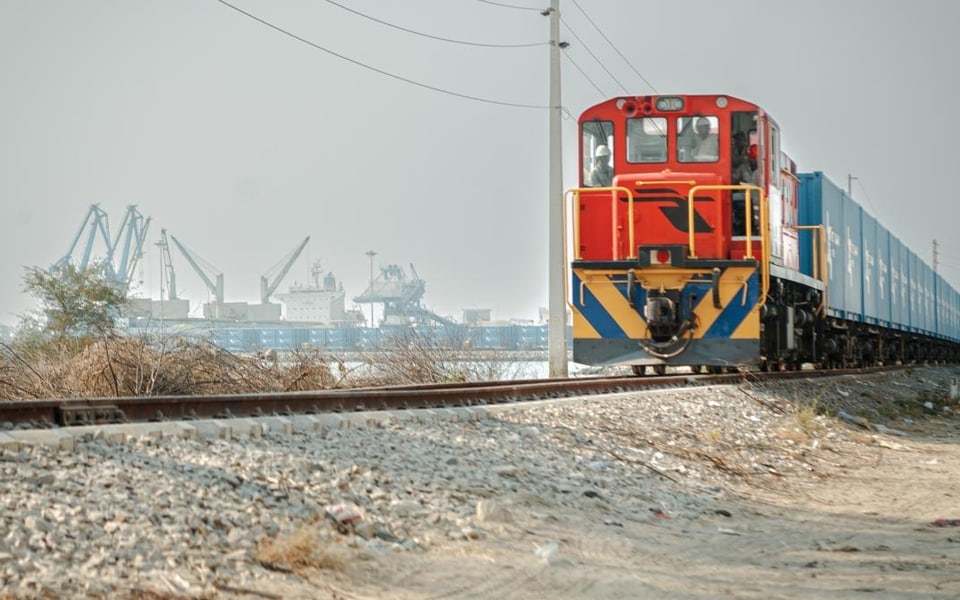
There are three separate Cape gauge systems and none of them meets another: the Luanda railway inland to Malanje, the Benguela railway from Lobito, and the Moçâmedes railway in the south. Each was built to carry the interior's minerals and crops down to its own port, so the map is three ladders rather than a network. The Benguela line is the one that matters to a traveller — 1,289 km and 67 stations, rebuilt end to end after the civil war, and worked by a state operator that publishes its long-distance and interurban services in the present tense.
Rail journeys in Angola
Good to know
Why do Angola's railways not join up?
Because each was built for a different port. The Luanda, Benguela and Moçâmedes railways all run inland from the Atlantic to the interior and stop; none of them was ever laid to meet another. The design goal was to get copper, manganese, coffee and sisal from a particular hinterland to a particular quay, not to knit the country together. The result is that a rail journey across Angola from north to south is not possible, and never has been.
How far does the Benguela railway go?
From Lobito on the Atlantic inland through Benguela, Huambo, Kuito and Luena to Luau on the border with the Democratic Republic of the Congo, where the track continues as the Congolese network towards the Copperbelt. That through connection is what the line was built for: a 99-year concession granted to Sir Robert Williams in 1902, laid to bring Katangan copper to an Atlantic port rather than around the Cape.
What language will I need?
Portuguese, and effectively only Portuguese. It is the official language and the language of the railway: timetables, station signs and the operator's own website are all Portuguese, and English is not widely spoken outside Luanda's business districts. The railway vocabulary is the same as in Portugal and Brazil — comboio for train, bilhete for ticket, horário for timetable.
Are there rail passes for Angola?
No. Angola is not part of Interrail, Eurail or any regional pass scheme, and there is no national multi-journey ticket. Tickets are bought for the individual train, and for the long-distance services on the Benguela line that means at a station rather than online — the operator sells no seats over the internet.