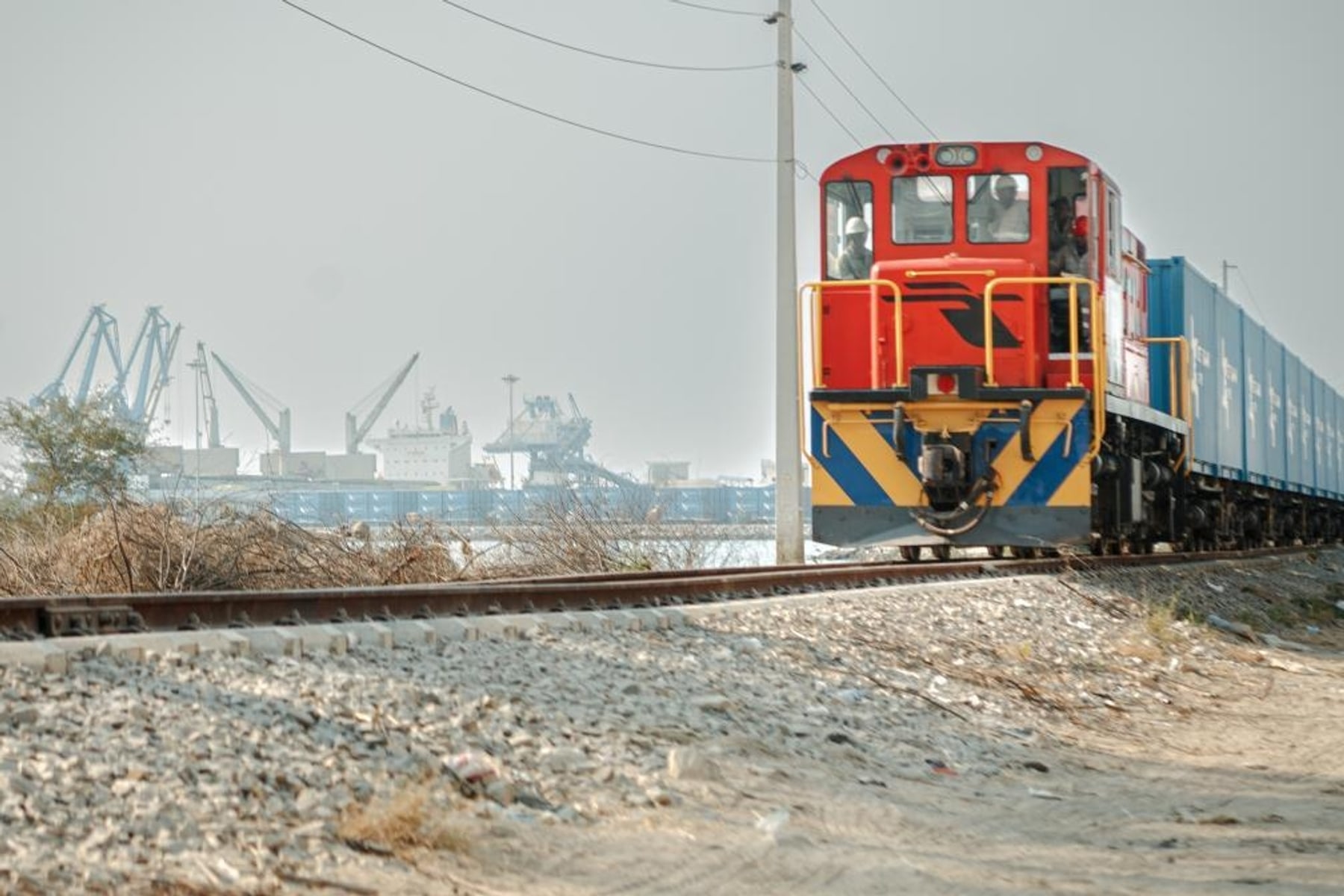
The Benguela Railway — Lobito to Luena
© European Union, 2026 · Audiovisual Service · CC BY 4.0 · cropped
- DistanceAbout 1,020 km, Lobito to Luena
- DurationAbout 25½ hours
- Best seasonWeekly, all year · May to September is the dry season
Introduction
The Benguela Railway begins at a quay on the Atlantic and ends, twenty-six hours later, on the far side of Angola. Between the two it climbs off the coastal plain onto the Bié plateau, crosses the whole width of the country at around 1,700 metres, and comes down into the flat miombo woodland of Moxico. It is the largest railway in Angola and one of the longest single lines in Africa: 1,289 km of track and 67 stations by the operator's own count, reaching its high point at 1,854 metres.
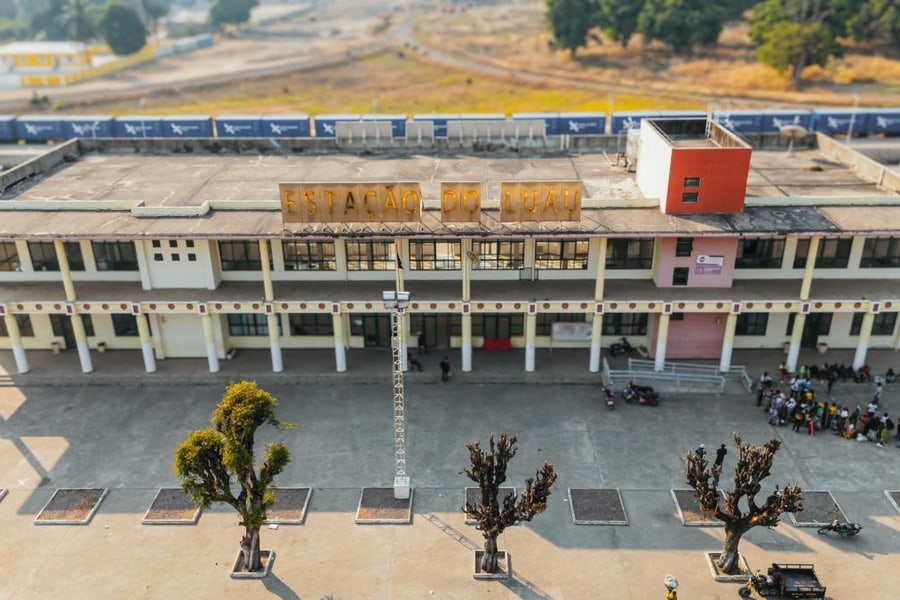
The line was conceived to carry other people's copper. A 99-year concession was granted to Sir Robert Williams on 28 November 1902, construction began at the Cavaco bridge outside Benguela on 1 March 1903, and the object was to bring the mineral wealth of Katanga out to the Atlantic by the shortest possible route. The rails reached Huambo in 1912 and the Congolese border at Luau in 1929. Then the civil war took it apart. By the time the concession expired in 2001 only 34 kilometres were still in service, along the coast between Benguela and Lobito. Rebuilding the whole 1,344 km took from 2006 to 2015 and Chinese finance, and it put the trains back.
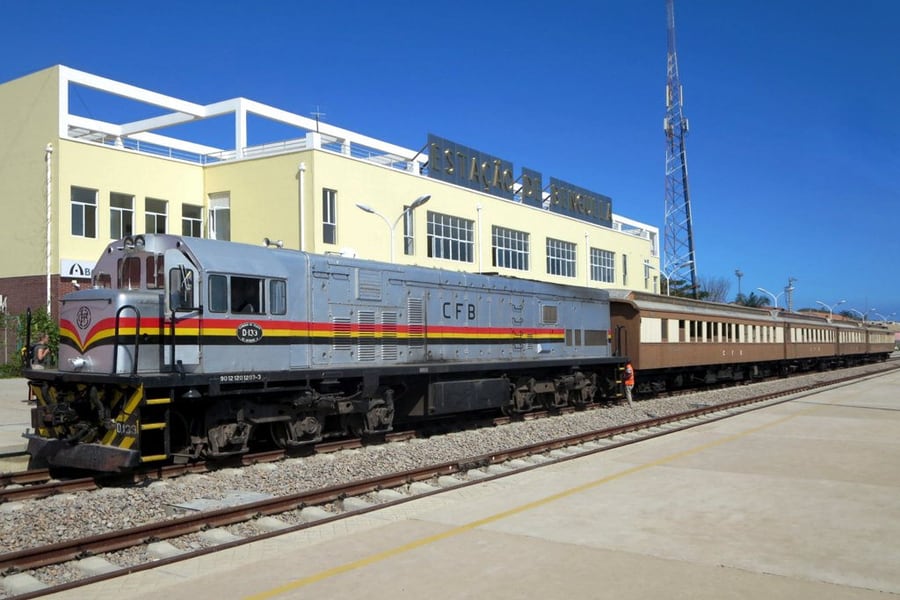
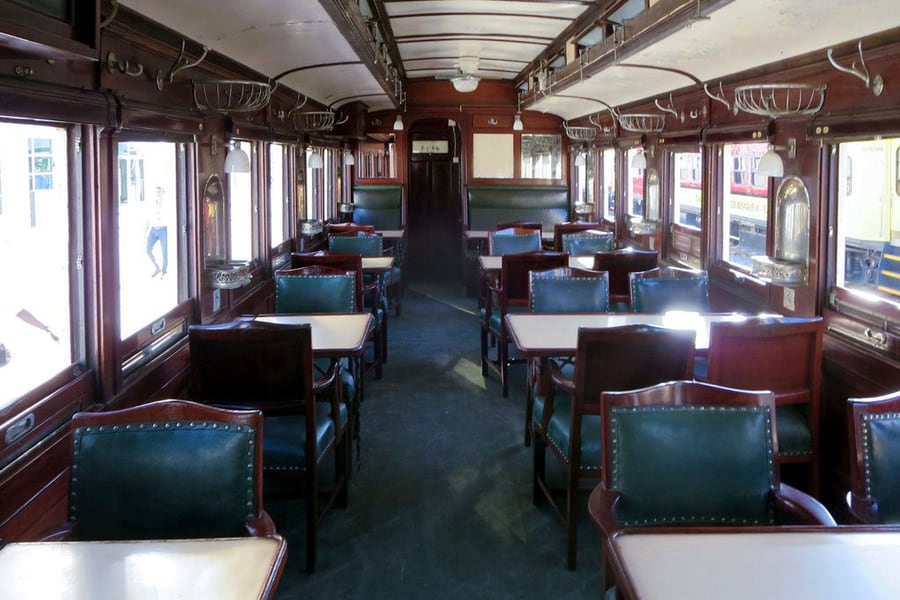
What runs on it now is one weekly express in each direction between Lobito and Luena, worked by Empresa do Caminho de Ferro de Benguela-E.P. with proper carriages — compartments, a restaurant car, and a nurse. It is not a tourist train. For the towns of the interior it is the only surface link to the coast that does not involve a road.
The Journey
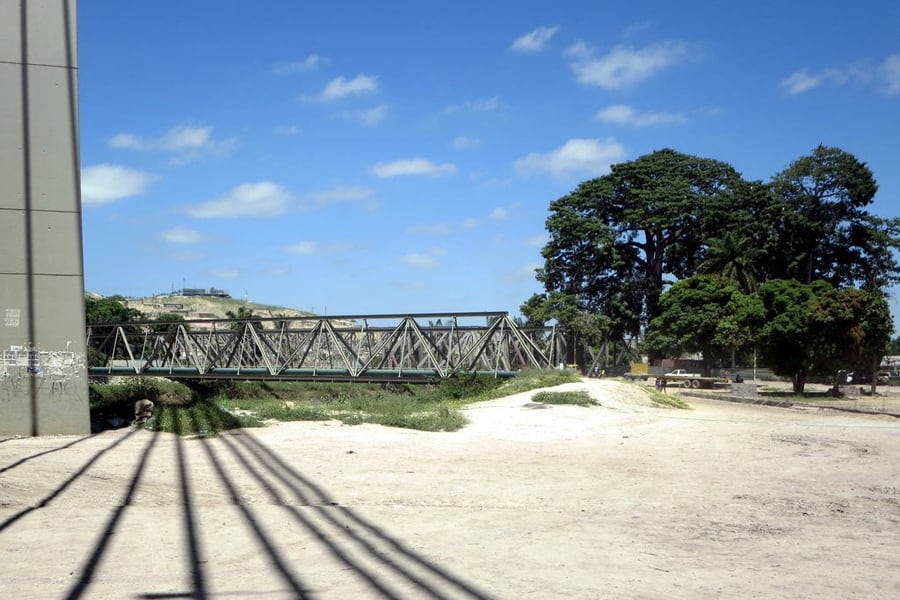
The express leaves Lobito on a Monday morning from a station a few hundred metres from the ore quays, and for the first half-hour it runs along the bay and through Catumbela — where the 1905 steel bridge over the river, built to a Gustave Eiffel design, still stands beside its modern replacement. Benguela is thirty kilometres on. After that the line turns inland and begins the climb that the whole railway exists for.
Onto the plateau
The ascent out of the coastal plain is the hardest engineering on the line, and the reason the early trains burned oil to Cubal and wood beyond it: the company grew its own fuel, on what was once the largest private eucalyptus plantation in the world. Above Cubal the country opens into the Bié plateau, high grassland and red earth at 1,500 to 1,800 metres, cooler than the coast and farmed. Huambo — laid out in 1912 as the railway's own town, and the place its workshops were destroyed in the war — comes up in the late afternoon.
The night, and Moxico
The express runs through the night across Bié, calling at Cuíto, and spends the following morning crossing Moxico. This is the emptiest part of the journey and the flattest: miombo woodland, seasonal rivers, very few roads. Luena, the provincial capital, arrives on Tuesday morning. The rails carry on another 324 kilometres to Luau on the Congolese border, but the weekly express turns round at Luena.
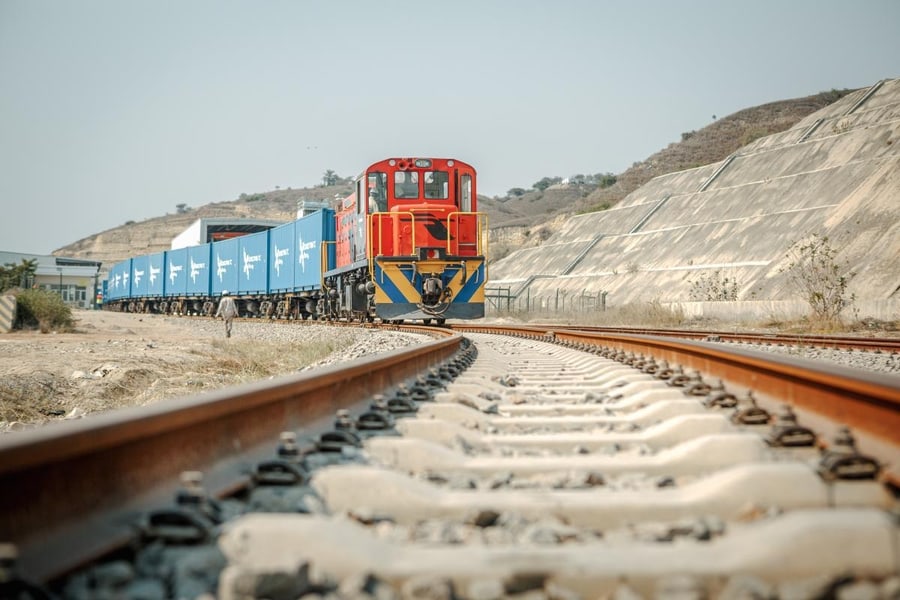
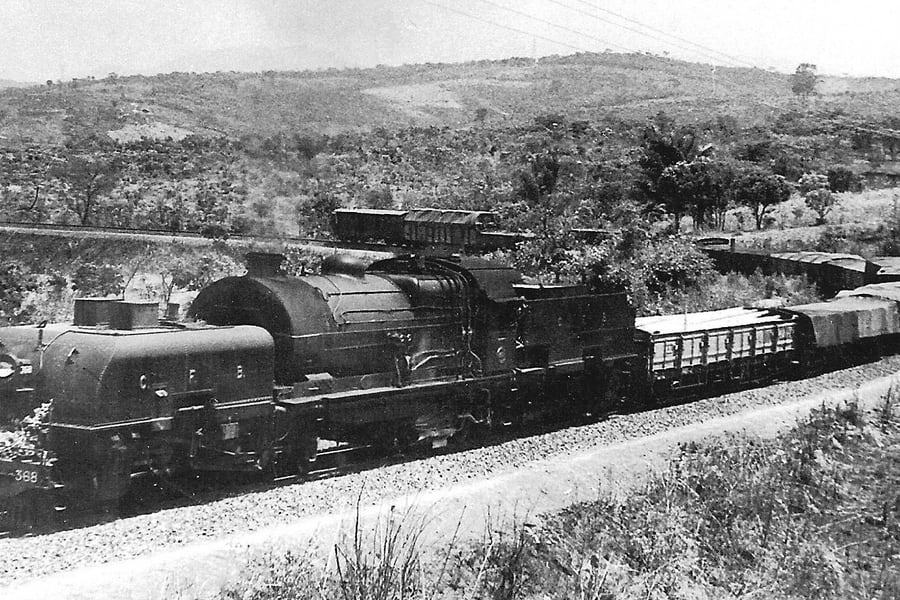
The traction is diesel. CFB took the first of Angola's General Electric C30ACi locomotives — 45 of the 100-unit national order were allocated to the Benguela line — and freight on the same metals is now worked by Lobito Atlantic Railway, the concessionaire that took over the goods business in 2022.
Along the route
A climb the railway was designed around
Lobito is at sea level and the line's high point is 1,854 m. The ascent above Cubal is the hard part; everything east of it runs across the plateau at around 1,700 m.Trains that grew their own fuel
Until the 1970s the locomotives burned oil from the coast to Cubal and wood beyond it, cut from what was then the largest private eucalyptus plantation in the world.One railway, two operators
CFB-EP runs the passenger trains. The goods business went to Lobito Atlantic Railway on a 30-year concession in 2022, so the freight you pass belongs to somebody else.A bit of history
Culture & experiences along the way
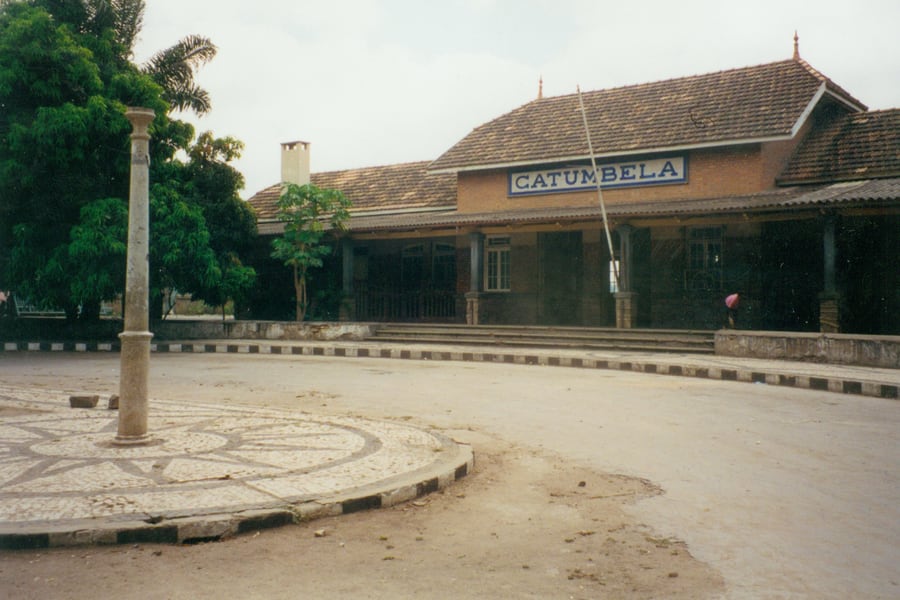
Claus Bunks / Wikimedia Commons · public domain · 1995 · croppedThe stations the rebuild kept
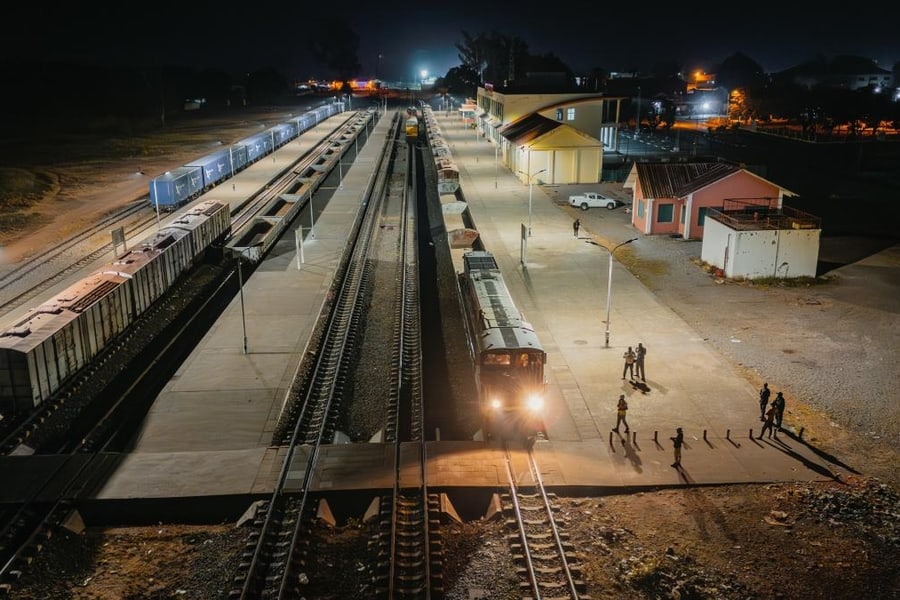
The war left the CFB in pieces and the rebuild finished in 2014, but it did not sweep the line clean: the Portuguese-era stations were repaired rather than replaced. Catumbela, twenty minutes out of Lobito and photographed here in 1995 when almost nothing ran, is still standing and still called at — as are most of the buildings inland of it.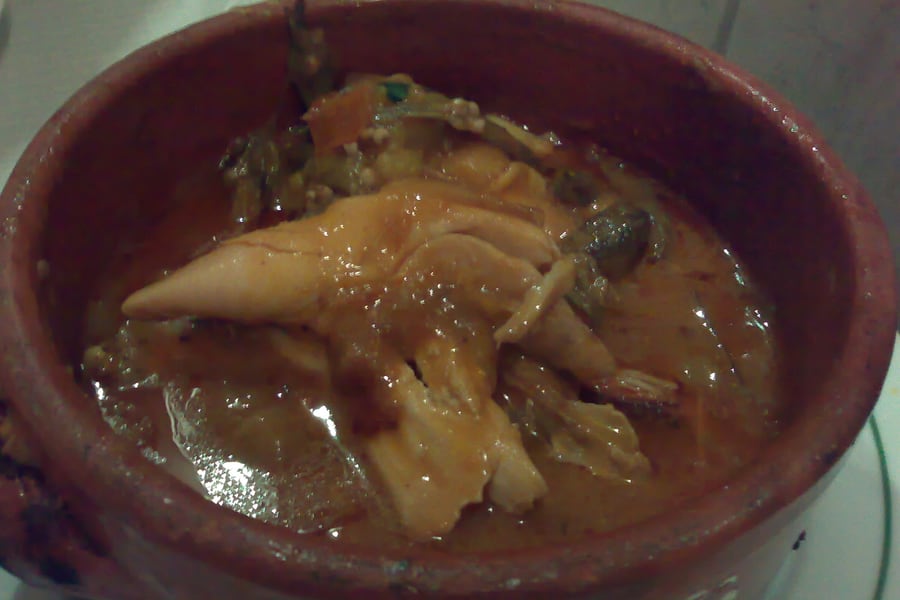 Adriao / Wikimedia Commons · CC BY 3.0 · cropped
Muamba de galinha
Angola's own version of the palm-oil stew: chicken cooked down with okra, chilli and gindungo, eaten with funge, the stiff cassava porridge you pull off with your right hand and use to lift the sauce. Every canteen along the line does it, and the argument is only ever about whose is better.Timetables
One express runs in each direction each week. These are the times the operator's commercial department gave when the service resumed on 29 June 2026, after a two-month break caused by flooding that damaged the line at Caimbambo in April.
| Direction | Departs | Arrives |
|---|---|---|
| Lobito → Luena | Monday 07:45 | Tuesday 09:28 |
| Luena → Lobito | 08:30 | Thursday 10:00 |
The run is about twenty-five and a half hours in each direction, so the return working leaves Luena on the Wednesday morning to reach Lobito on the Thursday. CFB's own services page describes the return simply as the Thursday train, which is the day it arrives.
Alongside the express, CFB runs ordinary long-distance trains on the same line every day of the week — 24 of them by its own count — and ten interurban trains a day between Lobito and Benguela, Monday to Friday. Those are slower, and they call at the intermediate stations the express passes.
Cancellations happen and are not always announced in advance. In the eighteen months to August 2026 the passenger service was stopped by vandalism of the track at Caimbambo, by a derailment at Luena in March 2026, and by the April floods. The operator posts notices at cfb.ao (opens in a new tab) and by telephone to the stations — Lobito 921 485 658, Huambo 945 435 855, Kuito 921 486 122, Luena 921 486 125.
Times as of August 2026.
Tickets
There is no online booking. Tickets are sold at the stations, and for the Lobito–Luena express that means Lobito, Huambo and Kuito. The fare for the full run was 15,350 kwanzas when the service resumed in June 2026, quoted by CFB's commercial department; the operator's own tariff page carries no figures at all, so the station counter is the only place a current price can be had.
Demand is well ahead of capacity. The resumption train ran with five carriages and a third of its seats filled, but that is not typical — CFB has said its trains are crowded because too few carriages are serviceable, with fifty under repair as of May 2026, and passengers have been known to queue overnight at the main stations. Buying a day or more ahead is the difference between travelling and not.
Fares as of August 2026.
Book your tickets
Lobito to Luena, full route
Sold at the station counter only
The through fare for the weekly express, as quoted by CFB when the service resumed in June 2026.
Book Tickets (opens in a new tab, on cfb.ao)via cfb.aoRail Passes
No rail pass covers Angola. Interrail and Eurail are European products — the One Country Pass is sold for 33 countries, all of them in Europe — and there is no African equivalent that includes the Benguela Railway, nor any pass sold by CFB itself.
Tickets are bought singly at the station, and the fare for the full Lobito–Luena run is modest enough that a pass would have little to save. Nothing in the Angolan network connects to a through-ticketing arrangement with a neighbour, either: the rails continue past Luau into the Democratic Republic of the Congo, but the passenger express stops well short of the border.
Checked August 2026.
Places to Visit
The express calls at four places, and each of them is a different Angola: an Atlantic port built on a sandspit, a colonial town two centuries older than the railway, a planned city on the high plateau, and a provincial capital in the woodland of the east. Nothing on this route is set up for visitors in the way a European rail town is, which is most of the reason to see it now.
 David Stanley / Wikimedia Commons · CC BY 2.0 · 2015 · cropped
Lobito
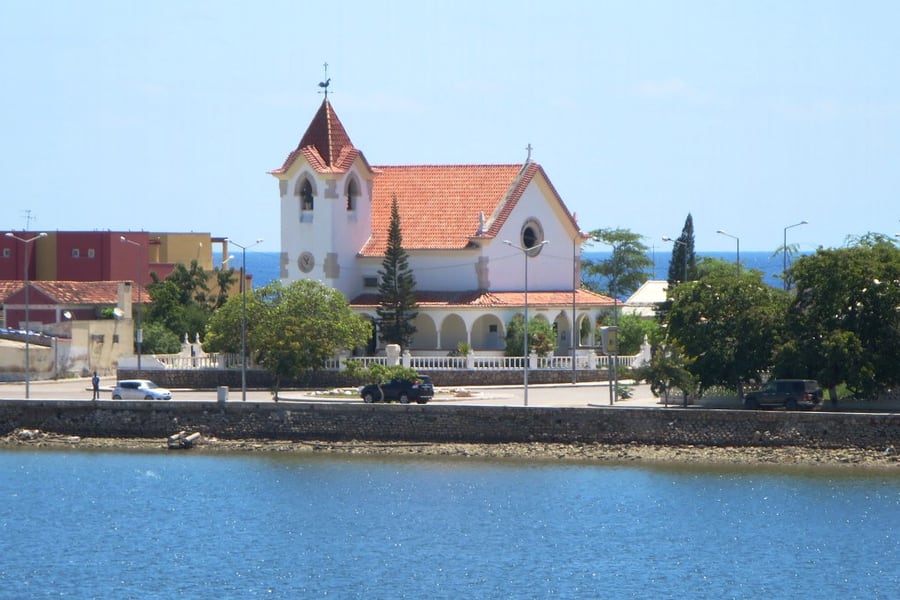
The Atlantic end of the line, and a town built on a sandspit — the Restinga runs five kilometres into the sea and shelters one of the best natural harbours on the coast, which is the only reason the railway starts here rather than at Benguela. The port is Angola's second largest and the Lobito Corridor's whole point. The Restinga itself is where the town eats and sleeps, with the Igreja da Arrábida on the water halfway along it.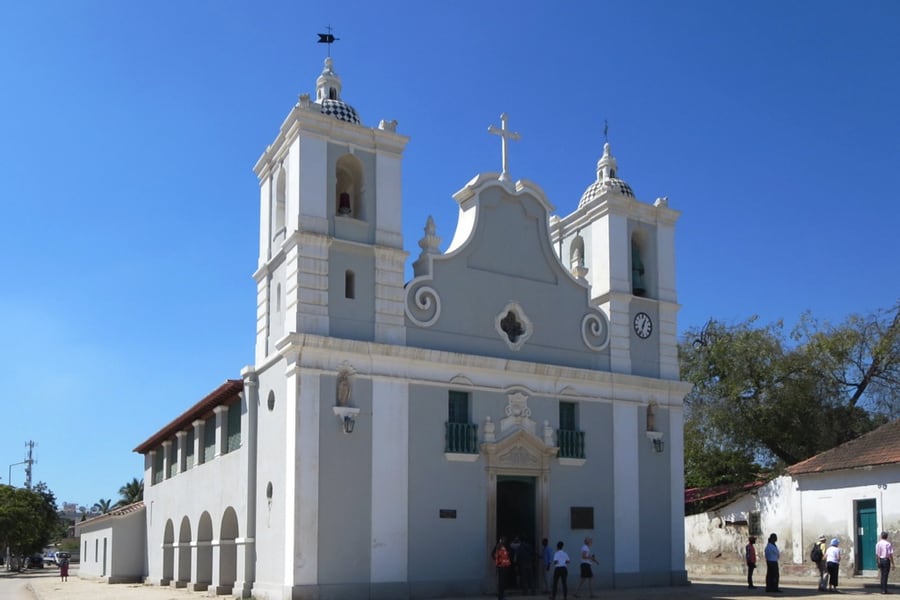 David Stanley / Wikimedia Commons · CC BY 2.0 · 2015 · cropped
Benguela
Founded in 1617 as São Felipe de Benguela, and long the centre of a slave trade that ran to Brazil and Cuba — the Igreja Nossa Senhora do Pópulo of 1748, where the enslaved were baptised before shipment, still stands in the middle of the town. Ships once anchored a mile offshore and worked cargo through jetties, which is why the deep water at Lobito took the railway and the port. Praia Morena runs the length of the modern town.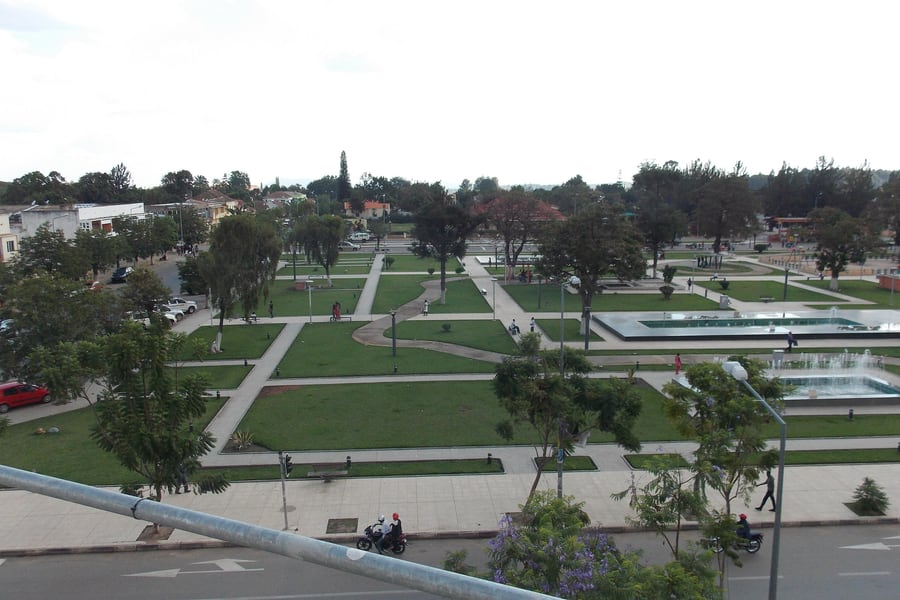 Abanul / Wikimedia Commons · CC BY-SA 4.0 · cropped
Huambo
The railway's own city, founded on 8 August 1912 where the rails reached the plateau and renamed Nova Lisboa in 1928 — a name it kept until independence. It is Angola's third-largest city, it sits high enough to be markedly cooler than the coast, and it was fought over so heavily in the civil war that its railway workshops were destroyed. The Jardim da Cultura is the centre of the rebuilt town.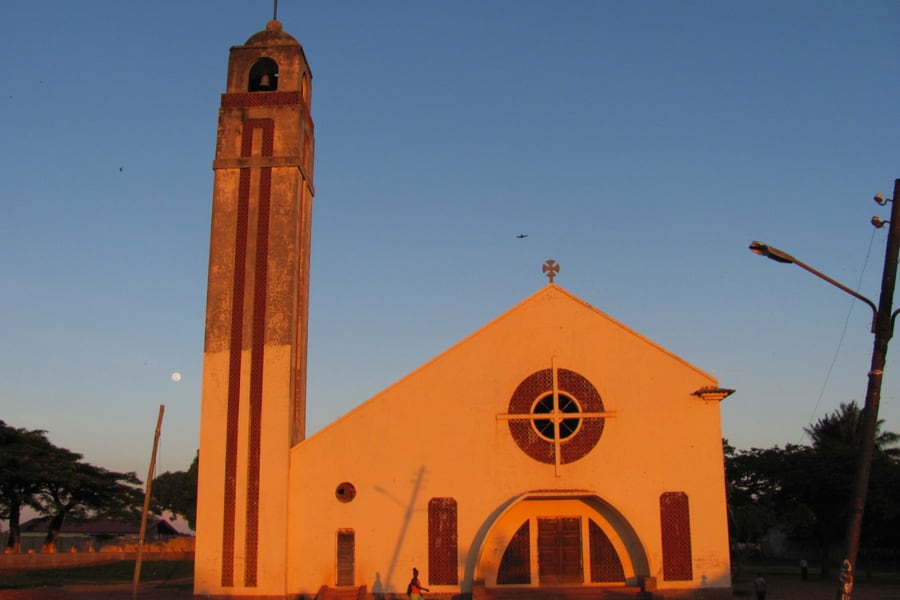 Diego Passos Costa / Wikimedia Commons · CC BY-SA 3.0 · 2011 · cropped
Luena
Capital of Moxico, 992 km inland from Benguela, and the end of the weekly express — a town of 356,880 people at the 2024 census, known as Luso until independence, and the supply point for a province with very little road. Its station has been rebuilt and given a clock tower. Cameia National Park, 14,450 km² of floodplain and woodland, lies east of it.Where to Sleep
The express leaves Lobito early and reaches Luena in the morning, so a night at each end is part of the trip rather than an optional extra. Lobito has the better choice: the Restinga, the five-kilometre sandspit that shelters the bay, carries most of the town's hotels and restaurants and is a short drive from the station.
Inland the options thin out quickly, and the reliable ones belong to a single Angolan group with houses in Benguela, Huambo, Kuito and Luena — which happens to be every city the express serves. They are business hotels rather than anything scenic, but they are open, contactable and used to foreign guests.
Where to stay
Apart-Hotel Aurora
In the middle of Lobito
An apart-hotel in central Lobito with a spa and Turkish bath, restaurant, bar lounge, pool, gym and private parking.
Check Availability (opens in a new tab, on apart-hotelaurora.com)via apart-hotelaurora.comiu Hotel Huambo
Avenida Teixeira de Sousa, Cidade Baixa
A 24-hour-reception hotel in the lower town at Huambo, with a restaurant, bar, meeting rooms and private parking.
Check Availability (opens in a new tab, on one-hotel-angola.e-gds.com)via one-hotel-angola.e-gds.comiu Hotel Luena
Bairro Mandembue, Luena
The same group's house at the end of the line, with air-conditioned rooms, a restaurant, meeting rooms and parking.
Check Availability (opens in a new tab, on one-hotel-angola.e-gds.com)via one-hotel-angola.e-gds.comQuestions or corrections
Planning this trip and stuck on something, or spotted a time, fare or detail that has changed? Send us a message about The Benguela Railway — Lobito to Luena. We read every one, and we update this page when something has changed.