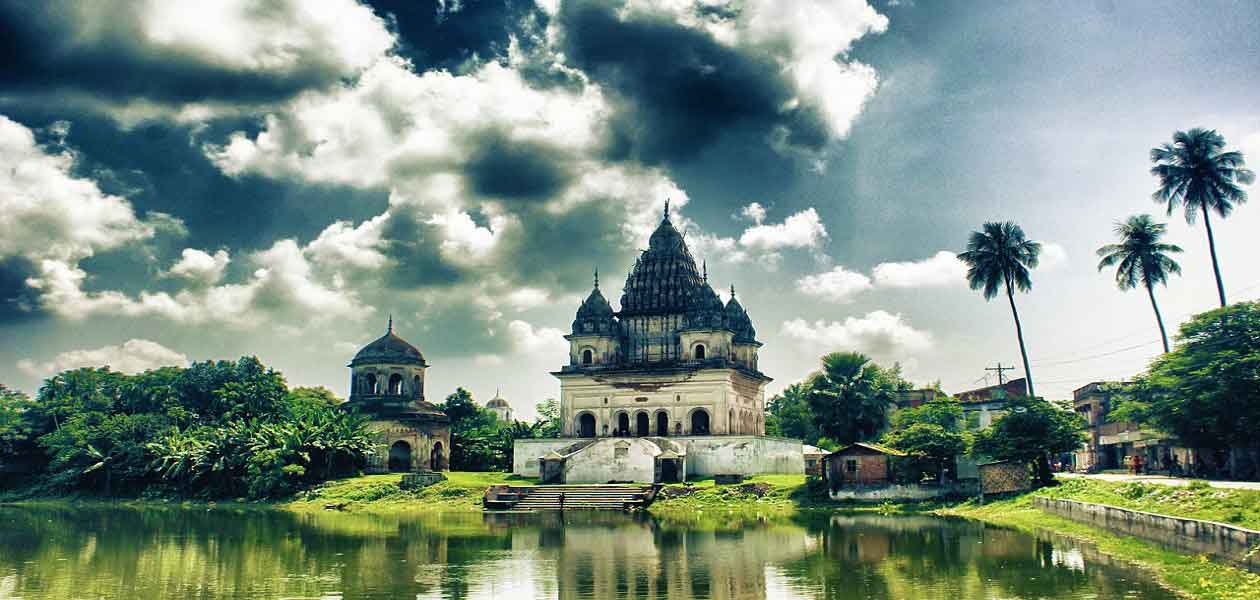
Bangladesh

Bangladesh occupies roughly 148,000 km² of the Bengal delta and is home to about 171 million people, making it the eighth most populous country in the world and one of the most densely settled. India wraps around it to the north, west and east, Myanmar touches its south-eastern corner, and the Bay of Bengal lies to the south. Nearly all of it is low, flat and wet — the combined outflow of the Ganges, the Brahmaputra and the Meghna crosses the country, and the rivers dictate where anything can be built.
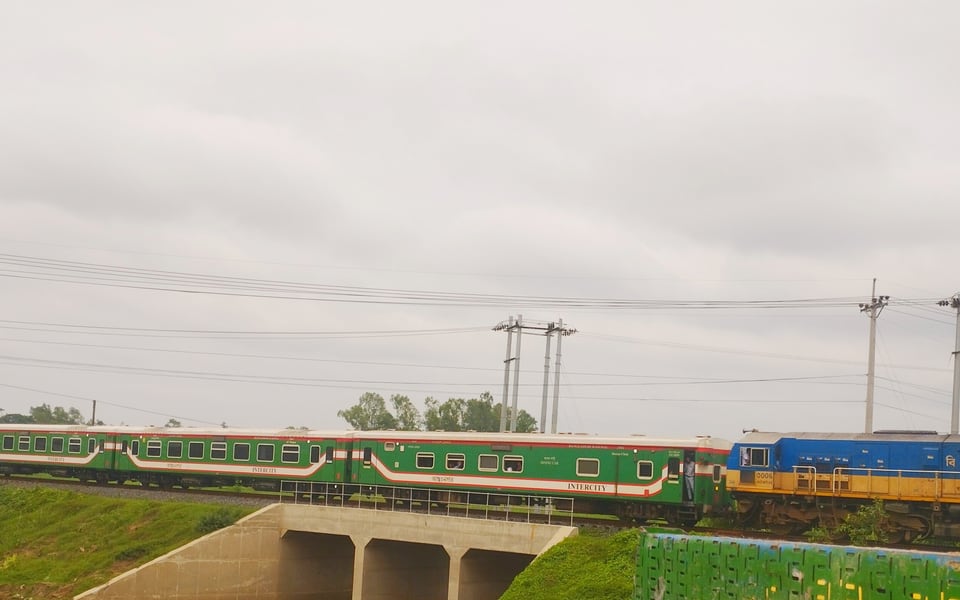
Those rivers are also why the railway is the shape it is. Bangladesh Railway runs on two different gauges — broad in the west, metre in the east — a partition legacy that still governs which trains can run where, and conversion work continues. Services are named and numbered in the South Asian manner, with fixed off-days, and they are heavily used. The network has also been growing: a new line has pushed south-east to the coast, and the Padma Bridge has carried rails across the country's largest river.
Rail journeys in Bangladesh
Good to know
Why does Bangladesh have two track gauges?
It is an inheritance of partition. The railways of Bengal were built partly to broad gauge and partly to metre gauge, and the 1947 division left Bangladesh with both, split roughly west and east. The practical effect is that not every train can run on every line, and some journeys involve a change that has nothing to do with geography. Conversion to a single gauge has been under way for years.
How are tickets bought?
Bangladesh Railway sells through its own e-ticketing service as well as at stations. Named intercity trains run to fixed numbers and usually have a weekly off-day, so the specific train matters more than the route when planning — the operator's own booking system is the authority on what runs and when.
Is there a rail pass?
No. Bangladesh is outside the Interrail and Eurail areas, and there is no equivalent national tourist pass. Fares are low even by regional standards.
Has the network been expanding?
Yes, unusually so. A new 102 km line from Dohazari to Cox's Bazar opened to passengers on 1 December 2023, and the Padma Bridge has brought rail across the Padma river towards the south-west. Both are recent enough that published details are still settling, so figures and timings are best taken from Bangladesh Railway rather than from secondary write-ups.
Which journey should a first-time visitor take?
Dhaka to Cox's Bazar. It is the newest long-distance route in the country and the only one that ends at the sea — 551 km and about eight and a half hours, with a choice of an overnight train and a daytime one, and a last hundred kilometres through elephant country on a railway opened in 2023.