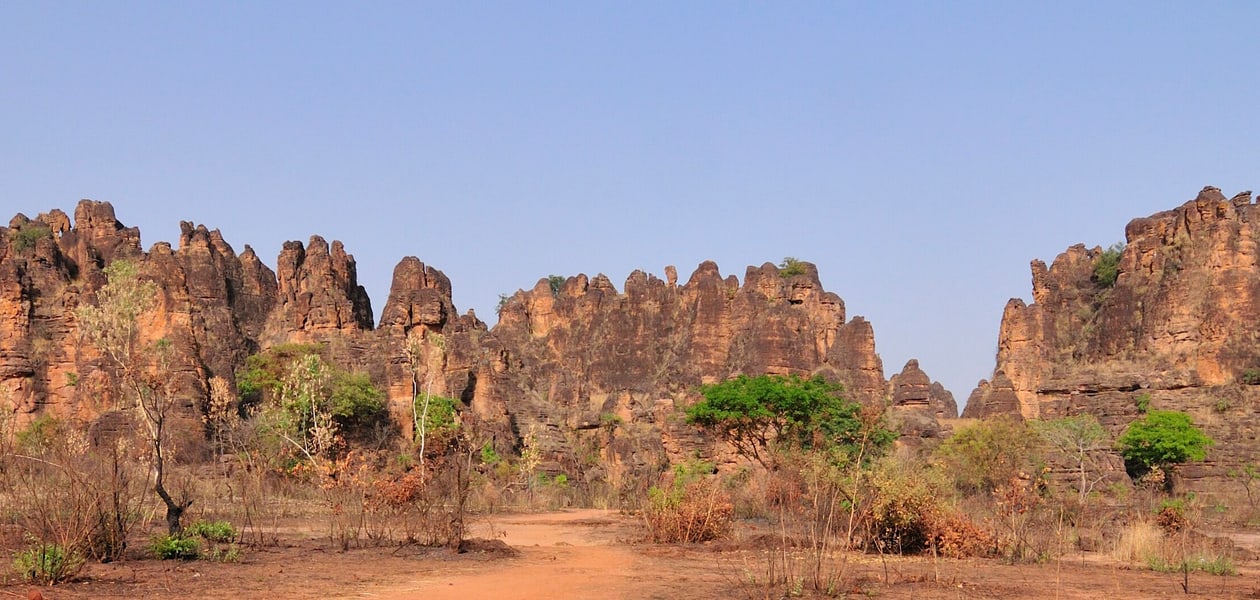
Burkina Faso
Sylvain Crouzillat / Wikimedia Commons · CC BY-SA 3.0 · cropped
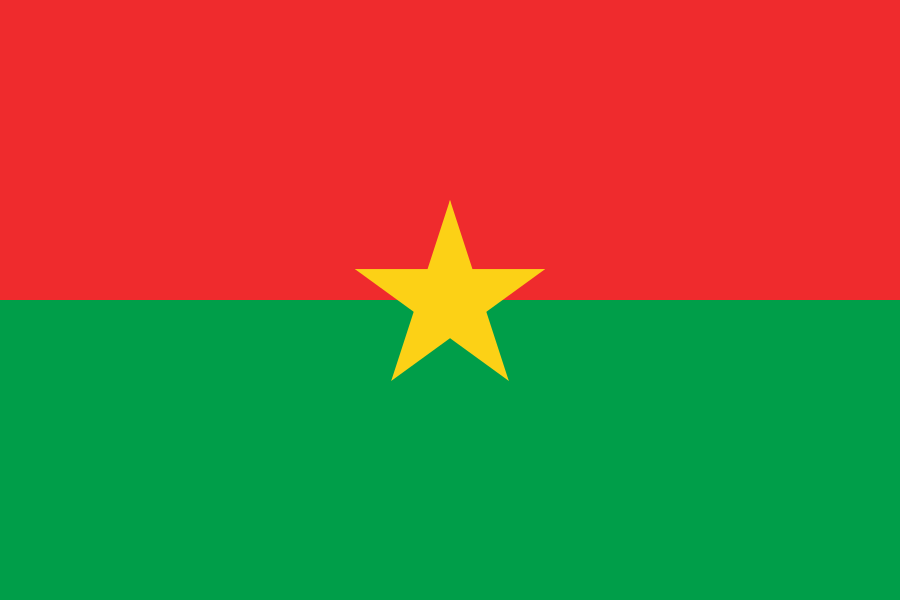
Burkina Faso is landlocked in the heart of West Africa, 274,223 km² of plateau and savanna with about 23 million people and its capital at Ouagadougou. Mali wraps around the north and west, Niger lies to the east, and Benin, Togo, Ghana and Ivory Coast run along the southern frontier. The land is flat and low — most of the country sits between 200 and 400 m — and it dries northward from the wooded savanna of the Sudanian belt into the Sahel. The Black, Red and White Voltas rise here and flow south into Ghana, and it was those rivers that gave the country the name it carried until 1984, Upper Volta.
The railway is a single artery rather than a network: 622 km of metre gauge running from Kaya through Ouagadougou and Bobo-Dioulasso towards the Ivorian frontier, the northern half of the old Abidjan–Ouagadougou line built between 1904 and 1954. It exists because a landlocked country needed a port, and for most of its life it delivered one. The concessionaire, Sitarail, has no website and publishes its running programme through the press; as of June 2024 it was not working a passenger train through to Abidjan.
Rail journeys in Burkina Faso
Good to know
Does the train still run through to Abidjan?
Not as of the most recent source this site could fetch. Wikipedia's Rail transport in Burkina Faso states flatly that as of June 2024 Sitarail does not operate a passenger train to Abidjan, and Burkinabè press reporting describes a service that turns back before Ivorian territory. The through working to the sea is the railway's history rather than its present, and any account that describes it in the present tense should be treated with care.
What is Bobo-Dioulasso to the railway?
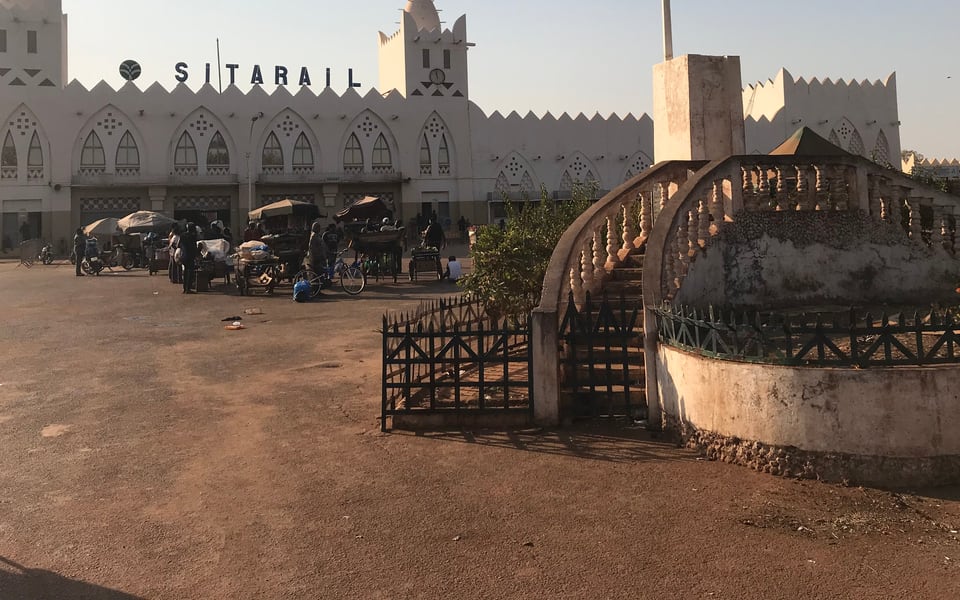
The country's railway town. Bobo-Dioulasso is Burkina Faso's second city and was the line's operating centre, with workshops and a 1934 station in the Sudano-Sahelian style that is among the most photographed buildings in the country. The railway reached it long before it reached Ouagadougou, and the city grew around that fact.
What does "Burkina Faso" mean?
Roughly "land of upright people". The name was adopted in 1984, replacing Upper Volta, and it deliberately draws on two of the country's languages — burkina from Mooré and faso from Dioula — rather than one. A citizen is a Burkinabè, a form taken from a third language, Fulfulde.
Are there rail passes for Burkina Faso?
No. No pass scheme covers the country and there is no national multi-journey ticket. Tickets are bought for the individual train. Travellers should also read their own government's current advice before planning: Burkina Faso carries severe travel advisories, and that is a fact about the journey rather than an aside.