Ouagadougou to Bobo-Dioulasso
GranCastor / Wikimedia Commons · CC BY-SA 4.0 · cropped
- Distance349 km, Ouagadougou to Bobo-Dioulasso
- DurationAbout 7 hr 45 min
- Best seasonOne train each way a week, all year
Introduction
Burkina Faso has one railway, and one passenger train on it. Every Tuesday morning at nine o'clock a short train pulls out of Ouagadougou and runs south-west through Koudougou and the shea country to Bobo-Dioulasso, the country's second city and its railway town; every Thursday morning at nine it comes back. That is the whole passenger service of a nation of some 23 million people, and it covers the 349 km between the two cities in around eight hours, at a fare of 6,000 CFA francs.
The line it runs on was once the most important railway in French West Africa. Building started at Abidjan in 1904, reached Bobo-Dioulasso in 1934 and only arrived at Ouagadougou in October 1954, fifty-one years after the first rail was laid. The point of it was the sea: Upper Volta had no coast, and the metre gauge to the Gulf of Guinea was how its cotton went out and everything else came in. At its height the Régie Abidjan-Niger carried 2.6 million passengers in 1967 and four million in 1978.
None of that traffic is left, and the through train to Abidjan is gone with it — since December 2023 the passenger working turns back at Niangoloko, the last station before the frontier, because Ivorian authorities will not admit it. What remains is a domestic train on the northern half of a great international railway, riding the same alignment through the same country, and it is the most interesting way to cross Burkina Faso.
The Journey
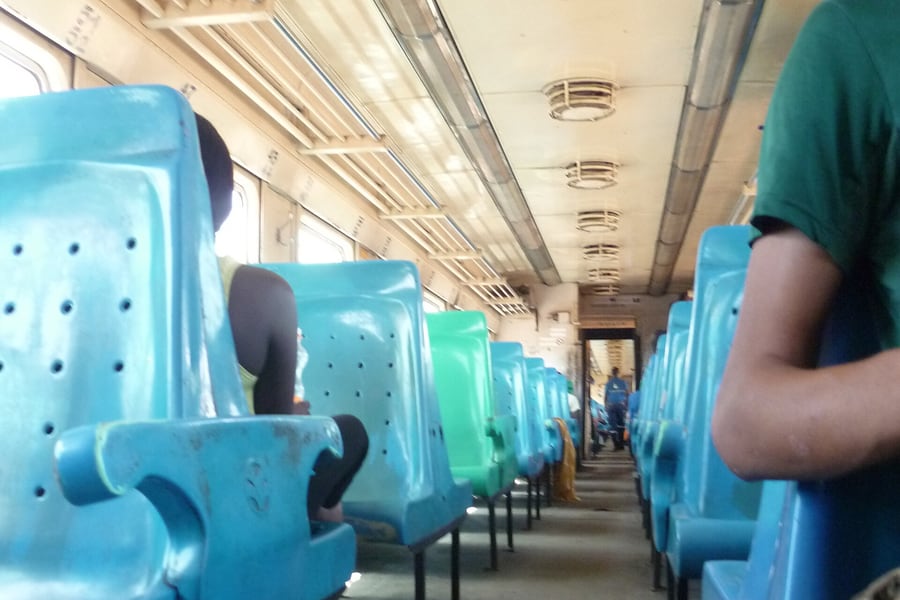
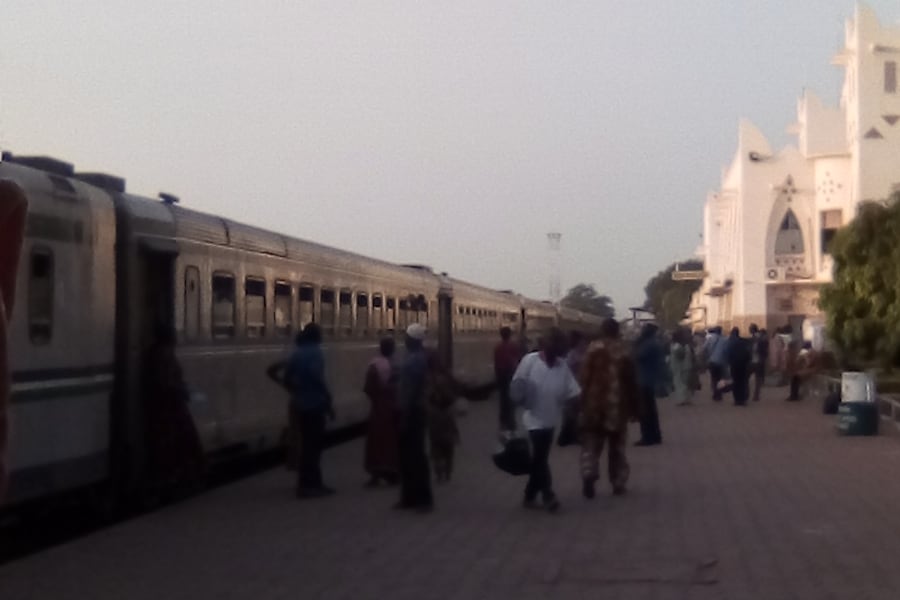
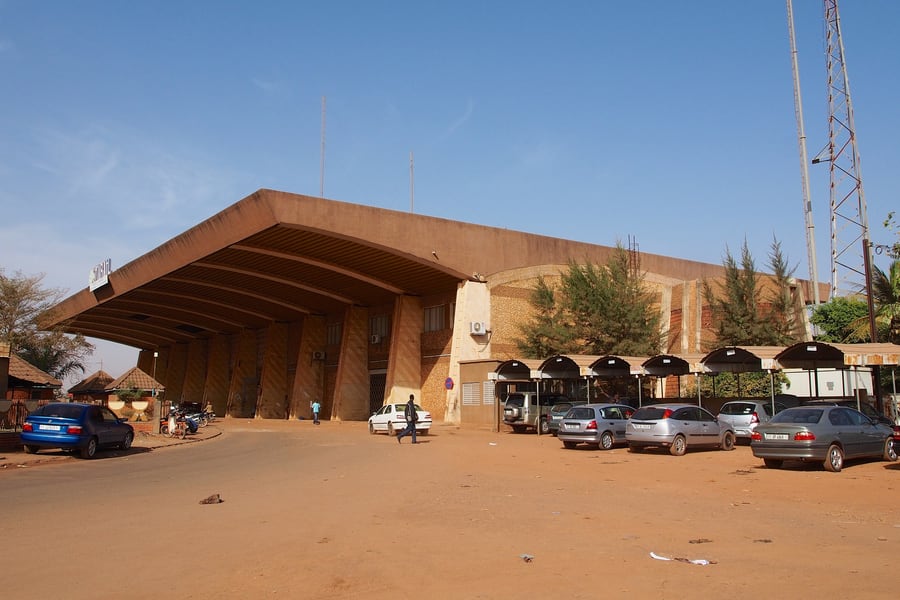
The train leaves from Ouagadougou's central station, a low concrete building with a deep folded canopy on the west side of the city, and it is a modest thing: a couple of second-class saloons with moulded plastic seats, a generator van for the lights and the fans, and vans for baggage. Sitarail quotes a first-class fare as well as a second-class one, and the coach used on charter runs has air conditioning; the ordinary Tuesday working is a second-class train with the windows down. Only accompanied luggage is carried, and everything is bought at the station window.
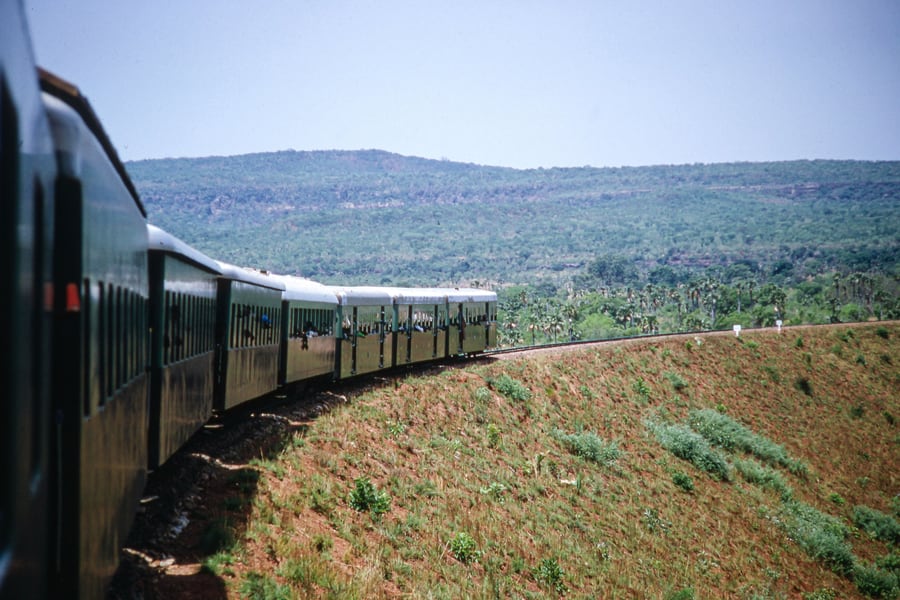
Ouagadougou sits at kilometre 1,145 of a line measured from Abidjan, so the whole journey is a countdown. The first stop, Koudougou, comes ninety-odd kilometres out — Burkina Faso's third city, about 160,000 people, Gurunsi and Mossi, with a university, a big market and a station that has been the reason for the town's living since the rails arrived. Beyond it the country opens into the Sudanian savanna: sorghum and millet plots, shea and néré trees left standing in the fields because they are worth more than the ground they shade, and laterite tracks the colour of brick.
Zamo, Siby, Béréba
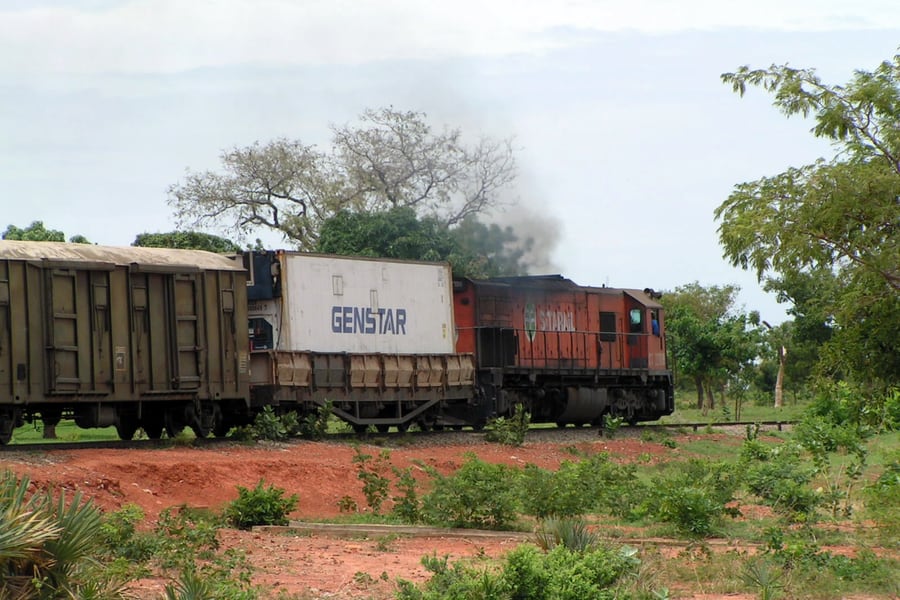
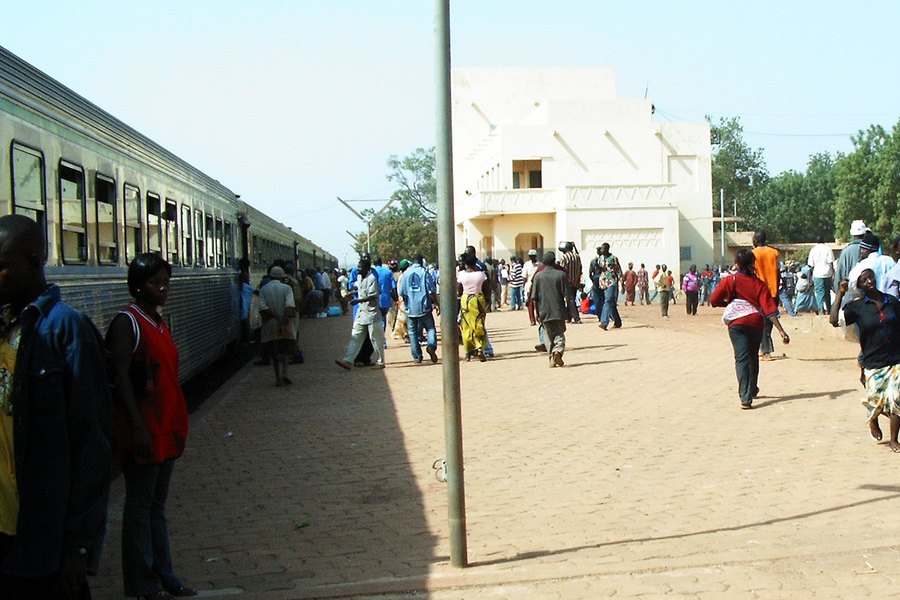
The middle of the run is the emptiest part of it. Zamo is at kilometre 1,005 and Siby a little beyond, and then comes Béréba at kilometre 885 — a name worth knowing, because for four years in the early 1950s Béréba was the end of the line, the point the contractors had reached while the last stretch into Ouagadougou was still being built. Between the halts there is very little: the train runs at something like forty-five kilometres an hour on a formation that has been patched for decades, and the rhythm of the journey is set by long straight stretches through bush and by stops where the platform is a strip of earth and the market comes to the train.
Into Bobo-Dioulasso
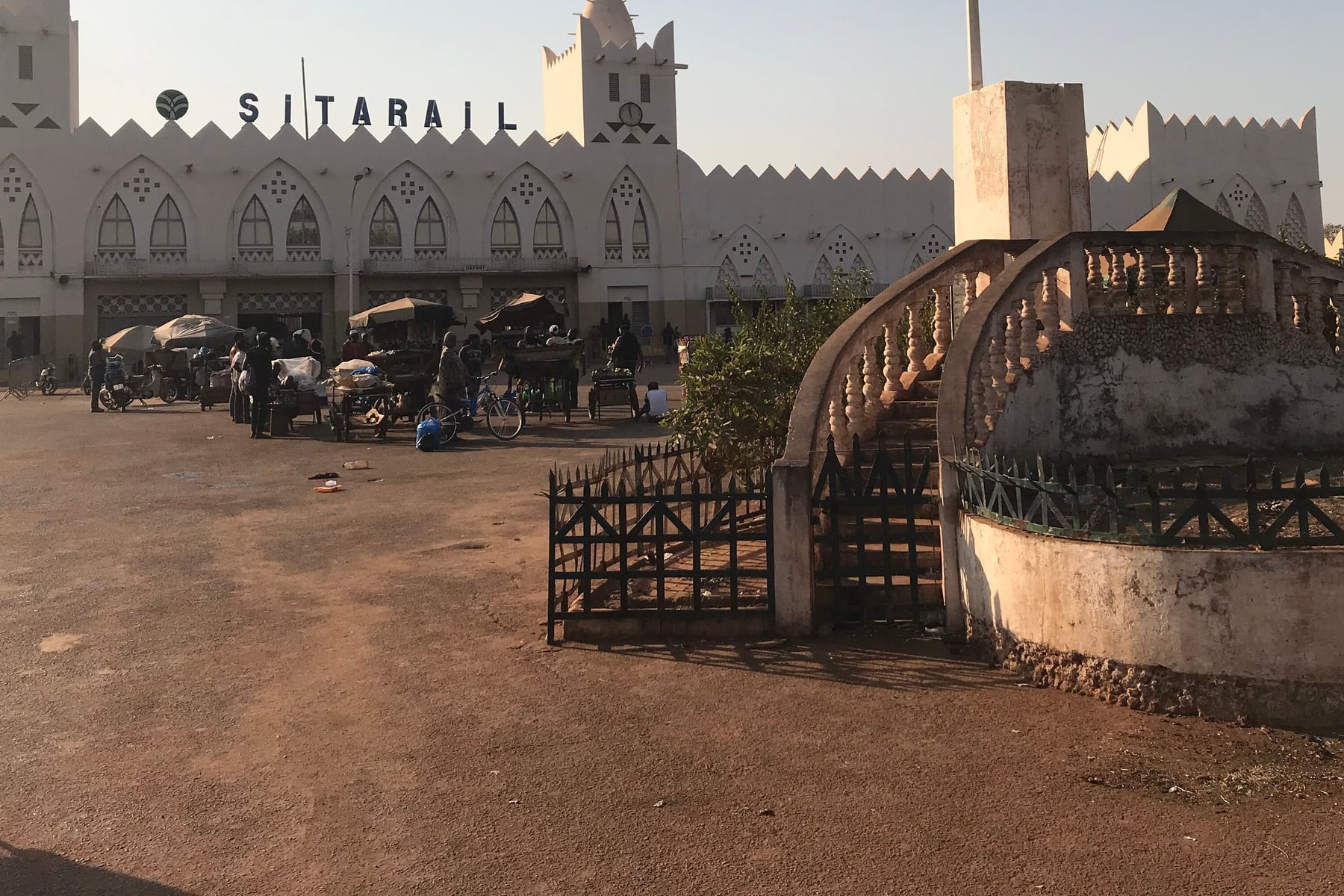
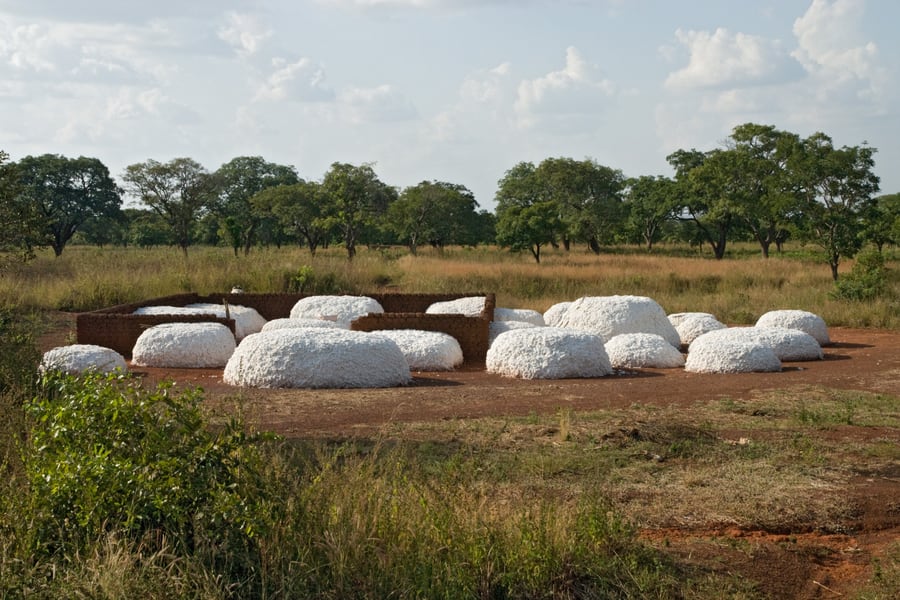
The last hour is cotton country. Burkina Faso is one of Africa's largest cotton producers and the crop is what the railway was rebuilt to move; south of Bobo the collection points sit beside the track with the year's modules wrapped in white sheeting. Bobo-Dioulasso itself is at kilometre 796, a city of well over a million, and its station is the reason many people photograph the place: a 1934 building in the Sudano-Sahelian manner, whitewashed, with stepped merlons and two pinnacled towers, and SITARAIL in metal letters across the front. The train comes to a stand on a platform long enough for a very different railway, and the square in front fills with tables and traders until dusk.
Along the route
 Sputniktilt / Wikimedia Commons · CC BY-SA 3.0 · 2013 · cropped
Out of Ouagadougou
Nine in the morning, from a low concrete station with a deep folded canopy on the west side of the capital. The train is away before the heat arrives.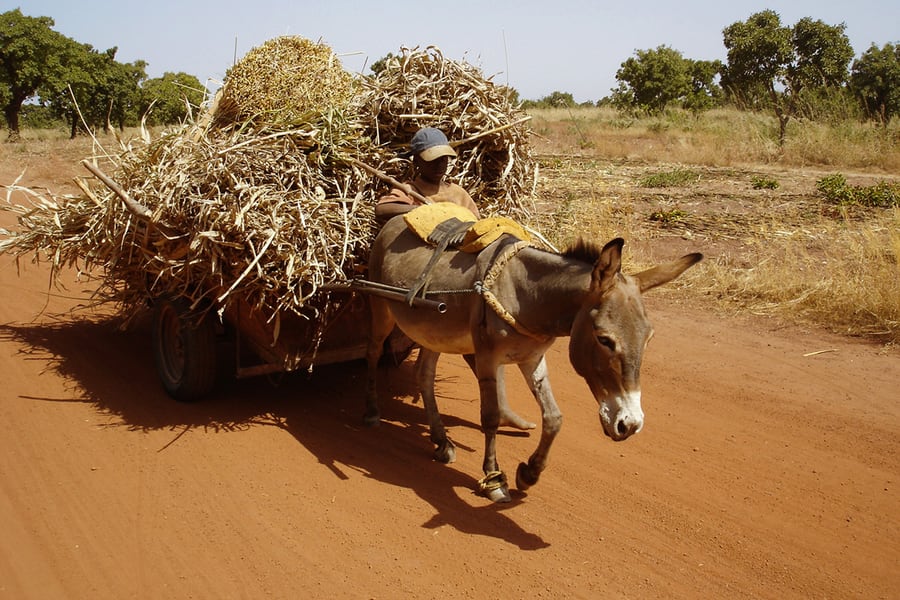 Julien Chiaretto / Wikimedia Commons · CC BY 3.0 · 2005 · cropped
Koudougou and the shea country
The first stop is Burkina Faso's third city, about 160,000 people. Past it the savanna opens out — millet plots, laterite tracks, and shea trees left standing in the fields.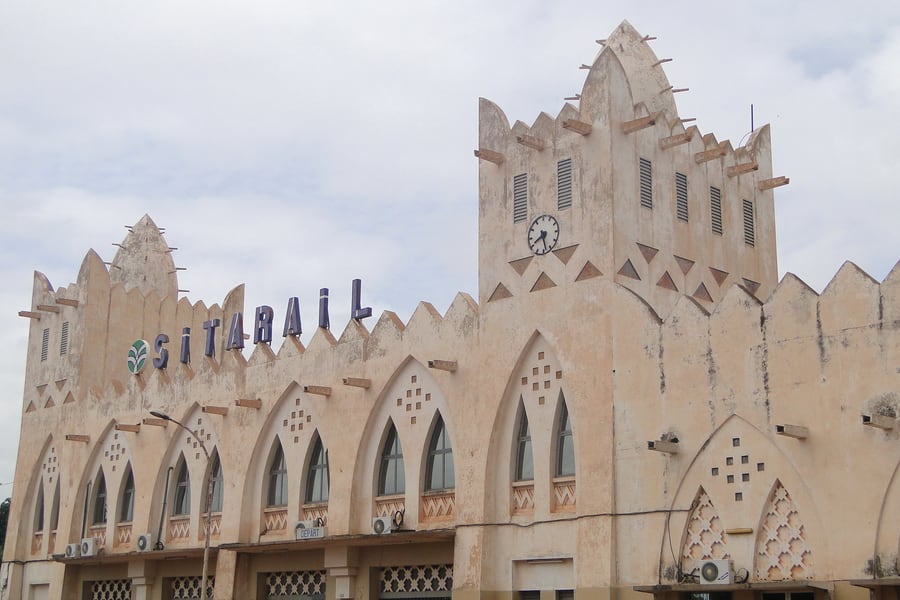 Adam Jones / Wikimedia Commons · CC BY-SA 2.0 · 2012 · cropped
Kilometre 796
The end of the run, and the best building on the railway: a 1934 station in the Sudano-Sahelian manner, whitewashed, stepped, with two pinnacled towers.A bit of history
Culture & experiences along the way
 Vincent C / Wikimedia Commons · CC BY-SA 3.0 · 2006 · cropped
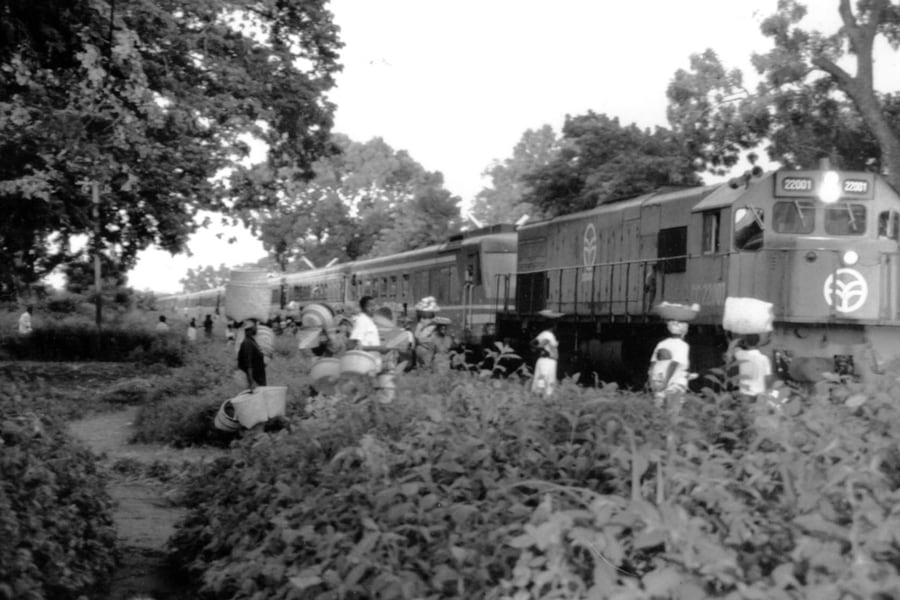
The train they called la Gazelle
The express that worked through to the coast had a name — la Gazelle, the Ivorian railway's pride alongside le Bélier. This is it arriving at Banfora in 2006, when the run was still Ouagadougou to Abidjan. The through passenger train has not crossed the frontier since 2023.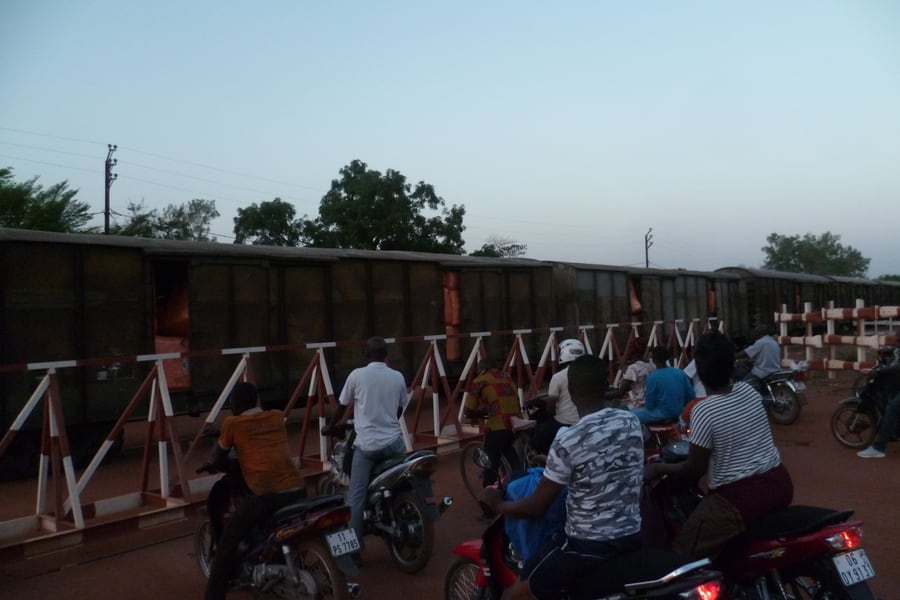 WILLAV-FR / Wikimedia Commons · CC BY-SA 4.0 · 2018 · cropped
What a level crossing looks like here
Burkina Faso moves on two wheels. At the Banfora crossing the queue is almost entirely mopeds and motorcycles with barely a car among them, which is a fair picture of how people actually travel in a country where the whole railway carries one passenger train a week.Timetables
Sitarail runs one passenger train a week in each direction, and it publishes the programme as a single sheet handed to the Burkinabè press. Departure is 09:00 in both directions. The two workings are not symmetrical: the southbound train goes the whole way to the Ivorian frontier, while the northbound one starts at Bobo-Dioulasso.
Ouagadougou to Niangoloko — Tuesdays
| Station | Tuesdays |
|---|---|
| Ouagadougou | 09:00 |
| Koudougou | calls |
| Zamo | calls |
| Siby | calls |
| Béréba | calls |
| Bobo-Dioulasso | calls |
| Banfora | calls |
| Niangoloko | terminus |
Bobo-Dioulasso to Ouagadougou — Thursdays
| Station | Thursdays |
|---|---|
| Bobo-Dioulasso | 09:00 |
| Béréba | calls |
| Siby | calls |
| Zamo | calls |
| Koudougou | calls |
| Ouagadougou | terminus |
The operator publishes the departure time and the calling points and nothing else, so there is no official arrival time for Bobo-Dioulasso or for anywhere between. The best measure available is a special working over the same road on 3 July 2026, which left Ouagadougou at 09:50 and reached Bobo-Dioulasso at about 17:30 — roughly seven and three-quarter hours for the 349 kilometres, an average in the middle forties of kilometres an hour. Allow a full day, and expect the timing to move.
There is no second train, no seasonal pattern and no daily alternative. Extra workings do appear, free of charge, for two events in the national calendar: a culture train to Bobo-Dioulasso for the Semaine nationale de la culture, which carried about 400 people on 23 April 2026, and a tourism train for the Grande saison du tourisme interne, which carried more than 300 on 3 July 2026.
As of September 2026, from Sitarail's own passenger programme, dated 15 July 2026 and reproduced by Wakat Séra (opens in a new tab). Sitarail has no website; the company publishes through the Burkinabè press and takes enquiries and reservations on +226 55 99 90 90.
Tickets
Tickets are sold at the station window, in cash, and there is no online sale of any kind — Sitarail has no website. The whole run costs 6,000 CFA francs in second class and 9,000 in first; any shorter hop between two stations costs 3,000. The 6,000 franc fare was itself a cut, made in December 2023, from 7,500.
Enquiries and reservations go through the passenger service on +226 55 99 90 90, the number Sitarail prints on its own programme. Only accompanied baggage travels with you.
Book your tickets
Second class, the whole run
6,000 CFA francs, cash at the station window
Ouagadougou to Bobo-Dioulasso or on to Niangoloko, at the fare Sitarail cut from 7,500 francs in December 2023.
Book Tickets (opens in a new tab, on wakatsera.com)via wakatsera.comFirst class
9,000 CFA francs for the full journey
The operator's programme quotes a first-class fare; the coach used on charter runs is the air-conditioned one.
Book Tickets (opens in a new tab, on wakatsera.com)via wakatsera.comA shorter hop
3,000 CFA francs between intermediate stations
One flat fare for any journey that is not the full run, in either half of the line.
Book Tickets (opens in a new tab, on wakatsera.com)via wakatsera.comRail Passes
No rail pass covers Burkina Faso. Interrail and Eurail are European schemes and do not reach Africa, and there is no West African equivalent, no national multi-journey ticket and no season for this line. The only ticket is the single, bought at the window on the day or shortly before.
That is not much of a loss on a route where the full journey costs 6,000 CFA francs. The thing worth planning around is not price but frequency: one train a week in each direction means a trip to Bobo-Dioulasso on the Tuesday train and back on the Thursday one, or a much longer stay.
Places to Visit
Almost everything worth stopping for is at the Bobo-Dioulasso end. The city is the older of the two — it was Sya long before it was a railway town — and the country south-west of it, towards Banfora on the Tuesday train's continuation, is the greenest and most broken landscape in Burkina Faso: waterfalls, sandstone, sugar cane and a lake full of hippopotamus.
 qiv / Wikimedia Commons · CC BY-SA 2.0 · 2007 · cropped
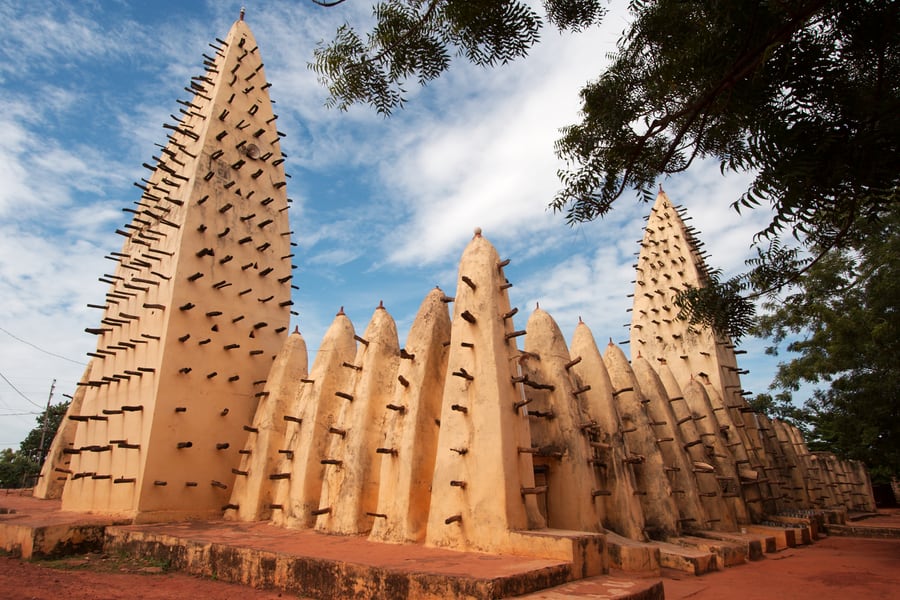
The Grand Mosque, Bobo-Dioulasso
A mud-brick mosque of the nineteenth century, and the building people come to Bobo-Dioulasso to see. Two conical minarets and a wall of tapering buttresses, all of it pierced by the projecting timbers that carry the masons who re-render it after each rainy season. It stands in Dioulassoba, the oldest quarter, ten minutes' walk from the station, and it is still in daily use — ask before going beyond the courtyard.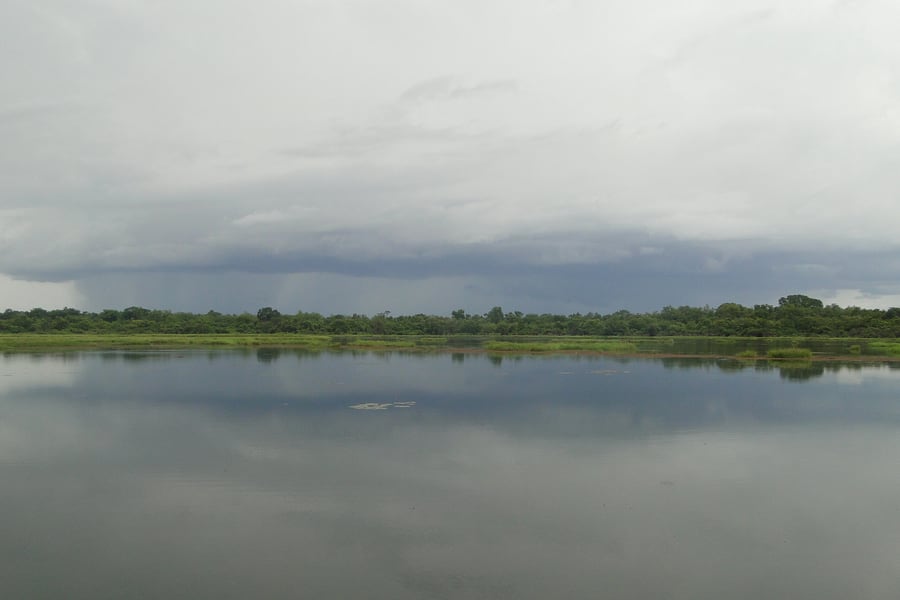 Adam Jones / Wikimedia Commons · CC BY-SA 3.0 · 2010 · cropped
The Mare aux Hippopotames
About 60 km north of Bobo-Dioulasso, a lake and national park on the flood plain of the Black Volta, created in 1937 and made Burkina Faso's only UNESCO Biosphere Reserve in 1977. It runs to some 163 km² of open water, marsh and gallery forest, and it holds a population of around a hundred hippopotamus. Roughly a thousand visitors a year make the trip, which tells you how quiet it is.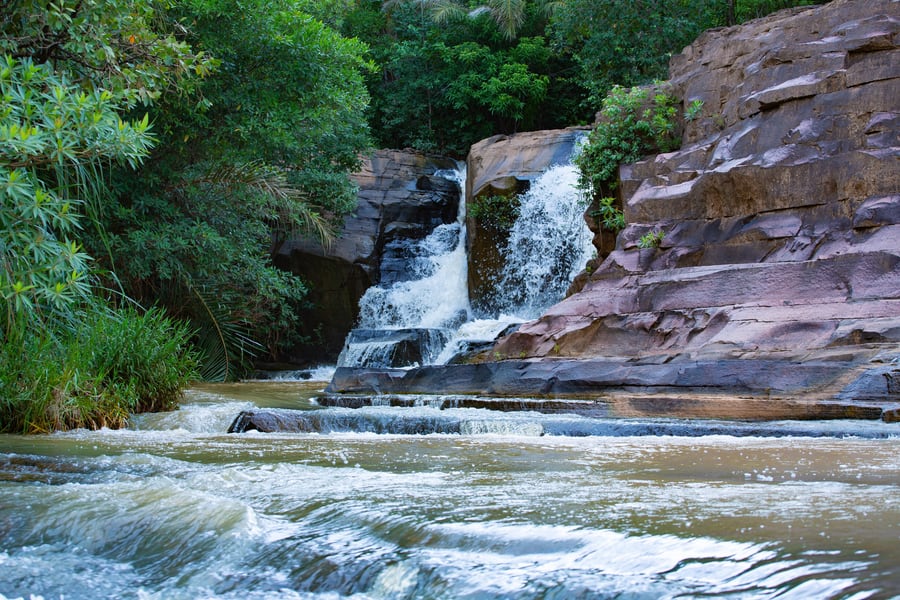 Masséni Héma / Wikimedia Commons · CC BY-SA 4.0 · 2023 · cropped
The Karfiguéla falls, Banfora
Stay on the Tuesday train past Bobo-Dioulasso and it reaches Banfora, 85 km further south-west and the capital of Comoé province. The cascades de Karfiguéla are a few kilometres out of town: a staircase of falls on the Comoé river, dropping through purple sandstone under a strip of forest. They are the best-known natural site in the country, and the water is at its fullest at the end of the rains.Where to Sleep
One train a week each way means at least two nights away, and the sensible shape of the trip is a night in Ouagadougou before the Tuesday departure and two in Bobo-Dioulasso before the Thursday return. Both cities have hotels used to foreign business travellers; neither has anything close to the station in the way a European city would, so plan on a taxi.
Where to stay
Azalaï Hôtel Ouagadougou
In Kadiogo, central Ouagadougou
Two hundred and thirty-two rooms and suites with a pool, three tennis courts and thirteen meeting rooms.
Check Availability (opens in a new tab, on azalai.com)via azalai.comHôtel L'Auberge
685 Avenue Guillaume Ouedraogo, downtown Bobo-Dioulasso
A hotel in the middle of Bobo with a pool, a restaurant and air conditioning, three kilometres from the airport.
Check Availability (opens in a new tab, on hotel-lauberge.com)via hotel-lauberge.comPractical information
The security situation is the first thing to settle, and it is not a footnote. The UK Foreign, Commonwealth and Development Office advises against all travel to Burkina Faso, because of the threat of terrorist attack and kidnap and the country's political circumstances; the advice covers the whole country and makes no exception for Ouagadougou, Bobo-Dioulasso or the south-west. Read your own government's current advice before you plan anything, and understand that travel insurance usually follows it.
The railway itself asks for patience rather than preparation. There is no website, no online booking and no published arrival time; the programme is a sheet Sitarail gives to the press, and it has been changed before at short notice — in August 2024 the company added extra departures for a week when heavy rain closed the RN1 road between the two cities. French is the working language at the ticket window, along with Mooré at the Ouagadougou end and Dioula at the Bobo end.
Take water and food for the day, and a hat: the train is second class, the windows open, and the Sudanian afternoon does the rest. Only accompanied baggage travels. Cash is the only way to pay for a ticket, in CFA francs.
Questions or corrections
Planning this trip and stuck on something, or spotted a time, fare or detail that has changed? Send us a message about Ouagadougou to Bobo-Dioulasso. We read every one, and we update this page when something has changed.