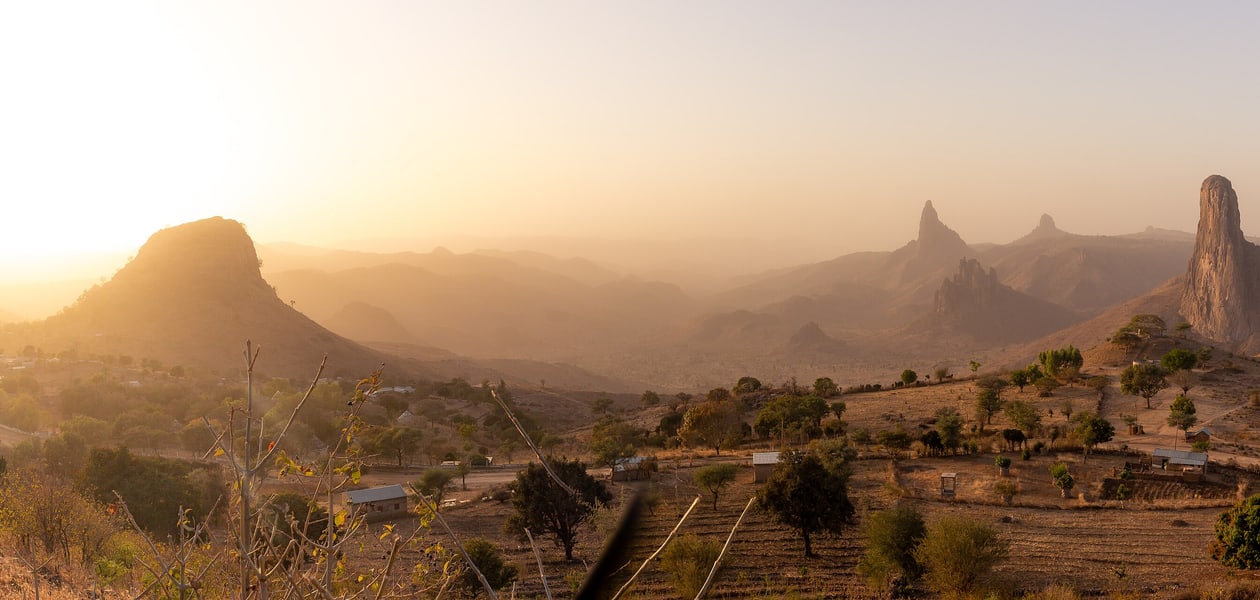
Cameroon
The Taxi Photographer / Wikimedia Commons · CC BY-SA 4.0 · cropped
Cameroon is often called Africa in miniature, and the geography earns it: 475,442 km² running from mangrove and rainforest on the Gulf of Guinea up through the volcanic Cameroon highlands to the Adamawa plateau and on to the Sahelian flats of Lake Chad. Nearly 31 million people live there, the capital is Yaoundé and the largest city and port is Douala. Nigeria lies to the west, Chad and the Central African Republic to the east, and Equatorial Guinea, Gabon and the Republic of the Congo to the south. Mount Cameroon, on the coast, is the highest point in West and Central Africa.
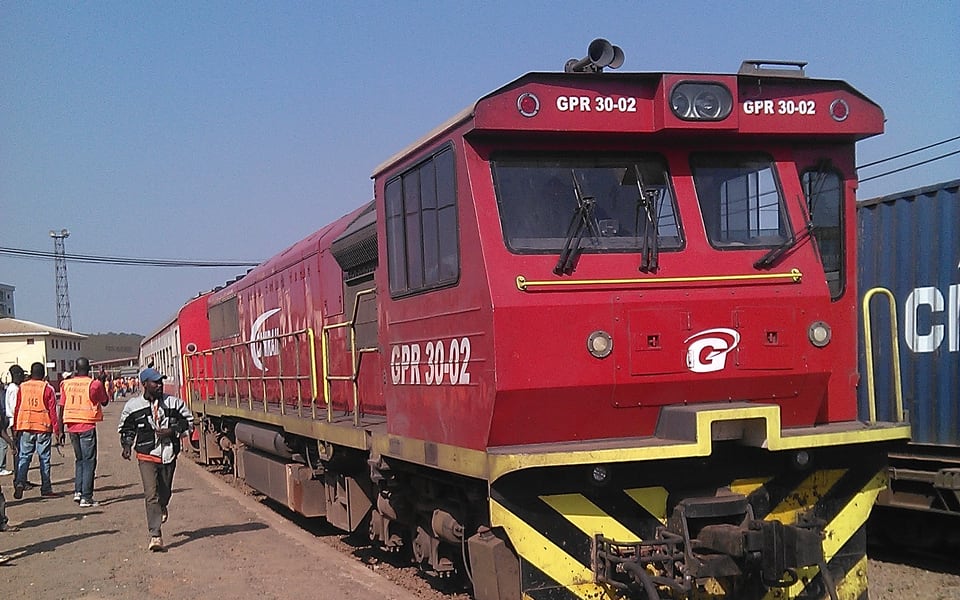
The railway is about a thousand kilometres of metre gauge laid out as a single Y: Douala inland to Yaoundé, then north across the Adamawa plateau to Ngaoundéré, with a western branch to Kumba. It has been worked since 1999 under concession by Camrail, which — unusually for the region — publishes its passenger offer in English on its own site, with train numbers, daily departure times and the make-up of each formation. Freight is timber, cotton and bauxite; passenger service is daily on the two main legs and sparse elsewhere.
Rail journeys in Cameroon
Good to know
Why does the railway stop at Ngaoundéré?
Because that is where the line ends. The railway was pushed north from Yaoundé across the Adamawa plateau to open up the interior and to give landlocked Chad and the Central African Republic a route to the sea, and it was never extended past Ngaoundéré. Everything beyond — the far north, Garoua, Maroua, N'Djamena — goes on by road from there, which is why the railhead matters so much to the country and why the overnight train to it is Cameroon's most important passenger working.
Is Cameroon French-speaking or English-speaking?
Both, and the division is territorial. French and English are the two official languages, a legacy of the territory being split between France and Britain after the First World War. Eight of the ten regions are francophone; the North-West and South-West are anglophone. The railway operator publishes in both, which is rare in the region and makes planning considerably easier for English-speaking visitors.
What happened at Eséka in 2016?
On 21 October 2016 an overloaded Yaoundé–Douala train derailed near Eséka, killing 79 people and injuring nearly 600. It is the defining event in the railway's recent history — the train had been strengthened to carry passengers displaced by the collapse of a road bridge — and any honest account of Cameroonian railways has to include it.
Are there rail passes for Cameroon?
No. Cameroon belongs to no pass scheme and there is no national multi-journey ticket. Tickets are bought per train, in first or second class, with sleeping compartments on the overnight working to Ngaoundéré.