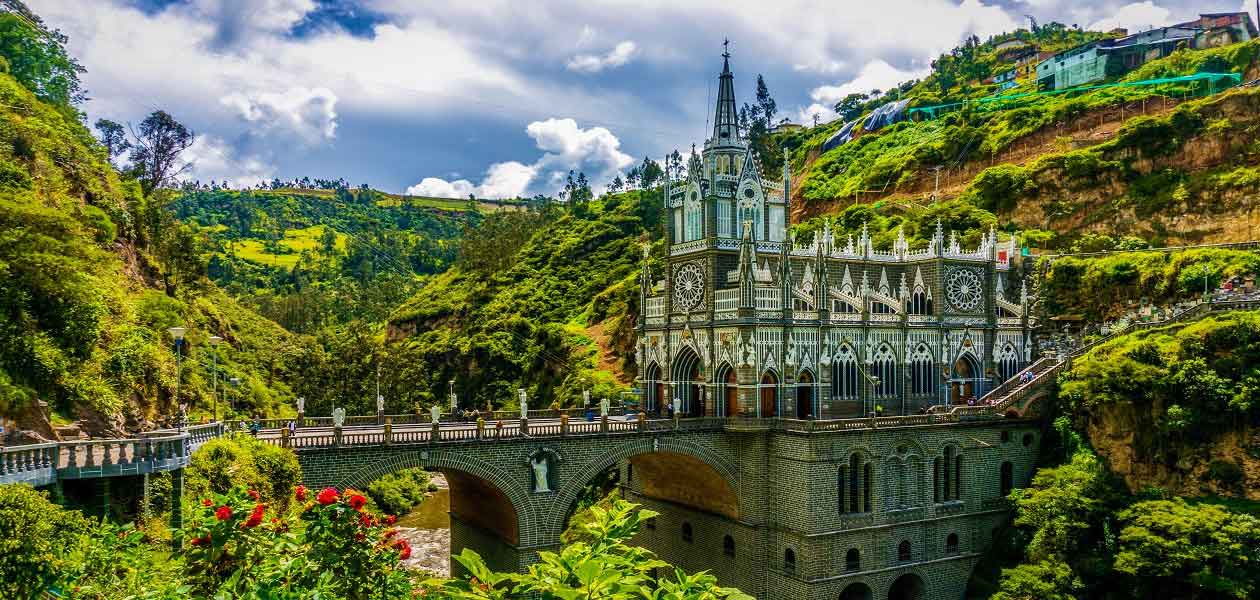
Colombia

Colombia covers 1,141,748 km² at the north-western corner of South America and has about 52 million people. It is the only country on the continent with coastlines on both the Caribbean and the Pacific, and it borders Venezuela, Brazil, Peru, Ecuador and Panama. The Andes split into three separate ranges as they enter the country, and the deep valleys between them hold most of the population and almost all of the cities — Bogotá itself stands at about 2,600 m. East of the mountains the land falls away into the plains of the Llanos and then the Amazon.
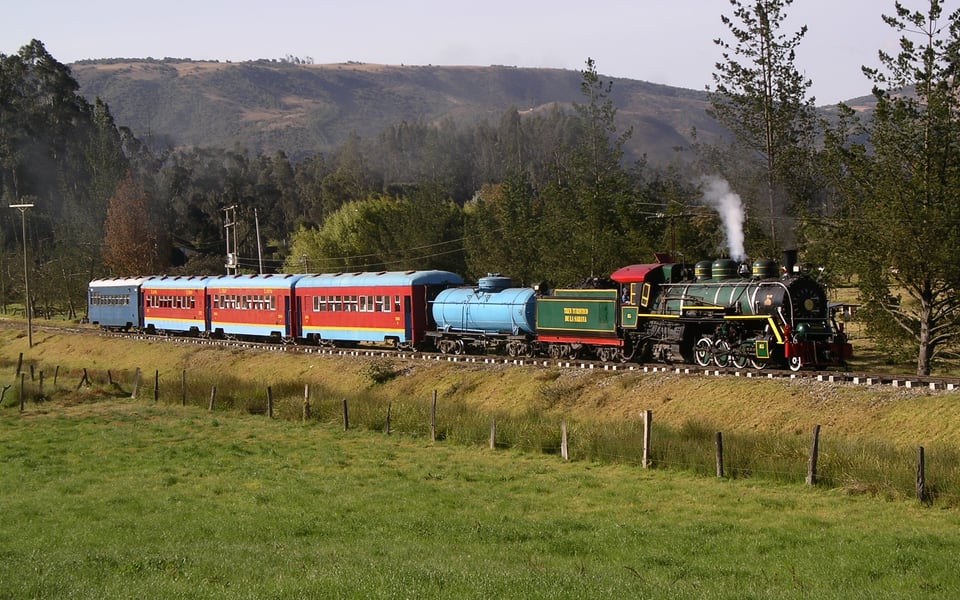
That geography defeated the railways. Building three parallel mountain ranges' worth of line proved impossibly expensive, aviation arrived early and took the traffic, and the network — some 3,300 km, most of it an unusual 914 mm narrow gauge — now carries coal rather than people. Passenger rail in Colombia today is essentially one weekend excursion: a classic locomotive and restored 1960s carriages running out of Bogotá across the savanna to Zipaquirá.
Rail journeys in Colombia
Good to know
Can you travel around Colombia by train?
Not as a way of getting between cities — that is done by air or by road. Colombia's railways are overwhelmingly freight, chiefly coal, and the passenger network that once existed did not survive the combination of very difficult mountain geography and early aviation. What remains for travellers is a tourist service rather than a transport network.
What is the Tren de la Sabana?
A tourist train operated by Turistren from Bogotá across the Sabana to Zipaquirá, running on Saturdays, Sundays and Colombian public holidays. It uses a classic locomotive and carriages from the 1960s that have been restored, on the original alignment. Its destination is the reason most people go: the Salt Cathedral, a working church carved inside a halite mine below the town.
Why is the gauge so unusual?
Colombia built to 914 mm — three feet — rather than to the metre gauge common elsewhere in South America or to standard gauge. The exception is a short standard-gauge line in the north serving the Cerrejón coal operation, which was built separately and for a single purpose.
Can you reach the Salt Cathedral of Zipaquirá by train?
Yes, and it is the one railway journey in the country a visitor can plan around. The Tren Turístico de la Sabana leaves Bogotá at 08:45, calls at Usaquén at 09:15 and reaches Zipaquirá at 10:45, then stands there for four and a half hours while its passengers go up to the mine — long enough for the cathedral and the town. It returns to Bogotá by 17:15, and only the full return is sold.
Is there a rail pass?
No, and with essentially one passenger service there would be nothing for it to cover. Tickets for the Sabana train are bought from the operator, which publishes its fares and its itinerary.