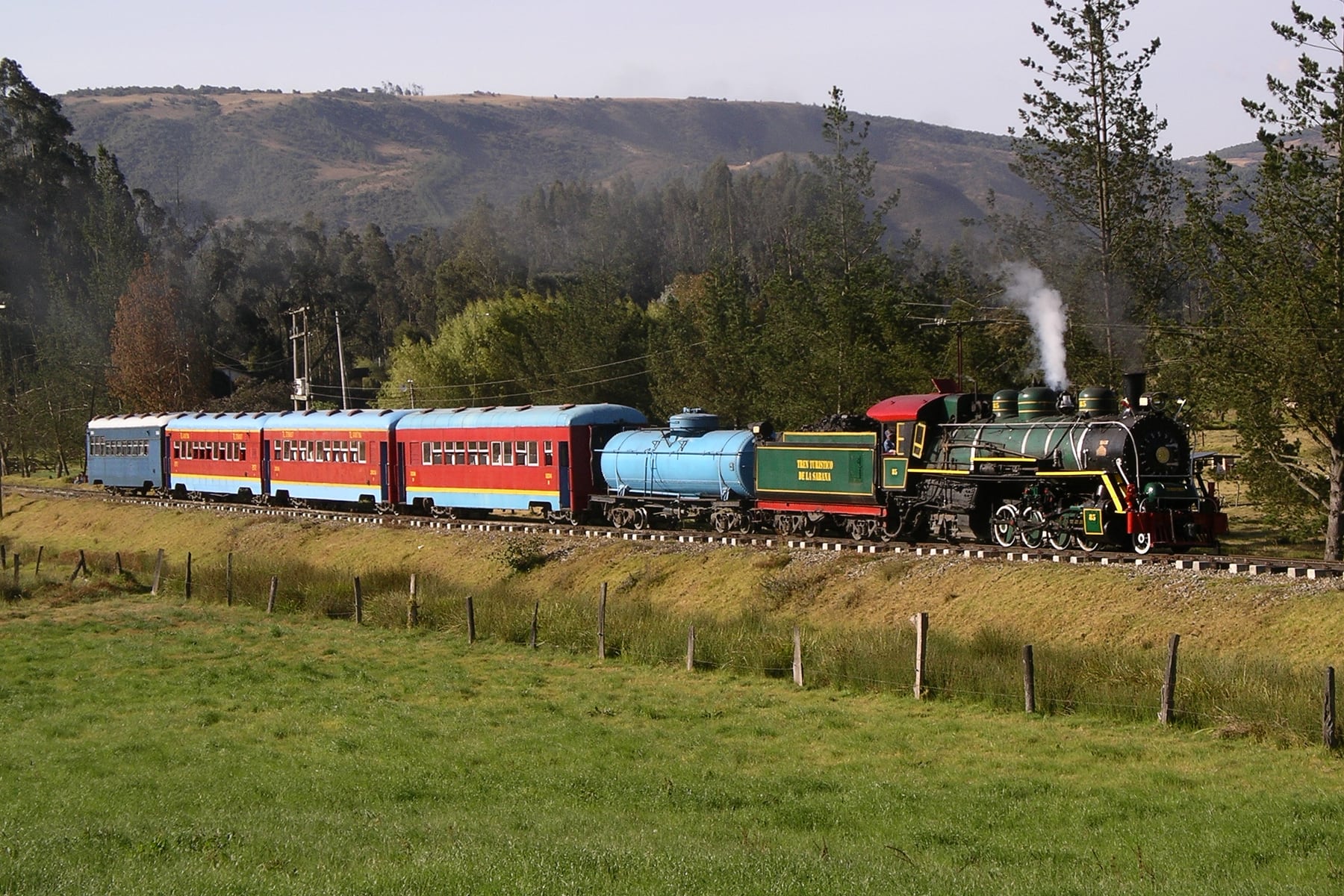
Tren Turístico de la Sabana — Bogotá to the salt cathedral
Nils Öberg / Wikimedia Commons · CC0 · 2007 · cropped
- DistanceAbout 48 km each way, Bogotá to Zipaquirá
- Duration2 hr out, 2 hr back, 4 hr 30 min in Zipaquirá
- Best seasonAll year · Saturdays, Sundays and Colombian public holidays only
Introduction
Colombia's railways were beaten by its geography. Three ranges of the Andes run the length of the country, the valleys between them took the cities, and by the time the lines were finished aviation had taken the traffic. The Ferrocarriles Nacionales de Colombia were wound up in 1991, and what track still carries anything carries coal. One passenger train came through the closure. Since May 1993 a private company, Turistren, has worked a tourist service out of Bogotá over the old Ferrocarril del Norte — a 914 mm narrow-gauge line that reached Zipaquirá in 1898 and runs almost level the whole way, across the high plain the capital stands on at 2,600 metres.
It runs on Saturdays, Sundays and Colombian public holidays, once a day, and only as a return: 08:45 from beside the Gran Estación shopping centre, 09:15 out of Usaquén, into Zipaquirá at 10:45 behind a restored locomotive and a rake of 1960s carriages with numbered, reclining seats. The train then stands for four and a half hours while its passengers go up to the cathedral cut into the salt mine above the town, and leaves again at 15:15. The whole day takes eight and a half hours and costs 96,000 pesos for an adult bought at the station. Seats go on sale about a fortnight ahead and weekend dates sell out.
The Journey
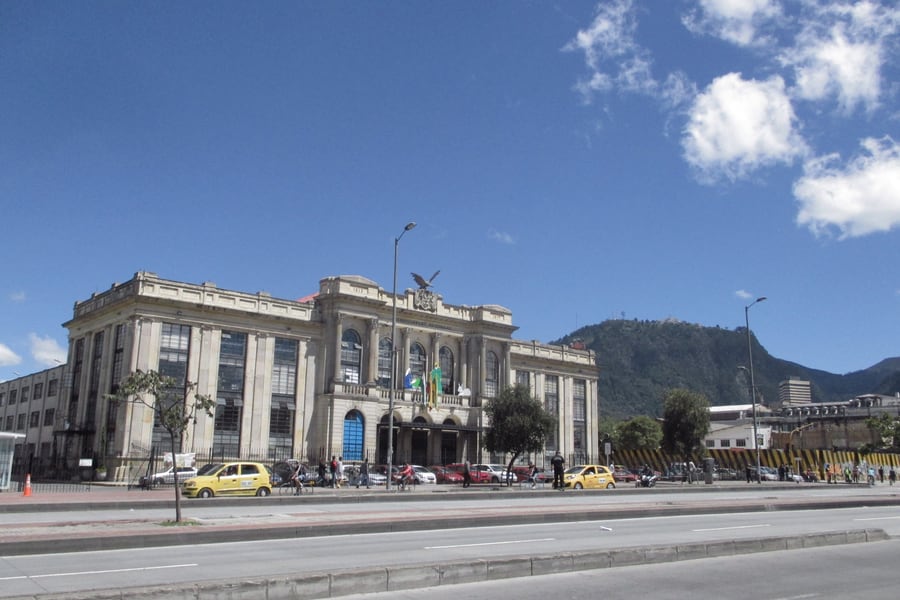
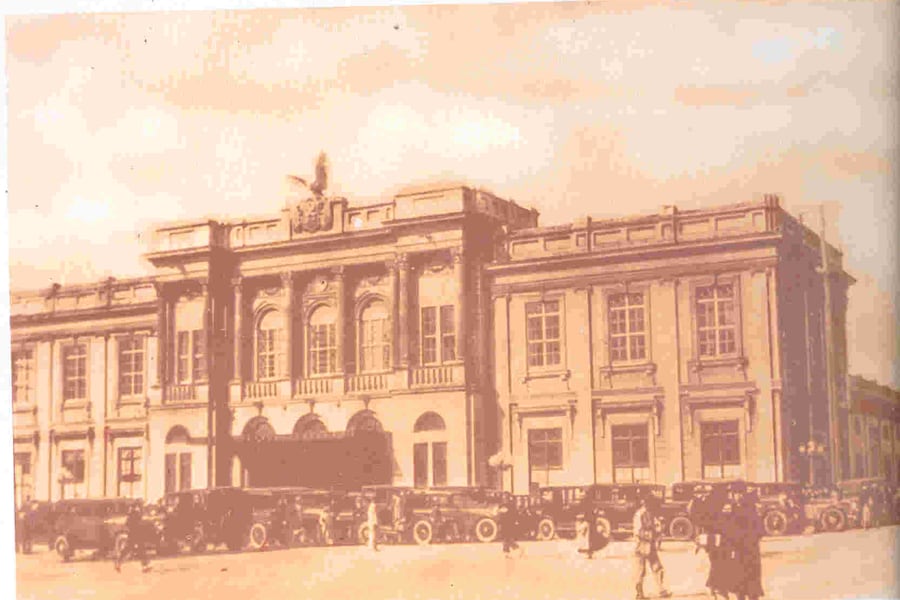
The train no longer starts where it ought to. For thirty years it left from the Estación de la Sabana, the 1917 terminus in the centre of Bogotá, and in March 2024 Turistren moved its locomotives and coaches out to a depot at Kilómetro 5 and stopped using the old station for anything but selling tickets. The operator calls the change permanent. Boarding is now at a platform on Carrera 66, beside the Gran Estación shopping centre, opposite the Plazoleta de Los Alfiles — a stretch of running line with a canopy, in the middle of the city's western office district.
From there the line runs north and east across Bogotá, then turns up the middle of Avenida Carrera 9. This is not the alignment the Ferrocarril del Norte was built on: its own rails ran up what became Avenida Caracas and were lifted when the avenue was made, so the trains took over the Ferrocarril del Nordeste's corridor instead. The result is a railway in the central reservation of a city avenue, with a level crossing at almost every intersection, and about half an hour of Bogotá going past the window before the train reaches Usaquén.
Usaquén, and the edge of the city
Usaquén was a village outside Bogotá until the city swallowed it, and its station is still the small, white, green-trimmed building the Ferrocarril del Norte put up, with the company's initials on the gable and a glass office tower directly behind it. The train arrives at 09:05, waits ten minutes and leaves at 09:15; this is where most passengers get on, and where tickets are sold on the morning itself if any are left. North of here the avenue thins out, the eastern hills come closer, and the buildings give way to the Sabana de Bogotá: flat pasture, dairy farms, eucalyptus windbreaks, and the long white roofs of the greenhouses that make this one of the world's largest cut-flower districts.
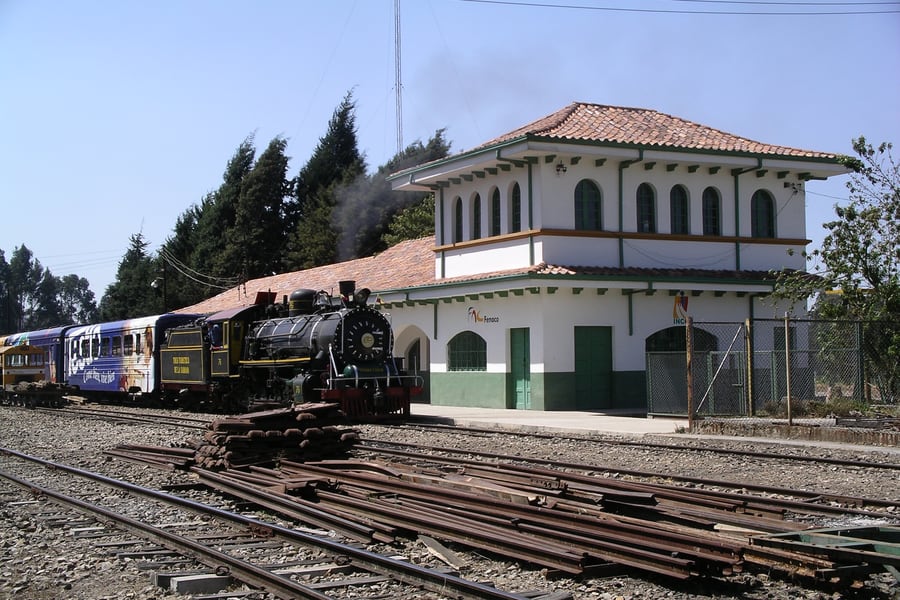
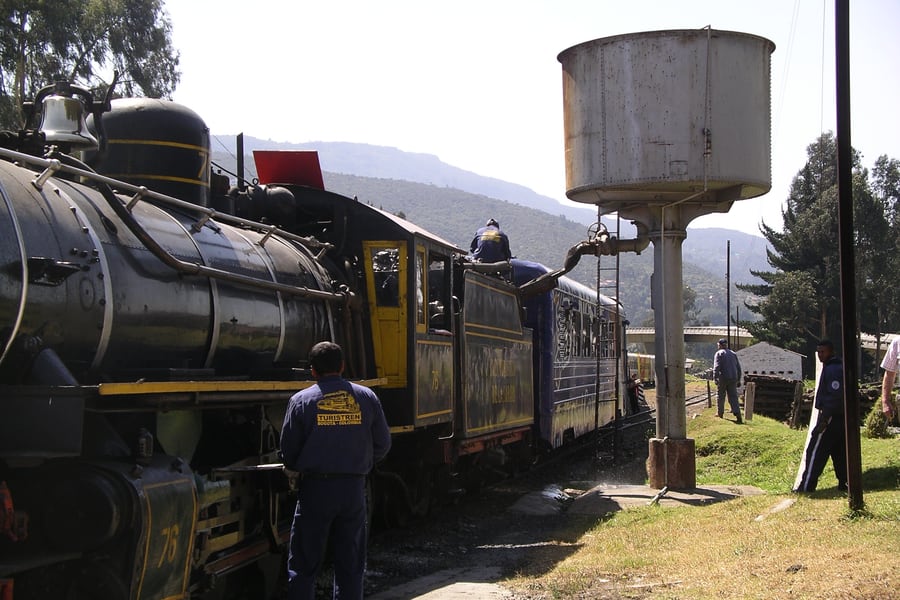
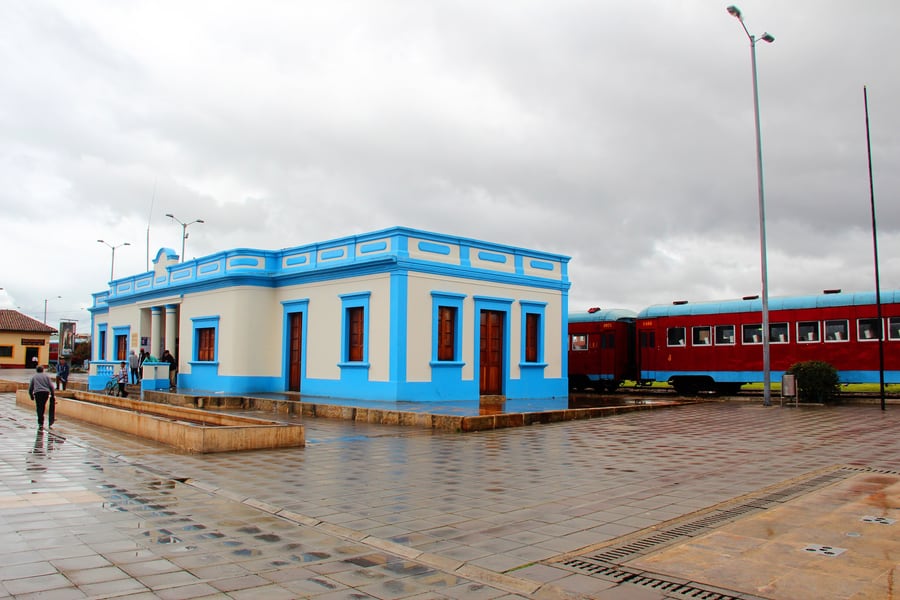
At kilometre 34 the line reaches La Caro, in the municipality of Chía, where the Norte and Nordeste routes met and separated again. The station is a low building with a tiled roof and a steel water tower beside it, and the tower is not decorative — a steam locomotive working this line still fills from it. A little further on is Cajicá, whose station has been restored in cream and blue, and then the last few kilometres into Zipaquirá, where the train draws up in a wide grassed yard below the town at 10:45.
The locomotives, and what is likely to be on the front
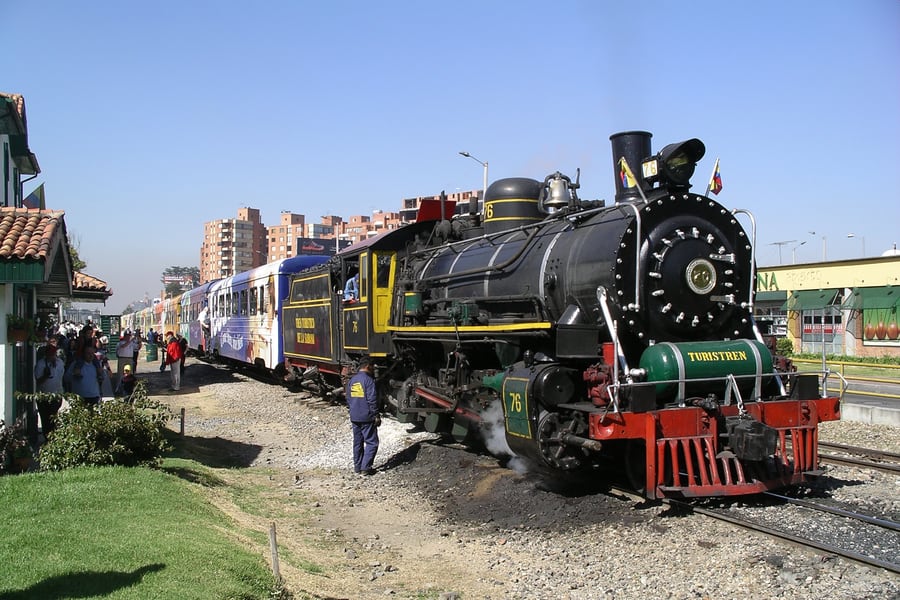
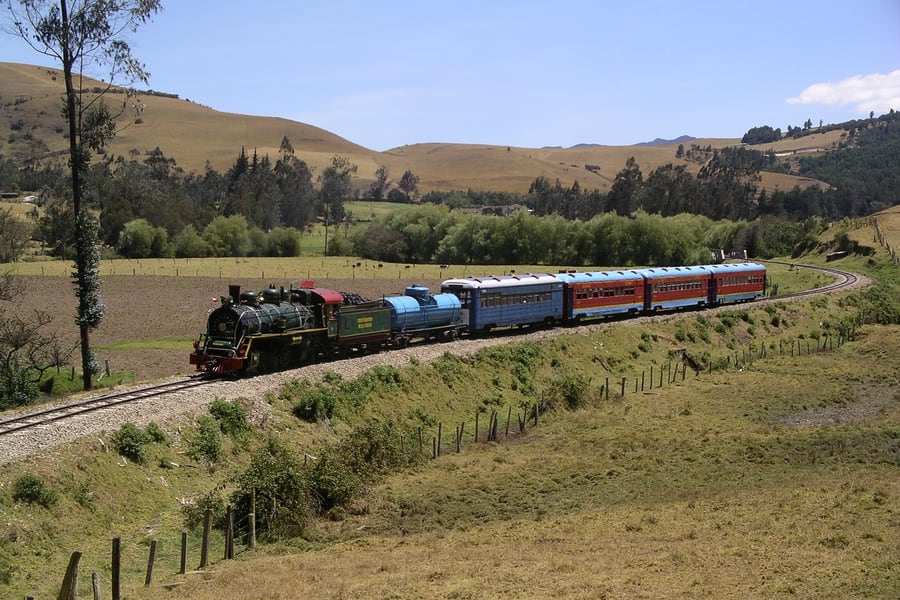
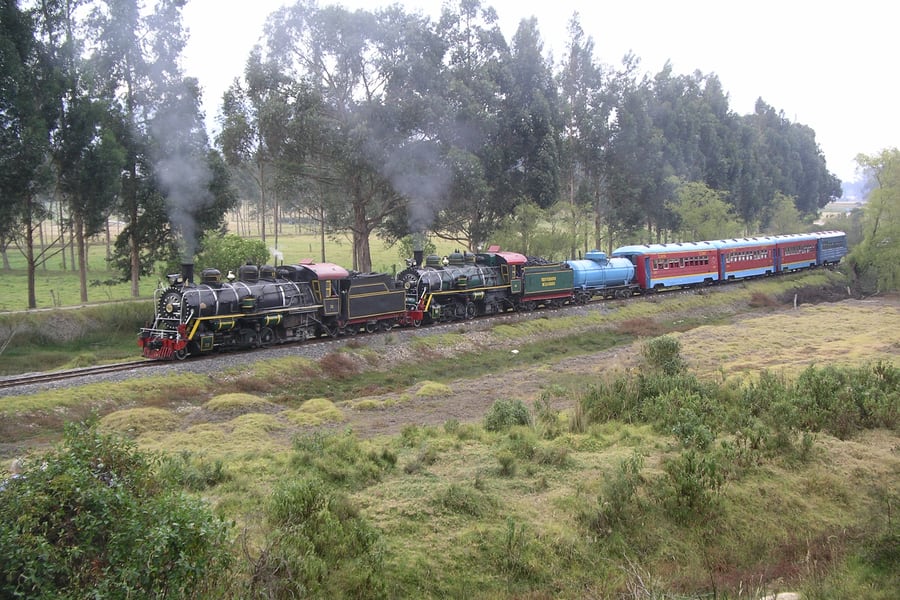
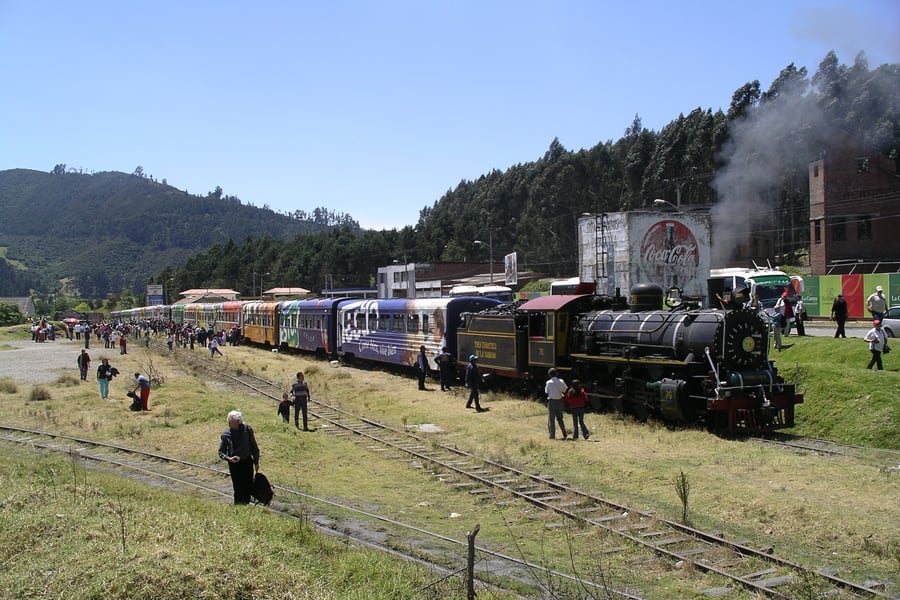
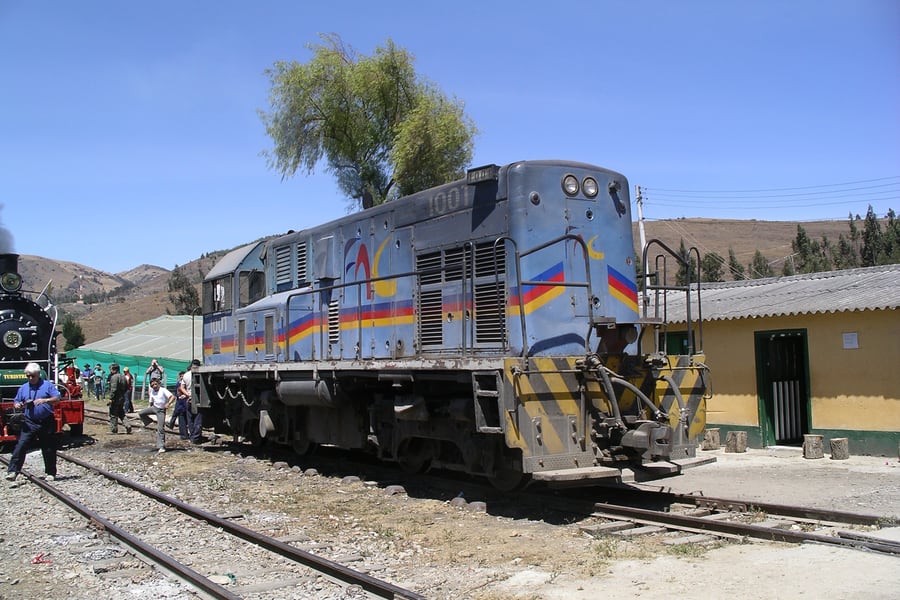
Turistren rebuilt its fleet out of what was left in the national railway's yards after 1991: five Baldwin steam locomotives, three General Electric U10B diesels of 1,000 horsepower, and three Swedish-built ASJ railcars. The steam engines are the reason the company exists. Number 85, the one most often photographed at the head of this train, came out of the Baldwin Locomotive Works in Philadelphia in April 1947 as works number 73057, weighs about sixty tonnes and was built for the 914 mm gauge; number 76 and number 72 have both worked the Zipaquirá train too, sometimes double-headed.
What Turistren will not say is which locomotive works a given date. Its own pages promise only a "classic locomotive"; the agencies that resell the trip say "steam or diesel"; and an emissions study published in August 2025 describes the service flatly as a diesel operation, putting its fuel use at about 246 litres for the round trip. The honest expectation is a diesel with the steam engines kept for the days that warrant them. Either way the train behind it is the same: a water tanker, then a rake of carriages from the 1960s in red, blue and cream, with numbered seats and a lavatory in every second coach.
The return
The train leaves Zipaquirá at 15:15 and runs the same road back, reaching Usaquén at 16:45 and Carrera 66 at 17:15. Only the full return is sold — Turistren does not sell one leg, and the day cannot be started anywhere but Bogotá. Trains seen on this line midweek are not a service anyone can join: they are contract workings for universities along the corridor.
Something larger is coming to the same rails. The RegioTram del Norte, a tram-train of 48.8 kilometres and seventeen stations, is planned to run from Gran Estación to Zipaquirá over this corridor, with commercial operation projected for 2034 — from the same platform where the tourist train now begins.
Along the route
 Felipe Restrepo Acosta / Wikimedia Commons · CC BY-SA 3.0 · 2010 · cropped
A terminus that only sells tickets
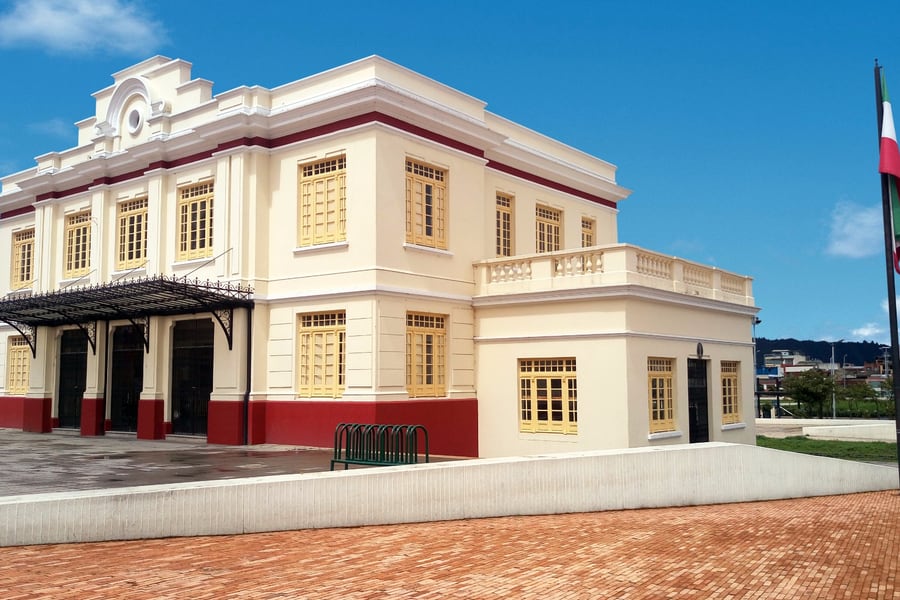
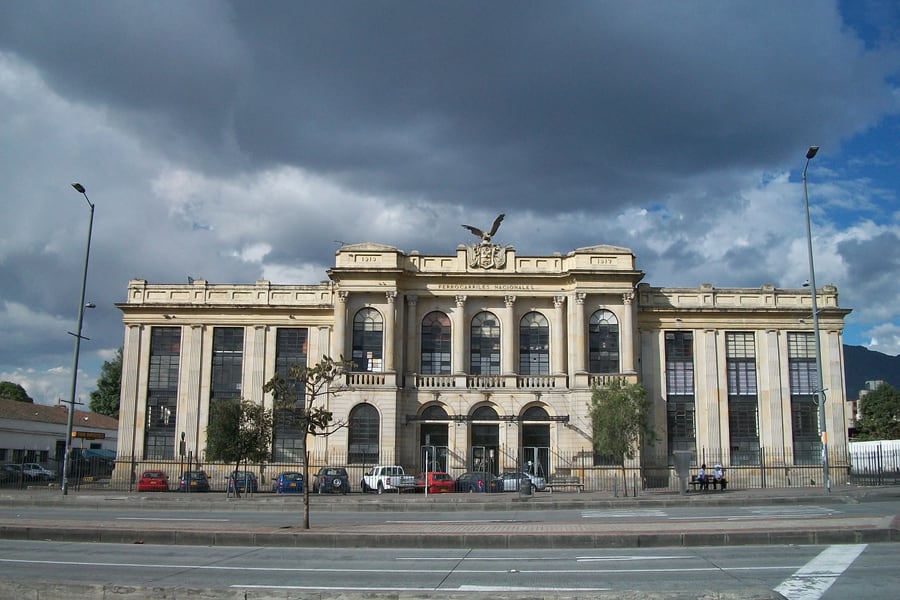
The 1917 Estación de la Sabana was the start of this train for thirty years. Turistren moved out in March 2024 and calls it permanent — the counter at Calle 13 still sells seats, but no train leaves from the platforms.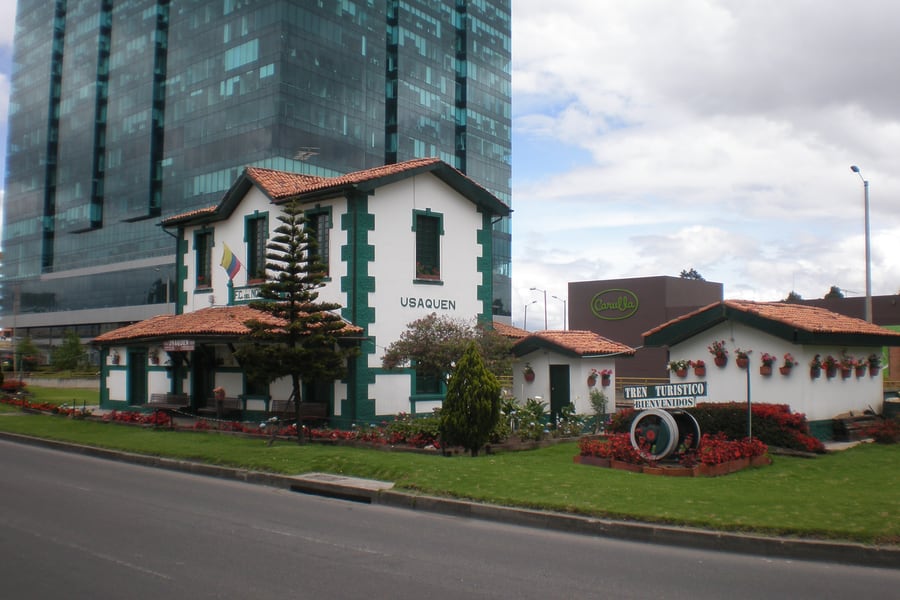 Cuauhtemoc sanchez fernandez / Wikimedia Commons · CC BY-SA 3.0 · cropped
A village station under a tower
Usaquén's station is the small building the Ferrocarril del Norte put up, still in white and green, with a glass office block directly behind it. Most passengers board here, at 09:15.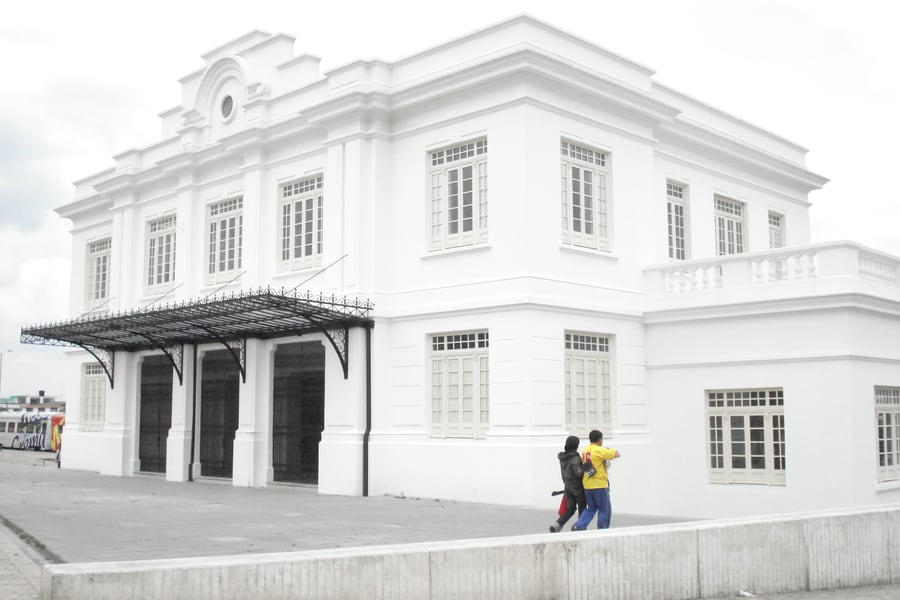 Karolynaroca / Wikimedia Commons · CC BY-SA 3.0 · cropped
Four and a half hours, then it goes
The train stands at Zipaquirá from 10:45 to 15:15 and the operator asks for passengers back by 15:00. Enough for the mine and the town; not a schedule that waits.A bit of history
Culture & experiences along the way
 Hoako / Wikimedia Commons · CC BY-SA 3.0 · cropped
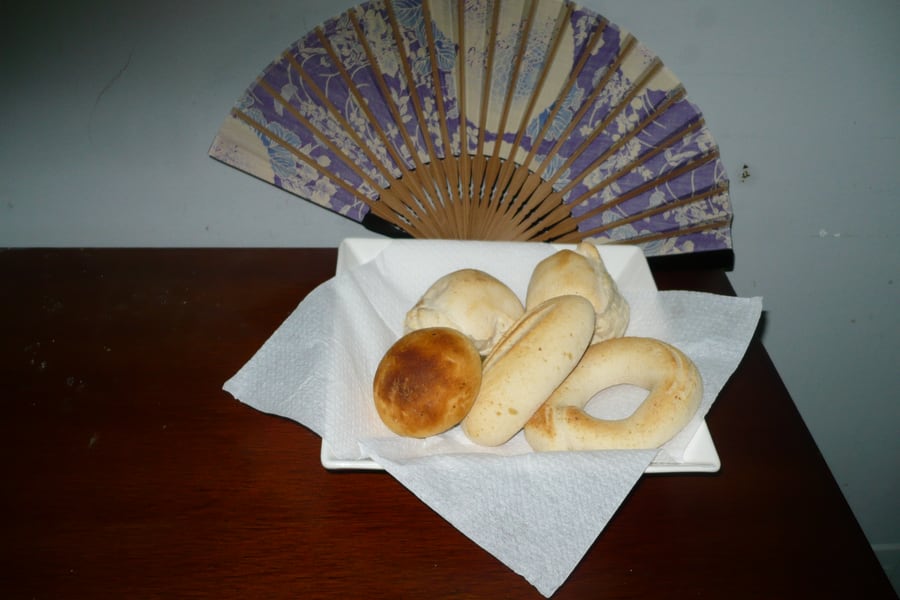
Almojábanas, and the rest of a sabana breakfast
The towns along this line are where Bogotá goes for its baked goods. An almojábana is a warm cheese roll made with fresh curd; beside it come pandebono and pandeyuca, both built on cassava starch, and a cup of aguapanela con queso — hot cane syrup with a slab of cheese dropped in to melt. It is eaten standing up. Jairo1005 / Wikimedia Commons · CC BY-SA 4.0 · 2016 · cropped
The train that runs at Christmas
For a few weeks each December the same locomotives work an evening service instead. The most recent ran from 15 December 2025 to 11 January 2026, skipping the 24th and the 31st: out to Usaquén for photographs with the locomotive under its lights, on to La Caro for fireworks, and back into the city at night. Nothing is published yet for 2026.Timetables
There is one train a day and it runs on Saturdays, Sundays and Colombian public holidays only; there is no weekday service. Times below are as of August 2026, from Turistren (opens in a new tab)'s own itinerary and its ticketing partner's listing for the same date.
| Station | Outward | Return |
|---|---|---|
| Bogotá, Carrera 66 (Gran Estación) | 08:45 | 17:15 arr |
| Usaquén, Av. Carrera 9 # 110–08 | 09:05 arr · 09:15 dep | 16:45 arr · 16:50 dep |
| Zipaquirá | 10:45 arr | 15:15 dep |
Two hours out, two hours back, and four and a half hours standing at Zipaquirá in between — eight and a half hours from first departure to last arrival. Turistren asks passengers to be back at the station by 15:00 for a 15:15 departure.
What the timetable does not show
The train calls only at those three points. La Caro and Cajicá are passed, not served, and the Estación de la Sabana in central Bogotá — the terminus for the first thirty years of this service — is now a ticket office and nothing more. Turistren describes that as permanent.
Trains do appear on this line midweek. They are private contract workings for universities along the corridor and are not open to the public, which the operator states plainly on its own FAQ page.
In December the same rolling stock runs a different service. The most recent Tren de la Navidad ran nightly from 15 December 2025 to 11 January 2026, with no operation on 24 or 31 December: an evening run out to Usaquén for photographs with the illuminated locomotive, on to La Caro for fireworks, and back into Bogotá. Nothing has yet been published for the 2026 season.
Tickets
Only the whole return is sold, for a named date, and the day has to start in Bogotá. Seats are numbered and go on sale about fifteen days ahead. Turistren sells at two counters — the Estación de la Sabana, for advance sales only, and Usaquén, which also sells on the morning itself — through its ticketing partner online, and on the day aboard the coach marked D.
Children under three travel free if they do not take a seat, and fifteen or more travelling together get ten per cent off. Nothing else is included: no food, and no entry to the salt cathedral, though tickets for that and for the shuttle bus up from Zipaquirá station are sold aboard the train, in cash, on the way out. Fares below are as published in August 2026.
Book your tickets
Adult return
Bogotá to Zipaquirá and back, one date
The full-day return, bought at Turistren's own counter.
Book Tickets (opens in a new tab, on turistren.com.co)via turistren.com.coChild and senior return
Ages 3 to 12, and 60 and over
The same return at the reduced fare; under-threes travel free without a seat.
Book Tickets (opens in a new tab, on turistren.com.co)via turistren.com.coBooked online
Through Turistren's ticketing partner
The adult return as displayed online in August 2026, service charges included.
Book Tickets (opens in a new tab, on tuboleta.com)via tuboleta.comRail Passes
No rail pass reaches Colombia. Interrail and Eurail cover Europe only, and there is no South American equivalent; nor is there anything national to buy, because there is no national passenger network left for a pass to cover. This journey is the passenger railway, and it is sold as a single product on a single date.
That leaves two decisions worth making. The first is where to buy: the fare at Turistren's own counters is 96,000 pesos for an adult, and the same seat bought online through the operator's ticketing partner came to 119,000 pesos once its service charges were added, checked in August 2026 for a departure the same weekend. The second is whether to buy at all before arriving — weekend dates do sell out, and the selling window only opens about a fortnight ahead, so a fixed date in Bogotá is worth booking and a flexible one is not.
Places to Visit
The point of the day is at the far end: a working church carved out of a salt mine, 1.7 kilometres uphill from Zipaquirá station. But the line passes three older places on the way, and the four and a half hours the train waits are enough for the town as well as the mine.
 Felipe Restrepo Acosta / Wikimedia Commons · CC BY-SA 4.0 · 2013 · cropped
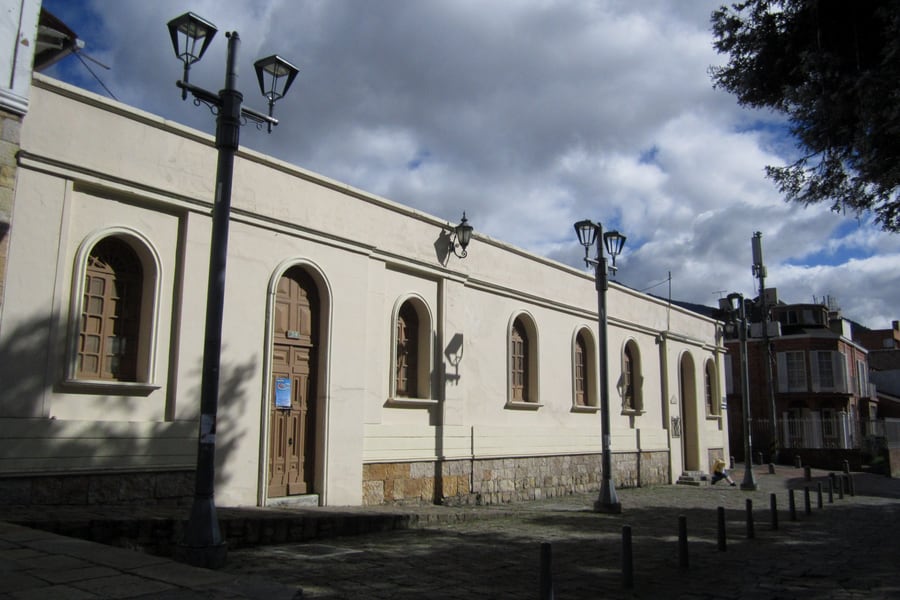
Usaquén, where the train picks up
A colonial village north of Bogotá that the city grew around rather than over. The plaza and the low white streets off it survive, now full of restaurants and antique shops, with a flea market on Sundays — which is to say on the mornings the train runs. The station is a few minutes away in the middle of Avenida Carrera 9, and this is the boarding point for anyone who would rather not cross the city at eight in the morning.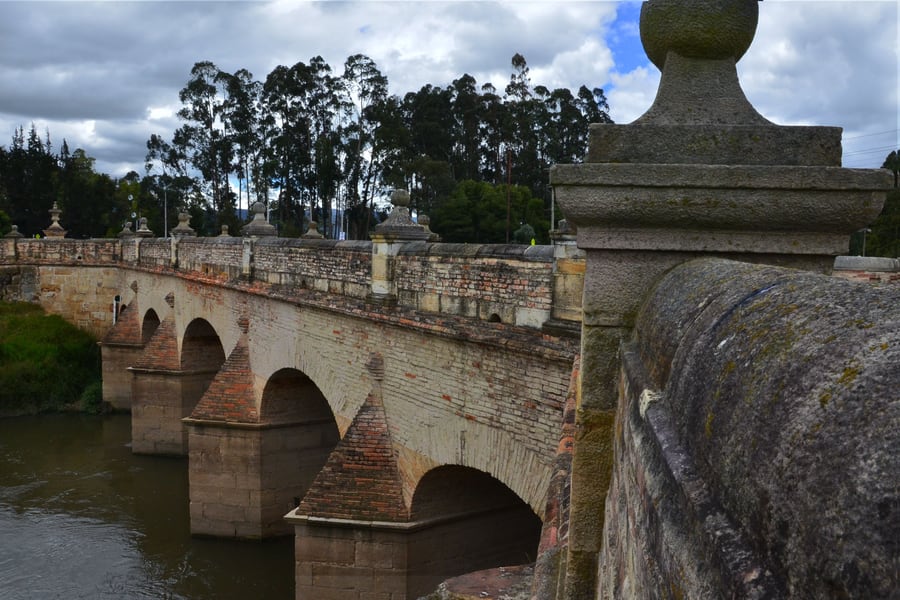 Onzerod / Wikimedia Commons · CC BY-SA 3.0 · cropped
Puente del Común, at La Caro
The railway calls kilometre 34 La Caro; it was named Puente del Común after the stone bridge over the Bogotá river a short way off, which carried the road north from the capital long before there were rails. The station opened in 1894, when the line from Bogotá got this far, and the two routes north — to Zipaquirá and to Tunja — met and separated here.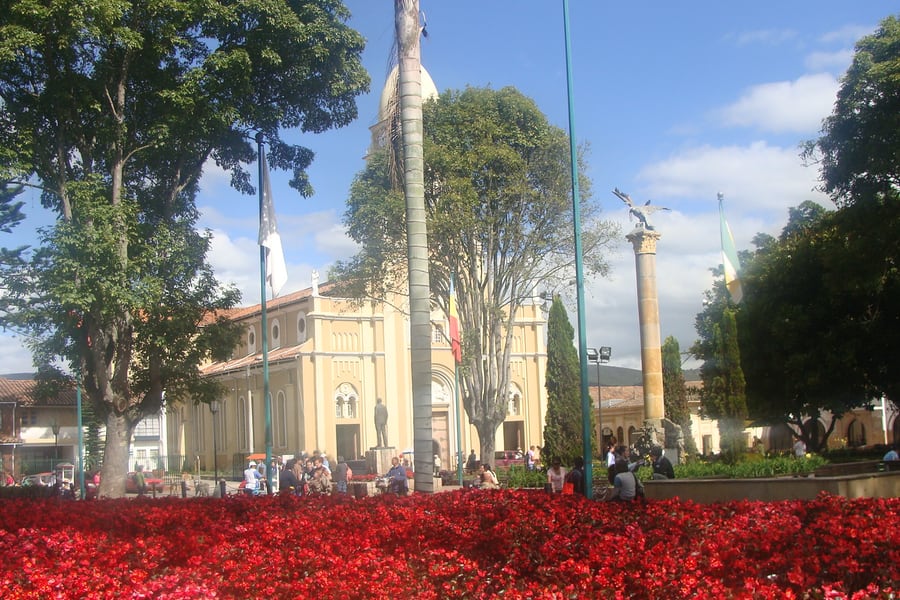 Javadumper / Wikimedia Commons · CC BY-SA 3.0 · 2010 · cropped
Cajicá and its plaza
The rails reached Cajicá in 1896, two years before Zipaquirá, and the station has been restored in cream and blue. The town itself is a Sabana market town whose central plaza is planted out in blocks of colour, with the parish church on one side; it is a working place rather than a preserved one, which is much of its appeal.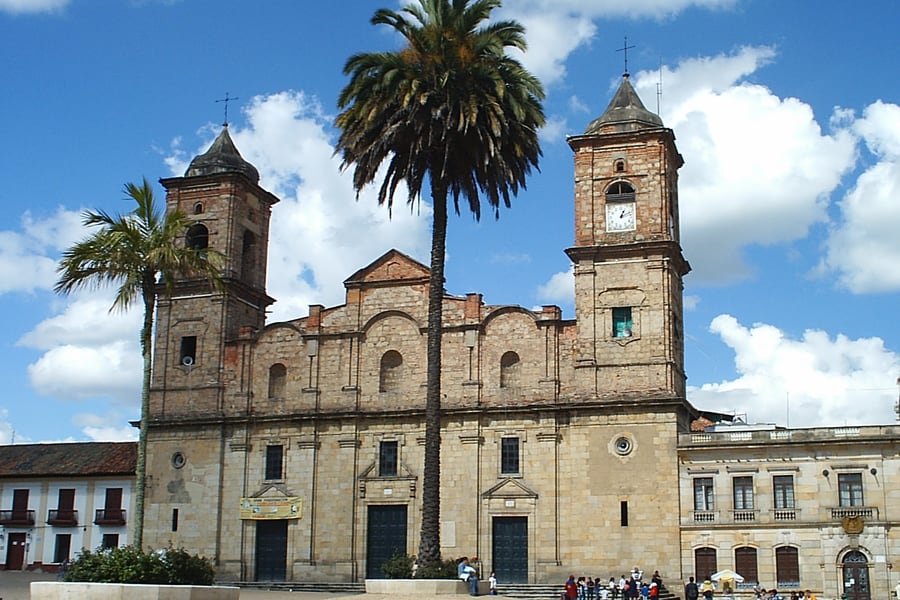 Nelsonc / Wikimedia Commons · CC BY-SA 3.0 · cropped
The Plaza de los Comuneros, Zipaquirá
Zipaquirá's main square is one of the largest colonial plazas in Colombia, paved in brick and lined with palms, with the cathedral of the Holy Trinity and St Anthony of Padua on the eastern side. It is ten minutes on foot from the station and it is where most of the town's restaurants are, which matters on a day when nothing is included in the fare.The salt cathedral
A working church inside a halite mine, 1.7 kilometres above the station at 2,652 metres. Miners cut a sanctuary here first; the church that followed in 1954 was shut as unsafe in 1992, and its replacement, sixty metres deeper, opened on 16 December 1995 — fourteen chapels along the entrance ramp, a dome and three naves carved in salt. Up to 3,000 people come on a Sunday. Tickets are sold aboard the train, in cash.Where to Sleep
The train leaves Carrera 66 at 08:45 and Usaquén at 09:15, which in Bogotá traffic argues for sleeping somewhere the boarding point can be reached on foot or in a short ride. Usaquén is the obvious answer: it is the second stop, ten minutes from the platform, and the pleasanter half of the city to spend an evening in. Zipaquirá is the other option, for anyone who would rather stay up on the savanna than be back in Bogotá by six.
Where to stay
Casona de Usaquén
A heritage mansion in the old village, near the boarding point
A boutique hotel in a listed building in Usaquén's colonial quarter, with rooms from singles to suites with their own terraces, and a spa.
Check Availability (opens in a new tab, on casonadeusaquen.com)via casonadeusaquen.combh Usaquén
Contemporary, ten minutes from the station
A modern hotel at Calle 120 No 7-14, on the avenue the railway runs up, a short way north of the Usaquén boarding point.
Check Availability (opens in a new tab, on bhhoteles.com)via bhhoteles.comHotel Cacique Real
In the historic centre of Zipaquirá
A colonial house at Carrera 6
Check Availability (opens in a new tab, on hotelcaciquereal.com)via hotelcaciquereal.comQuestions or corrections
Planning this trip and stuck on something, or spotted a time, fare or detail that has changed? Send us a message about Tren Turístico de la Sabana — Bogotá to the salt cathedral. We read every one, and we update this page when something has changed.