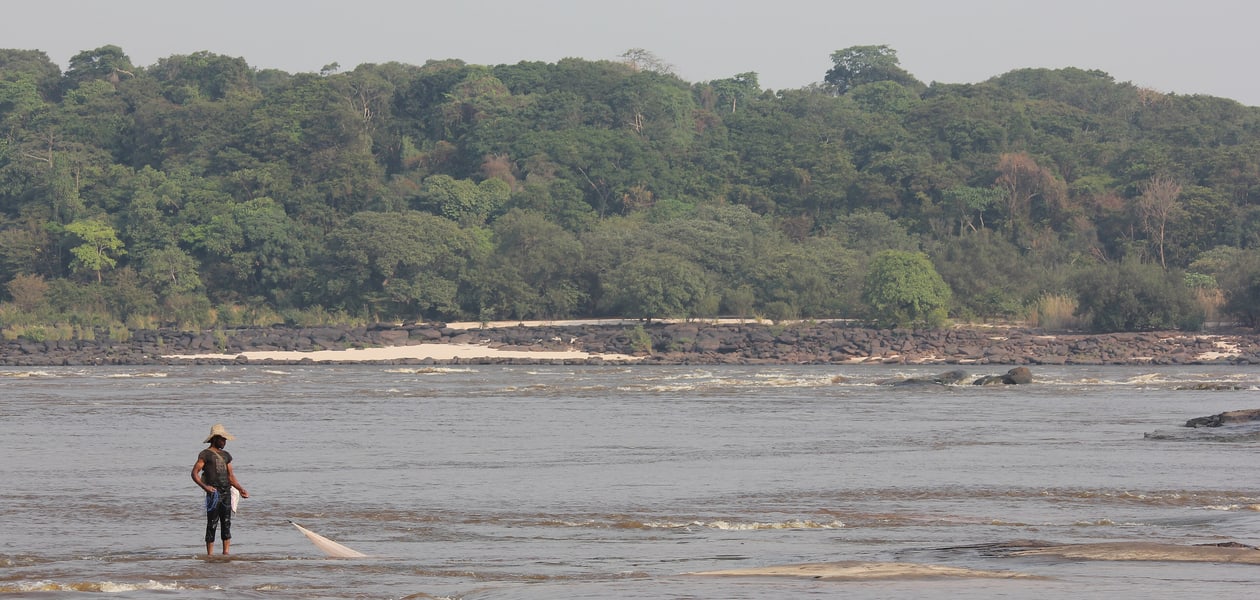
Congo Brazzaville
Cethuyghe / Wikimedia Commons · CC BY-SA 4.0 · 2023 · cropped
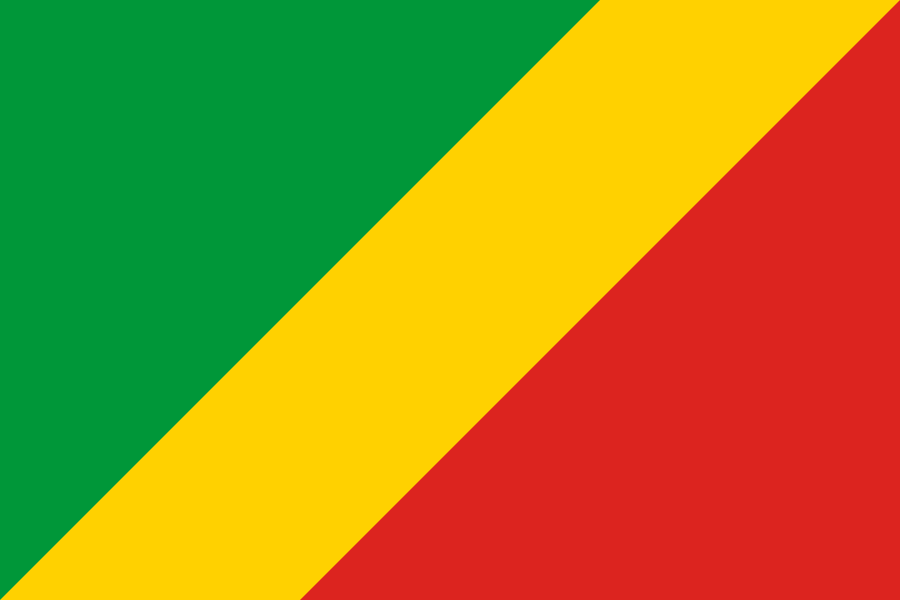
The Republic of the Congo — Congo-Brazzaville, to distinguish it from its much larger neighbour across the river — covers 342,000 km² and holds about 6.1 million people, more than half of them in the capital Brazzaville and the Atlantic port of Pointe-Noire. Gabon and Cameroon lie to the north-west, the Central African Republic to the north-east, the Democratic Republic of the Congo across the river to the east and south, and the Angolan exclave of Cabinda to the south-west. The equator runs through it. Behind a short coastal plain the forested Mayombe range rises steeply, and beyond it lie the Niari valley and the Batéké plateaux.
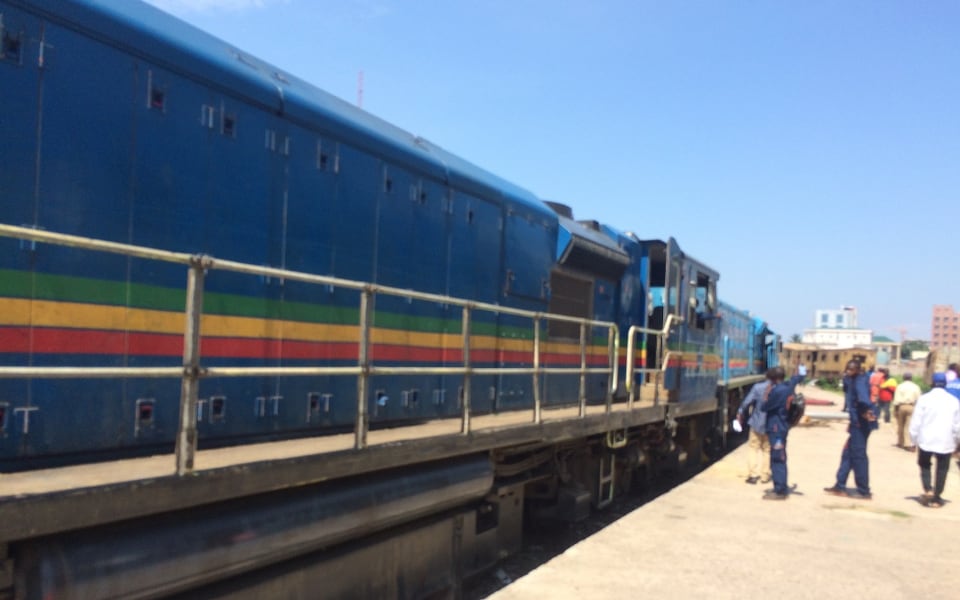
There is one railway that matters and it exists to defeat one obstacle. The Chemin de Fer Congo-Océan runs 502 km from Pointe-Noire to Brazzaville, bypassing the cataracts of the lower Congo that make the river unnavigable to the sea. Upstream of Brazzaville the Congo and its tributaries are navigable for thousands of kilometres, so the railway is the hinge on which the whole of Central African river trade turns. It carries a named passenger train, La Gazelle, and a history of long interruptions.
Rail journeys in Congo Brazzaville
Good to know
Which Congo is this?
The Republic of the Congo, capital Brazzaville — a country of about six million people on the western bank of the river. The Democratic Republic of the Congo, capital Kinshasa, is a separate and far larger country on the eastern bank, with its own railways. The two capitals face each other directly across the river, within sight of one another, and the two countries are routinely confused — which is why this site names them Congo-Brazzaville and DR Congo.
Why was the Congo-Ocean Railway built?
Because the lower Congo is unnavigable. Below Brazzaville the river drops through a long series of cataracts to the Atlantic, so ocean shipping cannot reach the interior and river boats cannot reach the sea. The railway carries the traffic over that gap — which is why the whole Congo basin's trade, and not just this country's, has depended on 502 km of track.
What did the railway cost to build?
Lives, on a scale that is part of the record. The line was built between 1921 and 1934 using forced labour conscripted from what are now southern Chad and the Central African Republic, and more than 17,000 workers are estimated to have died. The Kongo-Wara rebellion of 1928–31 was in part a response to that conscription. France did not ratify the ILO Forced Labour Convention of 1930 until 1946.
Are there rail passes for the Republic of the Congo?
No. There is no pass scheme and no multi-journey ticket. Seats are bought at station windows rather than online, in couchette, first or second class, and there is no internet reservation system for the line.