Pointe-Noire to Brazzaville
Arsène Séverin (VOA) / Wikimedia Commons · public domain · 2018 · cropped
- DistancePointe-Noire to Brazzaville · 502 km, Atlantic to the Congo River
- DurationAbout 16 hours, overnight — 10:00 away, 02:00 in, as measured in April 2023
- Best seasonJune to August, the dry season · the rains are when the washouts and the slow orders come
Introduction
Where this railway stands, September 2026. The Chemin de Fer Congo-Océan has published no passenger timetable since it relaunched La Gazelle in April 2023, and nothing found for this page shows the train keeping to that pattern now. In May 2026 the operator's own management told the incoming transport minister that six of its forty-three main-line locomotives were in traffic and that wages stood forty-three and a half months in arrears; the minister's stated objective for the railway is the relaunch of the Gazelle. On 27 February 2026 the line went into a four-year reconstruction. Everything below is the journey as CFCO itself last advertised it, with every figure dated. Whether a train runs in any given week is a question that can only be answered at the station.
The Congo-Ocean Railway exists to defeat a single obstacle. Below Brazzaville the Congo River falls through a long chain of cataracts to the sea, so ocean ships cannot reach the interior and river boats cannot reach the ocean; above Brazzaville the same river and its tributaries are navigable for thousands of kilometres, as far as Bangui. The 502 kilometres of Cape-gauge track between Pointe-Noire on the Atlantic and Brazzaville on the river are the hinge between those two worlds, which is why a country of six million people has a main line carrying the trade of half of Central Africa. Its named passenger train is La Gazelle: couchette, first and second class, an overnight run of roughly sixteen hours, over the forested Mayombe range and down the Niari valley.
It is also the most costly railway ever built in Africa, measured the only way that matters. The line was cut between 1921 and 1934 by the Société de Construction des Batignolles using forced labour conscripted from what are now southern Chad and the Central African Republic, and more than 17,000 workers are estimated to have died on it. André Gide, who travelled the works in 1926, called it an appalling consumer of human lives. That is not background to this journey. It is the journey, and this page says so where it belongs rather than leaving it to a footnote.
The Journey
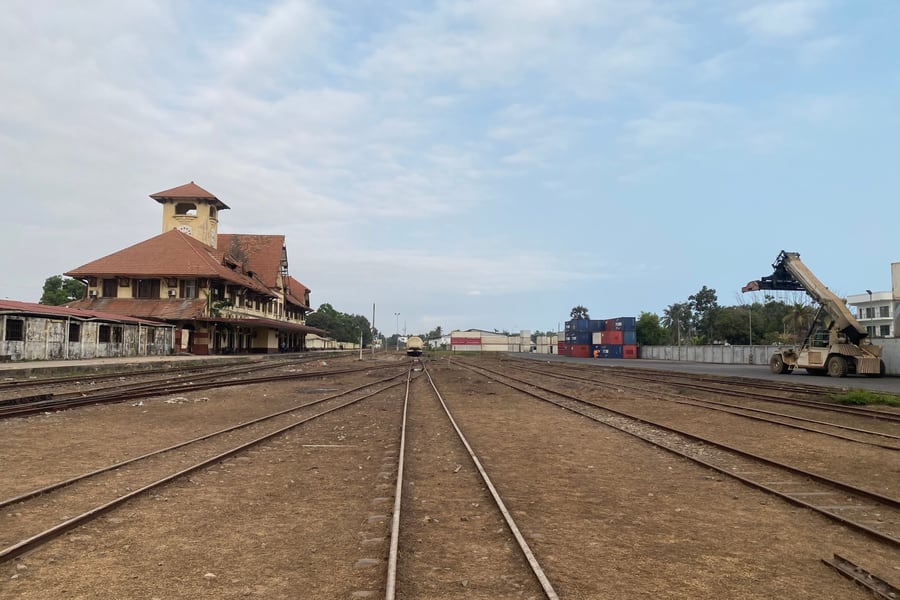
The train leaves from a building nobody expects. Pointe-Noire station is a Norman half-timbered pile with a clock tower and steep red-tiled roofs, put up in the early 1930s at the ocean end of the line and lettered C.F.C.O. across its gable — a piece of the Channel coast dropped four degrees south of the equator. Out of it the track runs east across the Kouilou plain, past eucalyptus plantations and the last of the coastal savanna, and within an hour the country ahead has closed in.
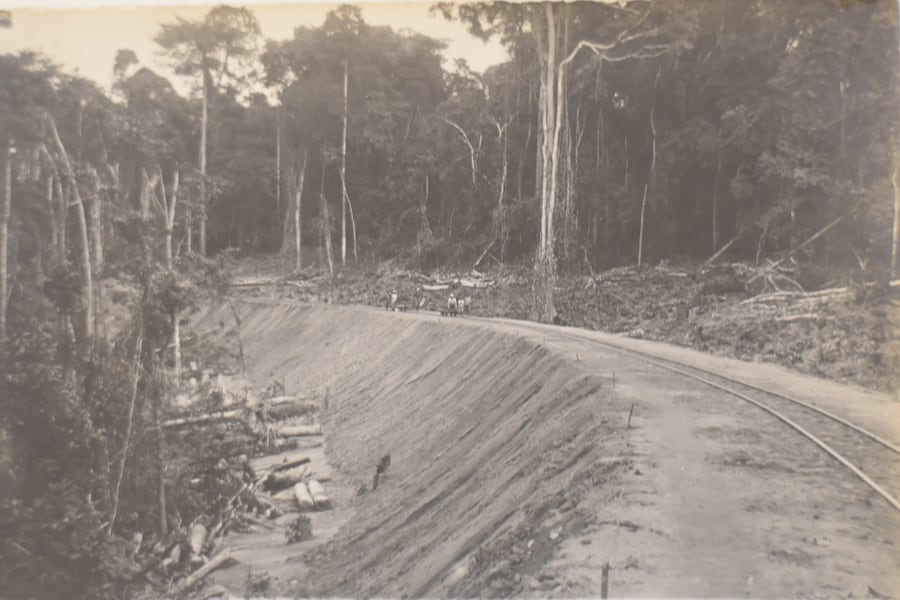
Then comes the reason this line took thirteen years to build. The Mayombe is a forested range that lifts straight off the coastal plain, and the railway crosses it on gradients of one in fifty westbound and one in sixty-seven the other way, through the Bamba tunnel — 1,694 metres, and the longest tunnel in Africa when it was driven — and across fourteen large reinforced-concrete viaducts. Heavy trains needed three or four locomotives to get over it. The 91-kilometre Bilinga–Dolisie realignment, built between 1976 and 1985, eased the worst of the original alignment and was meant to allow 80 km/h through the massif; on the old line, and on much of what survives, the speed is set by the state of the rail rather than by the gradient.
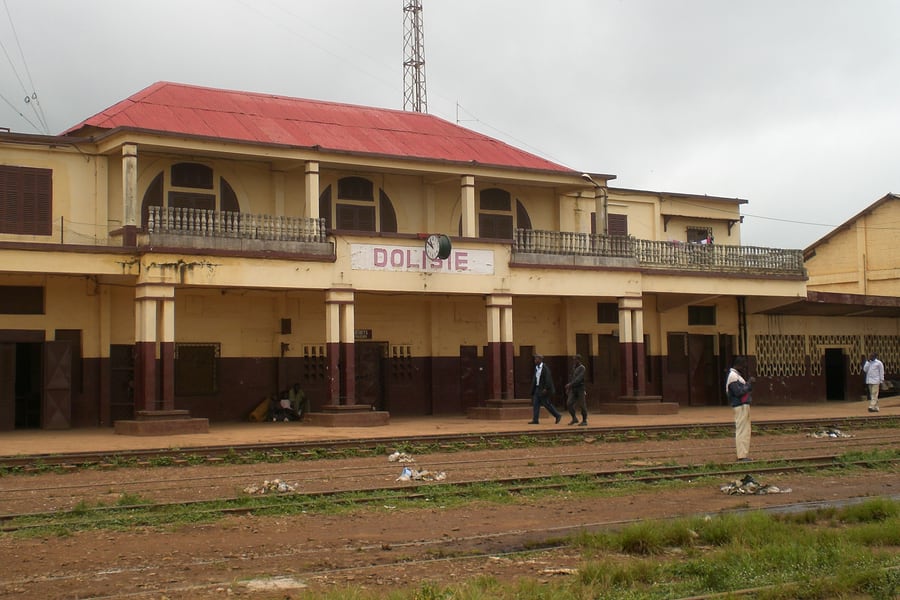
Beyond the massif the country opens into the Niari valley, the driest ground in the republic at a little over a thousand millimetres of rain a year. Dolisie sits on the eastern edge of the coastal rainforest, the country's third city and the halfway town of the journey, with its own CFCO station — the company's name over the door and a taxi rank on the red earth in front of it. Then Nkayi, the fourth city, and Madingou, the seat of the Bouenza. Past Mindouli the line enters the Pool, climbs onto the Batéké foothills, and comes down to the river at Brazzaville, where the Congo widens into Pool Malebo and Kinshasa stands on the far bank in plain sight.
What the train is
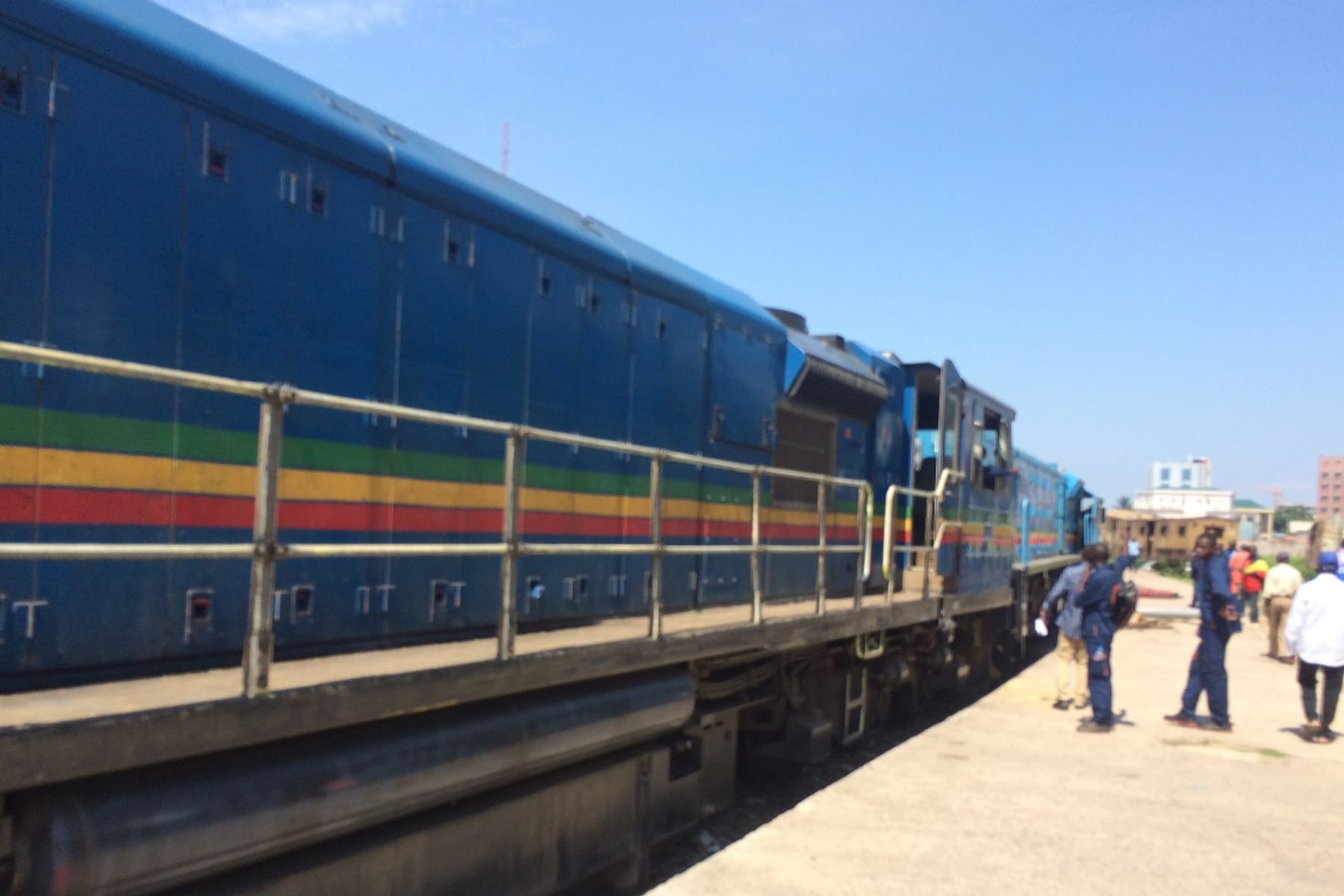
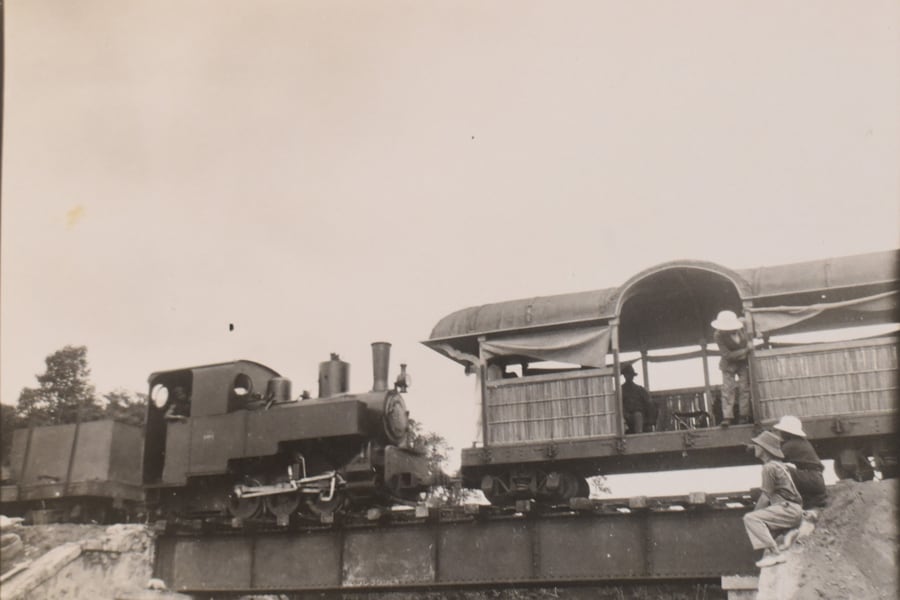
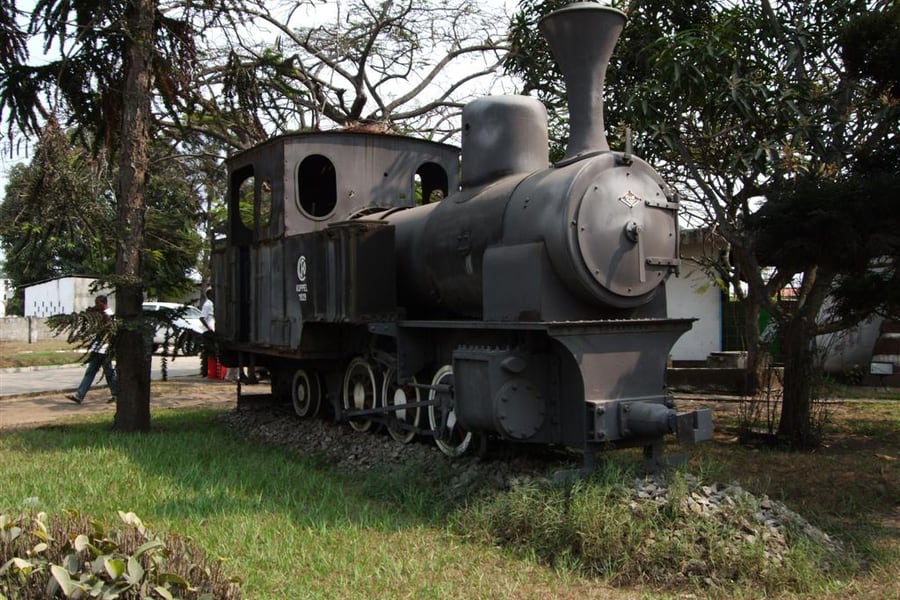
The set CFCO put back on the road in April 2023 was eight air-conditioned coaches, 186 metres long: one couchette car, one first class with 64 seats, a bar-restaurant, three second-class cars of 80 seats each, a generator van and a baggage van rated at 359 tonnes, behind a locomotive numbered CC 13-03. The passenger cars came from Korea and were introduced with the Gazelle name in 2012. Traction is diesel throughout; the Golwé, the articulated steam type designed for this railway's curves and gradients, has long gone, though one small tank engine stands plinthed under the trees in Pointe-Noire.
Two figures explain how the ride actually goes. The first Gazelle of the 2023 relaunch left Pointe-Noire at 10:00 on a Thursday and reached Brazzaville at 02:00 — sixteen hours for 502 kilometres. And at that time railwaymen counted more than two hundred temporary speed restrictions on the line, imposed where the rail was cracked or the fishplates split. Congolese newspapers made the obvious joke about a gazelle that travels like a tortoise; the reconstruction now under way is the answer to it.
What it cost to build
The Batignolles company was contracted in 1921 to build the line with conscripted labour. Men were recruited by force from the Middle Congo, from what is now southern Chad and from Oubangui-Chari, marched to the works, and set to clear forest by hand and break rock with hammers. The official death toll is more than 17,000; serious historians put the real figure far higher. The Kongo-Wara rebellion of 1928–31 was in part a rising against that conscription. When the scandal reached Paris in 1930 the colonial administration signed an amendment obliging the contractor to bring in machinery — compressors, bulldozers and tractors — so that tunnels were no longer dug with pick and crowbar; the same shortage of labour brought 600 Chinese workers from Canton and Hong Kong to the Mayombe. France did not ratify the ILO Forced Labour Convention of 1930 until 1946. No monument stands to the dead.
Along the route
 MANIMA MBEMBA / Wikimedia Commons · CC BY-SA 4.0 · 2020 · cropped
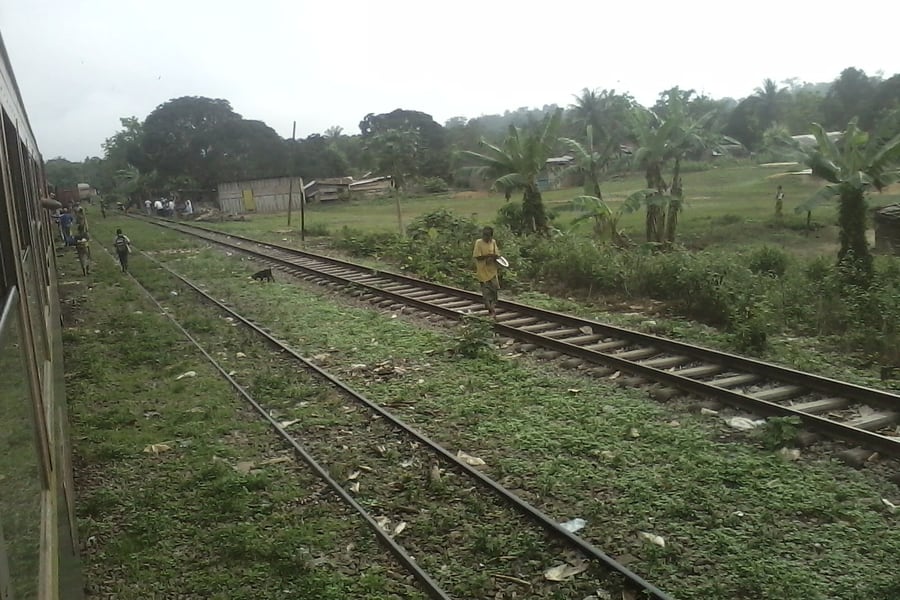
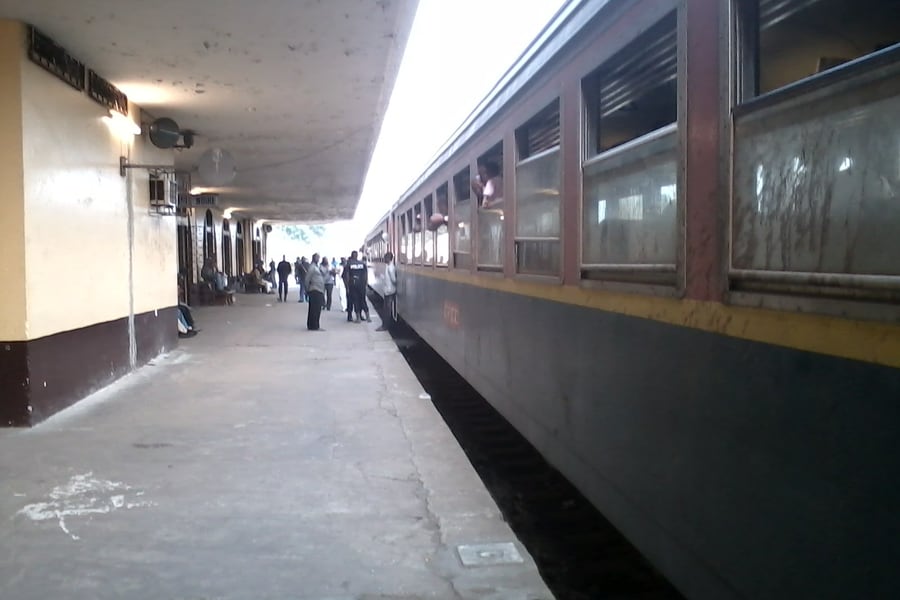
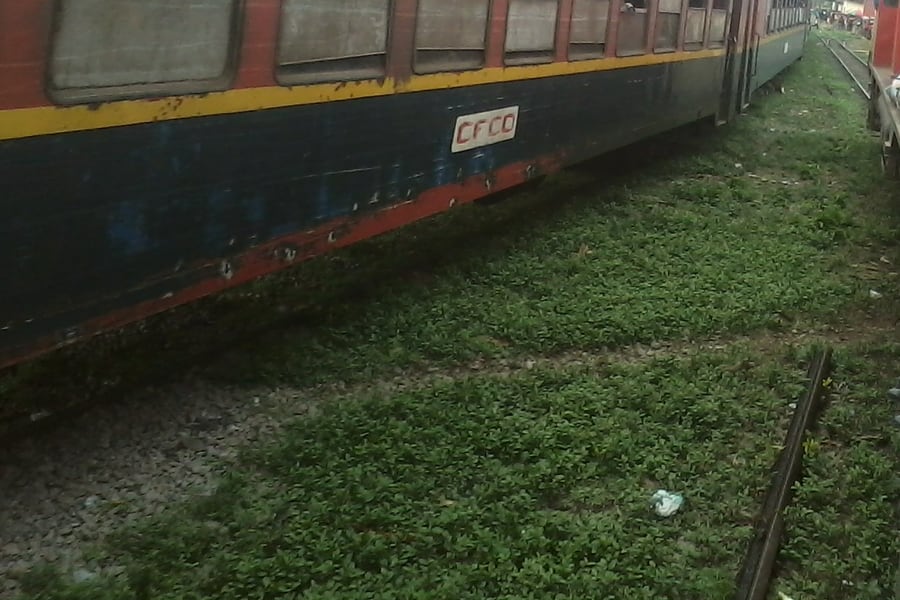
Coaches lettered CFCO and nothing else
Red, yellow and blue over a blue waistband, a small enamel plate for the company and no other branding anywhere. The cars came from Korea and took the Gazelle name in 2012.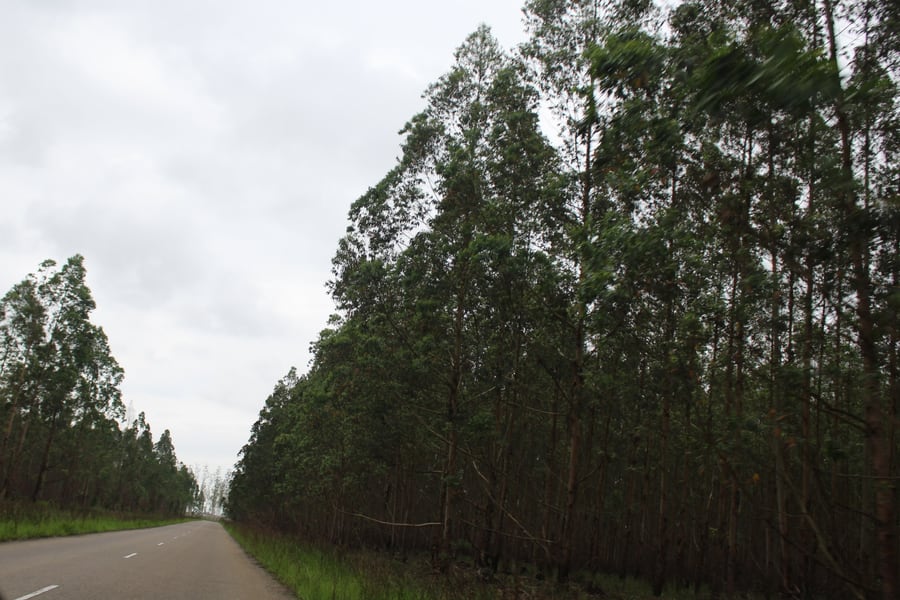 Liandi Navek / Wikimedia Commons · CC BY-SA 4.0 · cropped
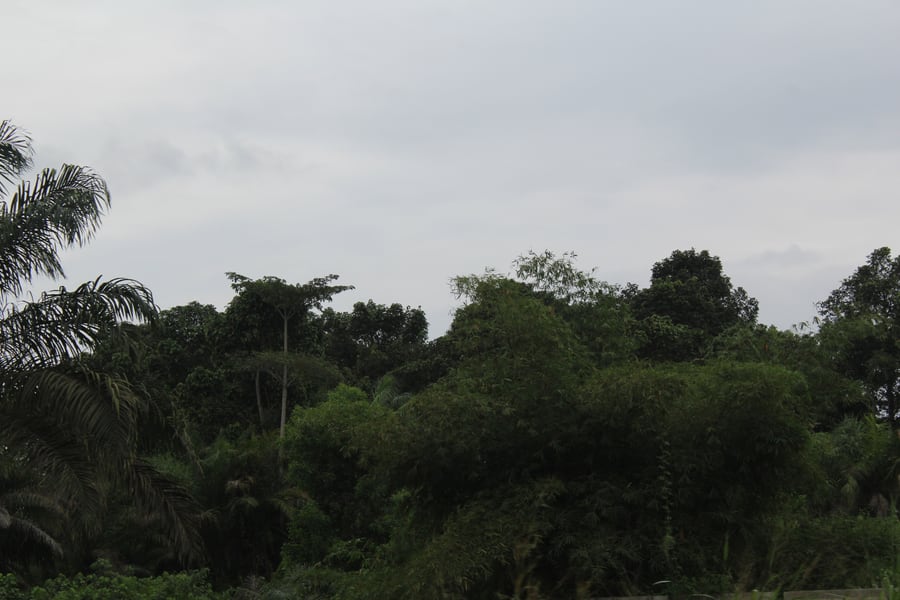
The Kouilou, in the first hour
Coastal plain behind Pointe-Noire — savanna, cassava and long blocks of planted eucalyptus, flat enough that the Mayombe ahead looks like a wall when it arrives.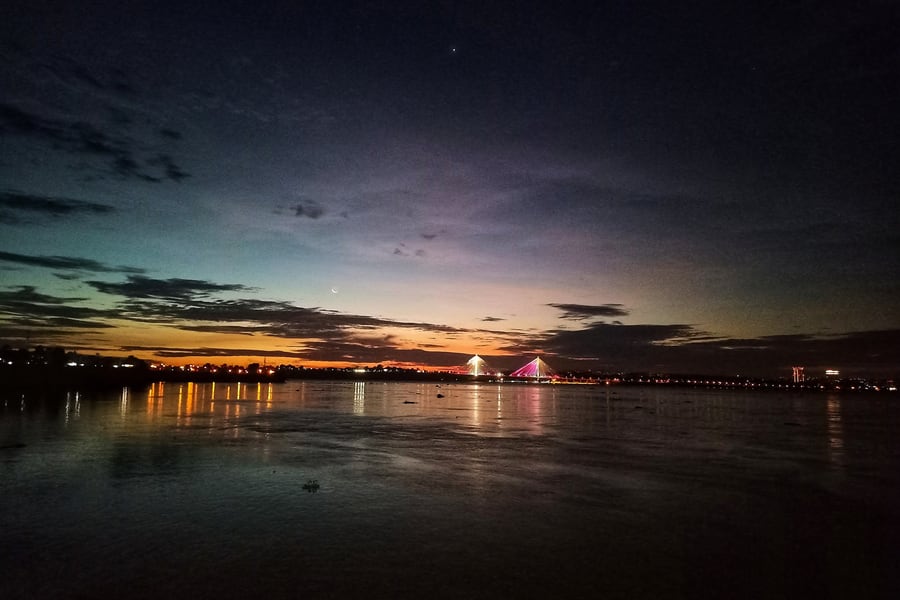 Kimmyfari / Wikimedia Commons · CC BY-SA 4.0 · cropped
The river at the far end
The Congo at Brazzaville, seen from Kinshasa on the other bank. Below this reach the cataracts begin, which is the whole reason the railway exists.A bit of history
Culture & experiences along the way
 Detsed1 / Wikimedia Commons · CC0 · 2023 · cropped
Diosso and the kings of Loango
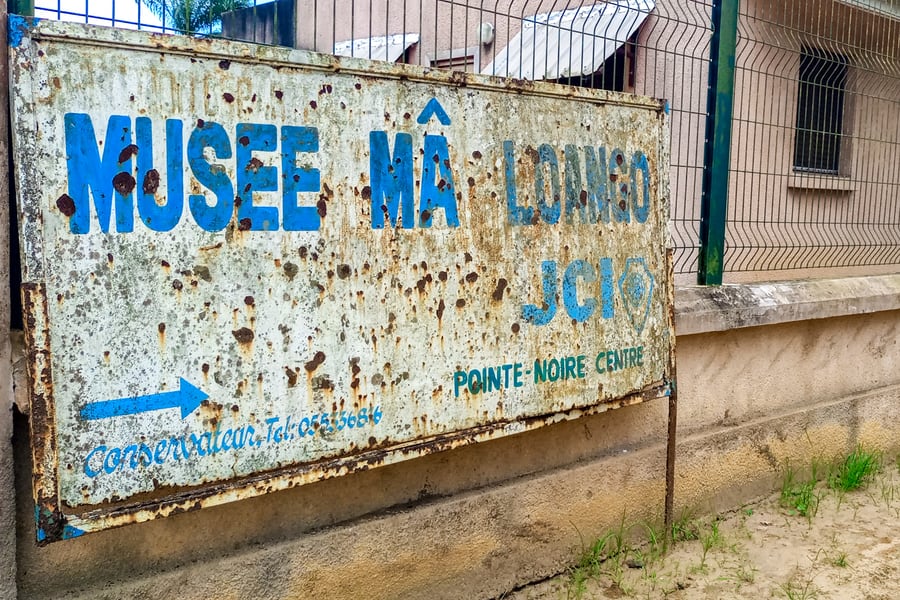
Half an hour north of Pointe-Noire, and the reason the port is where it is: colonial administrators abandoned the old city of Loango for a deep-water site down the coast. Diosso keeps the royal necropolis and the Musée Mâ Loango, which occupies the old palace of the Ma Loango, behind a rusting board with the curator's telephone number painted on it.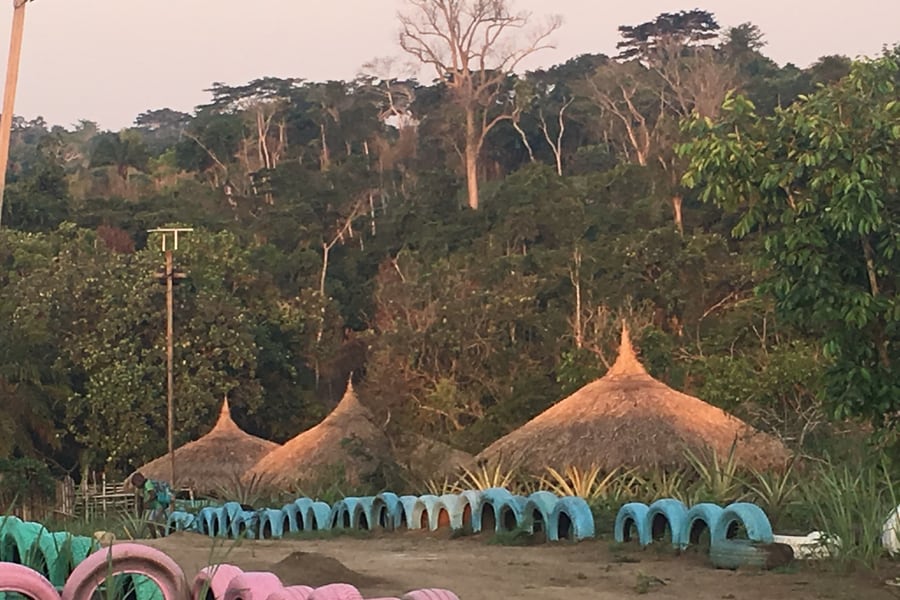 Ocelot02 / Wikimedia Commons · CC BY-SA 4.0 · 2019 · cropped
Weekends in the Bouenza
The green middle of the country, around Nkayi and Madingou, is where Congolese go for the weekend rather than where anyone else goes. Tsatsala is the pattern — thatched round houses on a forested slope, painted tyres for a garden wall, and the Nkila-Ntari caves within reach for the afternoon.Timetables
The last timetable CFCO published for La Gazelle is the one it announced on 25 April 2023, when the train went back on the road after seven years off it. One departure a week in each direction, both at ten in the morning, both running through the night:
| Departs | Day | Arrives | Journey |
|---|---|---|---|
| Pointe-Noire 10:00 | every Thursday | Brazzaville, around 02:00 next day | about 16 hours |
| Brazzaville 10:00 | every Saturday | Pointe-Noire, overnight | about 16 hours |
The 16-hour figure is not an estimate. It is what the relaunch train actually took on Thursday 27 April 2023 — away at 10:00, into Brazzaville at 02:00 — and it is the honest number for a line that then carried more than two hundred temporary speed restrictions. Intermediate stops on the 2023 pattern were Dolisie, Nkayi, Loutété and Mindouli; the reconstruction contract signed in 2026 lists Pointe-Noire, Dolisie, Nkayi, Madingou, Bouansa, Loutété, Mindouli and Brazzaville as the main stations of the line.
Whether it is running
CFCO has no working website. Both cfco.cg and cfco-congo.com fail to resolve, there is no
online reservation system, and the company does not publish a schedule anywhere a traveller outside
Congo can read it. What can be established, as of September 2026:
- The February 2026 reconstruction covers the whole line, is contracted to a Chinese consortium over four years, and includes complete relaying of the track, work in the tunnel, and the purchase of four new passenger trains.
- In May 2026 the transport minister set the relaunch of the Gazelle and of the Mbinda train as his objective for the company — the wording of a service that is not currently running to a pattern.
- At the same meeting CFCO's management put six of forty-three main-line locomotives and thirty-seven of 975 wagons in traffic, with wages 43½ months unpaid.
The practical answer is the one Congolese passengers already use: ask at the passenger service window at Pointe-Noire or Brazzaville station, in person or by telephone, a few days ahead. Nobody sells this train online, and no third-party site that claims a current Gazelle timetable has a source behind it.
Tickets
There is no online booking for this train and there never has been. Seats are sold at the passenger service window at Pointe-Noire and Brazzaville stations, where a reservation can also be made in advance, and the same windows are where fares for intermediate stations are quoted. A baggage registration fee of 1,000 FCFA is charged per registration on top of the ticket.
Three classes were on sale when CFCO published its tariff on 25 April 2023: couchette, first and second. Half fares apply, and the intermediate fares descend evenly down the line — Pointe-Noire to Dolisie in second class was 3,330 FCFA, to Nkayi 4,890, to Loutété 6,275, to Mindouli 7,565. Prices are in Central African CFA francs, and none of them has been restated by the operator since.
Book your tickets
Second class
10,000 FCFA one way, 5,030 at half fare
An 80-seat saloon, three of them in the 2023 set, and the class most of the line travels in.
via CFCOFirst class
12,000 FCFA one way, 6,030 at half fare
Sixty-four seats in one car, with the bar-restaurant next door.
via CFCOCouchette
15,000 FCFA one way, 7,530 at half fare
The single sleeping car, and the one worth having on a run that arrives at two in the morning.
via CFCORail Passes
No rail pass covers the Republic of the Congo. Interrail and Eurail stop far to the north, there is no African equivalent, and the Chemin de Fer Congo-Océan sells nothing but single journeys at its own ticket windows — no season ticket, no multi-journey card, no loyalty scheme, and no online product of any kind as of September 2026.
That is the right answer for a railway with one line and one named passenger train. There is a single fare to pay in one of three classes, it is bought in cash at a station window on the day or a few days before, and there is nothing to amortise across a network that does not exist. The one other passenger working CFCO names — the Mbinda train, over the 285-kilometre branch that leaves the main line at Mont-Bélo for the Gabonese border — is in the same position as the Gazelle, listed by the transport ministry in May 2026 as a service to be relaunched.
Places to Visit
The line runs between the country's two biggest cities and touches its third and fourth on the way, so the stops are real towns rather than trailheads. Pointe-Noire is the economic capital and the Atlantic port, with the Côte Sauvage running north from the city and the red cliffs of the Diosso gorge half an hour beyond it. Dolisie sits where the coastal rainforest ends. The Bouenza, around Nkayi and Loutété, is cave country. Brazzaville stands on the widest reach of the Congo, looking across at Kinshasa.
Transport is not organised for visitors: shared taxis and private hire are how everything below is reached, and the Diosso and Bouenza sites are half-day trips rather than stops between trains. A visa is required in advance — the Republic of the Congo issues none on arrival — and border control asks for yellow fever and polio certificates.
 Kani Beat / Wikimedia Commons · CC0 · cropped
The Côte Sauvage, Pointe-Noire
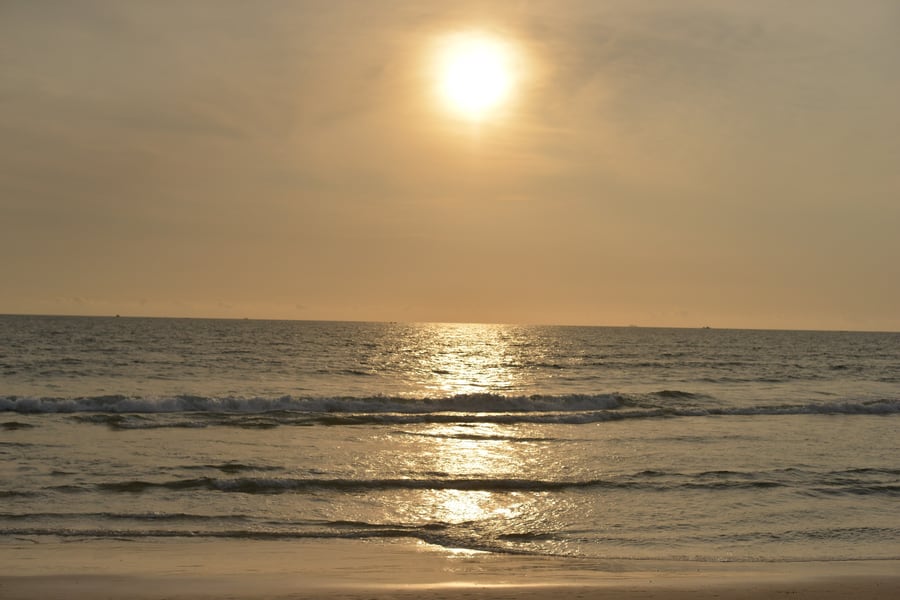
The Atlantic runs the length of the city and the beach is where Pointe-Noire spends its evenings — a wide grey-gold strand with surf on it, reached on foot from the centre. The railway line through the middle of town is the dividing line between the working city and the coast, which is why the station stands where it does.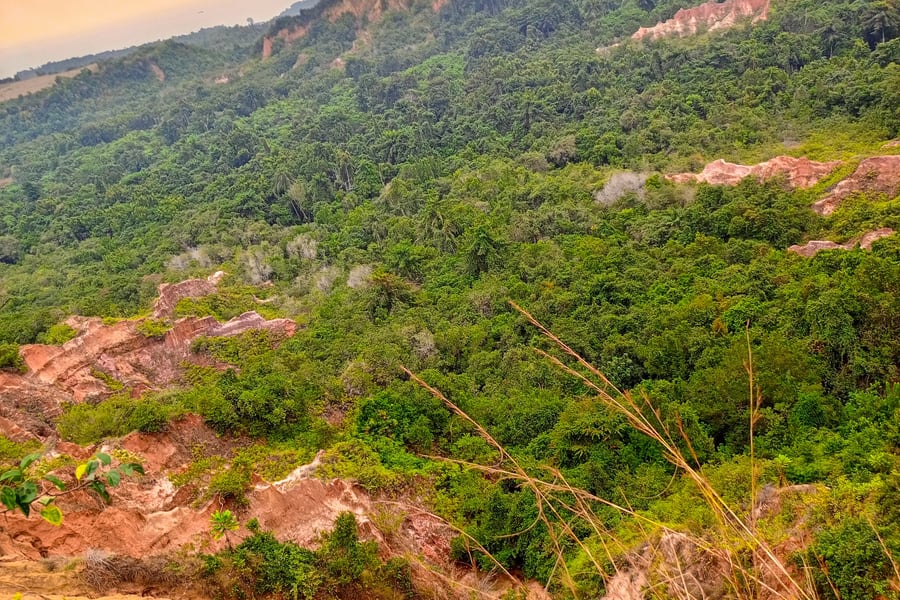 Roly USD / Wikimedia Commons · CC BY-SA 4.0 · 2025 · cropped
The Diosso gorge
Half an hour north of the terminus, a natural amphitheatre of red laterite cliffs standing out of green forest, cut by erosion into buttresses and pinnacles. It is the single best-known landscape in the Kouilou, it is a protected site, and the royal necropolis and museum of the Loango kings are on the plateau above it.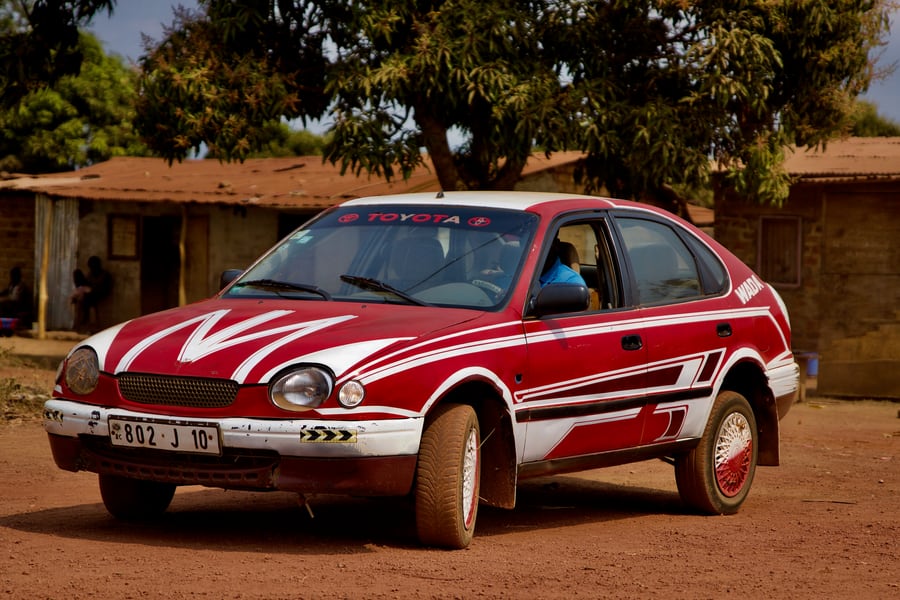 Krissima POBA NGOUMA / Wikimedia Commons · CC BY-SA 4.0 · 2019 · cropped
Dolisie
The country's third city, 178,000 people, capital of the Niari and the halfway stop on the line. It sits on the eastern edge of the coastal rainforest and lives on trade and timber; the CFCO station with the company name over the door is the centre of it, and the taxis waiting on the red earth outside are the local colour.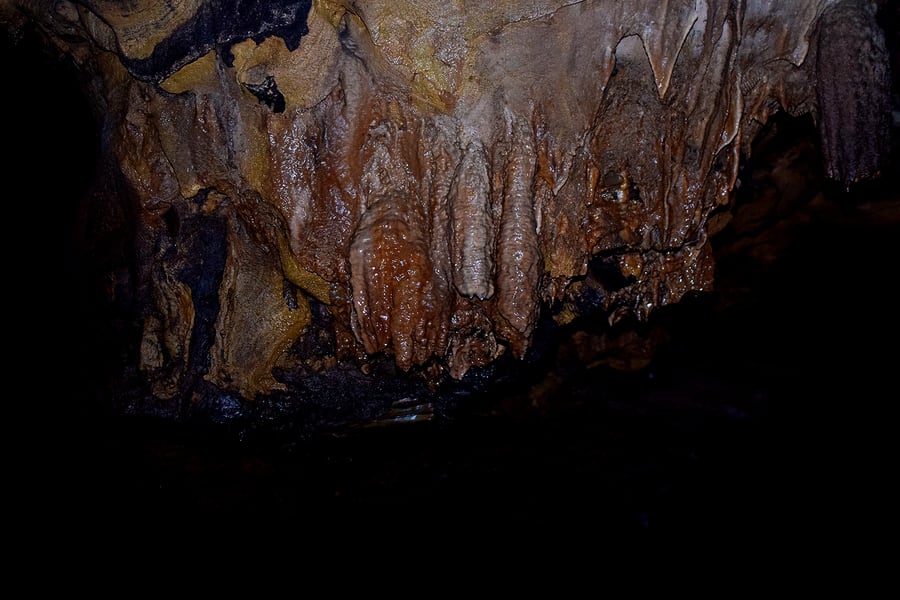 Bala-Bala2.0 / Wikimedia Commons · CC BY-SA 4.0 · 2024 · cropped
The Nkila-Ntari caves
In the Bouenza, within reach of Nkayi and Loutété, a limestone cave system of stalactite curtains and flowstone that is one of the few protected natural sites in this part of the country. Guides are arranged in the village; there is nothing organised for visitors, no lighting and no boardwalk, which is most of the appeal and also the warning.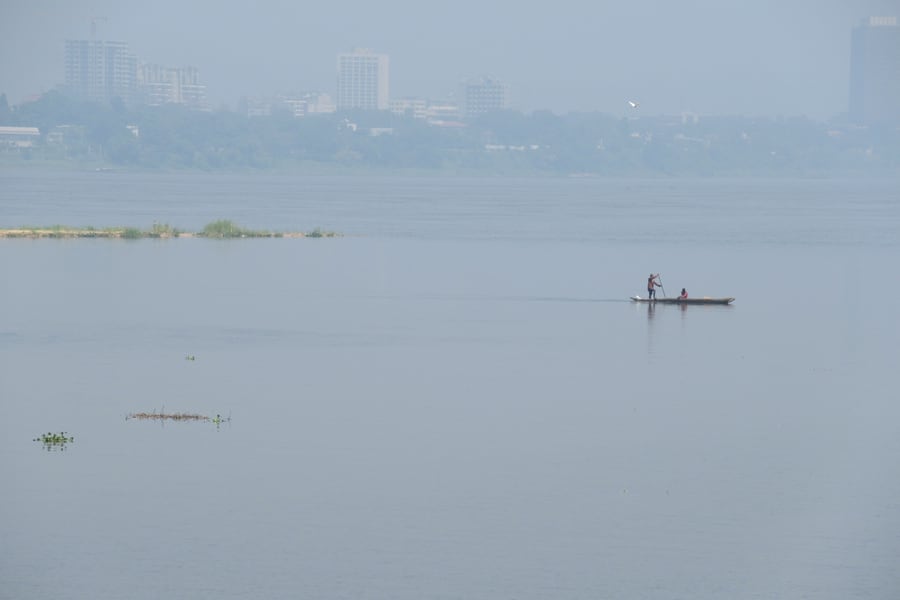 JeanJijiJunior / Wikimedia Commons · CC BY-SA 4.0 · 2019 · cropped
Brazzaville and Pool Malebo
The line ends where the Congo widens into Pool Malebo, with Kinshasa on the far bank — the two capitals stand closer together than any other pair on earth and are in plain sight of one another. Pirogues work the water in front of both skylines. Upstream the river is navigable for thousands of kilometres; downstream it is not navigable at all.Where to Sleep
A weekly overnight train makes the beds at each end matter more than usual: a missed departure costs a week, not a day. Brazzaville is where the international hotels are, most of them along the river within a few minutes of the central station, and both of the properties below can be booked directly.
Pointe-Noire is the harder end. It is the larger city and the busier one, and it has plenty of rooms — but almost none of its hotels keeps a working website, and several of the domains that appear in search results either fail to resolve or serve an empty page. Rather than send readers to a dead link or a booking aggregator, this page names no Pointe-Noire hotel. Rooms there are arranged locally or through a travel agent, and the district around the station and the Côte Sauvage is where most of them are.
Where to stay
Radisson Blu M'Bamou Palace Hotel
On the bank of the Congo, in central Brazzaville
A hundred and seventy-eight rooms facing the river and Kinshasa, minutes from the central station.
Check Availability (opens in a new tab, on radissonhotels.com)via radissonhotels.comKempinski Hotel Brazzaville
A few minutes' walk from the river
River-facing rooms with a rooftop lounge, an outdoor pool and a spa, in the middle of the capital.
Check Availability (opens in a new tab, on kempinski.com)via kempinski.comPractical Information
Entry. A visa is required and must be obtained before travel; there is no visa on arrival. Border control asks for certificates of yellow fever and polio vaccination. The currency is the Central African CFA franc (XAF), cash is what the railway takes, and the language of every counter, sign and announcement is French.
Safety on this route. The British Foreign Office advises against all travel only in one part of the country — within 50 km of the Central African Republic border in Likouala, far to the north of this line. On the Gazelle's own route it notes that parts of the Pool were a conflict area between the government and the Ninja insurgency, with no reported fighting since the 2017 ceasefire but a standing risk of clashes; it names Mindouli, a station on this line, among the districts concerned. Opportunistic crime is reported in both Brazzaville and Pointe-Noire.
The line's safety record is part of the record too. A collision between a passenger train and a freight train at Mvoungouti, in the Mayombe forest in September 1991, killed about a hundred people and injured three hundred; a second collision happened at the same place in January 2001. A passenger train derailed near Yanga, 60 km from Pointe-Noire, on 21 June 2010, with a death toll reported between sixty and seventy-six. The condition of the track is the stated reason for the reconstruction now under way.
Interruptions are the norm, not the exception. The line closed for six years from the civil war of 1997, when six bridges were destroyed. It closed again in November 2016, when two bridges were dynamited during the trouble in the Pool, and the first train did not reach Brazzaville again until 28 November 2018. Passenger services returned in April 2023 and there is no published timetable after that. Anyone planning around this train should hold the plan loosely.
Questions or corrections
Planning this trip and stuck on something, or spotted a time, fare or detail that has changed? Send us a message about Pointe-Noire to Brazzaville. We read every one, and we update this page when something has changed.