Djibouti
vxr7475 / Wikimedia Commons · CC BY 3.0 · 2012 · cropped
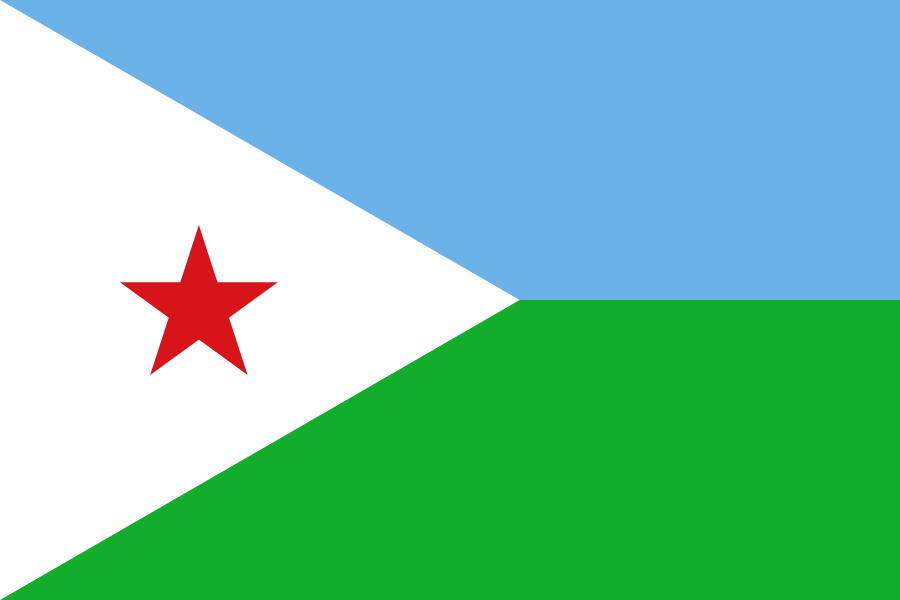
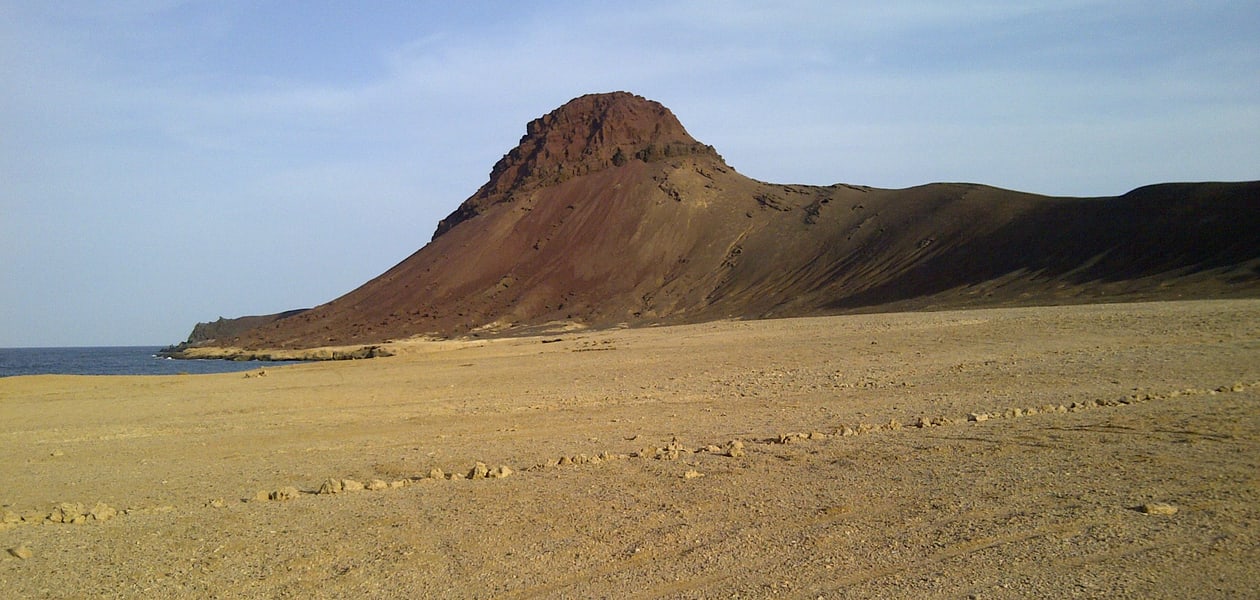
Djibouti is one of the smallest countries in Africa — 23,200 km², about 1.15 million people, and roughly three-quarters of them in the capital, which carries the same name as the country. Eritrea lies to the north, Ethiopia to the west and south, and Somalia to the south-east; across the strait of Bab-el-Mandeb is Yemen. The land is volcanic and almost without rain: black lava fields, salt pans and rifted basins, including Lake Assal at 155 m below sea level, the lowest point on the continent. What the country has instead of resources is position, at the mouth of the Red Sea on one of the busiest shipping lanes in the world.
That position is the whole of its railway story. Djibouti's port is the outlet for landlocked Ethiopia, and its single railway exists to serve it: the electrified standard-gauge Addis Ababa–Djibouti line, opened on 1 January 2018 and run by a company owned jointly by the two states. It replaced the metre-gauge Franco-Ethiopian railway of 1897–1917, formally decommissioned in 2016, whose formation still runs alongside in places. There is no domestic network — the country's only line is an international one.
Rail journeys in Djibouti
Good to know
Is there any railway in Djibouti besides the Ethiopian line?
No. The Addis Ababa–Djibouti Railway is the only railway in the country, and it is jointly owned with Ethiopia rather than being a Djiboutian national network. Every passenger train in Djibouti is an international one, and every one of them is going to or coming from Ethiopia.
What happened to the old metre-gauge railway?
It was replaced. The Chemin de Fer Franco-Éthiopien, built between 1897 and 1917, ran the same corridor for a century and is the reason the Ethiopian town of Dire Dawa exists at all. It was officially decommissioned in 2016, two years before the new electrified line opened, and sections of its formation, bridges and stations still stand beside the modern railway.
Do I need a passport for the train?
Yes — the journey crosses an international frontier, so a passport and the correct Ethiopian or Djiboutian entry permission are required exactly as they would be at an airport. This is not a domestic service that happens to run near a border; it is the border crossing.
Are there rail passes for Djibouti?
No. No pass scheme covers Djibouti or Ethiopia, and with a single international line there is nothing for a multi-journey ticket to cover. Tickets are bought for the individual train, in the classes the operator offers.