Ethiopia
A. Davey / Wikimedia Commons · CC BY 2.0 · cropped
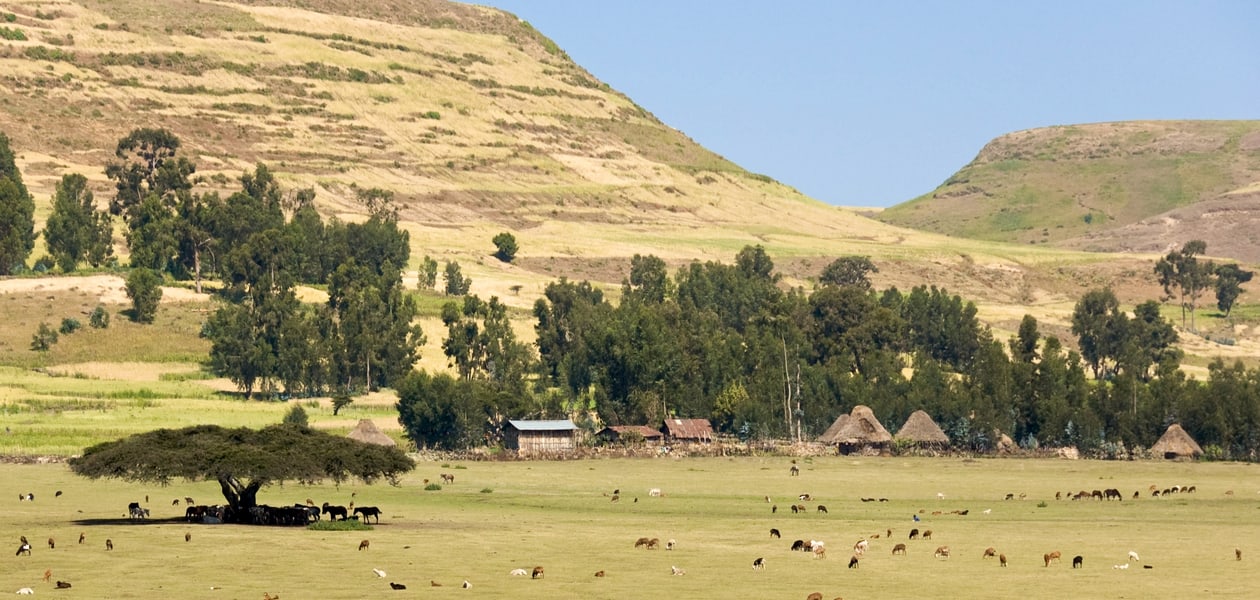
Ethiopia covers 1,104,300 km² of the Horn of Africa and holds around 138 million people, the second-largest population on the continent, with its capital at Addis Ababa. Eritrea and Djibouti lie to the north-east, Somalia to the east, Kenya to the south, and South Sudan and Sudan to the west; the country has had no coast since Eritrea's independence in 1993. Most of it is high: a vast basalt massif split from north-east to south-west by the Great Rift Valley, with the Simien mountains above 4,000 m on one side and, in the Afar triangle, the Danakil Depression more than 100 m below sea level.
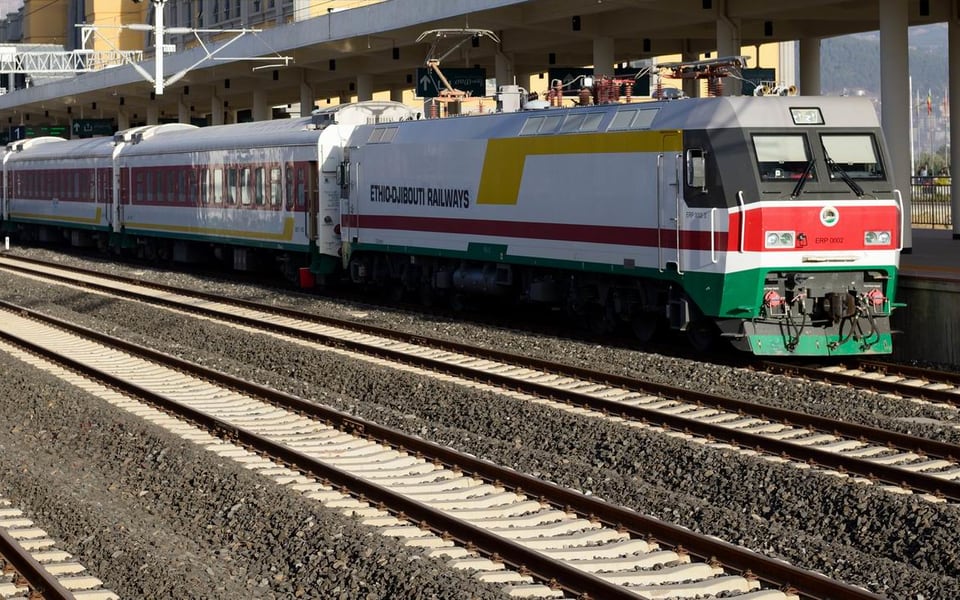
Rail travel here is new almost everywhere. The national network is electrified standard gauge built within the last decade, and consists of three lines — Addis Ababa to Djibouti, Awash to Weldiya and Weldiya to Mekelle — owned by the state Ethiopian Railway Corporation. The international route to the sea is worked by a company jointly held with Djibouti, which is the arrangement that matters most to a landlocked country whose imports almost all arrive through a foreign port. Addis Ababa also has a light-rail system, opened in 2015 and the first in East and sub-Saharan Africa.
Rail journeys in Ethiopia
Good to know
What happened to Ethiopia's old railway?
It was replaced rather than upgraded. The Chemin de Fer Franco-Éthiopien, a metre-gauge line built between 1897 and 1917, ran from Addis Ababa to the sea at Djibouti for a century and is the reason the town of Dire Dawa exists at all. It was largely superseded when the electrified railway was inaugurated on 1 January 2018, and the new line broadly follows the same corridor — in places alongside the old formation, its bridges and its stations. A rehabilitated section near the Djibouti border was reported still working in 2018.
Why is Ethiopia landlocked?
Because Eritrea became independent in 1993, taking the whole of the Red Sea coastline with it, including the ports of Massawa and Assab. Ethiopia has had no seaboard since. That single fact explains the shape of its transport policy: the railway to Djibouti is not a scenic line but the country's principal physical link to world trade.
Which calendar does Ethiopia use?
Its own. The Ethiopian calendar is the official state civil calendar: twelve months of thirty days each plus a short thirteenth of five or six days, with the new year falling on 11 or 12 September. Its epoch sits at 29 August 8 AD, which is why the Ethiopian year runs seven to eight years behind the Gregorian one. Dates on official documents and notices may be given either way, so it is worth checking which is meant.
Are there rail passes for Ethiopia?
No. No pass scheme covers Ethiopia, and with three lines and no dense network there is nothing for a multi-journey ticket to do. Tickets are bought for the individual train, and on the international service foreign and resident fares are set separately.