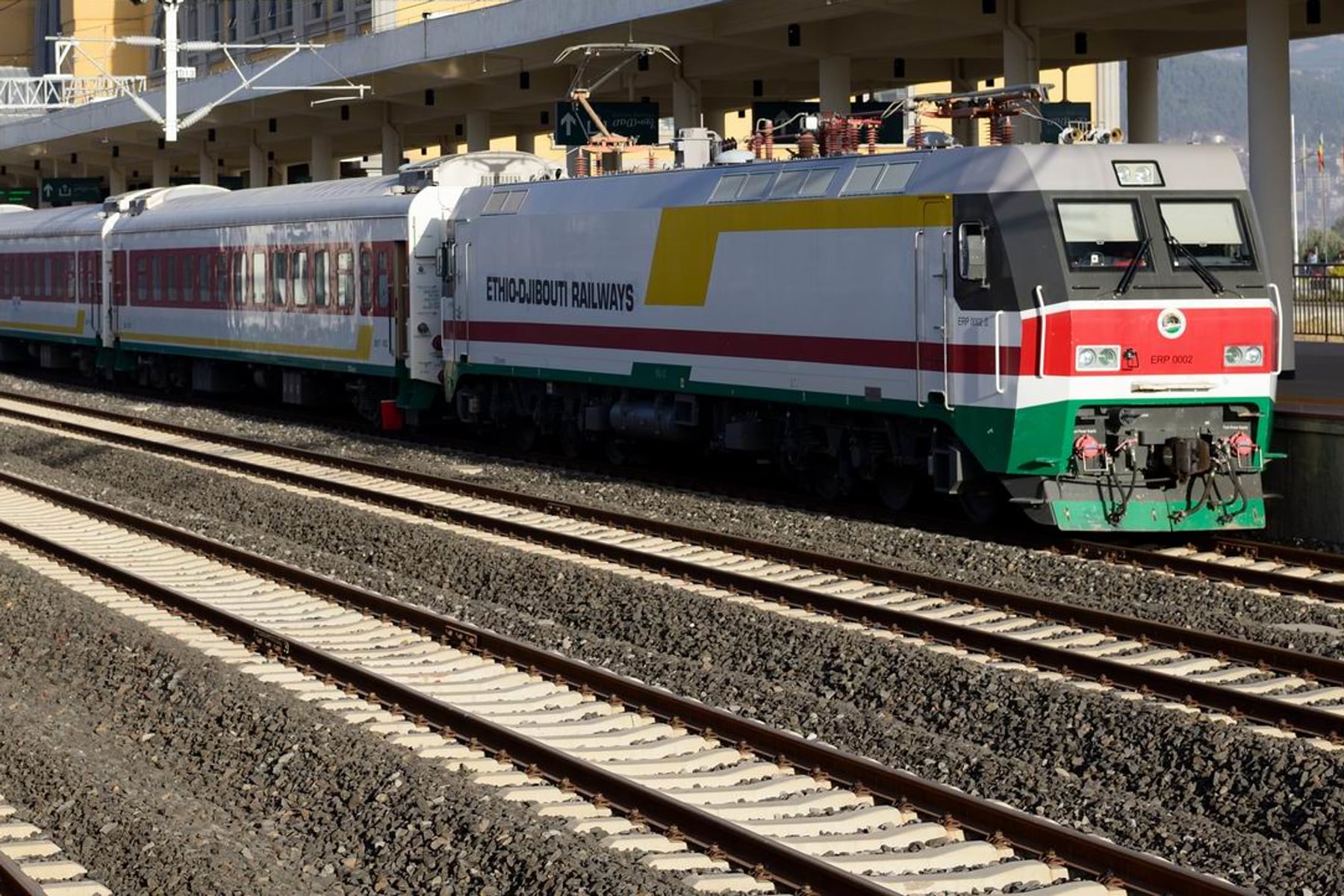
Addis Ababa to Dire Dawa — Ethiopia's electric night train
Matthias-Tf / Wikimedia Commons · CC BY-SA 4.0 · 2019 · cropped
- Distance446 km, Addis Ababa (Furi-Lebu) to Dire Dawa
- DurationBooked at 10 hours; the calling times suggest nearer 12
- Best seasonEvery other day, all year · November to February is coolest at the Dire Dawa end
Introduction
Ethiopia scrapped its railway and built a new one. The metre-gauge line the French began in 1894 carried everything the country traded for most of a century, then fell apart for want of spare parts; by 2004 Addis Ababa had no rail link to the sea at all. What replaced it is not a restoration. It is 759 kilometres of new standard gauge, laid between 2011 and 2016, strung with 25 kV overhead wire from the highlands to the Gulf of Tadjoura, and worked by Chinese-built electric locomotives. Commercial operation began on 1 January 2018.
The passenger train that runs on it is train 101, and it leaves the western edge of Addis Ababa at half past seven in the evening on odd-numbered days. Ten hours and 446 kilometres later it is in Dire Dawa, having dropped more than twelve hundred metres off the plateau, crossed the Awash at the floor of the Rift and climbed out again into the Somali lowlands — almost all of it in the dark, which is the one honest complaint to make about it. There are seats, six-berth bays and four-berth compartments, and a foreigner pays exactly twice what an Ethiopian pays. The train goes on to Djibouti from Dire Dawa, but not as this train: that is a separate service, a separate ticket and, in practice, a night's stop in between.
The Journey
The train does not start in Addis Ababa. It starts at Sebeta, a satellite town in the Sheger municipality south-west of the capital, and reaches the city proper an hour and a half later at Furi-Lebu — a long ochre station with domed corner finials, standing at 2,264 metres above the sea, which is the highest point anything on this journey reaches. Nearly everyone joins here. The overhead wires and the tall gantries are the first thing you notice: this is not a diesel railway that happens to have been modernised, it is an electric railway that was never anything else.
Out of Furi-Lebu the line runs east across the Oromia plateau, which is farmed to the horizon and green for much of the year. Bishoftu, an hour on, sits among a cluster of volcanic crater lakes that the town has built itself around. Modjo follows, and its dry port — Ethiopia's largest inland container terminal, and the reason most of the traffic on this railway is freight rather than people. Then Adama, at 1,644 metres, where the plateau ends.
Into the Rift
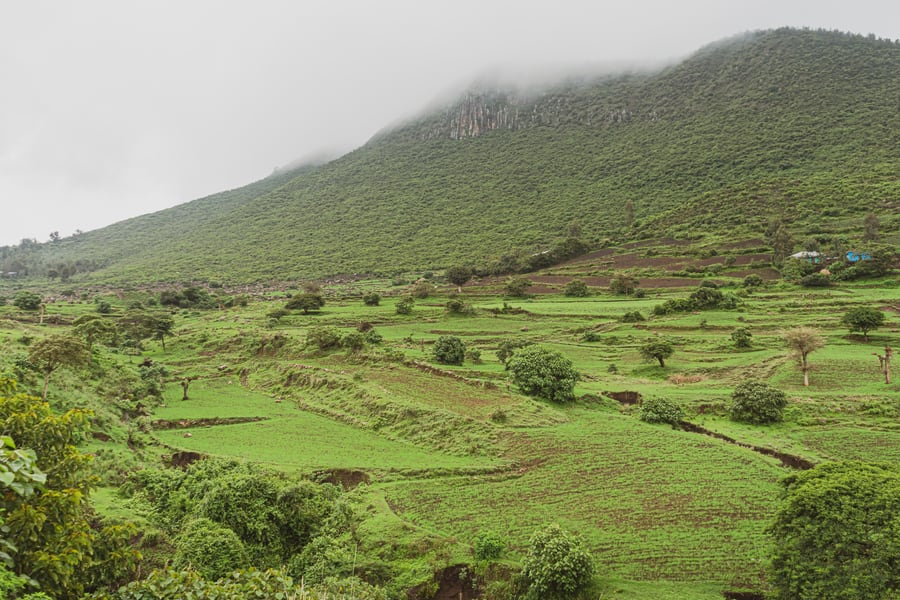
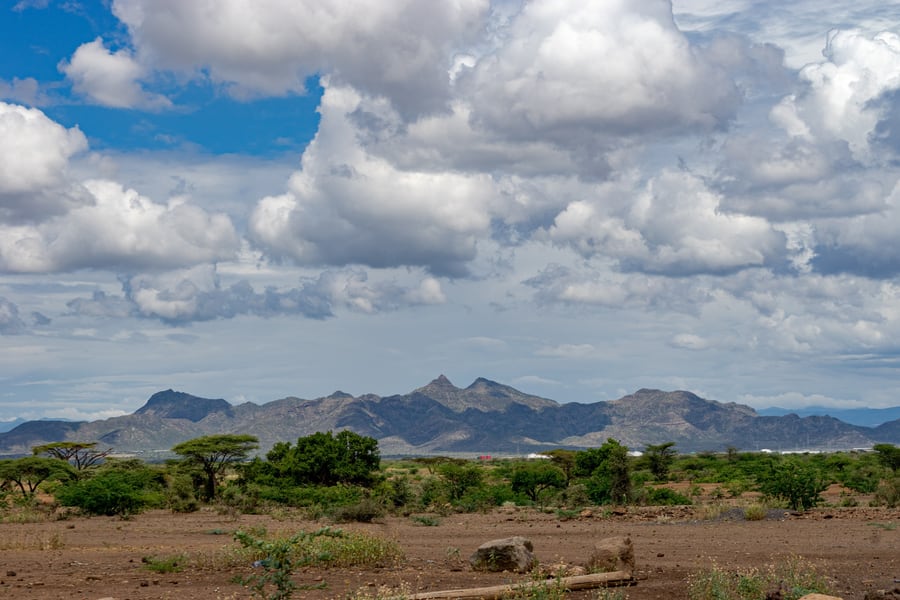
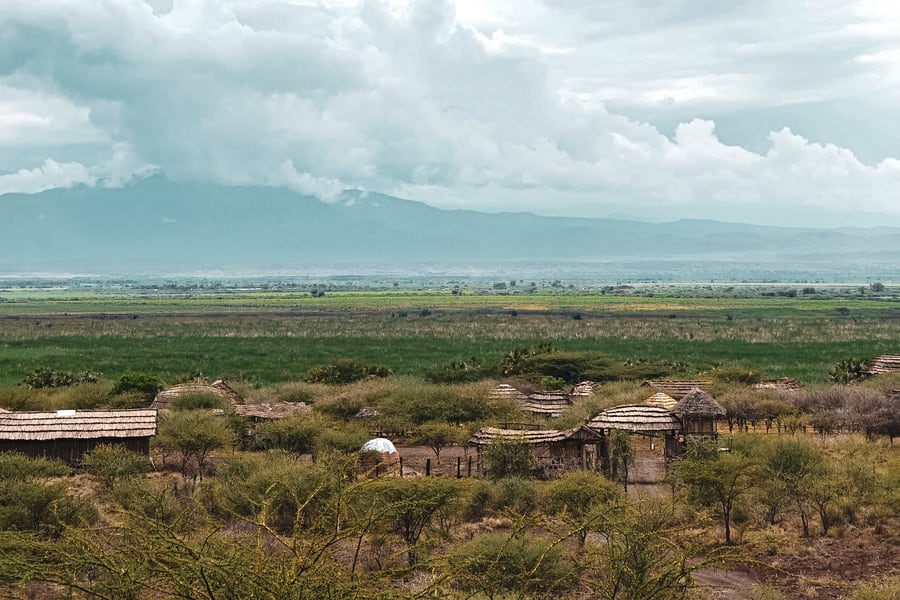
After Adama the railway falls. In the two and a half hours to Metehara it loses nearly seven hundred metres, dropping off the escarpment into the Great Rift Valley and running out onto the floor of it at 966 metres. This is the stretch the map is worth looking at even though you will sleep through it: acacia scrub, the black lava fields around Metehara, and then the Awash river, which the line crosses on a bridge of 155 metres at 870 metres above the sea — the lowest ground between Addis Ababa and Dire Dawa. Awash National Park, 827 square kilometres of savanna and palm-fringed river, lies along the track here. The train does not stop for it.
Beyond the river the railway climbs again, four hundred metres up to Mieso at half past four in the morning, then swings east and falls away a second time through Bike and down into the Somali lowlands. Dire Dawa arrives with the light, at 1,113 metres, in air that is already warm: the town averages 25.9 °C across the year and 35.6 °C on a June afternoon.
The train
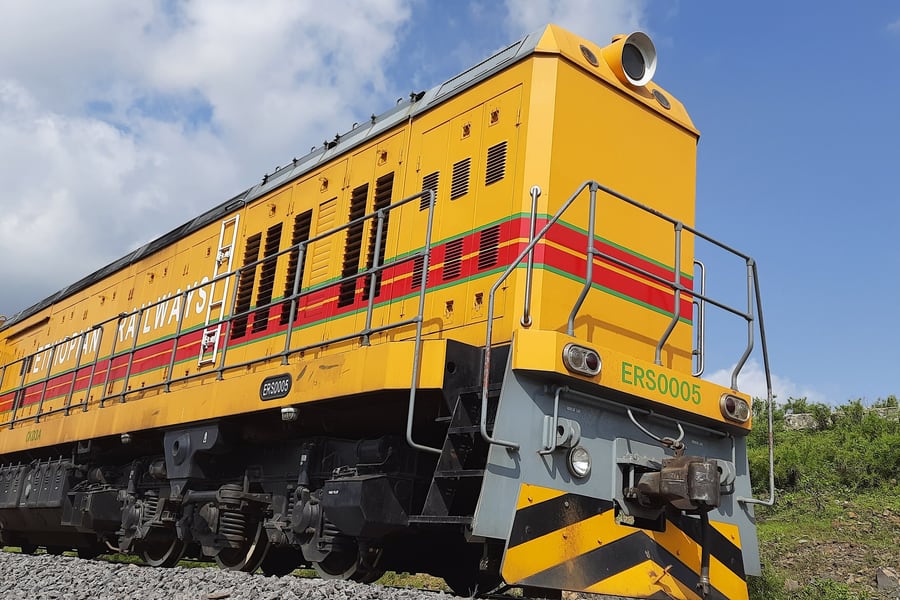
Ethiopia owns exactly three electric locomotives built to haul passengers. They are CRRC HXD1C machines, 7,200 kW, geared for 120 km/h, and they carry the national colours — green, yellow and red — where the thirty-two freight engines carry blue in place of the green. One of the three is on the front of your train. Behind it comes a rake of maroon-and-cream coaches in three grades: Regular Seat, an ordinary reclining car; Economy Bed, open bays of six berths stacked three high; and VIP Bed, four-berth compartments with a door that locks. A single traveller can book a whole VIP compartment, which is as close to a private sleeper as this railway gets.
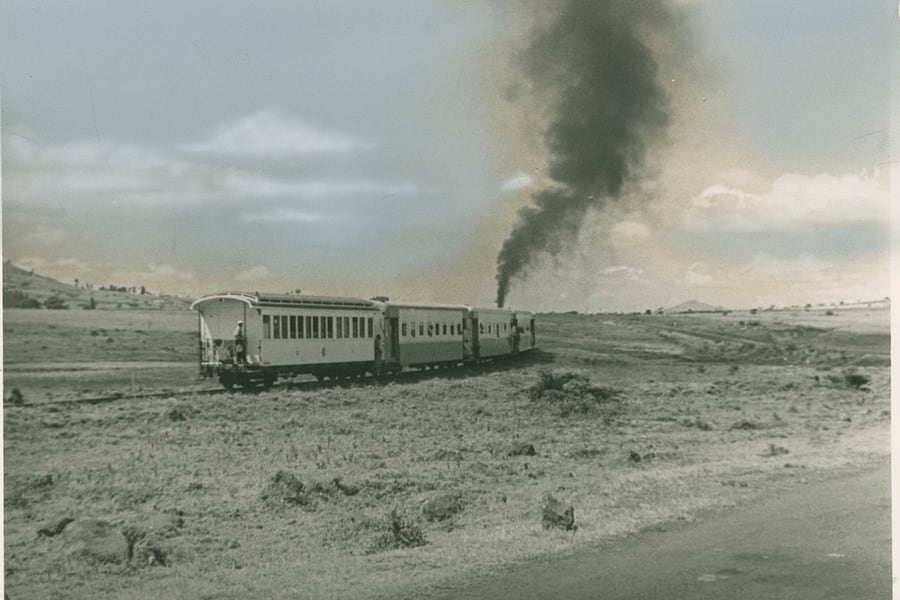
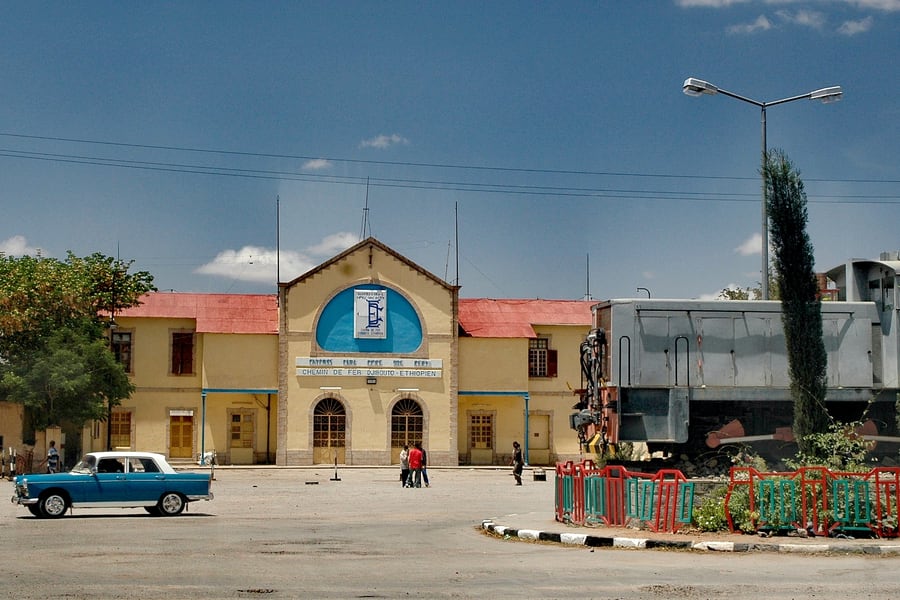
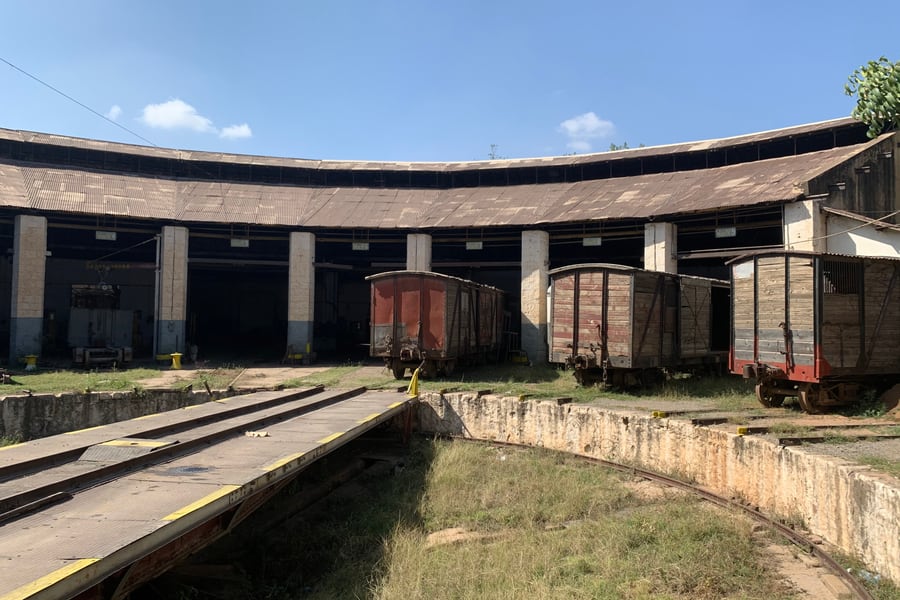
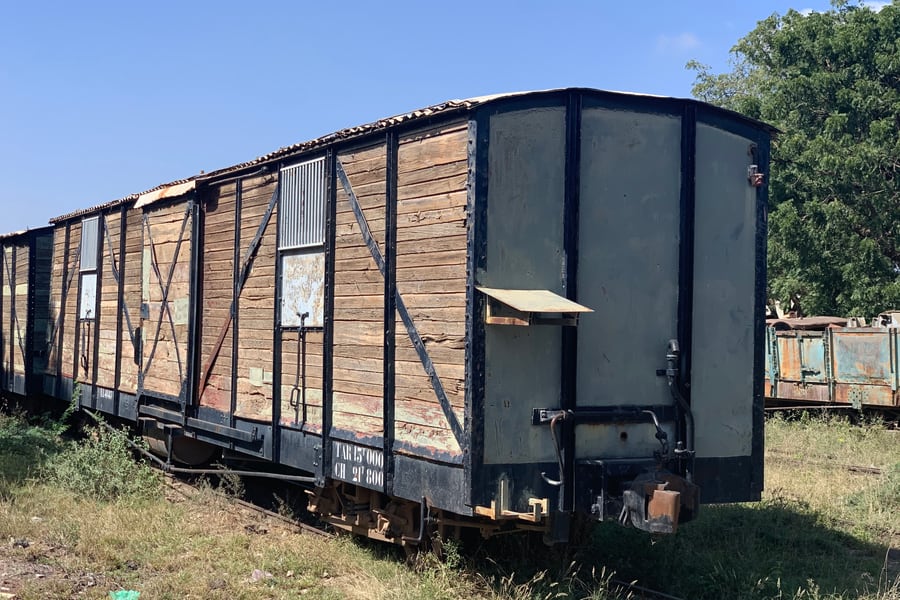
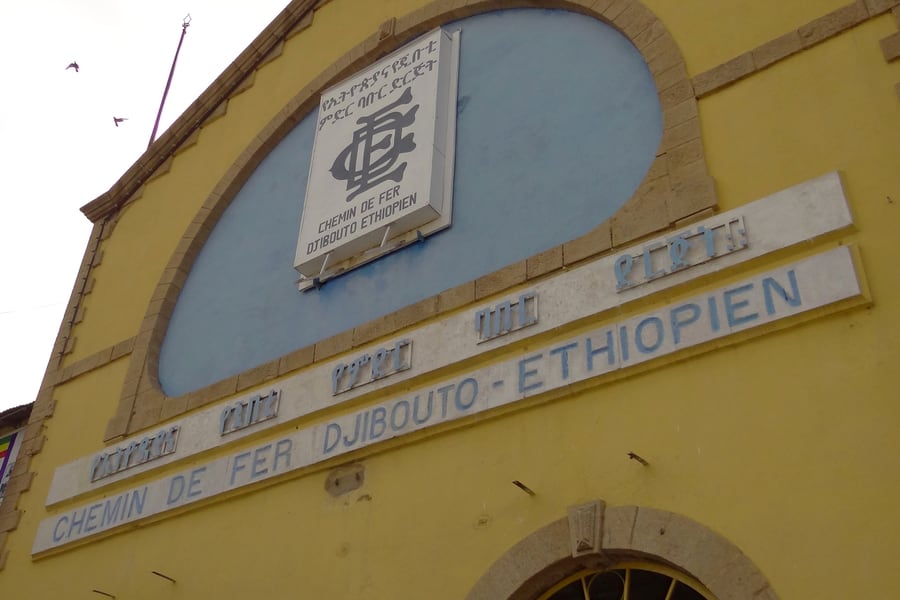
What you will not see, because it runs at the other end and mostly by day, is the international train onward from Dire Dawa to Djibouti. And what you may glimpse in the Dire Dawa yards is the railway this one replaced: French metre gauge, wooden-bodied vans, a semicircular roundhouse, and a station whose gable still reads Chemin de Fer Djibouto-Éthiopien in raised letters.
Along the route
 Nina R / Wikimedia Commons · CC BY 2.0 · 2020 · cropped
Twelve hundred metres, overnight
Furi-Lebu stands at 2,264 m; Dire Dawa at 1,113 m, with the Awash bridge at 870 m in between. The train gives most of that up in the dark, in two long descents separated by a four-hundred-metre climb back to Mieso.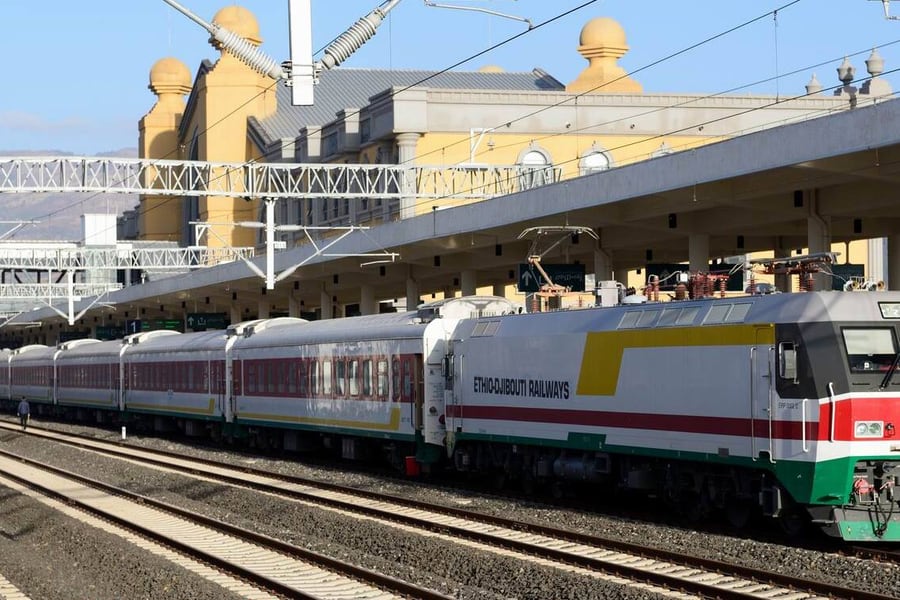 Matthias-Tf / Wikimedia Commons · CC BY-SA 4.0 · 2019 · cropped
Three locomotives for the whole service
Ethiopia bought thirty-two electric locomotives for freight and three for passengers. The three are CRRC HXD1C machines, 7,200 kW, and they wear green, yellow and red where the freight fleet wears blue. One of them is on the front.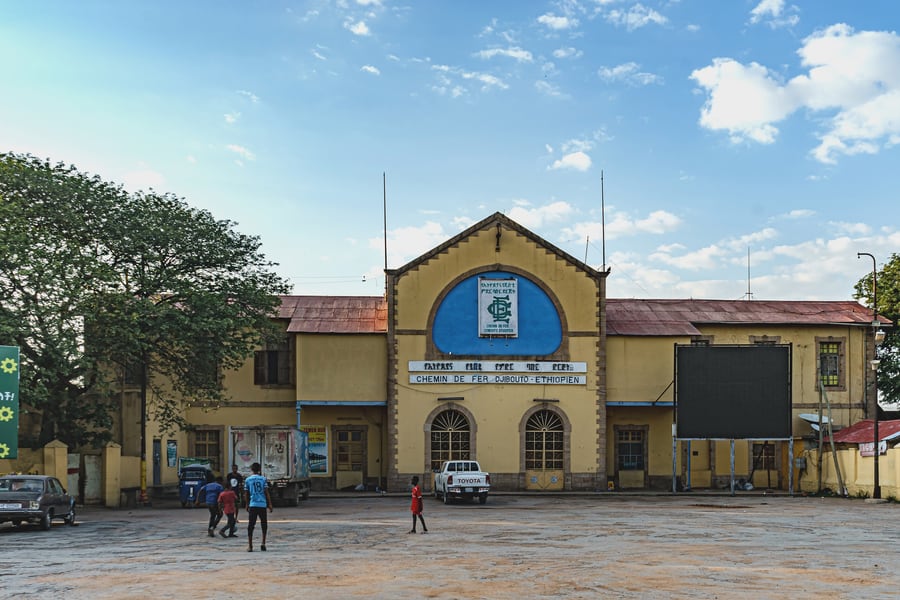 Ninara / Wikimedia Commons · CC BY 2.0 · 2021 · cropped
A town the railway invented
Dire Dawa is not an old place. It exists because the metre-gauge line could not climb to Harar, so Menelik II agreed in 1896 that it might stop at a village below the hills instead — and the trade came down to meet it.A bit of history
Culture & experiences along the way
 Adam Jones / Wikimedia Commons · CC BY-SA 2.0 · 2013 · cropped
The railway that is still there
The line this one replaced has not been lifted. Its station at Dire Dawa still carries Chemin de Fer Djibouto-Éthiopien in raised letters across the gable, with the company's cast monogram above it, and 213 rehabilitated kilometres east of the town still see a mixed train of goods and passengers. It is the best free railway museum in Ethiopia, and it is not a museum.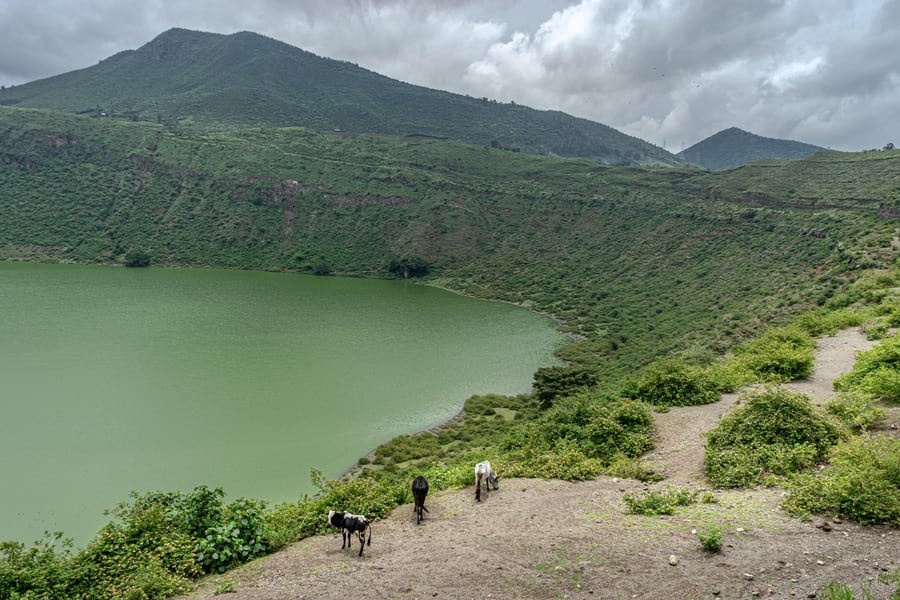 Nina R / Wikimedia Commons · CC BY 2.0 · 2021 · cropped
A day at Bishoftu first
Train 101 does not leave until the evening, which leaves a whole day free. Bishoftu, the first proper stop, is 67 km out and built among a group of volcanic crater lakes — Hora, Bishoftu, Kuriftu — with a resort or two on the water and cattle coming down to drink at the rim. It is the obvious place to spend the afternoon before the night train.Timetables
Train 101 runs east on odd-numbered days of the month; train 102 runs west on even-numbered days. There is no service in either direction on the days between, and the pattern resets at the start of each month, so two odd days can fall back to back.
Train 101 — Addis Ababa to Dire Dawa
| Station | Departs |
|---|---|
| Sebeta | 19:30 |
| Lebu (Addis Ababa) | 21:00 |
| Bishoftu | 22:10 |
| Modjo | 22:50 |
| Adama | 23:30 |
| Metehara | 01:50 |
| Mieso | 04:30 |
| Bike | 06:10 |
| Dire Dawa | arrives early morning |
Train 102 — Dire Dawa to Addis Ababa
| Station | Departs |
|---|---|
| Dire Dawa | 21:30 |
| Bike | 23:00 |
| Mieso | 00:30 |
| Metehara | 02:50 |
| Adama | 05:10 |
| Modjo | 05:50 |
| Bishoftu | 06:40 |
| Lebu (Addis Ababa) | 08:10 |
| Sebeta | arrives shortly after |
EDR's booking system prints a flat ten hours for the run and stamps the arrival at 05:30, but its own intermediate times do not support that — the train is still at Bike, some seventy kilometres short, at 06:10. Plan on being off at Dire Dawa nearer eight, and treat the small hours as approximate.
Booking closes about two hours before departure. Onward to Djibouti, trains K1 and K2 work Dire Dawa to Nagad (Djibouti City) in six hours, K1 leaving Dire Dawa at 08:30 on odd days and K2 leaving Nagad at 08:00 on even days. Because 101 arrives on an even morning and K1 leaves on odd ones, a through trip east means a night in Dire Dawa; westbound, K2 gets in at 14:00 and 102 leaves the same evening.
Times as of August 2026, taken from EDR's own booking system at bookingedr.et (opens in a new tab), which publishes each dated departure and its calling times. The static timetable on edrsc.com (opens in a new tab) still shows an older daytime working and does not match.
Tickets
Tickets are sold online at bookingedr.et (opens in a new tab), with no account needed. Ethiopians are checked against the national ID system as they book; everyone else enters a passport number instead, and the fare then doubles — a foreigner pays exactly twice the resident rate for the same berth, quoted in US dollars rather than birr. Under-fives travel free, one per adult.
The catch is payment. The portal takes Telebirr, Waafi, D-Money and CBE Birr, all of them Ethiopian or Djiboutian mobile-money schemes, and lists no international card, so a visitor without a local wallet is likely to be buying at a station counter or through EDR's call centre on 9546. Booking closes about two hours before departure. The ticket is a PDF with a QR code; bring the passport it was issued against.
Fares checked August 2026.
Book your tickets
Regular Seat
Reclining seat, Addis Ababa to Dire Dawa
The ordinary seated car, and the cheapest way across; residents pay half the same figure.
Book Tickets (opens in a new tab, on bookingedr.et)via bookingedr.etEconomy Bed
Open bays, six berths stacked three high
An upper berth is the cheapest bed on the train and a lower berth the dearest of the three.
Book Tickets (opens in a new tab, on bookingedr.et)via bookingedr.etVIP Bed
Four-berth compartment with a door
A single traveller can book the whole compartment, which is the nearest thing here to a private sleeper.
Book Tickets (opens in a new tab, on bookingedr.et)via bookingedr.etRail Passes
No rail pass covers Ethiopia. Interrail's One Country Pass list runs from Austria to Türkiye and stops there — every pass it sells is European, and there is no African or Ethiopian equivalent. Nor would there be much for one to do: the country has three railway lines, all built within the last decade, and no network for a multi-journey ticket to roam. Every seat and berth is bought for the individual journey.
That is not the constraint it sounds like. The whole 446 kilometres from Addis Ababa to Dire Dawa costs a foreign visitor about US$27 in a reclining seat and about US$62 in a locking four-berth compartment, which is not the sort of fare a pass exists to soften. What would genuinely help is a local mobile-money wallet, because that — not a card — is what the booking system takes.
Checked against EDR's booking system and the Interrail pass list, August 2026.
Places to Visit
Almost the whole of this journey happens in the dark, which changes what "places along the route" means. The two ends are where the time goes: a day at Bishoftu on the way out of the plateau, and whatever you give Dire Dawa and the walled city beyond it at the far end. In between, Awash National Park is the one stop worth breaking the journey for in daylight — though not by this train, which passes it in the middle of the night and does not call.
 Nina R / Wikimedia Commons · CC BY 2.0 · 2021 · cropped
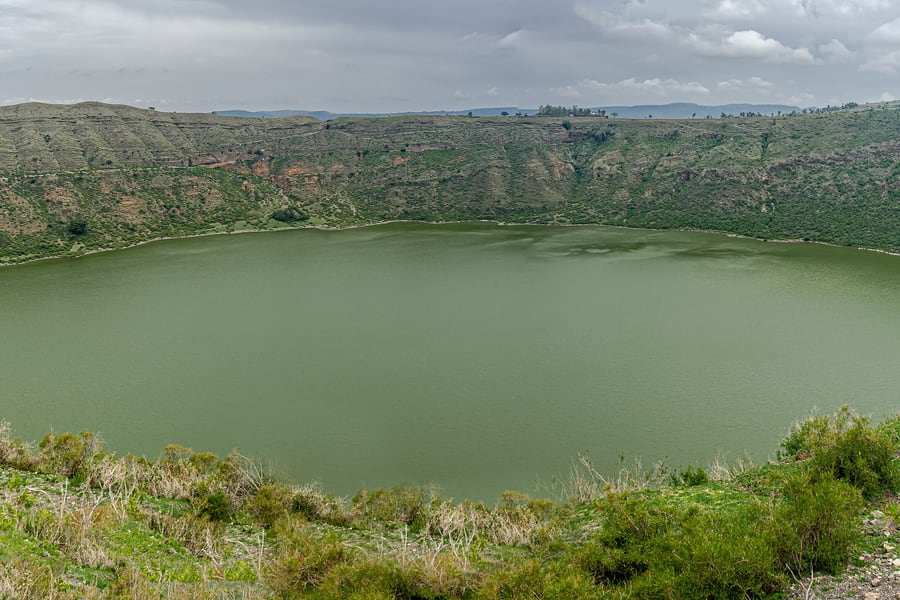
The crater lakes at Bishoftu
Sixty-seven kilometres out and the first station worth getting off at. Bishoftu is built around a cluster of explosion craters, each holding a lake — Bishoftu, Hora, Kuriftu — with steep green rims and water that runs from jade to olive depending on the light and the season. It is the weekend escape for Addis Ababa, an hour away by road, and the reason there are resorts on a lake in the middle of the Oromia plateau.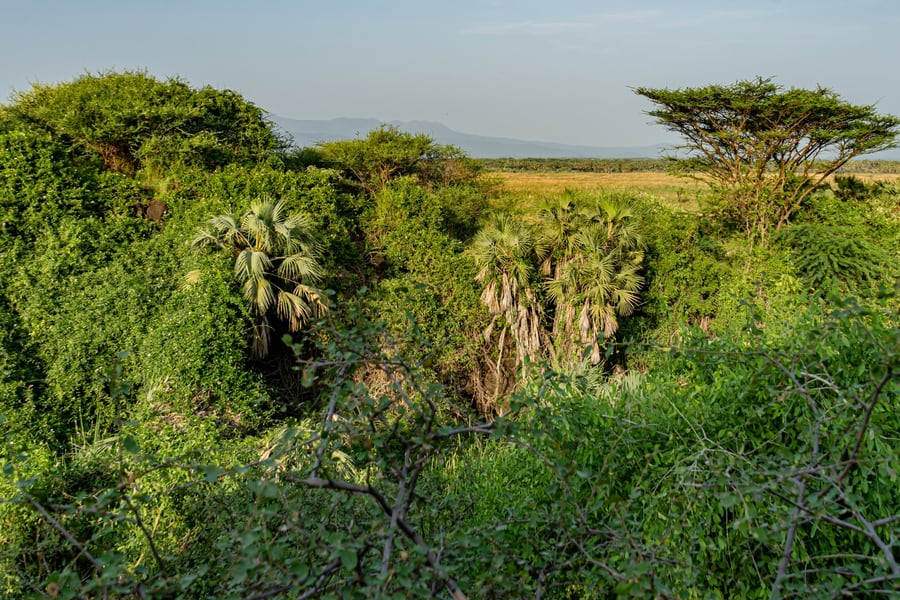 Nina R / Wikimedia Commons · CC BY 2.0 · 2021 · cropped
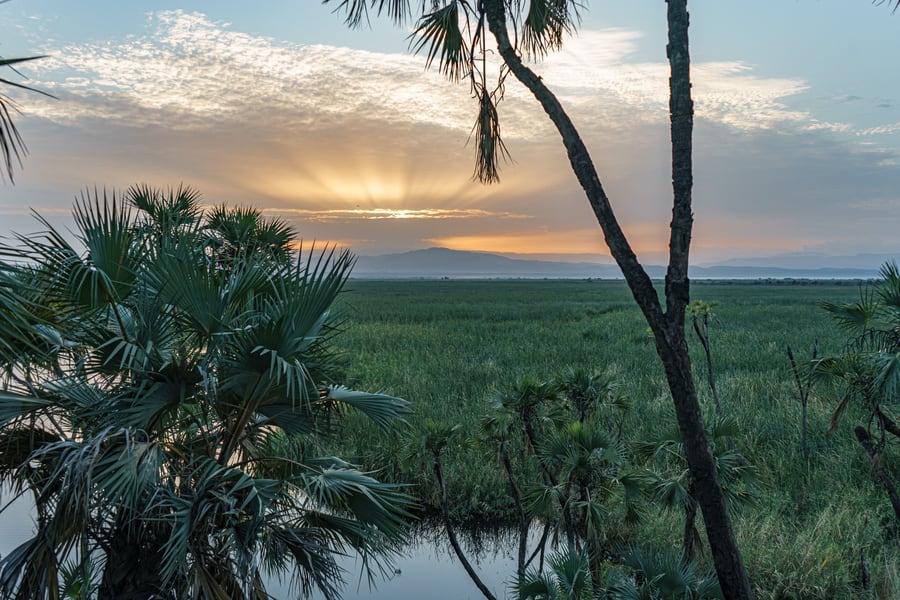
Awash National Park
Eight hundred and twenty-seven square kilometres of acacia savanna, lava field and riverine forest on the floor of the Rift, most of it around 900 metres up, straddling the Oromia and Afar boundary. The Awash river cuts a gorge through the southern edge of it and the doum palms follow the water. The railway runs along the park and does not stop: this one is reached by road, 225 km east of Addis Ababa.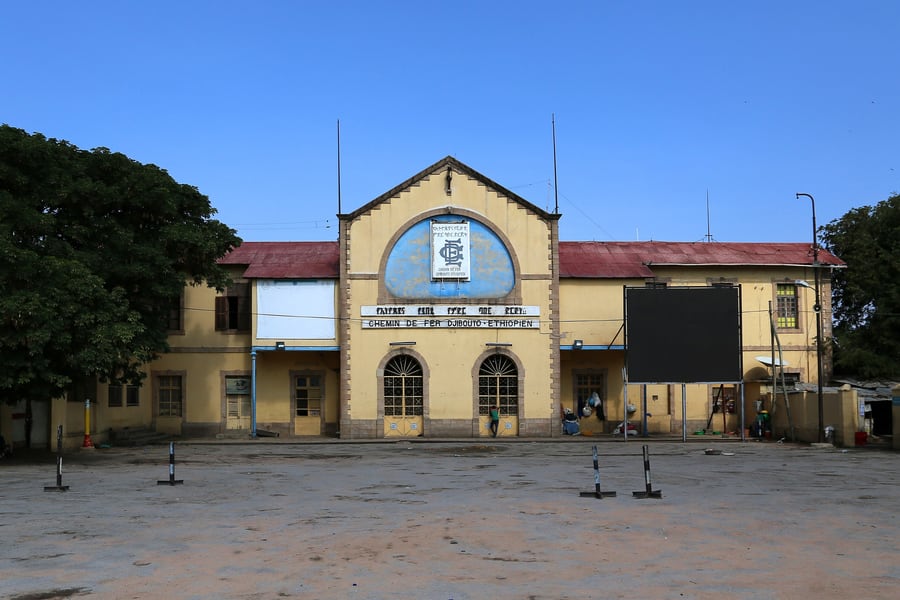 Sailko / Wikimedia Commons · CC BY 3.0 · 2018 · cropped
Kezira, the railway quarter of Dire Dawa
The French laid Dire Dawa out in two halves: Kezira, the grid of shaded streets the railway company built beside its station, and the older quarter across the Dechatu riverbed, which grew on its own. Kezira still has the 1902 station at the end of it — ochre walls, a blue tympanum, the company's monogram over the door — and the yard behind still holds a roundhouse and a line of wooden vans.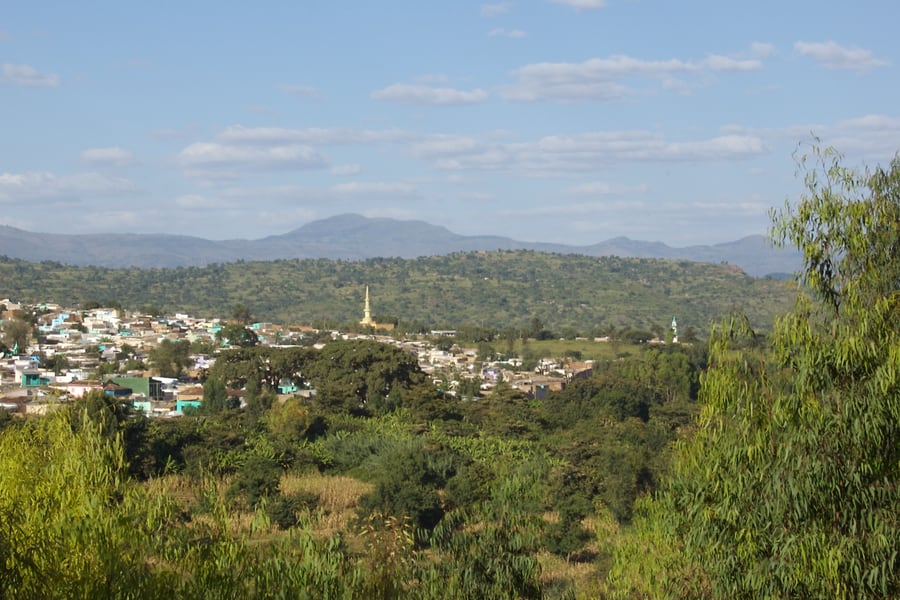 A. Davey / Wikimedia Commons · CC BY 2.0 · 2007 · cropped
Harar, an hour beyond the terminus
The walled city the railway could not reach, and the reason Dire Dawa exists. Harar sits in the hills about fifty kilometres south-east, was the capital of its own emirate until Menelik took it in 1887, and keeps a dense sixteenth-century core of lanes, mosques and courtyard houses inside its walls. Getting there is a minibus from Dire Dawa, up the climb that defeated the engineers — the road was cut in 1928, thirty years after they gave up.Where to Sleep
Eastbound the train leaves late enough that you get a whole day in Addis Ababa first, and arrives early enough that a room in Dire Dawa is worth booking for the night you land rather than the night after. Westbound is the reverse: 102 pulls out of Dire Dawa at half past nine in the evening and sets you down at Lebu after eight the next morning.
Nothing stands at the stations themselves. Sebeta and Furi-Lebu are out on the south-western edge of the capital, well away from anywhere you would choose to stay, and Dire Dawa's new station sits about ten kilometres north-west of the town — the old station, in the Kezira quarter, is the one in the middle of things. Plan on a taxi at both ends.
Where to stay
Ethiopian Skylight Hotel
At Bole airport, Addis Ababa
A 1,024-room hotel five minutes' walk from Addis Ababa Bole International Airport, with a further 97 rooms inside the terminal itself and a free airport shuttle around the clock.
Check Availability (opens in a new tab, on ethiopianskylighthotel.com)via ethiopianskylighthotel.comKuriftu Resort & Spa Bishoftu
On the lake at Bishoftu, 67 km out
A lakeside resort on the water at Bishoftu, the first town the train calls at, with gardens, a rooftop terrace, three restaurants and a spa.
Check Availability (opens in a new tab, on kurifturesorts.com)via kurifturesorts.comDire Dawa Ras Hotel
In Kezira, the old railway quarter
A hotel in Kezira, the historic heart of Dire Dawa, with air-conditioned rooms and suites and breakfast included.
Check Availability (opens in a new tab, on diredawarashotel.com)via diredawarashotel.comQuestions or corrections
Planning this trip and stuck on something, or spotted a time, fare or detail that has changed? Send us a message about Addis Ababa to Dire Dawa — Ethiopia's electric night train. We read every one, and we update this page when something has changed.