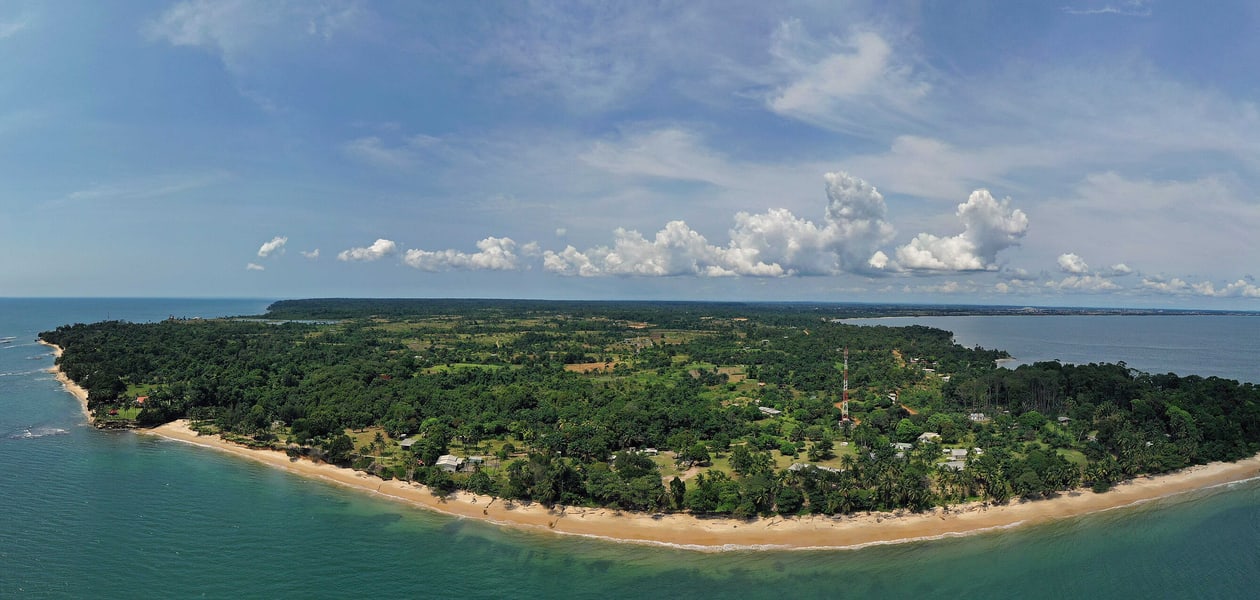
Gabon
VIGNA christian / Wikimedia Commons · CC BY-SA 4.0 · cropped
Gabon sits astride the equator on the Atlantic coast of Central Africa, about 270,000 km² with only around 2.6 million people — one of the emptiest countries on the continent, and one of the greenest, with forest over the great majority of it. Equatorial Guinea and Cameroon lie to the north, the Republic of the Congo to the east and south, and São Tomé and Príncipe across the water to the west. Libreville is the capital and largest city; Port-Gentil is the oil town and Franceville the interior's. Behind the coastal plain the ground rises into low mountains and, in the east, savanna.
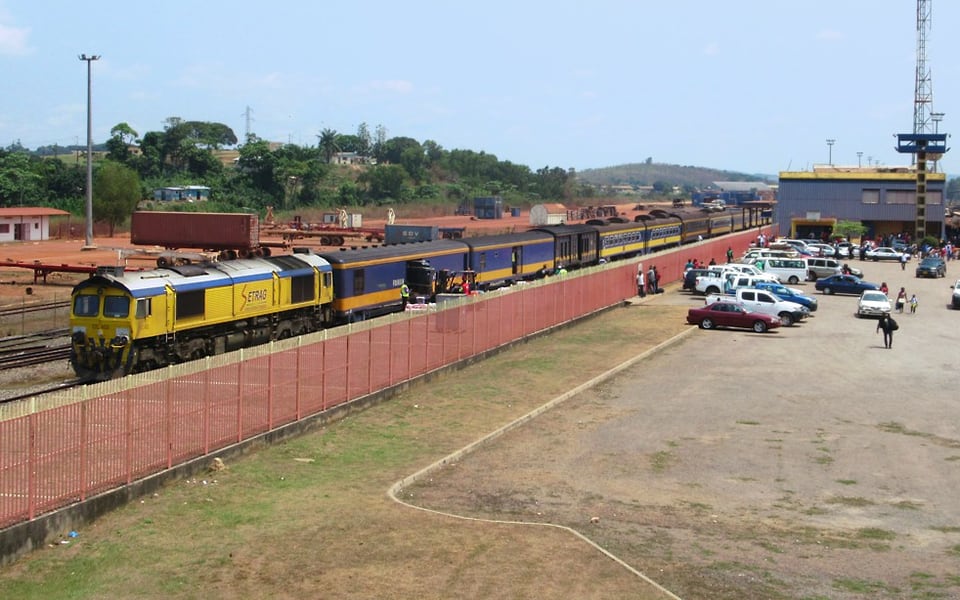
Rail travel in Gabon means one line. The Transgabonais runs 648 km east from the port of Owendo, on the edge of Libreville, to Franceville, serving 23 intermediate stations — single track, standard gauge, unelectrified and diesel-worked. It was begun in October 1974, financed largely out of the oil windfall after the World Bank declined the project on economic grounds, and reached Franceville on 30 December 1986 at a cost of roughly US$1.65 billion. It was built to move manganese, and it is also the country's main overland link to the interior.
Rail journeys in Gabon
Good to know
Why does Gabon have only one railway?
Because it only ever needed one. The Transgabonais was conceived as the centrepiece of Omar Bongo's post-independence modernisation and was built to carry manganese from Moanda to a deep-water port; there was no second mineral flow to justify a second line. Almost nine-tenths of the country is forest with a very small population spread thinly through it, and no other corridor could ever have paid for itself.
Who runs the Transgabonais?
SETRAG — the Société d'Exploitation du Transgabonais — under a long-term concession. It is a subsidiary of the manganese producer COMILOG, which is itself majority-owned by the French mining group Eramet, with Meridiam and the Gabonese state also holding stakes. Passenger service is written into the concession as a public-service obligation rather than being a commercial line of business, which is why it runs on the pattern it does.
What does the railway pass through?
Between Booué and Lastoursville the line crosses the UNESCO-listed Ecosystem and Relict Cultural Landscape of Lopé-Okanda, where forest meets savanna, and it crosses the Ogooué and the Ivindo rivers in quick succession near their confluence. Lopé has its own station, and it is where visitors leave the train for the national park.
Are there rail passes for Gabon?
No. With a single line there is nothing for a pass to cover, and Gabon belongs to no regional scheme. Tickets are bought for the individual train; the express services carry three classes and a restaurant car, and the all-stations service is plainer.