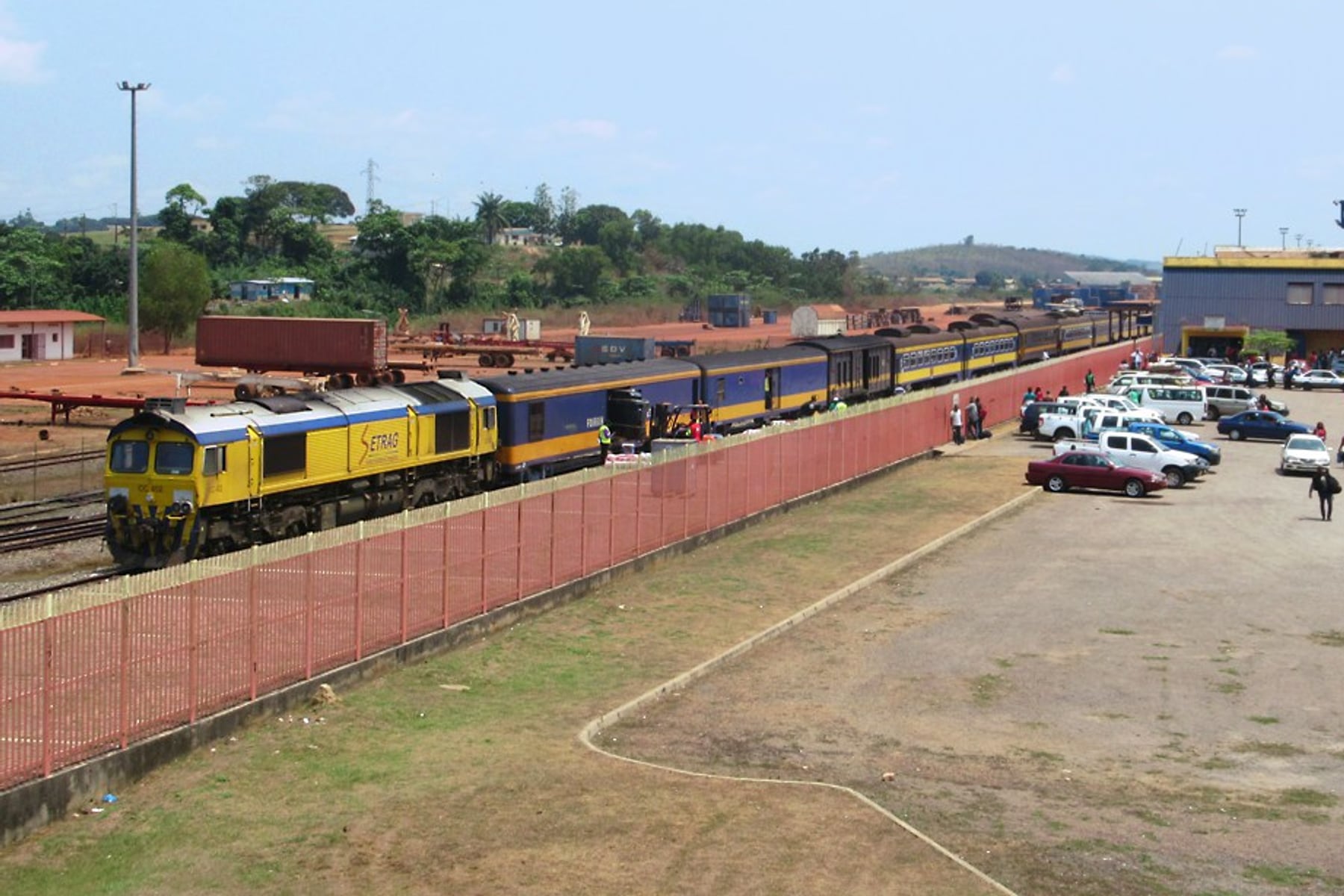
The Transgabonais - Owendo to Franceville
David Stanley / Wikimedia Commons · CC BY 2.0 · 2018 · cropped
- Distance648 km, Owendo to Franceville
- DurationAbout 18 hours end to end
- Best seasonFour departures a week, all year · June to September is the long dry season
Introduction
Gabon has one railway. It runs 648 km from the manganese port of Owendo, on the edge of Libreville, east and then south to Franceville, and there is nothing else — no branch a passenger can ride, no second line, no competitor. Almost nine-tenths of the country is forest and the parallel road is in poor condition for long stretches, so the Transgabonais is by a wide margin the most important overland link between the capital and the interior. Gabonese call it the train Bongo, after the president who built it out of the oil money of the 1970s once the World Bank had declined to fund it.
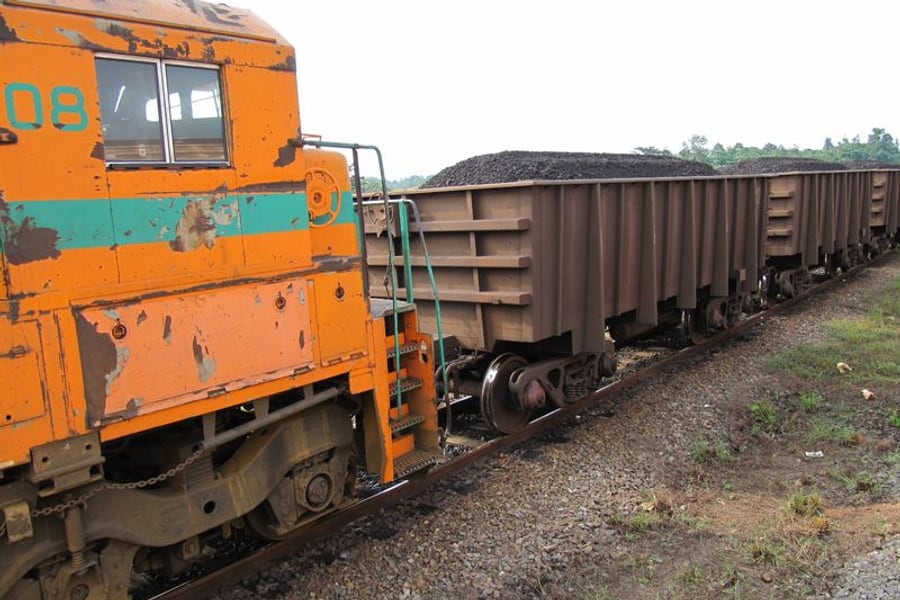
Two trains work the line under one timetable. The Train Express Trans-Ogooué stops only at the principal stations and carries three classes with a restaurant car; the all-stations Train Omnibus L'Équateur stops everywhere and carries two. Between them they make four departures a week in each direction, most of them overnight, and the run takes about eighteen hours. Roughly a quarter of a million people a year travel on them under a public-service obligation written into the operator's concession — passengers are about a tenth of SETRAG's turnover, and manganese is the rest.
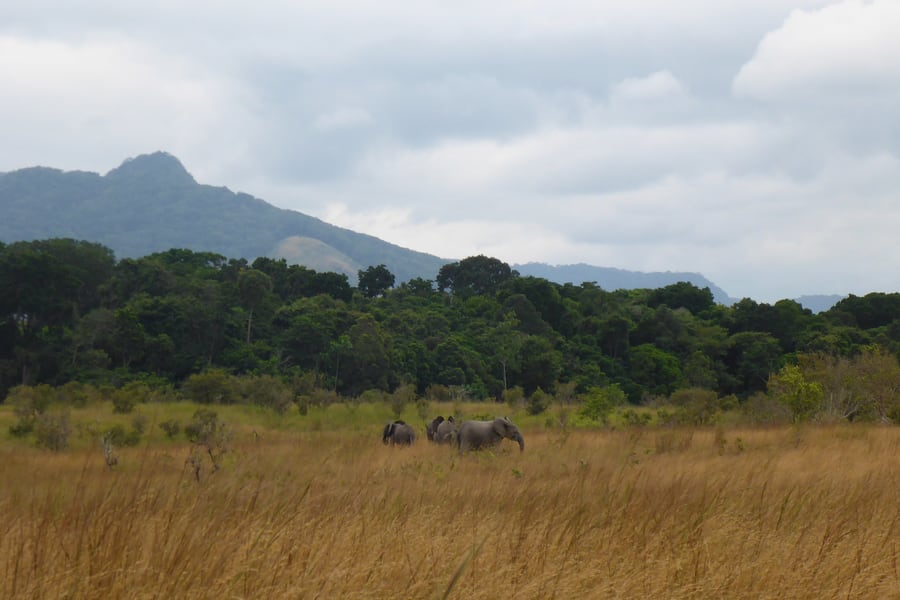
What the line is worth riding for sits in the middle of it. Between Booué and Lastoursville the railway crosses the Ecosystem and Relict Cultural Landscape of Lopé-Okanda, a UNESCO World Heritage Site where equatorial forest gives way to savanna, and it crosses the Ogooué and the Ivindo near their confluence. Lopé has its own station, and it is where visitors get off for the national park.
The Journey
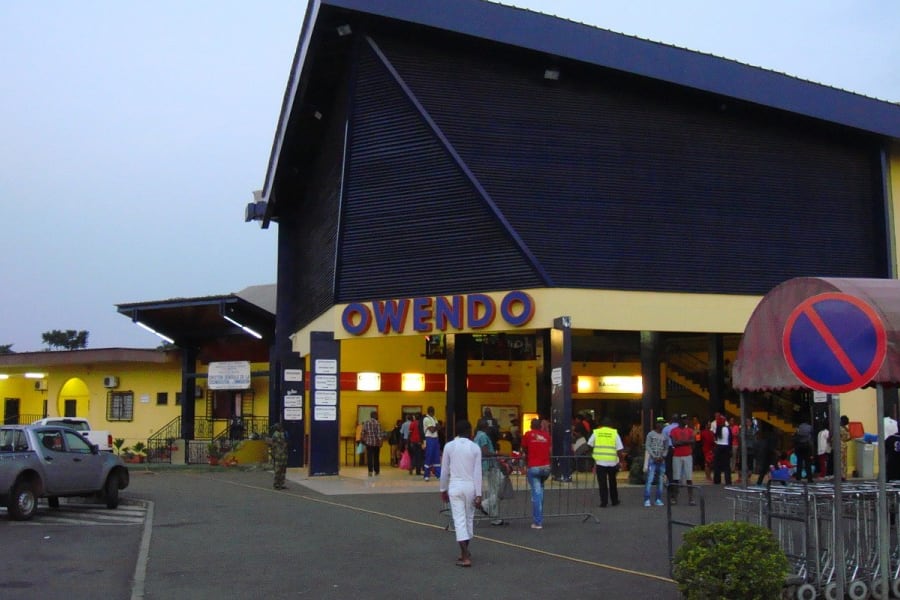
The train leaves from Owendo, which is the port rather than the city — Libreville itself has no station, and the terminus stands at PK 0 among the manganese stockpiles about ten kilometres south of the centre. For the first two hours the line keeps to the low country behind the estuary, through Ntoum and Andem, before it turns inland and begins the long haul up the Ogooué.
Ndjolé, at PK 182, is where the character changes. West of it the alignment follows the lower river; beyond it the railway climbs towards the interior plateau, crossing the Abanga swamp on a viaduct and working through the broken relief of the Monts de Cristal foothills. This was the stretch that nearly broke the project: unstable ground, heavy earthworks, and a right of way ninety metres wide cut through primary rainforest by a track-laying machine the builders nicknamed the dinosaur.
Through Lopé-Okanda
From Lopé to Booué and on towards Lastoursville the line runs inside the UNESCO World Heritage Site, and this is the part of the journey worth staying awake for. Forest alternates with open savanna, the Ogooué is close by on the left for much of it, and near Booué the railway crosses the Ogooué and the Ivindo one after the other, close to the point where the two rivers meet. The whole line crosses the Ogooué five times — at Franceville, at Ndjolé, three times around Booué — and passes three Ramsar wetlands on the way.
The trains themselves
Traction is diesel throughout, on a single unelectrified track laid to standard gauge with a maximum design gradient of 8 ‰ and a line speed of 80 km/h. The heavy work is done by CRRC Ziyang DF8B machines from China, twenty-two of them delivered in four batches between 2010 and 2022 and worked in multiples on the manganese trains; two EMD JT42CWR locomotives — the Class 66 body familiar from European freight — arrived in 2011 and are what you are most likely to find on the front of a passenger train.
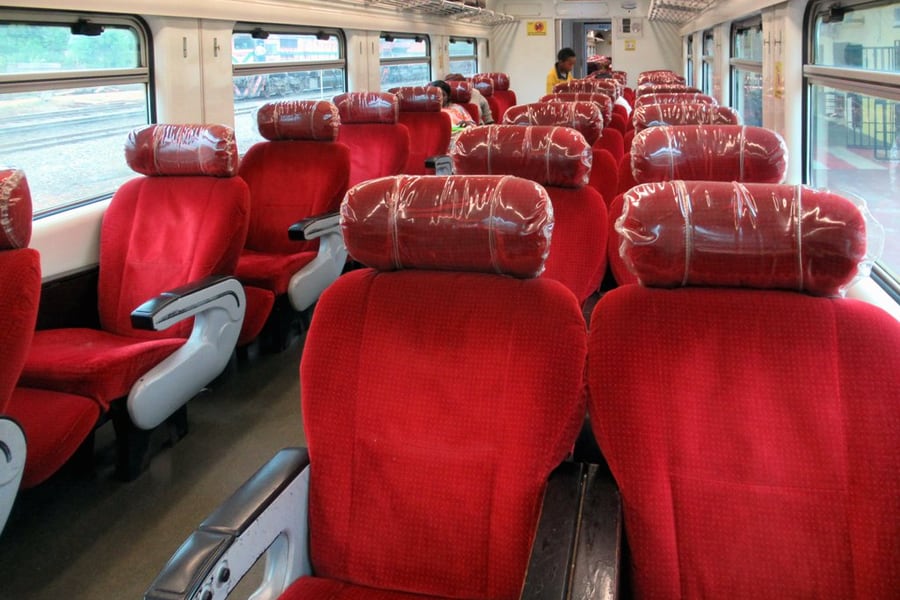
The carriages are a study in contrasts. The Express runs air-conditioned stock built in Germany in 2017, with reclining seats, tablets, power sockets, a restaurant car and a VIP saloon with its own lounge at the station either end. The Omnibus mixes Korean-built coaches delivered in 2011 with refurbished French vehicles of the 1960s. Since 23 December 2025 nine Express carriages have carried satellite Wi-Fi — a pilot using OneWeb, delivered with Airtel Gabon for 327 million CFA francs, which for now gives free access to WhatsApp and nothing else.
Along the route
One line, no alternative
Gabon has a single railway and no second one is planned. With the parallel road poor in places, the Transgabonais is the country's main overland link to the interior.Through a World Heritage Site
Between Booué and Lastourville the train runs inside Lopé-Okanda, where forest gives way to savanna, and crosses the Ogooué and the Ivindo close to their confluence.Built on the oil money
The World Bank refused to fund it in 1973 as uneconomic. Gabon built it anyway, out of the oil windfall, for about US$1.65 billion.A bit of history
Culture & experiences along the way
 Brigade Piron / Wikimedia Commons · CC BY-SA 4.0 · cropped
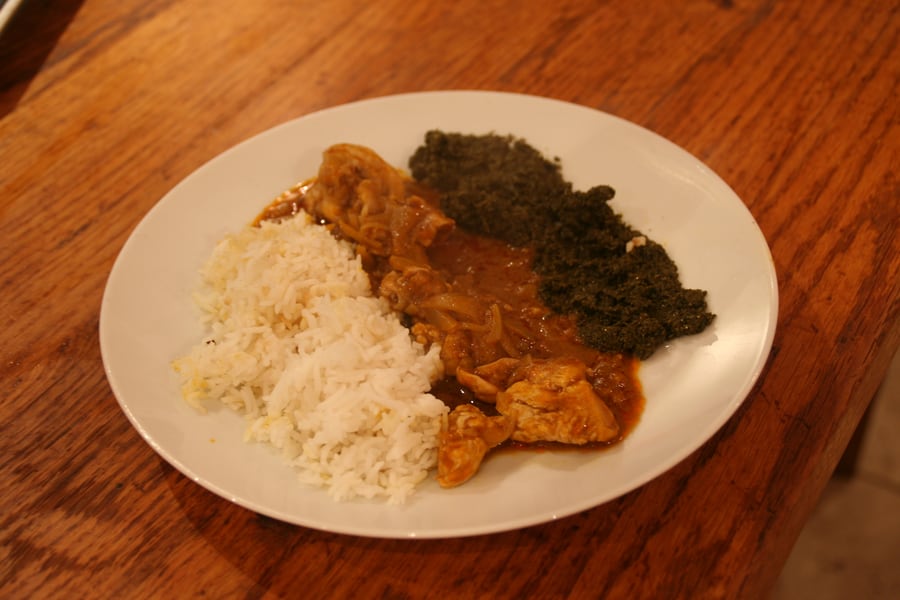
Poulet nyembwe, the dish to ask for
Gabon's national dish is chicken cooked in nyembwe — the thick orange butter pressed from the boiled fruit of the oil palm — with chilli, sometimes smoked fish, and rice or cassava alongside. It is rich, slightly sour and the colour of rust, and it is on every menu between Owendo and Franceville.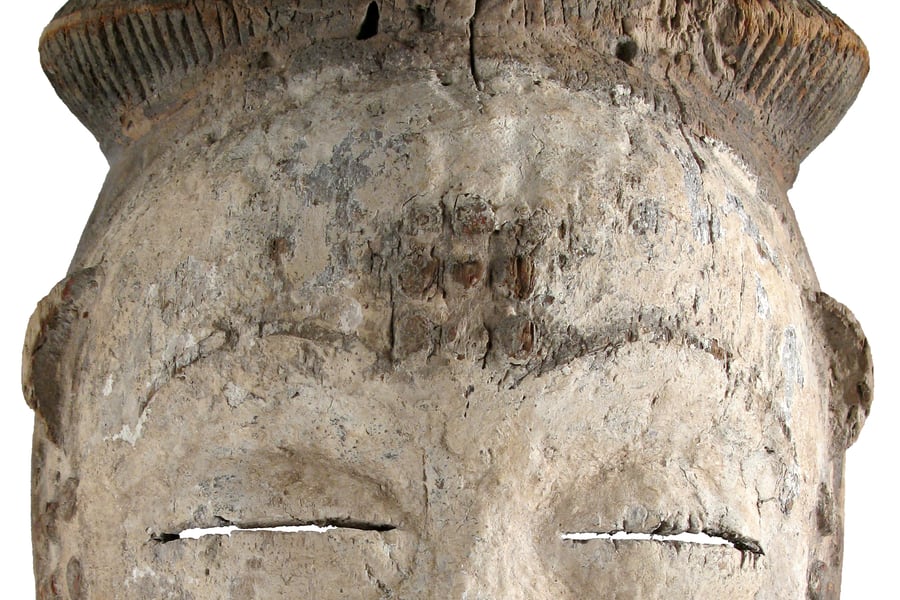 Ann Porteus / Wikimedia Commons · CC BY 2.0 · cropped
The white masks of the Punu
The best-known objects to come out of Gabon are the mukudj masks of the Punu of the south: a serene face coated in white kaolin, the eyes narrowed, the hair dressed in shell-shaped crests and the forehead and temples scarified in diamonds. They were danced on stilts, and they turn up in every account of what European modernism borrowed.Timetables
SETRAG publishes a programme de circulation rather than a timetable: departure day, train number, type and departure time, in both directions. Arrival times are not published, and the programme is reissued every few months.
| Day | Train | Type | Owendo → Franceville |
|---|---|---|---|
| Tuesday | 211 | Express | 22:00 |
| Thursday | 431 | Omnibus | 13:30 |
| Saturday | 611 | Express | 13:30 |
| Sunday | 731 | Omnibus | 16:00 |
| Day | Train | Type | Franceville → Owendo |
|---|---|---|---|
| Tuesday | 230 | Omnibus | 22:00 |
| Thursday | 410 | Express | 13:30 |
| Saturday | 630 | Omnibus | 13:30 |
| Sunday | 710 | Express | 16:00 |
Four departures a week each way, of which two are Express and two Omnibus. The Express calls only at the principal stations — Ndjolé, Lopé, Booué, Ivindo, Lastourville and Moanda — while the Omnibus stops at all of them; SETRAG counts twenty-four stations on the line, seven of them principal, at an average spacing of about forty kilometres. The numbering follows the week, so a train whose number begins with a 2 runs on a Tuesday, and an odd last digit means it is leaving Owendo.
End to end the run takes about eighteen hours. Passengers interviewed at Owendo in April 2024 had left Franceville at 12:00 on the Express and arrived at 06:05 the next morning, standing twenty minutes at Lastourville on the way. Incidents on the single track do happen, and when they do SETRAG cancels trains and reprograms them a day or two later — as it did in July 2026 — so leave slack at the far end of a connection.
Programme as last published by SETRAG in April 2026, with the same four trains named in the operator's own service notice of 15 July 2026. SETRAG's commercial site, setrag.ga, is offline for maintenance; the operator's notice directs travellers to its institutional site at setrag.eramet.com (opens in a new tab), and its information line inside Gabon is 1330.
Tickets
Tickets are sold at station ticket offices, and only there. SETRAG has no online sale and no app that takes payment, and its commercial website is offline for maintenance; the information line inside Gabon is 1330. Buy several days ahead where you can — seats on the Express sell out, and the ticket office is also where baggage is checked in on the day of departure, three pieces per traveller.
Refunds are worth understanding first. Cancel twenty days out and SETRAG keeps 20 per cent, ten days out 15 per cent, five days out 5 per cent; cancel on the day of travel and there is no refund. Changing the date, or the name on the ticket, is not currently offered on the Transgabonais.
Fares are the last SETRAG published, in Central African CFA francs, cheapest class in each case.
Book your tickets
Owendo to Franceville
The whole line, 648 km
The through fare, cheapest class, on either the Express or the Omnibus.
Book Tickets (opens in a new tab, on setrag.eramet.com)via setrag.eramet.comOwendo to Lopé
For the national park, 290 km in
The fare to the station most visitors to Lopé-Okanda get off at.
Book Tickets (opens in a new tab, on setrag.eramet.com)via setrag.eramet.comOwendo to Booué
The river town at the confluence
Booué is where the line crosses the Ogooué and the Ivindo in quick succession.
Book Tickets (opens in a new tab, on setrag.eramet.com)via setrag.eramet.comRail Passes
No rail pass covers Gabon. Interrail and Eurail are European products sold for a fixed list of European countries, and there is no African scheme that includes SETRAG. Nor is there anything for a pass to be spent on: the country has a single line with a single operator, four departures a week in each direction, and no connecting railway at either end.
SETRAG sells no multi-journey or season product for the Transgabonais either. Fares are charged by distance between the station you board at and the station you leave at, bought one journey at a time at the counter.
Through ticketing to a neighbouring country does not exist. The rails stop at Owendo and at Franceville; the Congolese border, the Cameroonian border and the Equatorial Guinean border are all reached by road, bought separately.
Checked August 2026.
Places to Visit
The Express calls at six places between the two termini, and they are not interchangeable. Lopé is the reason most visitors take this train at all; Booué is the river town at the confluence; Lastourville sits above the Ogooué rapids at the head of a limestone country full of caves; Moanda is the mine that pays for the railway. Ndjolé and Ivindo are smaller, and are stops rather than destinations.
Getting off is straightforward — every principal station has a ticket office and the town is walking distance — but getting on again is governed by the programme, so a stopover at Lopé or Lastourville means at least two nights unless you are prepared to travel on the Omnibus in one direction.
 Vincent.vaquin / Wikimedia Commons · CC BY-SA 3.0 · 2010 · cropped
Lopé
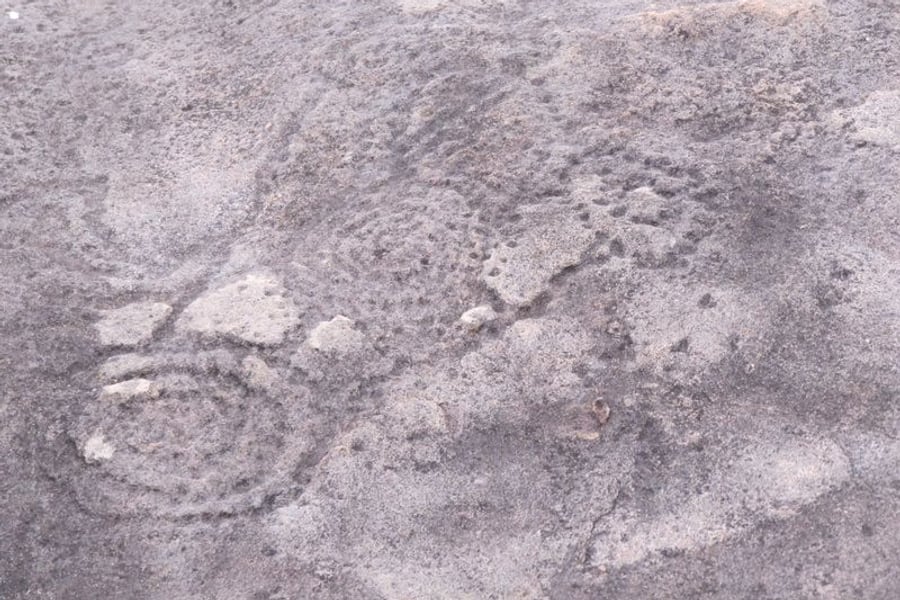
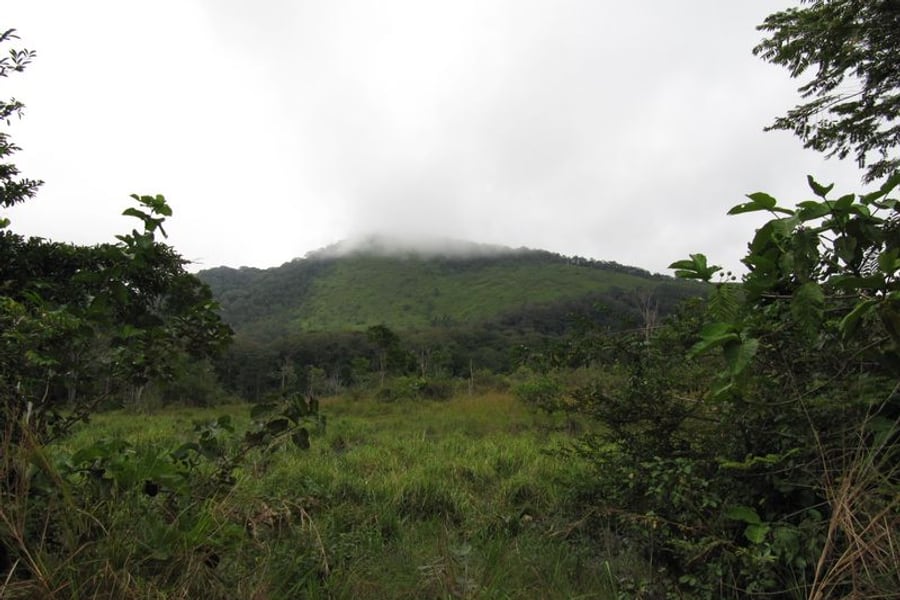
The station for the Lopé National Park, 4,912 km² of it, bounded by the Ogooué to the north and the Chaillu Massif to the south. What makes it a World Heritage Site is the meeting of two things: a mosaic of relict forest and savanna that survived the last ice ages, and a landscape lived in for thousands of years, with rock engravings still on the boulders along the river. Forest elephants, buffalo and mandrills are all here.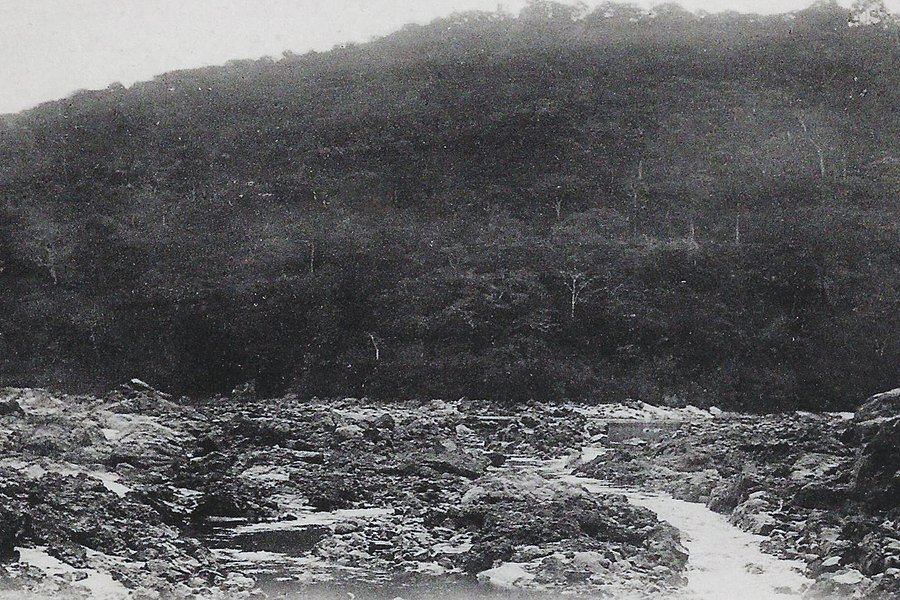 Collection S.H.O. / Wikimedia Commons · Public domain · about 1900 · cropped
Booué
A river town at PK 338, and the point where the railway crosses the Ogooué and the Ivindo within a few kilometres of their confluence. It is the junction of the country's two great waterways and the natural break in the journey, roughly halfway. The Ogooué runs over a rock bed here, bared at low water and photographed for the postcard trade seventy years before the railway arrived.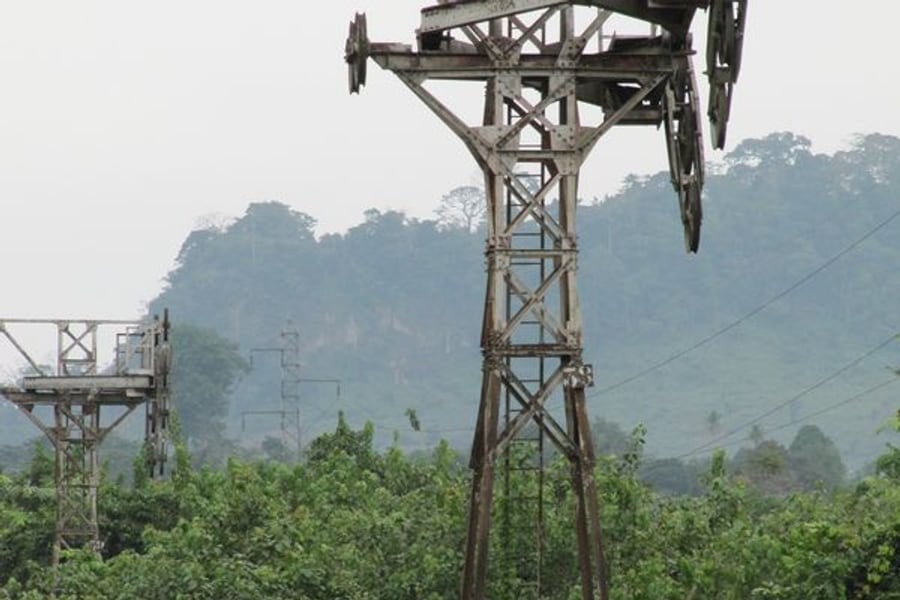 Vincent.vaquin / Wikimedia Commons · CC BY-SA 3.0 · 2010 · cropped
Moanda
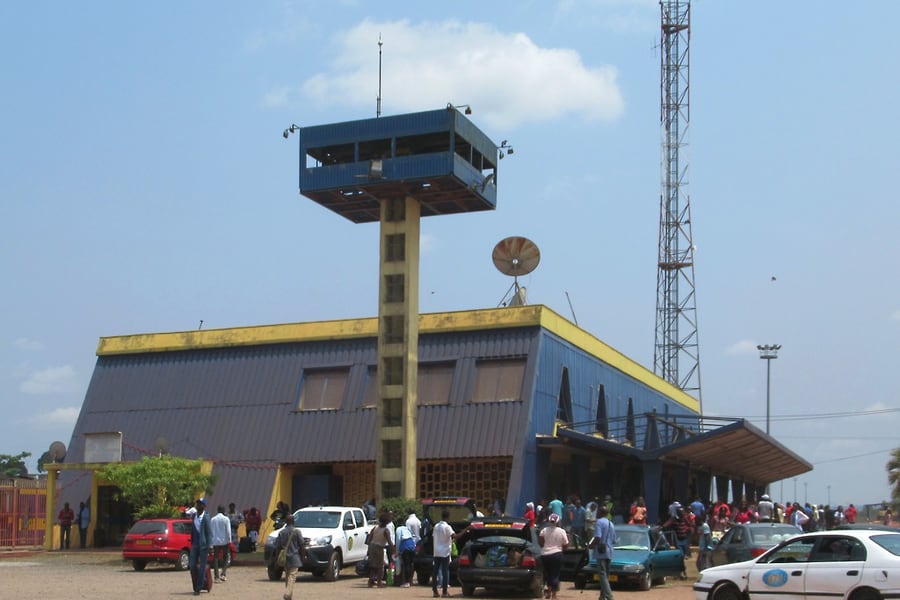
The manganese town, and the reason the railway exists. Before the line reached it in 1986 the ore went out on a 76 km cableway to Mbinda in the Congo — one of the longest ropeways ever built, closed the moment the rails arrived, and its pylons still stand in the bush above the town. Gabon is one of the world's largest manganese producers and almost all of it leaves through here.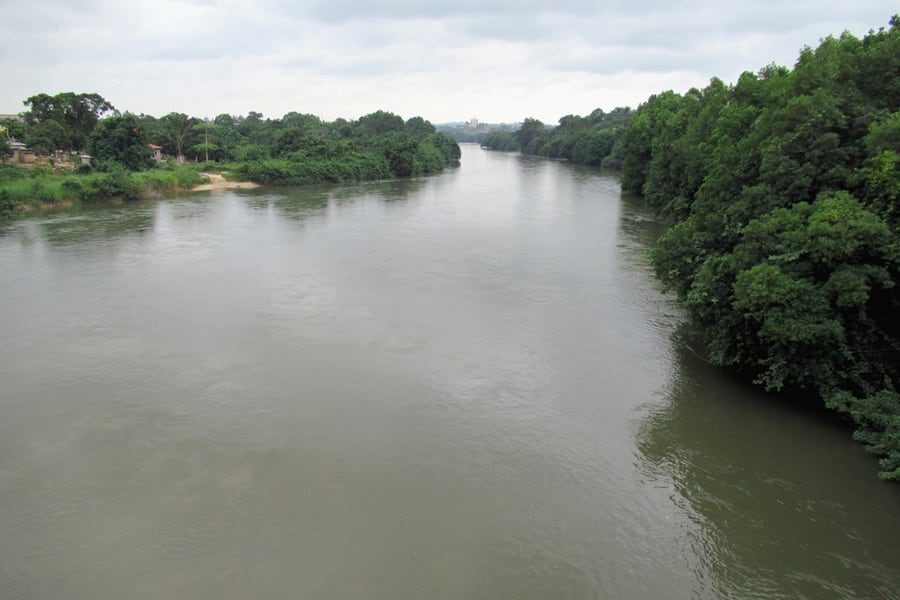 David Stanley / Wikimedia Commons · CC BY 2.0 · 2018 · cropped
Franceville
The end of the line, on the upper Ogooué in the Haut-Ogooué province, and a town of wide avenues and monuments that the oil years paid for. The Passa runs through it. South of the town the Poubara falls and the liana bridges over the Ogooué are the standard excursion, and the road on to Léconi and its red canyons starts here.Where to Sleep
Libreville has the choice, and it is where most travellers spend the night before the train: Owendo station is about ten kilometres south of the city centre, twenty minutes by taxi outside the rush.
At the far end the position is thinner. Franceville's best-known house, the Leconi Palace on the hill above the town, has been through a long refurbishment and keeps no website to confirm what is open; the smaller hotels in town keep none either. That is why the only card below is at the Libreville end — there is nothing honest to say about the others, and nowhere to send you. Ask at the station, or arrange a room through a Libreville agent before you travel.
Where to stay
Hotel Hibiscus
Two houses in downtown Libreville
A family hotel of more than ten years with two locations in the centre, both with pools and both about twenty minutes from the airport.
Check Availability (opens in a new tab, on hotelhibiscusgabon.com)via hotelhibiscusgabon.comPractical information
The Transgabonais is a working freight railway that carries passengers because its concession requires it to, and it behaves like one. Manganese trains have priority planning claims on a single track, incidents close the line for a day or two at a time, and services are cancelled and reprogrammed by public notice rather than rebooked automatically. SETRAG publishes those notices through the Gabonese press and its information line, 1330.
Since November 2025 the line has been under the second phase of a long modernisation programme, concentrated on the 200 km from Milolé to Franceville and a 30 km section between Ndjolé and Alembé, where 50 kg/m rail on wooden sleepers is being replaced with 60 kg/m rail on concrete. The money behind it is unusually visible: an AFD loan of €173 million and an EU grant of €30 million confirmed in November 2025, and a further €312 million agreed with Proparco and the IFC in July 2026. The works are one reason the programme moves.
For the journey itself: French is the working language, the Express restaurant car is worth using but bring water and something to eat regardless, and take a torch. Night departures mean the best of Lopé-Okanda passes in the dark on some workings and in daylight on others. Lopé is at PK 290 of 648, roughly eight hours out of Owendo on an eighteen-hour run, so the Tuesday Express — away at 22:00 — should reach it around first light.
Questions or corrections
Planning this trip and stuck on something, or spotted a time, fare or detail that has changed? Send us a message about The Transgabonais - Owendo to Franceville. We read every one, and we update this page when something has changed.