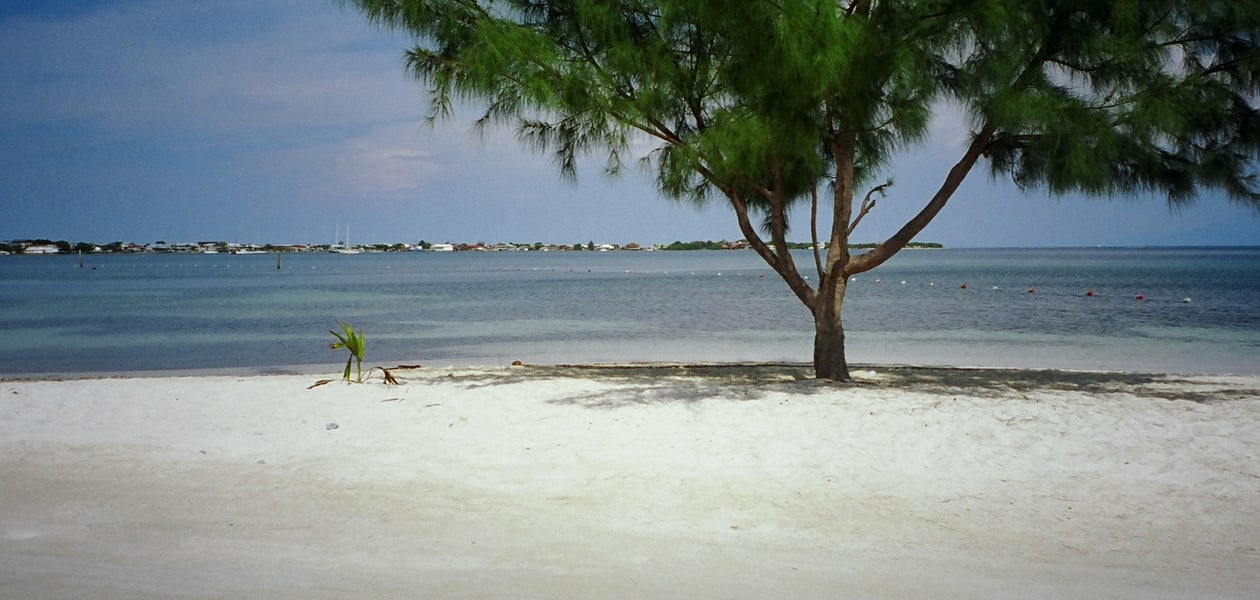
Honduras
User:Hoffryan / Wikimedia Commons · Public domain · cropped
Honduras sits in the middle of Central America, 112,492 km² with about 11 million people and its capital and largest city at Tegucigalpa. Guatemala lies to the west, El Salvador to the south-west and Nicaragua to the south-east; the long northern coast faces the Gulf of Honduras and the Caribbean, while the only Pacific frontage is a short stretch on the Gulf of Fonseca. Most of the interior is mountainous and thinly settled, and the flat land is on the Caribbean side — the hot, wet lowlands where the banana companies planted, and where every railway in the country was built.
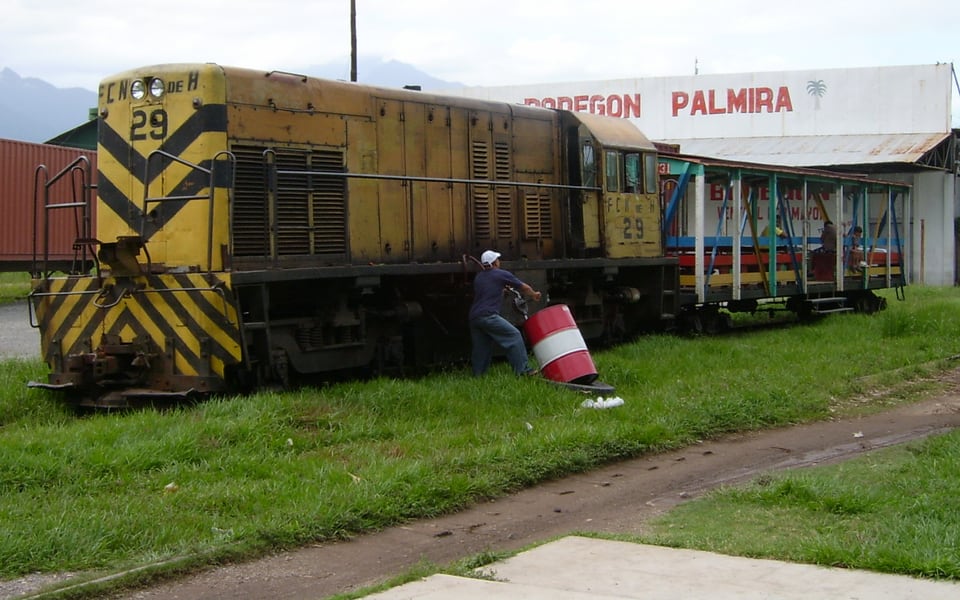
Rail here is what is left of that trade. The lines were laid from the late nineteenth century by two competing American corporations, United Fruit and Standard Fruit, and they were all on the Caribbean plain — none of them ever reached the capital. The combined network was 785 km in 1993; by 2006 only three segments totalling 67 km were still working under the national railway, and only one of those carries the public: the 9 km from La Unión out to the Cuero y Salado wildlife refuge, carrying coconuts and visitors.
Rail journeys in Honduras
Good to know
Why did the railway never reach Tegucigalpa?
Because it was not built for Honduras. The lines were laid by United Fruit and Standard Fruit to move bananas from the plantations of the Caribbean lowlands to the ports, and there was no commercial reason to drive track up into the mountains to the capital. Honduras is one of very few countries whose capital city has never had a railway.
What is at Cuero y Salado?
A wildlife refuge on the Caribbean coast west of La Ceiba, at the estuary of the Cuero and Salado rivers — one of the oldest protected areas in the country, with manatees, crocodiles, monkeys and a great range of waterbirds. The 9 km railway from La Unión is the main way in, which is why a fruit-company branch line has ended up carrying birdwatchers.
What is a burra?
The vehicle that works the refuge line: a small open flatcar, originally propelled by hand and now motorised. It is not a train in the ordinary sense and it is much the better for it — a surviving piece of banana-railway equipment still doing a job on the line it was built for.
Are there rail passes for Honduras?
No, and there is nothing for one to cover — the country's remaining passenger working is 9 km long. Fares are paid on the spot, and everything else in Honduras travels by road. Spanish is the language throughout.