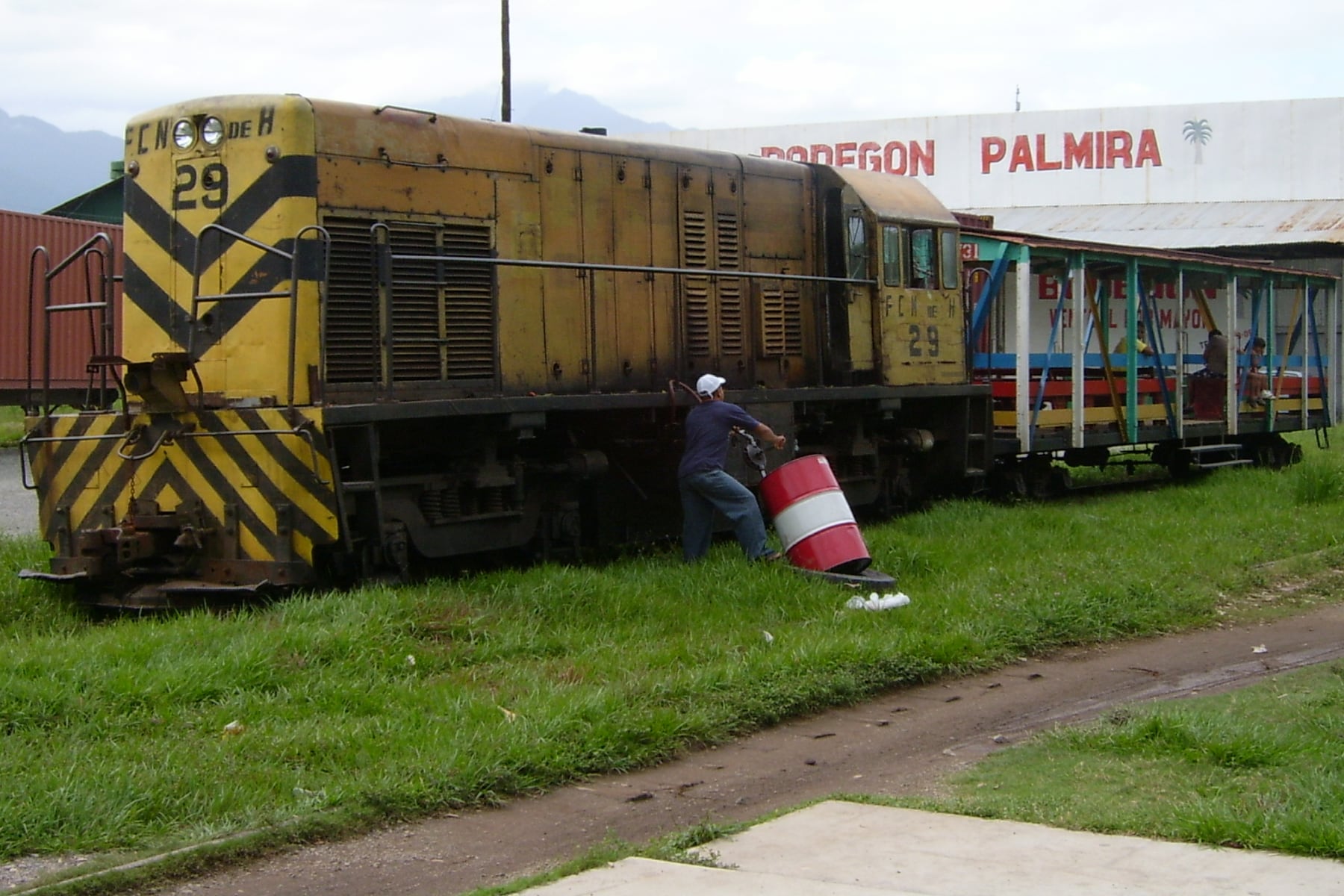
La Unión to Salado Barra
Jan Pešula / Wikimedia Commons · CC BY-SA 2.5 · 2005 · cropped
- Distance9 km, La Unión to Salado Barra
- DurationAbout 35 minutes each way
- Best seasonAny month · take the 07:00, which is the hour the refuge itself names
Introduction
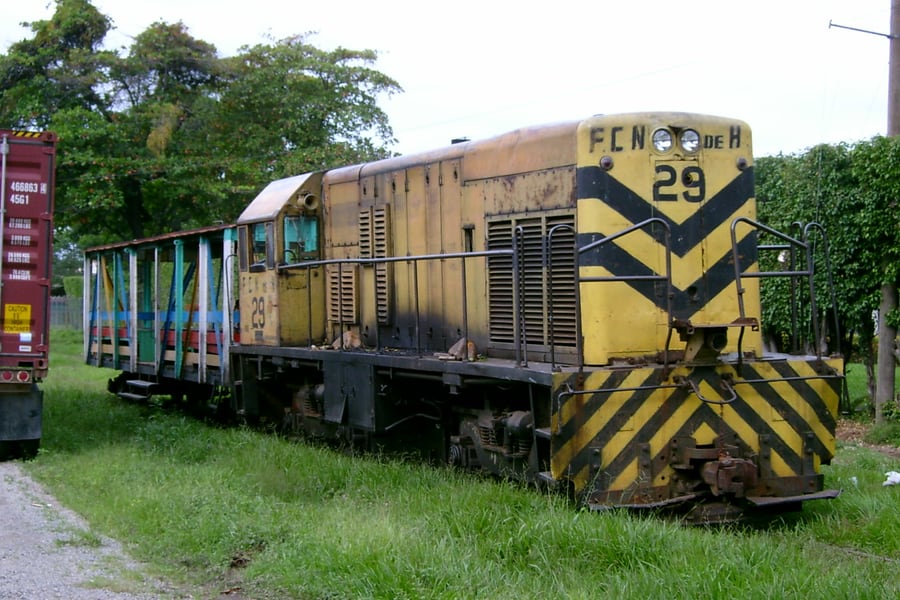
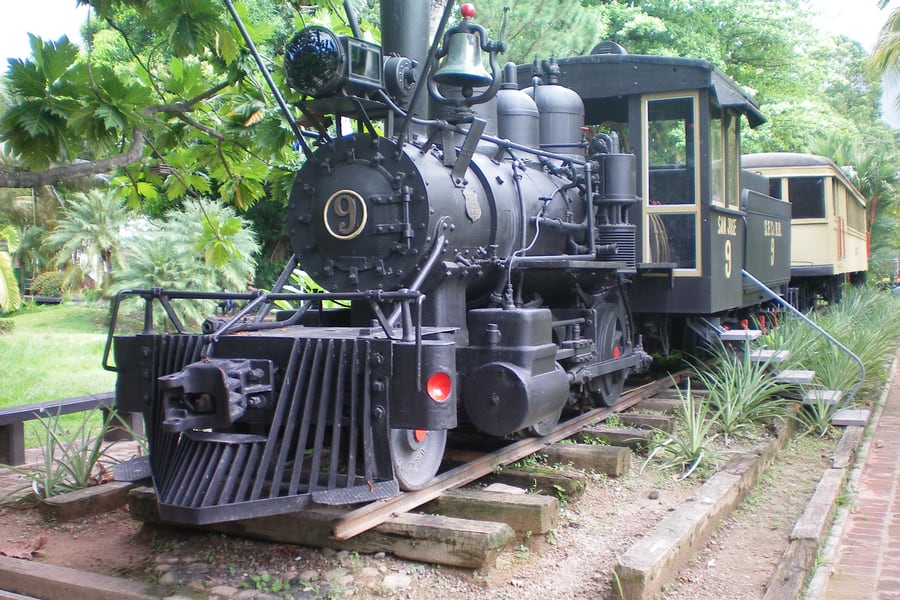
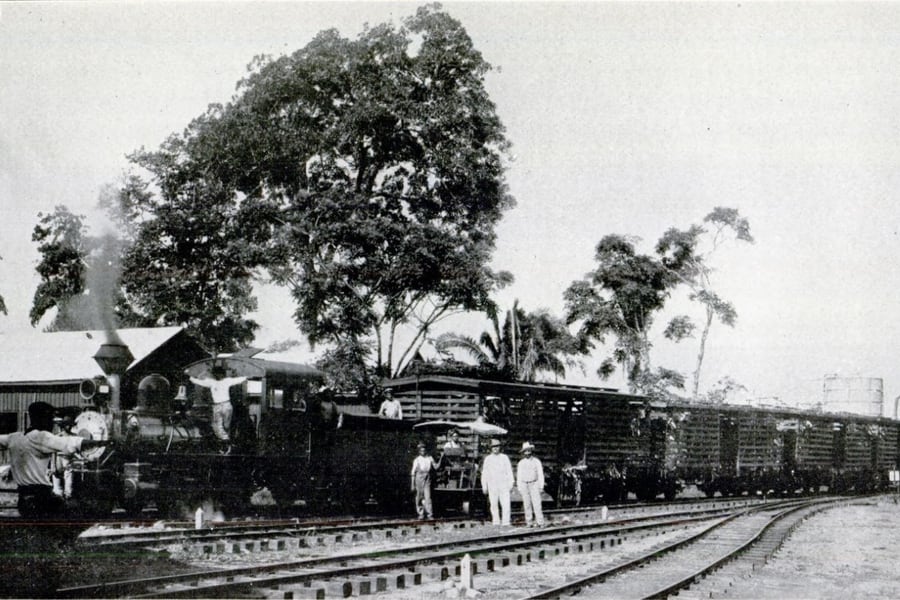
Honduras built its railways for fruit. From the 1880s the Tela Railroad Company — United Fruit — and the Standard Fruit and Steamship Company laid track across the hot Caribbean plain to bring bananas down to the ports at Tela, La Ceiba and Puerto Cortés, and none of it ever climbed to the capital. The network reached 785 kilometres. Almost all of it is gone. What survives in passenger use is one nine-kilometre spur of the old Standard Fruit system, running west off the CA-13 through coconut and pasture to a fishing hamlet at the mouth of the Salado river — and La Prensa's description of it in August 2026 was blunt: the only stretch of railway still active in the whole country.
The vehicle is a burra. It is a flat wooden platform on four steel wheels, propelled along the rails by a man on a motorcycle with a second man standing at the front to shout at anything on the track, and it is how the forty-odd families of Salado Barra get to the road and how every visitor reaches the Cuero y Salado Wildlife Refuge. The fruit company's train stopped in the pandemic and the village improvised, running a wooden deck along the rails behind a motorcycle. In July 2023 the refuge foundation and the national tourism chamber had two proper ones built with USAID money — 155,000 lempiras for two burras and four boats — and put the line back to work. Nobody would call it a train ride. It is a railway a village keeps alive because there is no road, and at the end of it there are manatees.
The Journey
The journey begins on the CA-13, the coast road between Tela and La Ceiba, at about kilometre 167. The turning is the village of La Unión, in the municipality of El Porvenir, and it is the access point the Cuero y Salado Foundation publishes as its own. From there the road runs on to Ceiba Mocha, where the cars stop and the rails begin. This is the end of the road in the literal sense: beyond it there is none, and the nine kilometres to the sea are covered on the railway or not at all.
The burra
A burra is not a train and does not pretend to be one. It is a platform built mostly of wood, carried on four steel wheels, running on the rails the freight train used to run on. A man on a motorcycle drives it from behind; a second man rides at the front, standing, calling out at anything on the line — cattle, dogs, people walking — because the permanent way is also the footpath. Two of them were rebuilt in 2023 and they are what the village has instead of a bus.
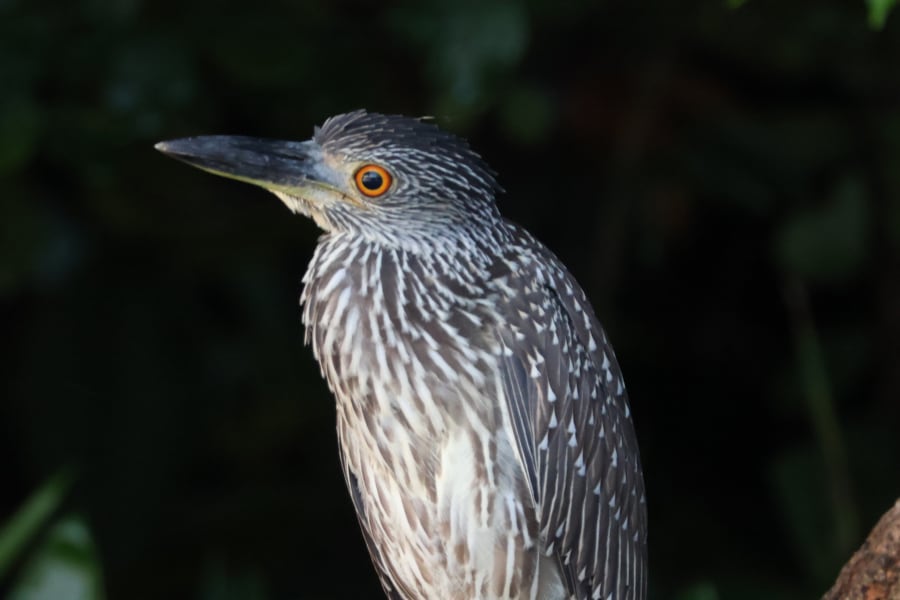
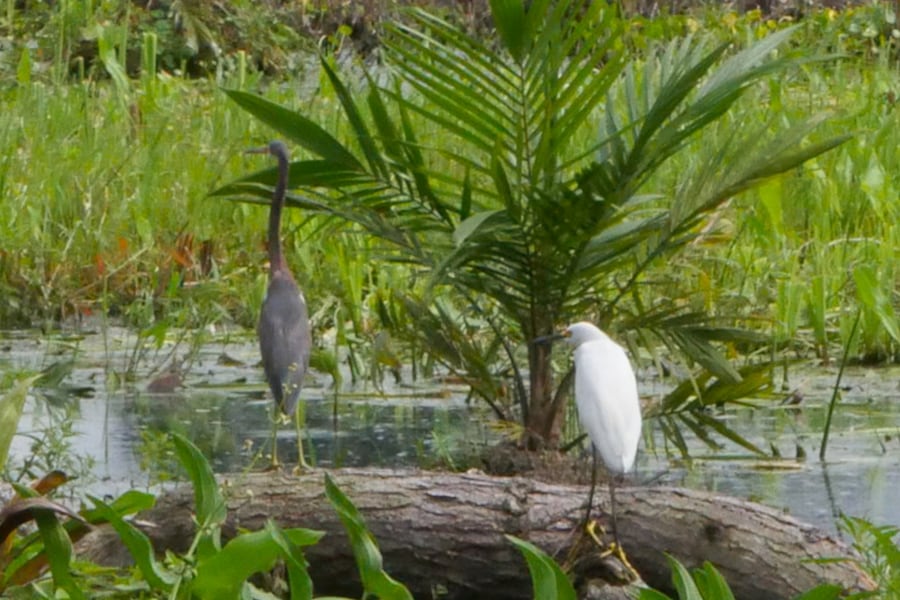
Nothing about the ride is fast. It takes about thirty-five minutes to cover the nine kilometres, which is not much above walking pace with the noise of a small engine behind you, and that is the point of it. The line runs through cattle pasture and stands of coconut — coconut and bananas were what this track was laid to carry — and then the ground softens, the palms give way to mangrove, and the last stretch runs between walls of green with brackish water either side. Herons stand off in the swamp. Howler monkeys are usually heard before they are seen.
Salado Barra
The rails end at Salado Barra, forty-odd families on the ground between the Río Salado and the Caribbean, with the refuge's visitor centre beside the water. What happens next is a boat: the foundation's guides take visitors out through the channels of the estuary — El Espejo, El Olingo, Boca Cerrada and El Coco — looking for the Antillean manatee, of which about forty live in these lagoons out of perhaps four hundred in the whole country. Kitchens in the village cook what has been landed that morning, and there are bunks for anyone who wants to be on the water at first light, which is when the birds are worth the trip.
The state is trying to make the line permanent. The Honduran Tourism Institute rebuilt the first kilometre of track in 2023 for three million lempiras, and the full repair of all nine has been costed at 52 million as part of a 180-million-lempira tourism package for the department of Atlántida. Until that is done, this remains what it has been since the freight train stopped: about 150 families and their visitors, on a flatcar, on a fruit company's track.
Along the route
 Alison Playle / iNaturalist · CC BY 4.0 · 2026 · cropped
Pasture, then coconut
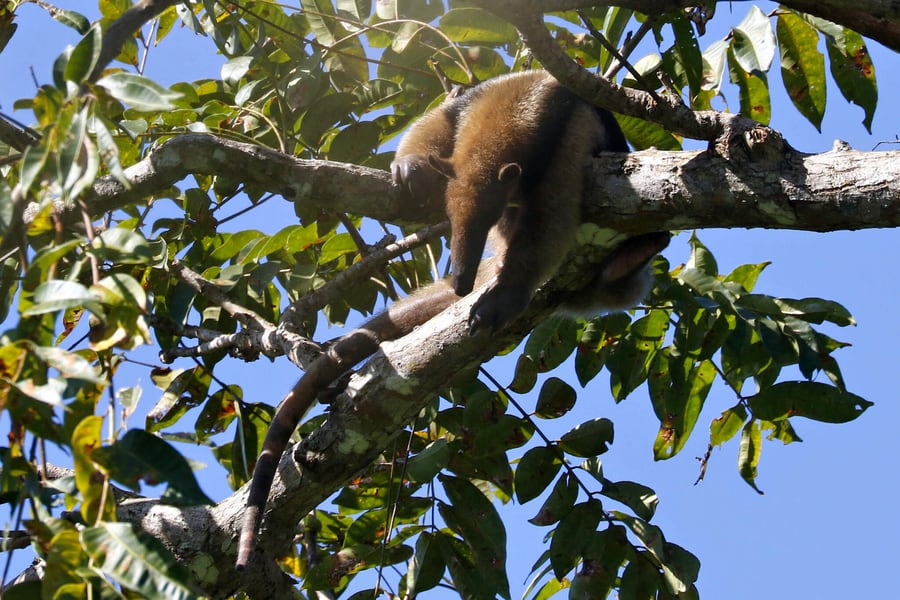
The first half of the run is flat farmland and stands of coconut, the crop that kept this branch busy alongside the bananas. Tamandua and howlers work the trees along the fence line, and the track is straight enough to see a long way down.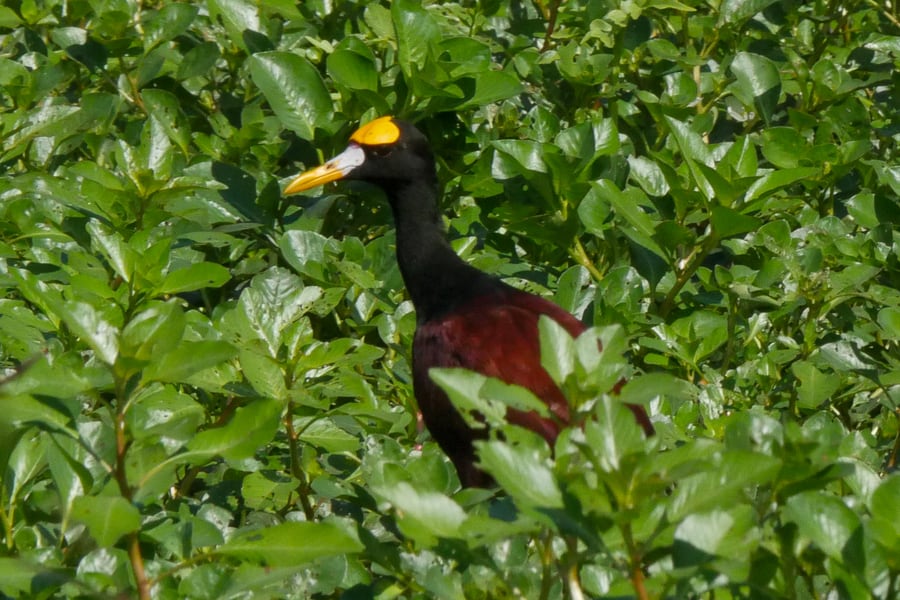 Dan Schofield / iNaturalist · CC BY 4.0 · 2024 · cropped
Where the water turns brackish
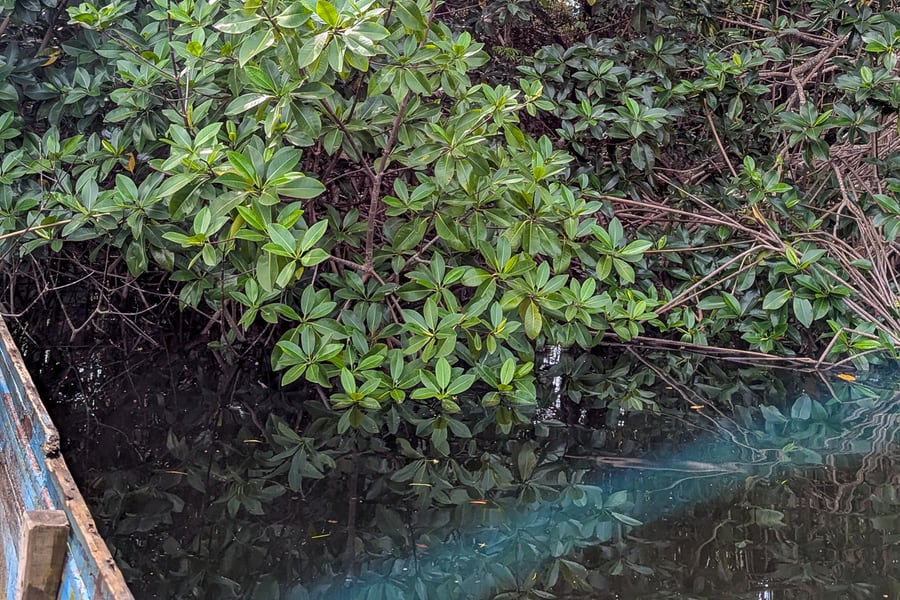
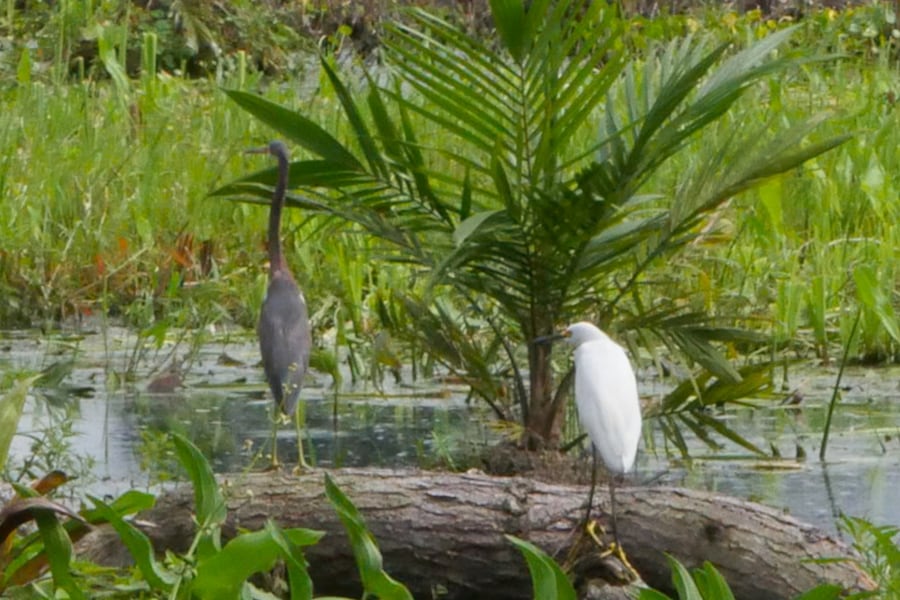
Halfway out the ground goes soft and the palms give way to mangrove. Northern jacanas walk the floating weed on their absurd toes, and the rails run on an embankment with swamp on both sides.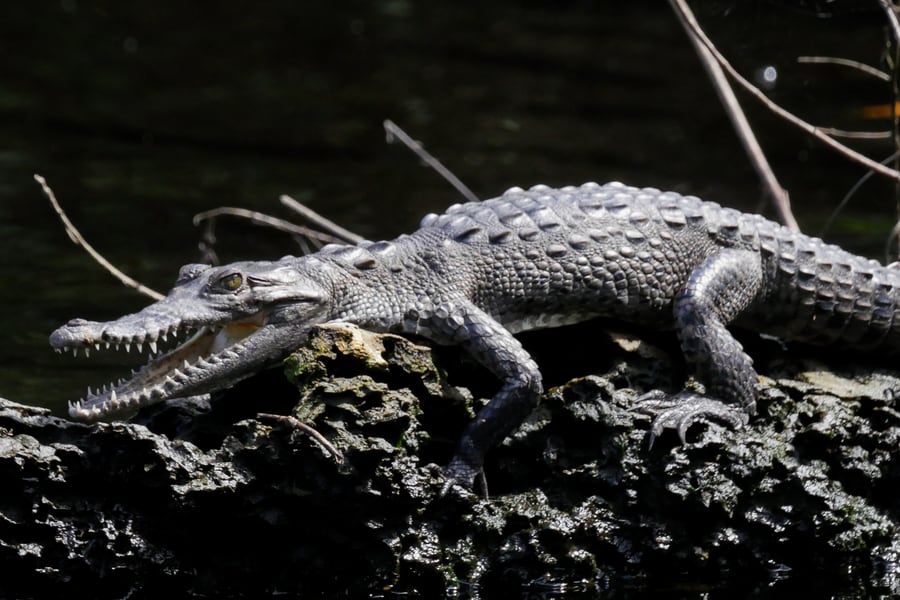 Dan Schofield / iNaturalist · CC BY 4.0 · 2024 · cropped
American crocodile
They lie out on the fallen trunks in the channels beyond Salado Barra and are one of the things the guides look for on the boat. Caimans are here too, and the two are easy to confuse from a moving lancha.A bit of history
Culture & experiences along the way
 Isis I. Castro Alberto / iNaturalist · CC BY 4.0 · 2026 · cropped
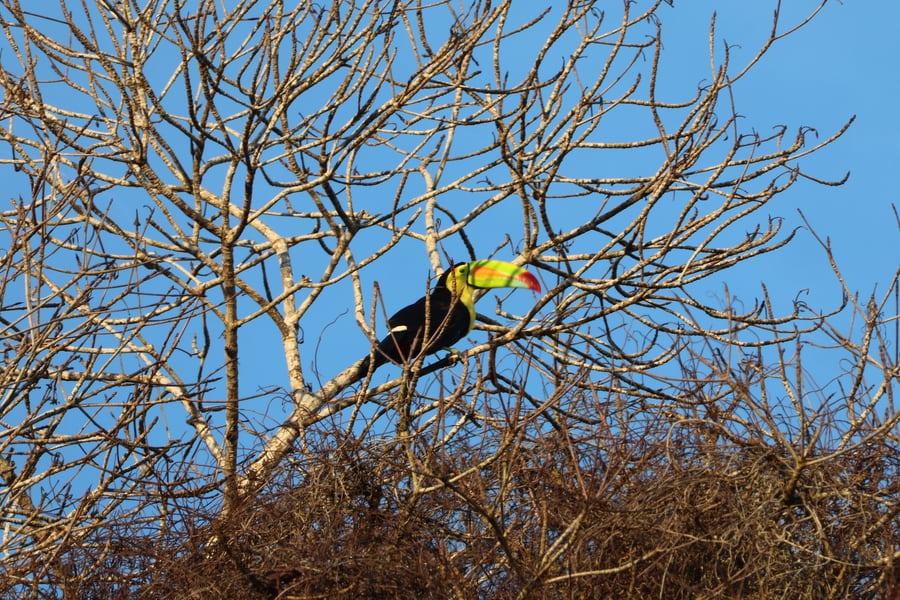
Birding at seven in the morning
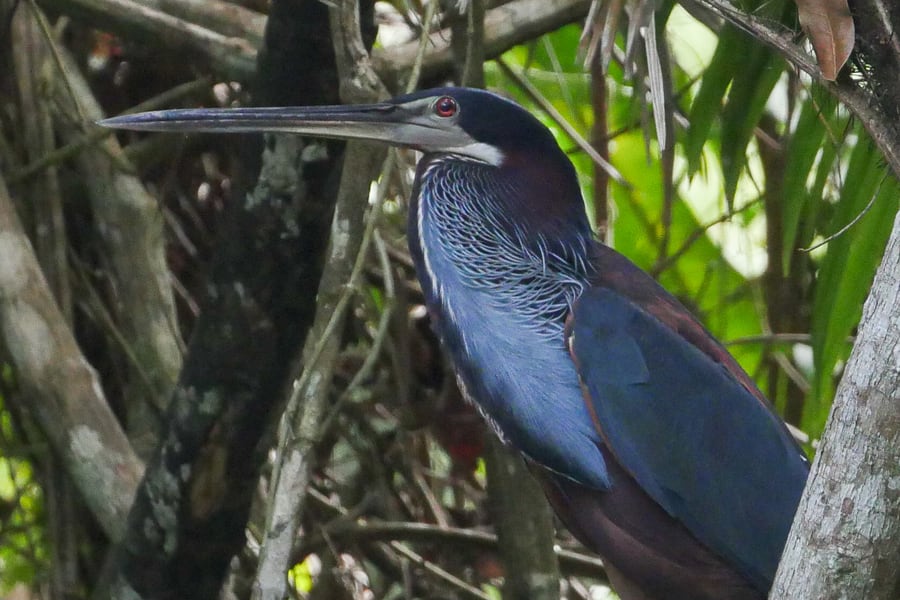
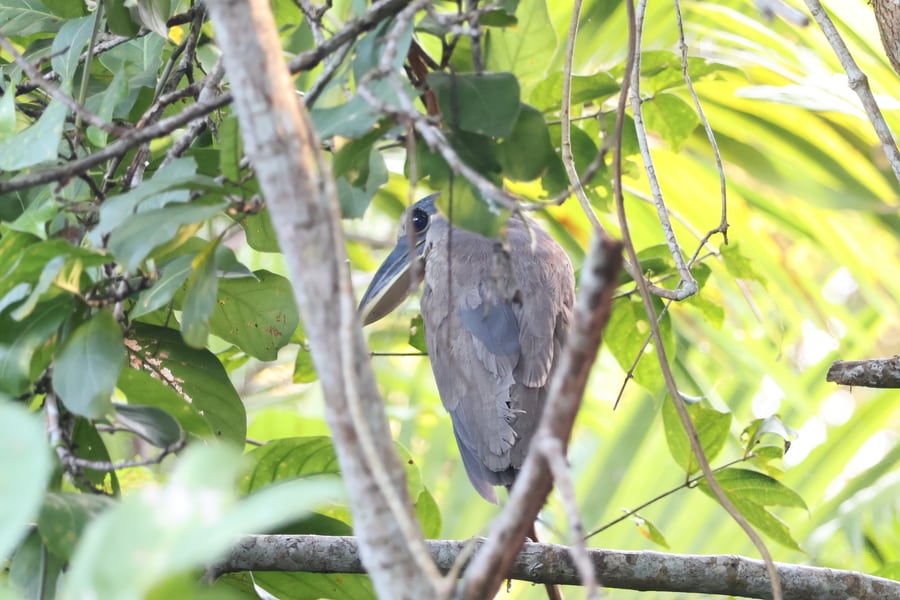
Around two hundred kinds of bird have been recorded inside the refuge — keel-billed toucans, oropendolas, kingfishers, five or six herons — and the first burra of the day exists so that you are on the channels while the light is still low and the water flat. Binoculars earn their weight here more than anywhere else in Honduras.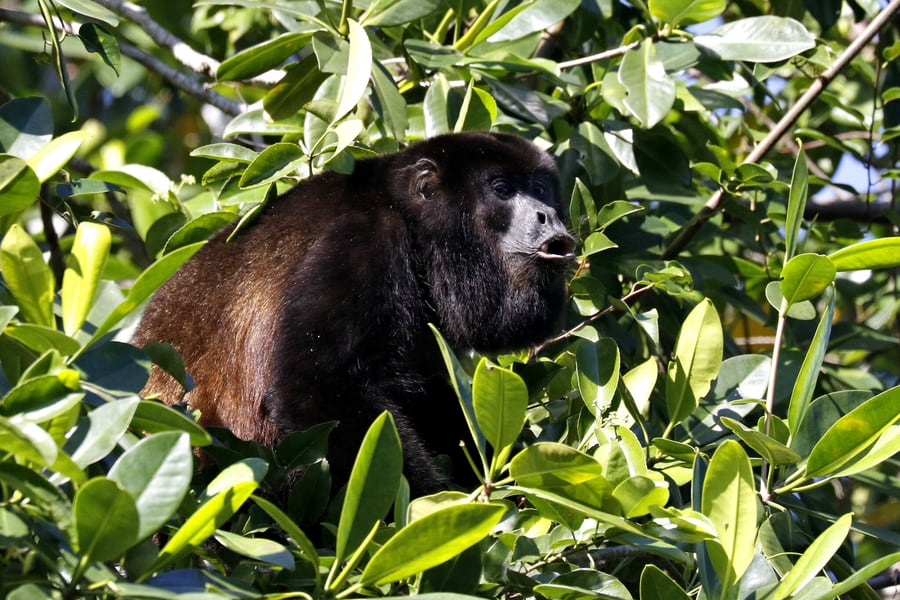 Alison Playle / iNaturalist · CC BY 4.0 · 2026 · cropped
The howlers, which you hear first
Mantled howler monkeys carry across water for a couple of kilometres, and the sound — a low, rolling roar that begins before dawn — is the thing visitors remember. They feed in the mangrove canopy right over the boat channels, in troops, and they are entirely unbothered by a lancha passing underneath.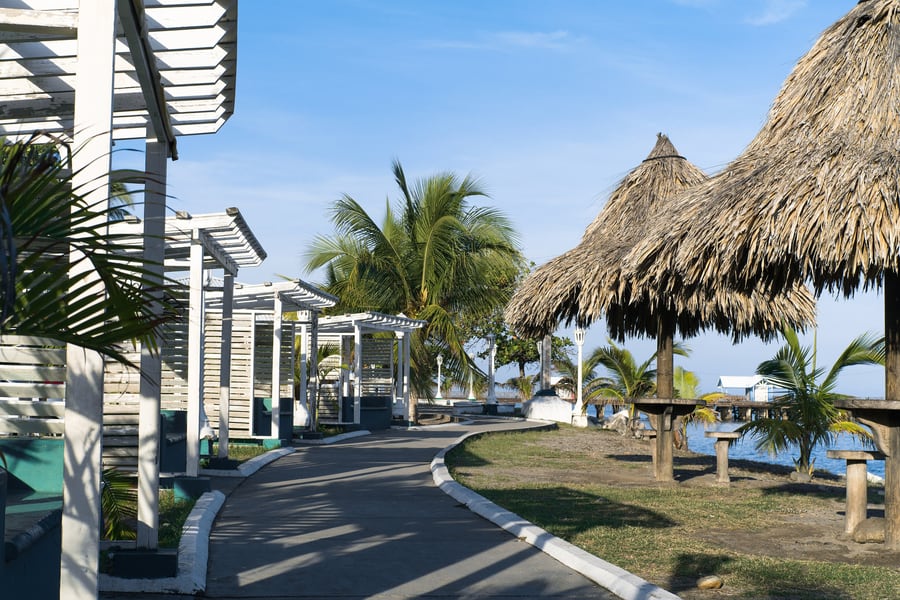 Djavanrodriguez / Wikimedia Commons · CC BY-SA 4.0 · 2019 · cropped
An evening on the malecón
La Ceiba's seafront walk is named for Guillermo Anderson, the Ceibeño singer who put the Caribbean coast — its Garífuna drums, its punta, its food — into Honduran popular music before his death in 2016. Thatched champas line the sand, and the town's reputation for being the country's most cheerful is earned along here after dark.Timetables
There is no printed timetable and no booking engine. The burras are worked by the community at Salado Barra under the Cuero y Salado Foundation (FUCSA), and the pattern the foundation and the Atlántida tourist board both give is a departure roughly every hour from 07:00, with 07:00 itself named as the best time to go in — it puts you on the water while the estuary is still cool. The crossing takes about thirty-five minutes each way.
| Ceiba Mocha, by La Unión | Salado Barra | |
|---|---|---|
| First departure | 07:00 | about 07:35 |
| Through the morning | roughly hourly | 35 minutes later |
| Return | fixed with the burreros when you book |
Two things to settle before you set out, because neither is fixed. The boarding point has moved: the foundation publishes its access point as the village of La Unión on the CA-13, while La Prensa's report of the tourism minister's visit in August 2026 says cars are now left at Ceiba Mocha, further along the same road, and the burra boards there. And the return is not a public departure but an arrangement — you agree it with the burreros or with your operator, and day visitors are generally back on the road in the early afternoon.
Book ahead. FUCSA takes reservations by WhatsApp on +504 9750-2910 and by email at info@fucsahn.org, and its office is on the CA-13 in Colonia Palmira, La Ceiba, in the ICF building. Several La Ceiba operators sell the day as a package with road transfers, the burra, the refuge entry and the boat.
As of September 2026. Booking and access: Fundación Cuero y Salado (opens in a new tab).
Tickets
Nothing is sold online and there is no ticket office. The refuge charges a single symbolic entrance fee of about US$10 a head, and that one payment covers the burra in both directions and the guided boat trip through the channels. The money goes back into Salado Barra, where it has paid for electricity, drinking water and schooling. Bring cash: there are no card machines at either end of the line.
The alternative is to buy the whole day from a La Ceiba operator, which is easier from the city because it includes the drive out to the railhead. Reservaciones La Ceiba, community-owned, lists it at US$35 a head for three to four hours, with the road transfer, the entrance, the burra and the boat in one price. Several other La Ceiba agencies sell a version of the same day.
Fares as of September 2026, in US dollars.
Things to do
Cuero y Salado entry
About US$10 a head, paid in cash on the day
One payment covering the burra both ways and the guided boat trip through the channels.
Book Experience (opens in a new tab, on fundacioncueroysalado.org)via fundacioncueroysalado.orgReservaciones La Ceiba
From about US$35 a head, three to four hours
The community-owned operator's day trip, with road transfer, the burra, entry and the boat.
Book Experience (opens in a new tab, on reservacioneslaceiba.com)via reservacioneslaceiba.comRail Passes
No rail pass exists for Honduras, and none could. The Interrail and Eurail networks are European and Honduras is not among the countries they cover; there is no Central American equivalent sold to visitors, and there is no national multi-journey ticket because there is no national passenger network left to sell one for. The country's remaining railway in public use is these nine kilometres.
What replaces a pass here is the refuge's own single payment. The entrance fee to Cuero y Salado covers the burra out, the boat trip inside the park and the burra back, so the ride is not something you buy separately at all — and at roughly ten dollars there is nothing a pass could improve on. Anything further afield in Honduras travels by road.
Checked against the Interrail country list in September 2026.
Places to Visit
The line has one destination and it is a nature reserve, so most of what there is to see is reached by boat from the end of the rails rather than from a station. Cuero y Salado was declared protected in 1987, when the manatee population here was judged to be in danger, and enlarged in 1989 to the 13,225 hectares it covers today across four municipalities — Esparta, San Francisco, La Masica and El Porvenir. Something like 327 species of animals and plants have been recorded in it, among them around two hundred kinds of bird, which is a startling share of everything that flies in Honduras.
The rest of what is worth a day is on the same coast, within an hour of La Ceiba by road: another estuary at Punta Izopo, a mountain river behind the town, and the old Tela Railroad country to the west, where the other fruit company built its own railway and its own port.
 Dan Schofield / iNaturalist · CC BY 4.0 · 2024 · cropped
The channels of Cuero y Salado
The point of the railway. From the visitor centre at Salado Barra the foundation's guides run boats out along El Espejo, El Olingo, Boca Cerrada and El Coco, the water trails that thread the estuary of the Cuero and the Salado. About forty Antillean manatees live here — out of perhaps four hundred in the whole of Honduras — and the refuge was created in 1987 because that population was in trouble. Crocodiles, caimans and river turtles are far easier to see.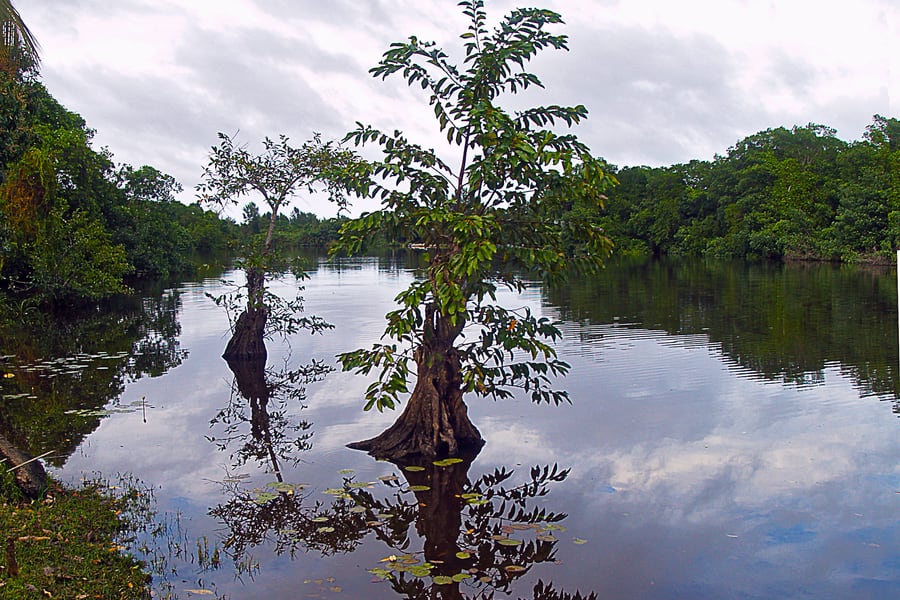 Adalberto H. Vega / Wikimedia Commons · CC BY 2.0 · 2010 · cropped
Punta Izopo
The other Atlántida wetland, an hour west towards Tela, where the Río Plátano runs out through mangrove to a headland. It is kayaking country rather than boat country — narrow channels, still water, howler monkeys overhead — and it makes a natural second day for anyone who came this far for the birds.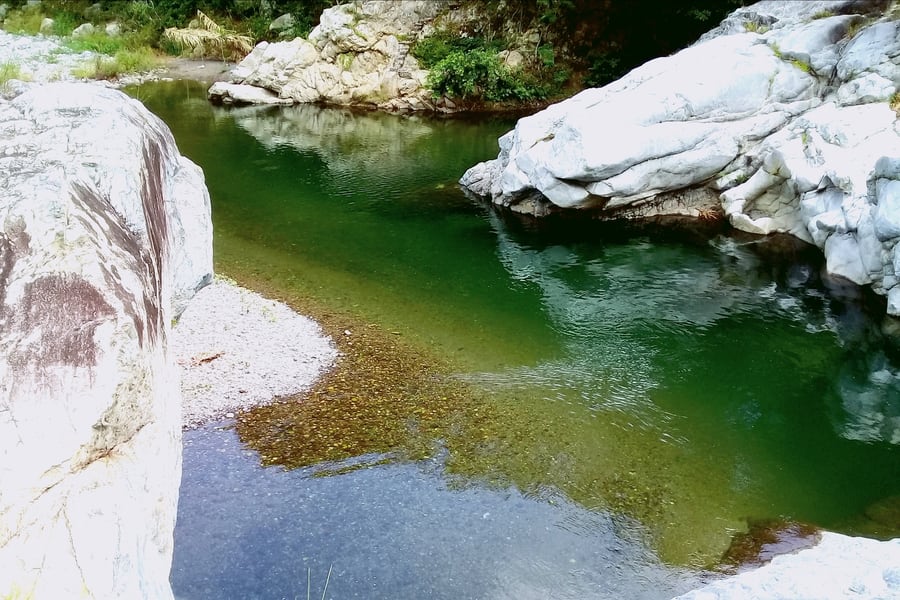 JMigdonio / Wikimedia Commons · CC BY-SA 4.0 · 2019 · cropped
The Río Cangrejal
Twenty minutes inland from La Ceiba the Cangrejal comes down out of Pico Bonito over white boulders in green pools, forming the eastern boundary of the national park. It is the country's best-known whitewater river and equally good for doing nothing at all beside it. Lodges and a hanging footbridge line the valley road.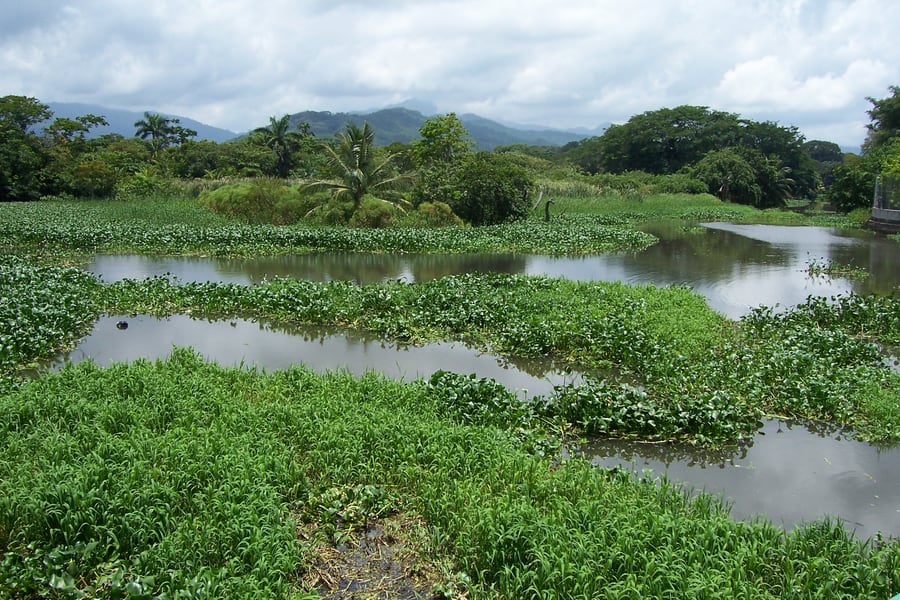 José Manuel Ibáñez Fernández / Wikimedia Commons · CC BY-SA 3.0 · 2005 · cropped
Tela, and the other fruit company
Seventy kilometres west, at the far end of the CA-13, Tela was United Fruit's town as La Ceiba was Standard Fruit's, and the Tela Railroad Company's name still hangs on buildings there. The river runs out to the Caribbean through marsh and water hyacinth, and the Lancetilla botanical garden the company planted in 1926 is still open.Where to Sleep
There is one bed at the end of the line and it belongs to the refuge. Salado Barra has a simple hostel run by the Cuero y Salado Foundation, with bunk rooms, and staying is the only way to be on the channels at first light and at dusk, which is when the herons, the howlers and — with luck — the manatees are moving. Book it with the foundation before you travel; the village has no shop, no cashpoint and no road.
Everything else is in La Ceiba, half an hour east on the CA-13, which is where the tour operators, the airport and the coast road all are. The two below sit at opposite ends of that choice: a conventional town hotel on the beach in the Zona Viva, and a rainforest lodge on the edge of the Pico Bonito national park, twenty minutes inland.
Where to stay
The refuge hostel at Salado Barra
Bunk rooms at the end of the line, booked through FUCSA
The only accommodation on the refuge side of the rails, and the only way to be on the channels at dawn.
Check Availability (opens in a new tab, on fundacioncueroysalado.org)via fundacioncueroysalado.orgHotel y Centro de Convenciones Quinta Real
On the beach in La Ceiba's Zona Viva
A town hotel and convention centre on the Caribbean shore, near the operators who sell the refuge day.
Check Availability (opens in a new tab, on quintarealhotel.com)via quintarealhotel.comThe Lodge at Pico Bonito
On the national park boundary, twenty minutes inland
A rainforest lodge whose own grounds have 187 recorded bird species, against 400-odd in the park behind it.
Check Availability (opens in a new tab, on picobonito.com)via picobonito.comQuestions or corrections
Planning this trip and stuck on something, or spotted a time, fare or detail that has changed? Send us a message about La Unión to Salado Barra. We read every one, and we update this page when something has changed.