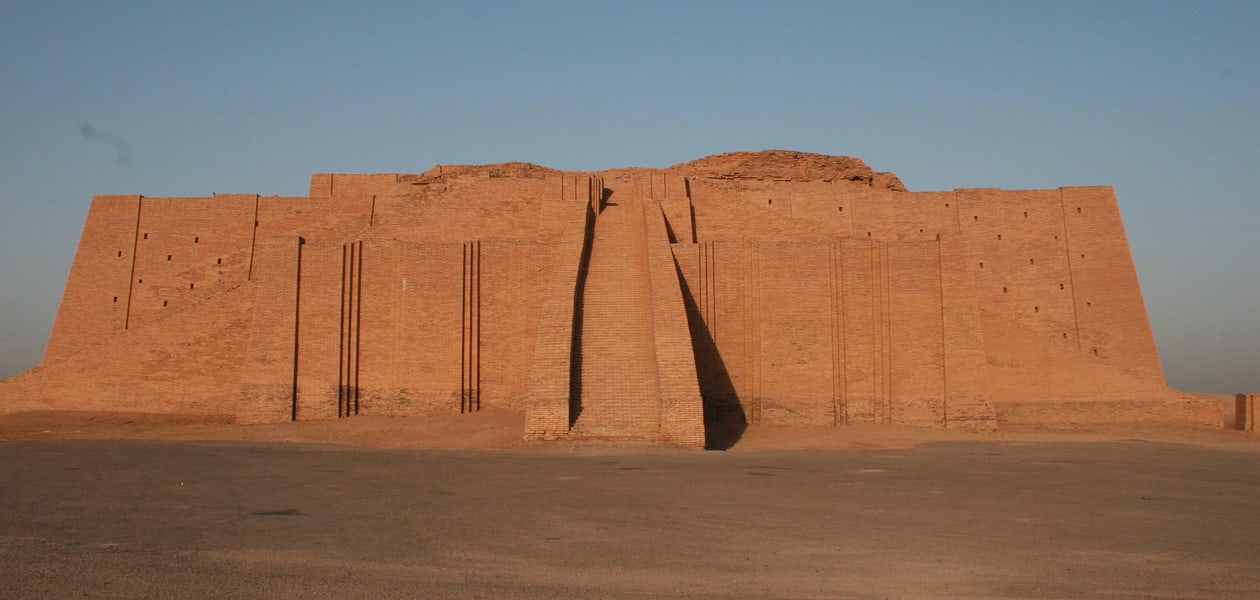
Iraq
Tla2006 at English Wikipedia / Wikimedia Commons · Public domain · cropped
Iraq covers 438,317 km² of western Asia and holds over 46 million people, with its capital at Baghdad. Turkey lies to the north, Iran to the east, Kuwait and Saudi Arabia to the south, Jordan to the west and Syria to the north-west; the only sea frontage is a short stretch at the head of the Persian Gulf. The country is defined by the Tigris and the Euphrates, which run down from the Anatolian highlands, converge above Basra and made the alluvial plain between them the first place on earth where cities were built. Desert covers the west and mountains rise in the Kurdish north-east.
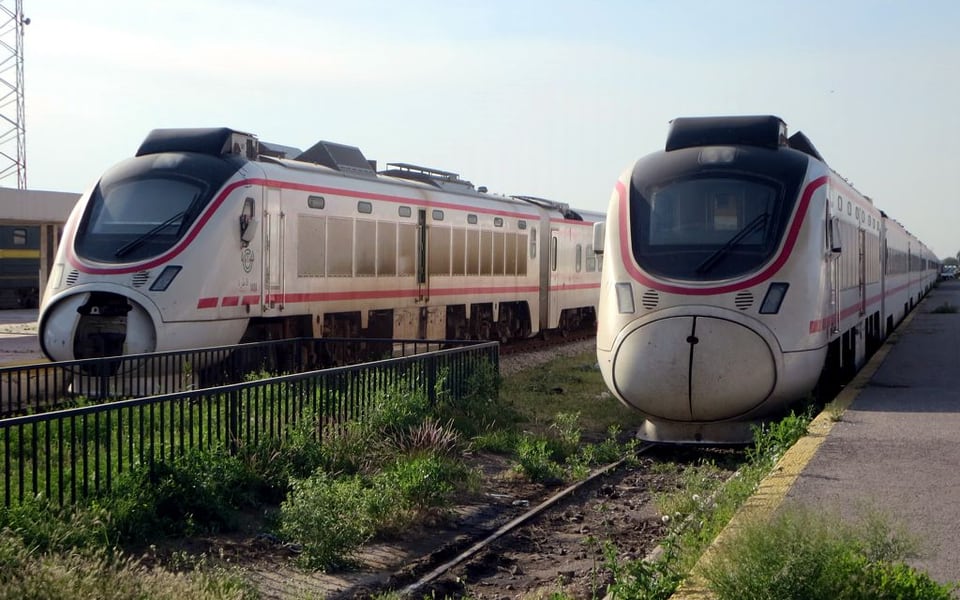
The railway follows the rivers, as everything here does. It is 2,272 km of standard gauge, owned and worked by the state Iraqi Republic Railways, and its spine runs from the Syrian frontier at Rabiya down through Mosul, Baiji and Baghdad to Basra and the Gulf ports. Branches strike west from Baghdad through Ramadi towards Al-Qa'im and east to Kirkuk. The one international interchange is with Syrian Railways at Rabiya — which is unusual for a network this size.
Rail journeys in Iraq
Good to know
How do you buy a ticket in Iraq?
At the station, on the day. There is no online booking for Iraqi Republic Railways: the counter opens at 08:00, sells only for that day's departure, takes payment by Mastercard and asks to see each traveller's original passport or national identity document. Sleepers on the Basra run go early. For most of the world that would be a curiosity; here it is the practical fact that decides whether a journey happens, and no third-party site can substitute for it.
Where does the railway connect to its neighbours?
In one place only: Rabiya, on the Syrian border in the far north-west, where Iraqi Republic Railways meets Syrian Railways. For a network of well over two thousand kilometres in a country with six neighbours, a single international interchange is remarkable, and it says a great deal about the last fifty years in the region.
Why does the network run north to south?
Because the country does. Iraq's population, its cities and its agriculture all follow the Tigris and the Euphrates from the northern hills down to the Gulf. The first section of railway in what was then Ottoman Mesopotamia was 123 km of the Baghdad Railway from Baghdad to Samarra, opened in 1914; the line was later carried north to the Syrian frontier at Tel Kotchek, and from 1941 Iraqi Pacifics worked the Taurus Express over it towards Istanbul. There has never been much to serve in the western desert, and the map reflects that.
Are there rail passes for Iraq?
No. Iraq belongs to no pass scheme and there is no multi-journey ticket. Fares on the state railway are low, and the sleeper accommodation on the long southern run is bought as a berth rather than as a seat. Arabic and Kurdish are the official languages.