Baghdad to Basra
David Stanley / Wikimedia Commons · CC BY 2.0 · 2016 · cropped
- DistanceAbout 550 km, Baghdad Central to Basra
- DurationOvernight, ten to twelve hours; the railway publishes no arrival time
- Best seasonNovember to March · the service stops for Ramadan and for the Arbaeen pilgrimage
Introduction
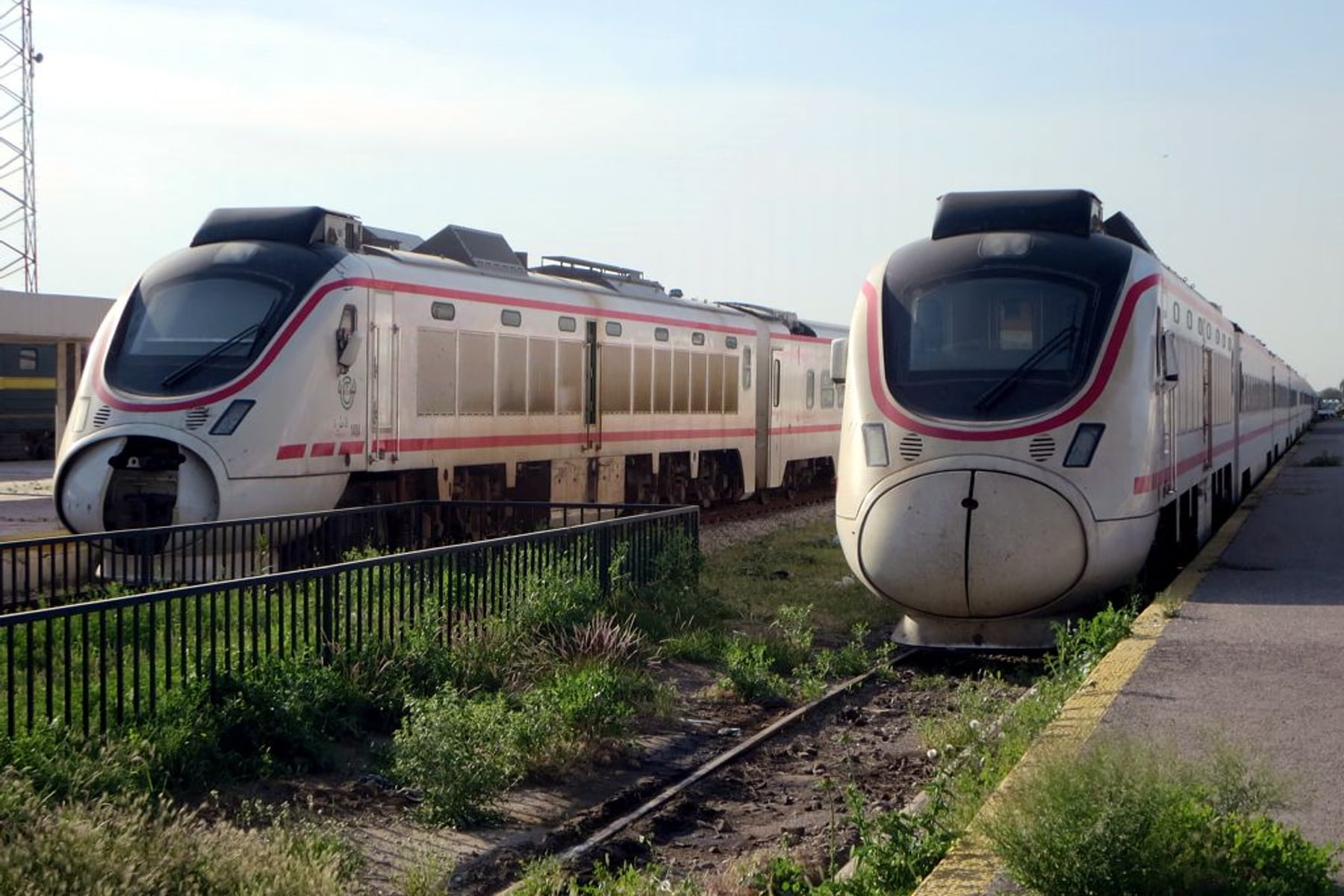
Iraq has one long-distance passenger train, and it runs at night. At seven in the evening a Chinese-built diesel set pulls out of Baghdad Central and goes south down the plain between the Tigris and the Euphrates — through Hillah, Diwaniyah, Samawah and Nasiriyah — to Basra and the head of the Gulf. About 550 kilometres, in the dark, with berths made up and a buffet car open. In the other direction a second set leaves Basra at half past seven and arrives in Baghdad in the morning. One train each way, every day, and nothing else on the route.
What makes it unlike almost any other sleeper on this site is the ticket. There is no online booking of any kind. The counter opens at eight in the morning, the seats are sold for that day only, payment is by Mastercard, and you have to show your passport or national identity document. About 350 places go each night. That is the whole system, and it is why anyone travelling the line plans their day around a queue rather than a website.
The Journey
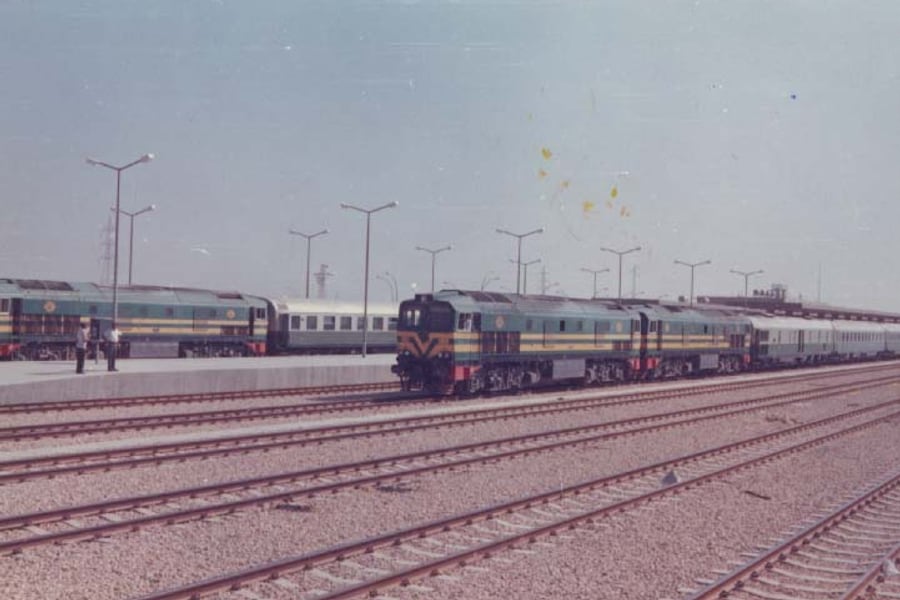
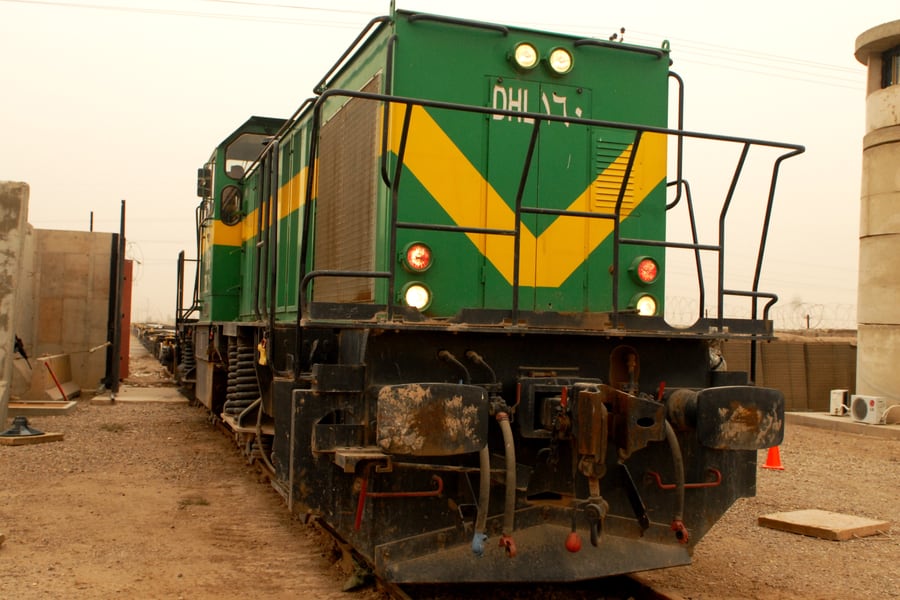
The train that runs this line was built for it. In December 2012 Iraqi Republic Railways signed a US$115 million contract with Dongfang Electric Corporation for ten inter-city sets, and the first was rolled out at CSR Sifang's Qingdao plant on 17 February 2014 with Iraq's ambassador to China watching. Each set is a diesel power car at either end and eight steel-bodied trailers, designed for 160 km/h, carrying 343 people in air-conditioned seats and sleeping compartments, with catering and on-board entertainment. The specification is unusual in one respect: it was drawn up for desert heat and wind-blown dust, and the filtration and cooling reflect that.
The line itself is older than the trains and younger than the route. A metre-gauge railway linked Baghdad and Basra from 1924, built out of the military lines of the Mesopotamian campaign. The standard-gauge replacement opened to freight on 10 March 1964 and to passengers on 25 April 1968, and the metre gauge closed soon afterwards. Track runs to UIC 60 profile with welded joints and a 25-tonne axle load, which is a freight specification; the passenger train is a guest on a railway built to move oil, grain and containers.
What the night looks like
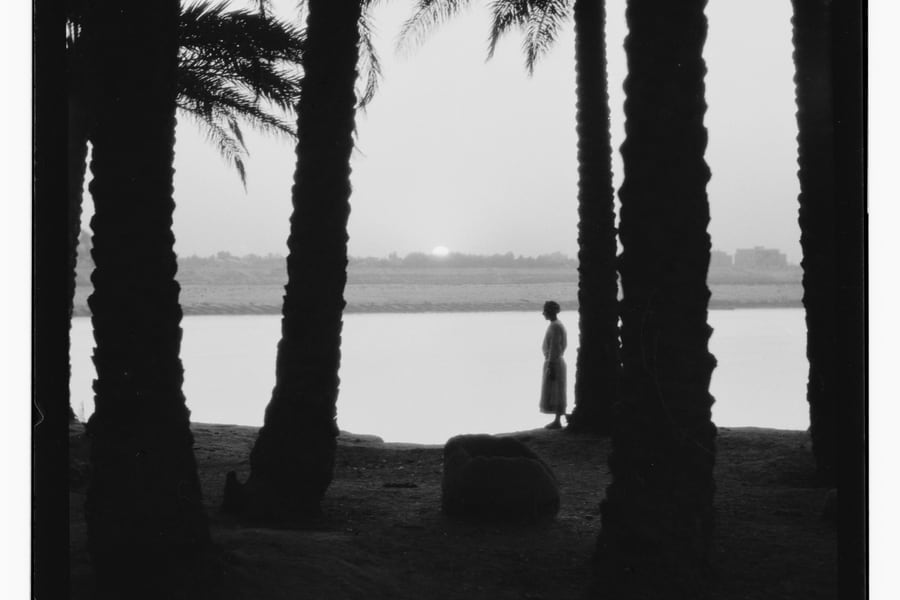
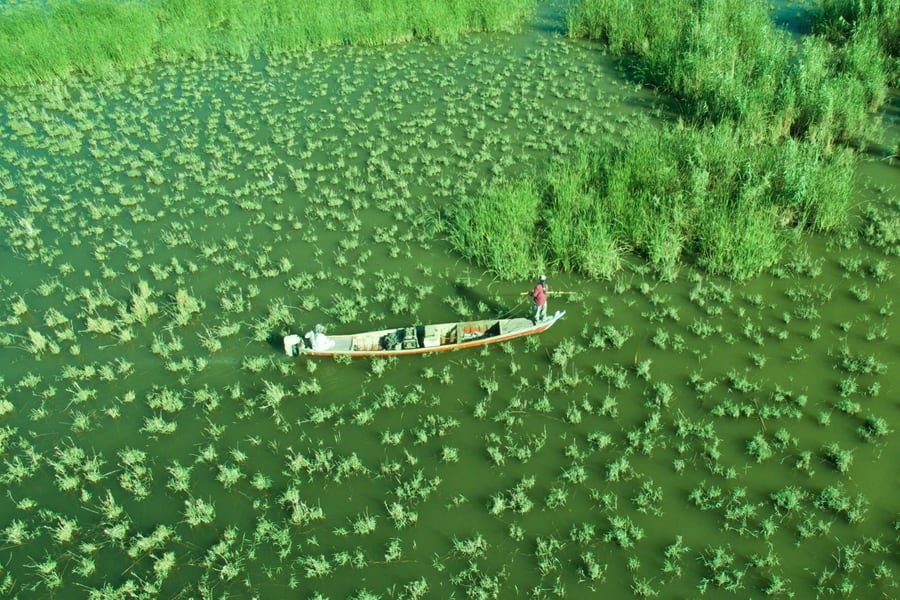
Leaving Baghdad the train crosses the Tigris plain and picks up the Euphrates towns. Hillah first, under palm groves that have grown along the river since long before the railway; then Diwaniyah, Samawah and Nasiriyah, each a stop of a few minutes in the dark. South of Nasiriyah the country opens into the marshes and salt flats behind Basra, and by dawn the train is running past date gardens into the Shatt al-Arab.
⚠️ The service is not reliable in the way a European sleeper is. In 2026 alone it was suspended on 2 March for Ramadan, resumed on 19 March, stopped again on 25 March because of the weather, came back on 12 April, and returned once more on 7 August after the Arbaeen pilgrimage traffic and the maintenance that followed it. Each restart is announced by the railway, usually a day or two beforehand, and the times have not changed across any of them.
Along the route
 Mike Brantley, US Army via Wikimedia Commons · public domain · 2009 · cropped
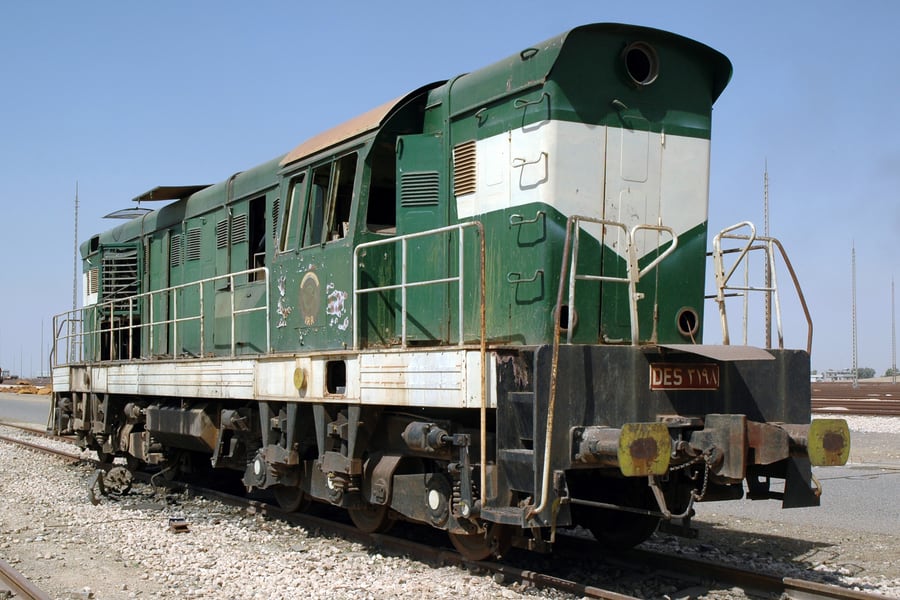
A freight railway that carries people
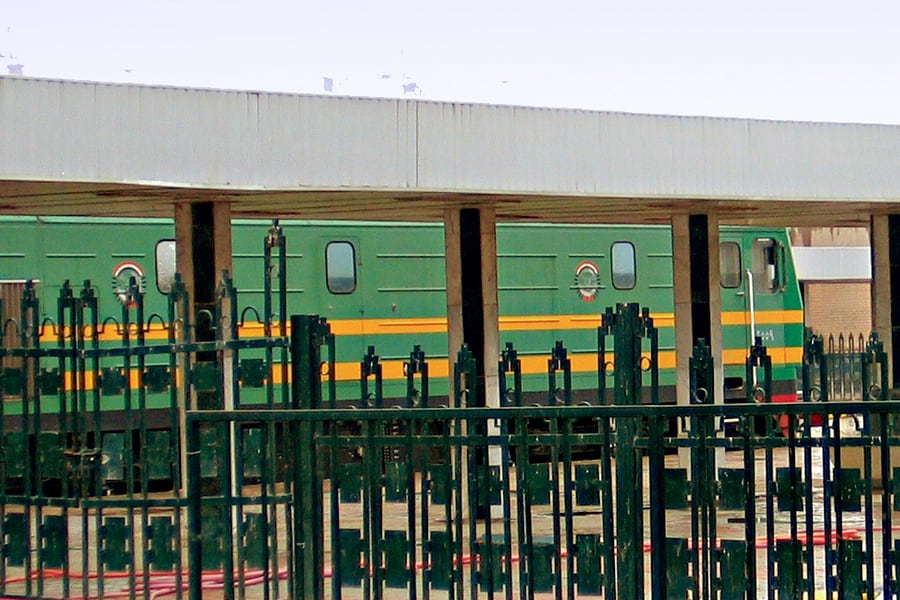
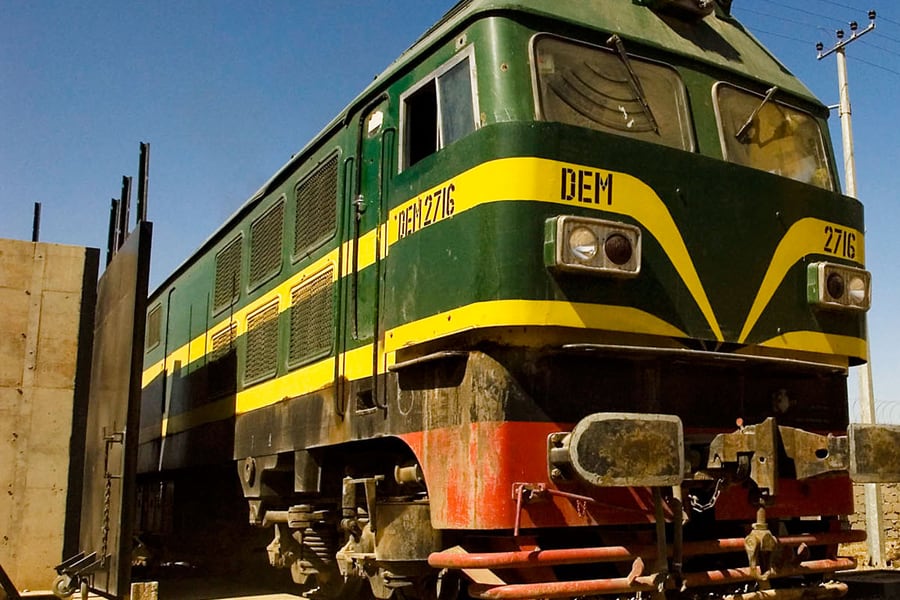
The southern line was laid for oil, grain and containers, to a 25-tonne axle load. One passenger train a night is what it does for travellers, and it runs among the freights.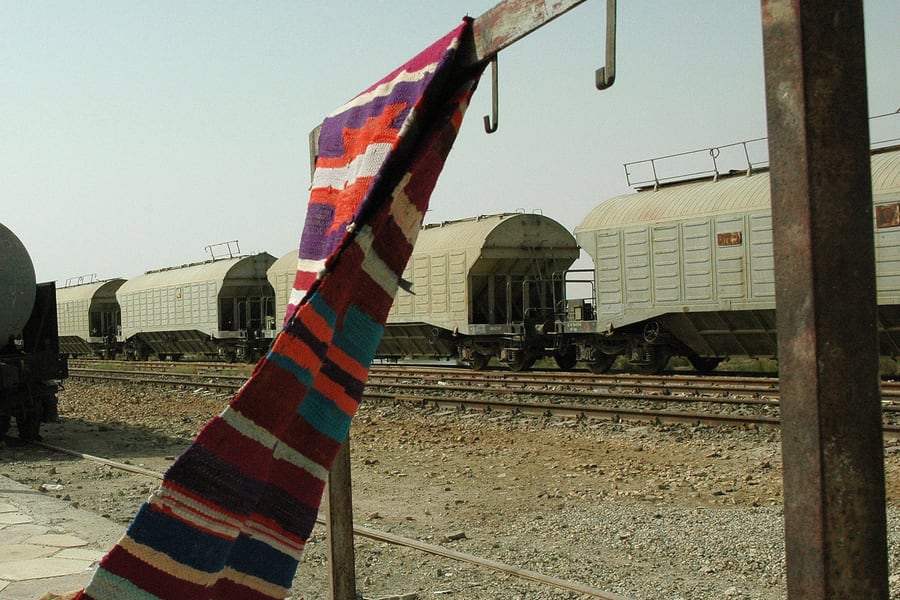 B. J. Weiner, US Army via Wikimedia Commons · public domain · 2005 · cropped
The desert stations
Between the Euphrates towns the stops are yards rather than stations — a loop, a water column, grain hoppers waiting, and someone's rug hung out to dry on the platform rail.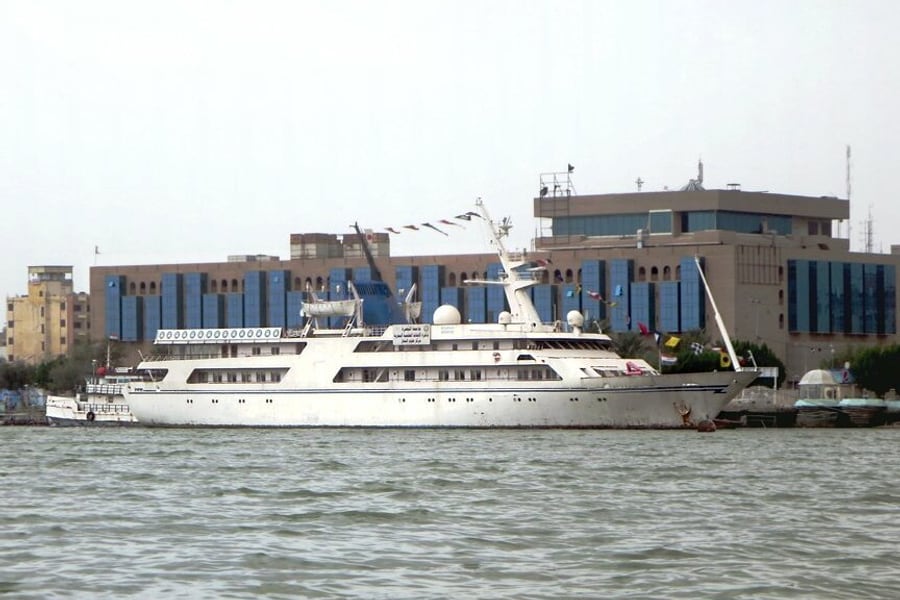 David Stanley / Wikimedia Commons · CC BY 2.0 · 2016 · cropped
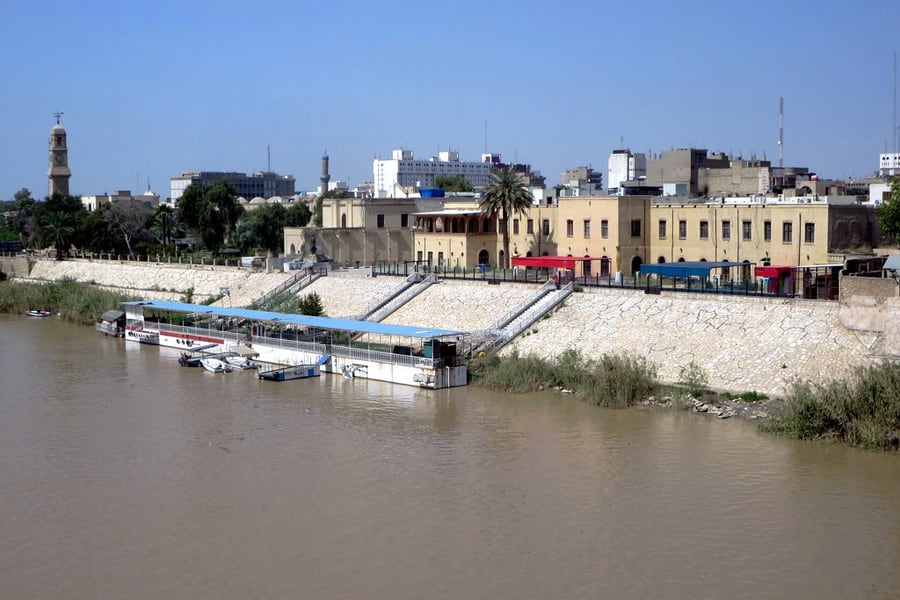
Into the Shatt al-Arab
Basra sits where the two rivers have already joined. The waterfront carries ocean-going ships, date barges and the rusting Basra Breeze, the yacht built for Saddam Hussein.A bit of history
Culture & experiences along the way
 Karrarheydar / Wikimedia Commons · CC BY-SA 4.0 · 2020 · cropped
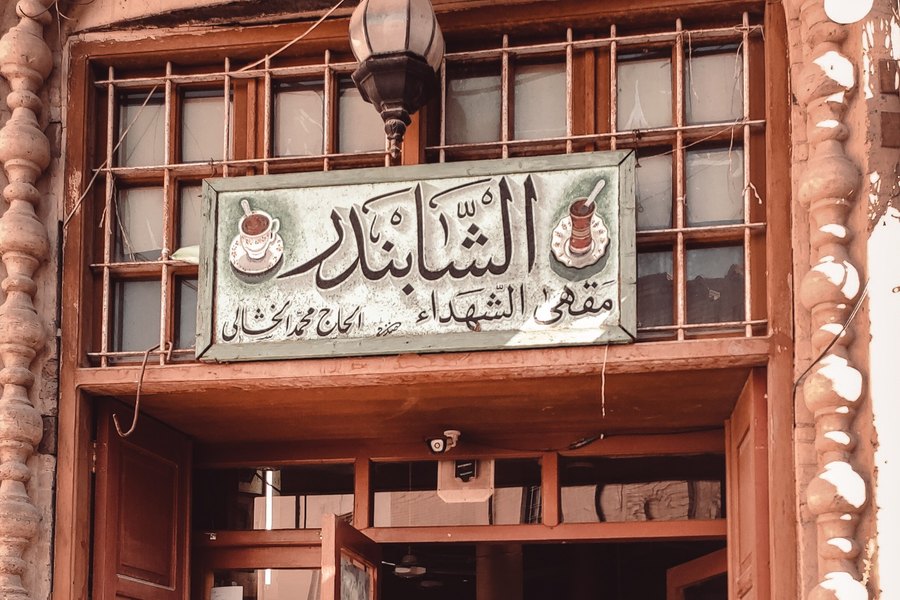
Mutanabbi Street and the Martyrs' Café
Baghdad sells its books on Mutanabbi Street — print shops, stalls laid out on the pavement, and the Shabandar, a coffee house opened in 1917 in an old printing works. A car bomb destroyed it on 5 March 2007. Mohammed al-Khashali rebuilt it, hung photographs of the four sons and the grandson he lost, and renamed it the Martyrs' Café.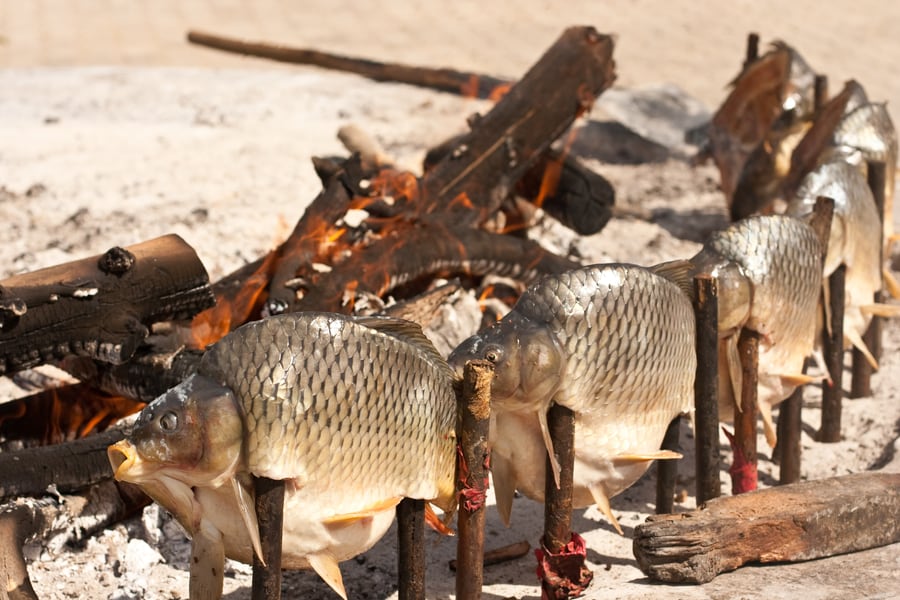 Omar Chatriwala / Al Jazeera English via Wikimedia Commons · CC BY-SA 2.0 · 2010 · cropped
Masgouf, and how it is cooked
A big carp or barbel out of the Tigris, split down the back, pegged upright on stakes in a ring around an open wood fire and cooked slowly by the heat coming off it. Masgouf is the national dish, and the one Iraqi ministers put in front of visiting delegations — Mesopotamian, and still eaten beside the river it comes from.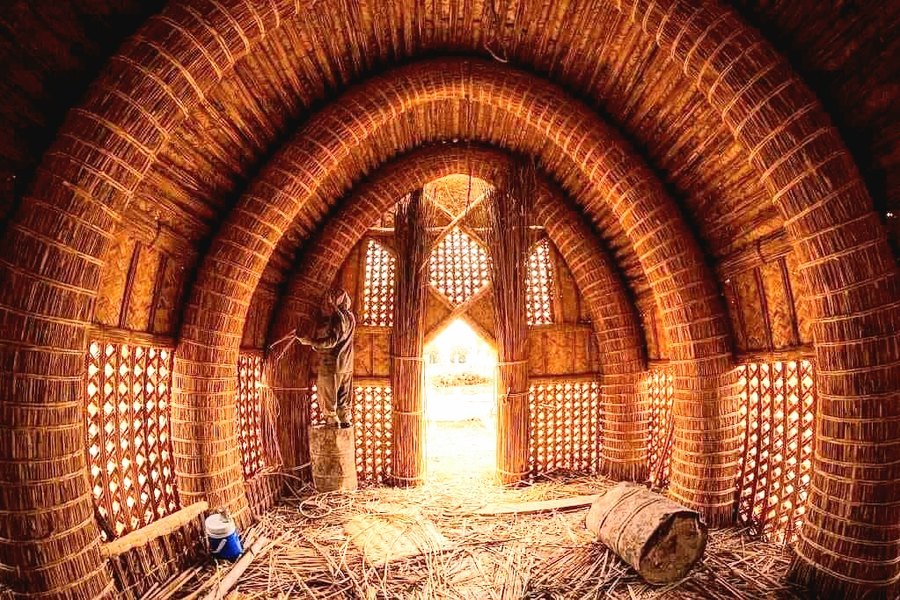 Hassan Al-Jarrah / Wikimedia Commons · CC BY-SA 4.0 · 2022 · cropped
A hall built out of reeds
In the marshes the mudhif is the village guest hall, and it is made of nothing else: reed bundled into columns, bent over and tied into parabolic arches, matting hung between them, no nail or timber anywhere. It is rebuilt about every ten years. A carved elevation of one, dated around 3300 BC, came out of Uruk, up the line at Samawah.Timetables
One train runs in each direction every day, overnight.
| Direction | Station | Departs |
|---|---|---|
| Southbound | Baghdad Central | 19:00 |
| Northbound | Basra passenger station | 19:30 |
No arrival time is published. The railway announces departures and not arrivals, and it has done so for decades — the reliability of the line through the 1990s and 2000s made a printed arrival time meaningless. The run is generally quoted at ten to twelve hours, which puts the southbound train into Basra somewhere between five and seven in the morning.
Intermediate stops, in order: Hillah · Diwaniyah · Samawah · Nasiriyah.
The train carries about 350 passengers, which is the design capacity of one set.
As of September 2026. The times above are those announced by the General Company for Iraqi
Railways on 5 August 2026, when the service resumed after the Arbaeen pilgrimage, and they are the
same times the company's director general gave in March 2026 — the pattern has been stable across
every suspension and restart. ⚠️ The railway has no website reachable from outside Iraq
(scr.gov.iq refuses connections from abroad), so departures are announced through Iraqi news
outlets and the company's own social media rather than a timetable page. Check before travelling,
particularly during Ramadan and around Arbaeen, when the whole passenger fleet is turned over to
pilgrim specials.
Tickets
There is no online booking, no agent and no app. Tickets are sold at the station counter from 08:00 on the day of travel only, payment is by Mastercard, and the railway requires the original passport or national identity document of each traveller. Sleepers go early.
Fares are set by the railway and quoted in Iraqi dinars. A first-class two-berth compartment is 30,000 dinars a berth, a second-class four-berth compartment 25,000 a berth, and a reclining seat 15,000 in first class or 10,000 in second. Shorter journeys are cheaper — Baghdad to Samawah is 8,000 or 5,000 dinars, depending on class. There is a buffet car; tea, kebabs and snacks are bought on board.
Book your tickets
First-class sleeper
Two-berth compartment · 30,000 dinars a berth
The compartment most travellers want, and the one that sells first when the counter opens.
via scr.gov.iqSecond-class sleeper
Four-berth compartment · 25,000 dinars a berth
Cheaper per berth than first class, because the compartment is shared four ways.
via scr.gov.iqSeats
15,000 dinars first class, 10,000 second
Reclining seats for anyone content to sit up through the night.
via scr.gov.iqRail Passes
No rail pass covers Iraq. Interrail and Eurail run One Country Passes for 33 destinations, and their coverage stops at Türkiye — Iraq is not in the network at all, and neither is any neighbouring country except Türkiye itself. There is no Iraqi domestic pass, season ticket or multi-journey product either.
That is less of a loss than it sounds. A first-class berth from Baghdad to Basra costs 30,000 dinars, roughly the price of a restaurant meal, and the fare structure is flat and published. The constraint on this journey is never the price — it is the ticket window, which opens at eight in the morning and sells for that day only.
As of September 2026, from Interrail's own One Country Pass page.
Places to Visit
The railway runs down the middle of the oldest inhabited landscape on earth, and every one of its stops is within reach of a Sumerian or Babylonian city. Because the train travels at night, these are places to break the journey for rather than glimpse from a window — and the line is the reason they are reachable at all without a long drive from Baghdad.
 David Stanley / Wikimedia Commons · CC BY 2.0 · 2016 · cropped
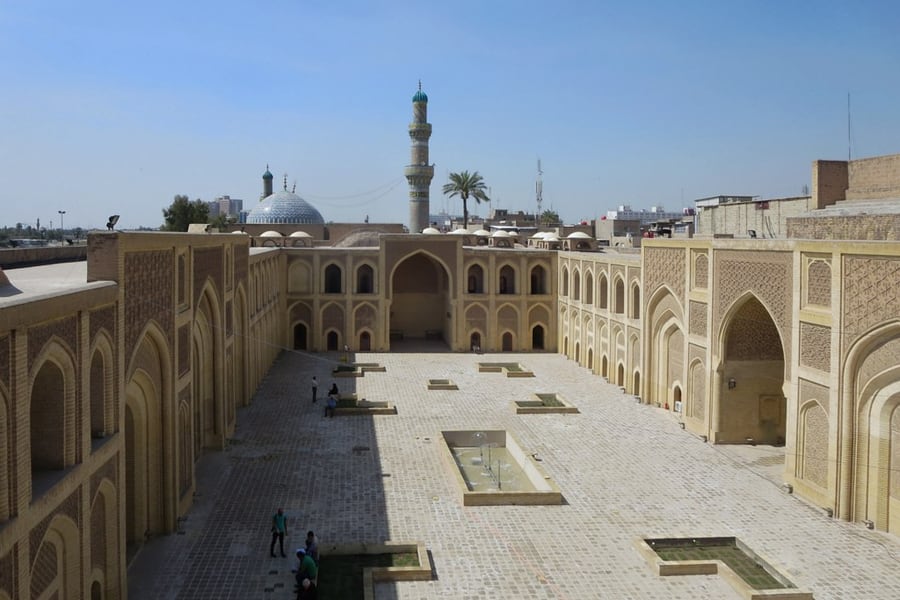
The Mustansiriya, Baghdad
A four-kilometre walk from the station, on the Rusafa bank of the Tigris, stands a college founded in 1232 by the Abbasid caliph al-Mustansir to teach law, medicine, mathematics and pharmacy. It is one of the very few buildings in Baghdad to have come through the Mongol sack of 1258, and its brick courtyard — arcaded on two storeys, with a water clock recorded by medieval visitors — is still open.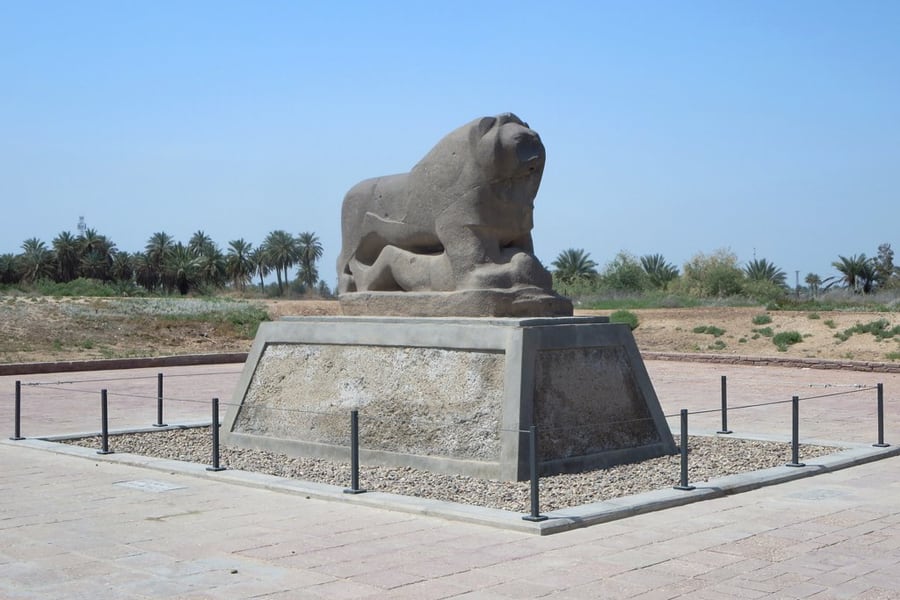 David Stanley / Wikimedia Commons · CC BY 2.0 · 2016 · cropped
Babylon, at Hillah
The first stop is nine kilometres from Babylon, inscribed by UNESCO in 2019. The Lion of Babylon stands where it has always stood: a block of basalt carved into a lion standing over a man, left unfinished, and the single object that says most about the place. Around it are the Processional Way, the foundations of Nebuchadnezzar's palace, and the ground where the Hanging Gardens may have been.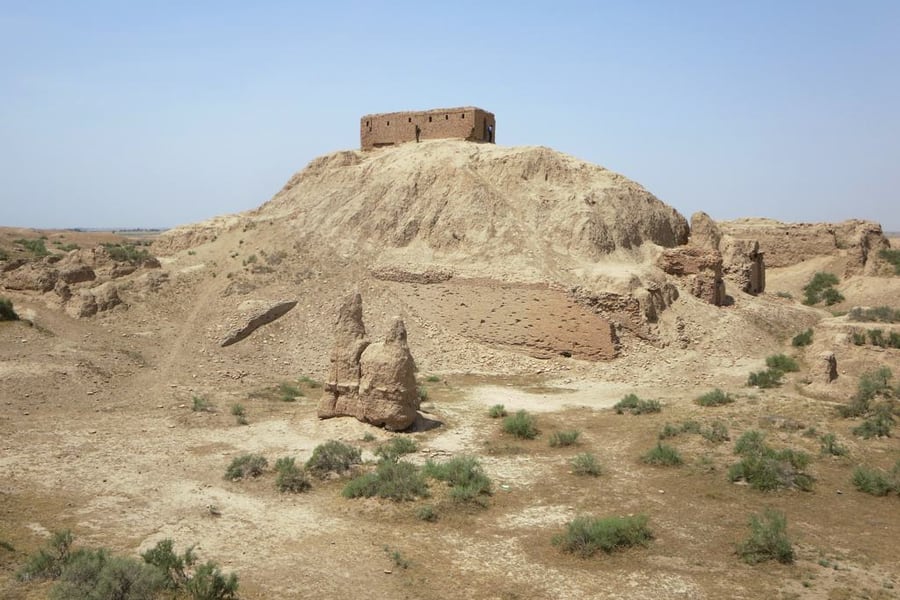 David Stanley / Wikimedia Commons · CC BY 2.0 · 2016 · cropped
Nippur, from Diwaniyah
Thirty-six kilometres east of the Diwaniyah stop, the ziggurat of Nippur rises out of the plain with a Parthian fortress built on top of it — two thousand years of reuse in one silhouette. Nippur was the religious centre of Sumer, sacred to Enlil, and the tens of thousands of cuneiform tablets dug from it are a large part of what is known about Sumerian literature.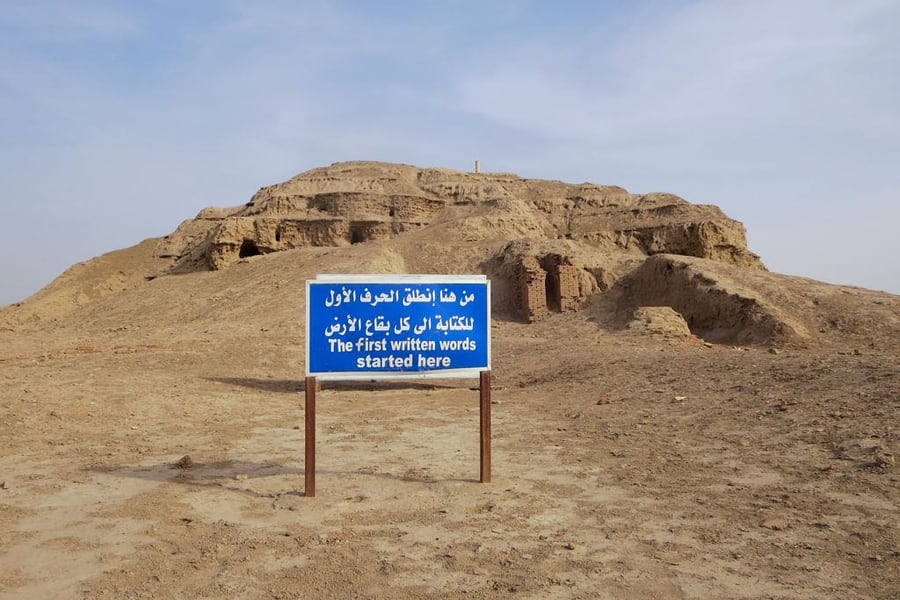 David Stanley / Wikimedia Commons · CC BY 2.0 · 2016 · cropped
Uruk, from Samawah
East of Samawah is Uruk, the city of Gilgamesh, and arguably the first city anywhere: forty thousand people inside a wall by 3000 BC. The sign the Iraqi authorities have put at the foot of the mound makes the claim without ornament — the first written words started here. The tablets found on this ground carry the earliest writing yet recovered.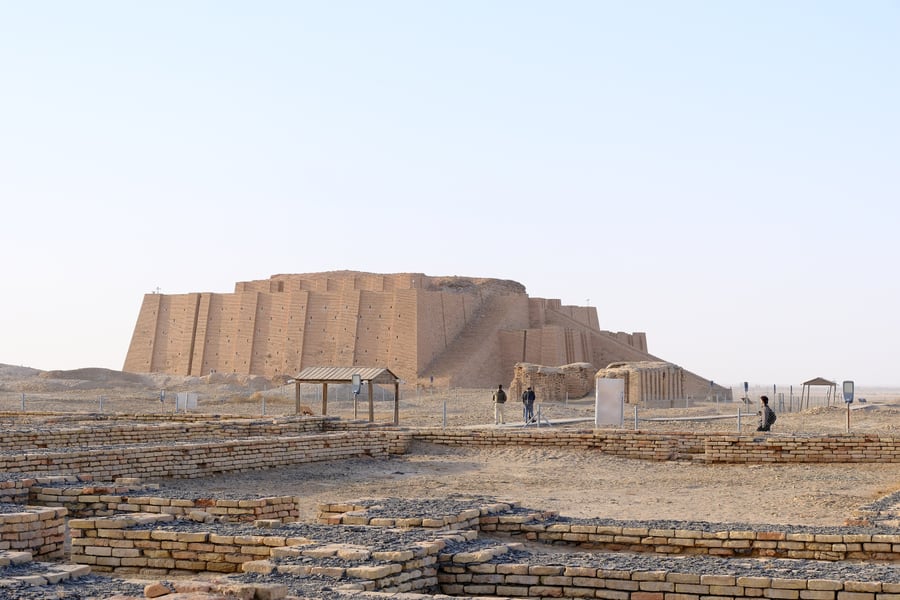 Alli Khalil / Wikimedia Commons · CC BY-SA 4.0 · 2024 · cropped
Ur, from Nasiriyah
Sixteen kilometres south-west of Nasiriyah, the Great Ziggurat of Ur is the best preserved in Mesopotamia — built for the moon god Nanna in the twenty-first century BC, rebuilt by Nabonidus, and dug out by Leonard Woolley in the 1920s and 30s along with the Royal Tombs. The lower stage and the triple stair are original brick. The old railway named its junction here Ur Junction.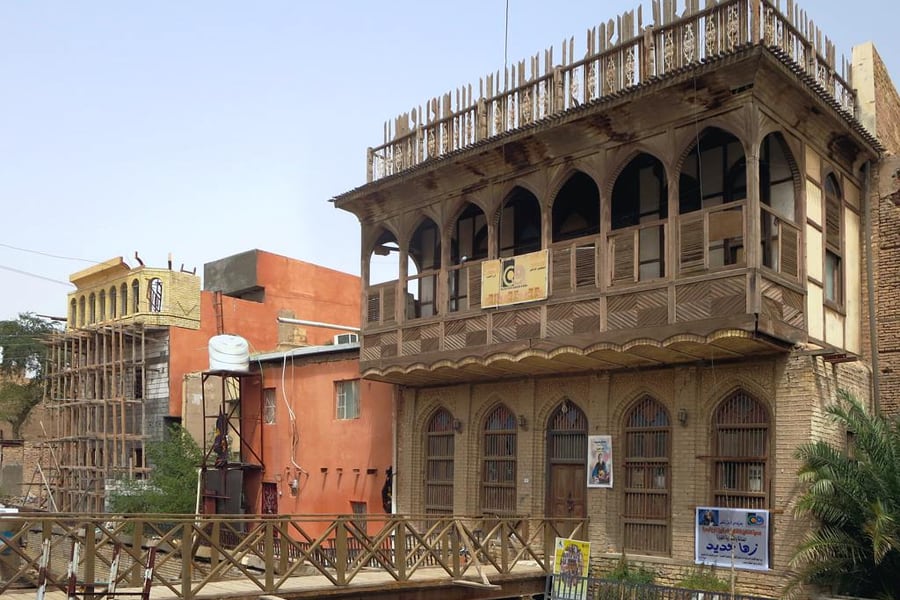 David Stanley / Wikimedia Commons · CC BY 2.0 · 2016 · cropped
The shanashil houses of Basra
Along the creeks of old Basra stand the shanashil — nineteenth-century merchant houses whose upper storeys project over the water on carved teak balconies, latticed to catch the river air. The Abdul Latif Mandel house is the finest of them. Many are derelict and some are being restored; walking the canal banks at Ashar is the way to see them.Where to Sleep
Both ends of the line have a large international hotel with a working website and English reservations, which in Iraq is not a given.
⚠️ Nothing along the middle of the route does. Hillah, Diwaniyah, Samawah and Nasiriyah all have hotels, and several are used by visitors to Babylon and Ur, but none publishes a site that states anything checkable — no address, no room count, no reservations page. One Basra hotel that search results still list with its own domain, the former Sheraton on the Shatt al-Arab, has lost that domain to a booking-affiliate page that is not the hotel. No card is written for any of them.
Where to stay
Babylon Rotana
Baghdad, on the Tigris beside the Green Zone
Two hundred and eighty-four rooms in a pyramid on the river bank, four kilometres from the Iraq Museum.
Check Availability (opens in a new tab, on rotana.com)via rotana.comGrand Millennium Al Seef Basra
Central Basra, in the Manawi Basha district
Four linked buildings and 311 rooms set in a private date-palm garden, seventeen kilometres from the airport.
Check Availability (opens in a new tab, on millenniumhotels.com)via millenniumhotels.comPractical information
Documents. The ticket office asks for the original passport or national identity document of every traveller, and will not sell against a photocopy or a photograph. Check your own visa position with an Iraqi mission before booking flights — the rules have changed repeatedly, and the Kurdistan Region administers entry separately from the federal government.
Money. Ticket sales are card-only — Mastercard, specifically — but almost nothing else on the journey is. Carry dinars for the buffet car, taxis and the archaeological sites.
When to go. November to March. The plain between the rivers regularly passes 45°C from May to September, and while the train is air-conditioned the platforms and the sites are not. Avoid the weeks around Arbaeen, when the whole fleet moves pilgrims and the ordinary service stops, and check before travelling during Ramadan.
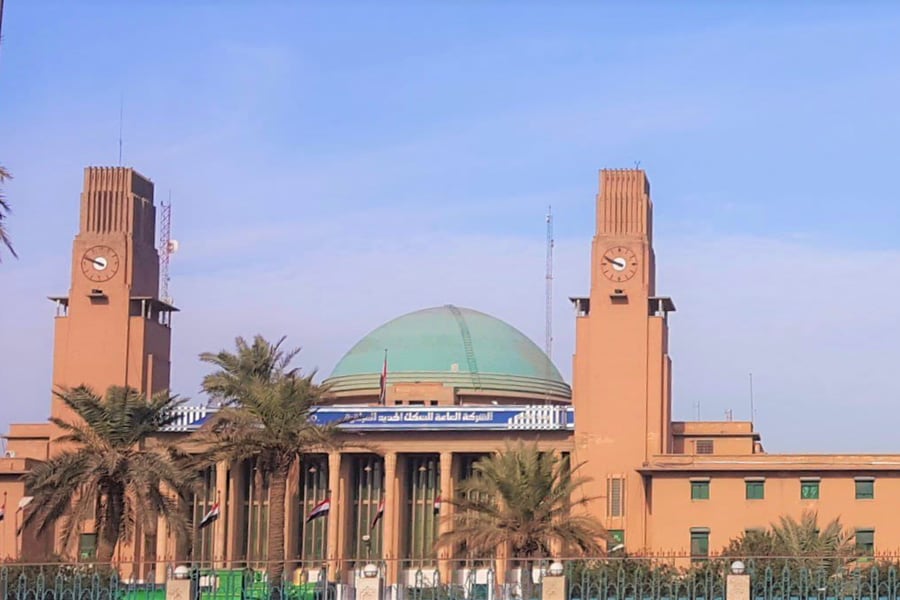
Getting to the station. Baghdad Central is in the Alawi district on the Karkh bank, about four kilometres from the Iraq Museum. Basra's passenger station is on the north-western edge of the city. Both are ordinary taxi rides.
Questions or corrections
Planning this trip and stuck on something, or spotted a time, fare or detail that has changed? Send us a message about Baghdad to Basra. We read every one, and we update this page when something has changed.