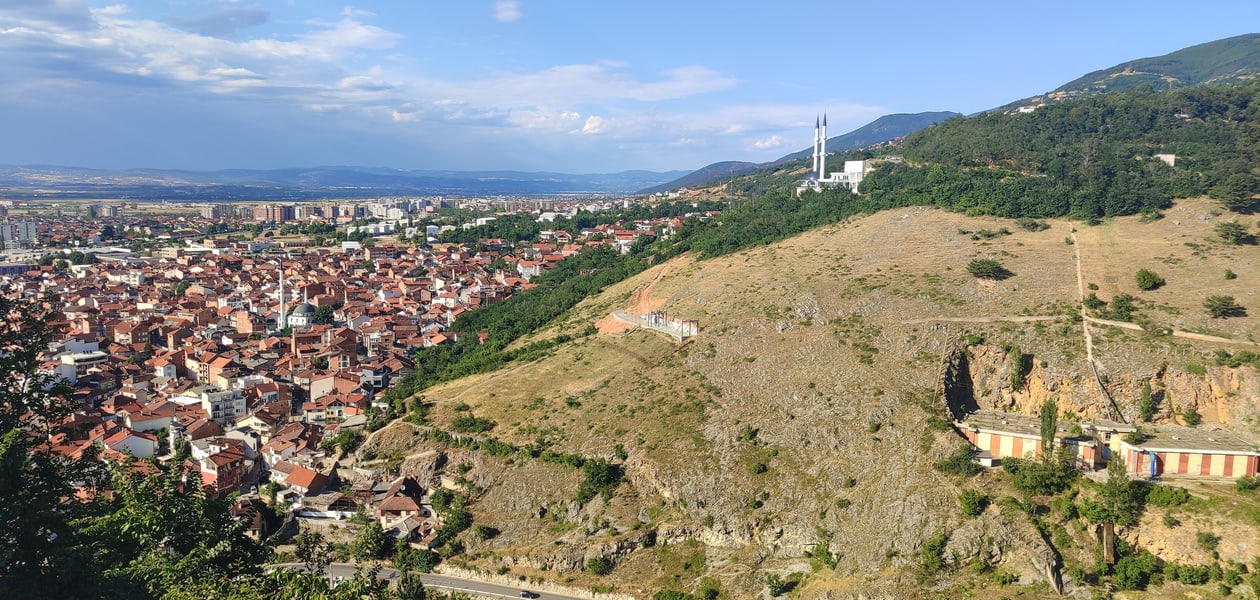
Kosovo
Avocados2026 / Wikimedia Commons · CC BY-SA 4.0 · cropped
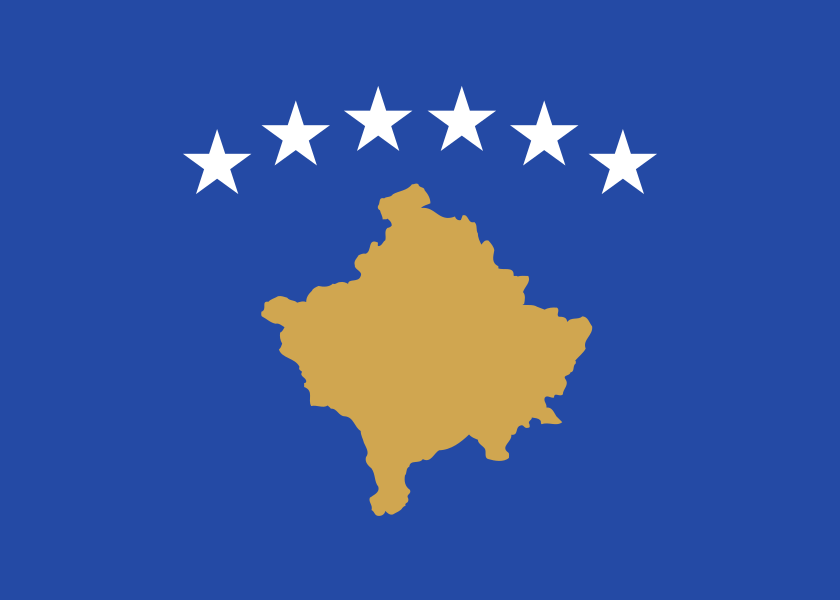
Kosovo is a landlocked country of 10,887 km² in south-eastern Europe with a population of nearly 1.6 million, the great majority of them ethnic Albanians. Its capital and largest city is Pristina; Prizren, Ferizaj, Gjilan and Peja are the other main towns. Albania lies to the south-west, Montenegro to the west, Serbia to the north and east, and North Macedonia to the south-east. The terrain runs from two high basins to mountains on the rim, several of them over 2,500 m — the Prokletije, the Accursed Mountains, on the Albanian and Montenegrin frontiers. The climate is mainly continental with Mediterranean and Alpine influences.
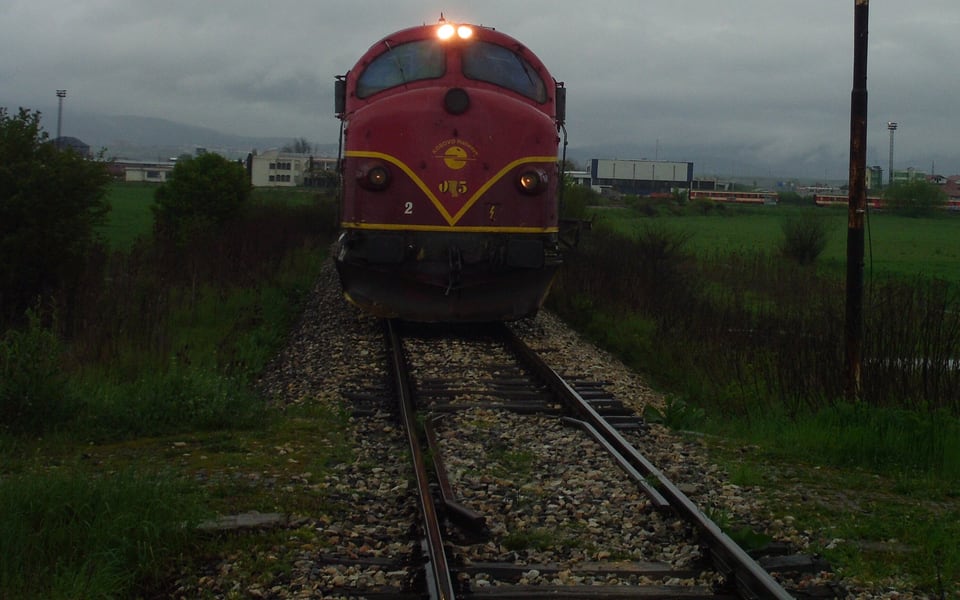
The whole railway is a single small system operated by Trainkos: 333.9 km of line, of which 103.4 km carries freight only. It descends from the Ottoman railway that ran up from Salonica in 1874, and what is left of it for a passenger is remarkably little. Trainkos still names three routes, but only one carries scheduled trains today: Pristina west to Pejë, twice a day each way. The line south to the Macedonian border at Hani i Elezit is being rebuilt, and the international train to Skopje that used to run down the Kaçanik gorge is not running.
Rail journeys in Kosovo
Good to know
Where can you travel by train from Pristina?
One place: Pejë, west towards the Rugova gorge and the Accursed Mountains, twice a day each way for three euros. Trainkos also names a Fushë Kosovë–Hani i Elezit service and an international working to Skopje, but the line to the Macedonian border is under reconstruction and neither is running. The Peja train is the only scheduled passenger service in the country.
Why is Kosovo's currency the euro?
Because it adopted it unilaterally. Kosovo is not in the eurozone and not in the European Union, but it uses the euro as its currency — a legacy of the post-1999 administration, which adopted the Deutsche Mark and then followed it into the euro. It means no currency exchange is needed for visitors arriving from the eurozone.
What happened to the line to Skopje?
It is the northern end of the old Ottoman railway from Salonica, which ran up the Vardar and the Lepenac valleys towards Mitrovica, and two capitals ninety kilometres apart once had a daily train over it. Passenger services stopped in March 2020, and the rebuilding of the Fushë Kosovë–Hani i Elezit line has kept them off. Trainkos still publishes a timetable for the train; the Macedonian side does not.
Are there rail passes for Kosovo?
No. Kosovo is not among the countries whose railways the Interrail Pass covers, and there is no national multi-journey ticket. Tickets are bought for the individual train, and fares on a network this small are very low.