Pristina to Peja
Jan Pešula / Wikimedia Commons · CC0 · 2014 · cropped
- Distance81 km, Fushë Kosovë to Pejë
- DurationAbout 2 hr
- Best seasonTwo trains a day each way, all year
Introduction
Kosovo's railway was built to run north to Mitrovica, south to Skopje and west to the mountains. What is left of it, for a passenger, is this: two trains a day from Pristina to Peja and two back, across the middle of the country in two hours for three euros. It is the only scheduled passenger service in the country. It is also slower than the bus — the road does the same journey in about an hour and twenty, thirty-three times a day — so nobody rides it to save time. They ride it because two hours at the window is the best look at Kosovo anyone is offered.
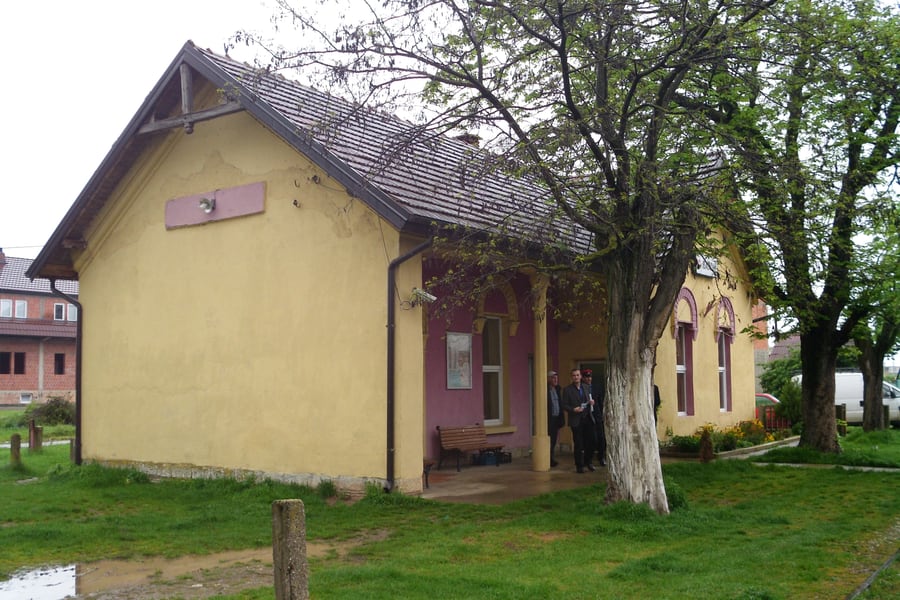
The line it runs on — 81 kilometres from Fushë Kosovë to Pejë — opened on 12 July 1936, built for the Kingdom of Yugoslavia by the French contractor Société de construction des Batignolles, to reach the mines and forests of what was then the least developed corner of the state. It was never meant to end where it ends. The design drawn up between 1926 and 1930 carried it on west over the mountains to Andrijevica in Montenegro; the loans did not come, Belgrade cut its railway plans back, and the track stops a few hundred metres past Peja station in the grass. What lies between the two ends is villages — Bardh, Dritan, Damanek, Lugdren, Grykas — eighteen stops in two hours, most of them a nameboard and a strip of platform.
The Journey
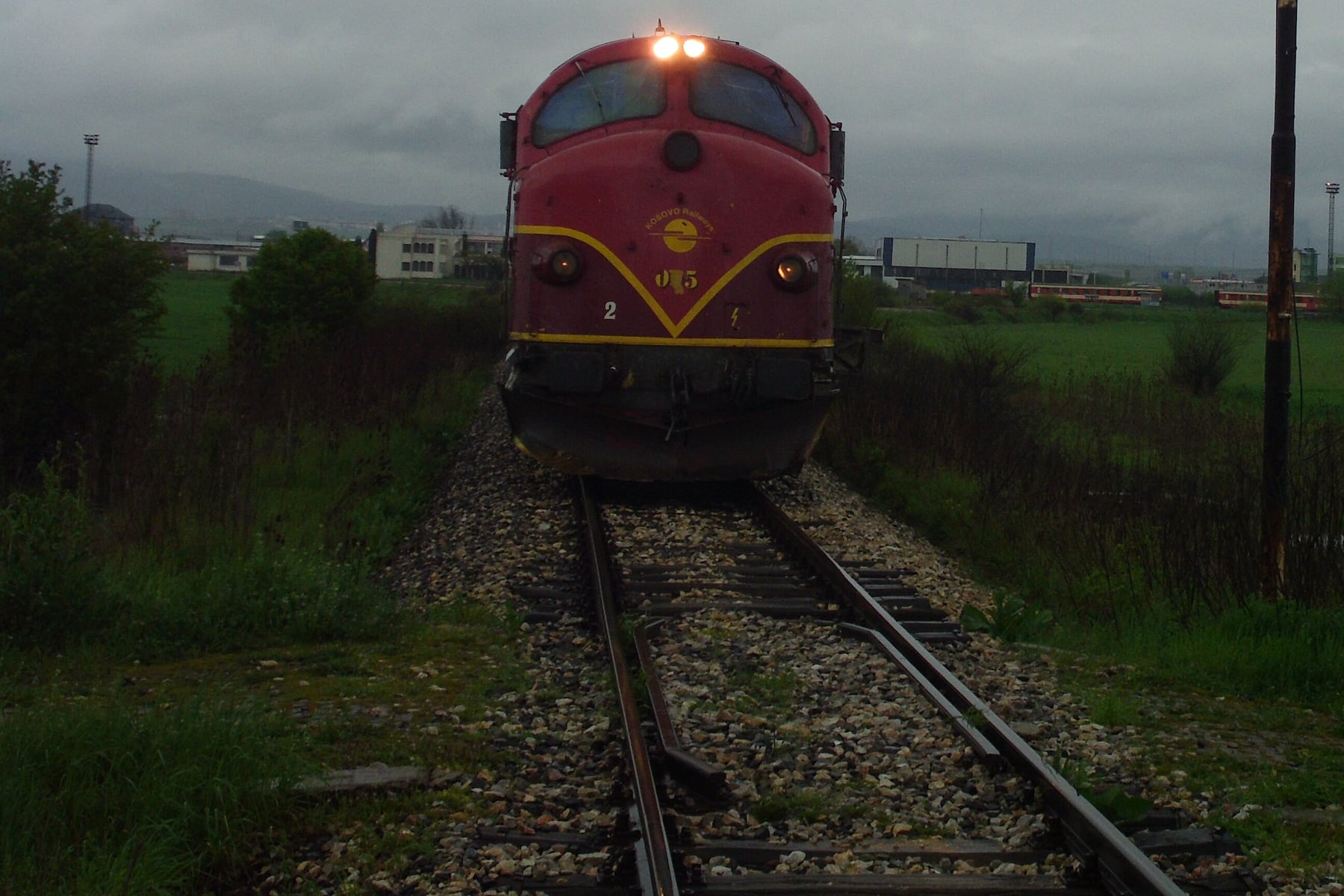
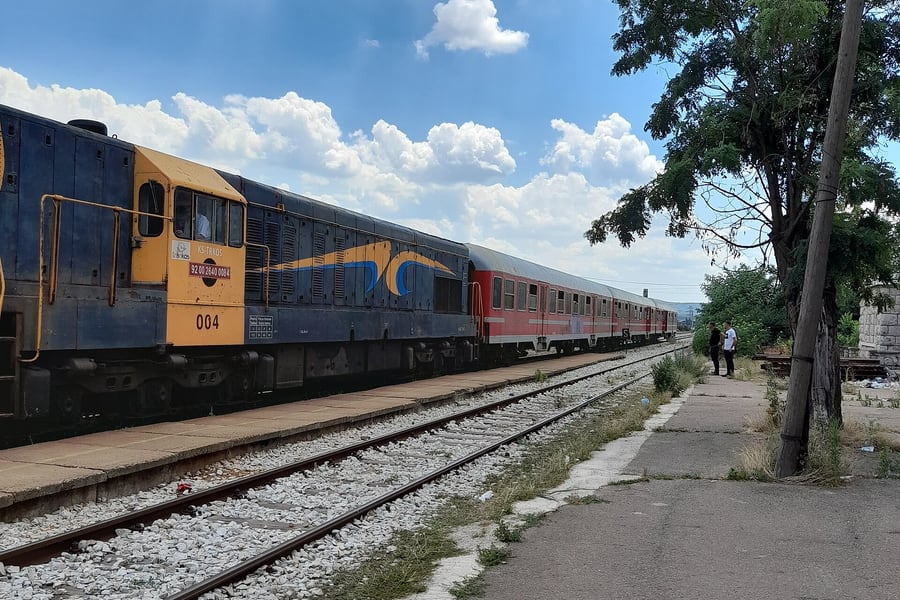
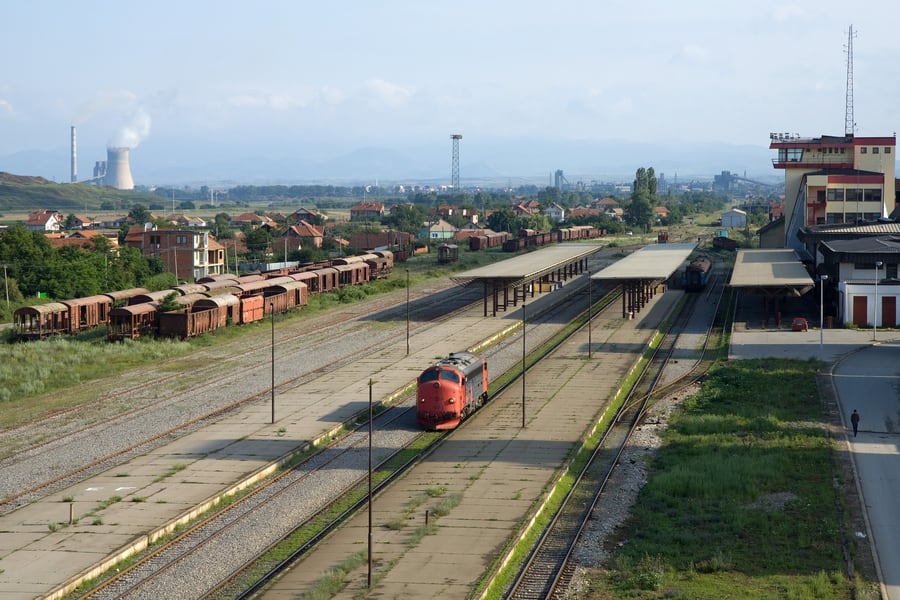
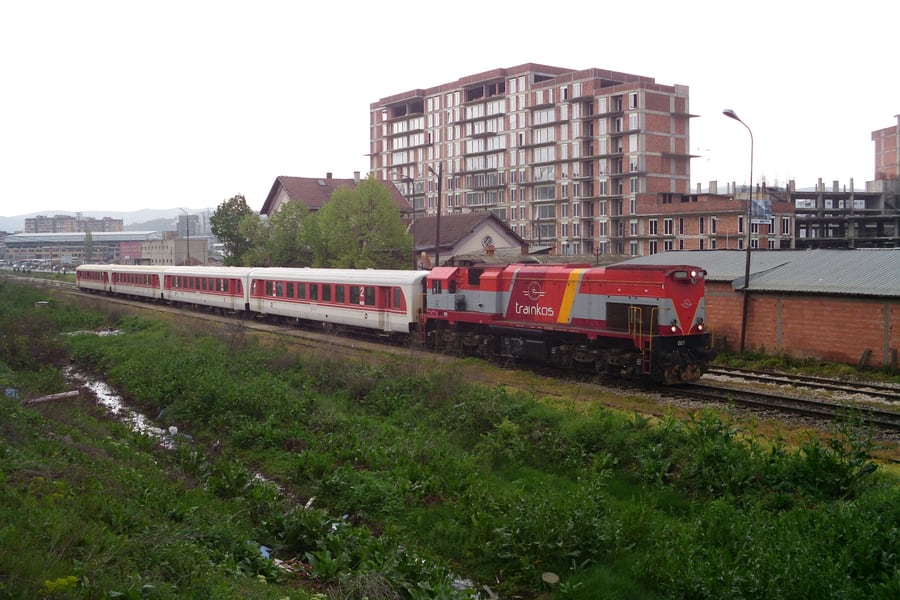
Pristina's station sits at the end of a short branch of its own, opened in 1934, and the train leaves it heading the wrong way — south-west, down to Fushë Kosovë, before anything can go west. Fushë Kosovë is the junction, the largest station in the country and the headquarters of both Kosovo's railway companies; lines of stored freight wagons stand along its platforms, and the cooling towers of the Obiliq power stations stand on the skyline behind it. The 07:50 out of Pristina is there at 08:04.
Up the Drenica
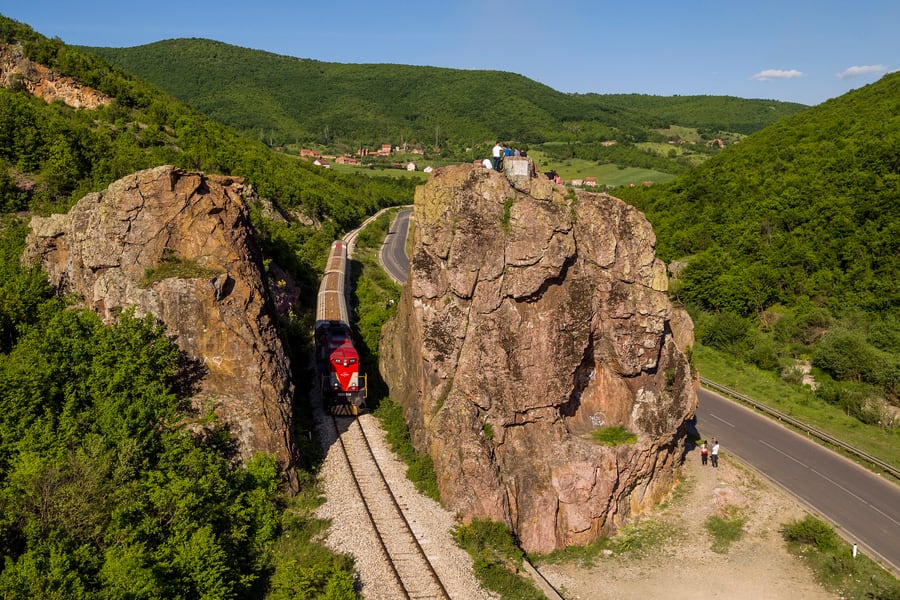
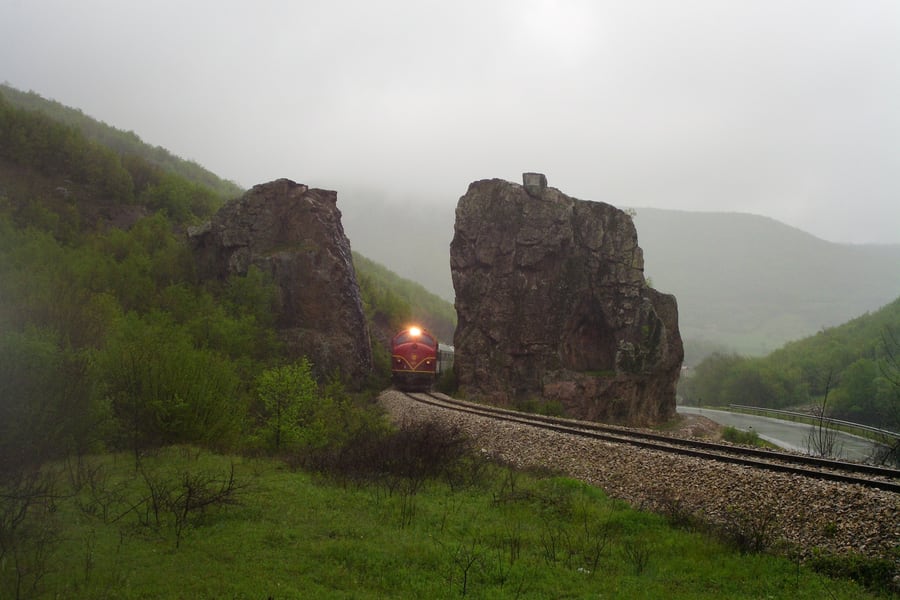
West of Fushë Kosovë the line climbs gently into the valley of the Drenica, and the stops come every four or five minutes: Bardh, Mjekaj, Dritan, Drenas. Near Dritan the track threads a gap between two weathered rock stacks — Guri i Plakës, the old woman's stone — with the main road squeezed through beside it, and it is the one place on the journey where passengers reach for a camera. Drenas is the industrial stop, the railhead for the Ferronikeli smelter, which with the brewery at Peja is what keeps freight on this line at all.
Past Damanek and Lugdren the valley narrows and the railway cuts through the flank of the Çiçavica ridge in a series of rock cuttings, then drops out of the hills towards Klina.
Klina and the line that is not there
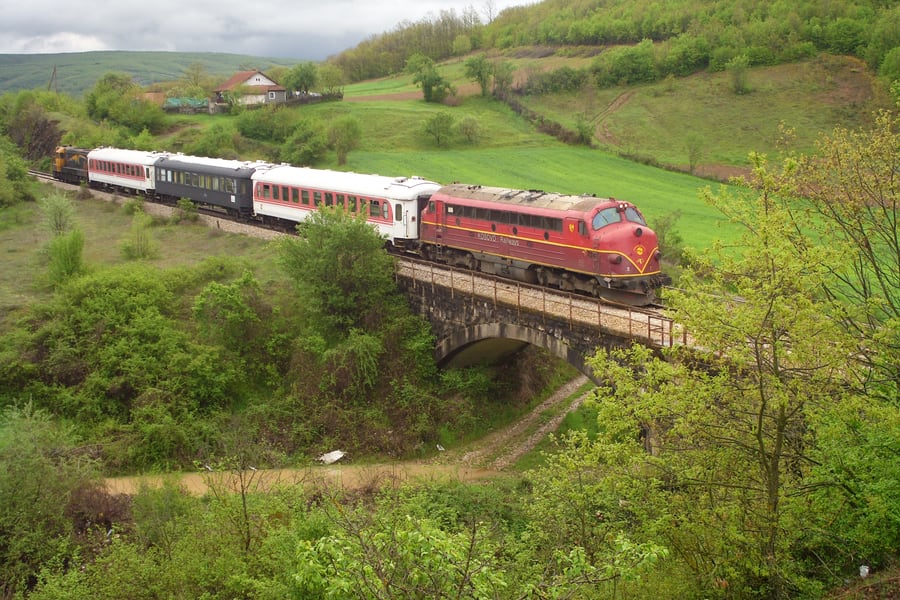
Klinë, an hour and a half out, is the only junction on the route. The track curving away to the left at the western end of the station is the 58-kilometre line to Prizren, begun in 1959 and opened in 1963; its passenger trains are long gone, the rails at the Prizren end have been lifted and built over, and what freight remains goes no further than the works at Zrze. Politicians have promised its rebuilding, and an extension south into Albania, for most of the period since. The bridge over the Klina river just east of the town — a single masonry arch in a green side valley — is the prettiest structure on the journey.
Into Peja
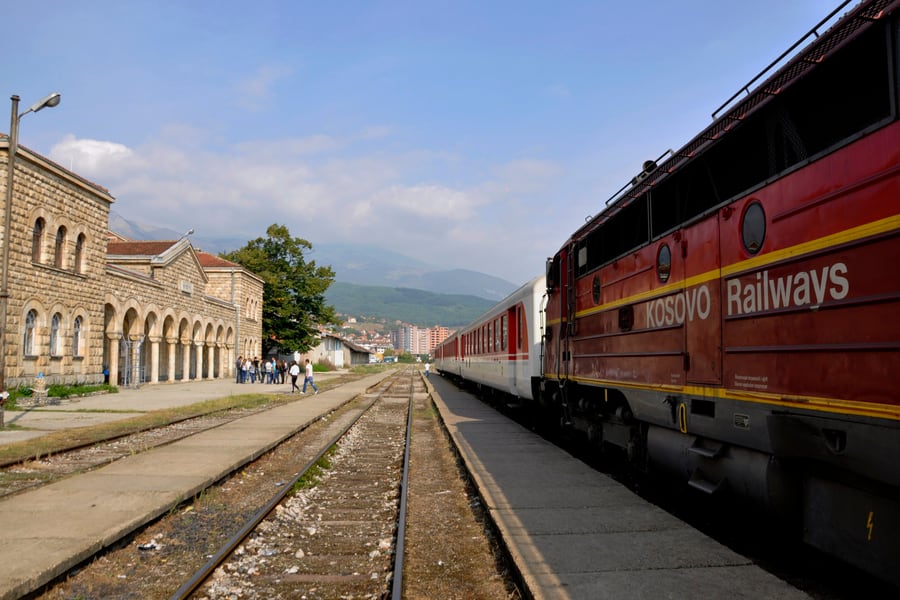
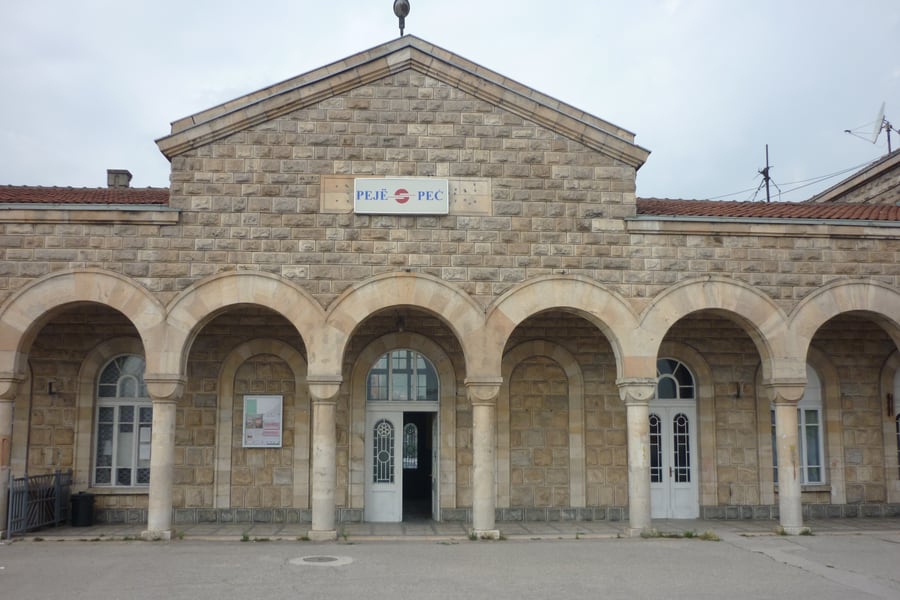
The last half-hour crosses the flat of the Dukagjini plain through Shëngjergj, Budisalcë, Arbanë and Seperant, with the wall of the Bjeshkët e Nemuna, the Accursed Mountains, closing the western horizon. Peja's station is a long stone arcade with PEJË ● PEĆ on the pediment, on the edge of town rather than in it, and the platform ends where the town's bus traffic begins.
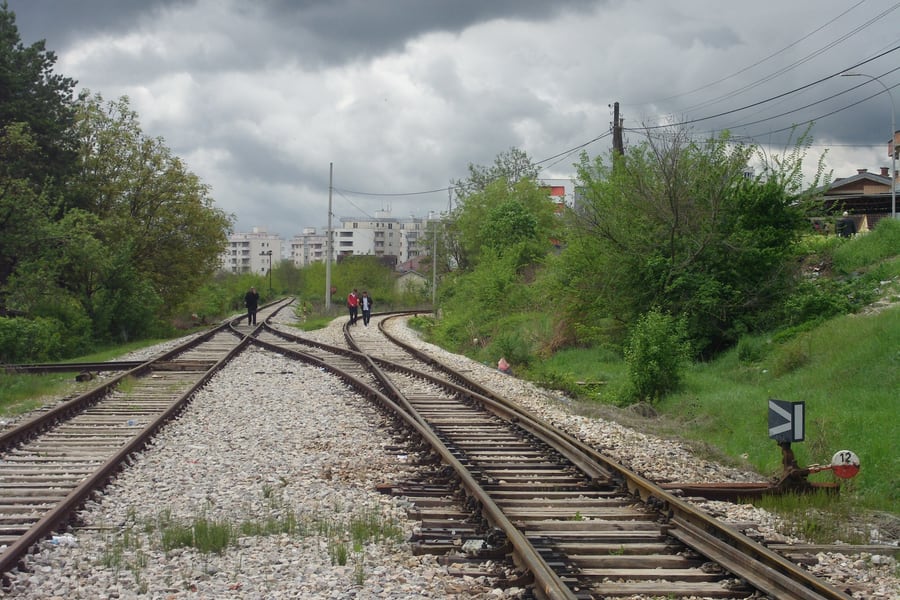
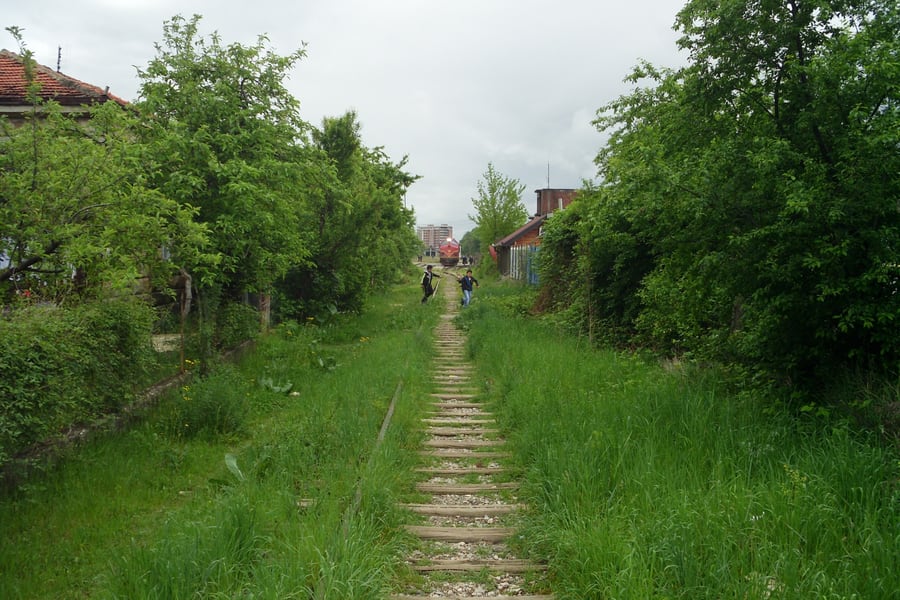
Walk to the far end and the point of the whole journey is on the ground in front of you: two rails running out into rough grass and stopping. That is where Andrijevica was to have been.
What runs it
The train is locomotive-hauled, two or three second-hand coaches behind a diesel. Most workings fall to Trainkos class 2640 — former Yugoslav Railways series 661, built by General Motors, now in blue and yellow or in the operator's red and grey; several were rebuilt and modernised by TŽV Gredelj of Zagreb, which has been repairing Kosovo's locomotives since 2010 and delivered another in February 2016. Behind them in the depot are the survivors of a stranger inheritance: a handful of NOHAB machines, the Swedish-built, American-designed diesels that ran in Norway as NSB Di 3 before they came here. The whole fleet is eight diesel locomotives and four railcars, inherited from Yugoslavia or given by the countries that sent troops after 1999.
Along the route
 Jan Pešula / Wikimedia Commons · CC0 · 2014 · cropped
Out of Pristina at ten to eight
The first of the two departures leaves the 1934 branch terminus and runs south-west to Fushë Kosovë, the junction, before the journey can turn west at all.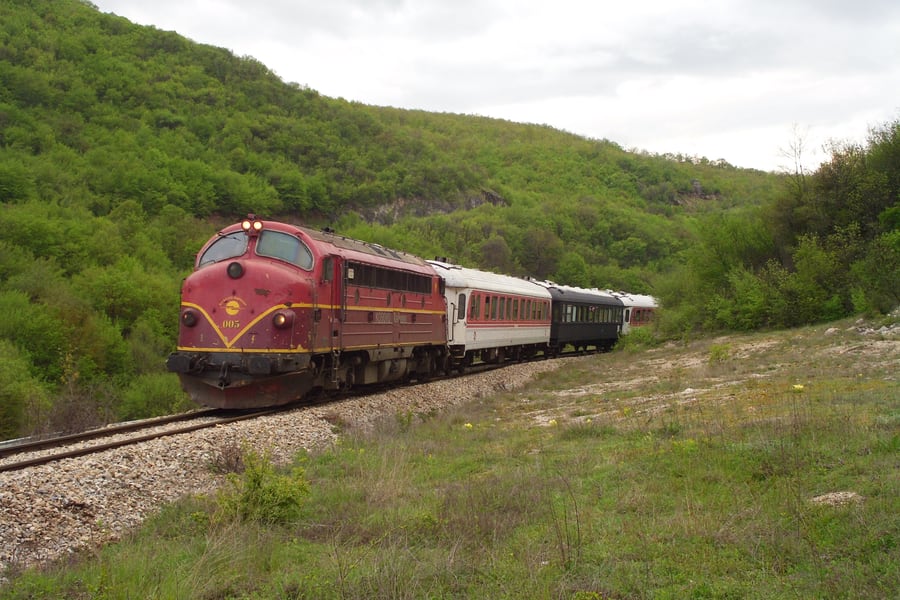 Jan Pešula / Wikimedia Commons · CC0 · 2014 · cropped
Up the Drenica to Guri i Plakës
Stops every four or five minutes through Bardh, Mjekaj and Dritan, where the line threads two rock stacks, then cuttings under the Çiçavica ridge.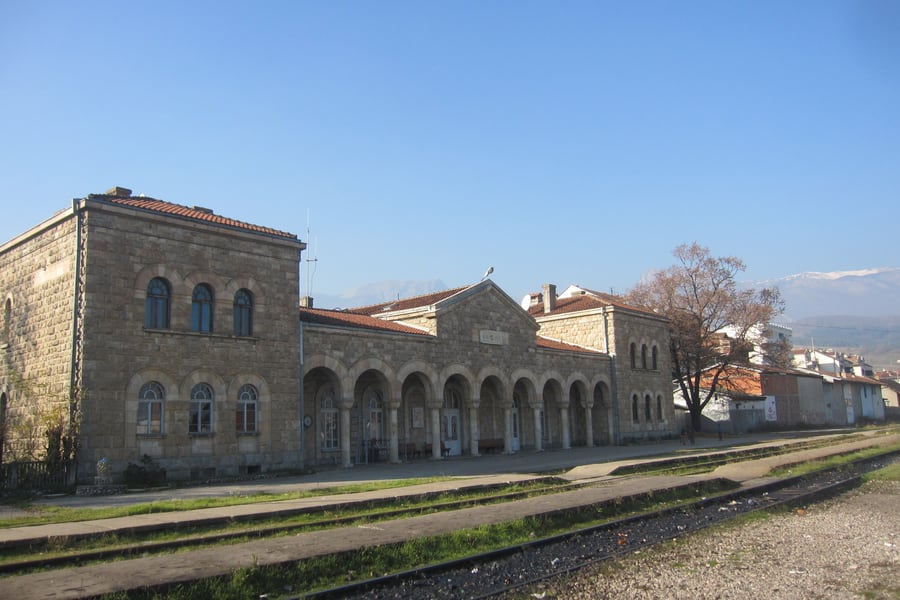 Violetamyftari / Wikimedia Commons · CC BY-SA 4.0 · 2009 · cropped
Into Peja two hours later
The last half-hour crosses the Dukagjini plain with the Accursed Mountains along the western skyline, and ends in a stone arcade on the edge of town.A bit of history
Culture & experiences along the way
 Jan Pešula / Wikimedia Commons · CC0 · 2014 · cropped
The line that was drawn to reach Montenegro
The route was designed between 1926 and 1930 to carry on west over the mountains to Andrijevica. The Kingdom of Yugoslavia could not raise the loans, Belgrade cut its railway programme back, and the line was closed off at Peja. Walk past the platform and the rails simply run out into the grass.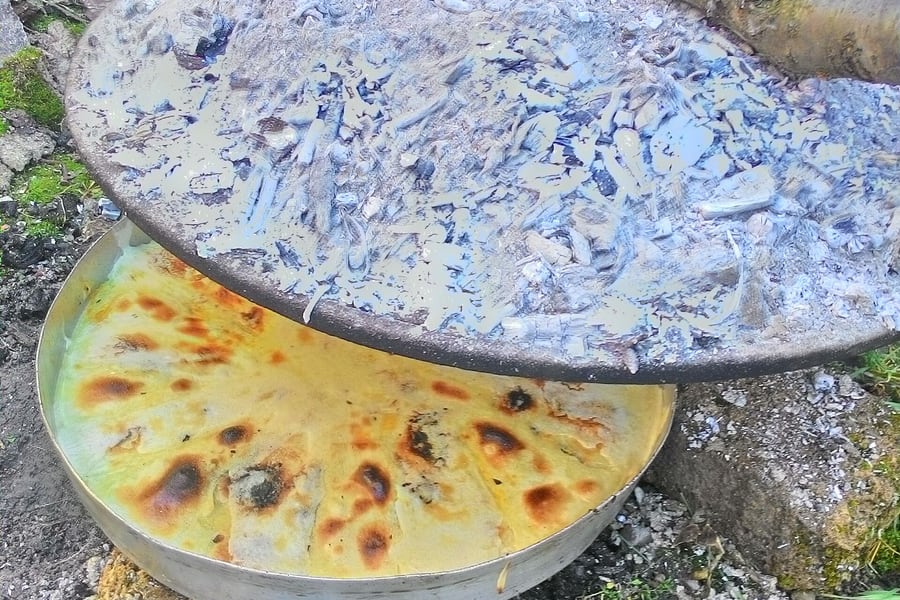 Arselapoga / Wikimedia Commons · CC BY-SA 4.0 · cropped
Flia, and the patience it takes
Flia is built in rings: a ladle of batter into a pan, a lid of hot embers lowered over it, wait, another ring, lower the lid again — layer by layer for a couple of hours until it comes out striped like the rings of a tree. It is served with sour cream and honey, and it is what a Kosovar household cooks when there is something to celebrate.Timetables
Two trains run each way, and they are the only passenger trains anywhere in Kosovo. Times below are Trainkos's own sheet for 2026, published as Orari Prishtinë – Pejë – Prishtinë 2026; it carries no seasonal or day-of-week footnote, so both pairs are shown as running every day.
Pristina to Peja
| Station | 4201 | 761 |
|---|---|---|
| Prishtinë | 07:50 | 16:30 |
| Fushë Kosovë | 08:04 | 16:41 |
| Bardh | 08:12 | 16:50 |
| Dritan | 08:24 | 17:03 |
| Drenas | 08:33 | 17:12 |
| Klinë | 09:19 | 18:00 |
| Pejë | 09:53 | 18:29 |
Peja to Pristina
| Station | 760 | 4200 |
|---|---|---|
| Pejë | 05:32 | 12:10 |
| Klinë | 06:05 | 12:42 |
| Drenas | 06:50 | 13:29 |
| Dritan | 06:58 | 13:38 |
| Bardh | 07:11 | 13:51 |
| Fushë Kosovë | 07:23 | 13:59 |
| Prishtinë | 07:32 | 14:10 |
The run takes two hours, give or take three minutes. The intermediate halts left out of the tables above — Sh. Ekonomike, Mjekaj, Damanek, Lugdren, Grykas, Qarrat, Aqarevë, Ujëmir, Gurkat, Shëngjergj, Budisalcë, Arbanë and Seperant — are all served by all four trains; the full sheet has every one of the twenty calls.
Before you go
⚠️ Check with the operator on the day. Individual trains are cancelled at short notice and Trainkos announces it on its social channels rather than on the website — the 05:32 from Peja was dropped for technical reasons on 21 February 2026, and trains 760 and 4201 were both cancelled on 3 August 2026. The timetable sheets are posted at trainkos.com (opens in a new tab).
⚠️ There is no train to Skopje, whatever Trainkos publishes. The operator still issues a Prishtinë – Shkup – Prishtinë 2026 sheet showing trains 891 and 892, but on the Macedonian side nothing is timetabled: ŽRSM Transport's departure board for the current year notes that no trains are provided on the Skopje–Volkovo (Pristina) route, and the infrastructure manager's Skopje station extract for 1 September to 12 December 2026 lists ten departures and ten arrivals, every one of them domestic. The service stopped in March 2020, and the rebuilding of the Fushë Kosovë–Hani i Elezit line has kept it out of the timetable.
As of September 2026.
Tickets
Tickets are sold at the station window and by the conductor on the train; there is no online sale and no reservation. Trainkos issues four kinds — single, return, discounted and monthly — and its published fare table for the Peja train is a single grid in euros, the currency Kosovo uses. Pristina to Peja is €3.00, Klinë €2.20, Drenas €1.20 and Fushë Kosovë €0.30.
Concessions are unusually broad and are claimed at the window. A return bought within 24 hours takes 20 % off. School pupils and anyone over 65 pay half, on production of a school book or an identity card; students, blind travellers and their companions, and several other categories pay half on a Trainkos card. War veterans, war invalids, the families of the fallen, members of the Kosovo Security Force and children under four travel free.
Book your tickets
Single, Pristina to Peja
The whole line, one class
The operator's published fare for all 81 kilometres, bought at the window or from the conductor.
Book Tickets (opens in a new tab, on trainkos.com)via trainkos.comSingle, Pristina to Klinë
An hour and a half, for the shorter ride
Klinë is the only junction on the route and the stop for the Mirusha waterfalls.
Book Tickets (opens in a new tab, on trainkos.com)via trainkos.comReturn within 24 hours
Twenty per cent off the two singles
Trainkos discounts any return bought back to the station the journey started from.
Book Tickets (opens in a new tab, on trainkos.com)via trainkos.comRail Passes
No rail pass covers this journey. Kosovo is not one of the countries in the Interrail and Eurail network — it does not appear in the pass conditions' railway-companies table, which lists every operator whose trains a pass is valid on, and there is no One Country Pass for it. Nor does Trainkos sell a network ticket of its own beyond the monthly season for commuters and students.
That is not the loss it would be elsewhere. The whole passenger railway is 81 kilometres of line and a single over all of it costs €3.00, so there is nothing for a pass to save. If you are crossing the Balkans on a pass, the practical point is simply that the pass stops at the frontier: buy the Kosovo ticket at the window like everyone else, and start counting again when you leave.
Checked against the Interrail pass conditions and its railway-companies table, September 2026.
Places to Visit
The two ends of the line carry almost everything worth stopping for. Pristina is a young capital built around an Ottoman core of mosque, hammam and clock tower; Peja sits at the mouth of a gorge, with a bazaar, a patriarchal monastery and the Accursed Mountains beginning at the edge of town. In between, the one detour worth making is to the Mirusha waterfalls, in the gorge the river has cut south of Klina.
Everything below is reachable on foot or by a short taxi ride from a station on this journey.
 Bujar Imer Gashi / Wikimedia Commons · CC BY-SA 3.0 · 2013 · cropped
Ottoman Pristina
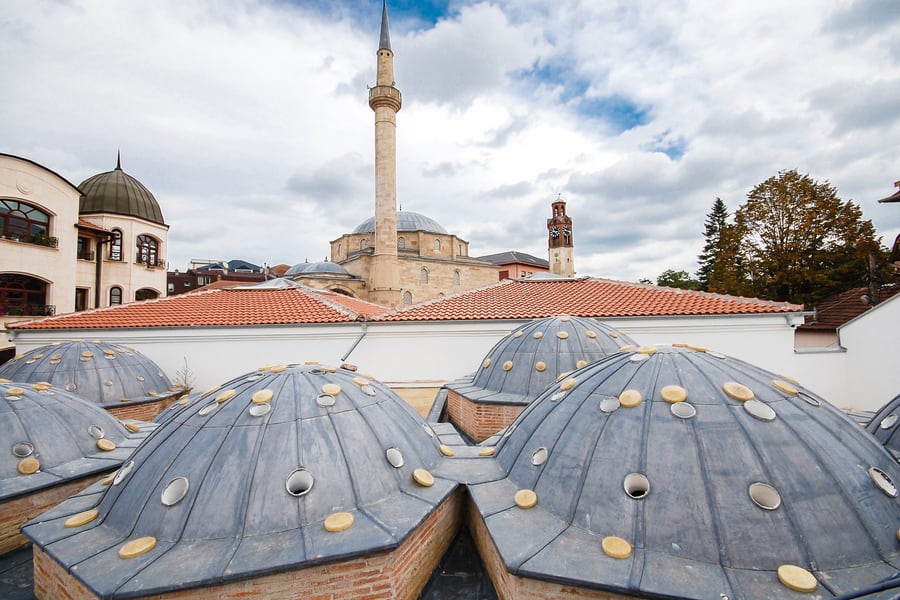
The capital's oldest quarter is easily missed among the towers: the King's Mosque, built in 1461 by Mehmed the Conqueror and among the most important Islamic buildings in eastern Europe; the lead-domed roofs of the Great Hammam beside it; and behind them Jashar Pasha's nineteenth-century clock tower, 26 metres of sandstone and brick.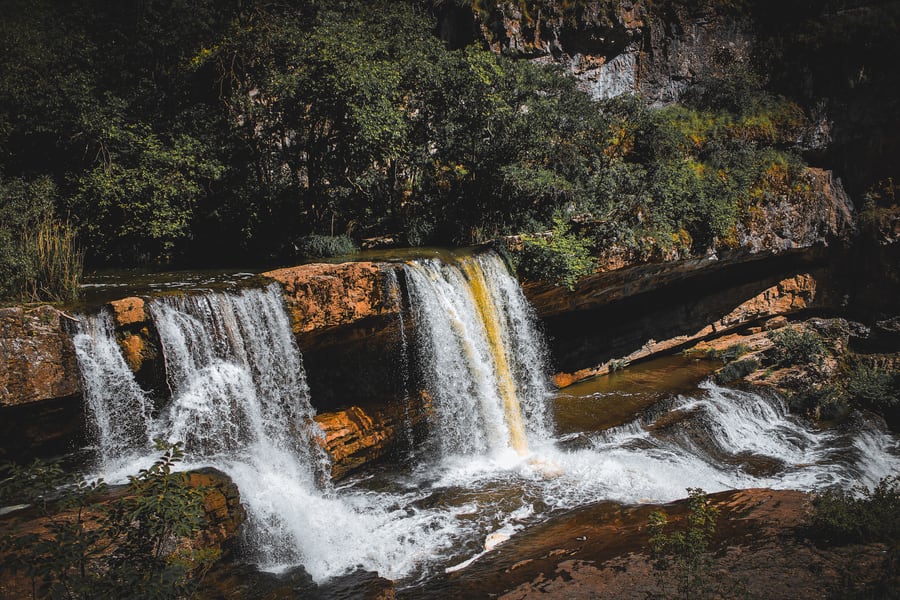 Berishasinan / Wikimedia Commons · CC0 · 2024 · cropped
The Mirusha waterfalls
Below Klinë the Mirusha river runs into a canyon on its way to the White Drin, and drops a staircase of twelve waterfalls and sixteen pools through it — the reason the whole gorge is a protected natural monument. It is the one thing between the two ends worth leaving the train for, and Klinë is the station to do it from.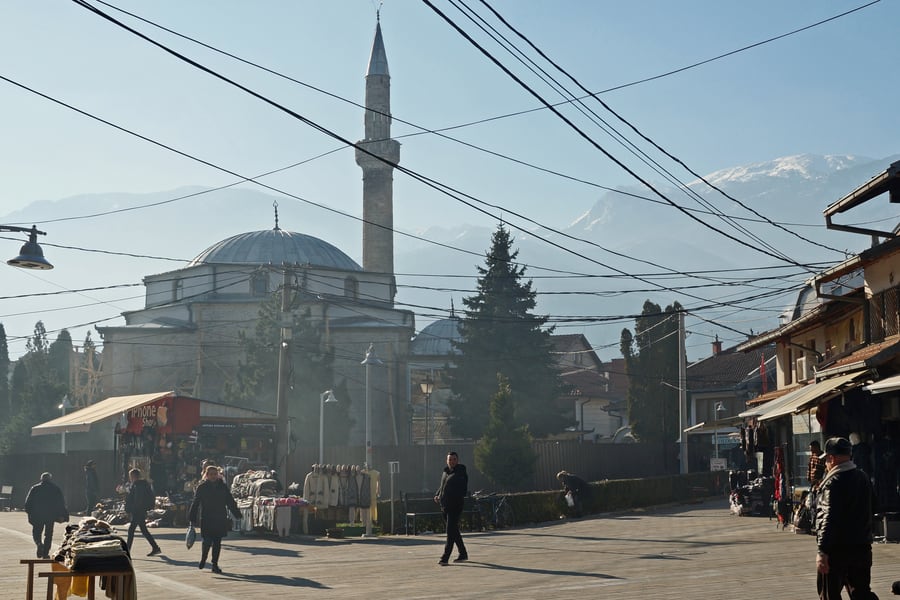 Albinfo / Wikimedia Commons · CC BY 4.0 · 2017 · cropped
Peja's bazaar and the Bajrakli mosque
The bazaar by the Lumbardhi has been destroyed twice — under the Italian occupation in 1943 and again in the war of 1998–99 — and rebuilt each time to its Ottoman pattern. It still sells cloth, hardware and hand-knitted socks from open fronts. The Bajrakli mosque stands over its roofs and the Accursed Mountains over both.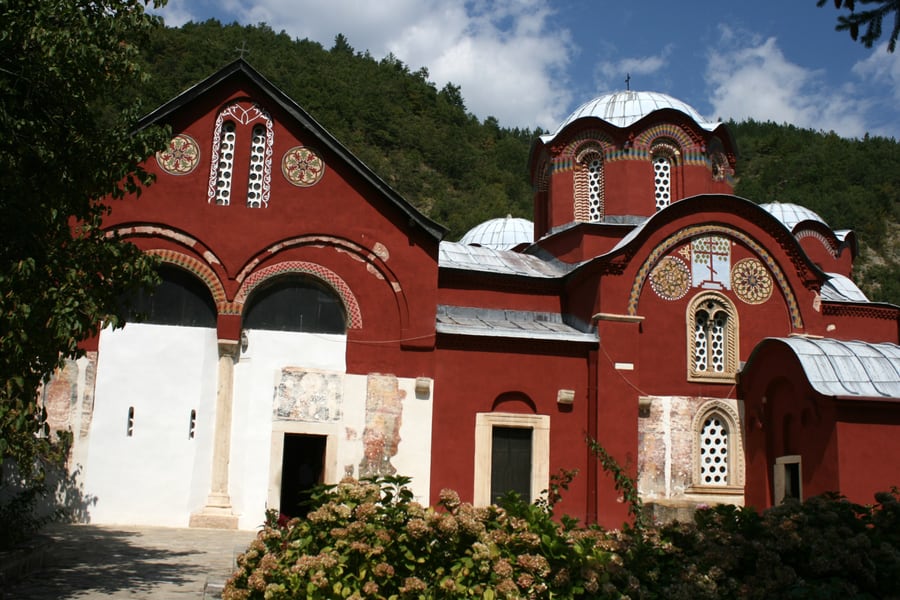 Quinn Dombrowski / Wikimedia Commons · CC BY-SA 2.0 · 2010 · cropped
The Patriarchate of Peć
Four domed churches under one red roof at the mouth of the Rugova gorge, painted inside between the thirteenth and seventeenth centuries — the frescoes of the Church of the Holy Apostles in a monumental style with no equivalent. With Dečani and two other buildings UNESCO inscribed it in 2004, modified the boundaries in 2006, and has kept it on the List of World Heritage in Danger ever since.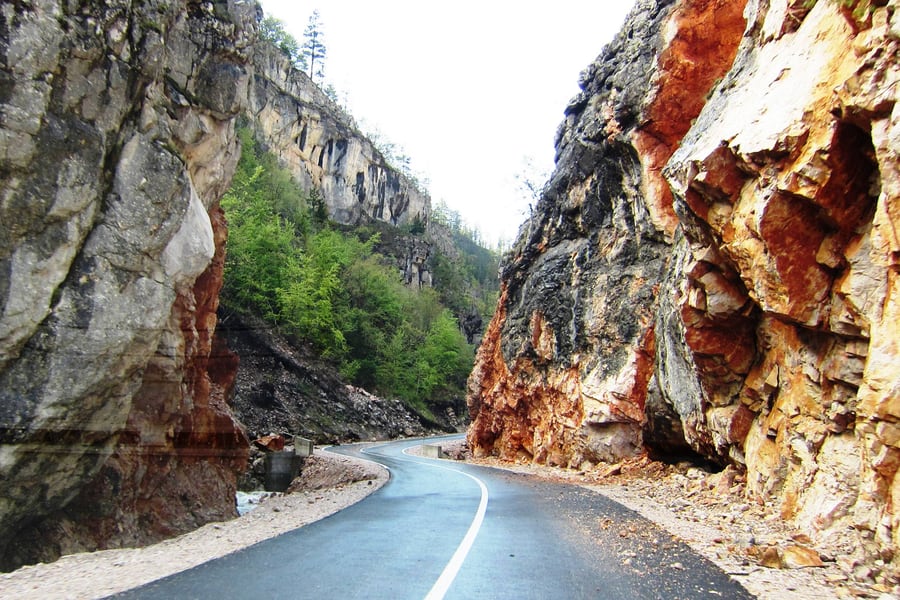 Martin Furtschegger / Wikimedia Commons · CC BY 3.0 · 2011 · cropped
The Rugova gorge
The canyon begins narrowing about three kilometres out of Peja and runs 25 kilometres west into the Accursed Mountains, up to a thousand metres deep, with the road threaded through it and the Lumbardhi below. It has been a protected natural monument since 1985, and it is the way into Kosovo's high country.Where to Sleep
The timetable makes the line awkward as a day trip and easy as a one-night stay. Out on the 07:50 you reach Peja before ten, but the only way back the same day is the 12:10, which gives you barely two hours in the town. Ride out on the 16:30 instead, sleep in Peja, and take the 05:32 or the 12:10 home.
Peja's hotels are in the centre, along the Lumbardhi river and within a few minutes' walk of the bazaar, with the mouth of the Rugova gorge a few kilometres further west. In Pristina the choice is concentrated on and around Bulevardi Nënë Tereza, the pedestrian boulevard, a short taxi ride from the railway station.
Where to stay
Hotel Dukagjini
On the square in the middle of Peja
A landmark of the town centre, by the Lumbardhi river with the Rugova mountains behind it.
Check Availability (opens in a new tab, on hoteldukagjini.com)via hoteldukagjini.comSwiss Diamond Hotel Prishtina
On Bulevardi Nënë Tereza
On the pedestrian boulevard in the centre of Pristina, with a spa and three restaurants.
Check Availability (opens in a new tab, on sdhprishtina.com)via sdhprishtina.comQuestions or corrections
Planning this trip and stuck on something, or spotted a time, fare or detail that has changed? Send us a message about Pristina to Peja. We read every one, and we update this page when something has changed.