Kyrgyzstan
Bgag / Wikimedia Commons · CC0 · cropped
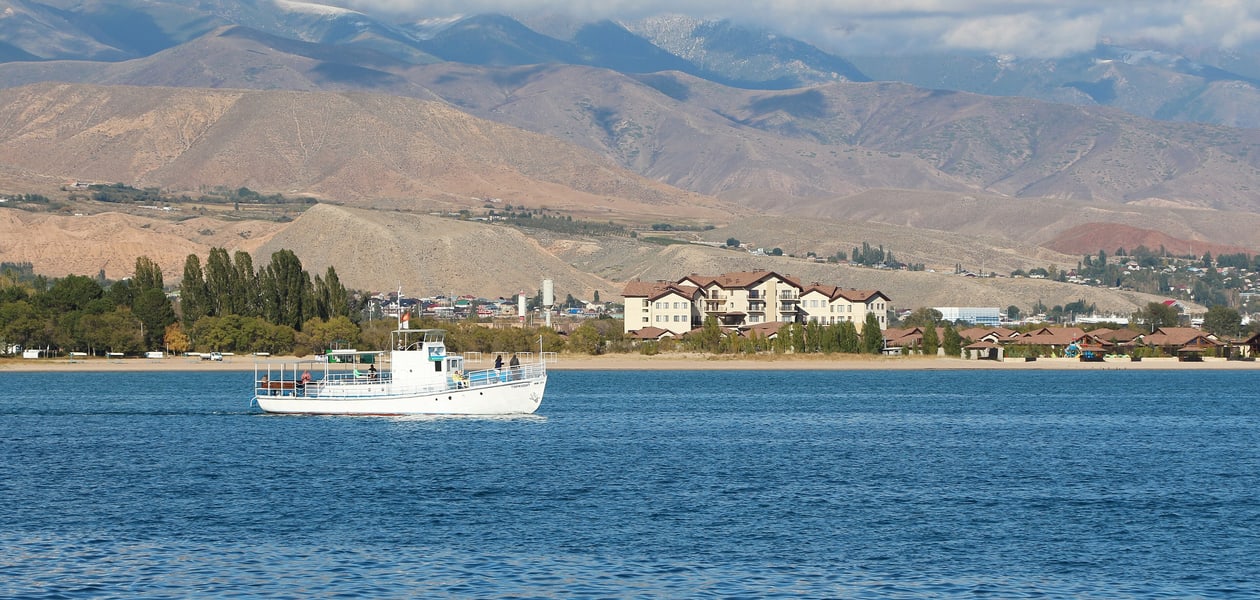
Kyrgyzstan is a landlocked country of mountains — 199,951 km² lying across the Tian Shan and the northern Pamirs, with over 7 million people and its capital at Bishkek, on the northern border. Kazakhstan is to the north, Uzbekistan to the west, Tajikistan to the south and China to the east and south-east. The Tian Shan alone covers over 80% of the country, and the ranges divide it so thoroughly that north and south are effectively two regions joined by a pass. In the east sits Issyk-Kul, an endorheic saline lake at 1,607 m — the eighth-deepest in the world, and the second-largest salt lake anywhere.
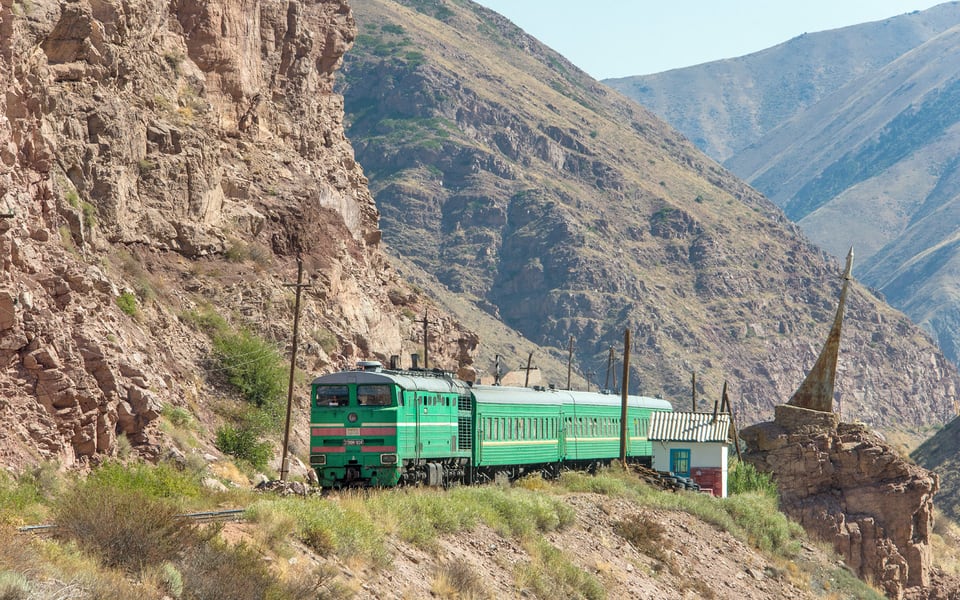
The railway is small and it reflects that geography exactly. The network is 1,520 mm Russian broad gauge, built as two disconnected fragments of the Soviet Central Asian system — a northern piece around Bishkek and a southern piece around Osh — with no line between them, because nothing was ever driven through the mountains. Most of what runs is freight. The one passenger service a visitor is likely to want is seasonal: a summer train from Bishkek down to the western shore of Issyk-Kul, sold online by the national operator.
Rail journeys in Kyrgyzstan
Good to know
Can you travel between Bishkek and Osh by train?
No. Kyrgyzstan's railway exists as two separate fragments — one serving the Chüy valley in the north, the other the Fergana valley in the south — and there has never been a line linking them. The mountains in between were never crossed by rail. Travel between the two halves of the country is by road over the passes, or by air.
What is the train to Issyk-Kul?
A summer service from Bishkek-2 down through the Boom gorge to Balykchy at the western tip of the lake, taking around four hours. Its final stop is a halt called Balykchy Beach, past the town, which puts its passengers out at the water — a national railway whose last station is a beach. It runs only in the warm months, so the season has to be checked before it is relied on.
What does Issyk-Kul mean?
"Hot lake", in Kyrgyz. It is an endorheic saline lake in the western Tian Shan, sitting at 1,607 m: the eighth-deepest lake in the world, the eleventh largest by volume, and the second-largest salt lake anywhere. The name refers to the fact that it stays open water while the mountains around it are deep in snow, and it is the country's main summer destination.
Are there rail passes for Kyrgyzstan?
No. No pass scheme applies and there is no national multi-journey ticket. Tickets are sold through the operator's own online channels and at Bishkek-2 station. Russian and Kyrgyz are the working languages, and no English version of the railway's site was found.