Macedonia
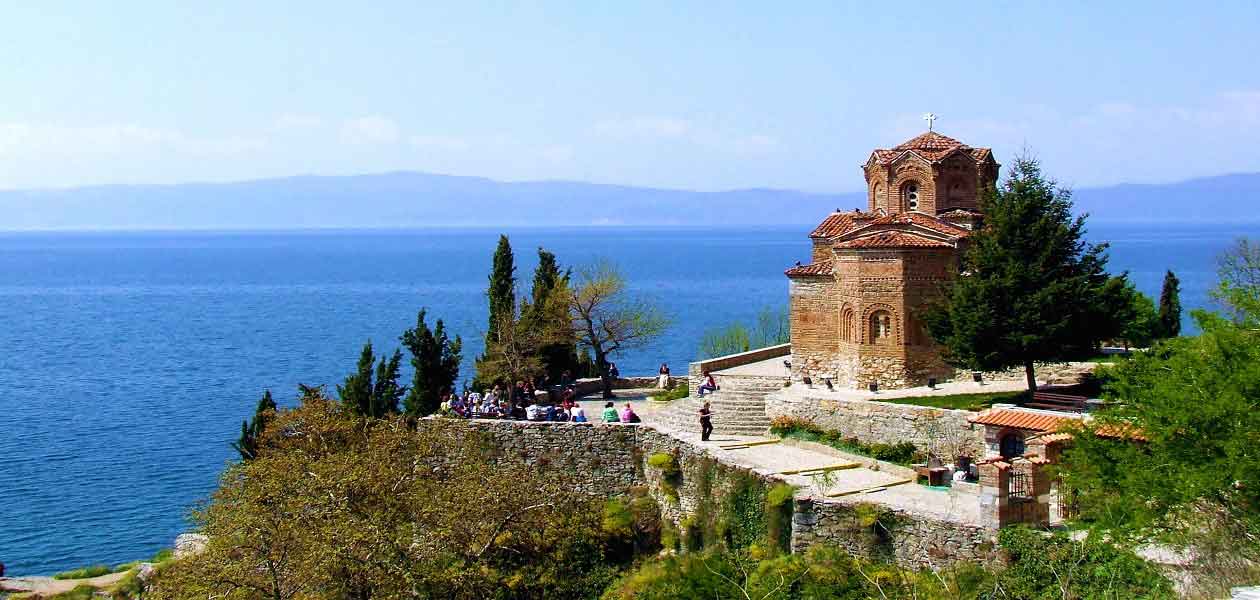
North Macedonia is a landlocked country of 25,713 km² and about 1.84 million people in the middle of the Balkan peninsula, bordered by Greece to the south, Albania to the west, Bulgaria to the east, and Kosovo and Serbia to the north. Skopje, the capital, sits on the Vardar, and the river's valley is the country's spine — a corridor that has carried traffic between central Europe and the Aegean for as long as there has been traffic to carry. Away from it the land is mountainous, and Lake Ohrid in the south-west is among the oldest lakes in the world.
The railway follows that logic exactly. Some 925 km of standard-gauge line is maintained, 315 km of it electrified, and the electrified part is the north–south corridor from the Serbian border at Tabanovci to the Greek border at Gevgelija. Branches run west to Tetovo, Gostivar and Kičevo, and south-west through Prilep to Bitola. Trains are inexpensive and well used, and the newest of them are Chinese-built units delivered from 2015.
Rail journeys in Macedonia
Good to know
Is the country called Macedonia or North Macedonia?
North Macedonia is the country's name; it was adopted in 2019, resolving a long dispute with Greece over the older form. Both names are still widely used in travel material, and older signs, timetables and rolling stock may carry either. The national railway renamed itself to match.
What is unusual about the trains?
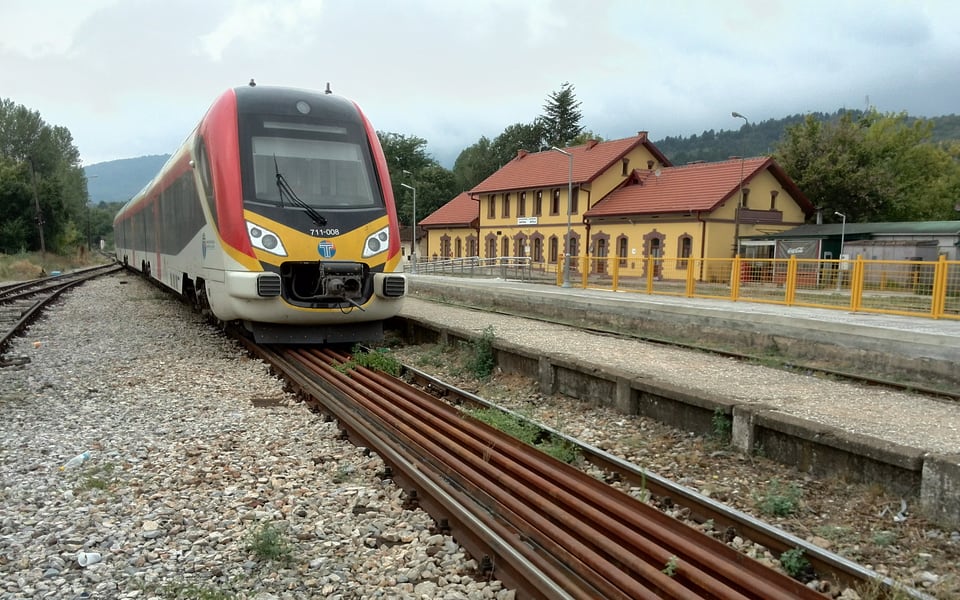
The newest passenger units were built by CRRC in China — contracted in 2014, with the first arriving in August 2015 — and they were the first Chinese-built multiple units sold into the European market. Each is a three-car set seating around 200. They work the routes out of Skopje towards Bitola, Gevgelija, Kičevo, Kumanovo and Veles.
Which line is worth riding?
Skopje to Bitola, three times a day each way and about three and a half hours. It leaves the electrified main line at Veles, climbs the Babuna valley through a string of village halts, and comes down into Pelagonia, the widest plain in the country. A single costs 314 denari.
How old is the railway here?
Older than the country. The line from Skopje to Thessaloniki opened in 1873, under Ottoman rule, and was the first standard-gauge railway in what is now North Macedonia. The 150th anniversary in April 2023 was marked by the opening of the Museum of Macedonian Railways in Skopje.
Is an Interrail or Eurail pass useful here?
Interrail does sell a one-country pass for North Macedonia, but it is rarely the economical choice: domestic fares are among the lowest in Europe, and the network is small enough that point-to-point tickets almost always cost less. A pass is worth considering only as part of a wider Balkan itinerary.