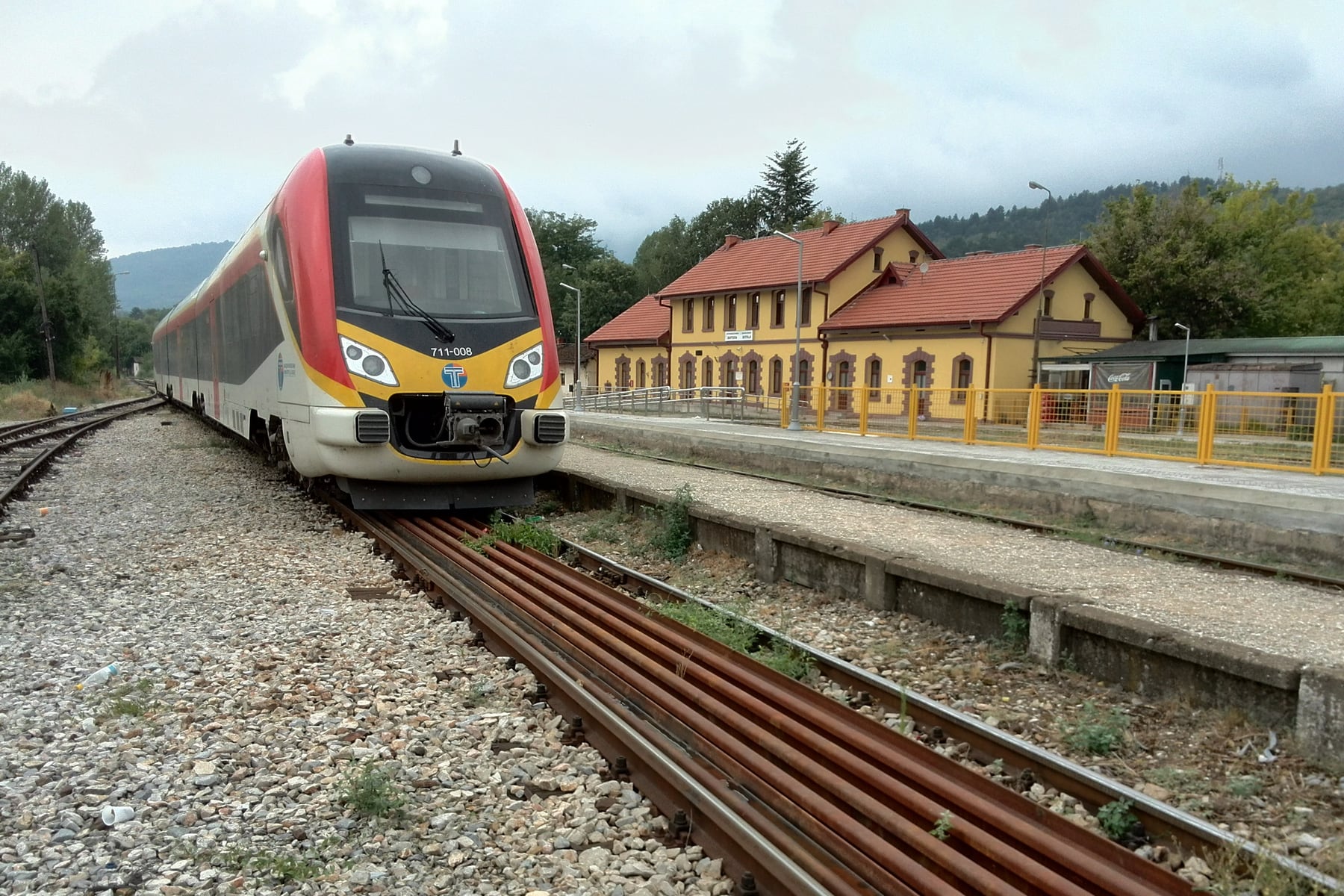
Skopje to Bitola — the line over the Babuna
Petar Milošević / Wikimedia Commons · CC BY-SA 4.0 · 2017 · cropped
- DistanceAbout 170 km, Skopje to Bitola
- Duration3 hr 24 min to 3 hr 31 min
- Best seasonThree trains a day each way, all year
Introduction
Bitola had a railway forty years before Skopje could reach it. The line that runs south from Ottoman Salonica reached the city — Monastir, as it then was — on 14 June 1894, and for the next four decades the way out of Bitola by train was towards the Aegean. The border moved, the Aegean end closed, and the country Bitola now belongs to had to build its own way in. Prilep and Bitola were joined on 7 April 1931; the harder half, north from Prilep over the Babuna to Veles and the Vardar, opened on 20 January 1936. That is the line this train runs on, and the old line to Greece is still there, still lifted out of the timetable at Kremenica, a few kilometres short of the frontier.
It takes about three and a half hours to cover the 170 kilometres, and there are three trains a day each way. Out of Skopje the train runs on the electrified Corridor X main line as far as Veles, then turns off it into country the main line never sees: the Babuna valley, a string of village halts under the Azot hills, and then the long descent into Pelagonia, the widest plain in the country, tobacco to the horizon and the wall of Baba mountain along its western edge. It is worked by three-car diesel units built at Zhuzhou in China, part of the first batch of multiple units a Chinese builder sold into Europe, and a single ticket for the whole run costs 314 denari.
The Journey
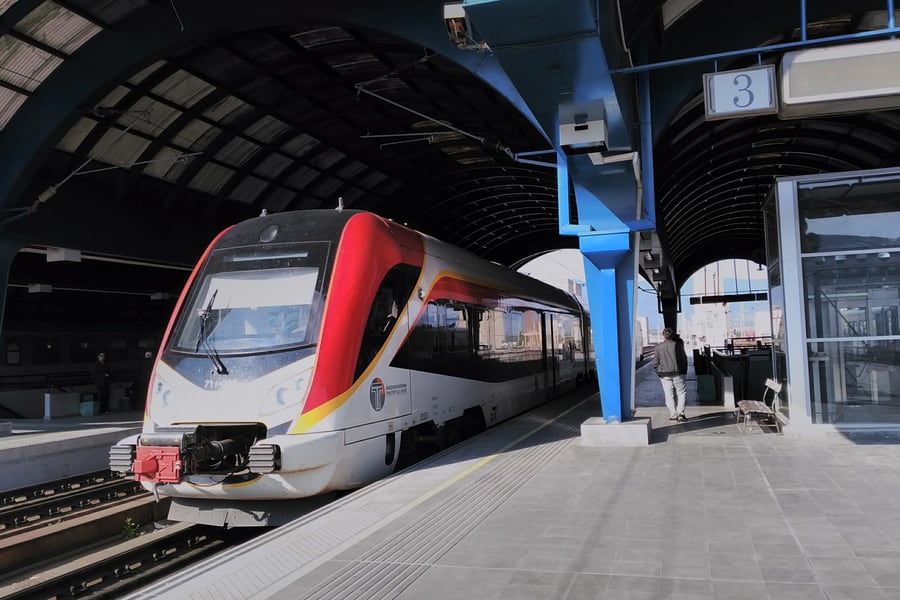
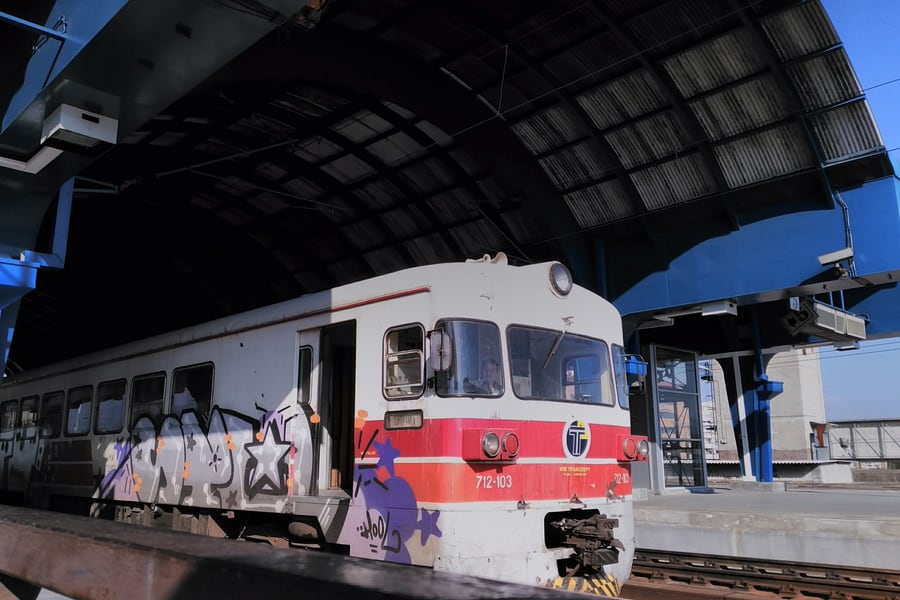
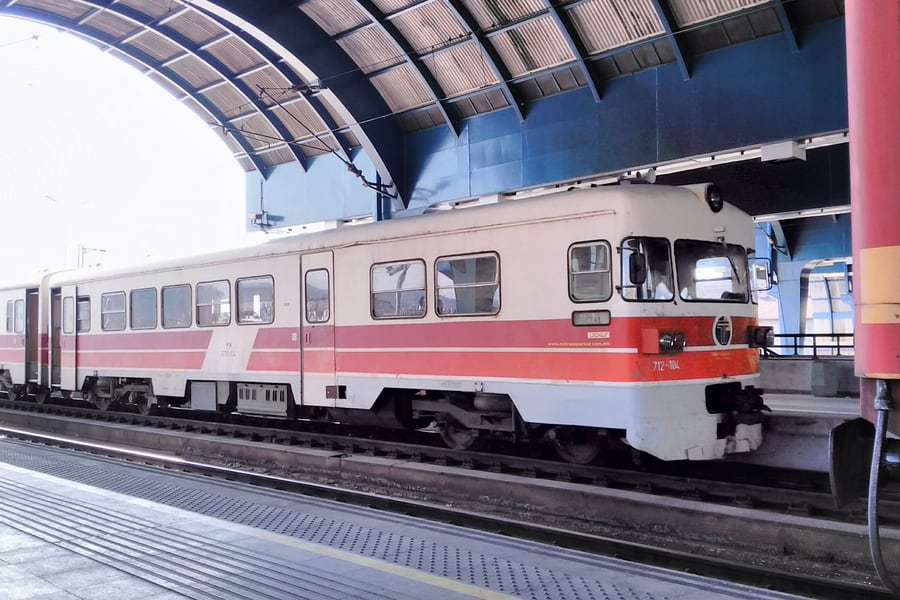
The train leaves from the upper level of the Transport Centre, the concrete box that replaced the station the 1963 earthquake destroyed. Platform level is high above the street, under a long barrel roof; the departure is announced in Macedonian and the unit that comes in is red, yellow and white, three cars, with a Chinese builder's plate.
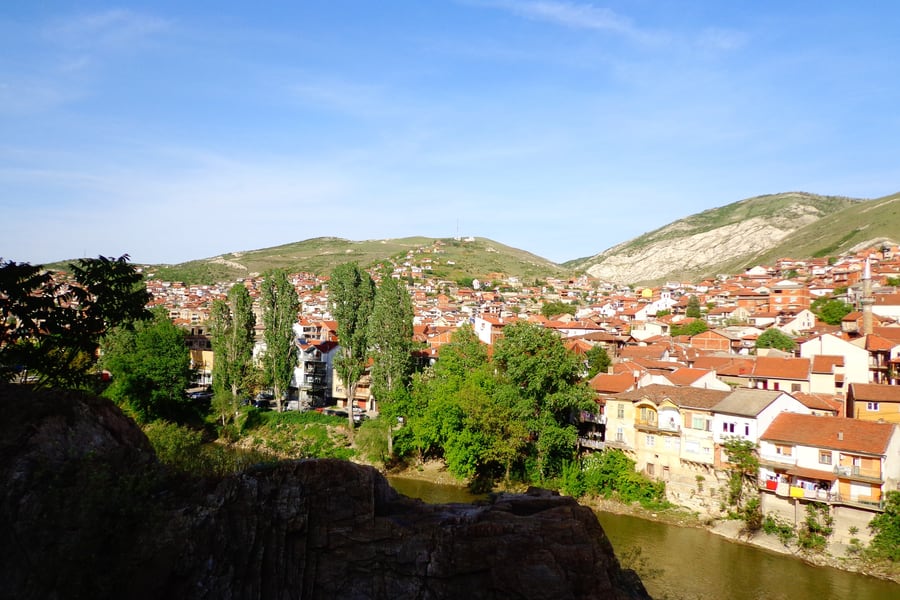
For the first forty kilometres the line is not really the Bitola line at all. It is Corridor X, the electrified main line that runs from the Serbian border to the Greek one, and the train shares it with the Gevgelija services and with freight. The suburbs go by — Lisiče, Dračevo, Jane Sandanski — then the valley narrows, and at Veles the train stops for two minutes on a platform under the town, which climbs both banks of the Vardar in terraces of red roofs.
Off the main line, into the Babuna
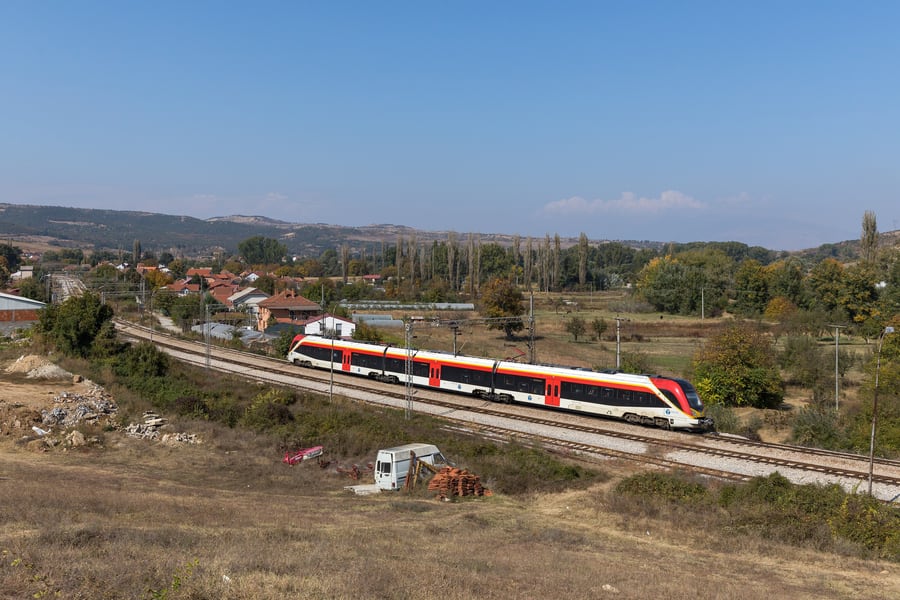
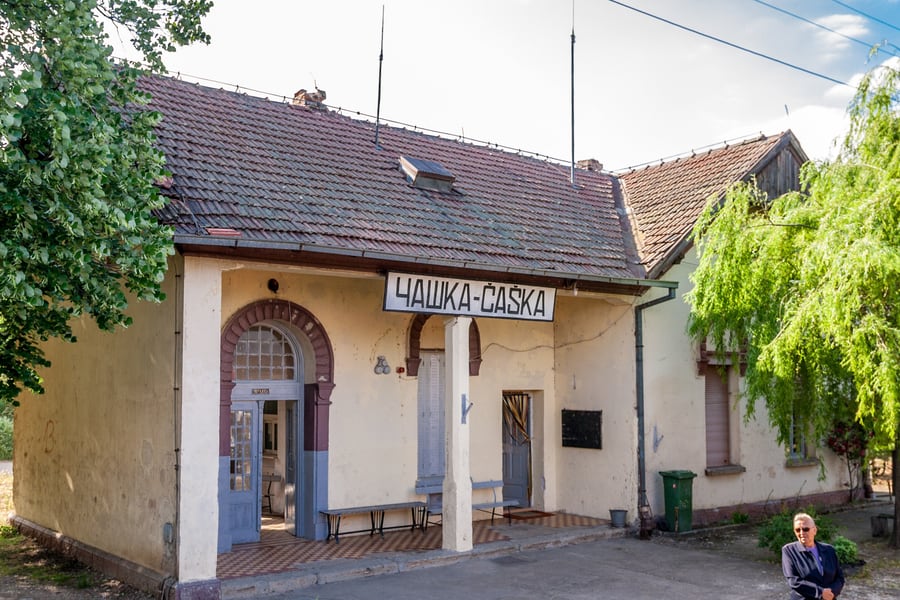
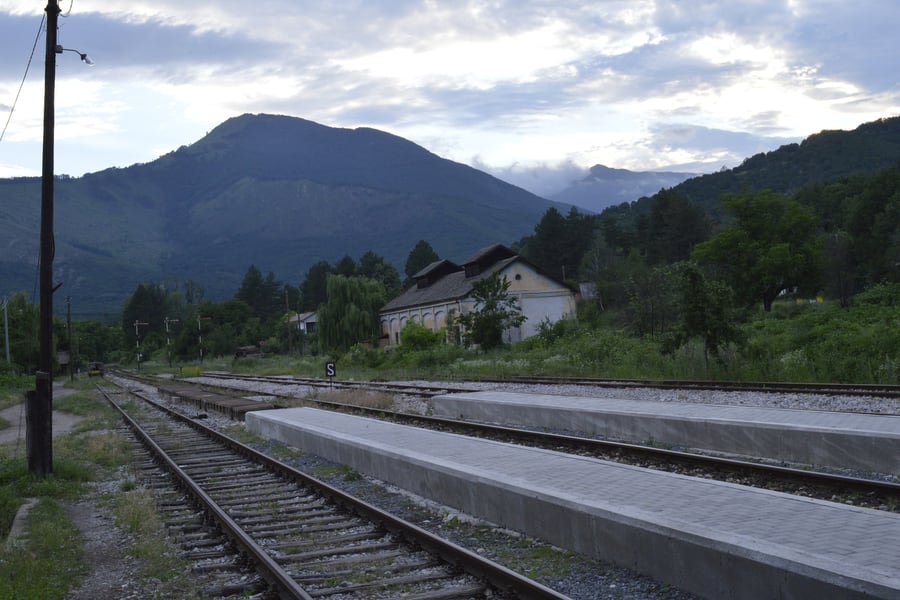
At Veles the wires end. The train swings west, away from the Vardar, and takes the single line up the Babuna — a river that has cut a gorge through limestone before it reaches the town, and which the railway follows into the district called Azot. The stations here are villages and the villages are small: Prevalec, Čaška with its old nameboard in two alphabets, Stari Grad, Martolci, Vasil Antevski, Teovo, Sogle, Bistrica. Some are request stops and some are passed at speed. At Bogomila, an hour out of Veles and 510 metres up, the timetable allows a proper stop; the village is the largest in the Azot and the station is a low cream building under trees.
Above Bogomila the line crosses the watershed. The Babuna drains north to the Vardar; on the far side the water runs south, into the Crna Reka, and the train comes down through Oreše, Gostiražni and Slepče into a different country.
Pelagonia
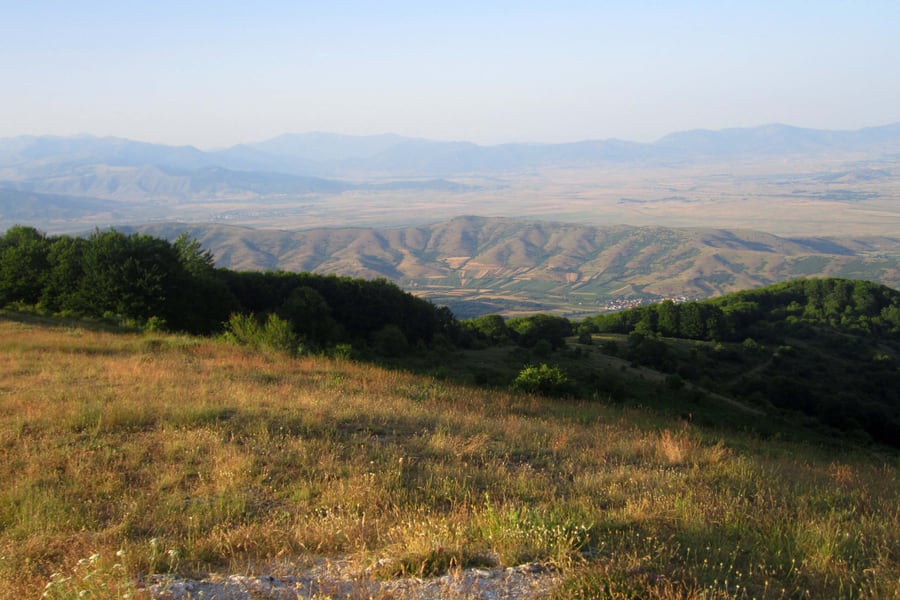
Pelagonia is the largest plain in North Macedonia and it arrives suddenly. The hills stop, the line straightens, and the window fills with the flat brown-and-green of a basin ringed by mountains — Baba to the west, with Pelister at 2,601 metres on its skyline, Selečka to the east. This is tobacco country. The crop is planted in ridged rows and hung in racks by the roadside to dry, and Prilep, the first town, has made its living from it for a century.
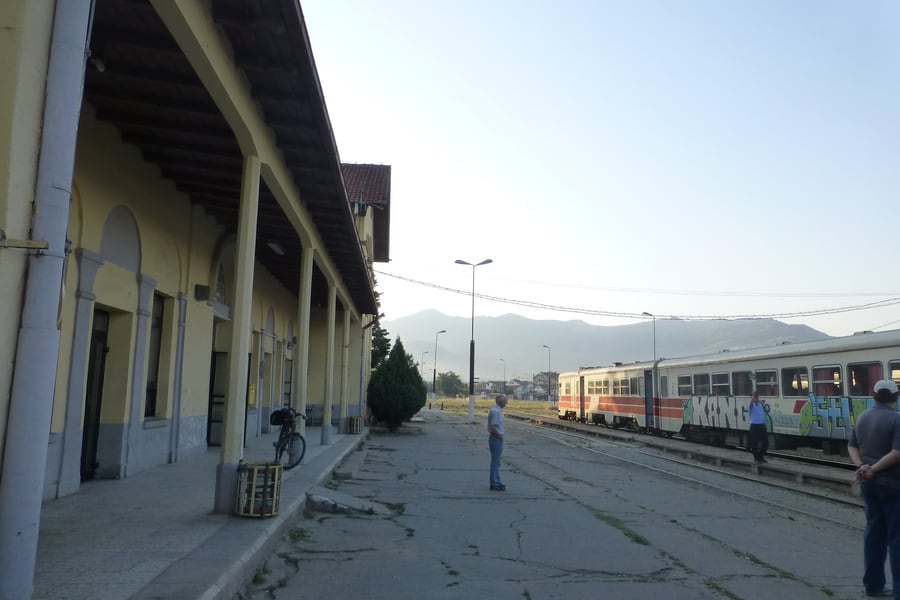
Prilep is the busiest intermediate stop, two minutes on the platform of a long yellow station building, with the broken towers of the medieval fortress that gives the town its nickname — Markovi Kuli, Marko's Towers — on the rocks above the roofs. After it the line runs dead straight across the plain through Galičani, Zagorani, Trojkrsti, Loznani and Vašarejca, and then comes into Bitola.
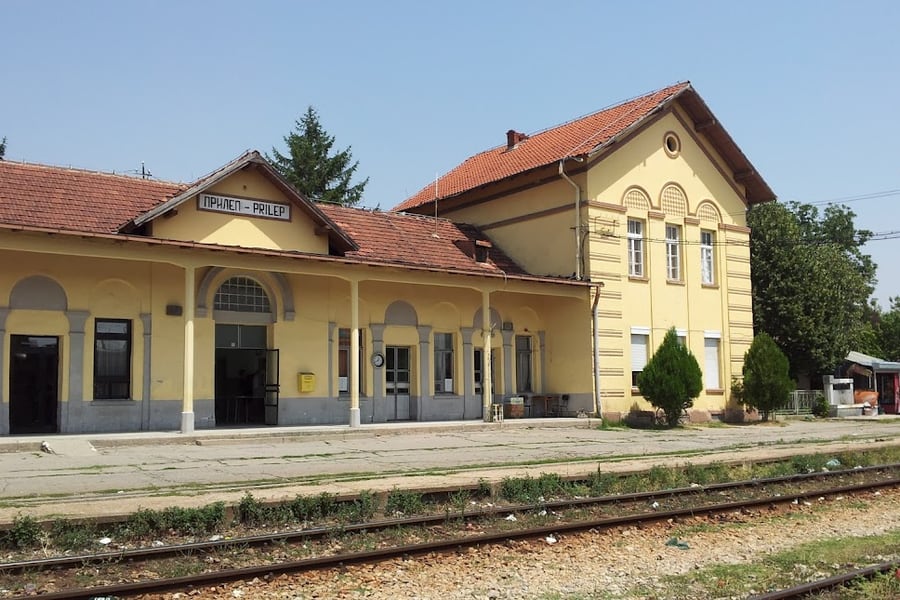
The station is a long two-storey block in yellow and terracotta, the nameboard in Cyrillic and Latin over the door and a hillside of oak behind it. The train stands here for four minutes on the morning working and then goes on, two stops further, to Kravari and Žabeni — which is not a town but a halt on the far side of the city, on the last surviving fragment of the line that used to run to Greece.
Along the route
 Jcornelius / Wikimedia Commons · CC BY-SA 4.0 · 2017 · cropped
Out of Skopje at six minutes past seven
The first of three daily departures leaves the upper level of the Transport Centre and runs the first 41 kilometres under wires, on the main line to Greece.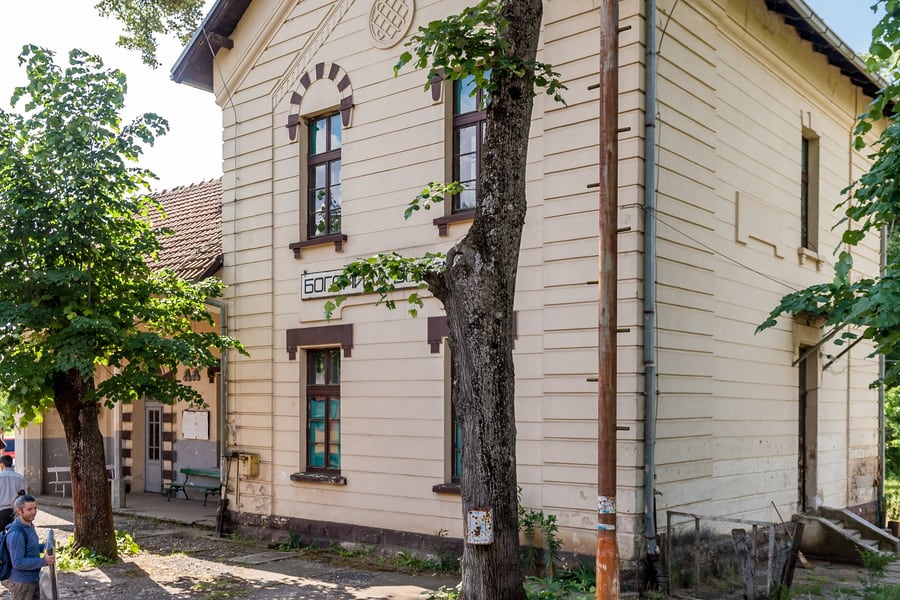 Petrovskyz / Wikimedia Commons · CC BY-SA 4.0 · 2015 · cropped
An hour up the Babuna to Bogomila
Past Veles the wires end and the single line climbs the Babuna into Azot, through eight village halts to the watershed above Bogomila.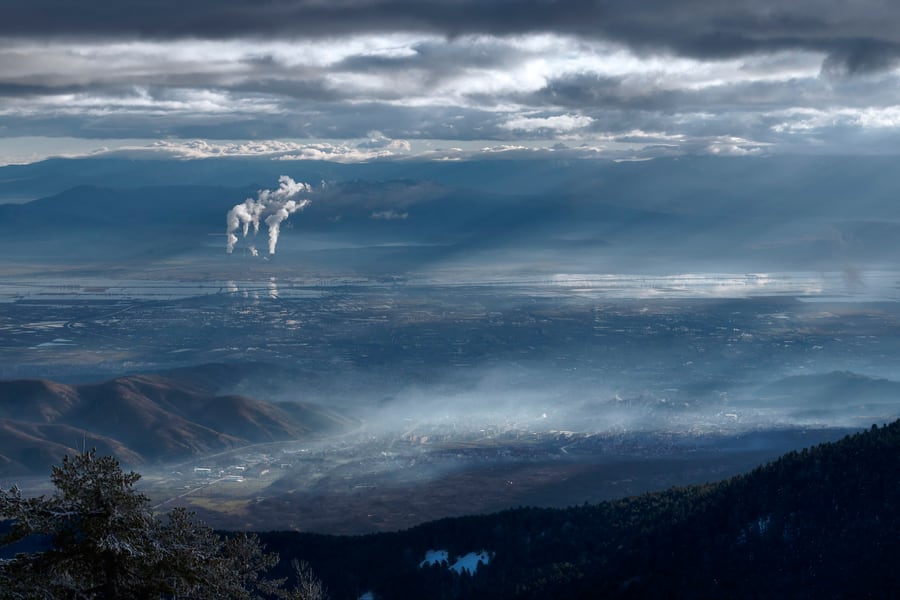 Шпиц / Wikimedia Commons · CC BY-SA 4.0 · 2015 · cropped
Into Bitola at half past ten
The last hour crosses Pelagonia dead straight, with Baba mountain and Pelister's 2,601 metres filling the western window all the way in.A bit of history
Culture & experiences along the way
 Sentimentalna / Wikimedia Commons · CC BY-SA 4.0 · cropped
Ajvar, and the month the whole country smells of it
Every September the red peppers come in off the Pelagonian plain and North Macedonia stops to make ajvar — roasted, peeled, minced, then cooked down in a pan over an outdoor burner for hours until it is thick enough to stand a spoon in. It is made in batches, jarred for the winter, and everyone's grandmother makes it best.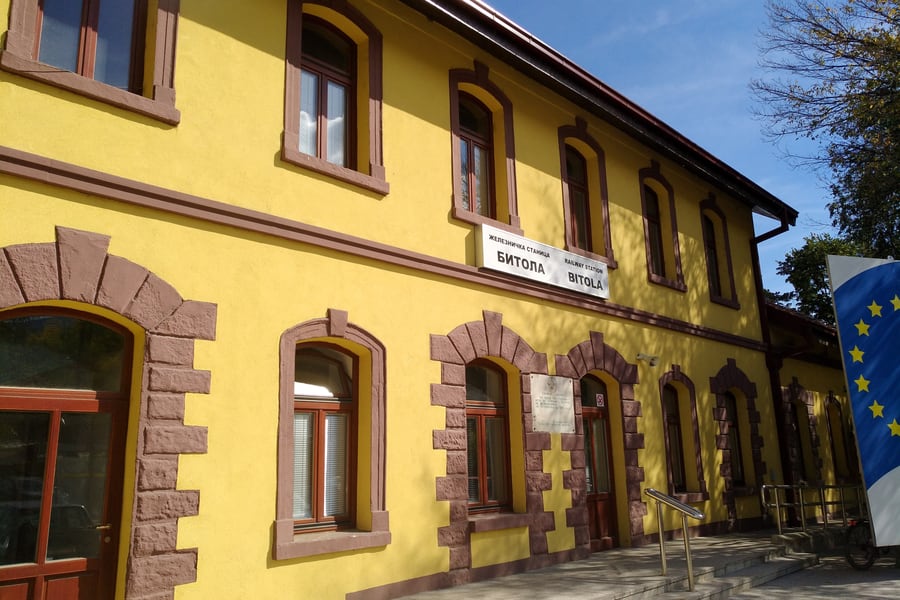 Sebleouf / Wikimedia Commons · CC BY-SA 4.0 · 2018 · cropped
The station that was the end of a different railway
Bitola's station faces the wrong way for Skopje. It was built as the northern terminus of the Ottoman line up from Salonica, and for forty years the trains that used it came from the south. The rails still run on past the platforms towards Kravari, Žabeni and the Greek border at Kremenica; the passenger service over that stretch is long gone.Timetables
Three trains a day run in each direction, every day of the week, and they are the only passenger trains on the line. Times below are from the extract of the working timetable published by ŽRSM Infrastruktura, valid 1 September to 12 December 2026.
Skopje to Bitola
| Station | 641 | 643 | 645 |
|---|---|---|---|
| Skopje | 07:06 | 14:30 | 20:05 |
| Veles | 07:59 | 15:25 | 20:58 |
| Čaška | 08:17 | 15:43 | 21:16 |
| Bogomila | 08:55 | 16:21 | 21:54 |
| Prilep | 09:44 | 17:09 | 22:42 |
| Bitola | 10:35 | 17:56 | 23:29 |
Train 641 goes on beyond Bitola, calling at Kravari at 10:39 and terminating at Žabeni at 10:44.
Bitola to Skopje
| Station | 640 | 642 | 644 |
|---|---|---|---|
| Žabeni | — | 11:05 | — |
| Bitola | 03:10 | 12:46 | 18:22 |
| Prilep | 03:59 | 13:35 | 19:11 |
| Bogomila | 04:46 | 14:23 | 19:58 |
| Čaška | 05:24 | 15:01 | 20:36 |
| Veles | 05:43 | 15:22 | 20:57 |
| Skopje | 06:34 | 16:17 | 21:48 |
The run takes between 3 h 24 min and 3 h 31 min. Train 642 begins at Žabeni, stands at Bitola for an hour and twenty minutes, and leaves there at 12:46.
Before you go
⚠️ Check the times against the operator before travelling. The line was closed for engineering work between Bakarno Gumno and the Nikola Karev loading point and reopened on 15 July 2026, and the timetable has been amended more than once since December. ŽRSM Transport publishes the full station-by-station board for departures from Skopje and arrivals into Skopje at mzt.mk (opens in a new tab); the infrastructure manager posts the current extract and the annual timetable book at mzi.mk (opens in a new tab).
⚠️ The operator's website and the current extract do not always agree — the web board still showed a 16:15 arrival for train 642 when the September extract had been amended to 16:17. Where they differ, the extract is the newer document.
As of September 2026.
Tickets
Tickets are bought at the station booking office — Skopje, Veles, Prilep and Bitola all have one — and there is no online sale for domestic journeys. There is one class, no reservation and no compulsory supplement: turn up, pay, get on. A ticket is valid for a month from the day it is issued.
ŽRSM Transport publishes its domestic fares as a single table of prices out of Skopje. Concessions are generous and are claimed at the window: half fare for anyone up to 27 with a K-13b card or an ISIC, half for children aged 4 to 12 and free travel under 4, 30 % off at 60 and over, and half for groups of six or more travelling together. A folding bicycle carried as hand luggage costs 177 denari.
Book your tickets
Single, Skopje to Bitola
The whole run, one class
The operator's published fare for the full 170 kilometres, bought at the booking office.
Book Tickets (opens in a new tab, on mzt.mk)via mzt.mkSame-day return, Skopje to Bitola
Out on the 07:06, back on the 18:22
Cheaper than two singles, and the two trains make a day out of the line possible.
Book Tickets (opens in a new tab, on mzt.mk)via mzt.mkSingle, Skopje to Prilep
Two and a half hours, for the shorter ride
Prilep is the busiest intermediate stop and the natural half-way break.
Book Tickets (opens in a new tab, on mzt.mk)via mzt.mkRail Passes
Interrail sells a One Country Pass for North Macedonia, and it covers this journey completely. The pass conditions list ŽRSM's Regional (R) and Interregional (IR) trains as included, with no excluded trains — and every service on the Skopje–Bitola line is one or the other. No reservation is needed and no supplement is charged, so a pass holder walks to the platform and boards.
Whether it is worth buying for this trip is a different question, and the honest answer is usually no. A single from Skopje to Bitola is 314 denari and a same-day return 502 — roughly the price of two coffees — so a pass has to be earning its keep somewhere else in Europe before it makes sense here. Buy it for a wider Balkan itinerary; do not buy it for North Macedonia alone.
⚠️ Eurail and Interrail are being brought under the single Interrail name from 9 September 2026, so a pass bought before that date may carry the older branding.
Checked against the Interrail pass conditions and its railway-companies table, September 2026.
Places to Visit
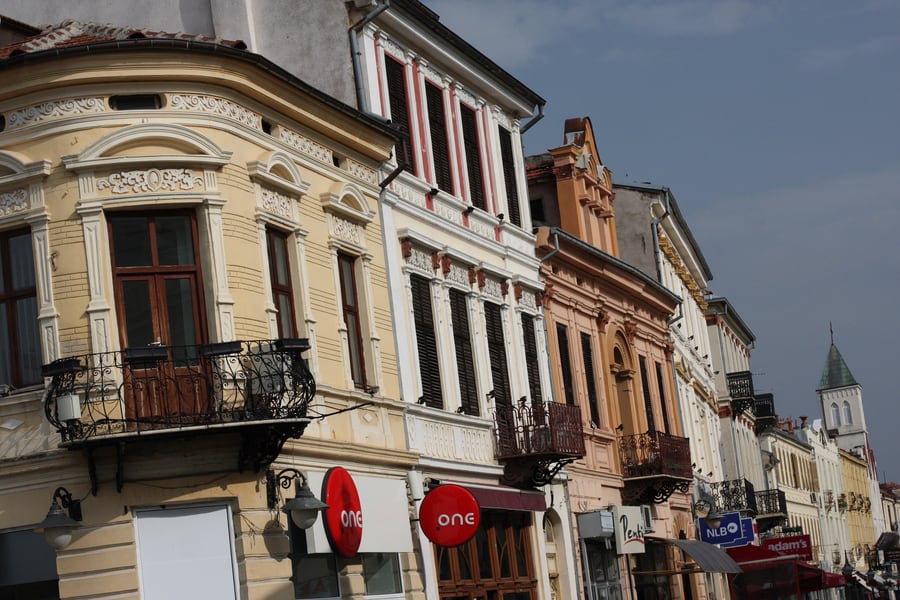
The line gives you three towns and a mountain range. Veles is fifty minutes out and worth a break for the Vardar gorge alone; Prilep is the tobacco town, with a ruined fortress on the rocks above it; Bitola has the ancient city of Heraclea Lyncestis on its southern edge, a street of consulates from the years when every European power kept one here, and the gate of Pelister National Park four kilometres from the centre.
Everything below is reachable on foot or by a short taxi ride from a station on this journey.
 METOKARA / Wikimedia Commons · CC BY-SA 3.0 · 2016 · cropped
The Vardar at Veles
Fifty minutes out of Skopje, the town climbs both banks of the Vardar in terraces of red roofs, and the river has cut a limestone gorge just upstream. Veles is the junction where the Bitola line leaves the main road to Greece, and it is the last stop with wires overhead. The station sits below the old town, so the walk up into it is a climb.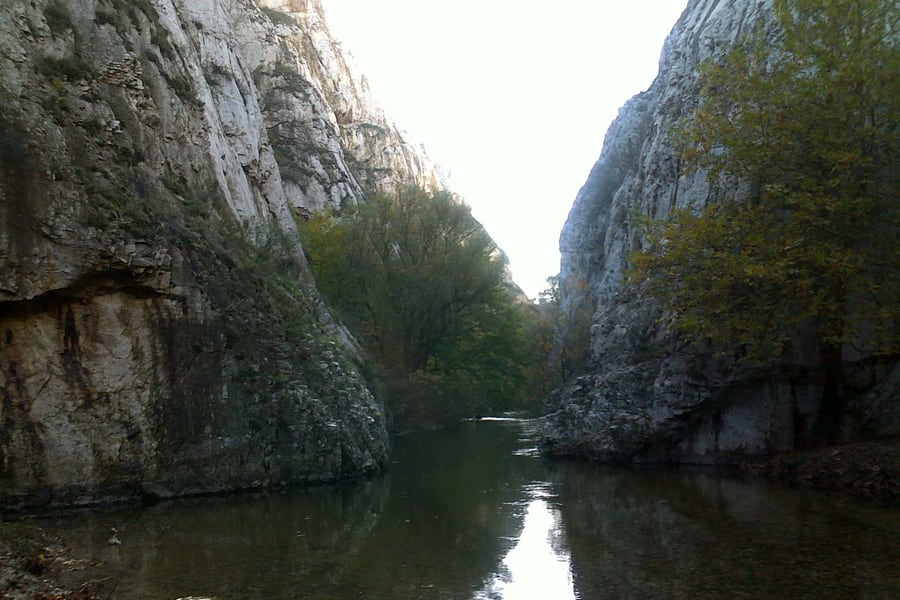 Македонец / Wikimedia Commons · CC BY 3.0 · 2010 · cropped
The Babuna gorge
The river the railway follows out of Veles has cut a narrow gorge through limestone before it reaches the town — the Pešti gorge, walls rising straight out of green water. The train does not run through the gorge itself, but the valley it climbs afterwards is the same river, and the halts between Prevalec and Bogomila are the way into the Azot district for anyone walking.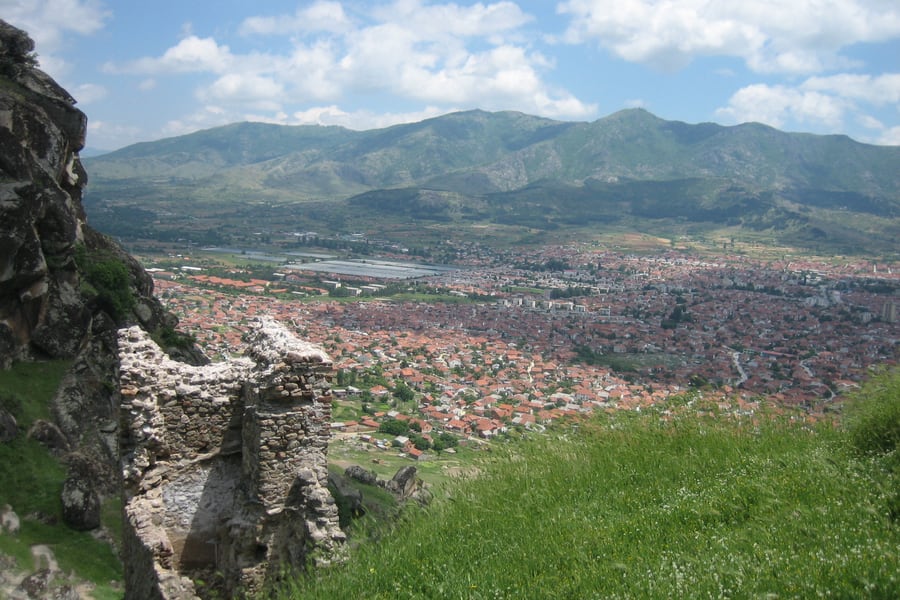 Prince Roy / Wikimedia Commons · CC BY 2.0 · 2012 · cropped
Marko's Towers above Prilep
Markovi Kuli stands on the rocks north of Prilep, above the suburb of Varoš, and the archaeological layers there run from the late Neolithic to the nineteenth century. What you see from the train are the broken curtain walls and towers of the medieval fortress. The site was declared a natural monument on 10 April 2006 as much for the rock formations as for the ruins.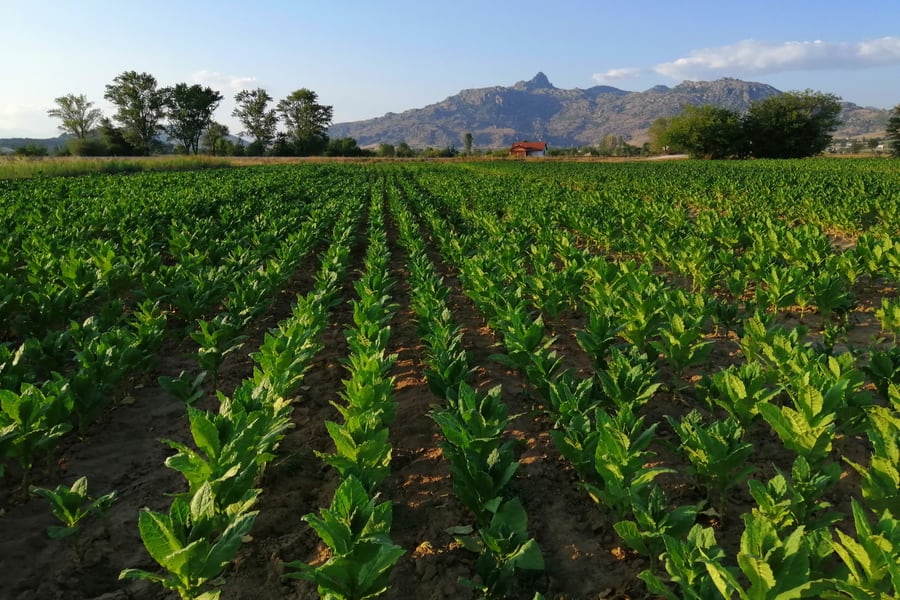 MKD / Wikimedia Commons · CC BY-SA 4.0 · 2020 · cropped
The tobacco of Pelagonia
Pelagonia is the largest plain in the country and tobacco is what it grows. The crop is set out in ridged rows across the basin the train crosses between Prilep and Bitola, and in late summer it is strung up leaf by leaf on lines to dry beside the houses, which is the sight that fixes the season for anyone on this train in August. Prilep has lived on the crop for a century, and its tobacco combine still stands on the edge of town.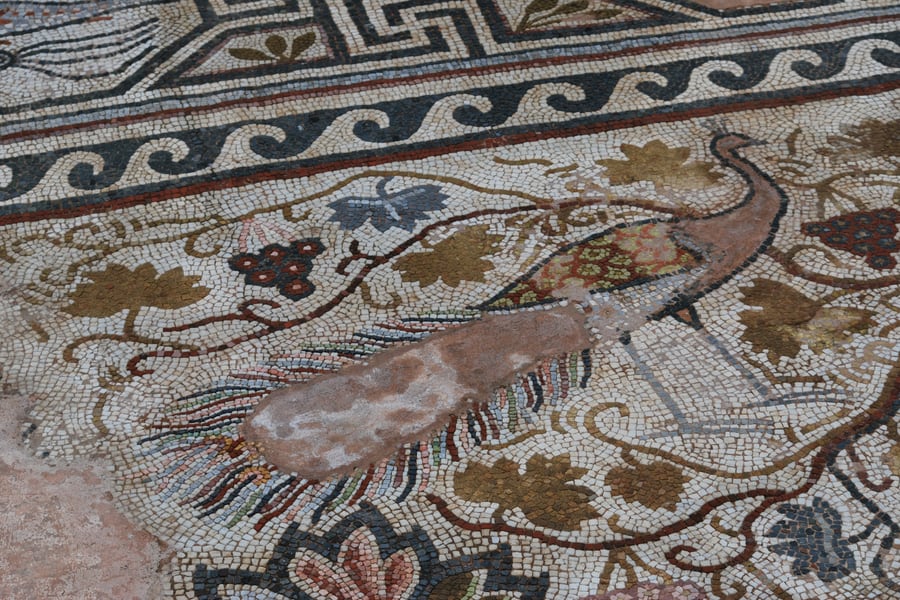 Rašo / Wikimedia Commons · CC BY-SA 3.0 · 2011 · cropped
Heraclea Lyncestis
On the southern edge of Bitola, at the foot of Baba mountain, is the city Philip II of Macedon founded in the middle of the fourth century BC and named for Heracles, the ancestor his dynasty claimed. What draws people now is later: the floor mosaics of the Great Basilica, birds and trees and vine scroll in coloured stone, laid when the place was a late-Roman bishopric.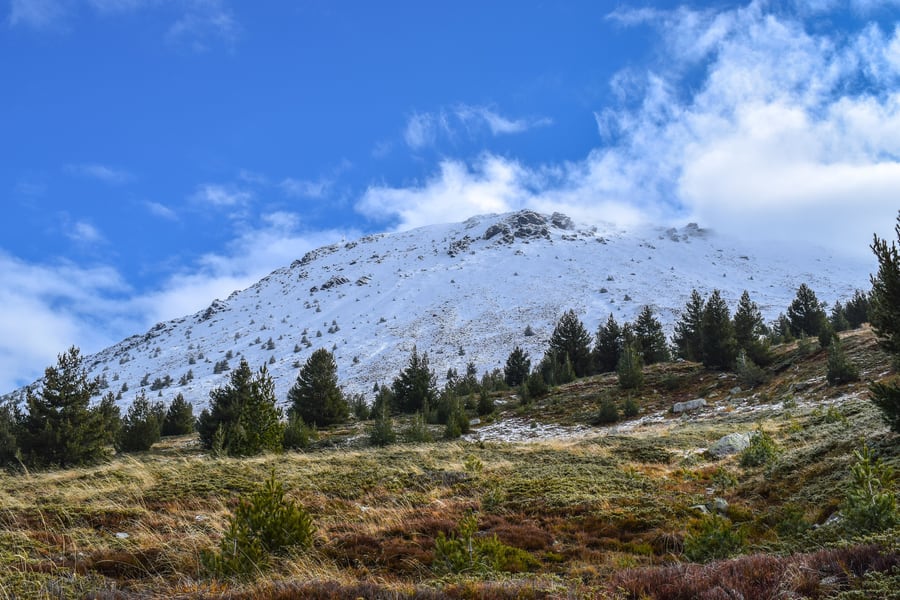 Liridon / Wikimedia Commons · CC BY-SA 4.0 · 2017 · cropped
Pelister National Park
Baba mountain rises straight out of Pelagonia west of Bitola, and its summit, Pelister, is 2,601 metres — the third-highest point in the country. The park was declared in 1948 and covers 17,150 hectares of it, including the stone rivers, two glacial lakes and the five-needled molika pine. The park gate is four kilometres from the centre of Bitola.Where to Sleep
The 07:06 out of Skopje reaches Bitola in the middle of the morning and the 18:22 back gets in at a quarter to ten at night, so the line can be ridden as a day out from either end. Doing it the other way — a night in Bitola, the 03:10 back — is a schedule only an enthusiast would choose.
Skopje's hotels are concentrated around the old bazaar and the Stone Bridge, a twenty-minute walk from the Transport Centre. In Bitola the choice is between the centre, on and around Širok Sokak, and the edge of Pelister National Park four kilometres out, where the air is cooler and the walking starts at the door.
Where to stay
Stonebridge Hotel
Beside the Stone Bridge in Skopje
A hotel on the Vardar next to the fifteenth-century bridge, at the edge of the old bazaar.
Check Availability (opens in a new tab, on stonebridge-hotel.com)via stonebridge-hotel.comHotel Shumski Feneri
At the gate of Pelister National Park
Open since 1988, four kilometres from the centre of Bitola where the park begins.
Check Availability (opens in a new tab, on sumskifeneri.com)via sumskifeneri.comQuestions or corrections
Planning this trip and stuck on something, or spotted a time, fare or detail that has changed? Send us a message about Skopje to Bitola — the line over the Babuna. We read every one, and we update this page when something has changed.