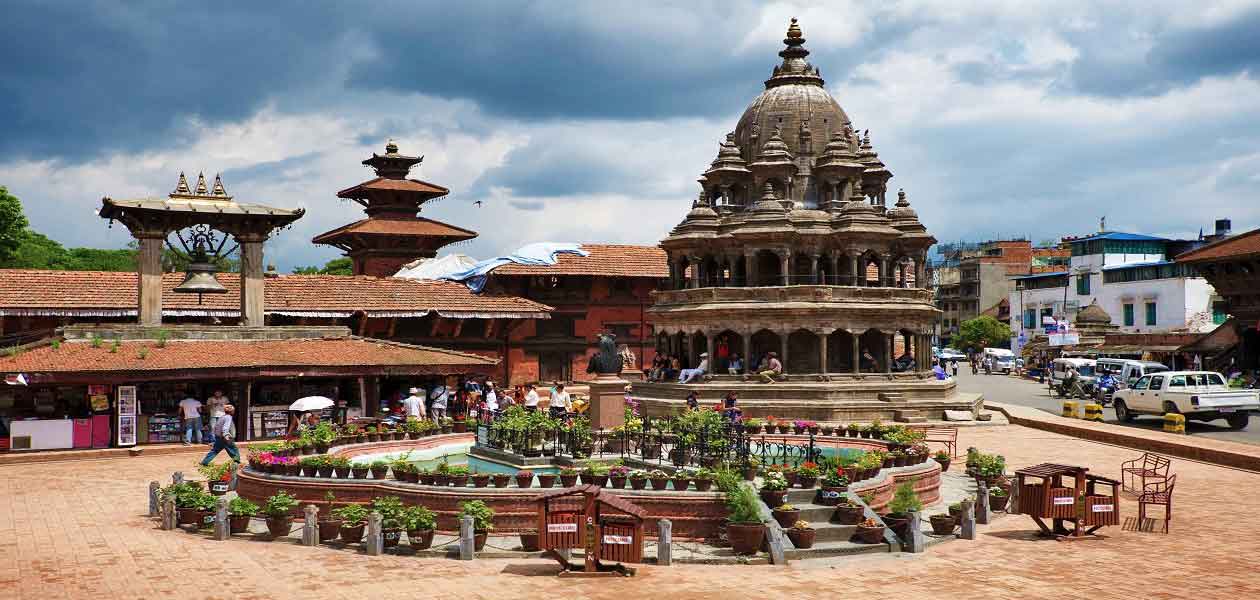
Nepal
Nepal is a landlocked country of 147,181 km² and roughly 29 million people, lying along the southern flank of the Himalaya between the Tibet Autonomous Region of China to the north and India to the south, east and west. Eight of the world's fourteen peaks above 8,000 m stand on or near its northern border. But the country steps down sharply from north to south, and its southern edge is not mountain at all: the Terai is a flat, hot, densely farmed strip of the Indo-Gangetic plain, and that is where most Nepalis live.
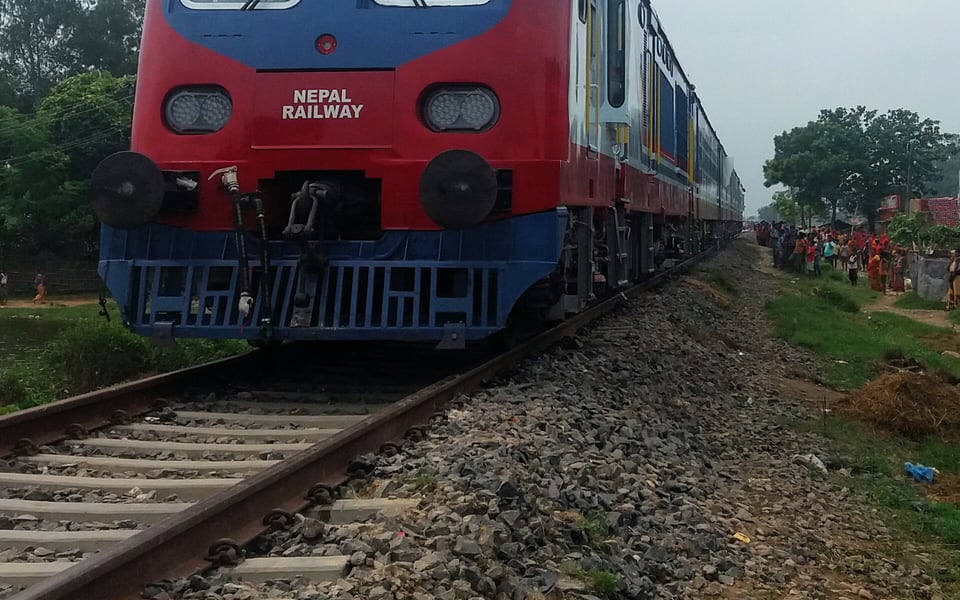
It is also the only part of Nepal with a railway. There is no Himalayan line and never has been; talk of one is a proposal, not a service. What exists is a short cross-border route from Jaynagar in the Indian state of Bihar to Kurtha and Bijalpura, originally a 762 mm narrow-gauge line, closed for years, regauged to Indian broad gauge and reopened in 2022. It runs to Janakpur, one of the great pilgrimage towns of the subcontinent, and its passengers are pilgrims and traders.
Rail journeys in Nepal
Good to know
Is there a train through the Himalayas in Nepal?
No. Nepal's only passenger railway runs across the flat Terai on the Indian border, and there is no mountain line — proposals to link Kathmandu with China or India have been discussed for years but nothing is running. The famous Himalayan railway most people are thinking of is the Darjeeling Himalayan Railway, which is in India.
Where does the train actually go?
From Jaynagar, just over the border in the Indian state of Bihar, north into Nepal to Kurtha and on to Bijalpura, serving Janakpur. Janakpur is revered as the birthplace of Sita in the Ramayana and is a major pilgrimage destination, which is a large part of why the line exists and who rides it.
Can foreign visitors use it?
Inside Nepal, yes. Under the operating procedure Nepal and India agreed in 2021, third-country nationals may travel on the railway within Nepal but may not cross the border on it — India asked for foreigners to be barred altogether and Nepal declined. In practice that makes Janakpur to Bhangaha, and Janakpur south as far as Inarwa, open to any visitor; the last few kilometres into Bihar are not.
What is there to ride, and how often?
One line and six trains a day. Our Jaynagar to Janakpur page has the operator's own timetable, the fares for both classes and what the border rules mean in practice: three trains a day each way between Jaynagar and Janakpur, one of them working the full 51 kilometres through to Bhangaha.
Is there a rail pass?
No, and with a single short line there would be little point in one. Tickets are bought locally, and fares are very low.