Jaynagar to Janakpur
© Tulsi Bhagat / Wikimedia Commons · CC BY-SA 4.0 · 2020 · cropped
- Distance28 km, Jaynagar to Janakpur
- Duration1 hr 15 min
- Best seasonThree trains a day each way, all year
Introduction
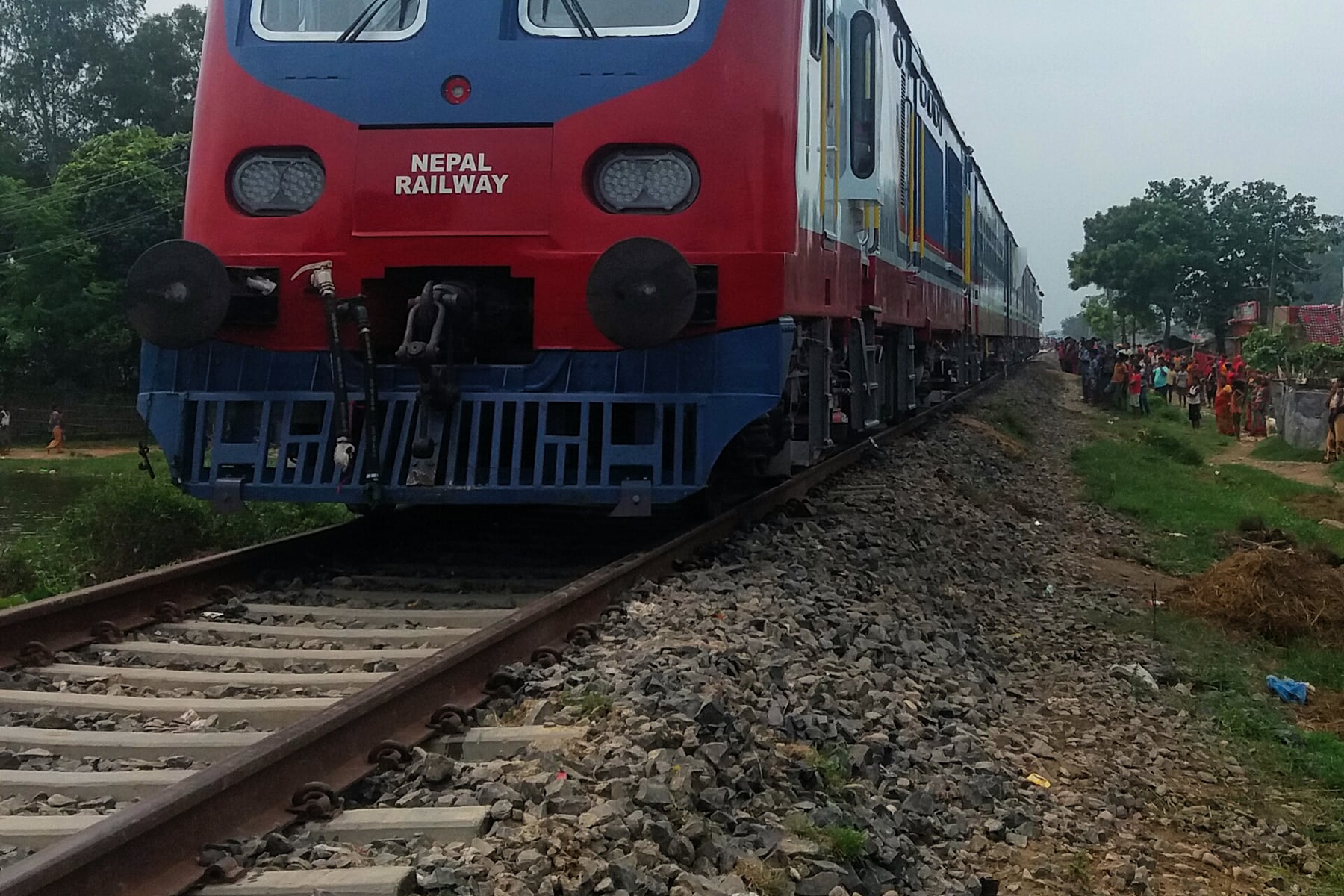
Nepal has one passenger railway. It runs for 51 kilometres across the Terai, the flat farmed strip along the Indian border, from Jaynagar in Bihar through Janakpur to Bhangaha — and it is nothing like the country in the postcards. There is no gradient worth the name and no mountain in the frame; there are paddy fields, level crossings, brick kilns and, three times a day each way, a five-car diesel railcar painted crimson and blue with NEPAL RAILWAY across its nose. Jaynagar to Janakpur takes an hour and a quarter and costs 70 rupees in general class, on a fare table the operator has not changed since 2023.
What makes it worth the day is where it goes. Janakpur is revered as the birthplace of Sita, and its Janaki Mandir draws pilgrims from across Nepal and India; the railway was built to carry timber out in 1937, ended up carrying pilgrims and traders instead, and has done so — with a gap — ever since. It closed in January 2014, was regauged from 762 mm to Indian broad gauge with a grant from India, and reopened to Kurtha in April 2022 and to Bhangaha in July 2023.
One thing to settle before you plan around it. Under the operating procedure agreed by Nepal and India, third-country nationals may ride this railway inside Nepal but may not cross the border on it. If you are neither Indian nor Nepali, the train is yours from Janakpur northward and southward to the frontier station — not into Bihar.
The Journey
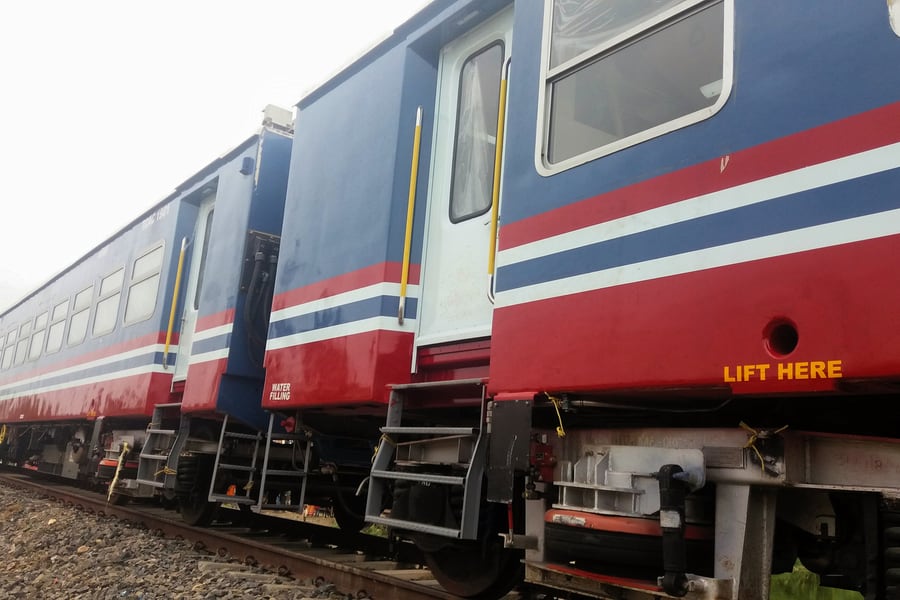
The train that does the work is a five-car diesel-electric multiple unit — a railcar, not a locomotive and coaches. Two sets were built at the Integral Coach Factory in Chennai and supplied through Konkan Railway, which still provides the technical staff; each has 1,600 horsepower, one air-conditioned coach and general seating in the rest, and each is painted in the crimson and blue of Nepal's flag. The two units carry the numbers DPC 1901 and DPC 1902, and between them they are the entire national passenger fleet.
From Jaynagar, the Indian railhead in Madhubani district, the line runs north across the plain. Inarwa, three kilometres on, is the first station in Nepal and the point where the customs and immigration formalities happen. Then Khajuri, Mahinathpur, Baidehi and Parbaha — low platforms among paddy, sugar cane and mango groves, with cycle rickshaws waiting at the ends — and at kilometre 28, an hour and a quarter out, Janakpur.
Janakpur, and what happens on the platform
Janakpur is the reason the train is full. It is the largest city of Madhesh Province, the centre of Maithili language and culture, and one of the great pilgrimage towns of the subcontinent: the Janaki Mandir stands twenty minutes' walk from the station, and at Vivaha Panchami in November or December the trains arrive loaded. Most services terminate here and turn back for India. Between them they take pilgrims one way and traders the other, and the platform empties in about four minutes.
On to Kurtha and Bhangaha
One working a day carries on north-east. Past Kurtha — the end of the rebuilt line for its first fifteen months, and the station in every photograph of the 2022 reopening — it runs through Khutta Pipradhi, Loharpatti and Singyahi to Bhangaha, also called Bijalpura, 51 kilometres from Jaynagar. That last 23 kilometres opened in July 2023, and the ride is the quietest part of the journey: single track through open fields, four stops, and a terminus with no town around it to speak of. Rails have been laid no further, though the survey for the extension to Bardibas, and eventually the east–west highway, began in December 2023.
The whole line is straight, flat and slow. Fifty-one kilometres take two and a half hours end to end, which is about twenty kilometres an hour — and even that is quick by local standards: on the 762 mm line that ran here until 2014, a contemporary report timed the 28 kilometres from Jaynagar to Janakpur at four to five hours.
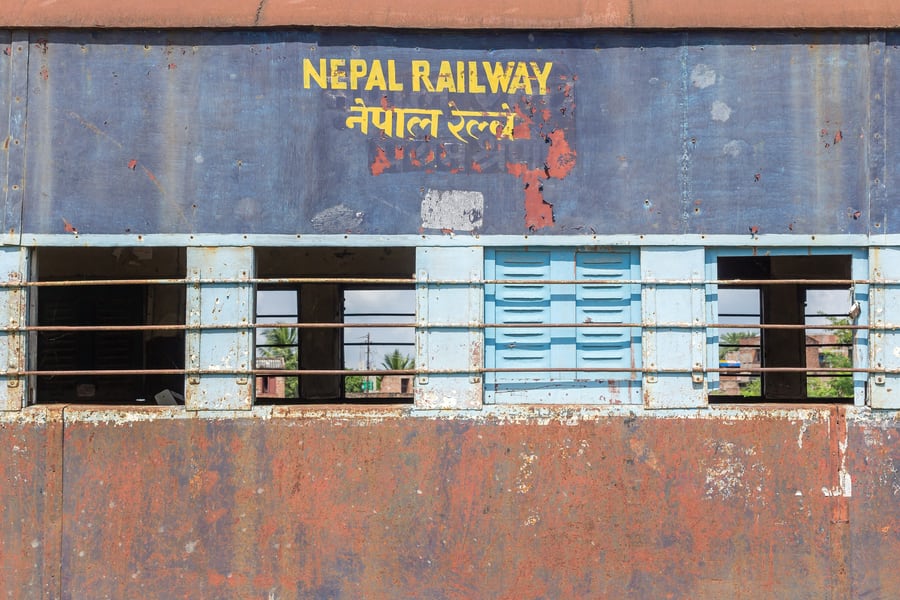
Along the route
 © Tulsi Bhagat / Wikimedia Commons · CC BY-SA 4.0 · 2022 · cropped
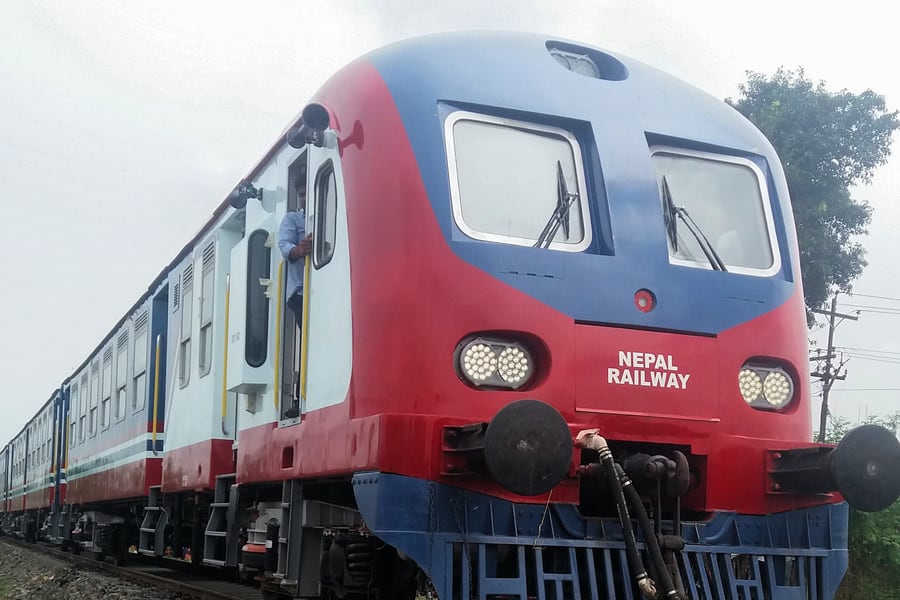
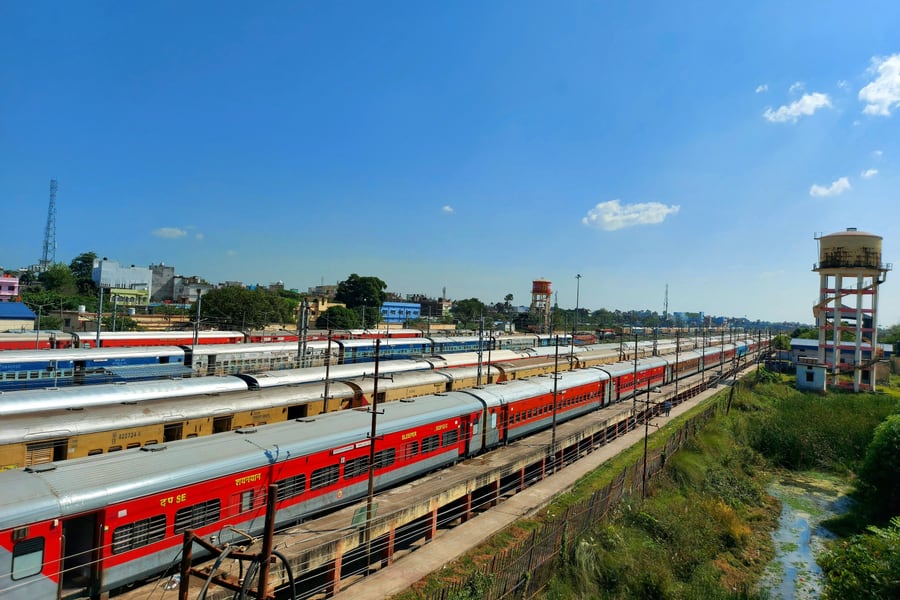
Out of Jaynagar
The line begins in Bihar, in the yard of an Indian junction station. Three kilometres later it is in Nepal at Inarwa, which is where customs and immigration are done.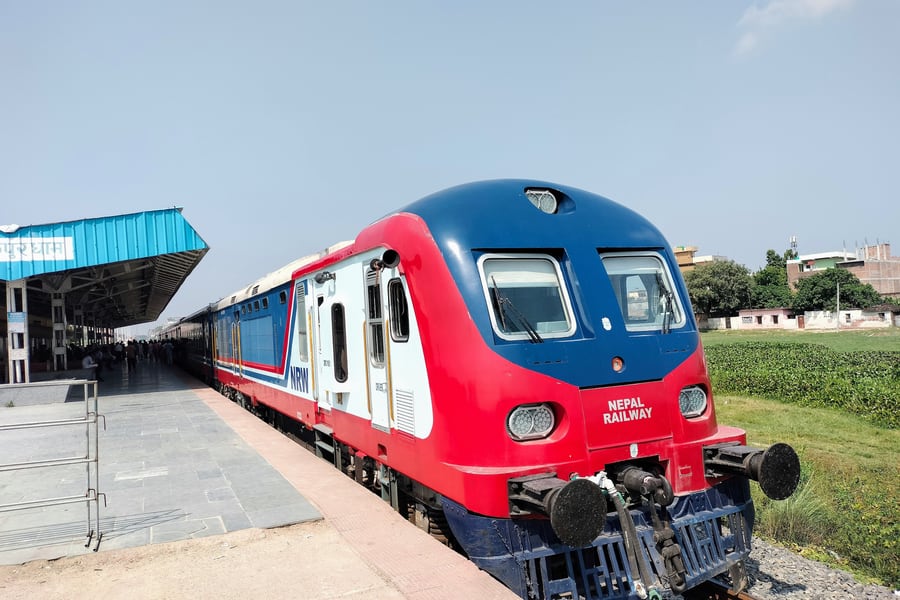 Suyash Dwivedi / Wikimedia Commons · CC BY-SA 4.0 · 2023 · cropped
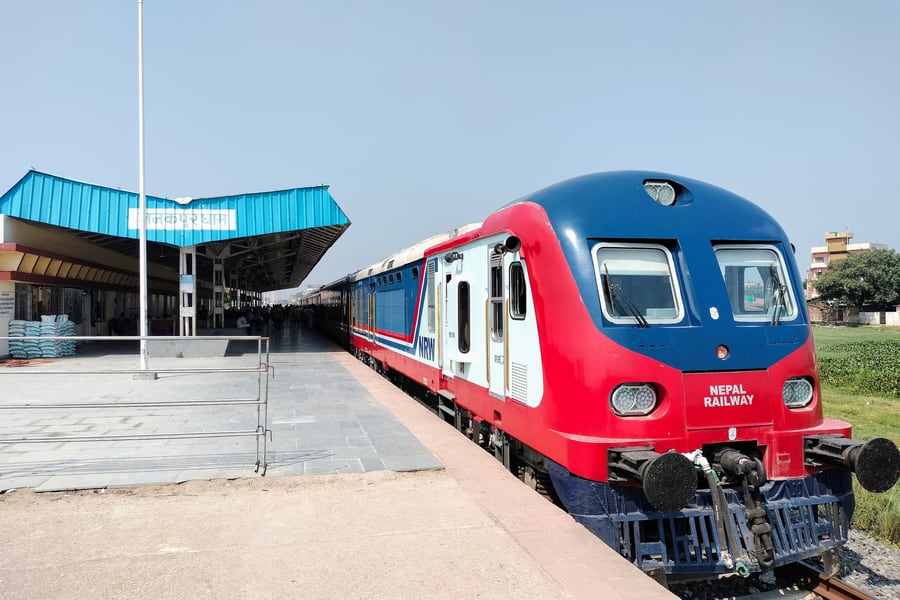
Into Janakpur
An hour and a quarter of paddy, level crossings and low platforms, then the stop where almost everybody gets off — twenty minutes' walk from the Janaki Mandir.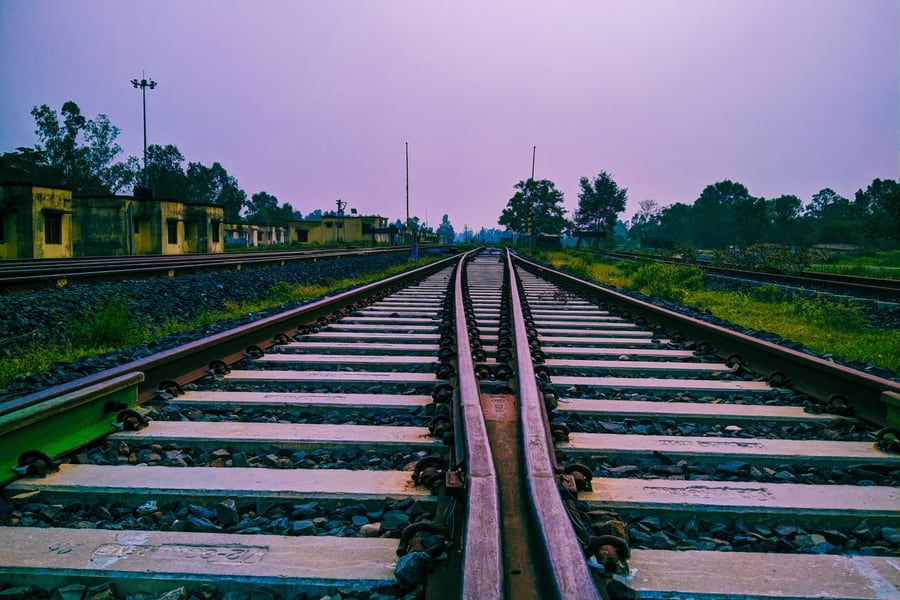 076BCT.SUMIT / Wikimedia Commons · CC BY-SA 4.0 · 2021 · cropped
Kurtha, and the rails beyond
Kurtha was the terminus for the first fifteen months after the 2022 reopening. One train a day now runs through it to Bhangaha, over the section opened in July 2023.A bit of history
Culture & experiences along the way
 Bijay Chaurasia Photography / Wikimedia Commons · CC BY-SA 4.0 · 2016 · cropped
What the narrow gauge left behind
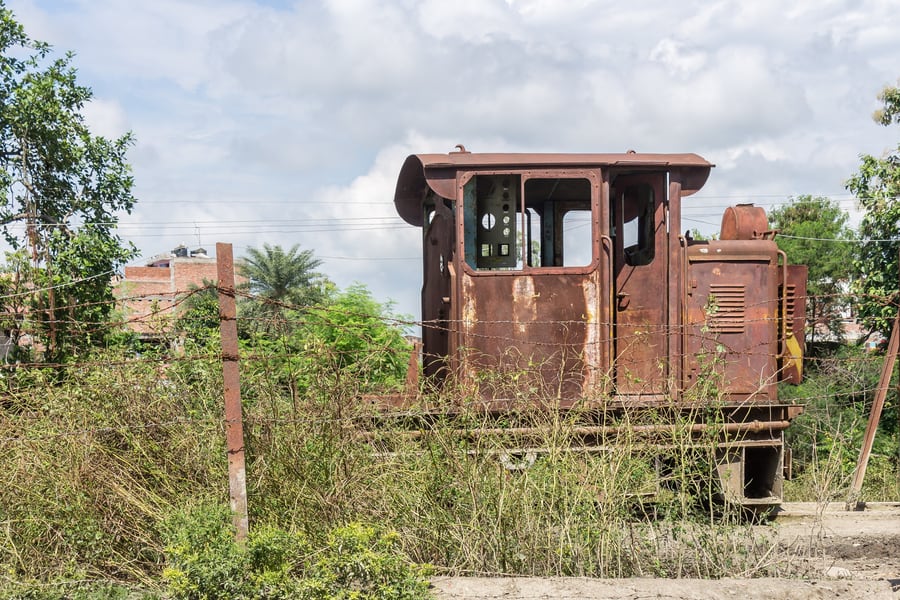
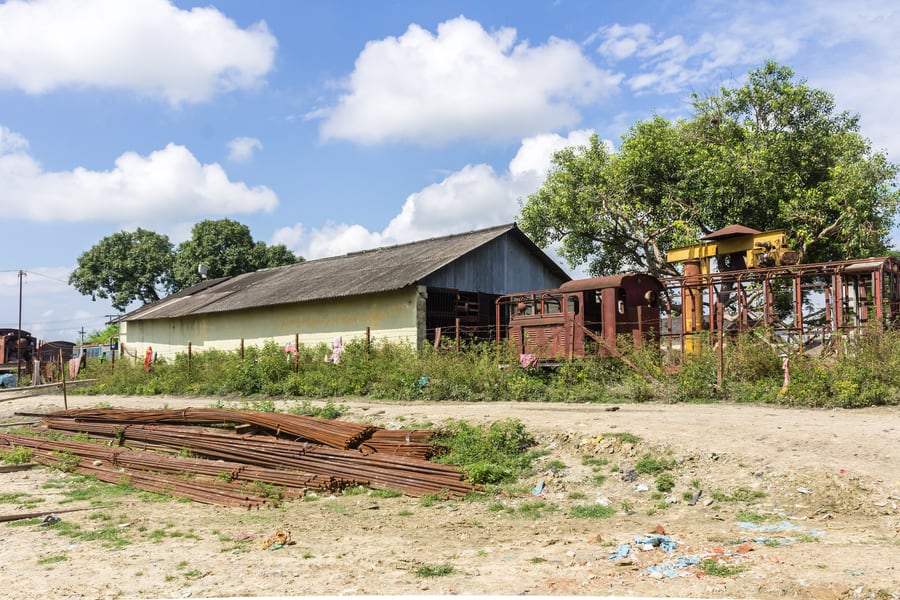
Locomotive frames, coach bodies and lifted rail still lie about Janakpur station from the 762 mm railway that closed in 2014. It had opened in 1937 to bring timber out, ended up carrying pilgrims, and in its last years took four hours to cover the 28 kilometres the railcar now does in seventy-five minutes.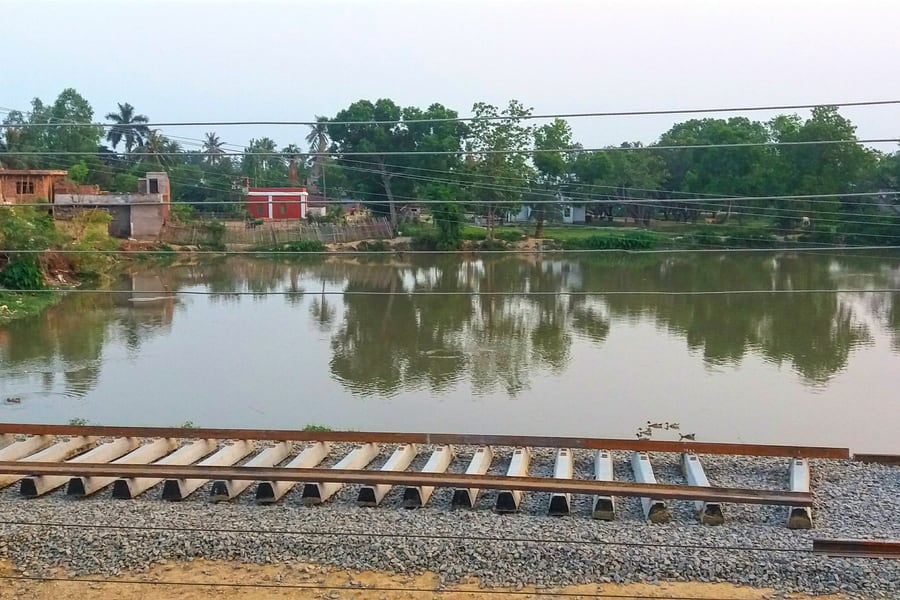 © Tulsi Bhagat / Wikimedia Commons · CC BY-SA 4.0 · 2018 · cropped
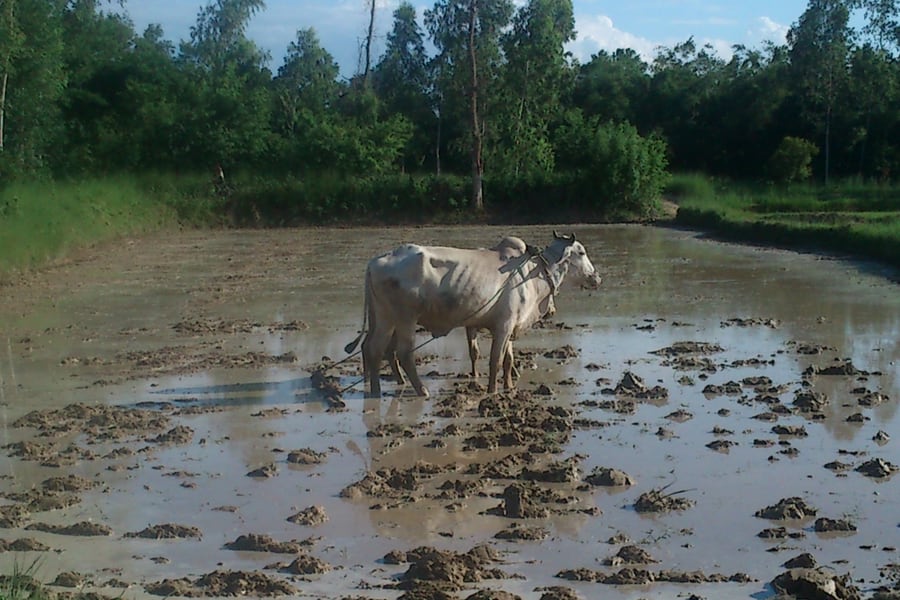
Built across standing water
The Terai floods, and monsoon flooding delayed the old 762 mm line year after year. The rebuild took eight years — from the last narrow-gauge train in January 2014 to the first broad-gauge one in April 2022 — and much of the new formation was laid within sight of water lying in the fields beside it.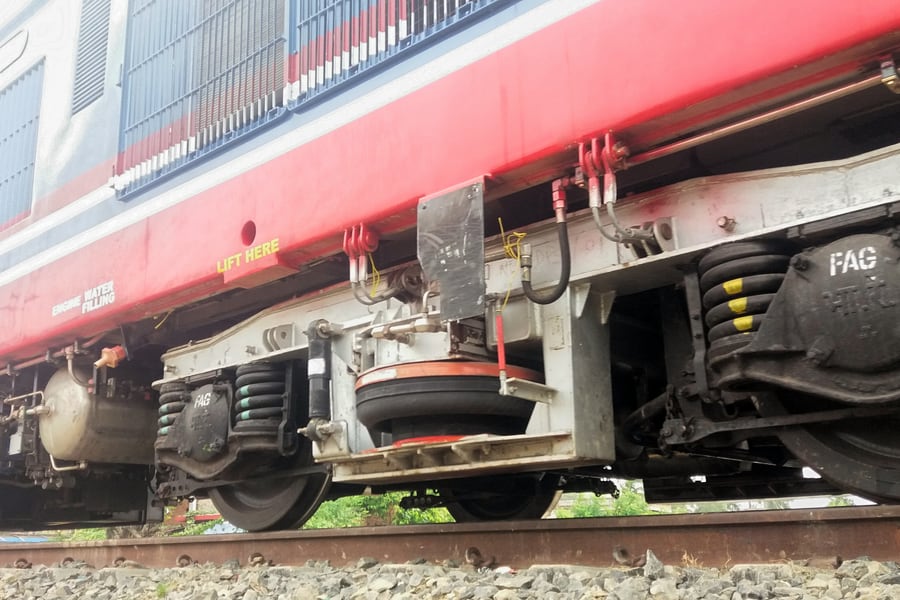 © Tulsi Bhagat / Wikimedia Commons · CC BY-SA 4.0 · 2020 · cropped
An Indian crew on a Nepali railway
Nepal owns this railway; India keeps it running. Konkan Railway still supplies the technical staff — seventeen Indians in 2026, at about eleven million rupees a month — because the country has no railway workshop, no fuelling point and a shortage of its own drivers and station masters. The diesel comes across the border too.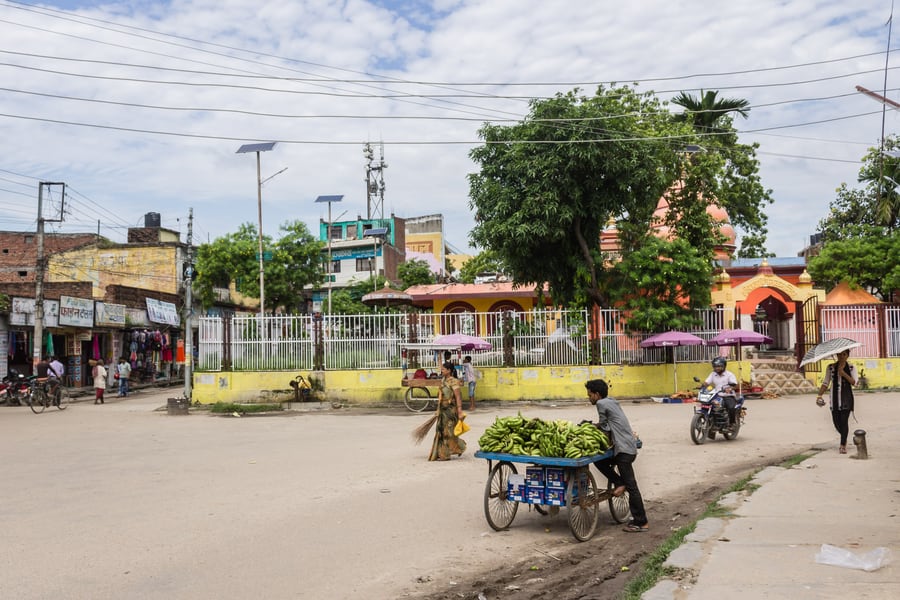 Bijay Chaurasia Photography / Wikimedia Commons · CC BY-SA 4.0 · 2016 · cropped
The bazaar at the end of the platform
A five-car set is built for 1,200 to 1,300 passengers, and the two of them cost 846.5 million rupees. What they deliver is a crowd: pilgrims for the temples, traders with sacks, and a rank of cycle rickshaws waiting to carry them the few hundred metres into Janakpur's bazaar.Timetables
Nepal Railway Company runs six trains a day: three from Jaynagar into Nepal and three back, of which one pair works the full line through to Bhangaha. The trains are numbered NR 1 to NR 6, and the times below are the operator's own, issued at Janakpurdham and in force since 17 November 2023.
Into Nepal — Jaynagar to Janakpur and Bhangaha
| Station | NR 2 | NR 4 | NR 6 |
|---|---|---|---|
| Jaynagar | 10:00 | 13:45 | 16:45 |
| Inarwa | 10:12 | 13:57 | 16:57 |
| Khajuri | 10:27 | 14:12 | 17:12 |
| Mahinathpur | 10:39 | 14:24 | 17:24 |
| Baidehi | 10:51 | 14:36 | 17:36 |
| Parbaha | 11:01 | 14:46 | 17:46 |
| Janakpur | 11:15 | 15:10 | 18:05 |
| Kurtha | — | — | 18:20 |
| Khutta Pipradhi | — | — | 18:32 |
| Loharpatti | — | — | 18:44 |
| Singyahi | — | — | 18:56 |
| Bhangaha | — | — | 19:15 |
Back to India — Bhangaha and Janakpur to Jaynagar
| Station | NR 1 | NR 3 | NR 5 |
|---|---|---|---|
| Bhangaha | 07:30 | — | — |
| Singyahi | 07:40 | — | — |
| Loharpatti | 07:52 | — | — |
| Khutta Pipradhi | 08:05 | — | — |
| Kurtha | 08:15 | — | — |
| Janakpur | 08:35 | 11:45 | 15:15 |
| Parbaha | 08:52 | 12:02 | 15:32 |
| Baidehi | 09:00 | 12:10 | 15:42 |
| Mahinathpur | 09:10 | 12:22 | 15:54 |
| Khajuri | 09:25 | 12:37 | 16:06 |
| Inarwa | 09:37 | 12:49 | 16:18 |
| Jaynagar | 09:55 | 13:15 | 16:40 |
Every day, all year. There is no seasonal timetable and no weekly pattern: the same six trains run on Saturdays and at festivals as on any other day. Jaynagar to Janakpur is 1 hr 15 min, Janakpur to Bhangaha 1 hr 10 min, and the full 51 kilometres 2 hr 25 min.
What can interrupt it
Two things, and both have happened recently. In June 2025 both Nepali railcars went to Indian Railways' Charbagh workshop at Lucknow for overhaul, and the service ran for months on a replacement rake lent by India that had no air-conditioned coach. In late July 2026 the trains stopped altogether while a curfew was in force in Dhanusha district; the operator's notice of 2 August 2026 put them back to the timetable above from ten o'clock that morning. Neither was announced far ahead, and both were announced on the same page.
As of September 2026, from the revised DEMU timing and the notices published by Nepal Railway Company Limited at nepalrailway.gov.np (opens in a new tab). The operator's site is served over plain HTTP; its secure certificate has expired.
Tickets
Tickets are sold in cash at the station window before departure. There is no online booking, no reservation and no seat allocation in general class; the air-conditioned coach, which has 56 seats and no standing, is the one place where a seat is guaranteed. Fares come from a single tariff the operator published in August 2023 and has not changed since, and the air-conditioned fare is exactly five times the general fare for the same pair of stations.
Cross-border passengers need identity documents at Inarwa, where customs and immigration sit. Indian and Nepali nationals travel on a government photo ID; third-country nationals may use the railway inside Nepal but are not permitted to cross into India on it, under the operating procedure the two countries agreed in 2021. If that is you, the ticket to buy is a domestic one — Janakpur to Bhangaha, or south no further than Inarwa.
Book your tickets
General class, Jaynagar to Janakpur
Benches and sliding windows, 28 kilometres
The operator's published fare for the busiest pair of stations on the line, sold in cash at the window.
via nepalrailway.gov.npAir-conditioned coach, Jaynagar to Janakpur
Fifty-six seats, and nobody standing
Five times the general fare, on the operator's own tariff, for the one coach in the train with a guaranteed seat.
via nepalrailway.gov.npGeneral class, the whole line to Bhangaha
All 51 kilometres, once a day each way
Jaynagar to Bhangaha end to end; the same journey in the air-conditioned coach is 650 rupees.
via nepalrailway.gov.npRail Passes
No rail pass covers this railway, and none covers Nepal. Interrail's Global Pass is a European product — its own page describes a network of 33 European countries — and the One Country Passes are drawn from the same list. Nepal is on neither. Nor is this an Indian Railways train, whatever the Indian station at one end suggests: it is run by Nepal Railway Company on its own tariff, and sold only at its own windows.
There is nothing to regret. The whole 51 kilometres costs 130 rupees in general class and 650 with air-conditioning, bought in cash minutes before departure, and no pass could improve on a fare that low or on a railway with one line and six trains a day.
Checked against interrail.com's Global Pass and One Country Pass pages, September 2026.
Places to Visit
Almost everything worth stopping for on this line is in or near Janakpur, and almost all of it is within twenty minutes' walk of the station. The city is the setting of the marriage of Sita and Rama in the Ramayana, and the temples, tanks and pilgrim streets that follow from that story are what the train is full of people coming to see.
Two of the three below are in the city itself. The third, Dhanushadham, is out towards the Bhangaha end of the line and needs a short road hop from Kurtha or Janakpur.
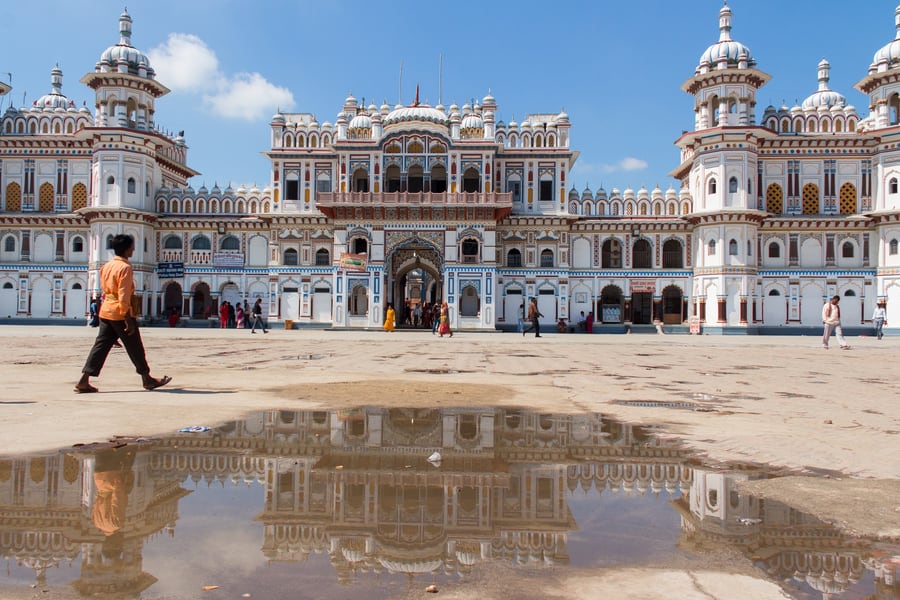 Bijaya 2043 / Wikimedia Commons · CC BY-SA 4.0 · 2015 · cropped
The Janaki Mandir
Janakpur's great temple, and the reason most of the train is here. It was built in 1910 by Queen Vrisha Bhanu of Orchha in stone and marble — three storeys, sixty rooms, Mithila paintings on the walls — and cost some 900,000 gold coins, which is why everybody calls it the Nau Lakha Mandir, the nine-lakh temple. It marks the place held to be the birthplace of Sita, and stands twenty minutes' walk from the station.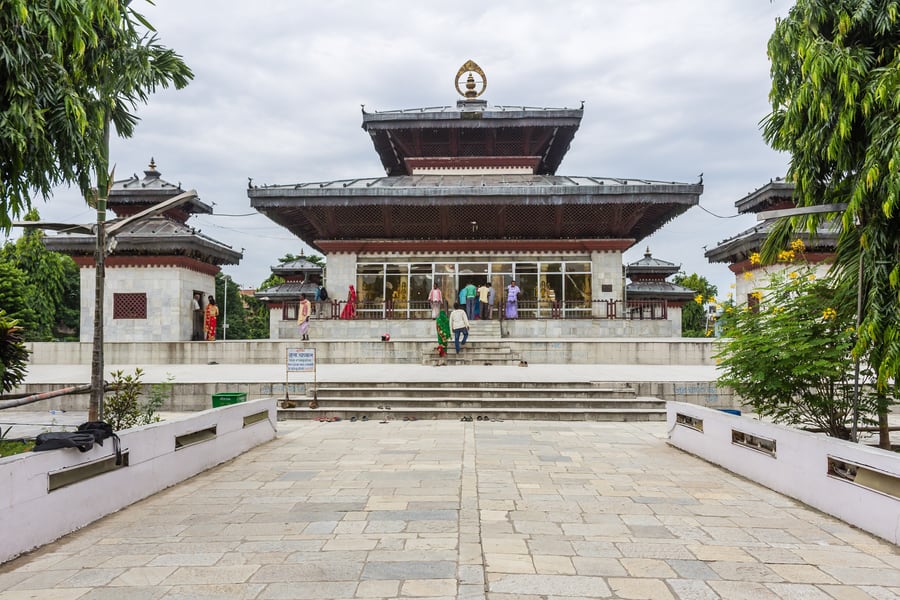 Bijay Chaurasia Photography / Wikimedia Commons · CC BY-SA 4.0 · 2016 · cropped
The Vivah Mandap and the sacred ponds
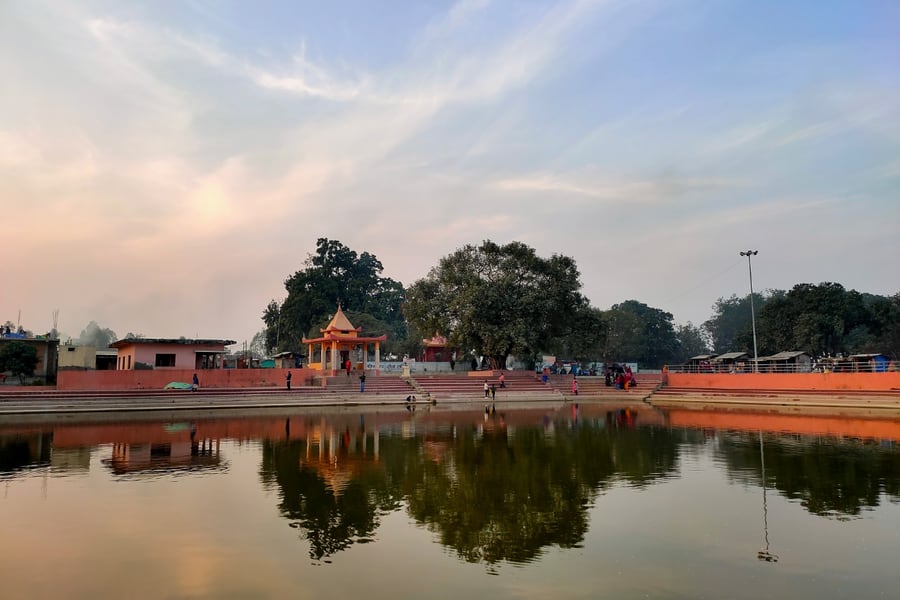
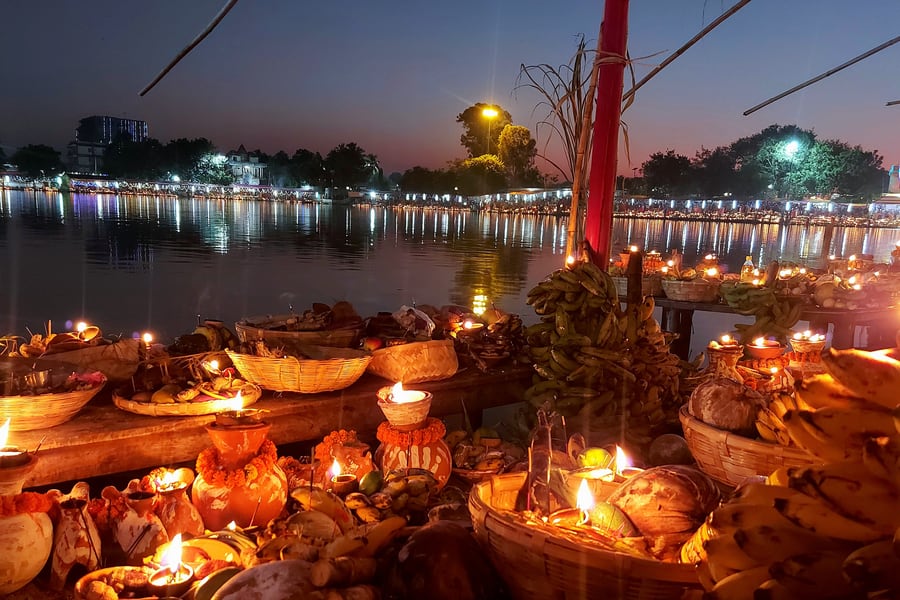
Beside the Janaki Mandir stands the Vivah Mandap, the pavilion marking the marriage of Sita and Rama, which is why Vivaha Panchami in November or December brings pilgrims here from across Nepal and India. Around it Janakpur keeps dozens of tanks — Ganga Sagar, Dhanush Sagar and their neighbours — which are the focus of Chhath and the pleasantest walking in the city at dusk.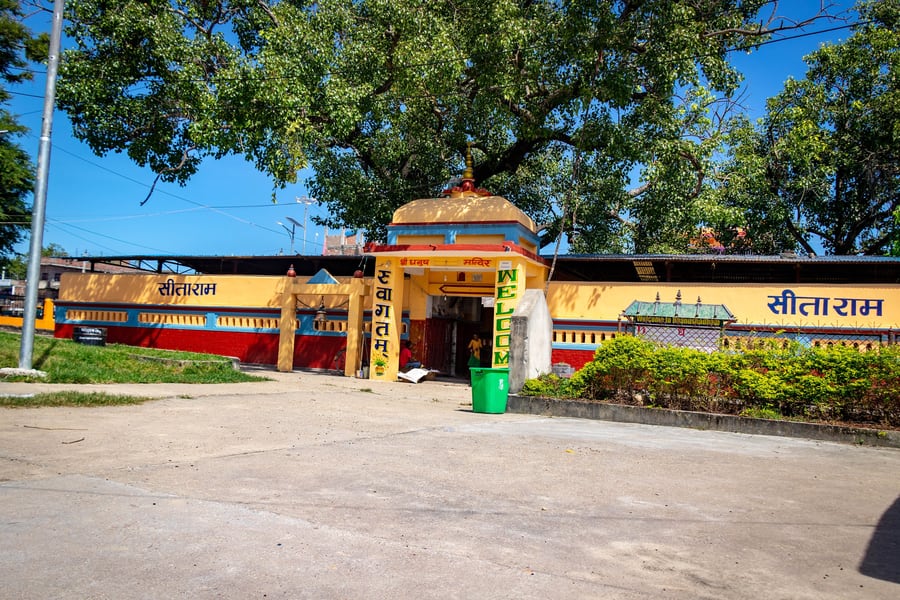 Aditya Pal / Wikimedia Commons · CC BY-SA 4.0 · 2020 · cropped
Dhanushadham
North-east of Janakpur, out towards the Bhangaha end of the railway, a shrine built around a piece of petrified stone held to be a fragment of Shiva's bow — the bow of the Ramayana, broken by Rama at Sita's swayamvara. It is a working local pilgrimage rather than a monument: a walled compound, a tree, and families arriving by bus from the stations along the line.Where to Sleep
Janakpur is where you sleep. It is the only place on the line with hotels of any size, and the timetable pushes you towards a night there anyway: the last train back to India leaves at 16:40, and the one working through to Bhangaha does not return until half past seven the next morning. Rooms cluster around Station Road, Shiva Chowk and Ramanand Chowk, all a few minutes from the platform.
Bhangaha and Kurtha have nothing to offer an overnight visitor — Bhangaha in particular is a terminus in open fields. On the Indian side, Jaynagar has small hotels near its own station, but that end of the journey is closed to travellers who are neither Indian nor Nepali.
Where to stay
Mystic Mithila
Station Road, Shiva Chowk, Janakpur
Sixteen rooms — three suites, five deluxe and eight twins — with a restaurant and a rooftop lounge, a few minutes from the platform.
Check Availability (opens in a new tab, on mysticmithila.com.np)via mysticmithila.com.npQuestions or corrections
Planning this trip and stuck on something, or spotted a time, fare or detail that has changed? Send us a message about Jaynagar to Janakpur. We read every one, and we update this page when something has changed.