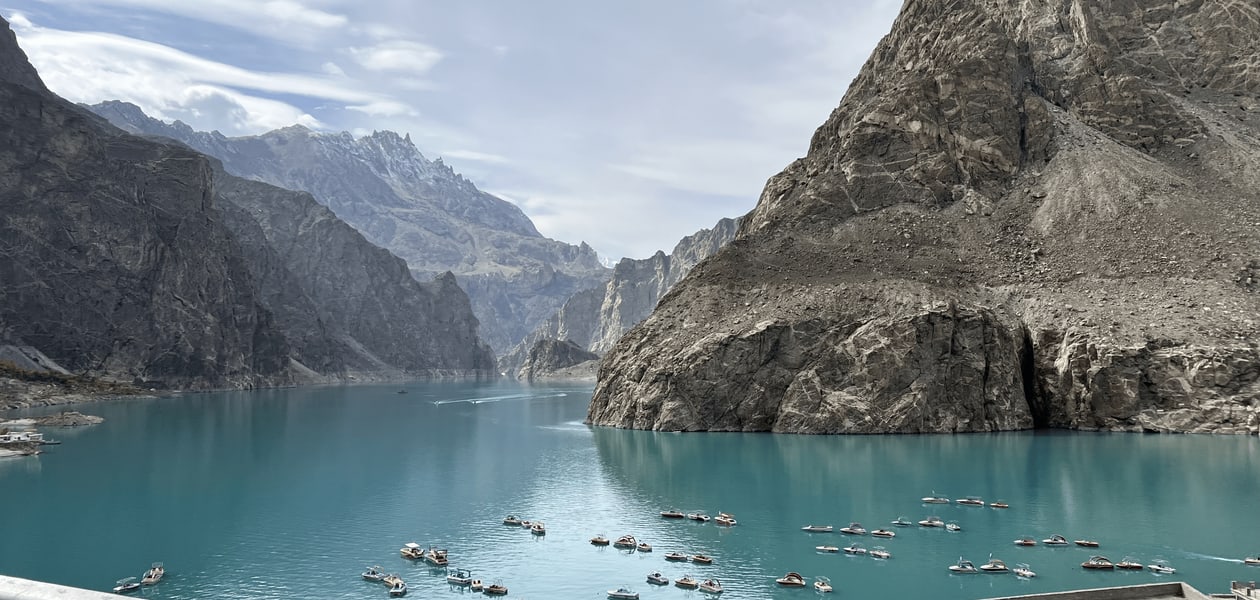
Pakistan
Mr.KhalidJawed / Wikimedia Commons · CC0 · cropped
Pakistan holds more than 241 million people in 881,913 km², which makes it the fifth most populous country in the world. Islamabad is the capital and Karachi, on the Arabian Sea, the largest city and financial centre. India lies to the east, China to the north-east, Afghanistan to the west and Iran to the south-west. The country is organised around the Indus, which runs its whole length from the Himalaya to the delta below Karachi; west of the river the ground rises into the Balochistan plateau, and in the far north the Karakoram, Hindu Kush and Himalaya meet at some of the highest ground on earth.
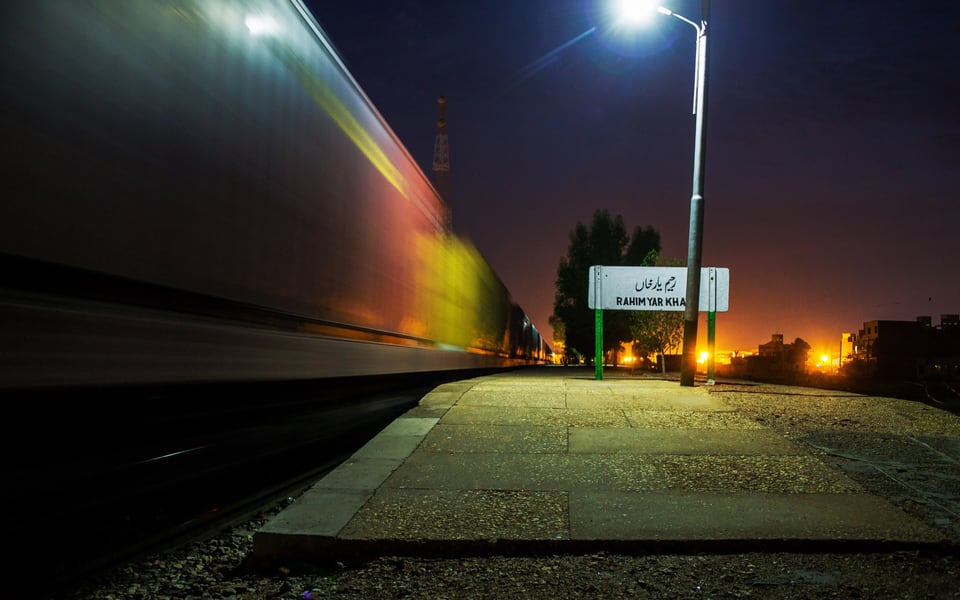
The railway follows the river. Pakistan Railways dates itself to 1886 and the North Western State Railway, formed that January out of six earlier companies, and it owns 7,791 km of operational track running the length of the Indus valley from Karachi to Peshawar. Off that spine the Raj drove two extraordinary mountain lines towards the passes — the climb through the Bolan to Quetta, and the switchback railway into the Khyber. It is a state operator running named expresses in several classes, and it publishes its fare tables with the dates on them.
Rail journeys in Pakistan
Good to know
What was the North Western Railway?
The direct ancestor of Pakistan Railways. It was formed in January 1886 by merging six companies — among them the Scinde, Punjab & Delhi Railway, the Indus Valley State Railway and the Punjab Northern State Railway — and it was headquartered at Lahore, covering Punjab, Sind, the North-West Frontier Province and Baluchistan. It served the frontier as much as the economy, and the alignments it laid down are broadly the ones trains still use.
Can you ride the Khyber Pass railway?
Not as a scheduled service. The Peshawar–Landi Kotal line, with its switchbacks and tunnels through the Khyber, is one of the most famous railways ever built and it has been out of regular use for years, with periodic announcements of revival. Anything describing it as a current ride should be treated with suspicion until the operator says otherwise.
What gauge is Pakistan?
1,676 mm Indian broad gauge, shared with India, Bangladesh and Sri Lanka. It is the widest gauge in common use anywhere, and it makes for notably roomy carriages. It also reaches into Iran: the Iranian network is standard gauge, but a broad-gauge section runs from the Pakistani border to Zahedan, so the two systems meet inside Iran rather than at the frontier.
Are there rail passes for Pakistan?
No. Pakistan belongs to no pass scheme and there is no national multi-journey ticket. Tickets are sold by class for the individual train, and Pakistan Railways publishes its fare tables on its own site. English is widely used alongside Urdu, including by the railway.