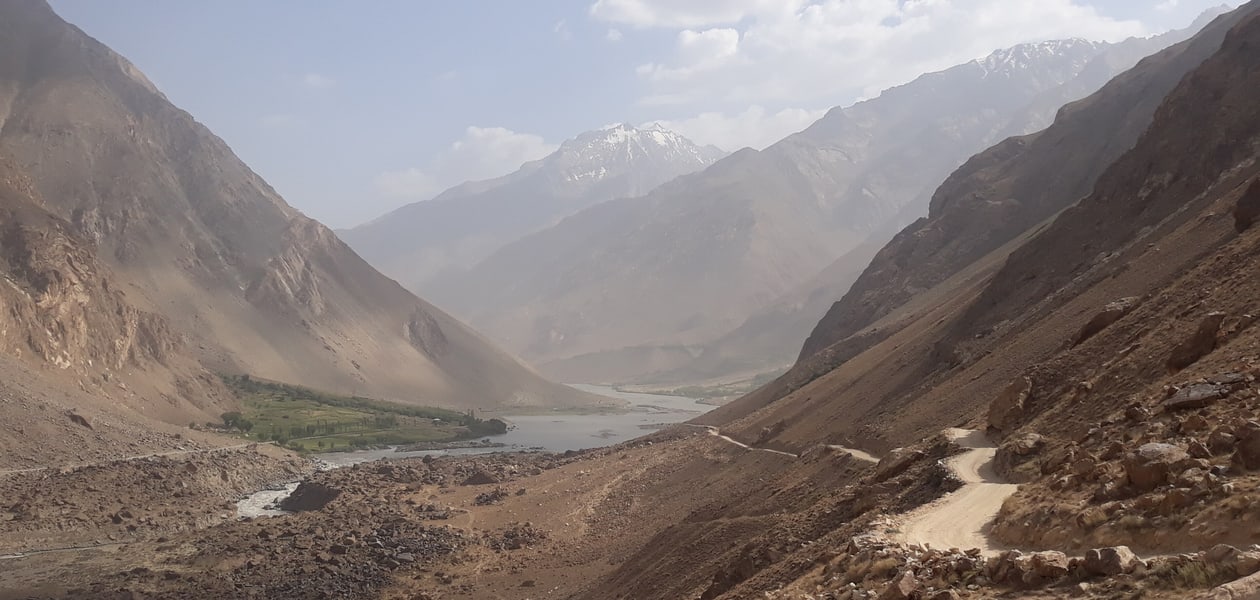
Tajikistan
Benoît Vicart / Wikimedia Commons · CC0 · cropped
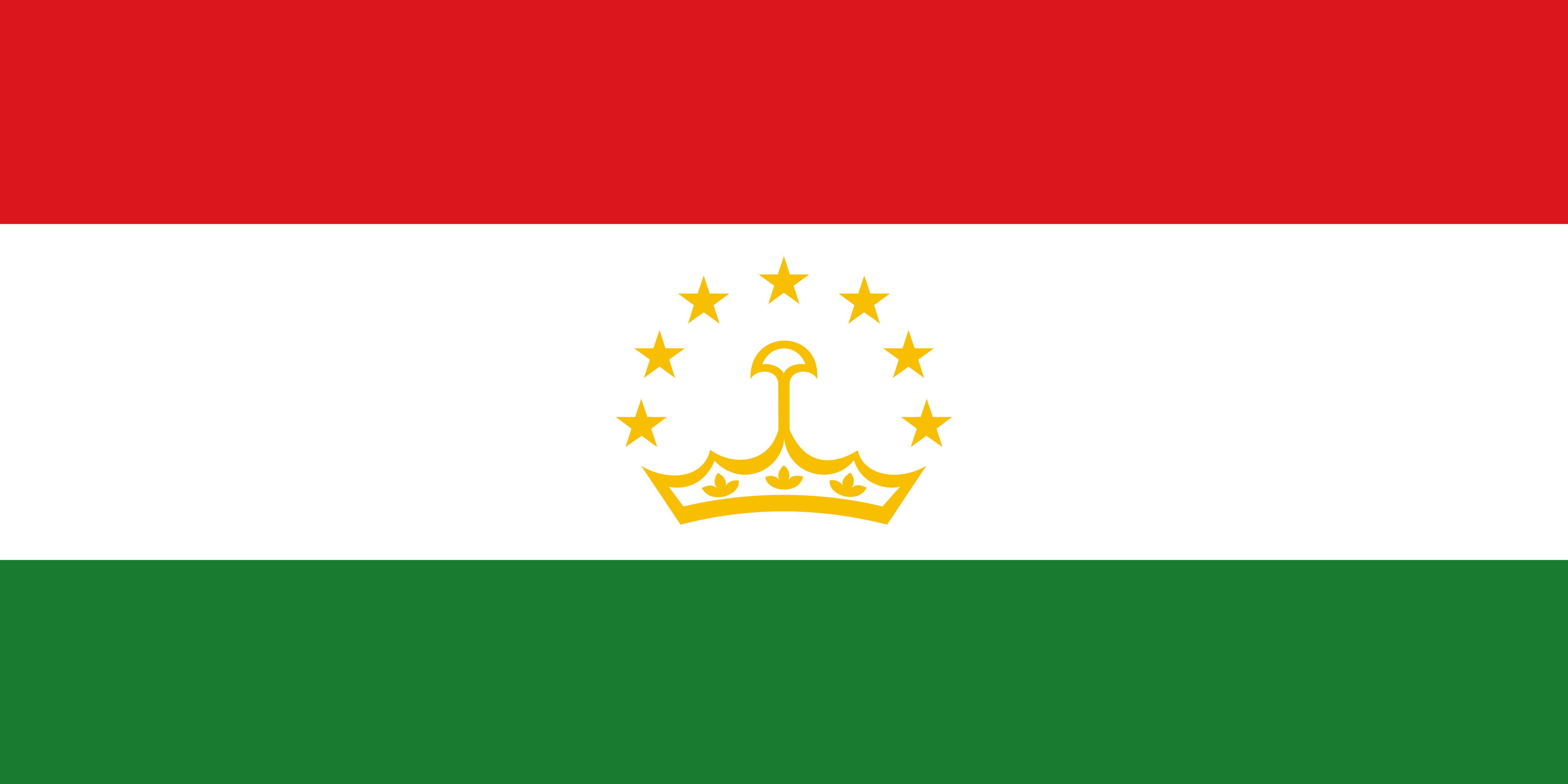
Tajikistan is the smallest of the Central Asian republics by area — 143,100 km² — and the most mountainous: the Pamirs, known since the Victorian era as the Roof of the World, fill the entire east. More than 11 million people live here, over 1.2 million of them in the capital, Dushanbe. Uzbekistan lies to the west, Kyrgyzstan to the north, China to the east and Afghanistan to the south, with only Afghanistan's narrow Wakhan Corridor separating the country from Pakistan. The habitable land is the valleys — the Fergana in the north, the Vakhsh and the Zarafshan in the south and west.
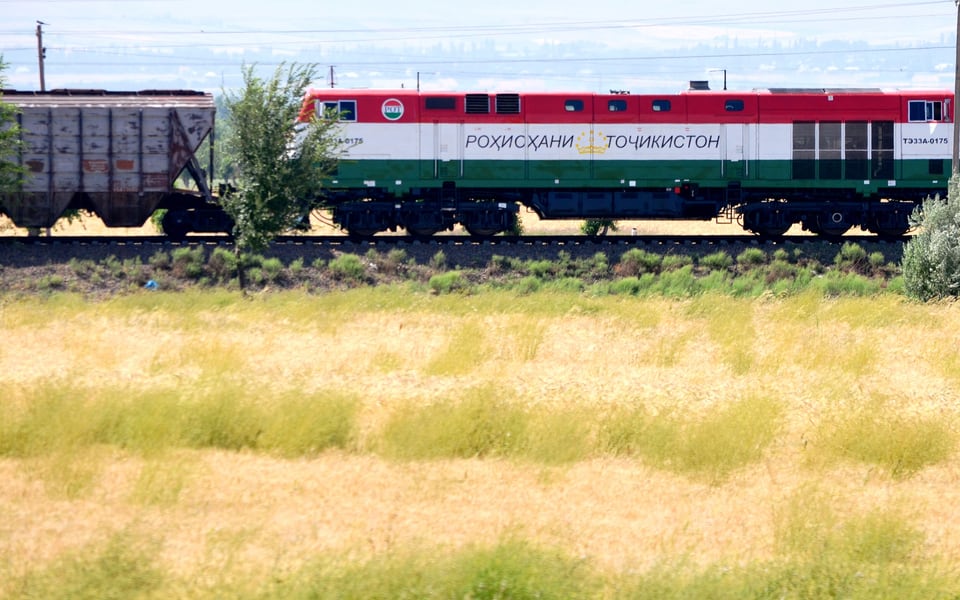
The railway reflects that division rather than overcoming it. There are 977.6 km of 1,520 mm Russian gauge, single track and unelectrified, run by the state company Tajik Railways — and it is not one network but two. The northern branch around Khujand is physically disconnected from the rest, reachable only by transiting Uzbekistan, because no line was ever driven through the mountains between them. What passenger service exists is a small number of domestic workings and long-distance international trains towards Russia.
Rail journeys in Tajikistan
Good to know
Can you travel from Dushanbe to Khujand by train?
Not without leaving the country. The northern branch serving Khujand is physically disconnected from the southern network, and rail travel between Tajikistan's two largest cities has to transit Uzbekistan and come back in. It is one of the strangest railway maps in the world: a national network that cannot join its own country together.
Why was the railway never joined up?
Because of the mountains, and because of how the network was planned. Tajikistan's lines were built as offshoots of the Soviet Central Asian system, laid where the valleys allowed and connected to Uzbekistan rather than to each other. The ranges between the Fergana valley and the south have never been crossed by rail, and building through them would be an enormous undertaking.
How high is Tajikistan?
High enough to define it. The Pamirs fill the eastern half of the country and have been called the Roof of the World since the nineteenth century — the phrase is a translation from Persian. The railways, by contrast, keep to the low valleys; none of them attempts the mountains, which is exactly why the network is in two pieces.
Are there rail passes for Tajikistan?
No. There is no pass scheme and no national multi-journey ticket, and with a network in two disconnected halves there would be little for one to cover. Tajik and Russian are the working languages of the railway.