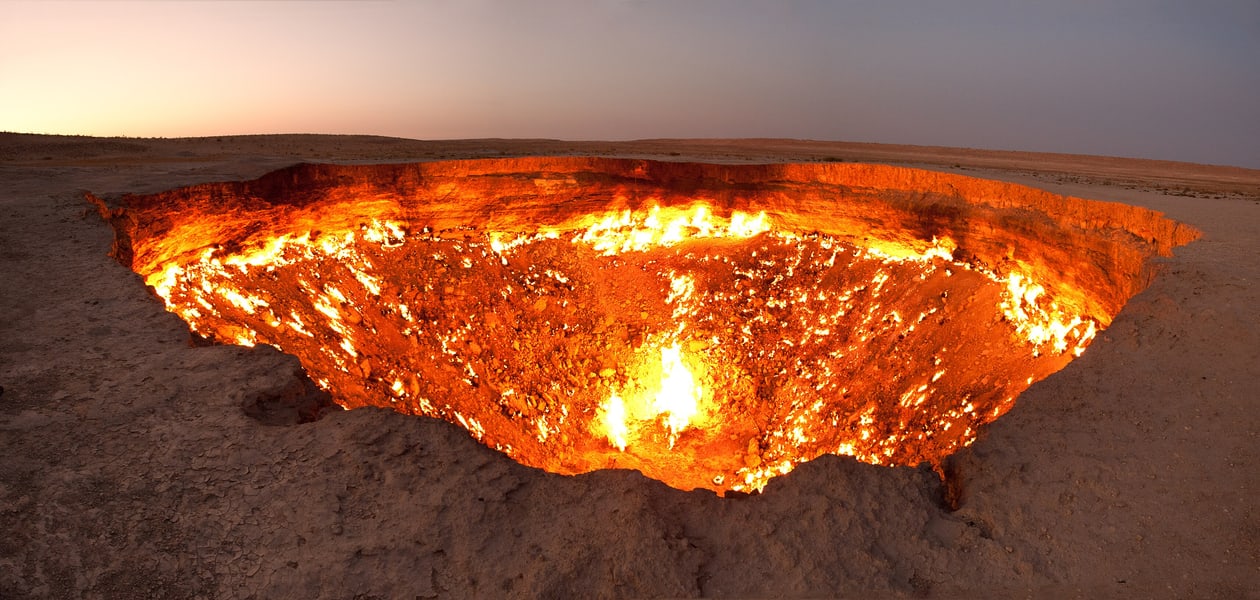
Turkmenistan
Tormod Sandtorv / Wikimedia Commons · CC BY-SA 2.0 · cropped
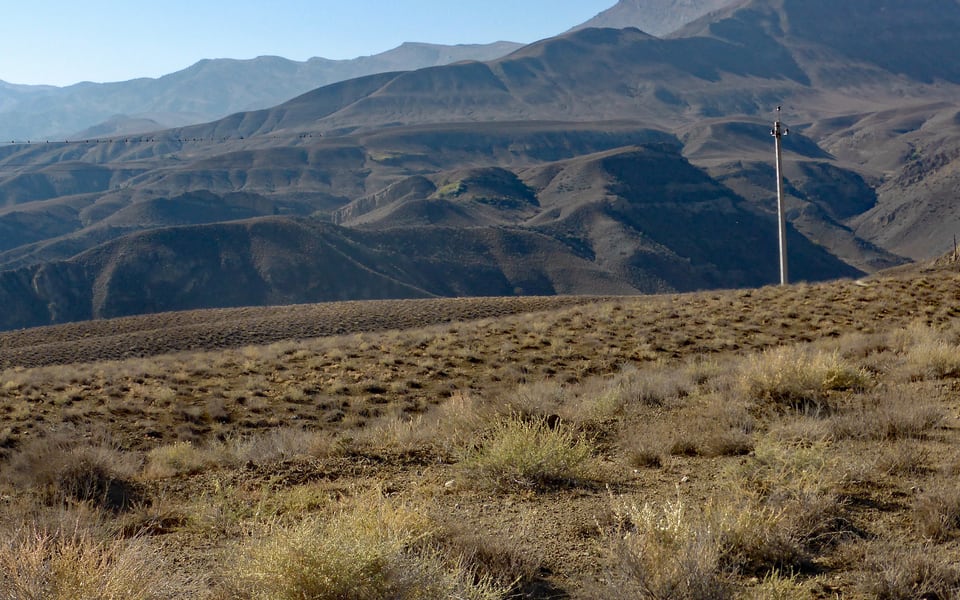
Turkmenistan is 491,210 km² of Central Asia with only a little over 7 million people, which makes it one of the most sparsely populated countries on the continent. Kazakhstan and Uzbekistan lie to the north, Afghanistan to the south-east, Iran to the south and south-west, and the Caspian Sea forms the western frontier. Ashgabat is the capital, built along the foot of the Kopet Dag, the mountain wall that is also the Iranian border. Behind that narrow inhabited strip the Karakum — Black Sand, the twelfth-largest desert in the world — covers about 70% of the country, and the population lives round its edges.
For a country of that shape the railway is remarkably substantial: 4,980 km of it, the 37th largest network in the world, run by the state company Türkmendemirýollary under its own Ministry of Railways. It descends from the Trans-Caspian Railway, pushed east from the Caspian across the desert by the Russian Empire during its nineteenth-century expansion into Central Asia, and the modern network still runs along the same axis. The operator publishes a full timetable for fourteen routes — per-day departures, distances, stops and dwell times — and sells tickets through its own booking engine.
Rail journeys in Turkmenistan
Good to know
What was the Trans-Caspian Railway?
The line the Russian Empire drove east across the desert from the Caspian during its conquest of Turkestan. It began at Uzun-Ada on the Caspian shore, with the terminus later moved north to Krasnovodsk — now Türkmenbaşy — and ran through Ashgabat and on towards Bukhara, Samarkand, Kokand and Tashkent. It is the ancestor of the modern network and the reason Turkmenistan's railway runs the way it does.
How hard is it to visit Turkmenistan?
Harder than almost anywhere. The Embassy of Turkmenistan's own instruction is to apply through a travel agency, which obtains a Letter of Invitation from the State Migration Service; the embassy issues the visa against that letter and quotes about a month for it. A transit visa is the other route, with a maximum stay of five days. None of that makes the trains unrideable — the railway is a working public service with a published timetable — but the visa is the first thing to settle.
What is the Karakum?
Black Sand — the twelfth-largest desert in the world, covering roughly 70% of Turkmenistan, some 350,000 km². The Karakum Canal, one of the largest irrigation and water-supply canals anywhere, was cut through it in the Soviet period, and it is much of what makes the inhabited strip along the Kopet Dag possible at all.
Are there rail passes for Turkmenistan?
No. There is no pass scheme and no multi-journey ticket. Seats are bought for the individual train through the operator's own booking system, which publishes in Turkmen. Fares on the national railway are very low by international standards.