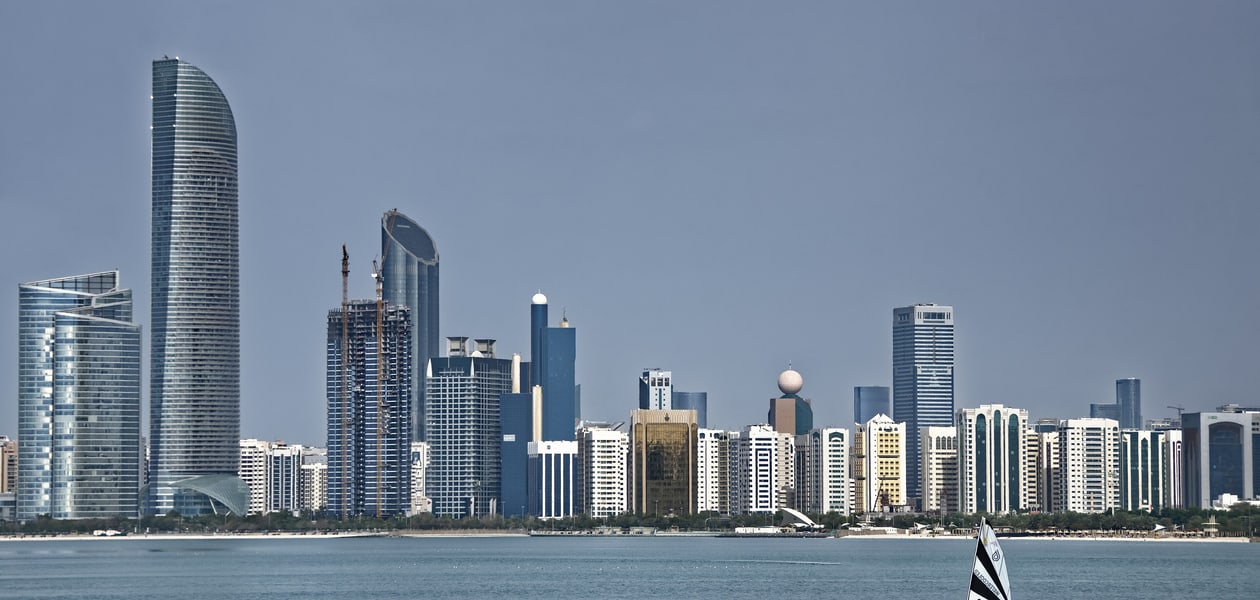
United Arab Emirates
Makalu / Wikimedia Commons · CC0 · cropped
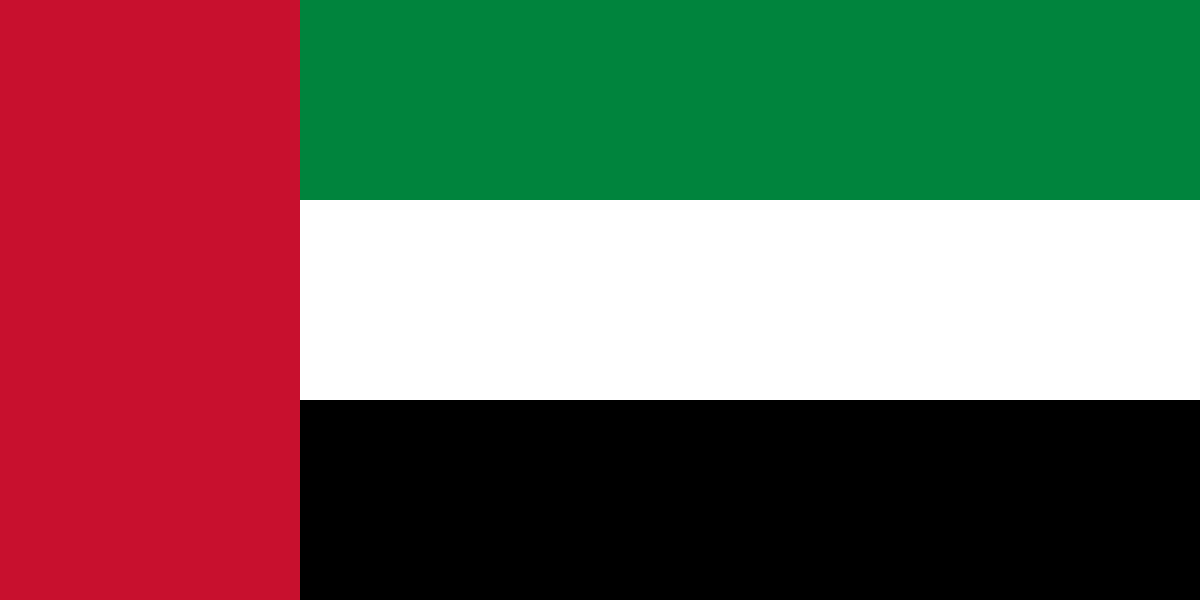
The United Arab Emirates occupies 83,600 km² at the eastern end of the Arabian Peninsula and holds over 11 million people, the great majority of them foreign residents. It is a federation of seven emirates — Abu Dhabi, Dubai, Sharjah, Ajman, Umm Al Quwain, Ras Al Khaimah and Fujairah — with Abu Dhabi as the national capital and Dubai as the largest city. Oman lies to the east and north-east and Saudi Arabia to the south and west. Most of the country is desert, running down to the Persian Gulf; along the eastern side the Hajar mountains rise between the interior and the Gulf of Oman.
Rail travel here is brand new. Etihad Rail, the federal railway company set up in 2009, built the network for freight first and opened it to passengers on 30 June 2026, with an inaugural route from Mohamed bin Zayed City in Abu Dhabi across the country to Al Hilal City in Fujairah. Further stations are due in phases — Dubai and Al Dhaid at the end of September 2026, Madinat Zayed and Liwa in November, the rest of Al Dhafra in December and Sharjah in March 2027. Seats are booked through the operator's site and app.
Rail journeys in United Arab Emirates
Good to know
How new is passenger rail in the UAE?
Very. Etihad Rail was established in 2009 and built its network as a freight railway; passenger services began only on 30 June 2026. Anyone reading about travel in the Emirates from before that date will find no intercity trains in it, because there were none. The metros in Dubai are a separate matter and considerably older.
Is the network finished?
No — it is opening in phases, and that is worth knowing before planning a trip. As of September 2026 only two stations exist, Abu Dhabi and Fujairah. The operator has announced Dubai and Al Dhaid for 30 September 2026, Madinat Zayed and Liwa for 30 November, the remaining Al Dhafra stations for 30 December and Sharjah for 30 March 2027. The list changes from one quarter to the next, so it should be taken from the operator on the day rather than from any secondary account.
What does the line cross?
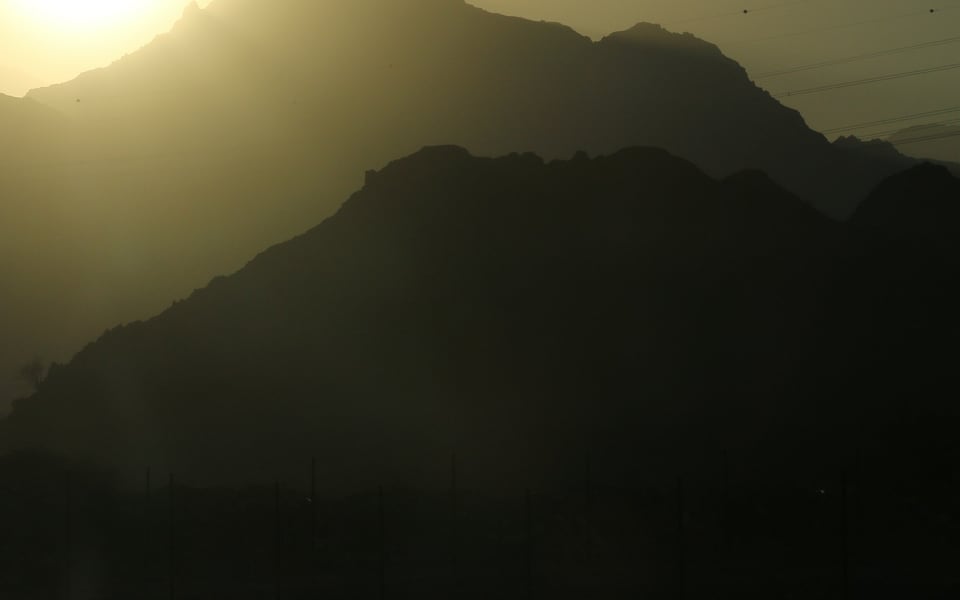
The whole width of the country, and two different worlds. It runs from the Persian Gulf side at Abu Dhabi across the desert to the Gulf of Oman at Fujairah, which means climbing through the Hajar mountains on the eastern side — the reason the line needed tunnels and viaducts at all, and the reason it is more interesting than a desert crossing sounds.
Are there rail passes for the UAE?
No. Etihad Rail sells its own tickets by class through its website and app, and the city metro systems are separate again. Arabic is the official language, but English is the most widely spoken language in the country and the language of business, so nothing about buying a ticket here is difficult.