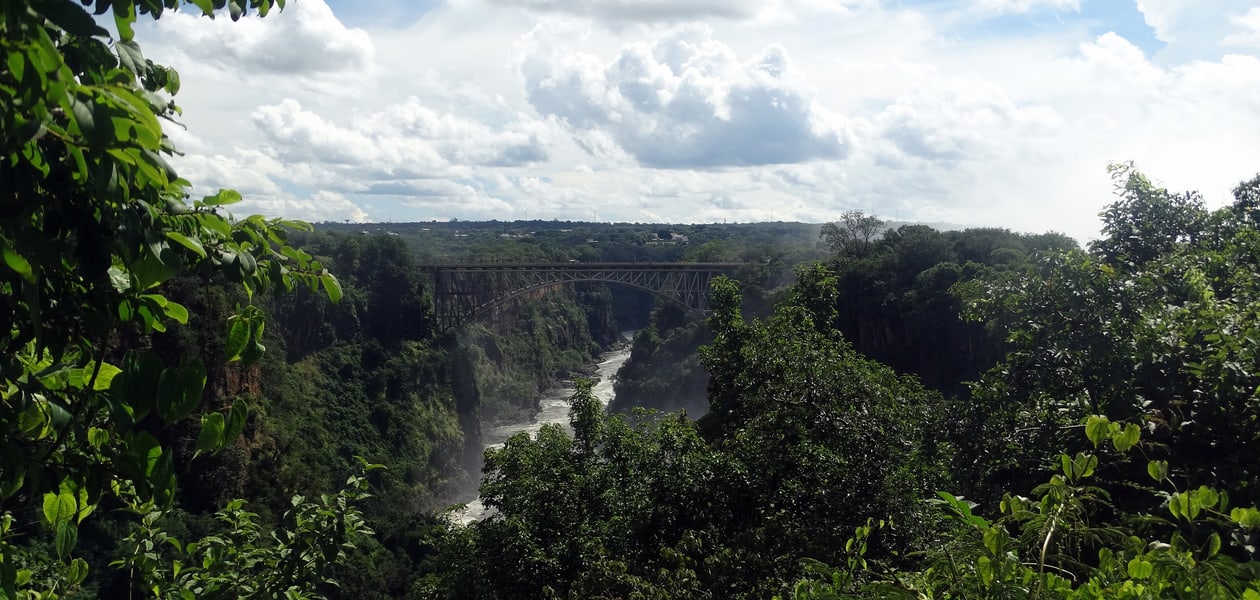
Zimbabwe
Henning Supertramp / Wikimedia Commons · CC BY 2.0 · 2017 · cropped

Zimbabwe covers 390,757 km² of southern Africa between two great rivers, the Zambezi on its northern border with Zambia and the Limpopo on its southern border with South Africa. Botswana lies to the south-west and Mozambique to the east, and the country has no coastline. About 15.2 million people lived there at the 2022 census. The capital, Harare, stands on the high plateau that runs across the middle of the country; Bulawayo, the second city, is the capital of Matabeleland in the south-west. Victoria Falls, on the Zambezi, is the border with Zambia.
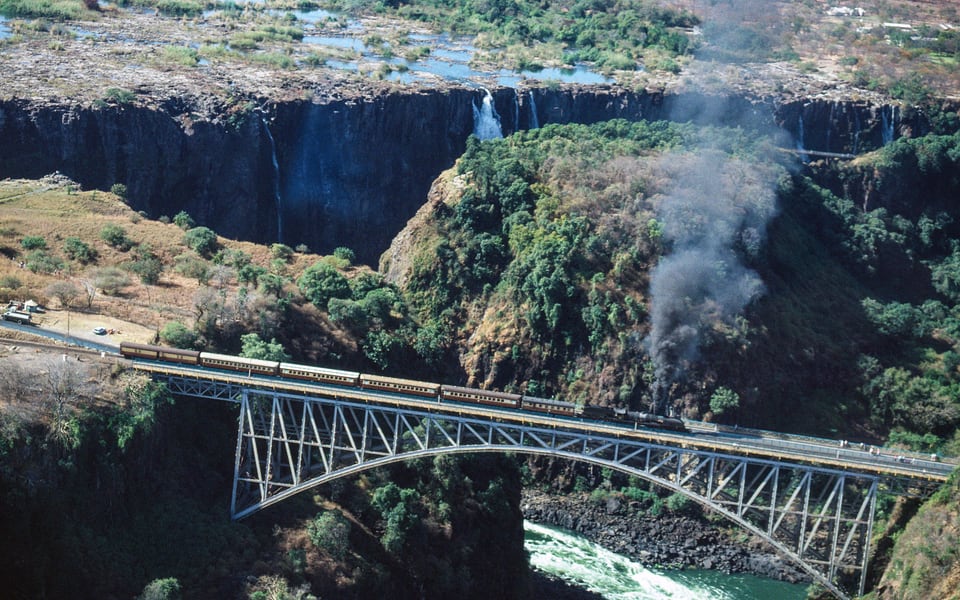
The railway came north from South Africa in the 1890s as part of Cecil Rhodes's plan for a line from the Cape to Cairo, and the network still runs on the Cape gauge it was built to. Bulawayo is its hub and the headquarters of the state operator. Passenger trains stopped in 2020, and in October 2025 two overnight routes came back, each running out on Friday and back on Sunday. Fares are in US dollars and low, a few dollars in economy, and tickets are bought at the station. Rovos Rail's luxury train from Pretoria also ends at Victoria Falls.
Rail journeys in Zimbabwe
Good to know
Are passenger trains running in Zimbabwe?
Two routes are. National Railways of Zimbabwe suspended every passenger train in 2020 and brought two back on 17 October 2025: Bulawayo–Victoria Falls and Harare–Mutare. Each runs overnight, out on Friday evening and back on Sunday evening. The overnight between Harare and Bulawayo has not returned.
How do you buy a train ticket in Zimbabwe?
At the station booking office. Fares are set in US dollars: at the October 2025 relaunch, economy cost US$9 from Bulawayo to Victoria Falls and US$5 from Harare to Mutare. National Railways of Zimbabwe announces changes on its X account, @NRZ263.
Are there rail passes for Zimbabwe?
No. Zimbabwe belongs to no pass scheme and the railway sells no multi-journey ticket. Each fare is bought separately at the station.