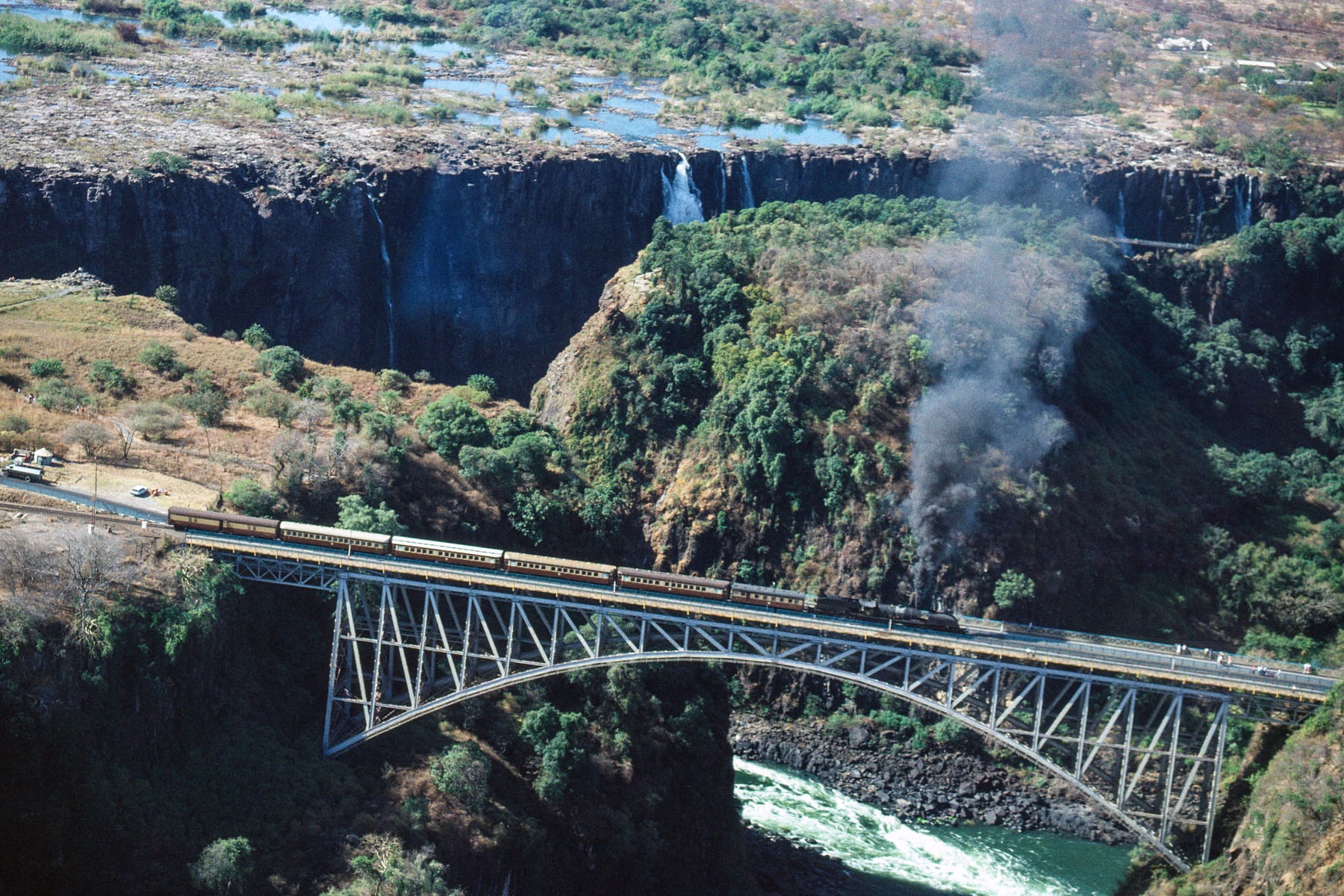
Bulawayo to Victoria Falls
Nigel Tout, www.nigeltout.com / Wikimedia Commons · CC BY-SA 4.0 · 1992 · cropped
- DistanceAbout 450 km
- DurationAbout 15 hours, overnight
- Best seasonMay to October, the dry season · out on Friday, back on Sunday
Introduction
Cecil Rhodes never saw the Victoria Falls, but he is recorded as telling his engineers to bridge the Zambezi where the trains, as they passed, would catch the spray. The railway that carries them there had already bent away from the first plan. The route north from Bulawayo was proving costly to build when valuable coal was found near Wankie, now Hwange, and the company turned the line north-west through the bush to Wankie and on to the falls.
That line is the route of this train. National Railways of Zimbabwe stopped every passenger train in 2020 and brought this one back on 17 October 2025. It leaves Bulawayo on Friday evening, runs about 450 km through the night past Dete and Hwange, on the edge of the country's largest national park, and reaches Victoria Falls at ten the next morning. It comes back on Sunday. Economy costs nine US dollars, and in its first three months nearly six thousand people rode it.
The Journey
The train leaves Bulawayo at seven on Friday evening, from the station at the hub of the national network, with the railway museum in the old workshops beside it. National Railways of Zimbabwe relaunched it with standard and economy coaches, and it runs through the night.
About 300 km out comes Dete, a railway village that grew up as a crew depot. In the days of steam, Bulawayo crews booked off here and Dete or Hwange men worked the train on. Dete stands inside Hwange National Park, Zimbabwe's largest, and the park's main gate is close by, so this is the stop for anyone going on safari.
Hwange, 67 km further on, is a coal town. The coalfield is why the railway runs this way at all, and the colliery is still the largest in the country. Beyond it the line passes Thomson Junction and runs through broken, wooded hills towards the Zambezi. With the train due at ten in the morning, this last stretch should be in daylight.
Victoria Falls station is the end of the run. The track goes on across the Victoria Falls Bridge, 198 m long and 128 m above the river, built by the Cleveland Bridge & Engineering Company to George Andrew Hobson's design and opened on 12 September 1905. Its steel was made in Darlington, shipped to Beira and brought up by rail. This train stops at the station, short of the bridge.
The engines in the pictures
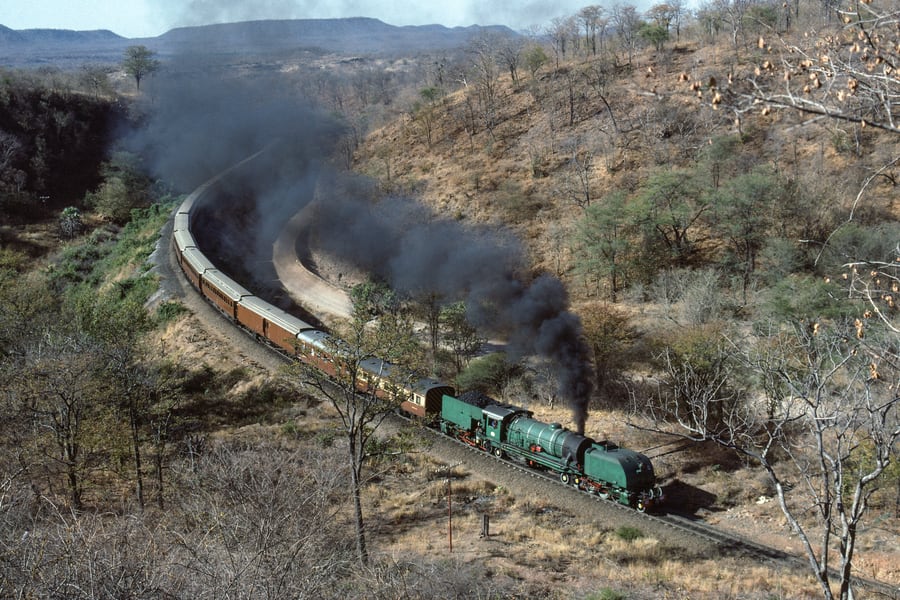
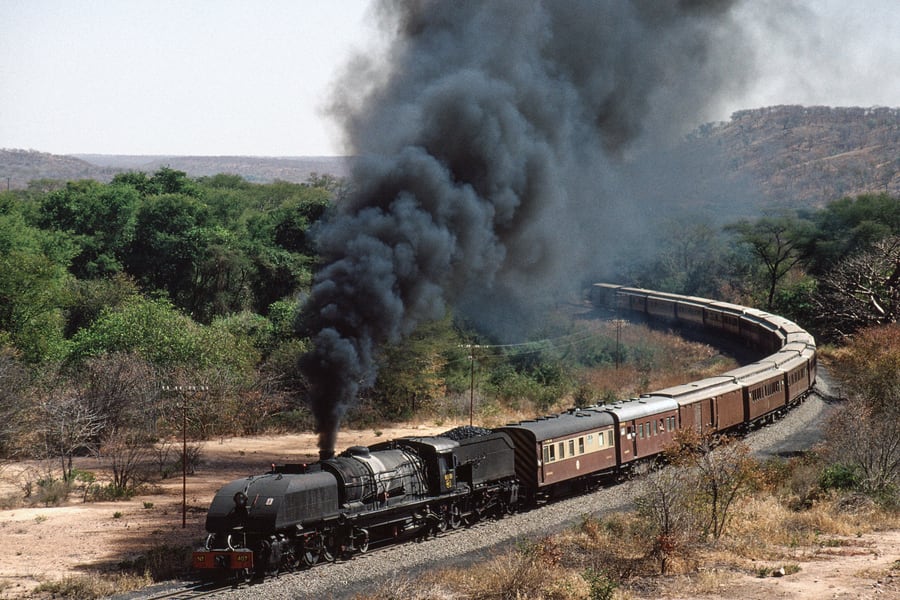
The steam photographs on this page were taken in August 1992, when a South African tour train, the Union Limited, came up the line behind NRZ Garratts, the articulated engines that did most of the railway's heavy work: in 1976, a hundred of its 109 steam locomotives were Garratts. The green 16A, no. 612, was built by Beyer Peacock in 1952–53, and the black 15A, no. 407, Ukhozi ("Eagle"), in 1950.
Along the route
 Nalle&Lisa / Wikimedia Commons · CC BY-SA 4.0 · 2017 · cropped
Bulawayo, the railway's own city
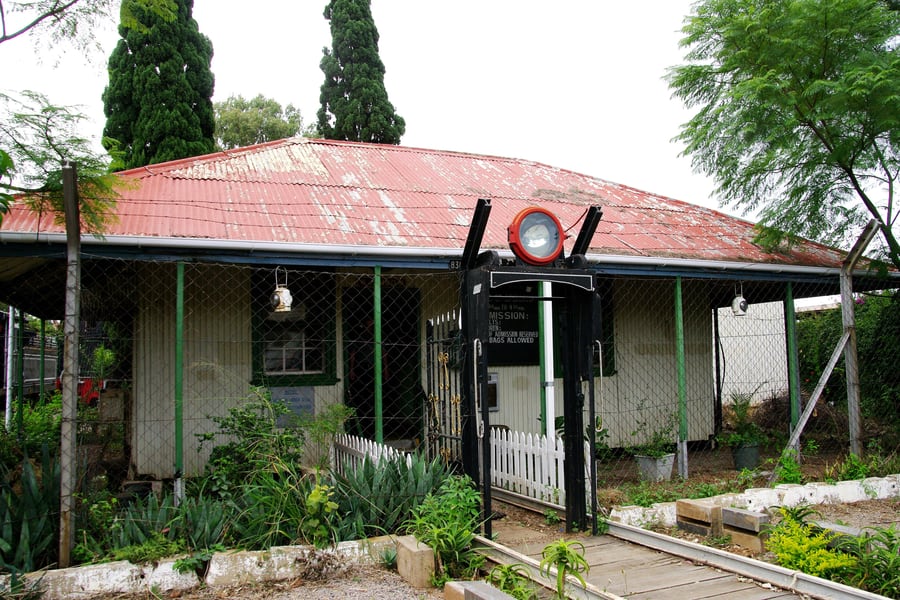
The line arrived from the south in 1897, and National Railways of Zimbabwe is still based here. The railway museum beside the station keeps Rhodes's private coach and a rebuilt country station from Shamva as its entrance.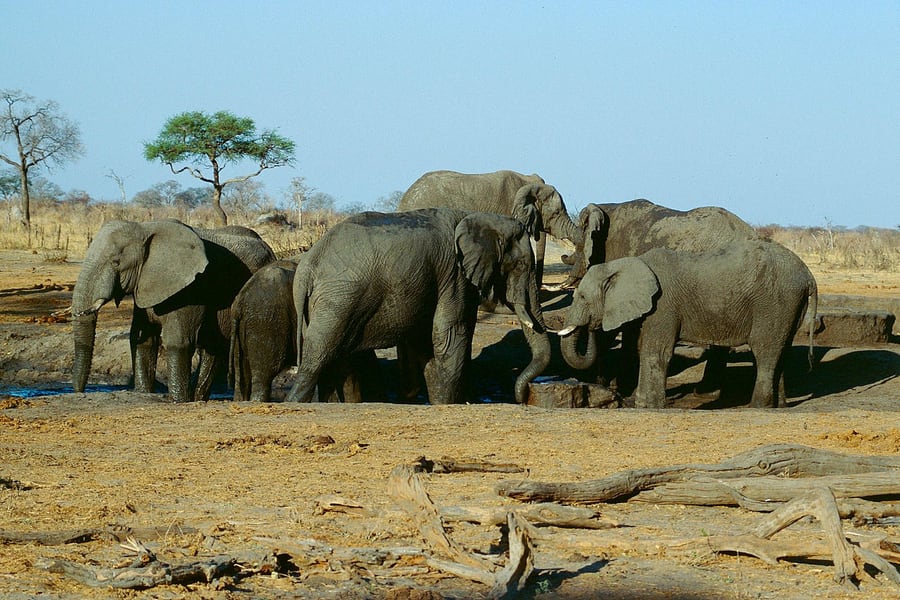 Jürgen Kehrberger / Wikimedia Commons · CC BY-SA 3.0 · cropped
Dete, inside the park
About 300 km out, Dete stands inside Hwange National Park, near the gate to Main Camp. It was where Bulawayo crews handed over in steam days, and where the train stopped short in August 2026.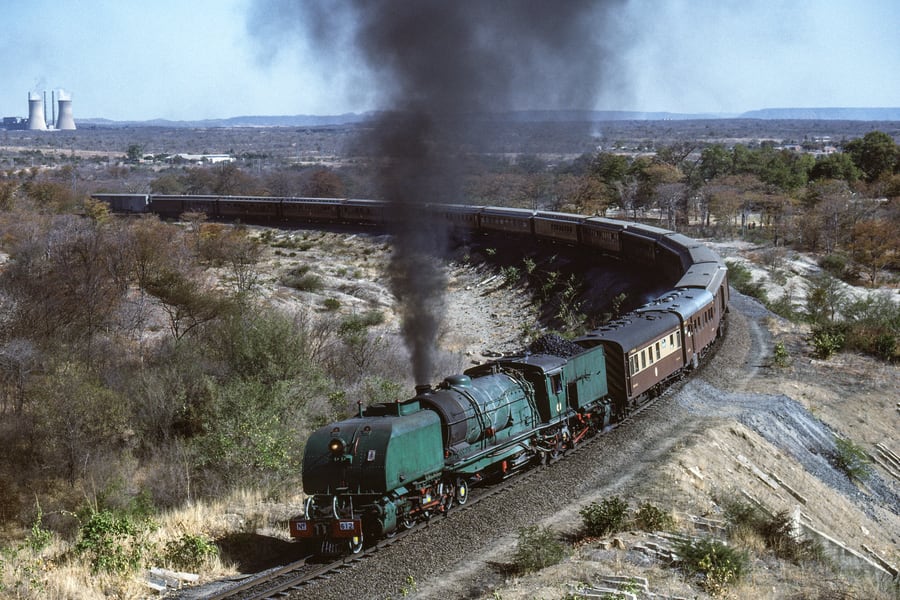 Nigel Tout, www.nigeltout.com / Wikimedia Commons · CC BY-SA 4.0 · 1992 · cropped
Hwange and Thomson Junction
The coal at Wankie, as Hwange was called until 1982, is why the line runs this way at all. The colliery is the country's largest, and the cooling towers of the power station built in the 1980s stand over the town.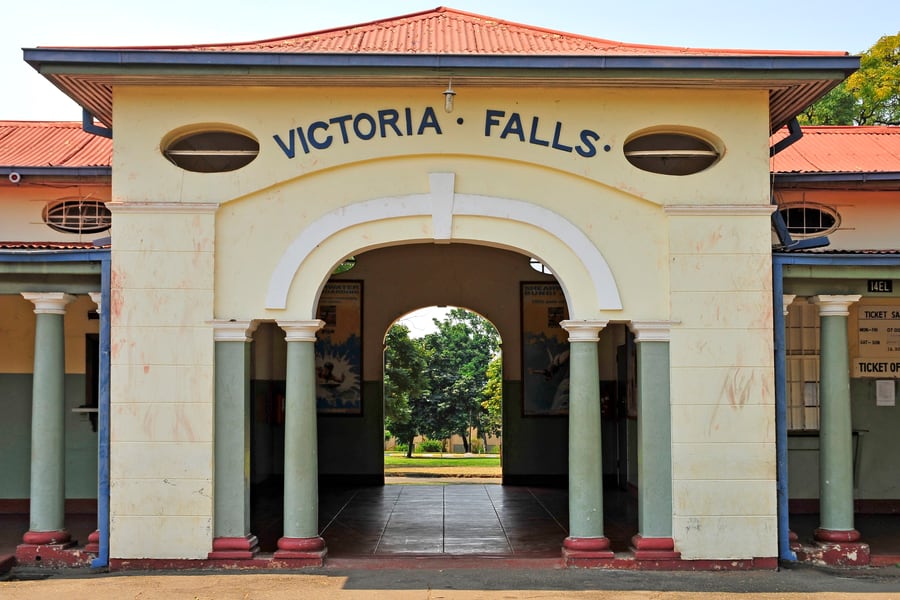 LBM1948 / Wikimedia Commons · CC BY-SA 4.0 · 2011 · cropped
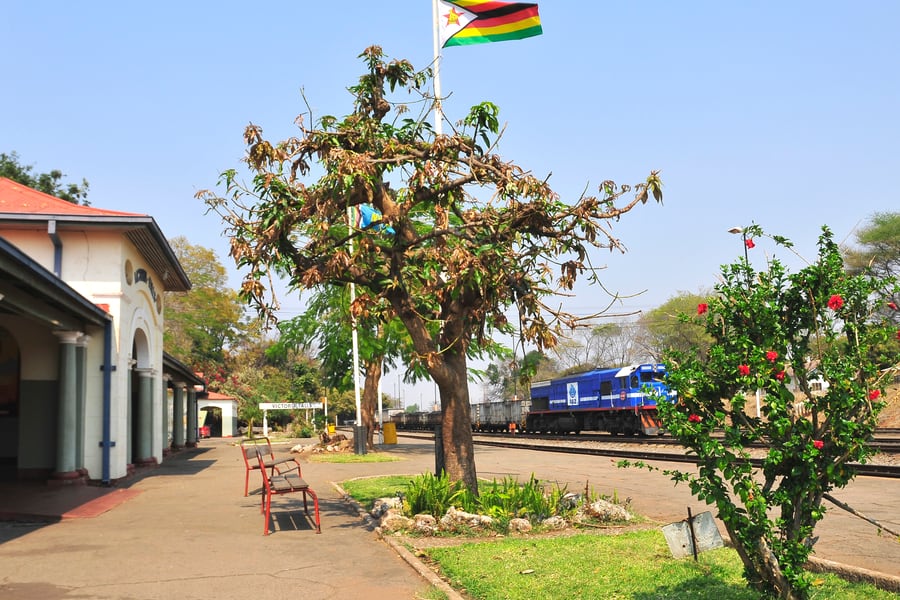
Victoria Falls station
The end of the line in Zimbabwe. Beyond the platform the track runs on over the Victoria Falls Bridge into Zambia, and the arch over the entrance carries the town's name in capitals.A bit of history
Culture & experiences along the way
 Alex Weeks / Wikimedia Commons · CC BY-SA 3.0 · cropped
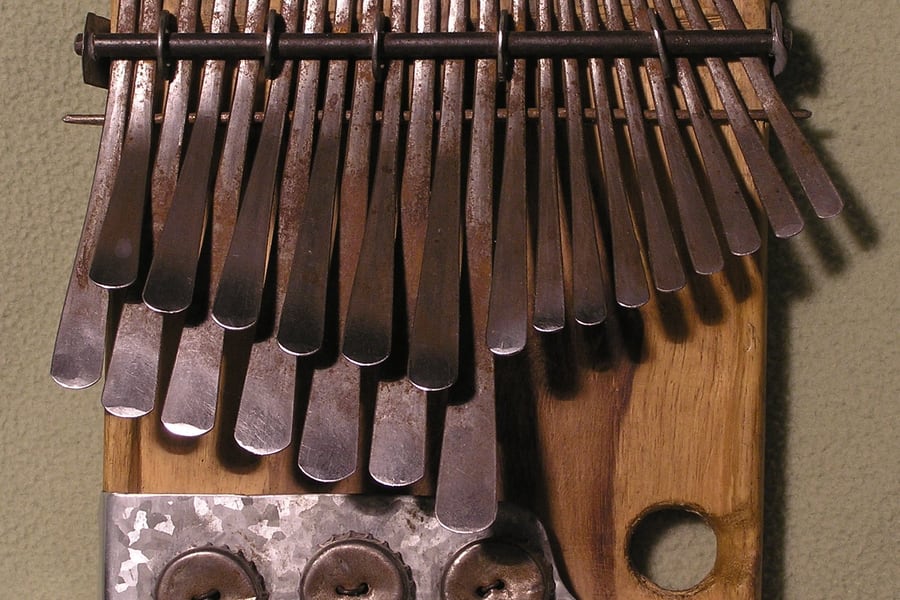
Mbira, the thumb piano
The mbira is a wooden board with rows of metal keys plucked with the thumbs, often fitted with a resonator and played with the hosho shaker. It belongs to the Shona and is heard at ceremonies, weddings and gatherings. UNESCO added the craft of making and playing it to its intangible heritage list in 2020.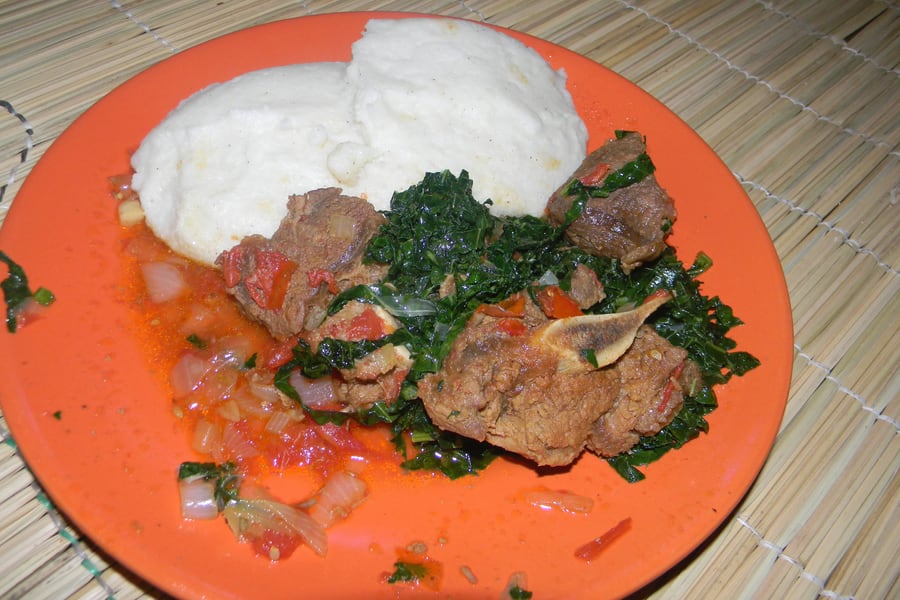 Cecil Dzwowa / Wikimedia Commons · CC BY-SA 4.0 · cropped
Isitshwala, or sadza
Stiff maize porridge is the meal in Zimbabwe: isitshwala in Ndebele, the language of Bulawayo, and sadza in Shona. It comes with a stew of beef, chicken or greens. Roll a lump in your right hand, press a dip into it with your thumb, and use it to scoop.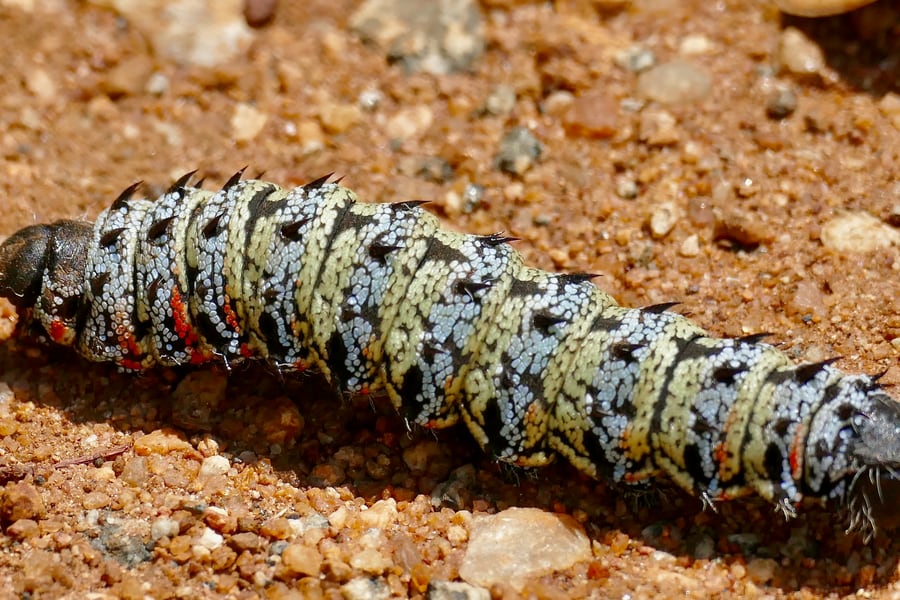 Bernard Dupont / Wikimedia Commons · CC BY-SA 2.0 · cropped
Amacimbi, the mopane worm
The fat caterpillar of the mopane emperor moth is picked by hand where it feeds on mopane trees, boiled with salt and dried in the sun. Dried, it is eaten as a crisp snack; soaked, it is fried or stewed with onion and tomato and served with isitshwala.Timetables
One train a week each way: out from Bulawayo on Friday evening, back from Victoria Falls on Sunday evening.
| Train | Departs | Arrives | Journey |
|---|---|---|---|
| Bulawayo → Victoria Falls | Friday 19:00 | Saturday 10:00 | About 15 hours |
| Victoria Falls → Bulawayo | Sunday 19:00 | Monday 10:00 | About 15 hours |
Intermediate stops include Dete · Hwange · Thomson Junction. No times at these stations have been published.
As of November 2026. National Railways of Zimbabwe restated the Friday 19:00 departure and Saturday 10:00 arrival on 3 November 2026 (opens in a new tab), and warned that the train can run late because of the heavy freight traffic on the line. The Sunday return is as announced when the service came back on 17 October 2025. The train can also be cut short: in August 2026 a truck hit a locomotive at a level crossing at Mbarira, and that weekend's train terminated at Dete, with refunds for passengers going on to Victoria Falls. NRZ posts notices like that one on its X account, @NRZ263 (opens in a new tab).
Tickets
Tickets are sold at the station booking office, not online, and the railway's own passenger page has said they are sold on the day of travel. Fares are in US dollars.
At the relaunch in October 2025 an economy seat cost US$9 for the whole run, in either direction. A standard-class fare was not published; ask at the booking office in Bulawayo or Victoria Falls.
Book your tickets
Bulawayo – Victoria Falls
Economy, either direction · US$9
The full run in economy, sold at the station booking office.
via x.com/NRZ263Rail Passes
No rail pass covers Zimbabwe, and National Railways of Zimbabwe sells no multi-journey ticket.
Nor would one help. The whole run costs nine US dollars in economy, and with one train a week each way, what limits this journey is the calendar, not the fare.
As of November 2026.
Places to Visit
The two ends of this line are the reasons to ride it. Bulawayo has the railway's own museum and the granite of the Matobo Hills on its doorstep; Victoria Falls has the falls themselves. In between, Dete station is the way into Hwange National Park.
 Nalle&Lisa / Wikimedia Commons · CC BY-SA 4.0 · 2017 · cropped
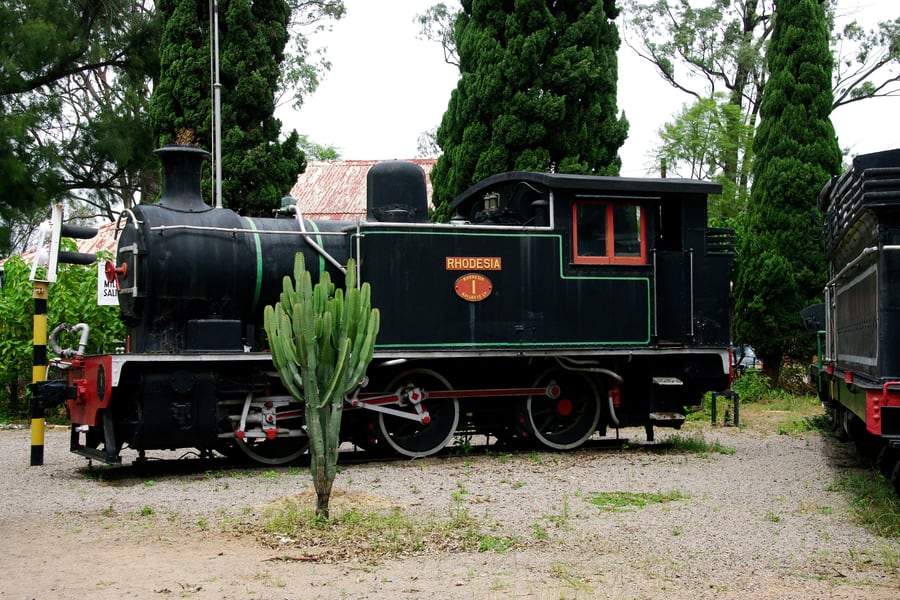
Bulawayo Railway Museum
Opened in 1972 at Bulawayo station and owned by NRZ, the museum fills an old workshop hall and the yard around it with engines and carriages back to 1897. Rhodesia, the little tank engine numbered 1, stands outside, and Cecil Rhodes's private saloon, Garratts, diesels, a dining car and an eye-surgery coach are all here.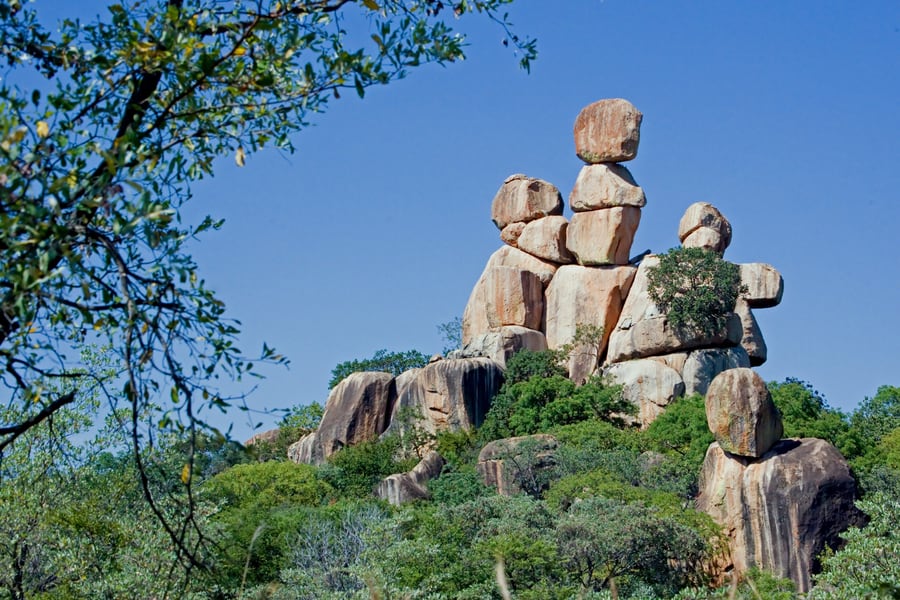 Susan Adams / Wikimedia Commons · CC BY-SA 2.0 · cropped
The Matobo Hills, from Bulawayo
About 30 km south of Bulawayo the granite breaks into domes, kopjes and boulders balanced one on another. The national park here, founded in 1926, is Zimbabwe's oldest, and the hills became a World Heritage site in 2003. Cecil Rhodes is buried on the summit of Malindidzimu, the "hill of the spirits".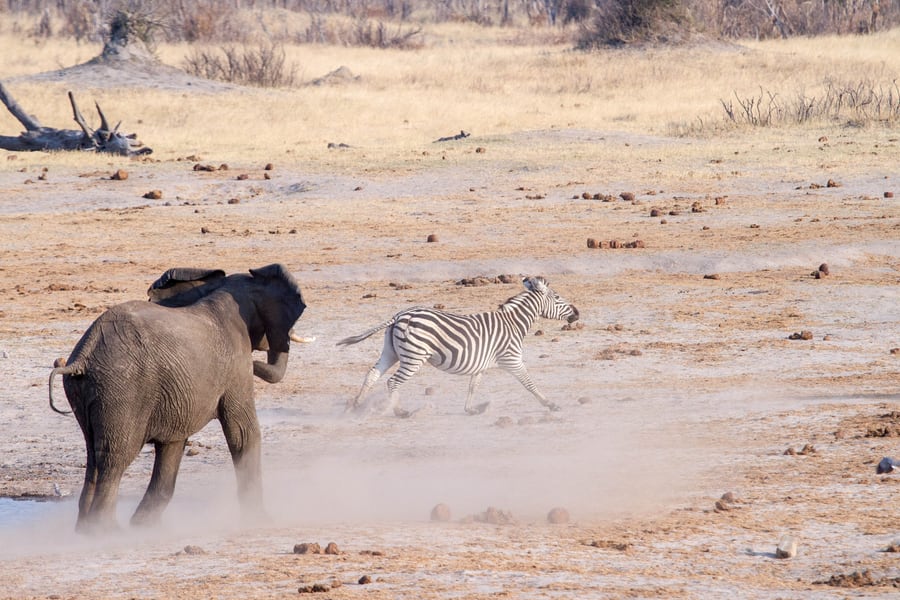 Faypearse / Wikimedia Commons · CC BY-SA 4.0 · cropped
Hwange National Park, from Dete
At about 14,600 km², Hwange is Zimbabwe's largest protected area, founded as a game reserve in 1928. The headquarters at Main Camp are reached through Mpofu Gate near Dete station. Its elephants have done so well that the park struggles to feed them, and it also shelters lion, giraffe and painted dogs.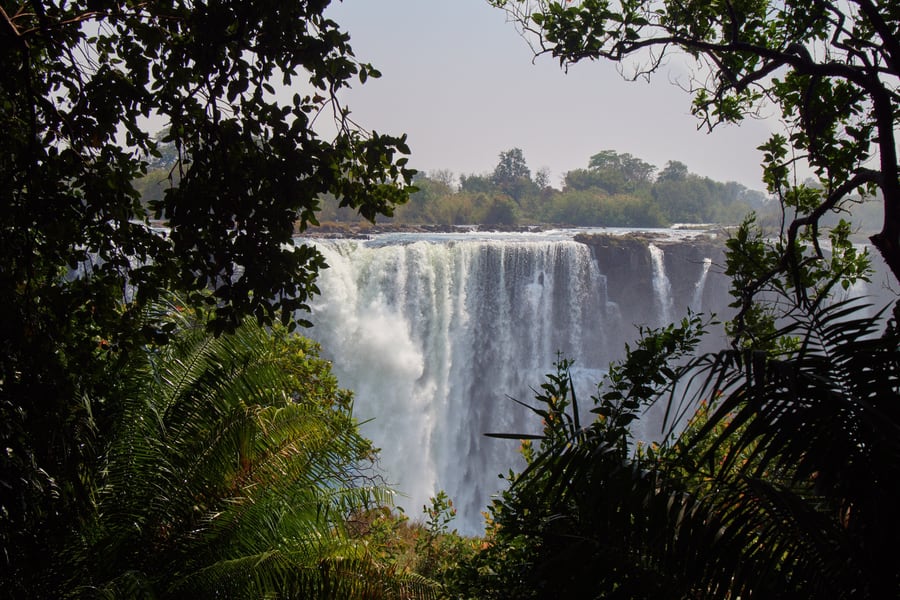 lumoplank / Wikimedia Commons · CC0
Victoria Falls
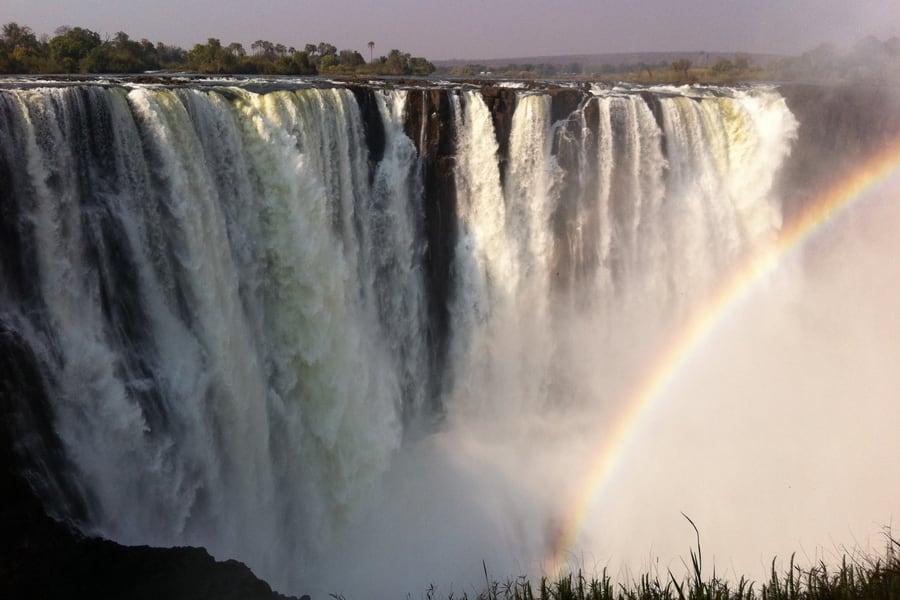
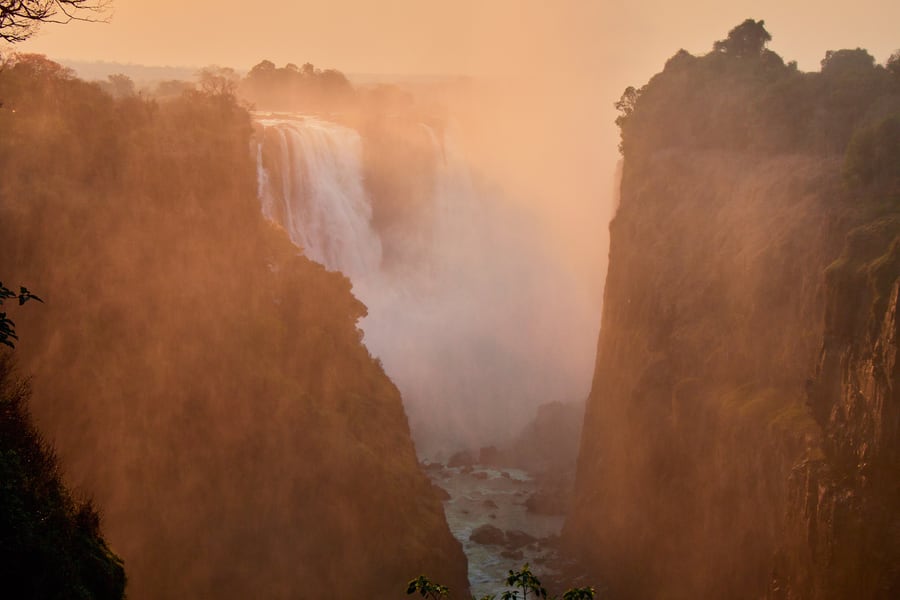
The Zambezi falls 108 m over a lip 1,708 m wide, and the spray it throws up keeps a patch of rainforest growing beside it. Its Lozi name, Mosi-oa-Tunya, means the smoke that thunders. The river floods from February to May, peaking in April. The falls became a World Heritage site in 1989. On the Zimbabwean bank they lie inside the 23 km² Victoria Falls National Park, which shares its name with the town.Where to Sleep
The train arrives in Victoria Falls on Saturday morning and leaves again on Sunday evening, so one night in the town fits the weekly timetable exactly.
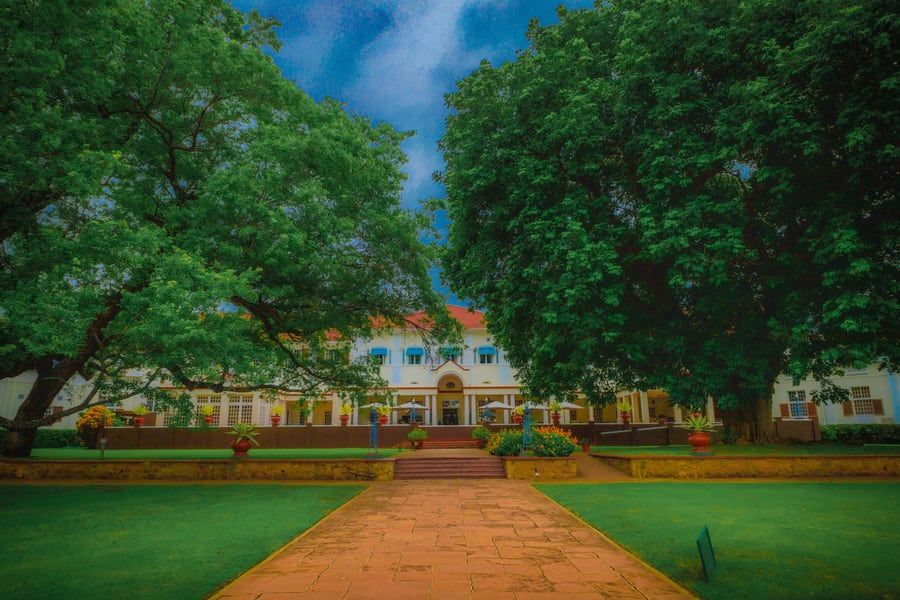
The Victoria Falls Hotel belongs to the same story as the railway: it opened in 1904 to house passengers on the newly built line, the year the rails reached the falls.
Where to stay
 Markmccauley / Wikimedia Commons · CC BY 4.0 · 2023 · cropped
The Victoria Falls Hotel
Mallet Drive, Victoria Falls
Opened in 1904 to house passengers on the newly built railway, and redecorated in 2013.
Check Availability (opens in a new tab, on victoriafallshotel.com)via victoriafallshotel.comQuestions or corrections
Planning this trip and stuck on something, or spotted a time, fare or detail that has changed? Send us a message about Bulawayo to Victoria Falls. We read every one, and we update this page when something has changed.