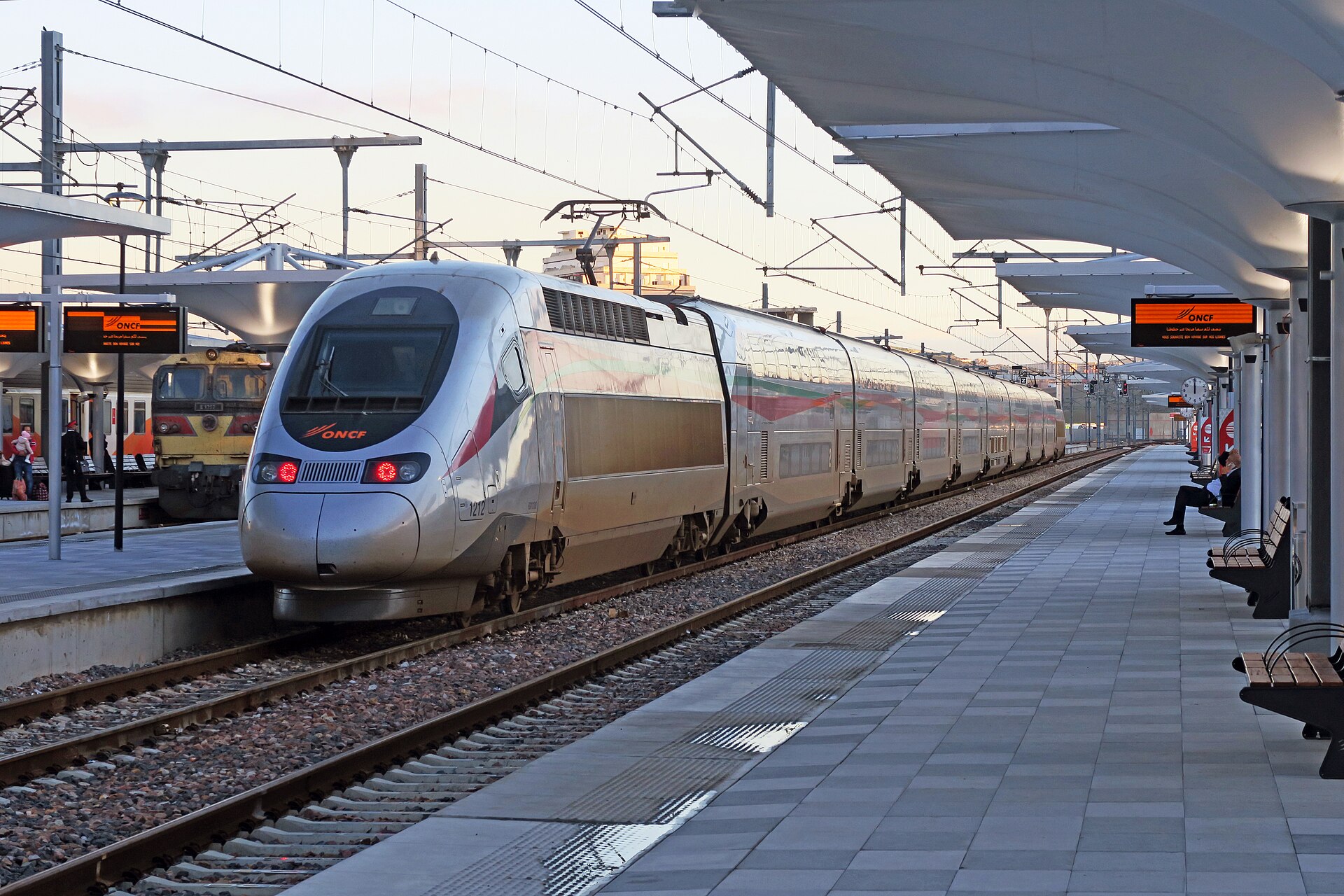
Al Boraq — Tangier to Casablanca
NicholasNCE / Wikimedia Commons · CC BY-SA 4.0
- DistanceTangier–Casablanca · 323 km (201 miles)
- DurationAbout 2 hours 10 minutes
- Best seasonYear-round
Introduction
In November 2018, Morocco did something no other African country had done: it opened a high-speed railway. The train is called Al Boraq — after al-Burāq, the winged steed that carried the prophets through the night sky in Islamic tradition — and it lives up to the name, running from Tangier on the Mediterranean to Casablanca on the Atlantic at up to 320 km/h.
It is a proper bullet train: a double-deck Alstom TGV, the same machine that flies across France, here painted in the red and silver of the Moroccan national railway, ONCF. On the purpose-built line between Tangier and Kénitra it reaches full speed across the plains of the north; then it joins an upgraded classic line through Rabat, the capital, and on into Casablanca. The whole 323-kilometre run takes about two hours ten — a journey that used to take the best part of five.
For the traveller, Al Boraq is the fast spine of any Moroccan rail trip. You can breakfast in Tangier, watch Spain slip away behind you across the Strait of Gibraltar, glimpse the minaret of Rabat's Hassan Tower go by, and be in Casablanca — with its great mosque on the ocean — before lunch. And from Casablanca, the classic line carries straight on to Marrakech.
The Journey
The journey begins at Gare de Tanger Ville, a sweeping modern terminus built for the high-speed age at the very tip of Africa. You settle into your double-deck carriage, the doors sigh shut, and the train slides out of Tangier and onto the LGV — the ligne à grande vitesse, the dedicated high-speed line that runs 186 kilometres south to Kénitra.
This is the fast part. The train winds up to 320 km/h, and the plains of northern Morocco stream past below the upper-deck windows — cork oak and wheat, olive groves, the occasional white town on a hill. There is little sense of speed inside; only the little screen at the end of the car, ticking past 300, gives it away. In barely an hour Tangier is gone and the train is slowing for Kénitra.
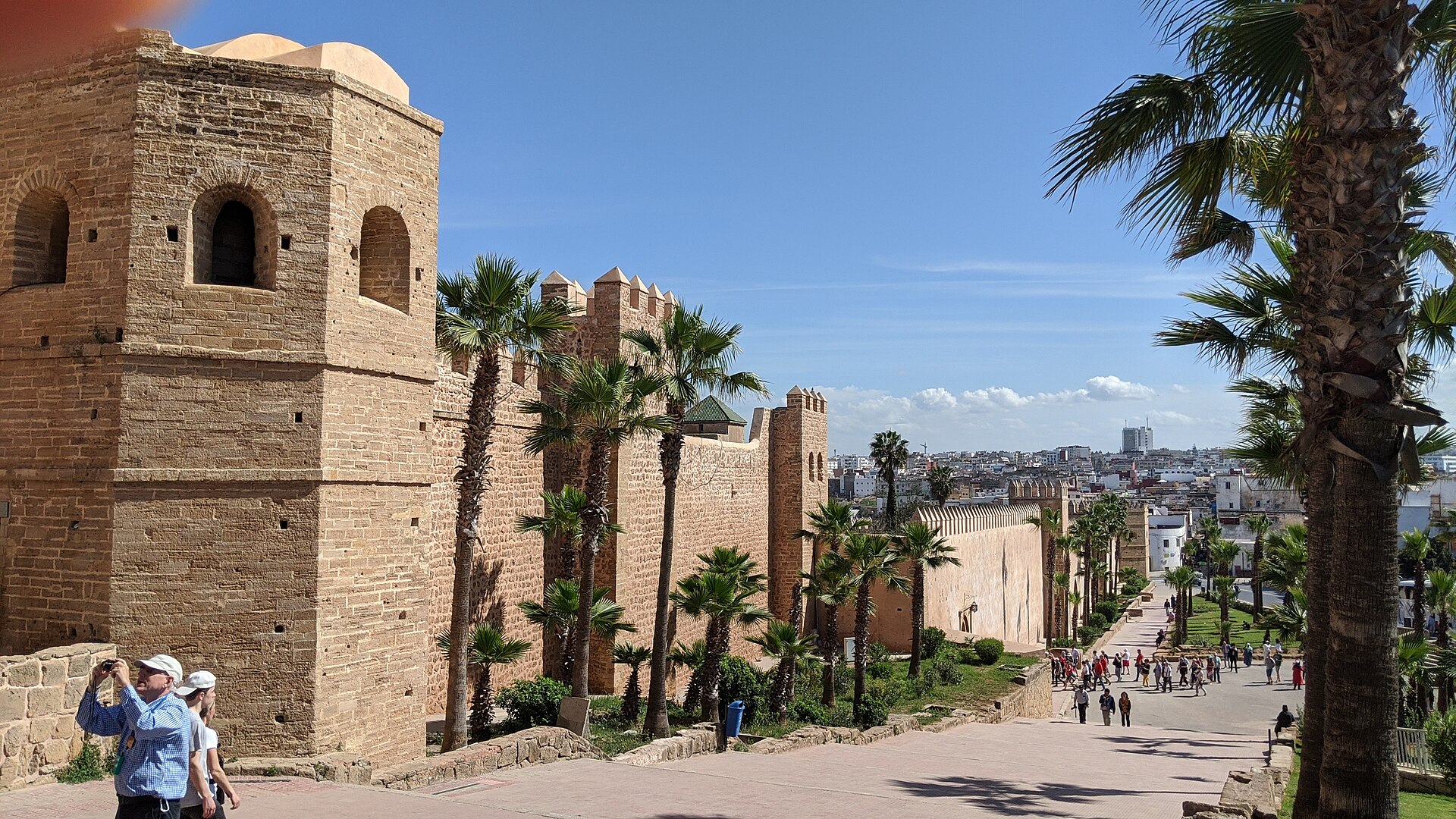
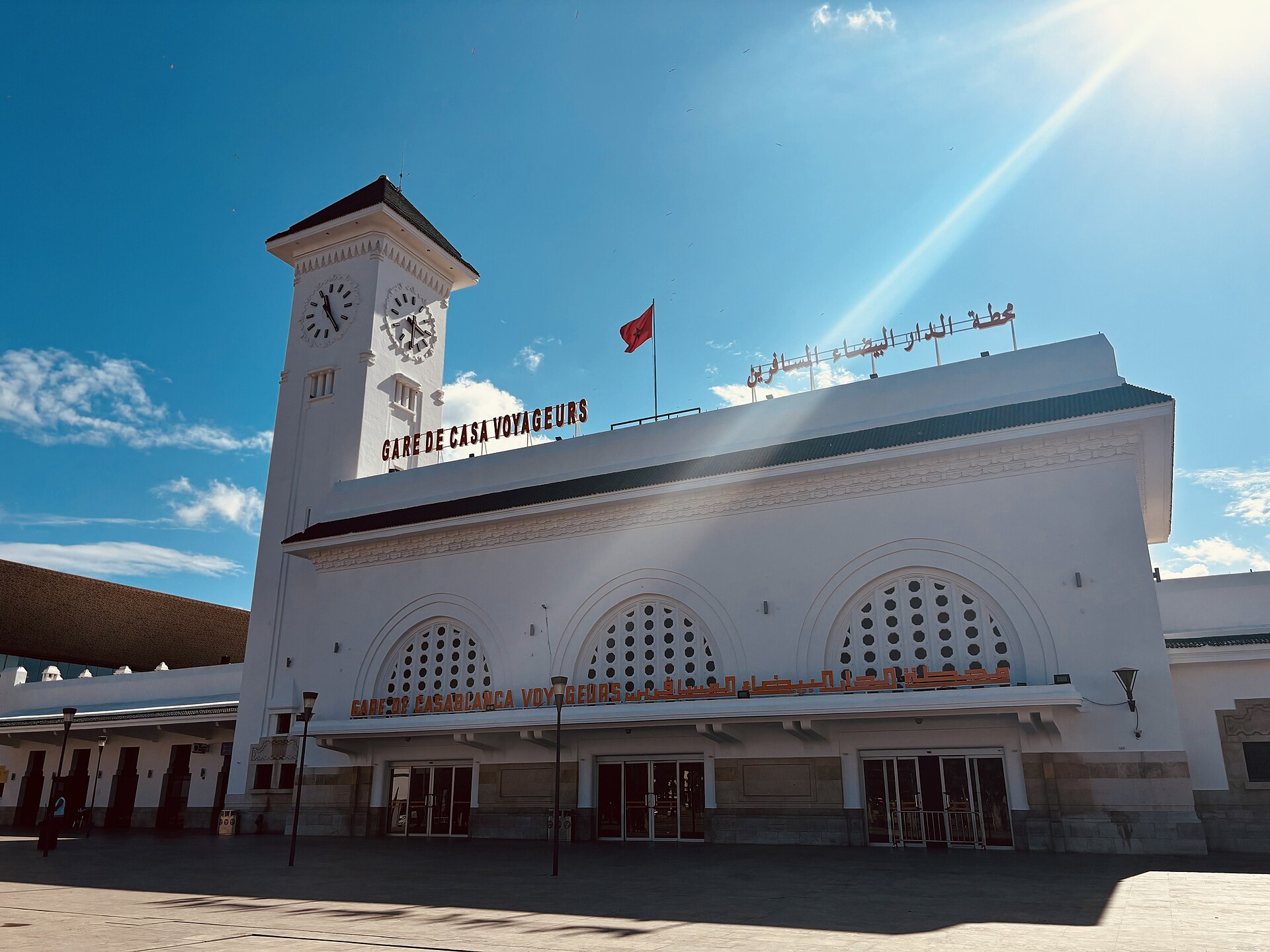
From Kénitra the line changes character. Al Boraq leaves the LGV and joins the upgraded classic main line, running at up to 160 km/h through Morocco's most populous corridor. It calls at Rabat — the capital, a graceful city of palm avenues, the great Hassan Tower, the royal mausoleum and the riverside Kasbah of the Udayas — and then runs on down to the Atlantic and into Casablanca, drawing up at the busy Casa-Voyageurs station about two hours and ten minutes after leaving the Mediterranean.
A few things worth knowing about the run:
- It is the first high-speed railway in Africa, opened on 15 November 2018 and inaugurated by King Mohammed VI and France's President Macron.
- The 323 km from Tangier to Casablanca takes about 2 hours 10 minutes; the dedicated line reaches 320 km/h.
- The trains are double-deck Alstom Euroduplex TGVs — 12 of them — with first and second class and a café coach, seating 533.
- It calls at Kénitra and Rabat (Rabat Agdal) in between; some services also serve Rabat Ville and Casa-Port.
Al Boraq is only the beginning of Morocco's high-speed story: a new line is under construction to carry the bullet trains on beyond Casablanca to Marrakech, due before the 2030 World Cup. For now, the classic Al Atlas train makes that final leg to the Red City.
Along the route
NicholasNCE / Wikimedia Commons · CC BY-SA 4.0Africa's first bullet train
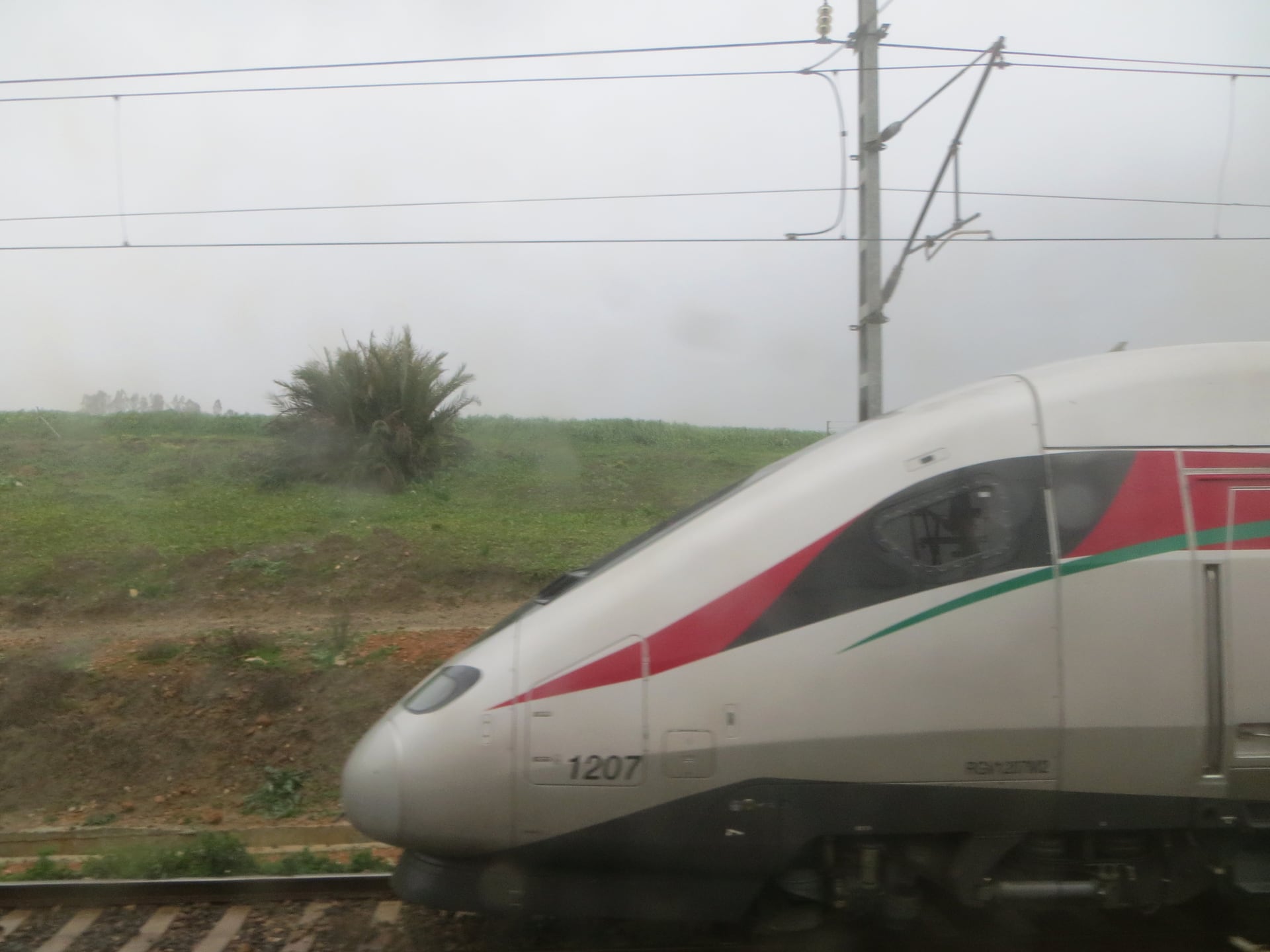
When Al Boraq opened in November 2018 it became the first high-speed railway on the African continent. It is named after al-Burāq, the winged steed of Islamic tradition, and it flies: 320 km/h, quicker than anything else south of the Mediterranean.hakzelf / Wikimedia Commons · CC BY 2.0320 km/h down the coast
The purpose-built line runs 186 km from Tangier to Kénitra, where the train tops out; from there it joins an upgraded classic line to Casablanca. The whole 323 km takes about two hours ten, against nearly five before.Bernard Gagnon / Wikimedia Commons · CC BY-SA 3.0Two seas, and the capital between
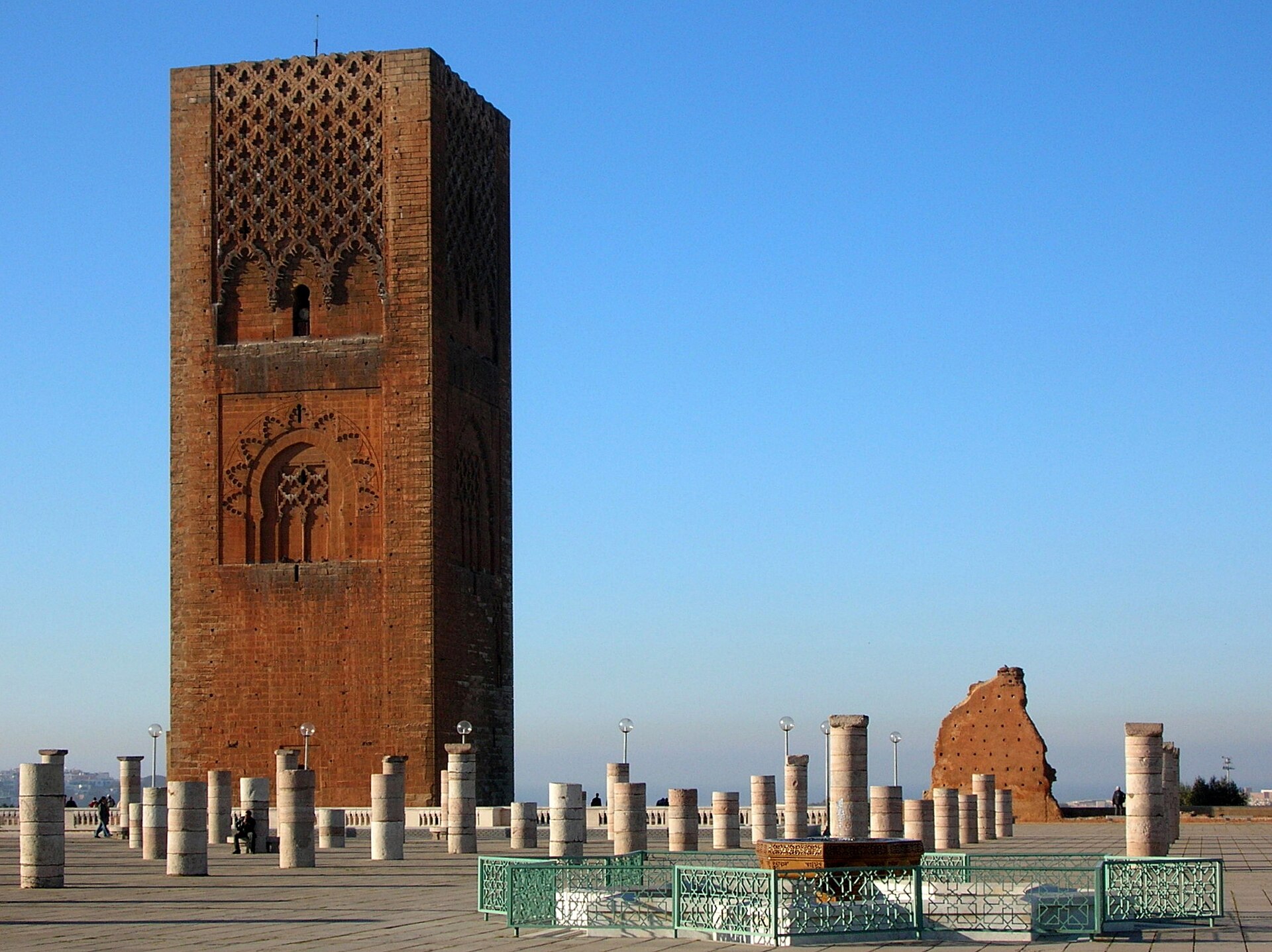
Few trains link two coasts so quickly. You start at Tangier within sight of Spain and finish at Casablanca on the Atlantic, and midway the train calls at Rabat, with its Hassan Tower and riverside kasbah.A bit of history
Culture & experiences along the way
David Scheibler / Zugreiseblog.de / Wikimedia Commons · CC BY-SA 4.0Double-deck TGV comfort
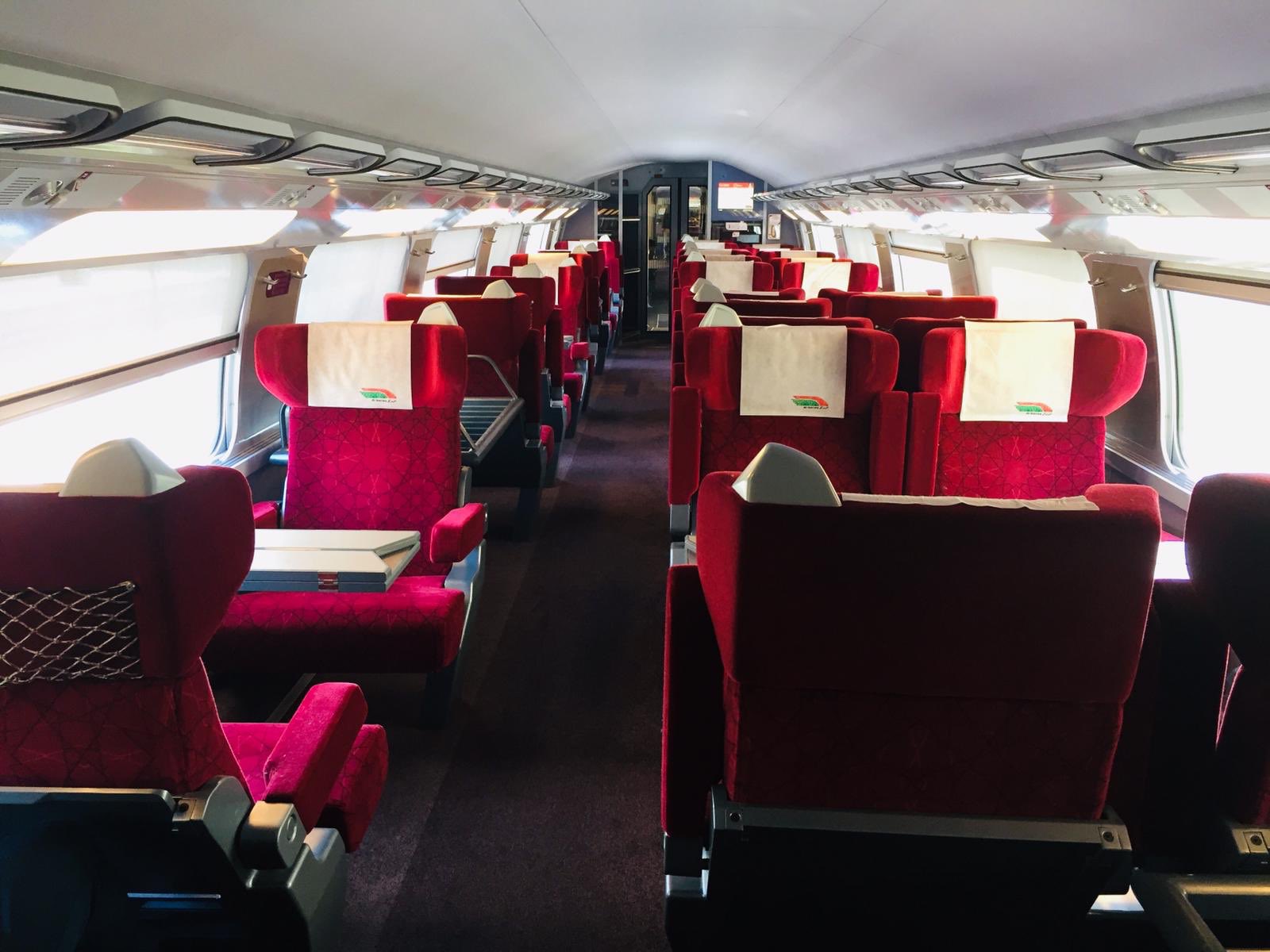
The trains are Alstom Euroduplex sets — the same double-deck TGVs that run France's LGV network — with two classes and a café coach, carrying 533 passengers. First class is spacious and quiet; even second class is a smooth, airline-smart ride with the plains streaming past below.رشيدة رقي / Wikimedia Commons · CC BY-SA 4.0Tangier, gateway between two worlds
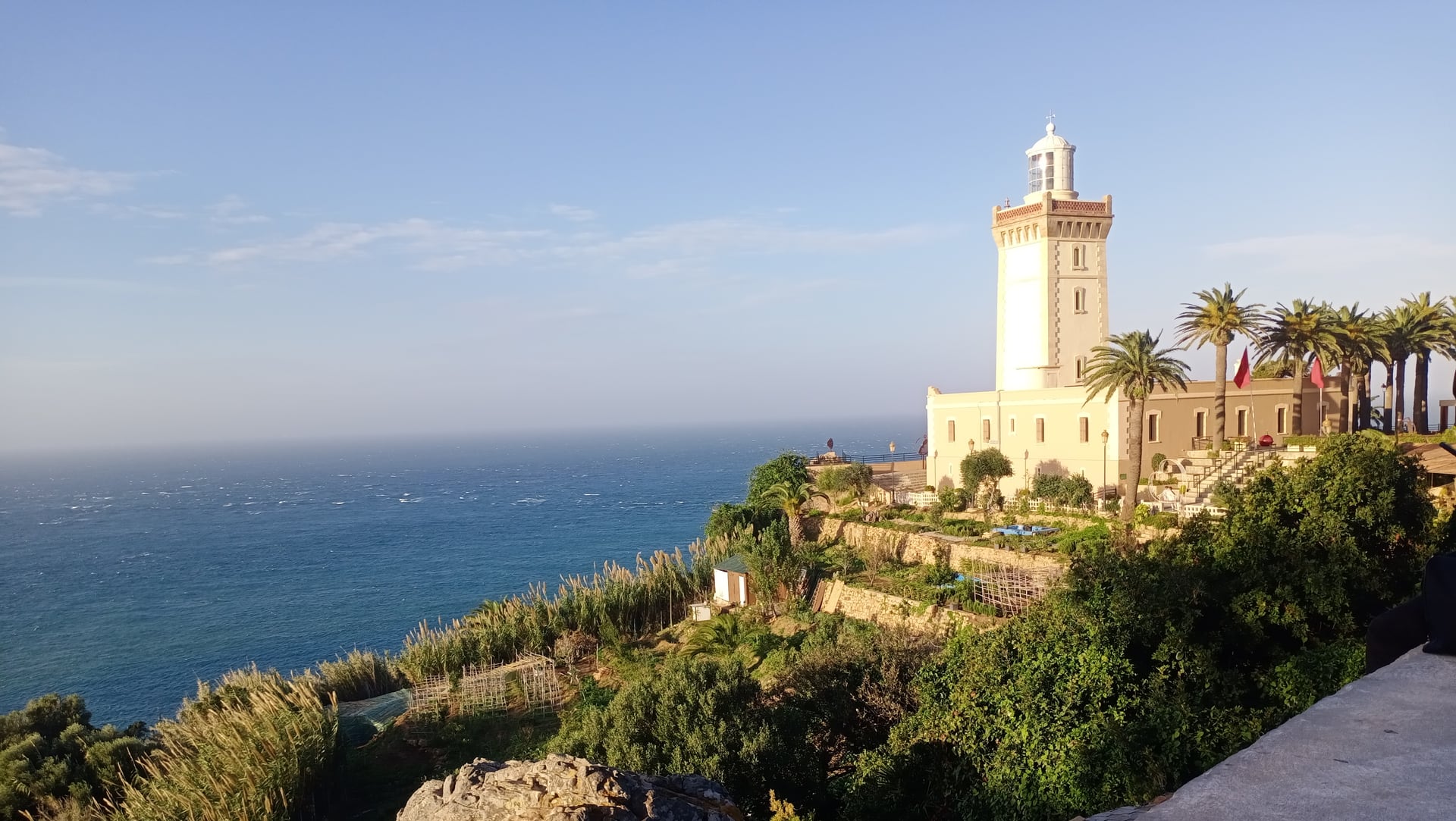
The northern terminus is Tangier — the whitewashed port on the Strait of Gibraltar that has drawn writers and painters for a century, with Europe a ferry-ride away across the water. Twelve kilometres west the cliffs run out to Cap Spartel, where the Mediterranean meets the Atlantic and a lighthouse has stood since 1864.Bernard Gagnon / Wikimedia Commons · CC BY-SA 3.0Casablanca and the Atlantic
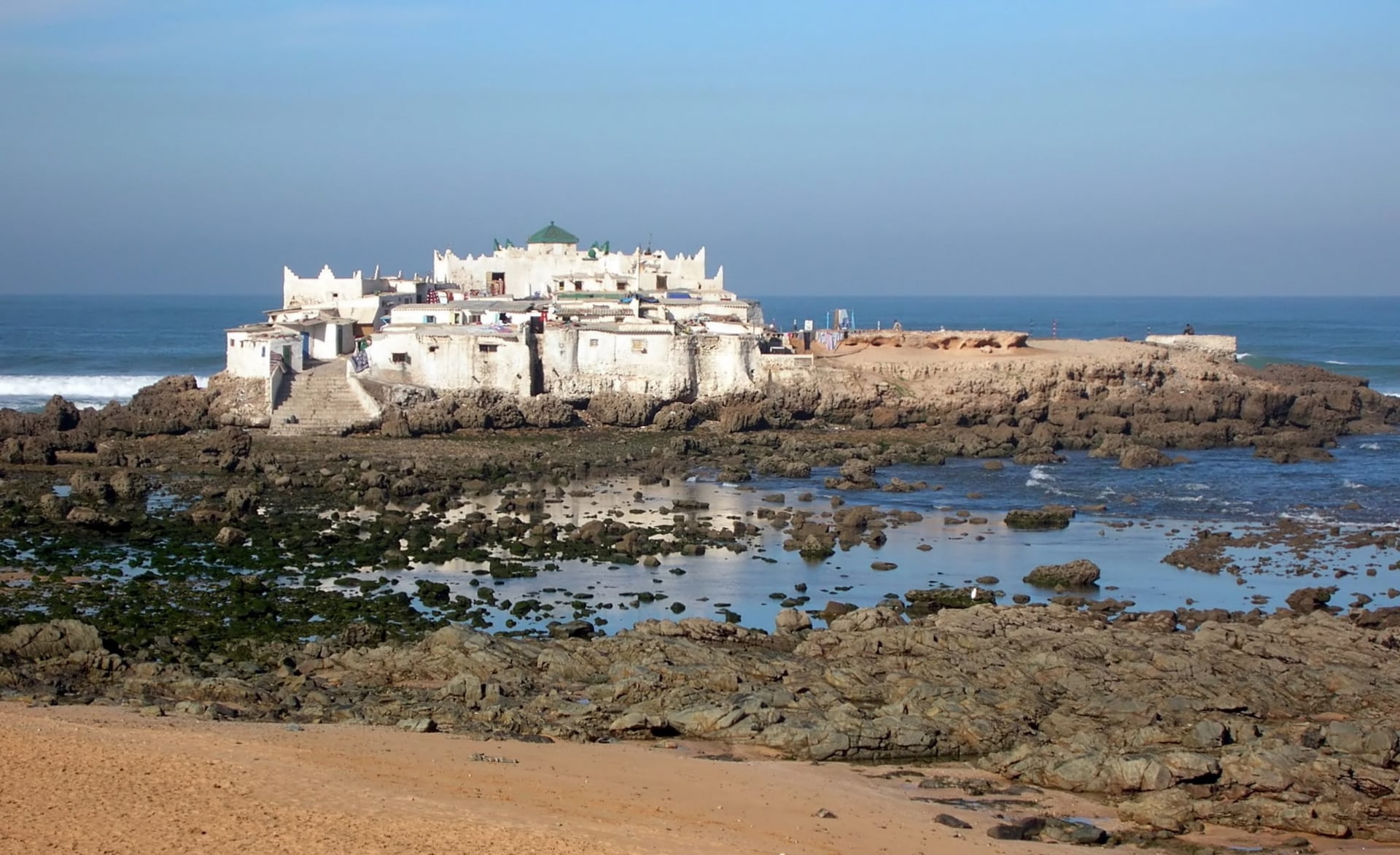
At the southern end, Casablanca is Morocco's largest city and its economic heart, turned full-face to the Atlantic. Just off the shore the little whitewashed shrine of Sidi Abderrahmane sits on a rock you can walk out to at low tide — a scrap of the old coast the modern city grew around. From Casa-Voyageurs you can carry straight on to Marrakech.Timetables
Al Boraq runs roughly every hour in each direction, from about 06:00 to 21:00, so it works almost like a turn-up-and-go service between the two coasts. The first train leaves around 06:00; the last departure from Casablanca is about 21:00, reaching Tangier around 23:17.
The fastest trains cover Tangier to Casablanca in about 2 hours 10 minutes. Intermediate times are roughly:
- Tangier – Kénitra: about 1 hour (the full high-speed section)
- Tangier – Rabat (Agdal): about 1 hour 20 minutes
- Tangier – Casablanca (Casa-Voyageurs): about 2 hours 10 minutes
Most services use Gare de Tanger Ville at the northern end and Casa-Voyageurs at the southern end, calling at Kénitra and Rabat Agdal; some also serve Rabat Ville and continue to Casa-Port.
Al Boraq is a reserved-seat service — every ticket is for a specific train, seat and class — so in the busy summer season and around Moroccan holidays it is worth booking a day or two ahead. To carry on to Marrakech, change at Casa-Voyageurs onto an Al Atlas intercity train.
Frequency and first/last as of the 2026 timetable. Confirm current times and fares with the operator — see the Tickets section below.
Tickets
Al Boraq is run by ONCF (Office National des Chemins de Fer), Morocco's national railway, and tickets are straightforward to buy:
- Online, at ONCF's booking site oncf-voyages.ma (opens in a new tab), with an English option and e-tickets you can show on your phone.
- At the station, from the ticket windows or machines at Tanger Ville, Casa-Voyageurs and the other stops.
- Through a booking agent, several of which resell ONCF tickets in English with a small mark-up.
There are two classes — first (première) and second (deuxième) — and both are comfortable; first gives you wider seats and a quieter car, while second is very good value. Fares are modest for a high-speed trip and rise a little at busy times, and because every ticket is tied to a specific train and seat, booking ahead in summer is wise.
We don't quote a figure here, as fares and schedules change — follow the links in the ticket cards above for current prices straight from ONCF. If you're heading on to Marrakech, you can often book the whole journey (Al Boraq to Casablanca, then the Al Atlas train onward) in a single transaction on the same site.
Book your tickets
Al Boraq · Tangier to Casablanca
First & second class, the high-speed train
Africa's first high-speed service, from Tangier to Casablanca via Rabat in about two hours ten, in first or second class aboard a double-deck Alstom TGV. Booked with ONCF, Morocco's national railway, online or at the station.
Book Tickets (opens in a new tab, on ONCF)via ONCFOnward to Marrakech
Al Atlas connection from Casablanca
Al Boraq gets you to Casablanca; from Casa-Voyageurs, ONCF's Al Atlas intercity trains carry on south to Marrakech in about three hours — the classic run down to the Red City. One operator, one ticketing site.
Book Tickets (opens in a new tab, on ONCF)via ONCFRail Passes
No rail pass covers Al Boraq. Interrail and Eurail are European schemes, and Morocco is not among the 33 countries in Interrail's list of covered railway companies (opens in a new tab). ONCF sells each journey as a ticket, online, at the station or through agents.
Checked October 2026 against Interrail's list of covered railway companies (opens in a new tab).
Places to Visit
Al Boraq strings together three of Morocco's great cities, and the beauty of the train is that you can stop off at each.
Tangier, at the northern end, sits where the Mediterranean meets the Atlantic, looking across the Strait of Gibraltar to Spain. Its whitewashed medina tumbles down to the port; the Kasbah at the top holds a fine museum in a former sultan's palace; and the Cap Spartel lighthouse and the Caves of Hercules are a short trip along the coast. Long a haunt of writers and painters — Matisse, Bowles, Burroughs — Tangier has a faded, cosmopolitan air all its own.
Rabat, the mid-route capital, is one of Morocco's most elegant and least hectic cities. The great red-stone Hassan Tower, begun in the 12th century and never finished, stands above the Mausoleum of Mohammed V; the Kasbah of the Udayas, a blue-and-white walled quarter, overlooks the mouth of the Bou Regreg river; and the Chellah, a Roman-then-medieval necropolis, sits among gardens on the edge of town. Rabat's old city and modern capital together are a UNESCO World Heritage Site.
Casablanca, at the southern end, is Morocco's largest city and its commercial engine — and the site of the colossal Hassan II Mosque, one of the largest in the world, whose 210-metre minaret rises straight out of the Atlantic. The Art Deco and Mauresque architecture of the old French ville nouvelle, the Old Medina, and the seafront Corniche round out a day in the city that Bogart made famous.
From Casablanca, the train carries on south — an easy connection to Marrakech and the gateway to the High Atlas.
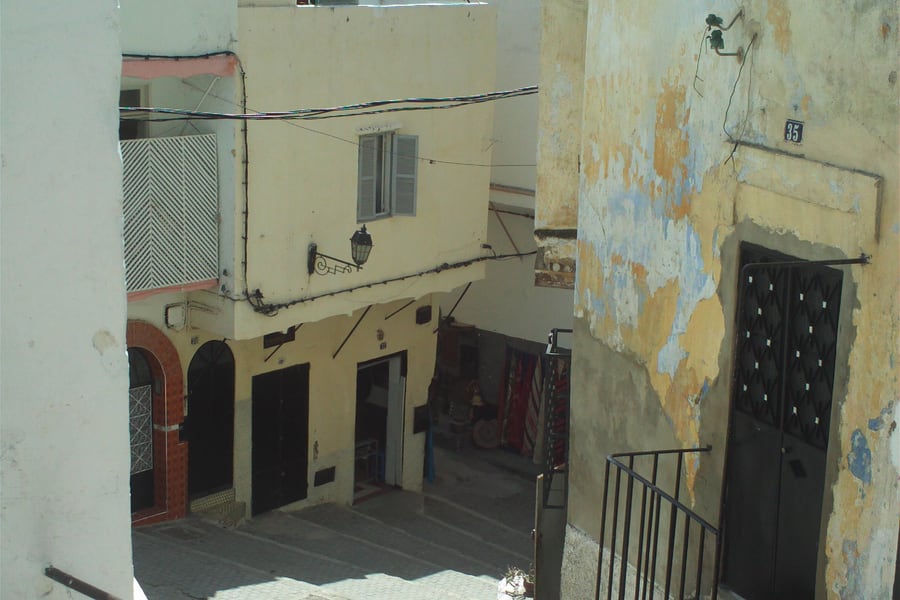 Ypsilon from Finland / Wikimedia Commons · CC0 · cropped
Tangier's medina
The old town falls in steps from the Kasbah down to the port, a warren of whitewashed lanes on the corner where the Mediterranean meets the Atlantic. Tangier spent decades as an international zone, administered jointly by the colonial powers from 1923, and that odd, half-governed status is what drew the diplomats, spies and writers the city is still known for. Matisse painted here; Bowles stayed for good.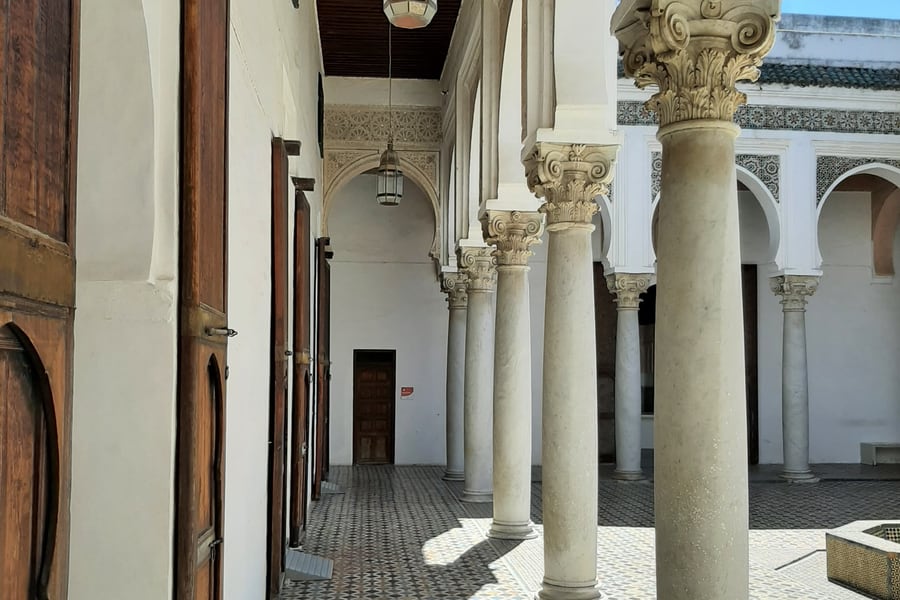 Ismael zniber / Wikimedia Commons · CC BY 4.0 · cropped
The Kasbah museum
At the highest point of the old town, the sultan's former palace now holds Tangier's archaeological collection — and the building is the real exhibit. A courtyard runs on marble columns, under carved cedar and painted ceilings, with floors of zellij tilework laid around a cool central garden. It is a few paces inside the Kasbah gate, and after the lanes below it is almost always quiet.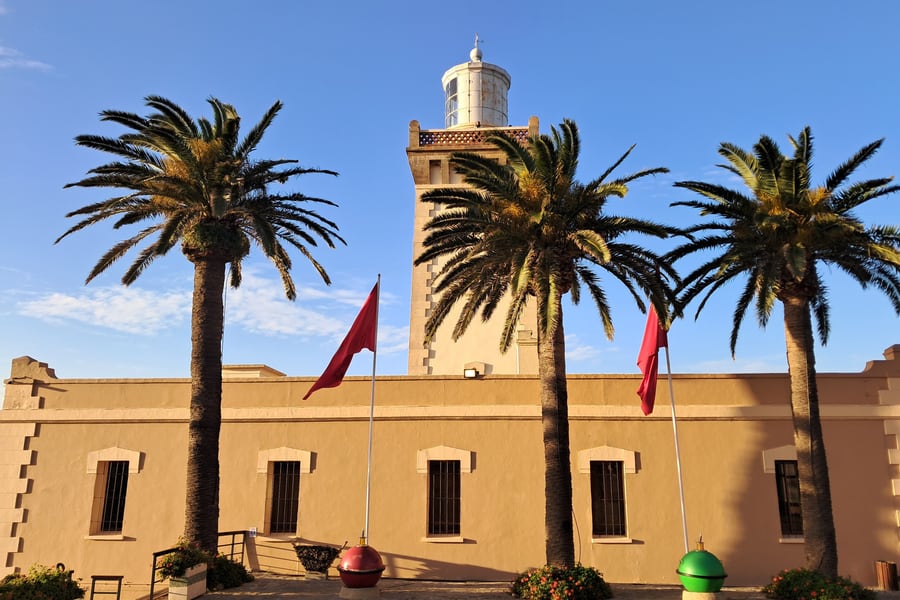 Ideophagous / Wikimedia Commons · CC BY-SA 4.0 · cropped
Cap Spartel
The headland west of the city is the northwesternmost point of the African continent, standing about 300 metres above the water at the Atlantic mouth of the Strait of Gibraltar. Its lighthouse is one of the largest in Africa, and on a clear day Spain is a low grey line across the strait. Most trips out here pair the cape with the caves in the cliff directly below it.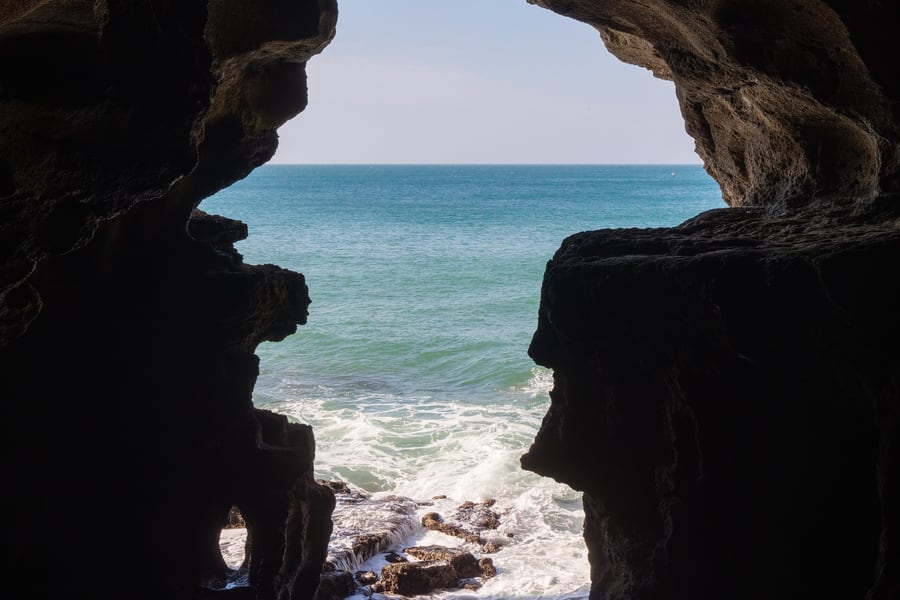 Diego Delso, delso.photo, License CC BY-SA · Wikimedia Commons · cropped
The Caves of Hercules
Sea caves opening straight onto the Atlantic underneath Cap Spartel. The draw is the seaward mouth — a ragged gap in the rock that frames the ocean like a window, with surf breaking through it and the sound filling the whole chamber. Go when the tide is up. It is a short drive from the lighthouse, and the two together make an easy half-day out of Tangier before the train south.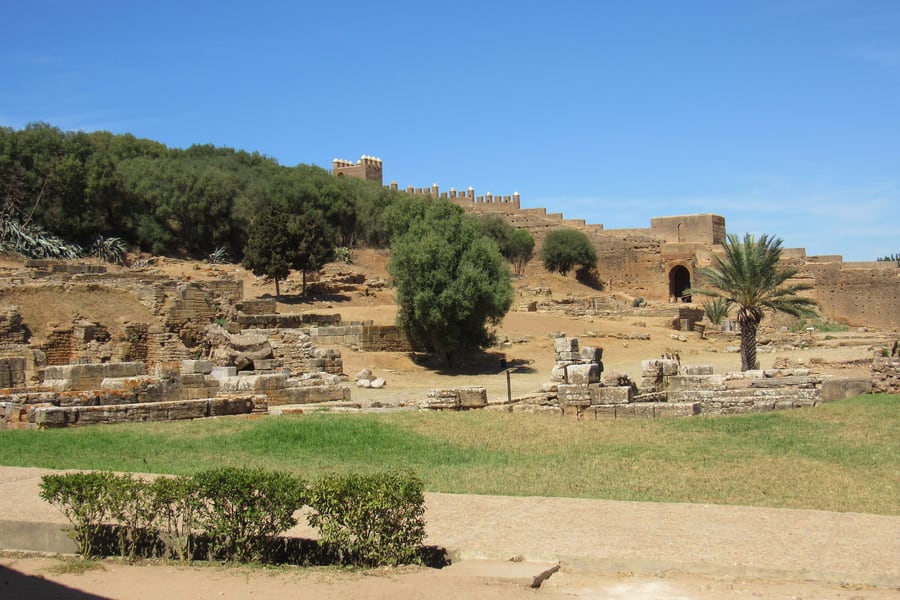 Rob Dozier / Wikimedia Commons · CC BY 2.0 · cropped
The Chellah
A walled necropolis on the edge of the capital with an unusually deep past. Phoenician traders had an outpost here in the first millennium BC; the Romans built the town of Sala Colonia on the same ground; and from the late thirteenth century the Marinid sultans turned it into a dynastic burial place, enclosing part of it with the walls that still stand. Roman foundations and Marinid tombs now share one set of gardens.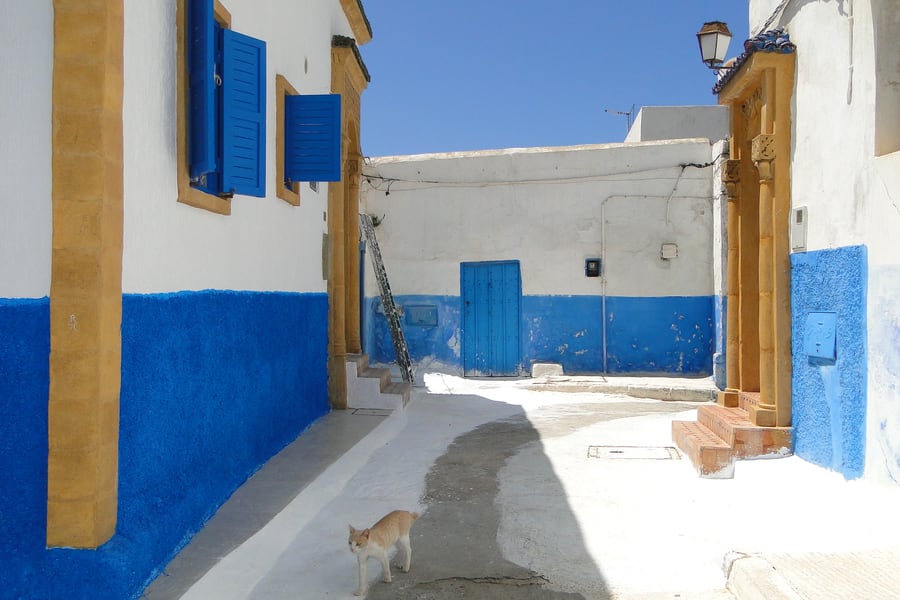 Adam Jones, Ph.D. / Wikimedia Commons · CC BY-SA 3.0 · cropped
The Kasbah of the Udayas
The old citadel above the mouth of the Bou Regreg, part of Rabat's UNESCO World Heritage listing. Inside the walls it is less a monument than a small quarter of lanes washed blue to shoulder height and white above, where there is nothing to do but walk them. There is an Andalusian garden at the far end and a terrace café looking across the river to Salé.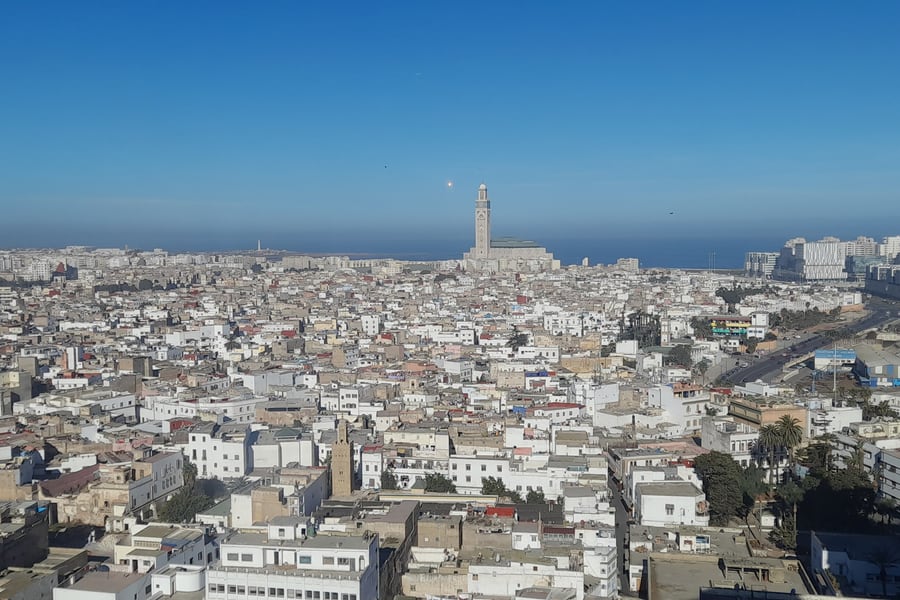 Azizonn / Wikimedia Commons · CC BY-SA 4.0 · cropped
Casablanca's old medina
Wedged between the port and the French ville nouvelle, the old medina is the oldest corner of a city that is otherwise relentlessly modern — Casablanca works one of the largest artificial ports in Africa. Come up to the edge of it for the city's real skyline: flat white roofs running down to the Atlantic, with the minaret of the Hassan II Mosque standing at the far end of them.Where to Sleep
Because Al Boraq is so fast, you can treat any of its three cities as a base and hop between them — but each is worth a night, and where you stay is really a question of which Morocco you want to wake up in.
In Tangier, the atmospheric choice is a room in or above the medina, looking out over the port and the Strait to the lights of Spain. The legendary El Minzah, a 1930s grande dame, and the boutique riads tucked into the old town both put you within walking distance of the kasbah; the modern hotels along the bay offer sea views and easy access to Tanger Ville station.
In Rabat, the quiet capital, you can stay among the palm avenues of the ville nouvelle or in a restored riad in the medina, a short taxi ride from Rabat Agdal and Rabat Ville stations. It is a calmer, more residential city than Casablanca or Marrakech — a pleasant place to break the journey.
In Casablanca, the classic setting is the Art Deco heart of the city or the seafront Corniche near the Hassan II Mosque, with the Atlantic on your doorstep. Casa-Voyageurs and Casa-Port stations are both central, so an early Al Boraq or a late arrival is never far from your bed.
Wherever you choose, all three stations sit in the middle of their cities, and the train between them is quick enough that a change of hotel need never cost you more than a couple of hours. We keep this guide to the lie of the land rather than specific bookings — pick the city and the setting first, and the right room usually follows.
Questions or corrections
Planning this trip and stuck on something, or spotted a time, fare or detail that has changed? Send us a message about Al Boraq — Tangier to Casablanca. We read every one, and we update this page when something has changed.