The Alderney Railway
Richardh1976 / Wikimedia Commons · CC BY-SA 4.0
- DistanceAbout 2 miles (3.2 km) · standard gauge
- DurationAn afternoon return trip · trains at 14:00 and 15:30
- Best seasonMay to September · Saturdays, and Sundays from mid-June
Introduction
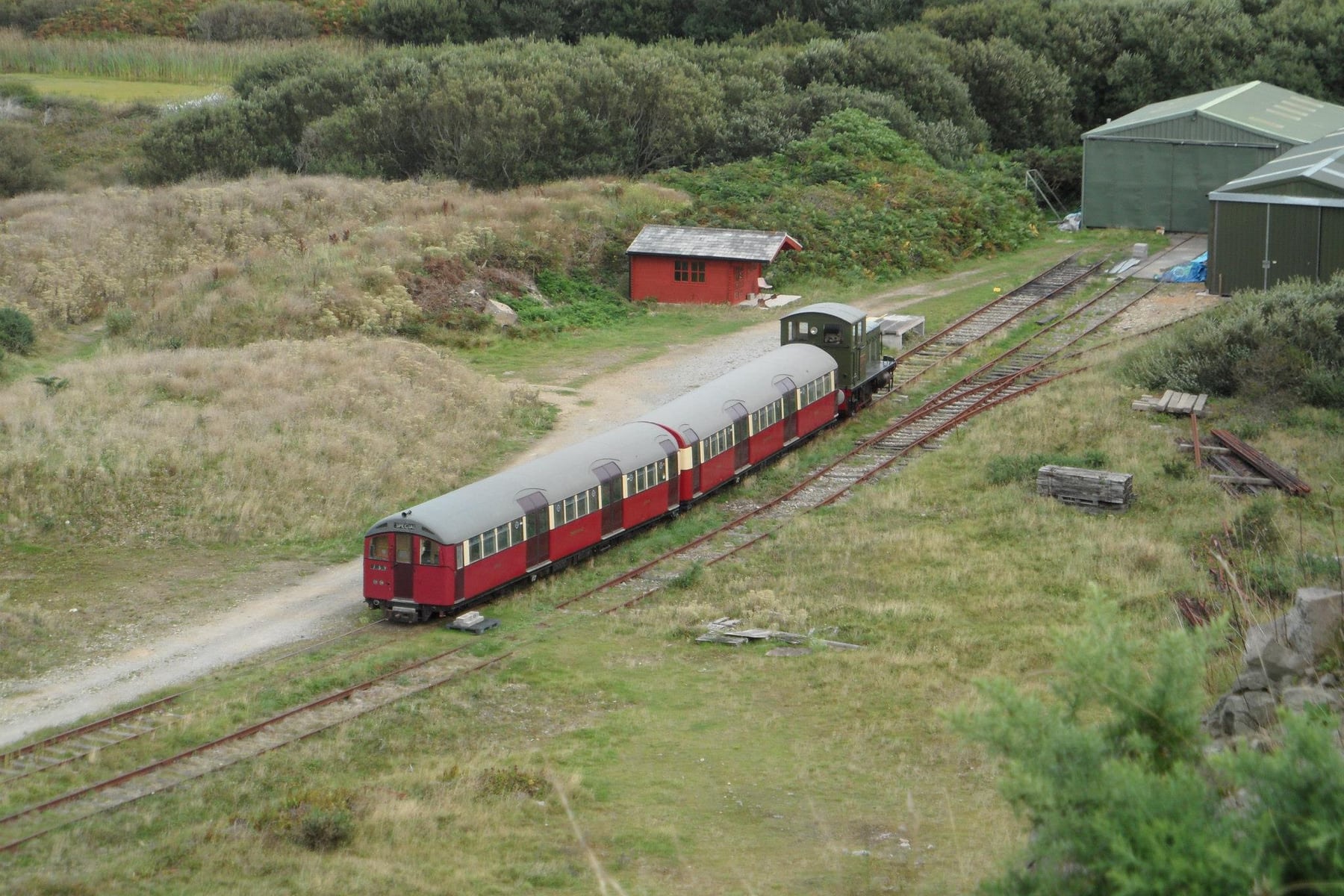
The Alderney Railway runs for about two miles along the north-east coast of Alderney, from Braye Road, near the harbour, to Mannez Quarry at the eastern tip of the island, below the lighthouse. It is the only working railway in the Channel Islands. The line opened in 1847, built by the government to carry stone from the quarries in the east to the great breakwater that shelters Braye, and it went on carrying stone for well over a century.
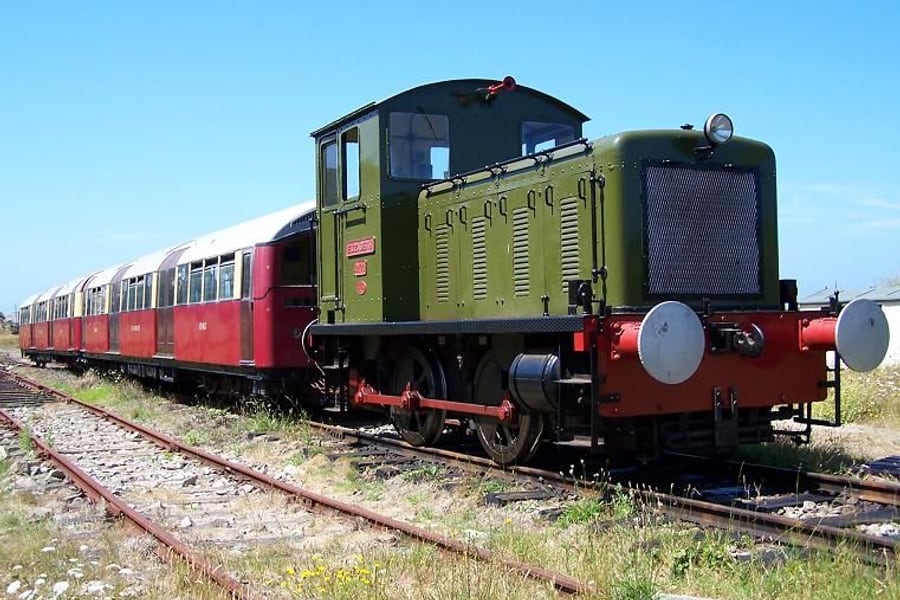
The passenger train is the surprise. A diesel locomotive called Elizabeth, built in 1949, hauls two cars of London Underground 1959 Tube Stock, numbered 1044 and 1045. Built for the tunnels under London, they now run past sand dunes, Victorian forts and the open sea.
Volunteers have run the trains since 1980, on summer weekend afternoons. Alderney is a Crown Dependency in the Bailiwick of Guernsey, not part of the United Kingdom. Aurigny flies to the island from Southampton and Guernsey, and a passenger ferry crosses daily from Guernsey.
The Journey
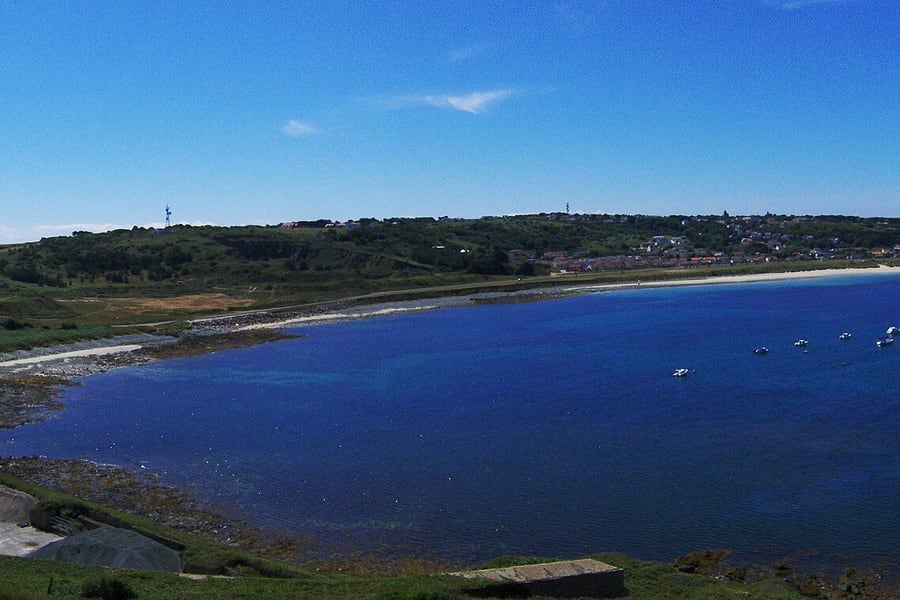
Trains leave from Braye Road station, at Braye. Past School Crossing the line starts a gentle, curving climb, then straightens out by the builder's merchant. At Battery Crossing the view opens up: the island's reservoir on one side and, on the other, Braye Bay and the long grey line of the breakwater, with Fort Albert standing over it.
Beyond the fort the line climbs harder, at 1 in 70 at its steepest, to Whitegates, the highest point of the railway at just over 70 feet. Essex Castle stands on the hill to the right, above Longis Bay, and on a clear day the French coast shows across the water: Cap de la Hague and Flamanville. The line then runs straight above Corblets Bay, past Fort Corblets and a flooded quarry stocked for anglers, and into Mannez Quarry, where the rails end among the sheds. The lighthouse and the bird hide on Longis Pond are a short walk away.
The train
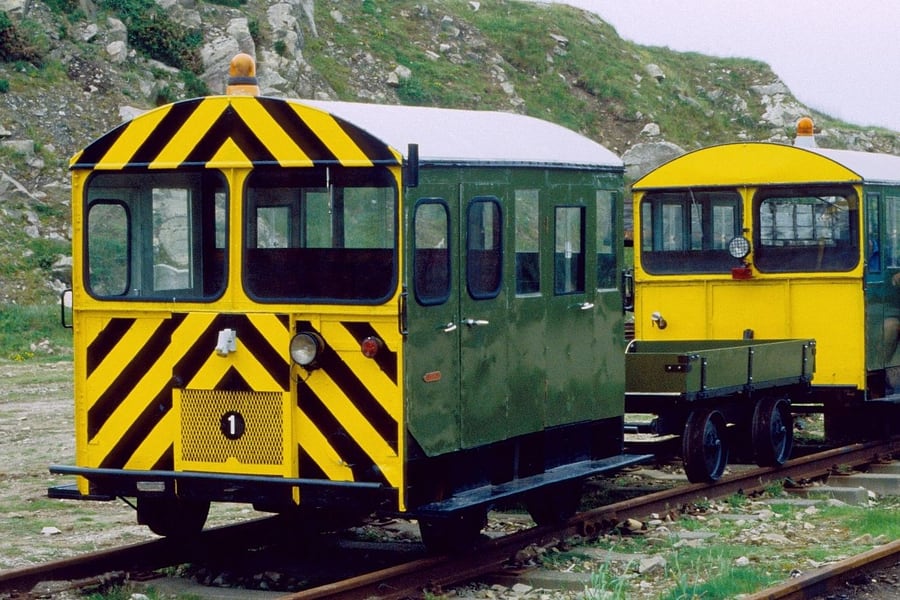
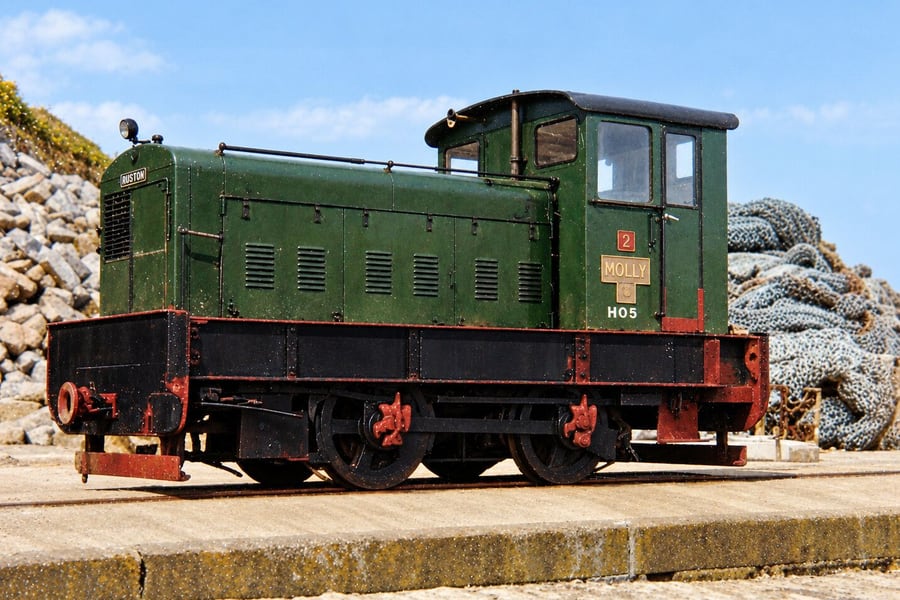
Two cars of London Underground 1959 Tube Stock, numbered 1044 and 1045, make up the passenger train, hauled by Elizabeth, a diesel built in 1949 and bought by the railway in 1985. The line's other vehicles are Wickham railcars of the 1950s, which run inside Mannez Quarry on some special days, and Molly 2, a diesel of 1958. The railway also runs a miniature railway, at £1 a ride.
Stone for the breakwater
The government built the line to carry stone to the breakwater at Braye, which reached 1,425 metres and protected a harbour meant for the Navy. In the winter of 1911–12 a train ran off the end of it into the sea; the crew were unhurt, and the engine was fished out and repaired. The Rev. W. Awdry heard the story and used it in one of his railway books.
Along the route
 Grandtubetrains / Wikimedia Commons · CC0
Braye Road station
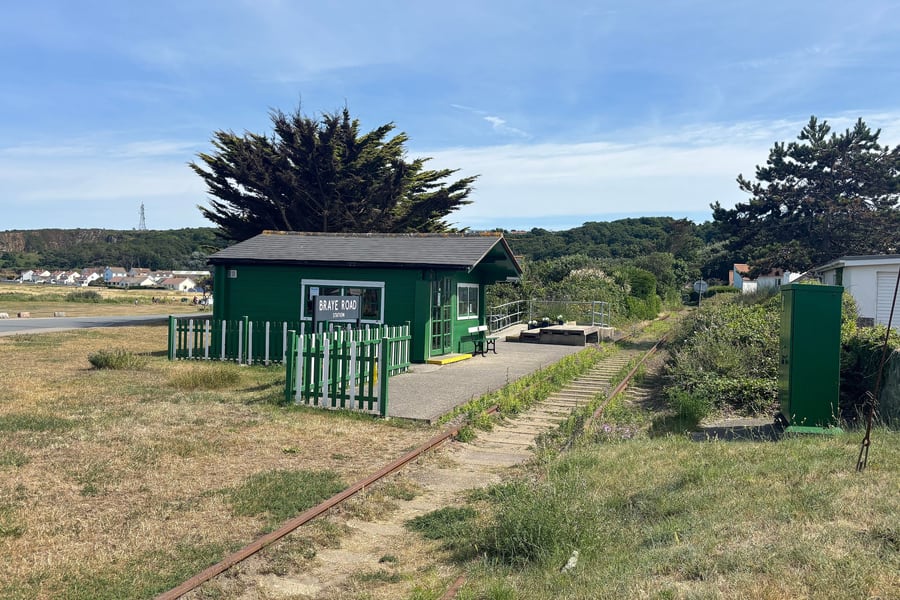
Trains leave from Braye Road, a small green station building near the harbour, rebuilt in 2008. The ticket office opens half an hour before the first train.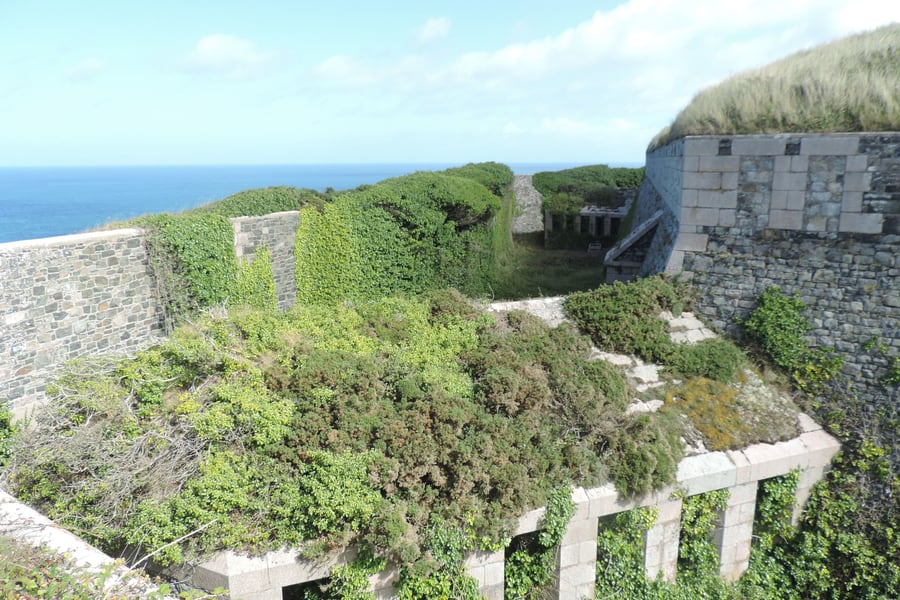 Daniel Kraft / Wikimedia Commons · CC BY-SA 3.0
Past Fort Albert
At Battery Crossing the view opens over Braye Bay and the breakwater. Above it stands Fort Albert, the main fort of the 1850s, its walls now overgrown.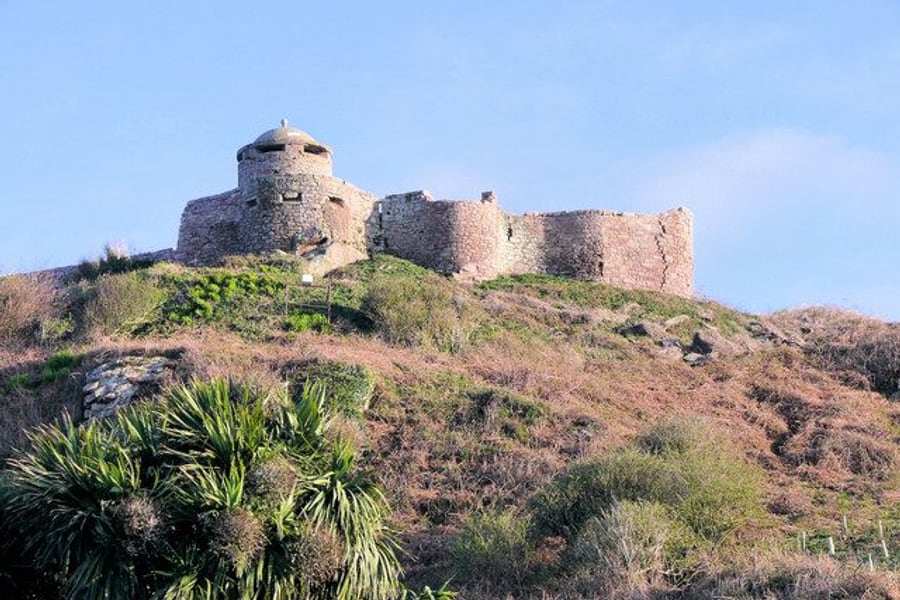 Peter / Geograph Channel Islands · CC BY-SA 2.0
Whitegates
After a climb of 1 in 70 the line reaches Whitegates, its highest point at just over 70 feet. Essex Castle, begun in the 1500s, stands above Longis Bay, and on a clear day the French coast shows beyond it.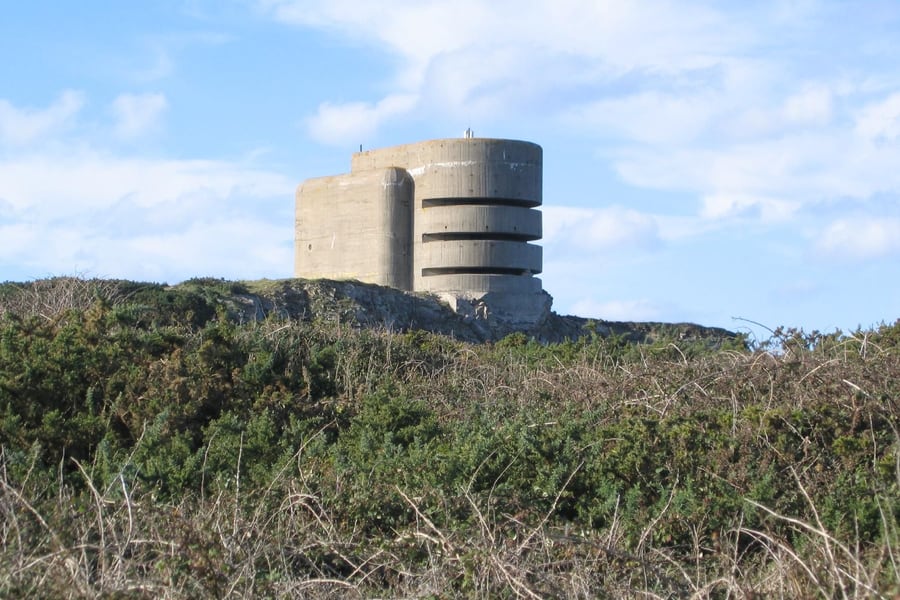 TimBrighton / Wikimedia Commons · CC BY-SA 2.0
Mannez Quarry
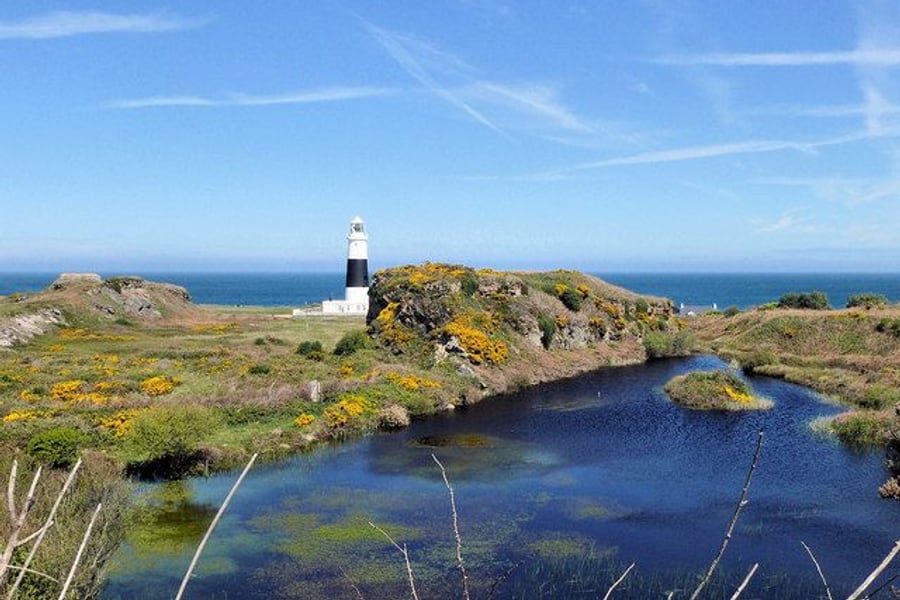
The line ends among the rail sheds in the old quarry, below a German observation tower of the Second World War that islanders call the Odeon. The lighthouse is a short walk away.A bit of history
Culture & experiences along the way
 Apeto / Wikimedia Commons · CC BY 3.0
The breakwater
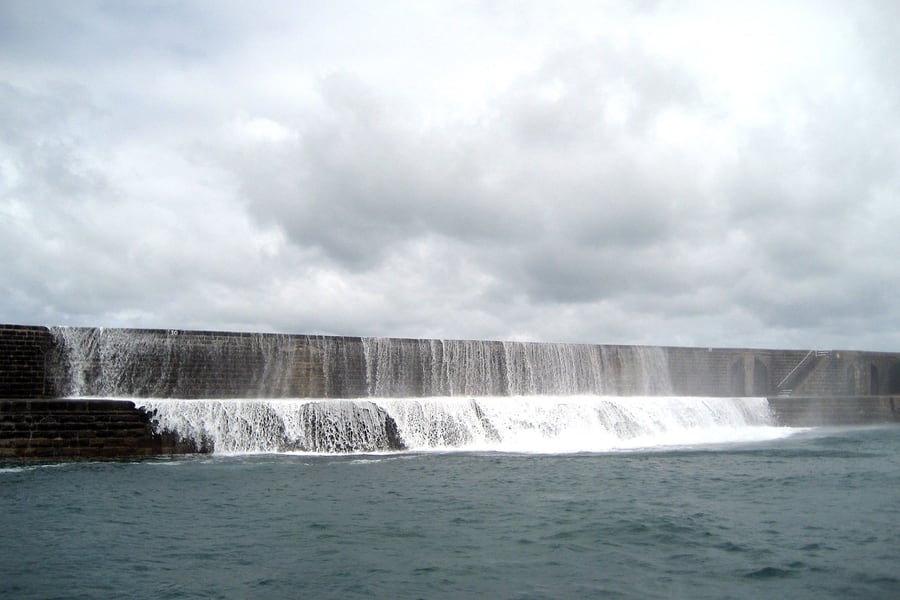
The railway was built to carry stone from the eastern quarries to the breakwater at Braye, begun in 1847. It once ran out for 1,425 metres; today 869 metres stand. In rough weather the sea still pours over it, and repairing it kept the line busy for 130 years.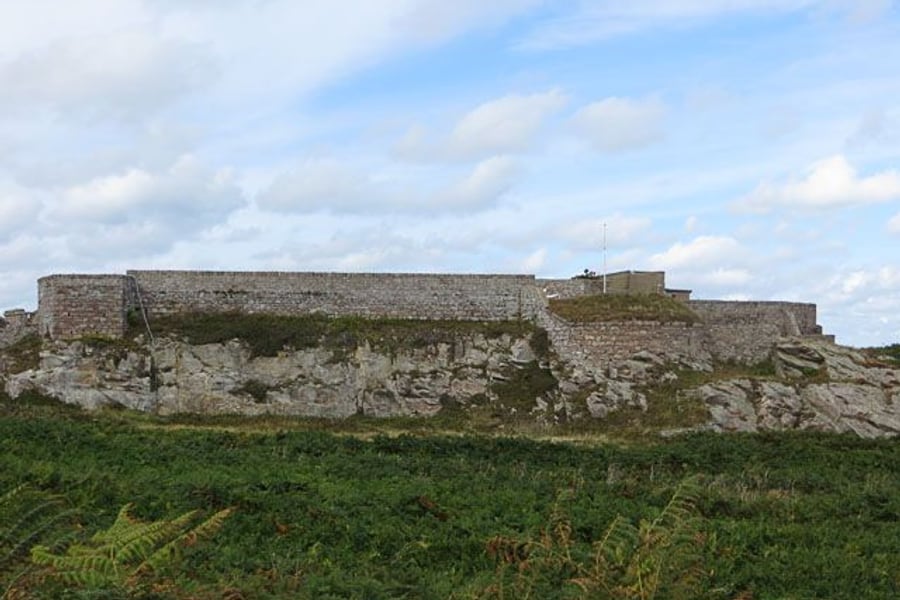 John Rostron / Geograph Channel Islands · CC BY-SA 2.0
A ring of forts
The breakwater was meant to shelter a naval harbour facing France, and in the 1850s forts went up all round the coast to protect it. The train passes Fort Albert and Fort Corblets, and Fort Clonque stands on its rock at the far west of the island.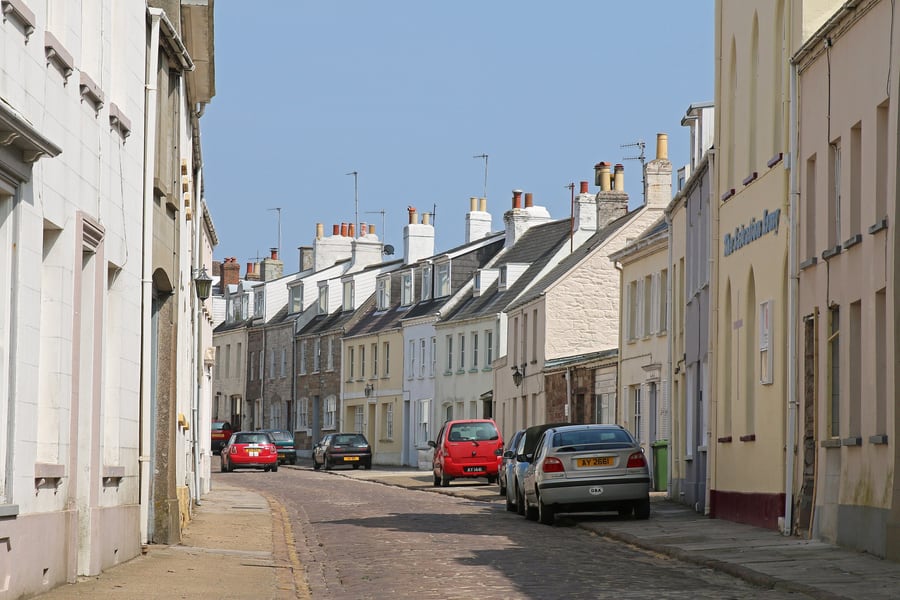 Christof46 / Wikimedia Commons · CC BY-SA 4.0
The royal ride
In 1854 Queen Victoria and Prince Albert became the railway's first passengers, riding in a horse-drawn tender. The island renamed its main street in St Anne for the visit: Rue Grosnez became Victoria Street, and the cobbles are still there.Timetables
The railway runs on summer weekend afternoons. In 2027 trains run every Saturday from 1 May to 25 September, and every Sunday from 13 June to 26 September except 4 July. Each running day has two departures from Braye Road, and each train goes out to Mannez Quarry and back:
| Departs Braye Road | Days |
|---|---|
| 14:00 | Every running day |
| 15:30 | Every running day except Sunday 1 August, Sunday 8 August and Sunday 5 September, when only the 14:00 runs |
Good to know:
- Specials. The Easter Chicken Run on Sunday 28 March 2027 leaves at 14:00 and 15:30. During Alderney Week a train runs on Wednesday 4 August at 12:00 and 13:30. The Santa Special runs on 18 and 19 December at 13:00 and 14:30.
- This winter. The 2026 Santa Special runs on Sunday 20 December, at 12:30 and 14:00 from Braye Road, and the 2027 calendar opens with a single train at 14:00 on Saturday 2 January.
- Tickets on the day. The ticket office at Braye Road opens at 13:30, half an hour before the first train.
Times as of November 2026, from the operator's 2027 timetable. Check the calendar on alderneyrailway.gg (opens in a new tab) before you travel; the line is run by volunteers.
Tickets
Tickets are sold at Braye Road station on the day; there is nothing to book in advance for an ordinary train. An adult return to Mannez Quarry costs £12 and a single £6. Children aged 3 to 16 pay half, £6 return and £3 single, and children under 3 travel free. A ride on the miniature railway costs £1.
For the Santa Special, tickets are also sold in advance at Cycle & Surf in St Anne. Fares checked November 2026 on alderneyrailway.gg (opens in a new tab); pounds sterling, one adult.
Book your tickets
Braye Road to Mannez Quarry, return
Adult · bought at the station on the day
There and back on the same train, paid for at Braye Road before you leave.
Book Tickets (opens in a new tab, on alderneyrailway.gg)via alderneyrailway.ggSingle journey
Adult · either direction
One way along the line, for walkers who want to come back on foot.
Book Tickets (opens in a new tab, on alderneyrailway.gg)via alderneyrailway.ggRail Passes
No rail pass is valid on the Alderney Railway. Interrail's table of railway companies lists no operator in the Channel Islands, and BritRail's conditions exclude heritage and tourist railways, and ships, so neither the train nor the boat to the island is covered.
For this journey, buy a ticket at the station. A return costs £12, and a pass would not cover the flight or the ferry that gets you to Alderney either.
Checked November 2026 against interrail.com (opens in a new tab) and britrail.com (opens in a new tab).
Places to Visit
Alderney is three miles long, so everything on the island is within reach of the train. St Anne, the only town, stands on the hill above Braye, the harbour and the beach lie at the start of the line, and the lighthouse and Longis Bay are close to the end of it.
 Peter / Geograph Channel Islands · CC BY-SA 2.0
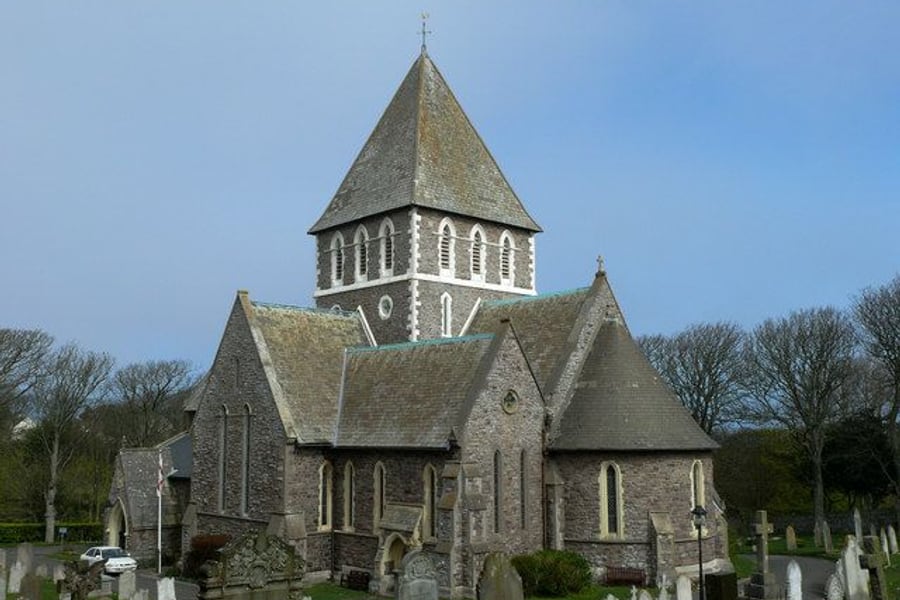
St Anne's Church
The island's parish has been dedicated to St Anne since the late 1580s, when a chapel of St Anne replaced a ruined older church at the foot of the main street. The church that stands in the town today was renovated in 1850, and again after the Second World War.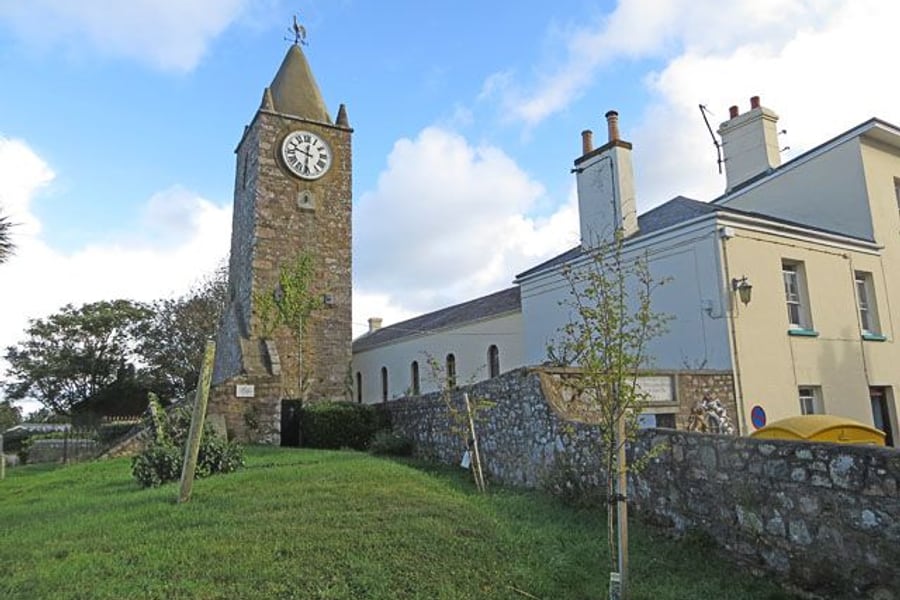 John Rostron / Geograph Channel Islands · CC BY-SA 2.0
The Alderney Society Museum
The island's museum fills the Old School House on the High Street, a school founded in 1790 by the governor Jean Le Mesurier. The Alderney Society opened it in 1966. Its rooms trace the island from the Stone Age to the present, with its maps, its garrisons and finds from an Elizabethan shipwreck. The old clock tower stands at the gate.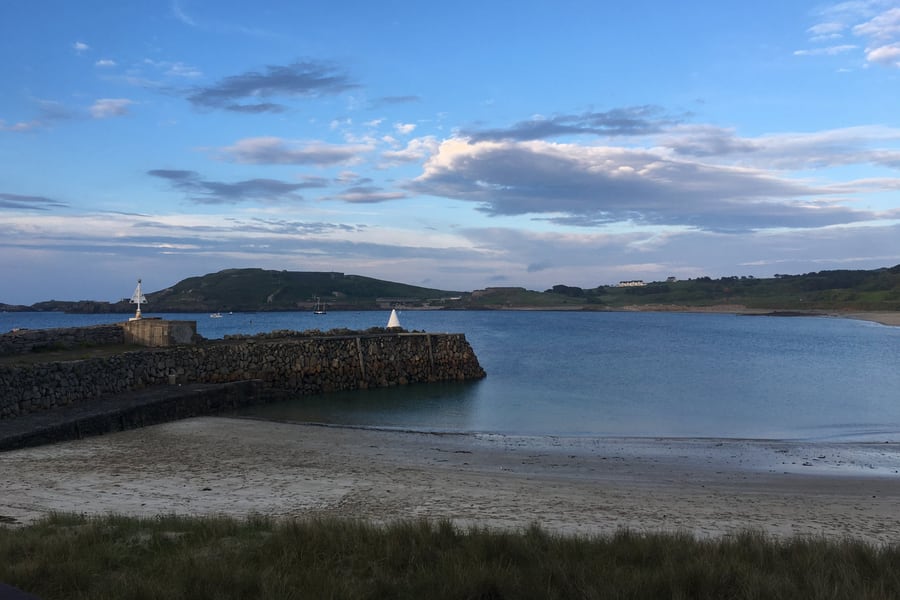 David Jones / Flickr · CC BY 2.0
Braye Bay
The harbour at Braye is where the boats from Guernsey and France come in and where the island's freight is landed. Beside it the sands of Braye curve round the bay, sheltered from the open sea by the breakwater that the railway was built to supply.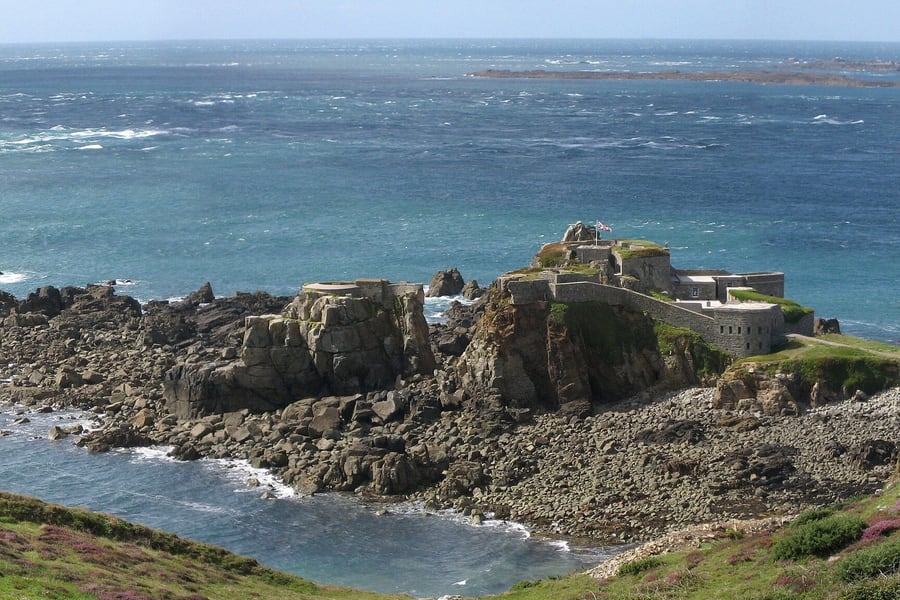 Andree Stephan / Wikimedia Commons · CC BY 3.0
Fort Clonque
Built between 1853 and 1855 to guard the west of the island, the fort stands on a rocky islet joined to the shore by a causeway that disappears at high tide. The Germans re-armed it during the occupation. The Landmark Trust bought it in 1966, and it is now let as holiday accommodation.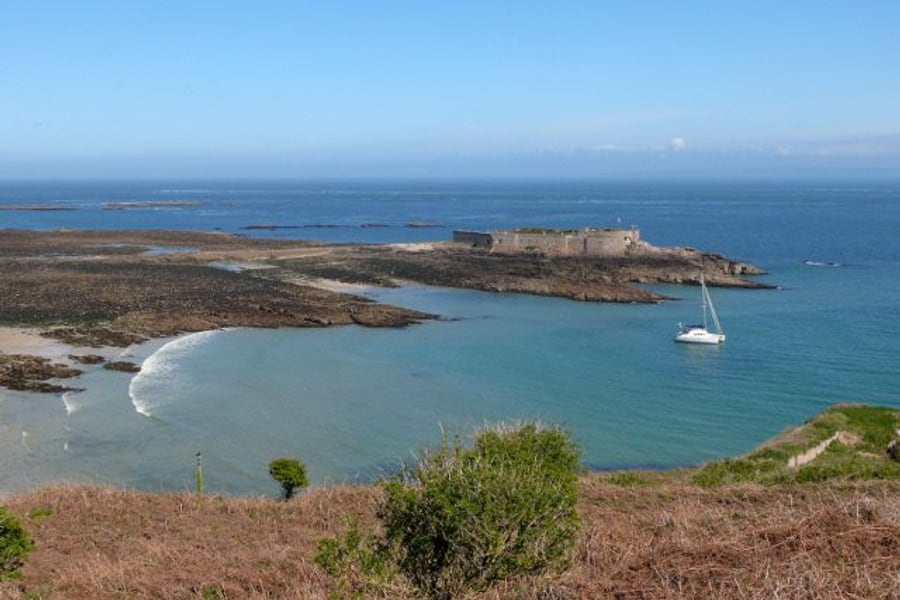 Peter / Geograph Channel Islands · CC BY-SA 2.0
Longis Bay
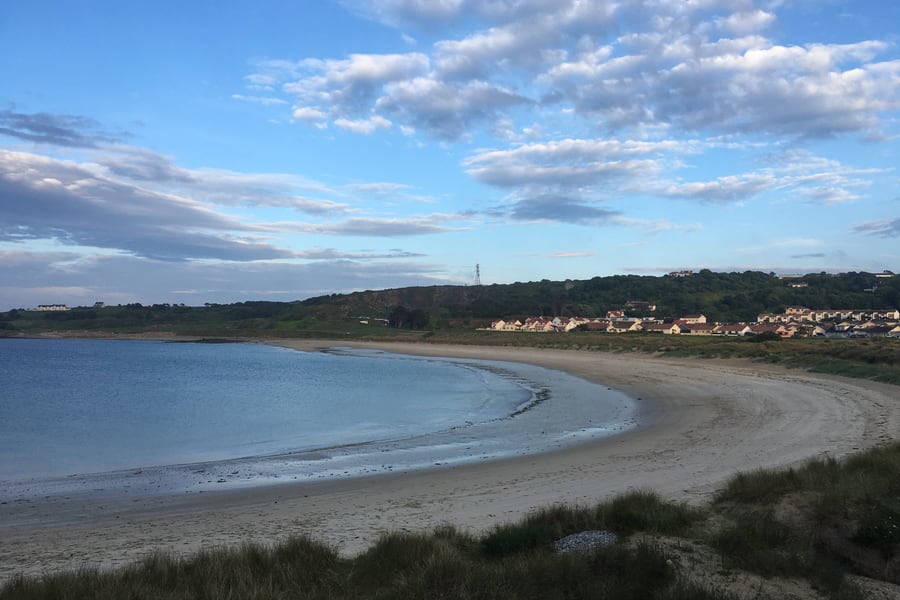
The sandy bay below Essex Castle was the island's harbour long before Braye: Governor Henry Le Mesurier built one here at his own cost in 1736, and storms swept it away. Today it is a quiet sandy bay.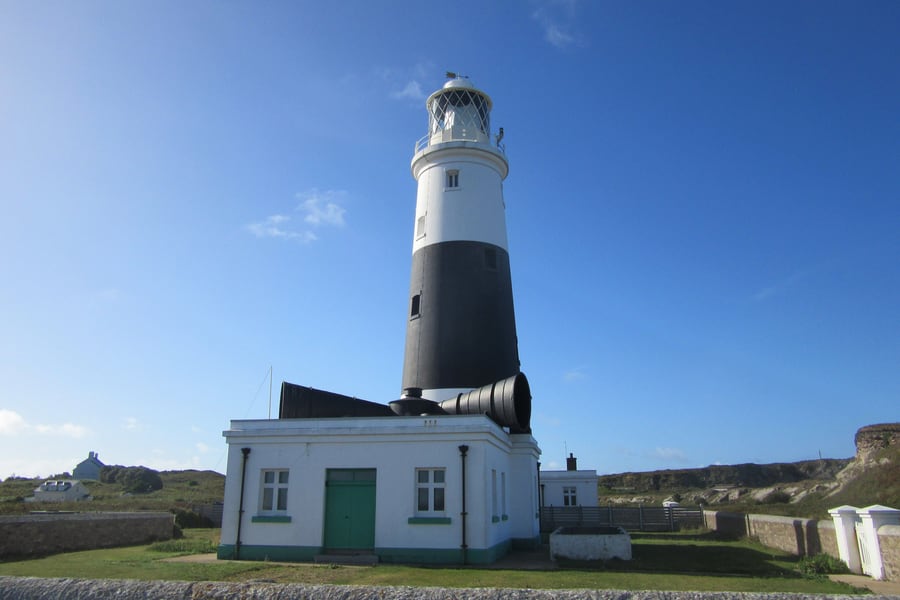 Daniel Kraft / Wikimedia Commons · CC BY-SA 3.0
Alderney Lighthouse
Banded black and white, the lighthouse at Mannez was built of granite in 1912 to warn ships off the rocks and the fierce current of the Alderney Race. Its last keeper left when it was automated in 1997, and since 2011 it has shown a smaller light, at night only.Where to Sleep
Braye, by the harbour and the beach, puts you close to the station; St Anne, up the hill, has hotels and restaurants too. Fort Clonque, on its tidal islet, is let as holiday accommodation by the Landmark Trust.
Where to stay
 David Jones / Flickr · CC BY 2.0
Braye Beach Hotel
Braye · on the beach by the harbour
A hotel on the edge of the sands at Braye, with rooms that look out over the beach and the bay.
Check Availability (opens in a new tab, on handpickedhotels.co.uk)via handpickedhotels.co.ukQuestions or corrections
Planning this trip and stuck on something, or spotted a time, fare or detail that has changed? Send us a message about The Alderney Railway. We read every one, and we update this page when something has changed.