Algiers to Constantine
Bouizriphotography / Wikimedia Commons · CC BY-SA 4.0 · 2017 · cropped
- DistanceAbout 460 km, Algiers Agha to Constantine
- Duration7 h 45 eastbound, 7 h 25 westbound, overnight
- Best seasonMay to August, when the evening light reaches the Kabylie · the train runs all year
Introduction
Algeria's second great main line runs east from the capital to Constantine, the city on a rock above the gorge of the Rhummel. It was finished in November 1886, after the hardest stretch — the gorges of the Isser and the defile of the Iron Gates — had held it up for years, and it is still the way east by rail: about 460 kilometres through the Kabylie, over the high plains of Sétif and down to Constantine.
One through train a night makes the trip, three times a week in each direction. It is SNTF's night express to Annaba, a loco-hauled train with first- and second-class seats and couchettes, which leaves Agha station in Algiers at 18:43 and reaches Constantine at 02:28. The return working leaves Constantine just before midnight and is in Algiers before seven in the morning.
So this is a night train in the plain sense, not a scenic day out: most of the line passes in the dark. What it gives you is a cheap, quiet way to cross the north-east of the country, with the evening light on the Isser gorges as you leave, and at the far end a city that is worth the awkward hour of arrival.
The Journey
The eastbound train starts at Agha, shares the busy double track with the suburban trains as far as El Harrach, and then runs along the eastern edge of the Mitidja to Thénia, the end of the wires and of the suburbs. From Thénia the line is single track, and it turns inland.
Into the Kabylie
The next stretch was the hardest to build. The railway climbs the valley of the Isser by Beni Amrane and Lakhdaria — the old Palestro — on metal viaducts and through the gorges, then crosses the open farmland of El Asnam and Bouira at the foot of the Djurdjura. Thénia to Lakhdaria opened in June 1885, and the gap between Draâ El Mizan and Bouira was the last to close, on 3 November 1886. Leaving at 18:43, the eastbound train is in the gorges around sunset in midsummer and in the dark the rest of the year.
The Iron Gates and the high plains
At Beni Mansour, where the branch down the Soummam valley to Béjaïa leaves, the line turns south-east into the Bibans and squeezes through the Portes de Fer — the Iron Gates — beside the road and the motorway. Beyond El Achir, where a 5.2-kilometre double-track tunnel opened in 2002, it comes out onto the high plains: Bordj Bou Arreridj at 22:46, then Sétif at 23:37. This is the fastest part of the line, with average speeds above 100 km/h, and between Bordj Bou Arreridj and Constantine the track has been doubled in stages since the mid-2000s.
Constantine
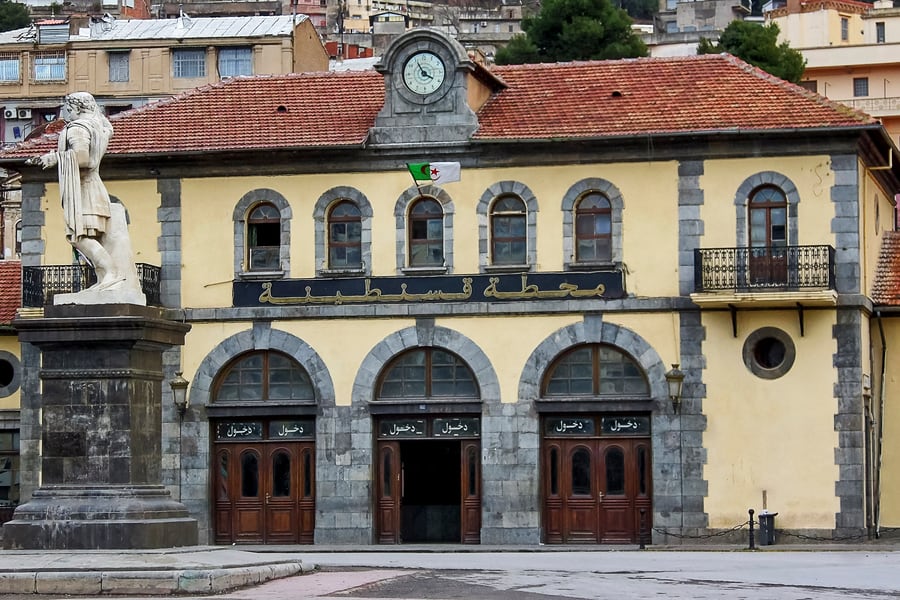
The last three hours cross the plateau east of Sétif to Constantine, reached at 02:28. The station stands on the far side of the Rhummel from the old town, joined to it by the Sidi Rached bridge. Constantine to Skikda, the line's first section, opened in September 1870; the train itself carries on to Annaba, three hours further east.
The train
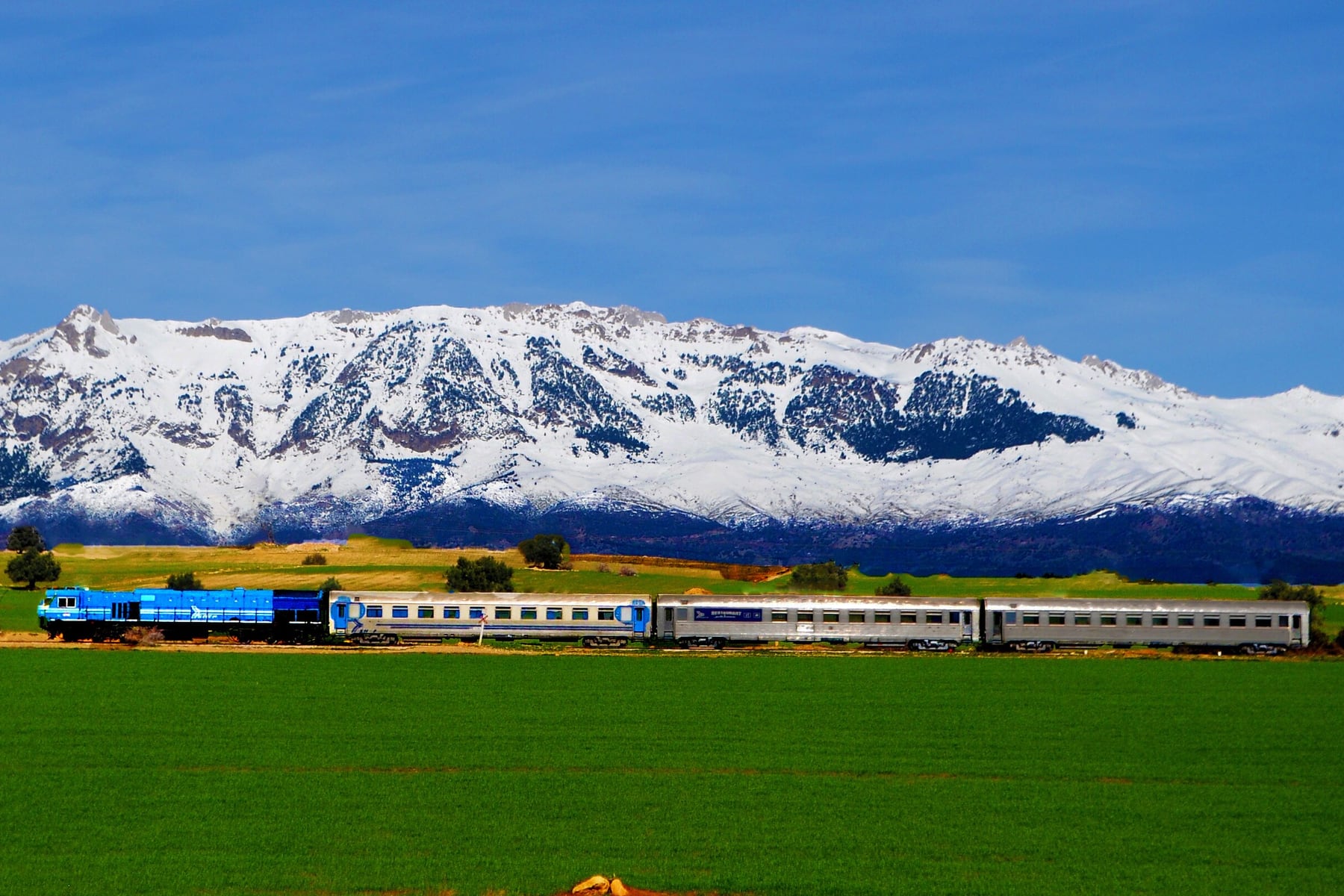
The service is a rapide de nuit, a loco-hauled night express of seats in both classes and couchettes. SNTF does not say which locomotives work it. The photograph at the top of this page shows the kind of train it is: a 060-DS diesel with a rake of stainless-steel coaches and a restaurant car, on the open line near El Asnam in February 2017.
Along the route
 habib kaki / Wikimedia Commons · CC BY 3.0 · cropped
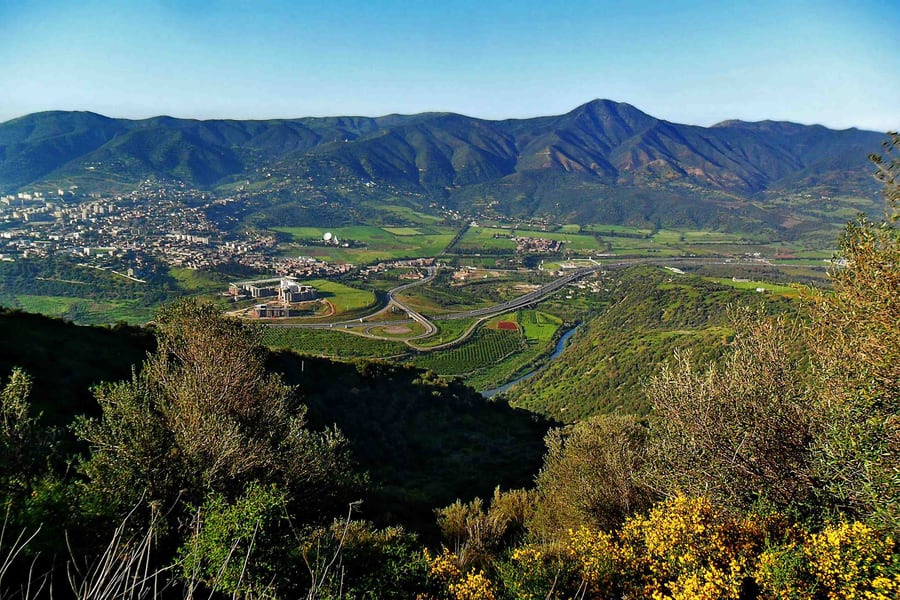
The Isser gorges
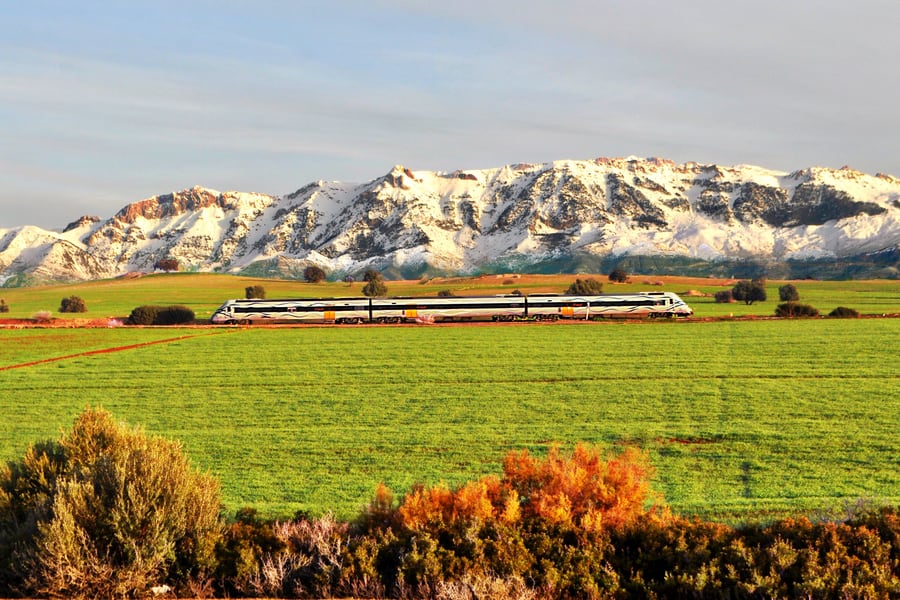
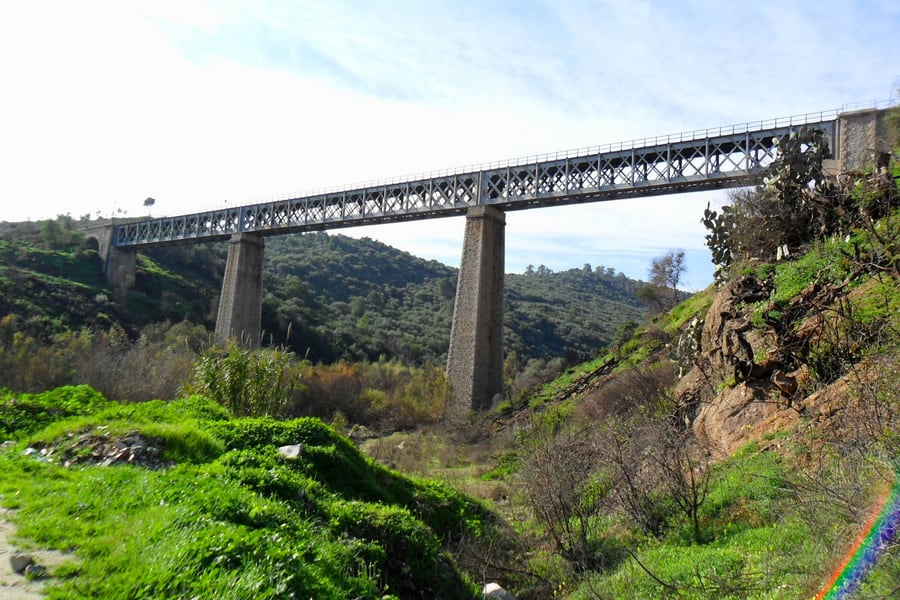
Past Thénia the line turns inland up the valley of the Isser by Beni Amrane and Lakhdaria, over high metal viaducts and through the gorges, the start of the hardest part of the line. In midsummer the eastbound train is here around sunset.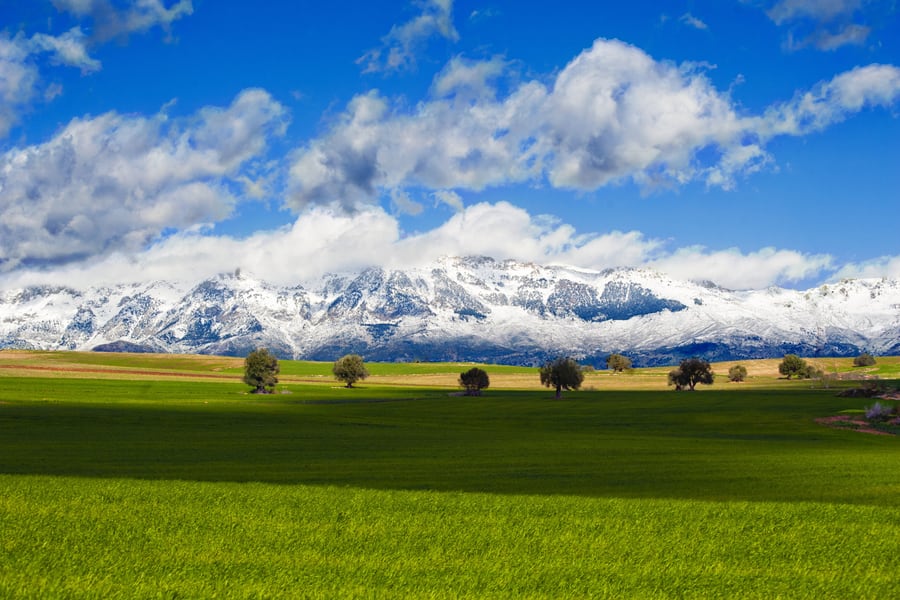 Bouizriphotography / Wikimedia Commons · CC BY-SA 4.0 · 2018 · cropped
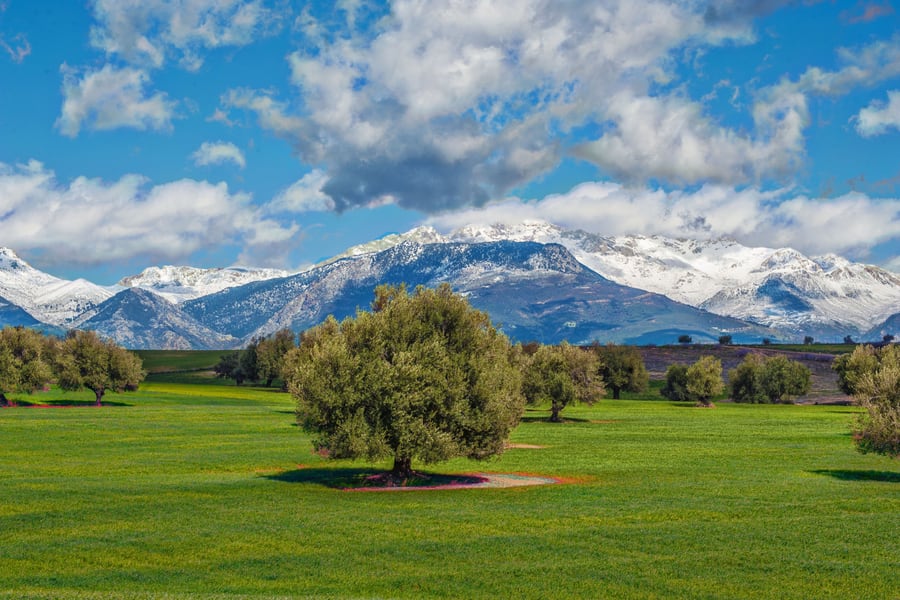
Under the Djurdjura
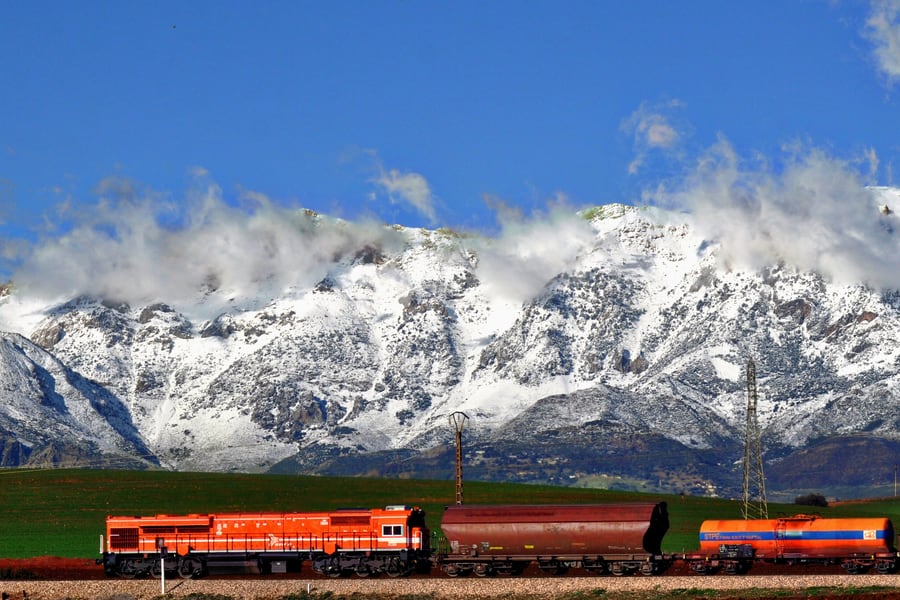
Around El Asnam and Bouira the railway crosses open farmland along the southern foot of the Djurdjura, snow-covered through the winter. Eastbound it is dark by then; in midsummer the westbound train comes back past the range at first light.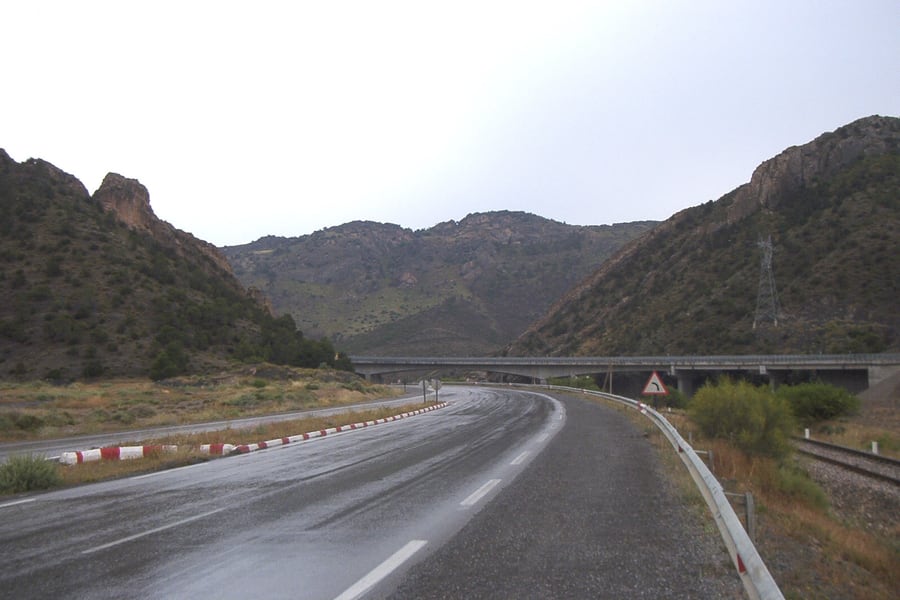 Yelles / Wikimedia Commons · CC BY-SA 3.0 · 2010 · cropped
The Iron Gates
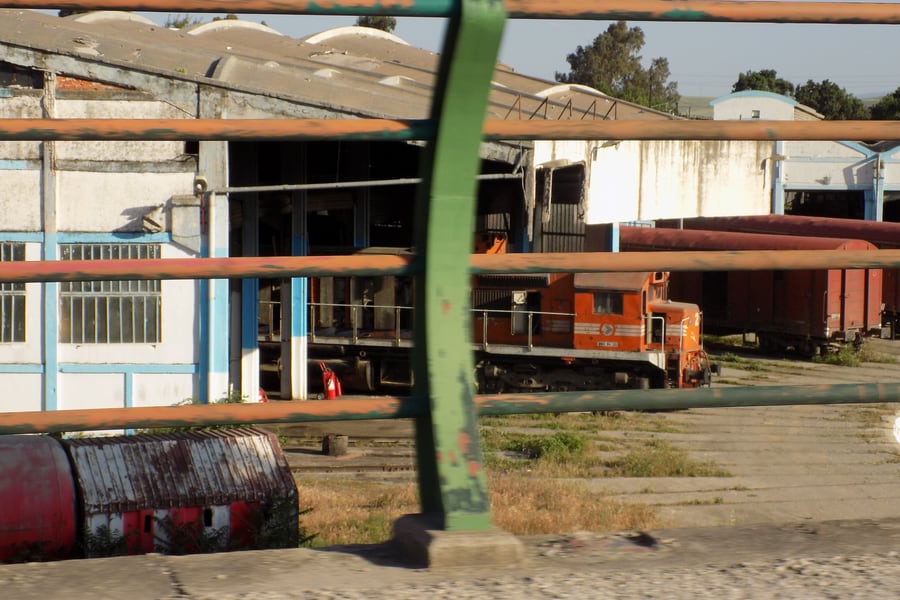
Beyond Beni Mansour the railway, the road and the motorway squeeze together through the defile of the Bibans, the Portes de Fer. It was among the last sections built, in 1886, and both night trains cross it in the dark.A bit of history
Culture & experiences along the way
 Hani.ad / Wikimedia Commons · CC BY-SA 4.0 · 2015 · cropped
The Emir Abdelkader Mosque
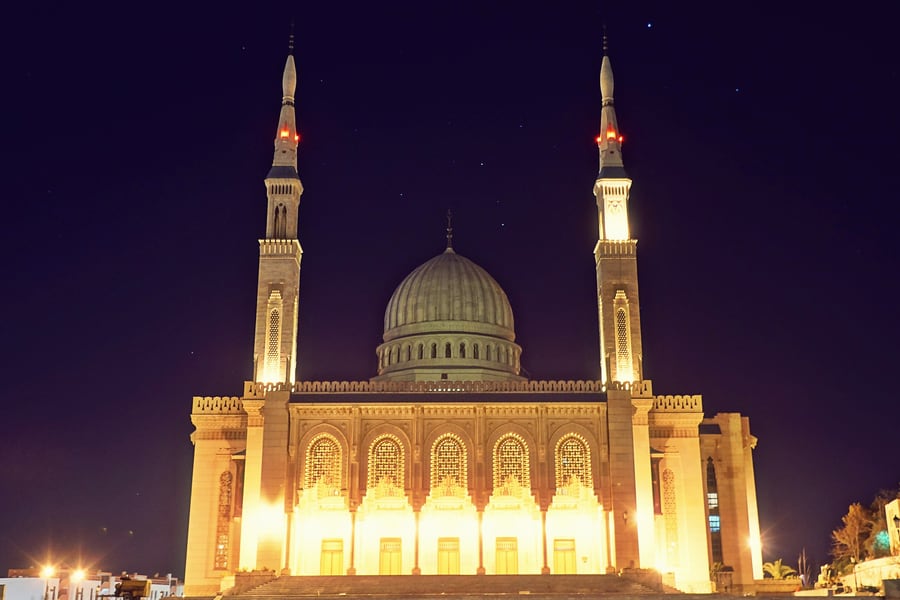
Completed in 1994 and named for the scholar and resistance leader Emir Abdelkader, Constantine's great mosque has two minarets 107 metres high and a 20-metre dome, in marble and granite. It stands beside the Islamic university of the same name, and at night the whole façade is lit.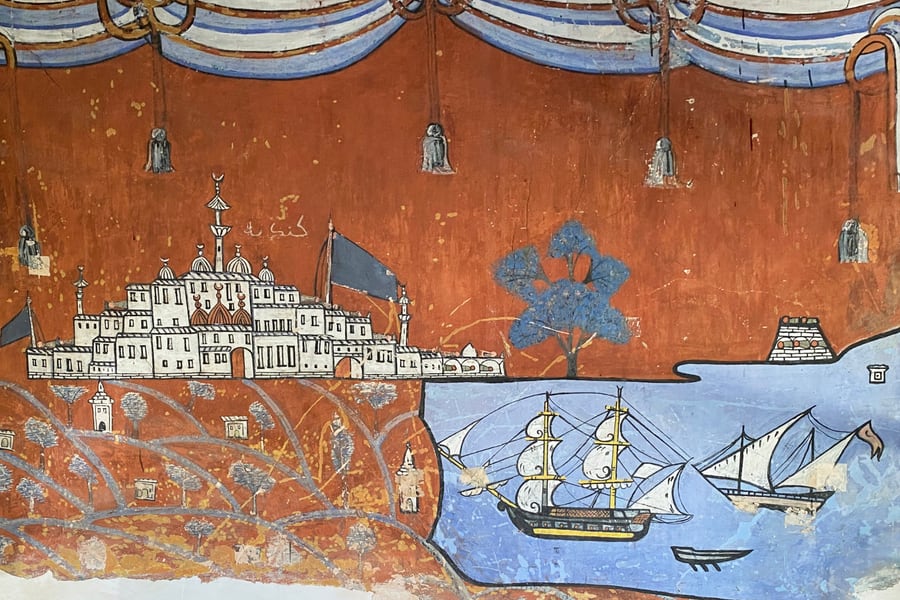 Bernard Gagnon / Wikimedia Commons · CC BY 4.0 · cropped
The painted walls of Ahmed Bey's palace
Ahmed Bey, ruler of Constantine, built his palace between 1825 and 1835, and lived in it for two years before the French took the city. Its galleries keep more than 2,000 square metres of wall paintings of his travels — Alexandria, Tripoli, Istanbul, Cairo and the Hejaz.Timetables
One night train runs in each direction, three times a week. It is the Algiers–Annaba night express, and it starts and ends at Agha in Algiers, not at the old Algiers terminus by the port.
Algiers to Constantine — train B1/2, Sunday, Tuesday and Thursday
| Algiers Agha | Thénia | Bouira | Beni Mansour | Bordj Bou Arreridj | Sétif | Constantine |
|---|---|---|---|---|---|---|
| 18:43 | 19:35 | 20:51 | 21:38 | 22:46 | 23:37 | 02:28 |
Constantine to Algiers — train B35, Monday, Wednesday and Friday
| Constantine | Sétif | Bordj Bou Arreridj | Beni Mansour | Bouira | Algiers Agha |
|---|---|---|---|---|---|
| 23:34 | 01:57 | 02:47 | 03:59 | 04:49 | 06:59 |
The eastbound train takes 7 h 45 and continues to Annaba, arriving at 05:28; the westbound one starts from Annaba at 21:00 and takes 7 h 25 from Constantine. There is no daytime through train: the daily trains from Algiers go no further east than Bordj Bou Arreridj.
As of November 2026, from SNTF's own timetable search. SNTF's site is sntf.dz (opens in a new tab); it could not be opened from outside Algeria while this page was written, and these times were read from its search engine through a third-party front end. Check them at the station before travelling.
Tickets
Fares are set by SNTF and quoted in Algerian dinars. Algiers to Constantine costs 945 in first class and 670 in second for a seat. A couchette costs extra, and SNTF's timetable search does not show the supplement, so ask at the counter.
Buy at the station. SNTF takes reservations online for its main-line trains, but payment there is by Algerian CIB bank card, so for a visitor the counter at Agha is the practical way to buy — the day before, if you can, since this is the only through train and it runs three nights a week.
Book your tickets
First class
Algiers to Constantine · 945 dinars
A seat in first class on the night train, before any couchette supplement.
via sntf.dzSecond class
Algiers to Constantine · 670 dinars
A seat in second class for the same seven and a half hours.
via sntf.dzRail Passes
No rail pass covers Algeria. Interrail's One Country Passes stop at Türkiye and the European shore of the Mediterranean, no North African railway is in the network, and SNTF has no pass of its own for visitors, so every journey is an ordinary ticket.
Nothing is lost by that. First class from Algiers to Constantine is 945 dinars for some 460 kilometres, among the lowest long-distance fares on this site, and no pass could pay for itself.
As of November 2026, from Interrail's own list of One Country Passes.
Places to Visit
The train stops at Bouira and Sétif in the middle of the night, so these are places to come back to by day, on the regional trains or by road. Constantine itself rewards two days at least. They are listed from west to east, in the order the train meets them.
 Abdeabde7777 / Wikimedia Commons · CC BY-SA 4.0 · cropped
Tikjda, in the Djurdjura
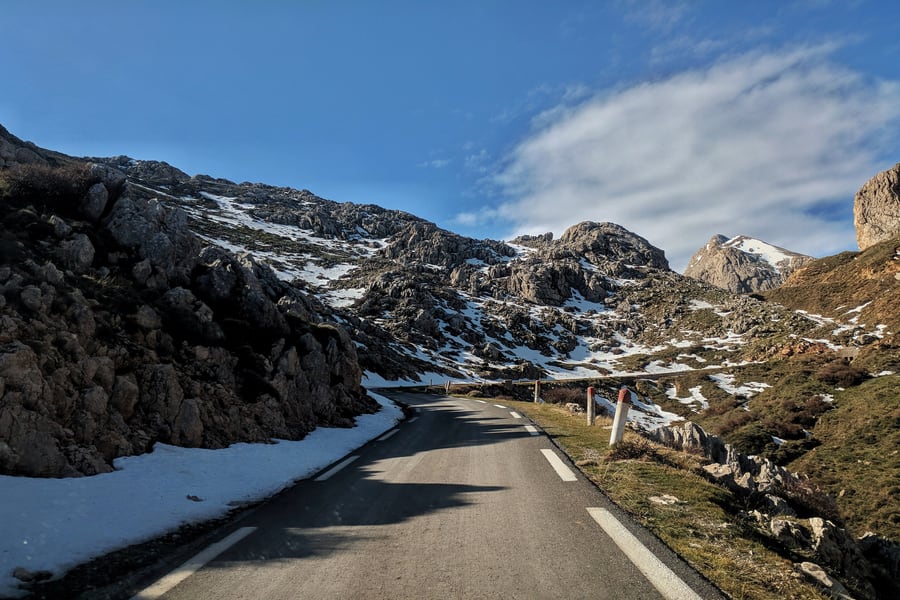
In the Djurdjura above Bouira, at about 1,600 metres, Tikjda is a ski station in winter and a walking centre the rest of the year, with cedar forest on the slopes, the Gouffre de l'Akouker to explore and, on a clear day, the Mediterranean in view. The range is a national park, home to the Barbary macaque.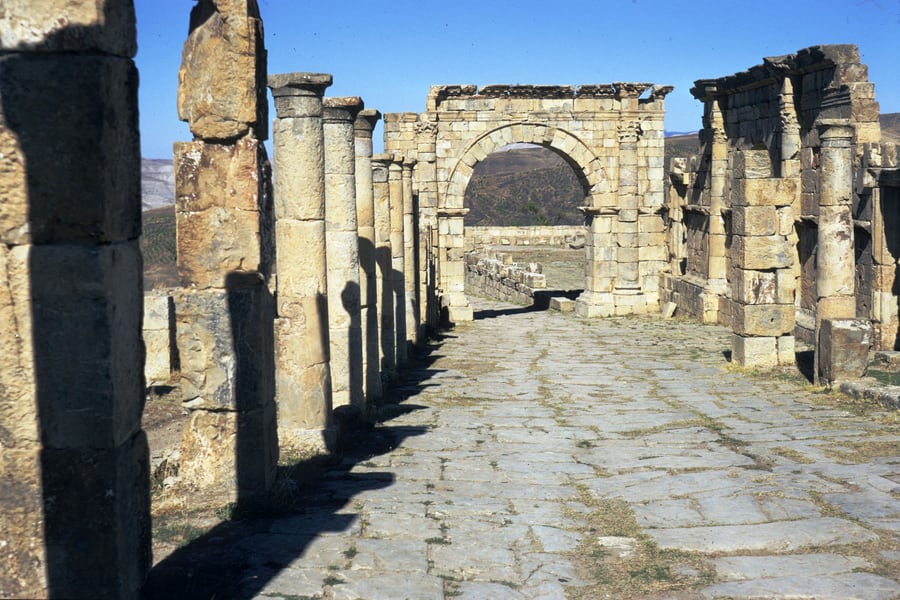 Paebi / Wikimedia Commons · CC BY-SA 4.0 · cropped
Djémila
Roman Cuicul was built in the first century on a narrow plateau 900 metres up in the hills of Sétif province, and it is one of the best-preserved Roman towns in North Africa: a theatre, two forums, temples, basilicas and paved streets with the arch of Caracalla at the end. It has been a UNESCO World Heritage Site since 1982.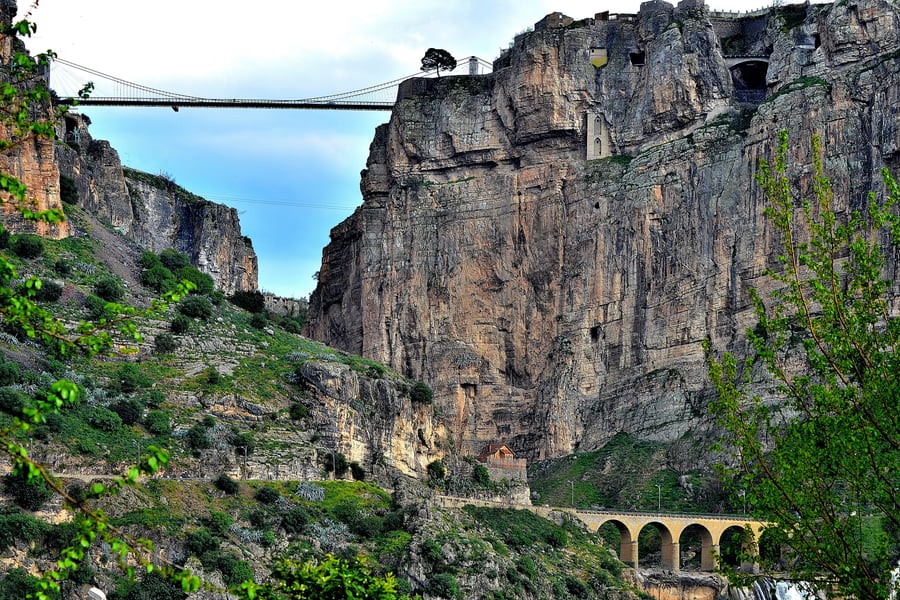 Louadfel / Wikimedia Commons · CC BY-SA 4.0 · 2013 · cropped
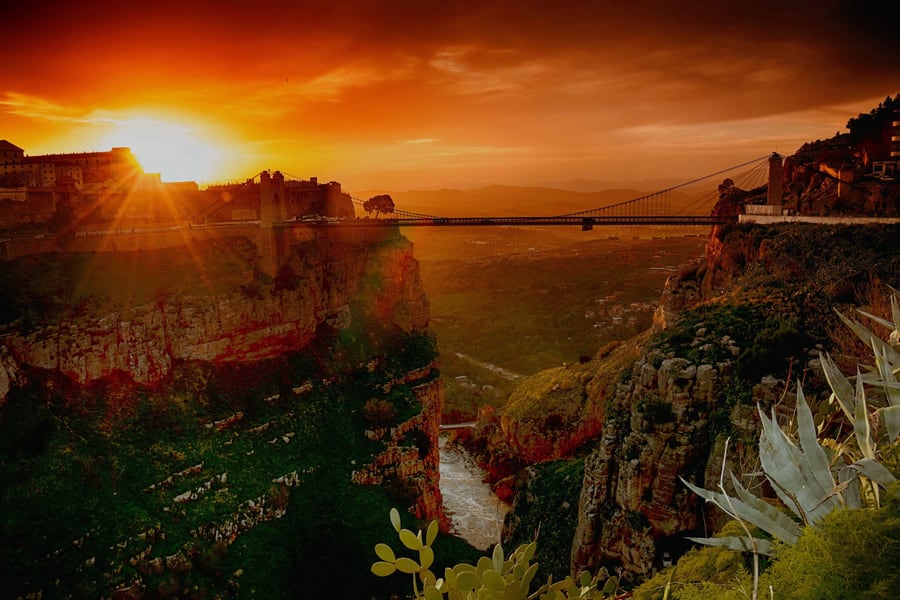
The Rhummel gorge and its bridges
Constantine stands on a rock almost wholly ringed by the gorge of the Rhummel, and its bridges are the reason to come. The Sidi M'Cid suspension bridge, opened in April 1912, runs 164 metres from the Casbah to the Sidi M'Cid hill, 175 metres above the river — the highest bridge in the world until 1929.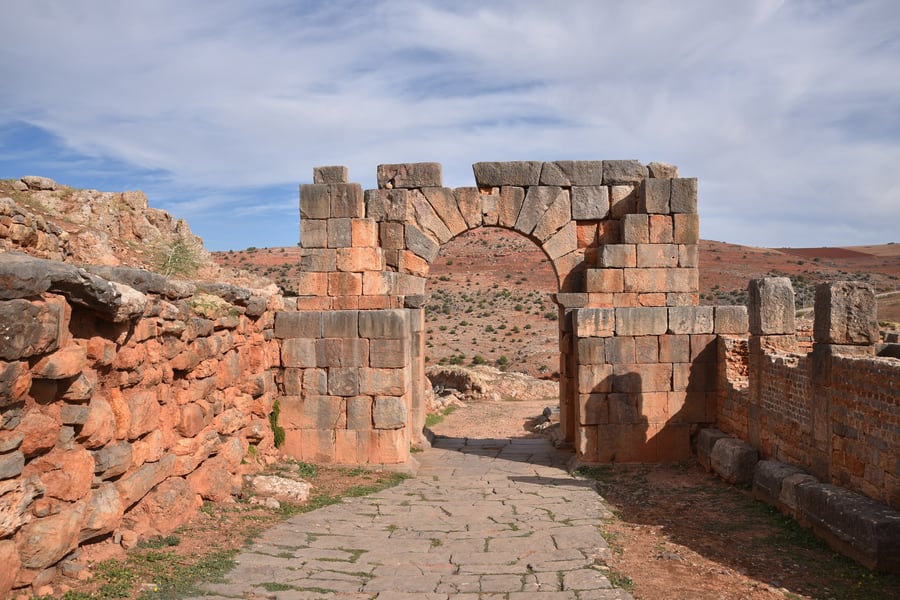 Carole Raddato / Wikimedia Commons · CC BY-SA 2.0 · 2022 · cropped
Tiddis
Outside Constantine, in the commune of Béni Hamidane, the Roman castellum of Tiddis climbs a red hillside: a monumental gate, a paved main street, baths and cisterns, a forum and a Temple of Saturn on the crag. Its most famous son, Lollius Urbicus, rose to be prefect of Rome, and his circular mausoleum stands a few kilometres to the north.Where to Sleep
The eastbound train reaches Constantine at 02:28, so the bed that matters is the one waiting at the end. Book it for the night before you arrive, so that it is yours when you walk in, and choose a hotel with a 24-hour front desk. Going west, the train arrives in Algiers at 06:59, in time for breakfast and a full day in the city.
Where to stay
Constantine Marriott Hotel
180 rooms, beside the Oued Rhumel
Near the Rhumel and the Cirta Museum, with 24-hour room service for a train that arrives at half past two.
Check Availability (opens in a new tab, on marriott.com)via marriott.comNovotel Constantine
117 rooms, in the city centre
On Square Hadj Ali downtown, with rooms looking out over the city or the mountains.
Check Availability (opens in a new tab, on all.accor.com)via all.accor.comPractical information
Start at Agha. The night train leaves from Agha station, not from Algiers station by the port; SNTF's own timetable search returns nothing for Constantine if you search from "Alger".
Plan for 02:28. Arrival in Constantine is in the small hours. The station is across the Rhummel from the centre, so arrange a taxi or a hotel pick-up in advance rather than looking for one on the night.
Mind the days. The train runs east on Sundays, Tuesdays and Thursdays and west on Mondays, Wednesdays and Fridays. There is no service on Saturdays in either direction.
Allow for delays. The timetable is a plan rather than a promise on a long single-track line. Do not build a tight onward connection on an arrival time.
Questions or corrections
Planning this trip and stuck on something, or spotted a time, fare or detail that has changed? Send us a message about Algiers to Constantine. We read every one, and we update this page when something has changed.