Almaty to Astana
Kabelleger / David Gubler / Wikimedia Commons · CC BY-SA 3.0 · 2012 · cropped
- Duration16 hr 39 min on the daily Talgo
- Best seasonDaily all year; train 106 passes the lake by day
Introduction
Until 1953, a train from Alma-Ata to Karaganda went the long way round. That year the line south from Moiynty to Shu was finished along the edge of the Betpak-Dala, the Hungry Steppe, and it cut 2,400 kilometres off the journey at a stroke and completed the Trans-Kazakhstan main line. Every train between Almaty and Astana still runs over that shortcut. The daily Talgo leaves Almaty-2 at 16:57 and reaches Nurly Zhol station in Astana at 09:36 the next morning: 16 hours 39 minutes, three stops, and Lake Balkhash somewhere out in the dark around midnight.
The two cities at the ends are the old capital and the new one. Almaty held the title until 1997, when it moved north across the steppe to Akmola, renamed Astana the following year, and this is the train that connects them. It is a Talgo — the low, articulated Spanish design — but built in Kazakhstan by Tulpar-Talgo, the joint venture the national railway and Talgo set up in 2011; the coaches on trains 9 and 10 were all made in 2022. Overnight it means a compartment with a door that shuts. Southbound by day on train 106, it means the lake beside the line in the late afternoon and the desert after it.
The Journey
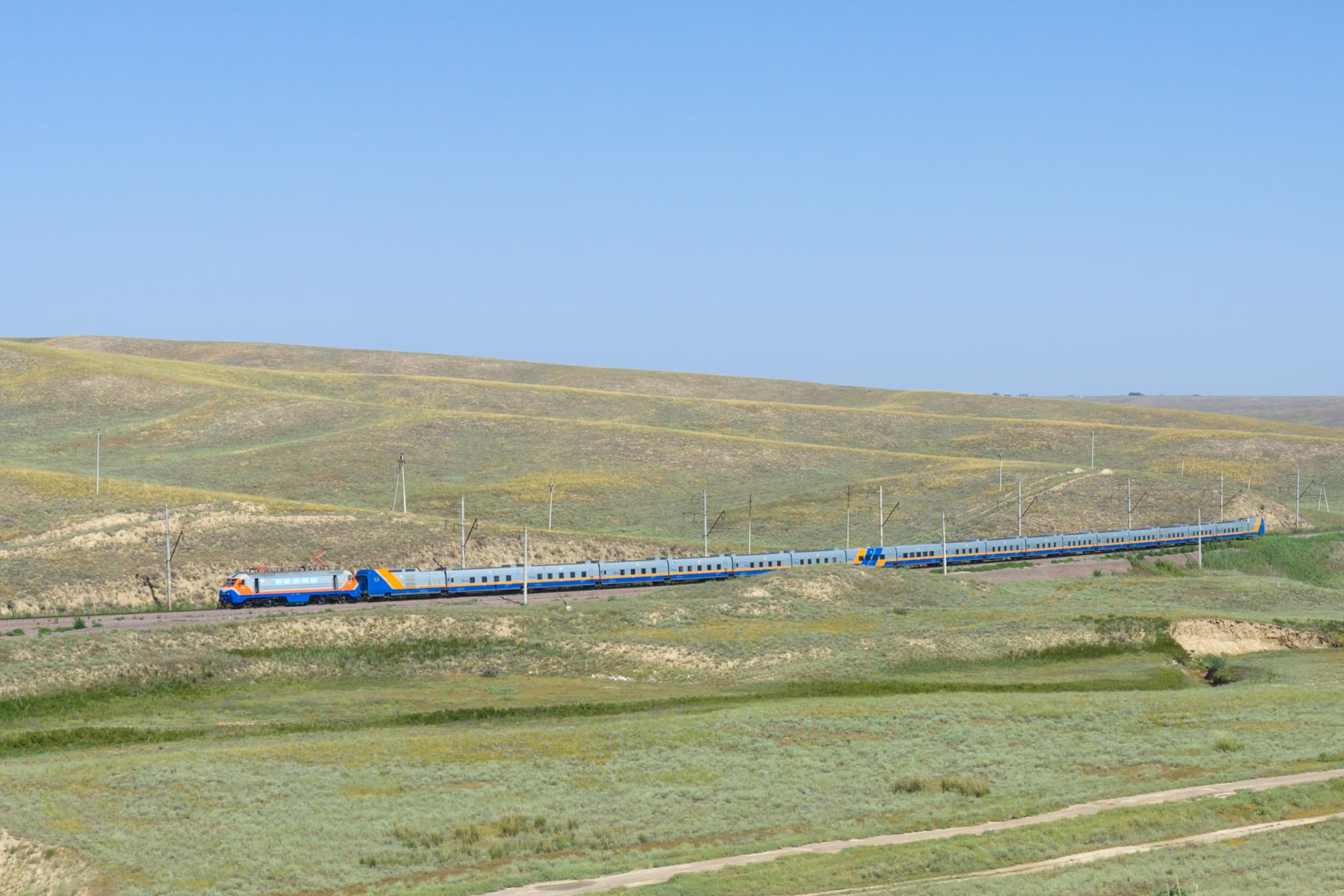
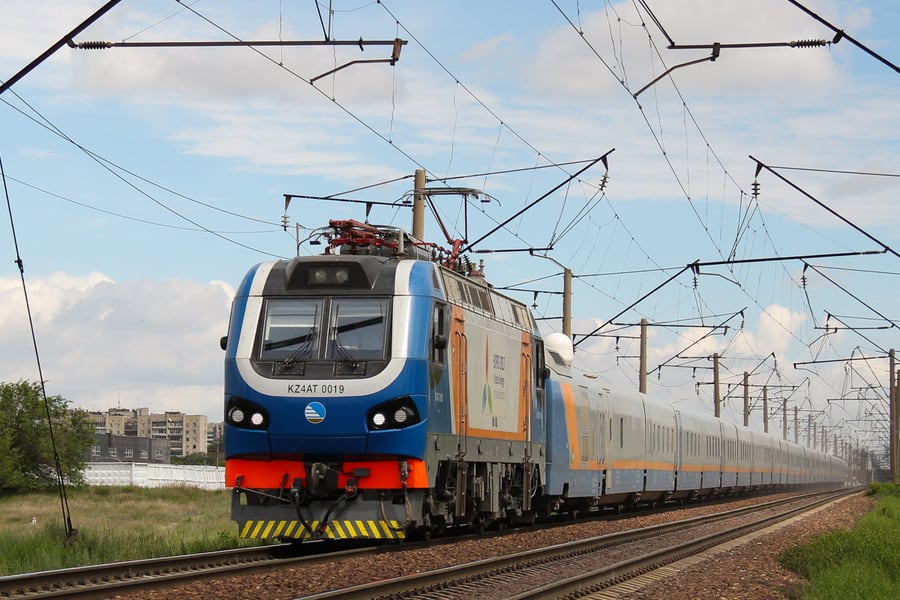
Train 9 leaves from Almaty-2, the city station on Abylai Khan Avenue, and heads west. The first hours follow the old Turksib through Chemolgan and Otar towards Shu; the photograph at the head of this page was taken a few kilometres outside Chemolgan in July 2012, a KZ4A electric with what was then a brand-new Talgo set on train 152 from Petropavlovsk. The Talgo makes no stop at all for the first seven and a half hours. The slower trains do: train 43 stands twenty minutes at Shu, where the Turksib and the Trans-Kazakhstan line part company.
The cut-off
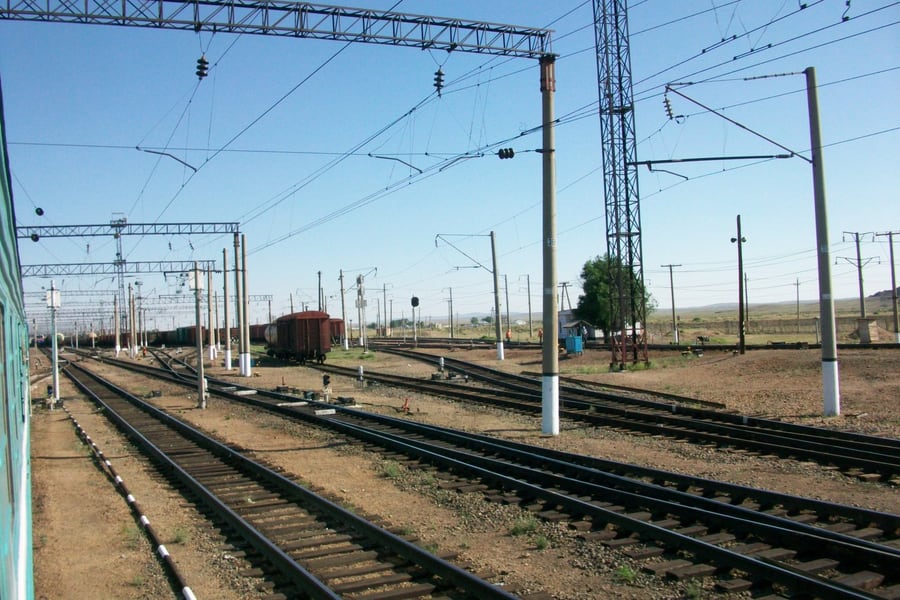
At Shu the route turns north, and from here to Moiynty it is on the line finished in 1953. Before it, Alma-Ata and Karaganda were joined only by going round; this one stretch took 2,400 kilometres out of the journey. West of the track lies the Betpak-Dala, some 75,000 square kilometres of clay and stony desert between the Chu, the Sarysu and the lake, used as spring and autumn grazing and home to the saiga antelope.
Lake Balkhash
The line reaches the water at Shyganak and runs along the western shore past Mynaral to Sary-Shagan, which the Talgo reaches at 00:30 and leaves ten minutes later. Balkhash is some 600 kilometres long and sits in a closed basin with no outflow. A narrow strait divides it in two, and the half beside the railway is fresh water while the deeper eastern half is salt. The little brick station at Sary-Shagan carries the year 1953 above its door; the town around it got its own village council the year after. By day, on train 106 southbound, this is the stretch to be awake for — it passes Sary-Shagan at about four in the afternoon.
Into the uplands, and Karaganda
North of the lake the railway leaves the water for Moiynty, the junction 361 kilometres south of Karaganda where the 1953 line meets the older one from Karaganda to Balkhash, built in the 1930s. The Talgo runs through it without stopping and calls at Akadyr at 03:31. At 05:54 it stands ten minutes at Karaganda, a coal city of half a million. The Karlag, the Gulag camp set up in 1931 largely to supply the coal basin's industry, ran across this steppe until 1959.
Astana
The last three and a half hours run north across the steppe, and at 09:36 the train pulls into Astana Nurly Zhol, the terminal station opened on 1 June 2017 for Expo 2017. Almost every Talgo serving the capital uses it; the older Astana-1 is where the through trains to Petropavlovsk and Kostanay call.
What pulls it
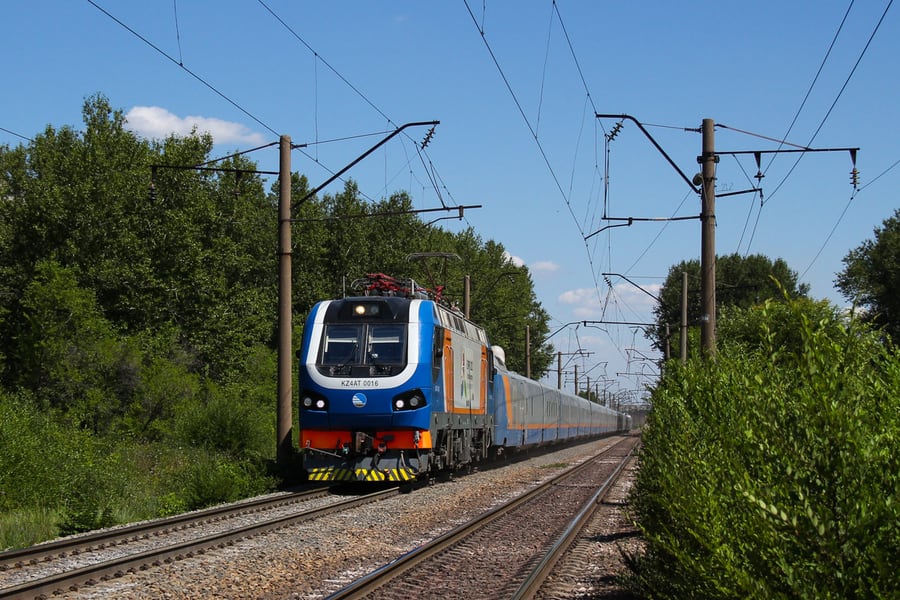
The Talgos are hauled by electric locomotives of the KZ4A family, designed with Siemens and built in China. The first went into service on 22 July 2004 and were used on the Talgo between Astana and Almaty. The KZ4AT followed from 2013, built for 200 km/h. When the first Tulpar-Talgo trains ran in 2011 they cut the trip from eighteen hours to twelve. The timetable today is slower: the fastest train in it takes 16 hours 4 minutes.
Along the route
 Сергей Болашенко / Wikimedia Commons · CC BY-SA 3.0 · cropped
Moiynty, and the shortcut
Until 1953 a train from Alma-Ata to Karaganda went the long way round. The line south from Moiynty to Shu, finished that year, cut 2,400 kilometres off the journey and completed the Trans-Kazakhstan main line. Moiynty is where it meets the older line to Balkhash.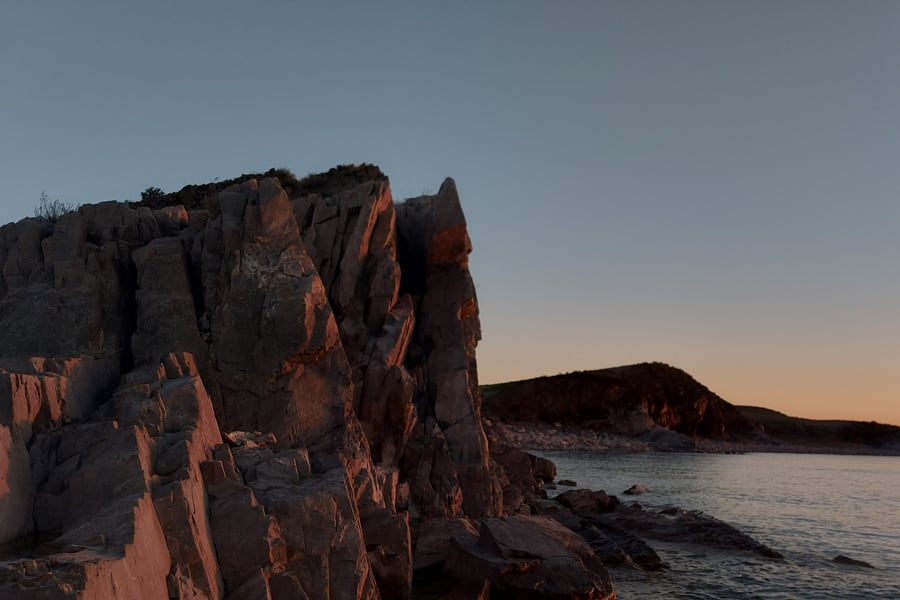 AALLMMAATT / Wikimedia Commons · CC0 · 2024 · cropped
Lake Balkhash
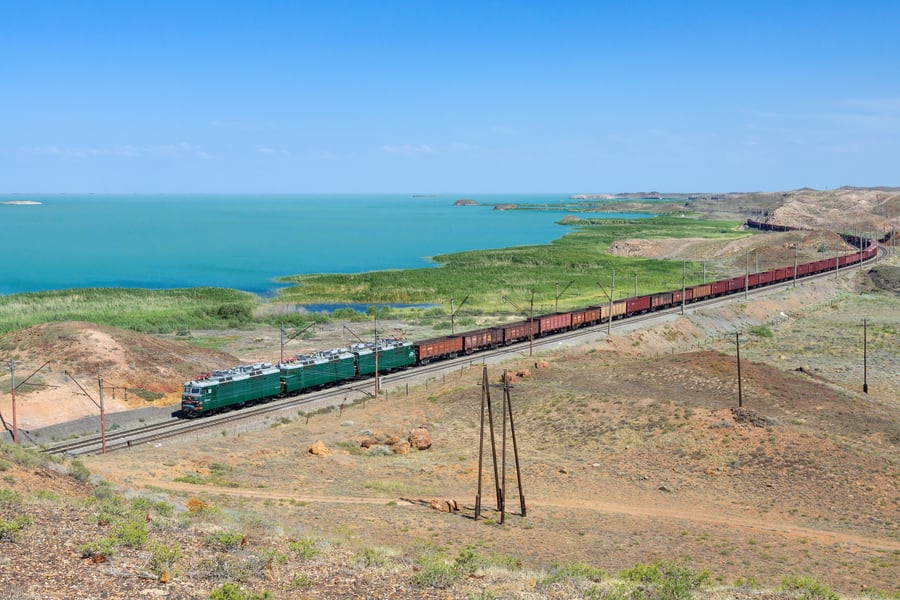
The line meets the western shore at Shyganak and follows it past Mynaral to Sary-Shagan. Balkhash is some 600 kilometres long and split by a narrow strait: the western half, the one beside the railway, is fresh water, and the deeper eastern half is salt.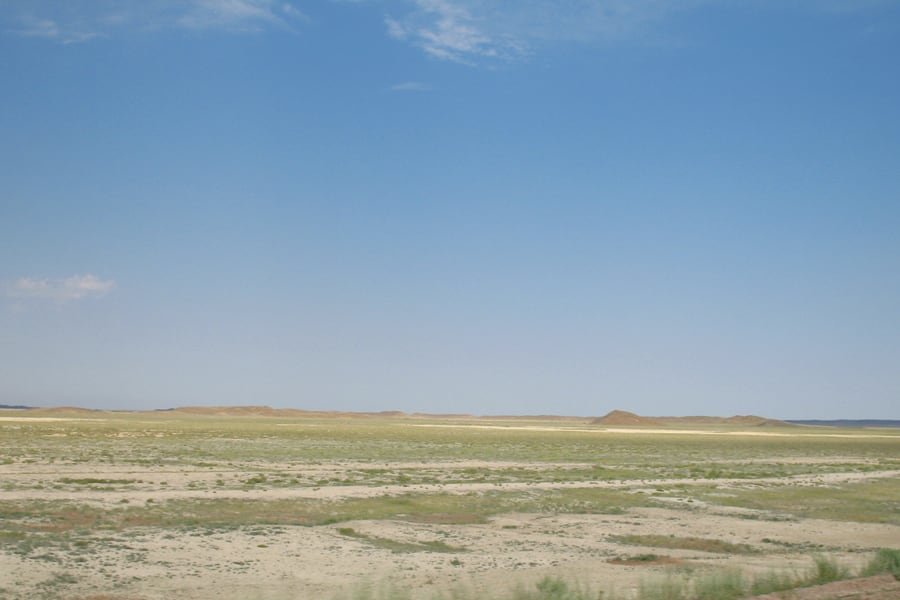 Nikolay Yushnikov / Wikimedia Commons · Public domain · 2007 · cropped
The Hungry Steppe
West of the line between Shu and the lake lies the Betpak-Dala, about 75,000 square kilometres of clay and stony desert whose Russian name means the Hungry Steppe. It is saiga country; in May 2015 disease killed more than 120,000 of them here.A bit of history
Culture & experiences along the way
 Matti Blume / Wikimedia Commons · CC BY-SA 4.0 · 2024 · cropped
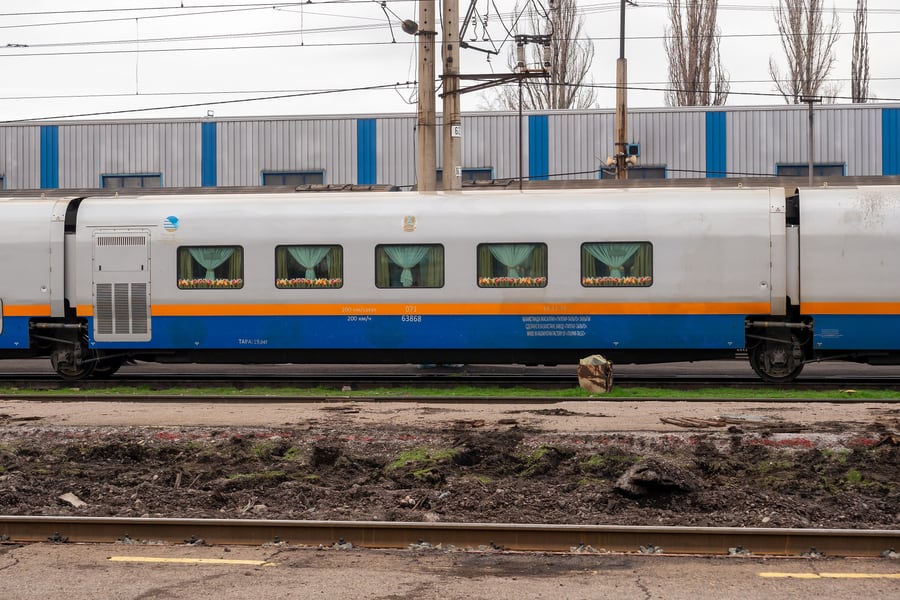
A Talgo built in Kazakhstan
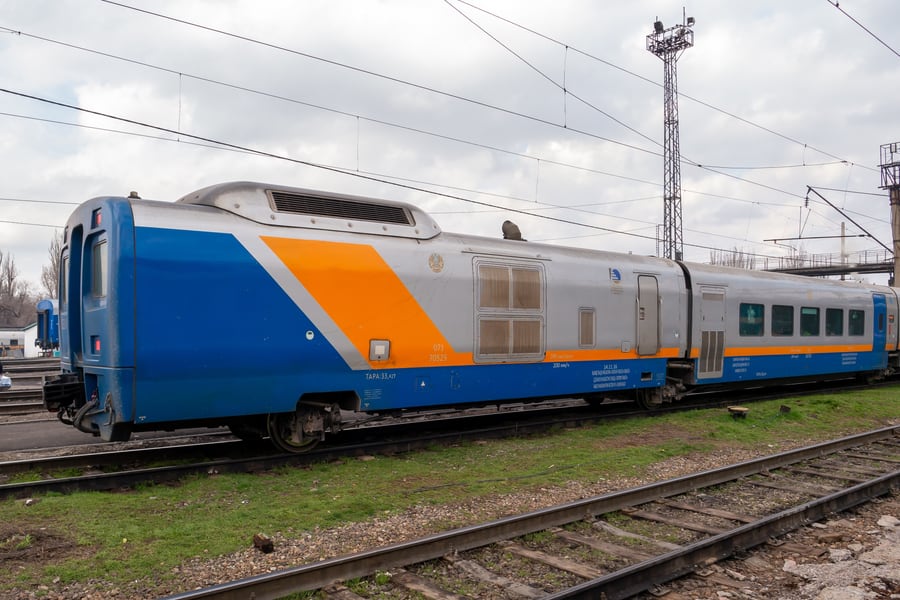
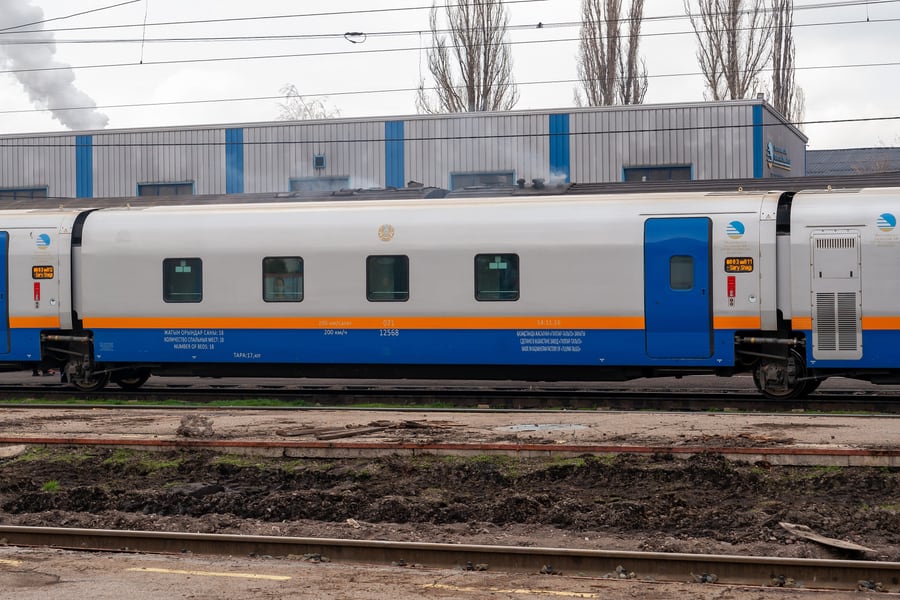
Trains 9 and 10 are Spanish-designed Talgo sets, but every carriage was built by Tulpar-Talgo in 2022. The operator lists them: four-berth Tourist compartments, two-berth Business compartments with a washbasin, an accessible Grand coach with a shower in each compartment, seated coaches, a restaurant car and a café car.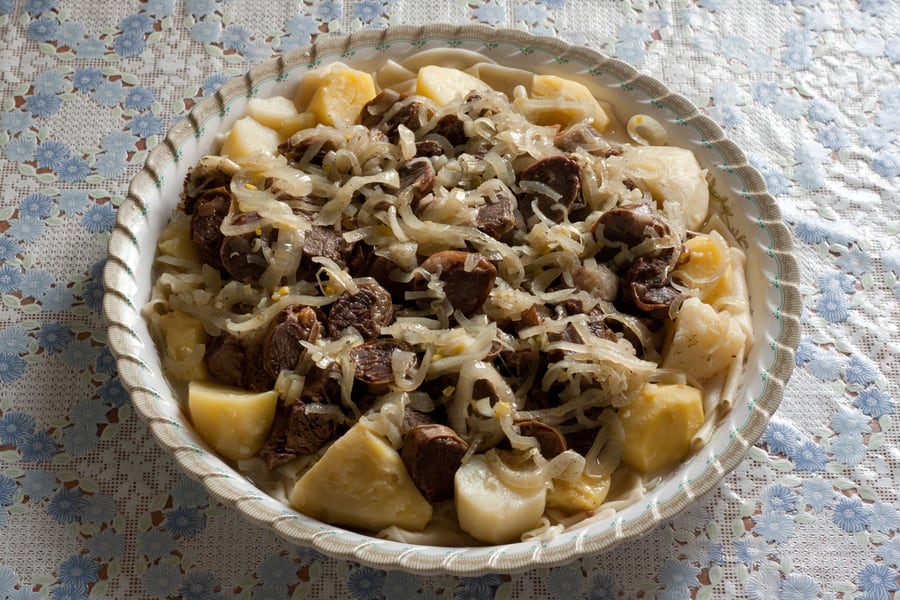 Igors Jefimovs / Wikimedia Commons · CC BY 3.0 · cropped
Beshbarmak
Meat, noodles and onion with the broth from the pot, cooked right across Central Asia under half a dozen names. This plate, from the Almaty district, comes with potatoes. Either end of the journey is the place to eat it, before or after a night of restaurant-car food.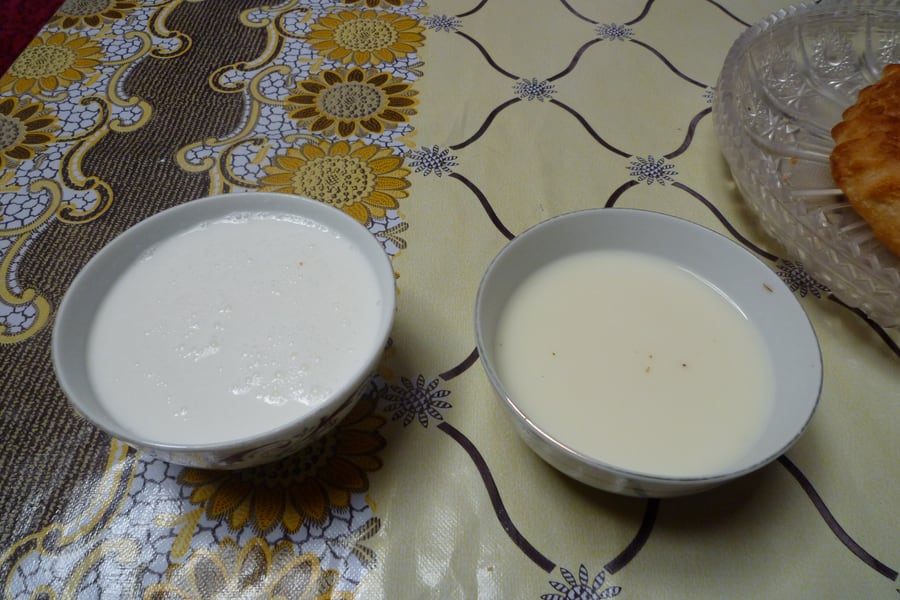 Upyernoz / Wikimedia Commons · CC BY 2.0 · 2010 · cropped
Kumis and shubat
The two fermented milks of the steppe: kumis from mare's milk, and shubat from camel's milk, sparkling white and sour, which in Kazakhstan is a staple summer food. Shubat spoils quickly and has proved hard to export, so this is the country to try it.Timetables
Three or four trains a day run between Almaty and Astana in each direction, two of them Talgos. The times below are the operator's own, read from the route detail behind each train on bilet.railways.kz in October 2026 for departures between 9 November and 6 December, and checked across fourteen consecutive dates. They are local times; Kazakhstan keeps a single time zone.
Almaty to Astana
Departure times from each station, arrival at the last. A dash means the train does not stop.
| Station | 15 | 9 Talgo | 43 | 119 Talgo | 105 Talgo |
|---|---|---|---|---|---|
| Runs | every other day | daily | daily | every other day | every other day |
| Almaty | 08:53 | 16:57 | 17:33 | 20:40 | 22:55 |
| Shu | 14:32 | — | 23:30 | — | — |
| Sary-Shagan | 19:12 | 00:40 | 04:44 | 04:12 | 06:29 |
| Moiynty | 20:51 | — | 06:48 | — | — |
| Akadyr | 22:57 | 03:41 | 09:19 | — | — |
| Karaganda | 02:09 | 06:04 | 13:05 | 09:11 | 11:28 |
| Astana | 06:25 | 09:36 | 17:45 | 12:46 | 14:59 |
Astana to Almaty
| Station | 106 Talgo | 43 | 119 Talgo | 10 Talgo |
|---|---|---|---|---|
| Runs | every other day | daily | every other day | daily |
| Astana | 07:07 | 10:02 | 14:15 | 21:03 |
| Karaganda | 10:30 | 14:55 | 17:37 | 00:27 |
| Akadyr | — | 18:12 | — | 02:43 |
| Moiynty | — | 20:43 | — | — |
| Sary-Shagan | 16:06 | 23:19 | 23:13 | 06:27 |
| Shu | — | 04:39 | — | — |
| Almaty | 23:49 | 10:30 | 07:13 | 14:27 |
What the timetable is doing
Trains 9 and 10 are the only ones that run purely between the two cities, and they use the newer stations at both ends — Almaty-2 and Astana Nurly Zhol — in 16 hr 39 min north and 17 hr 24 min south. Everything else is passing through. 105/106 is the Talgo between Almaty and Petropavlovsk, and 119 the Talgo between Almaty and Kostanay; the two alternate, so one or the other runs every day, and both use Astana-1. Train 106 changes its times in mid-November: before 17 November it left Astana at 06:45. 43 is the slow daily train between Almaty-1 and Kostanay, 24 hours of open-berth and compartment coaches with a stop at almost everything, and 15, every other day to Petropavlovsk, is the one that crosses the Shu valley by day and reaches the Balkhash shore in the late afternoon.
Two more appear on a few dates only — 113 north and 114 south were each on sale on just two dates in the fortnight scanned — and 16, every other day from Petropavlovsk, reaches Almaty in the small hours.
Departures are published by the operator: Qazaqstan Temır Joly · bilet.railways.kz (opens in a new tab).
Tickets
Tickets are sold by Qazaqstan Temır Joly through its own system at bilet.railways.kz, in Kazakh, Russian and partial English, and at station ticket offices; sales open about six weeks ahead. Fares move by train and by date rather than being fixed. Across early December 2026 the Talgo's seated coach on trains 9 and 10 was 7,100 ₸, a berth in a four-berth compartment 11,003–19,183 ₸ and one in a two-berth compartment 17,328–25,563 ₸, with train 119 the cheapest of the Talgos.
The cheapest bed of all is on the slow train 43: an open platskart berth at 8,812 ₸, with a four-berth compartment at 14,513 ₸, for seven and a half hours longer on the way.
Book your tickets
 Matti Blume / Wikimedia Commons · CC BY-SA 4.0 · 2024 · cropped
Almaty to Astana by Talgo, seat
7,100 ₸ on every sampled date
A reclining seat in an open Talgo coach, sold on trains 9 and 10 only.
Book Tickets (opens in a new tab, on bilet.railways.kz)via bilet.railways.kzAlmaty to Astana by Talgo, four-berth compartment
11,003 – 19,183 ₸ depending on train and date
A berth in a four-berth Tourist compartment with air conditioning and a socket.
Book Tickets (opens in a new tab, on bilet.railways.kz)via bilet.railways.kzAlmaty to Astana by Talgo, two-berth compartment
17,328 – 25,563 ₸ depending on train and date
A berth in a two-berth Business compartment with its own washbasin.
Book Tickets (opens in a new tab, on bilet.railways.kz)via bilet.railways.kzRail Passes
No rail pass covers Kazakhstan, so there is nothing to buy instead of a ticket. Interrail and Eurail describe a network of 33 countries, and Kazakhstan is not one of them.
The answer for this journey is the plain fare, bought per train from the operator: on the Talgo, around eleven to nineteen thousand tenge for a berth in a four-berth compartment, which is a night's bed as well as the ride. Checked against interrail.eu in October 2026.
Places to Visit
The Talgo stops only three times between the capitals, and two of those stops come in the middle of the night. These four are worth knowing before you board: the two cities at the ends, the lake, and the coal city in between.
 Bgag / Wikimedia Commons · CC0 · 2023 · cropped
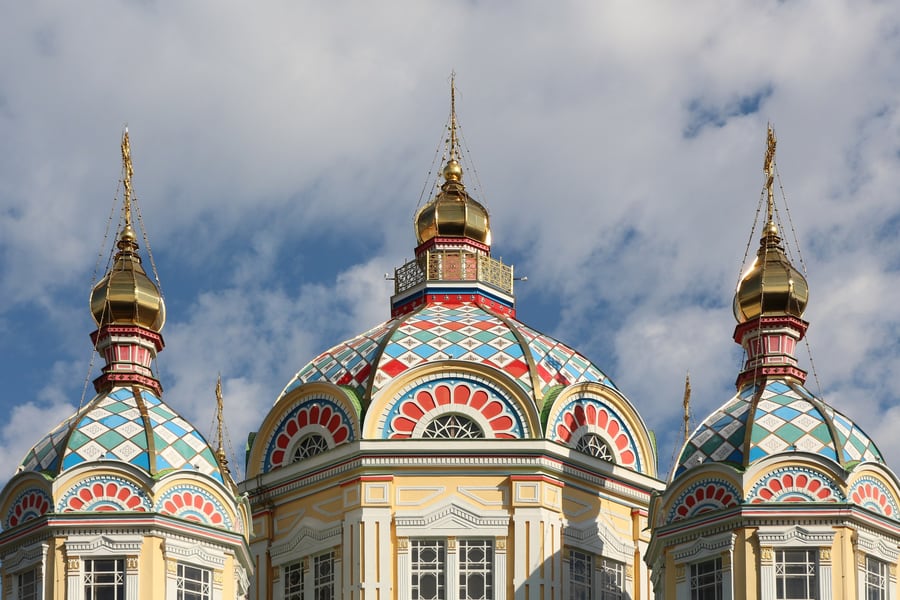
Almaty
The largest city in Kazakhstan and the capital until 1997, laid out below the mountains of the Tian Shan. In Panfilov Park is the Ascension Cathedral, finished in 1907 by Andrei Zenkov: 56 metres of painted timber, built without nails, which came through the 1911 earthquake with little damage. The Talgo leaves from Almaty-2, on Abylai Khan Avenue.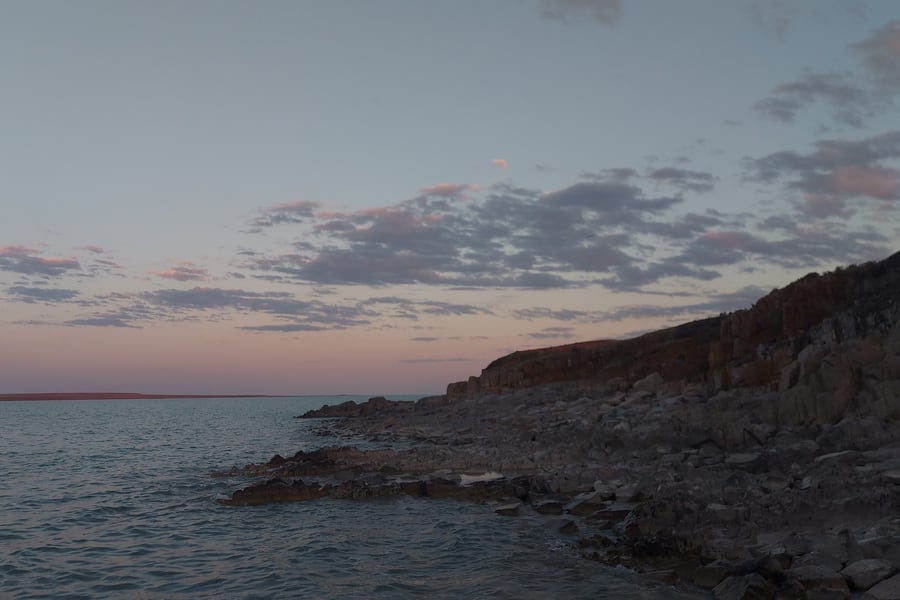 AALLMMAATT / Wikimedia Commons · CC0 · 2024 · cropped
Sary-Shagan and Lake Balkhash
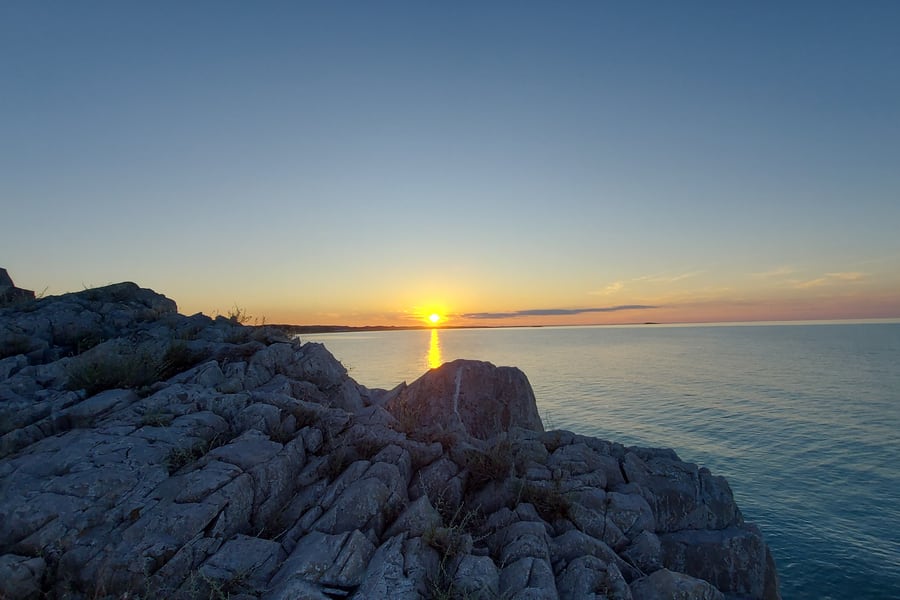
A lakeside town of some eleven thousand that grew around the station: its village council was set up at the railway settlement in 1954, the year after the line arrived. It also gives its name to an anti-ballistic-missile testing range. The northbound Talgo calls after midnight; train 106 southbound passes in the late afternoon, with the lake beside the line.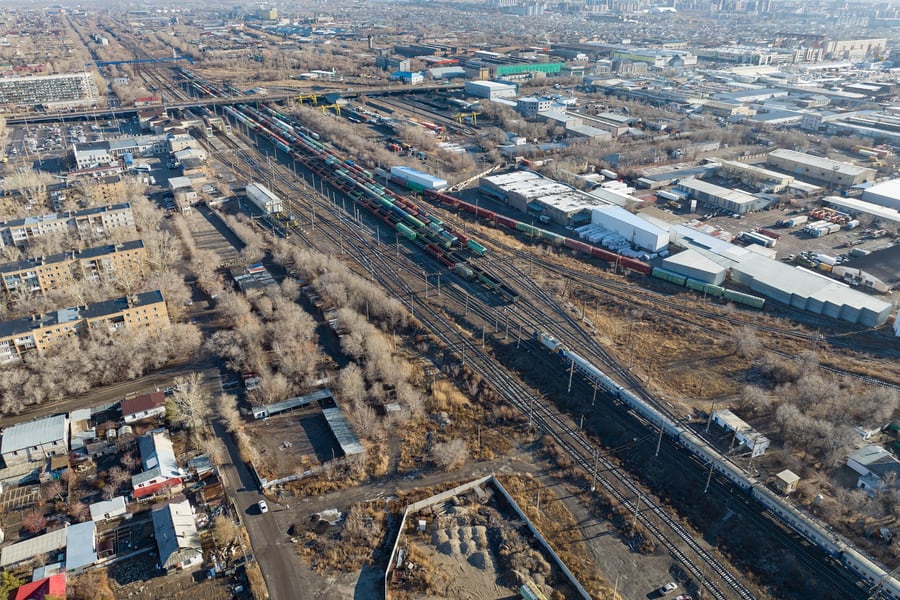 Nikolai Bulykin / Wikimedia Commons · CC BY-SA 4.0 · 2022 · cropped
Karaganda
A city of about half a million, 230 kilometres south-east of Astana, built on the Karaganda coal basin. The Karlag, one of the largest camps of the Gulag, was set up in 1931 largely to supply the basin's industry, and ran until 1959 across a territory reaching from Akmola to the Chu; more than a million prisoners passed through it. Its museum is in the former camp headquarters at Dolinka.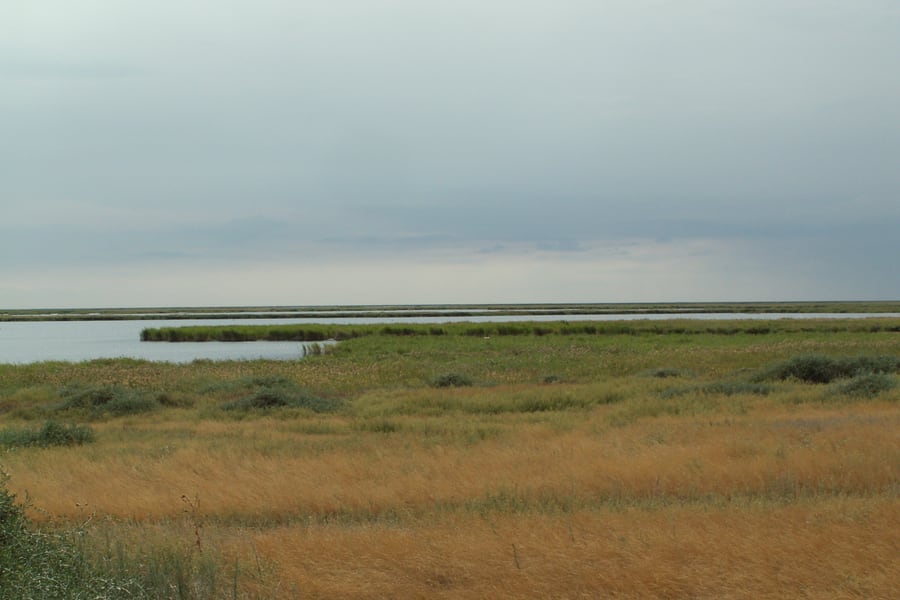 Tomiris / Wikimedia Commons · CC BY-SA 3.0 · cropped
Astana, and the Korgalzhyn steppe
Founded as Aqmoly in 1830 and renamed three times before it became Astana — "capital" in Kazakh — in 1998; it was Nur-Sultan from 2019 to 2022. The Talgo ends at Nurly Zhol, opened in 2017. West of the city, the Korgalzhyn reserve is half of the Saryarka World Heritage Site, whose steppe wetlands feed an estimated 15–16 million migrating birds; its pink flamingos are the best known.Where to Sleep
The train is the bed for the night in between. What is needed is somewhere in Almaty before the late-afternoon departure, and somewhere in Astana after a mid-morning arrival — and both ends belong to the same hotel group, which keeps a working website of its own in English.
Where to stay
Kazzhol Almaty
Gogol 127/1, in the centre of Almaty
A business hotel in central Almaty with the Salt restaurant, Kazakh and European cooking, and the AquaFit wellness centre with a pool.
Check Availability (opens in a new tab, on kazzhol.com)via kazzhol.comKazzhol Astana
Balkantau Avenue 213, Astana
The same group's Astana house, with rooms from a 25 m² standard to a 70 m² suite and the Fergana restaurant serving Kazakh and European dishes.
Check Availability (opens in a new tab, on kazzhol.com)via kazzhol.comQuestions or corrections
Planning this trip and stuck on something, or spotted a time, fare or detail that has changed? Send us a message about Almaty to Astana. We read every one, and we update this page when something has changed.