Almaty to the Caspian
radist / Wikimedia Commons · CC BY-SA 4.0 · 2017 · cropped
- Duration2 days 5 hr 53 min westbound
- Best seasonDaily all year; eastbound crosses Mangystau by day
Introduction
On its second morning out of Almaty, train 077 stops for four minutes at a station called Aral Tenizi — in Kazakh, the Aral Sea. It opened in 1905 as Aralskoye More, a station on the shore of what was then the third-largest lake in the world, and for most of the twentieth century the town beside it was a fishing port. The sea began to retreat in the 1960s. Today the town of Aral is about twelve kilometres from the water, and that is after a dam brought part of the sea back. The station has kept the name.
That is one stop on a ride of 2 days 5 hours 53 minutes, the whole way from Almaty to the Caspian inside one country. Train 077 leaves Almaty-2 at 23:57 every night and runs west through Taraz, Shymkent, Turkestan and Kyzylorda, past the Aral, across a desert line opened only in 2014, and on past a station called Ustyurt to Mangistau, the station for Aktau on the Caspian shore. It arrives at 05:50 after three nights aboard, in the same time zone it left: since 1 March 2024 the whole of Kazakhstan keeps one clock.
The Journey
Train 077 leaves Almaty-2 at 23:57, calls at Almaty-1 twenty-five minutes later, and spends its first night on the old Turksib through Chemolgan and Otar to Shu, where it stands twenty minutes in the early morning. The first day is the south: Taraz at ten, Shymkent at a quarter past two in the afternoon, then Arys. From Arys the train is on the Trans-Aral line, the Orenburg–Tashkent railway opened in January 1906 — for much of the early twentieth century the only railway between European Russia and Central Asia. Turkestan comes at six in the evening, and the second night begins soon after.
Kyzylorda, Baikonur and the Aral
Kyzylorda, capital of the Kazakh ASSR from 1925 to 1927, comes just after midnight with twenty-five minutes on the platform. Before four the train stops for five minutes at Toretam, the station for the Baikonur Cosmodrome, from which Sputnik 1 and Yuri Gagarin's Vostok 1 were launched; Russia leases it until 2050. Then Kazaly, founded as a Russian fort in 1853 and now a closed area that needs a permit to visit, and at 07:54 Aral Tenizi — the station that still carries the name of the Aral Sea. The sea had been retreating since 1960. The Kokaral dam, finished in 2005, had the North Aral twelve metres higher by 2008 than in 2003, and by 2013 there were fish enough in it for fishing to pay again.
The 2014 line
At Shalkar, where the station, the depot and a school and hospital were built in 1905–07, the train stands forty minutes and then leaves the 1906 line. The old line goes on north to Aktobe; the 077 turns south-west on to the Shalkar–Beineu line, 499 kilometres with six stations and fourteen passing loops, opened in August 2014 as part of a new route linking the centre of the country to its Caspian ports. Begimbet, Tassay, Turysh and Sam are the only stops in the eight hours and twenty minutes to Beineu.
Beineu and the Mangyshlak line
Beineu was founded in 1960, while the railway from Makat to Mangyshlak was being built. The train stands forty-nine minutes here, and leaves behind its through coaches for Kulsary, which leave for it a little before midnight. From Beineu it is on the Mangyshlak line itself: joined in June 1964, opened on to Uzen in 1965 and handed over for permanent service on 30 December 1966, when the first freight train arrived at Mangyshlak. After a station called Ustyurt, after the plateau, come Sayotes and Shetpe, the town near Sherkala mountain, and at 05:50 Mangistau, the terminus 13 kilometres from Aktau. It was Mangyshlak station until its renaming in November 2017.
The train
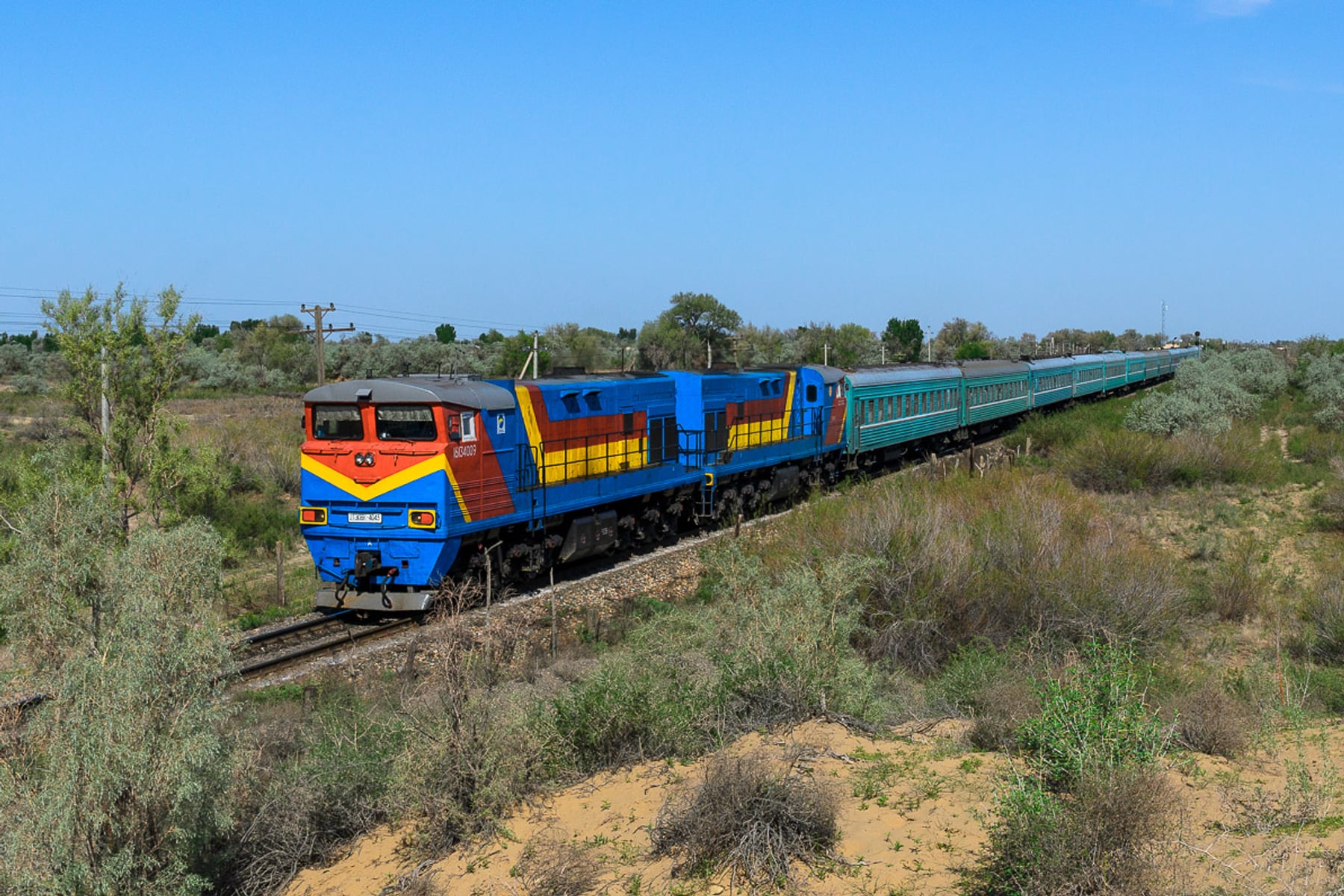
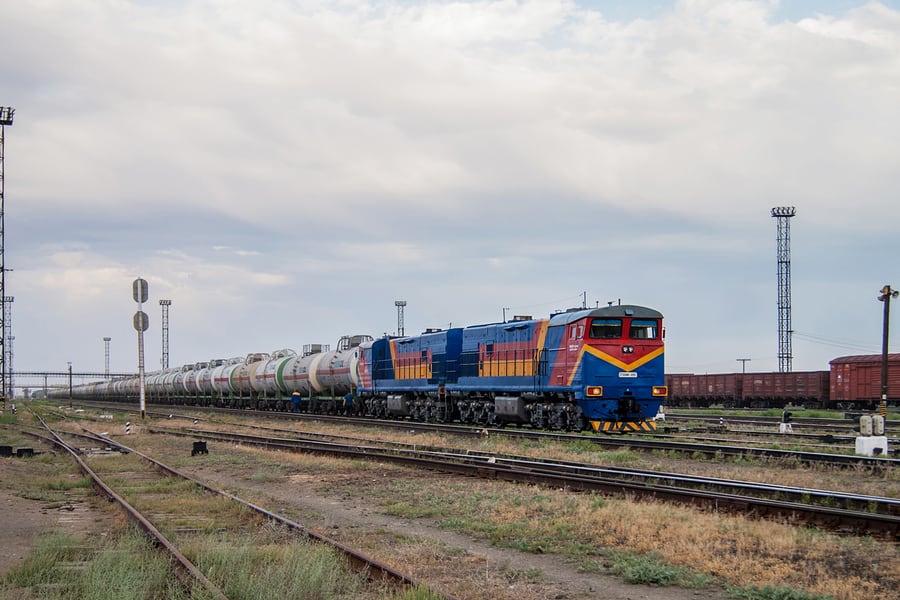
The operator describes train 077's coaches as built in 2019–2021 and good for 160 km/h, with kupe compartment coaches of nine four-berth compartments and open platskart coaches of 54 berths, both air-conditioned and with sockets, plus a compartment coach with one compartment adapted for passengers with reduced mobility. Bedding is included in the fare, the restaurant car delivers to the compartment, and at busy times older coaches are added. Which locomotives take it west is not published. The photograph at the head of this page is a passenger train in Kyzylorda Region in April 2017 behind 2TE10V-4043, built in 1978 — one of the twin-section 2TE10 freight diesels of the TE10 family, built at Luhansk in the Soviet years.
Along the route
 Zhanat Kulenov / Wikimedia Commons · CC BY-SA 3.0 IGO · 2006 · cropped
Aral Tenizi, the Aral Sea
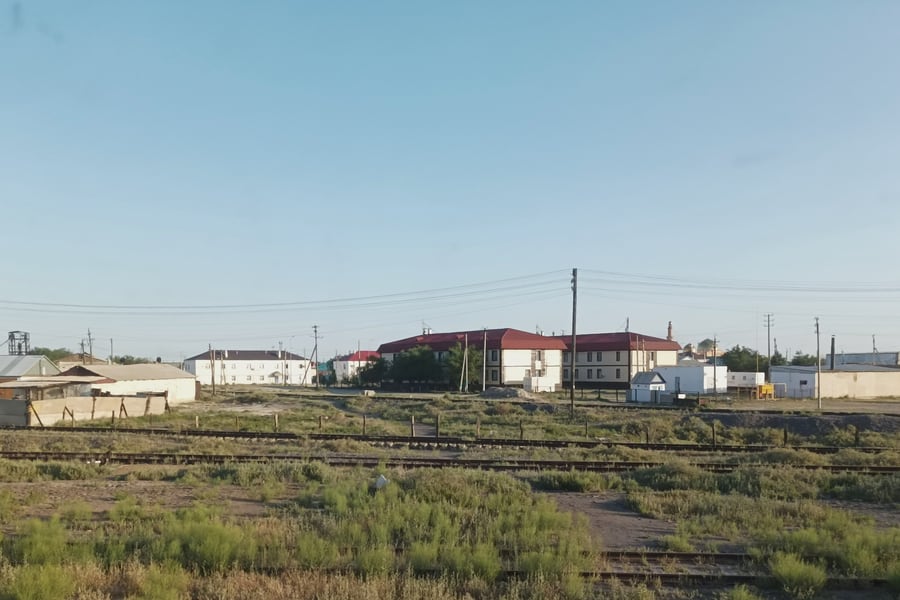
The station opened in 1905 as Aralskoye More, beside a fishing port; in December 1921 its fishermen loaded fourteen wagons of fish in answer to a letter from Lenin. The sea began to retreat in the 1960s. Aral is now landlocked, about twelve kilometres from the water.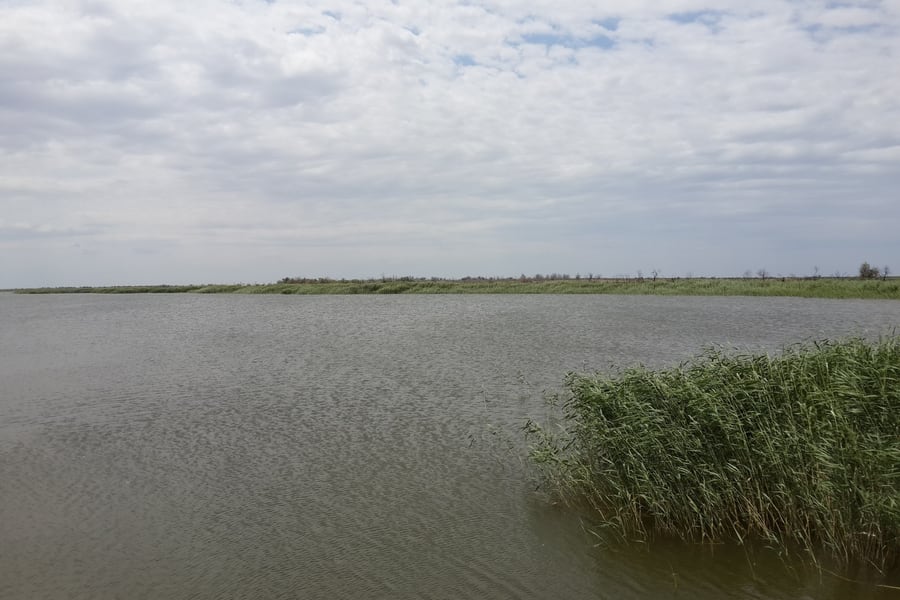 Esetok / Wikimedia Commons · CC BY-SA 4.0 · 2014 · cropped
Shalkar, and the 2014 line
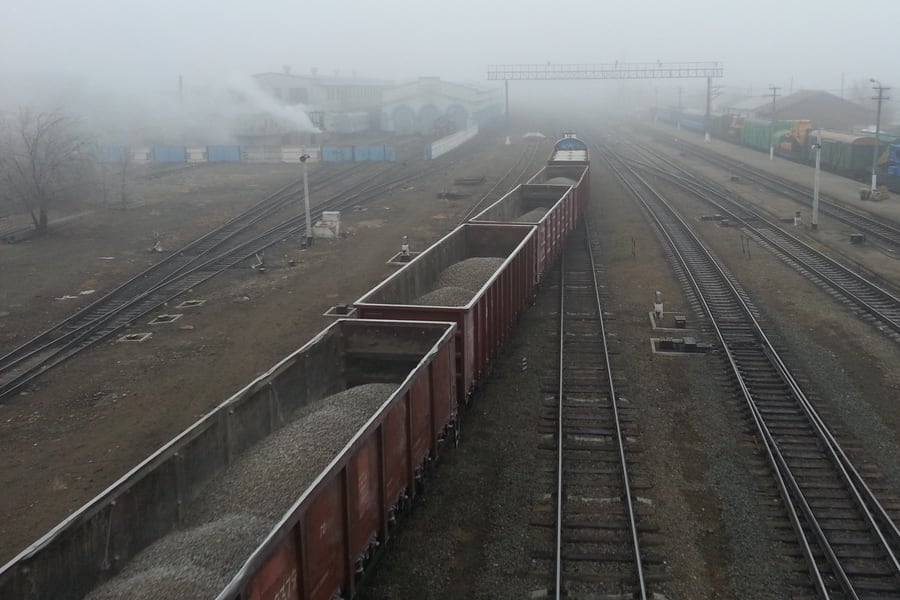
Shalkar's station and depot were built in 1905–07 beside its lake. Here the train leaves the 1906 line and turns on to the Shalkar–Beineu line, 499 kilometres opened in August 2014, with six stations and fourteen passing loops.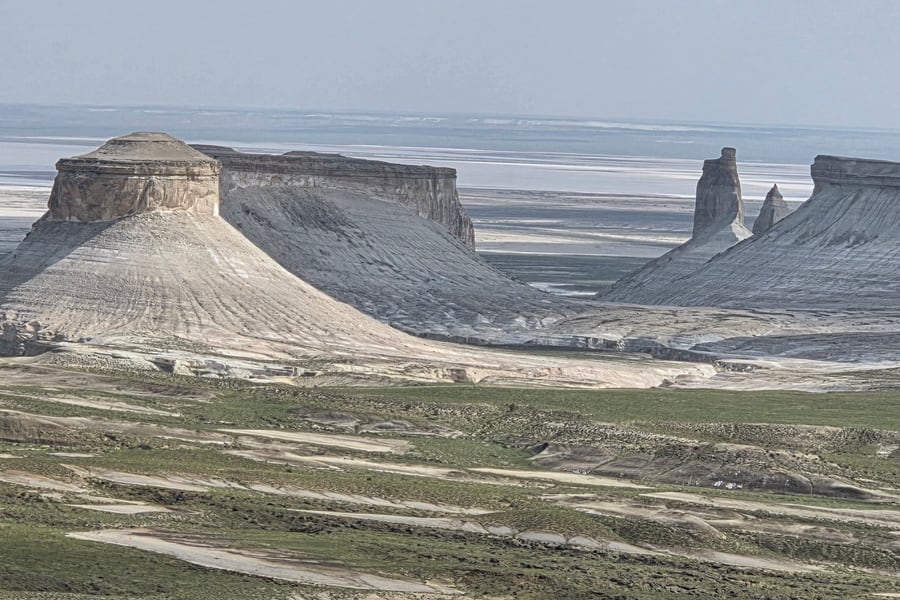 IvarT / Wikimedia Commons · CC0 · 2026 · cropped
The Ustyurt
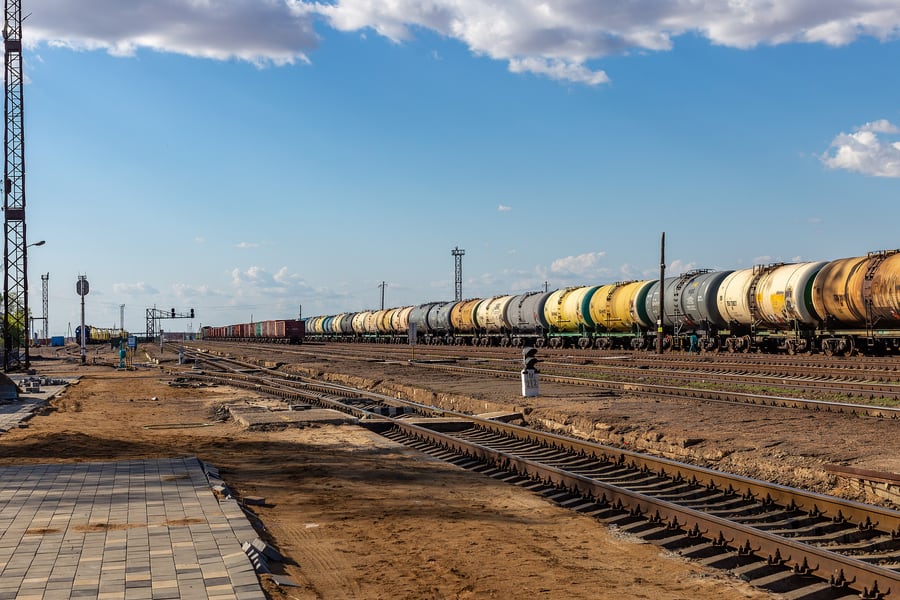
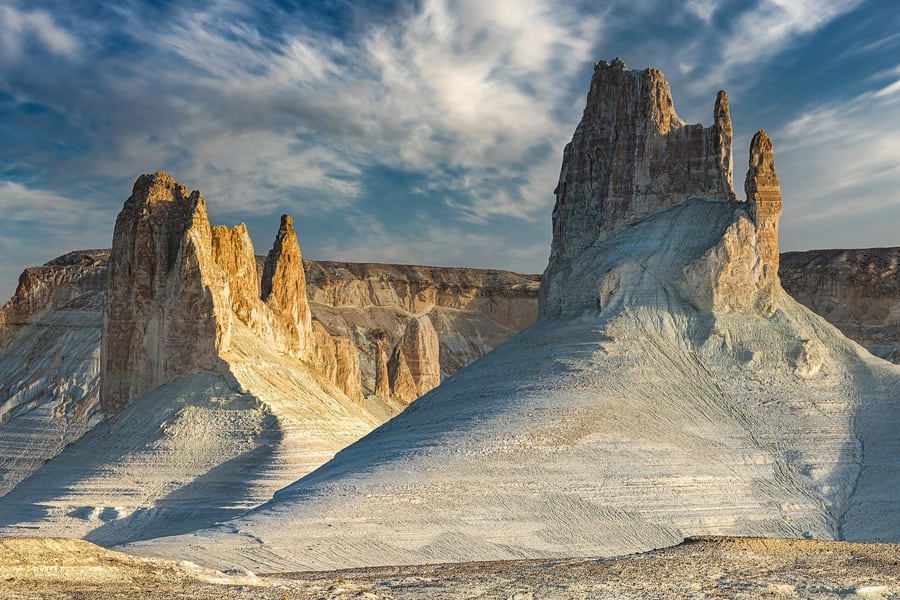
Past Beineu the train calls at a station named after the Ustyurt, a clay desert plateau of some 200,000 square kilometres shared with Uzbekistan and Turkmenistan. It is bounded almost everywhere by cliffs called chinks, banded pale pink, blue and white.A bit of history
Culture & experiences along the way
 Graphique38 / Wikimedia Commons · CC BY 4.0 · 2026 · cropped
Three nights in a kupe
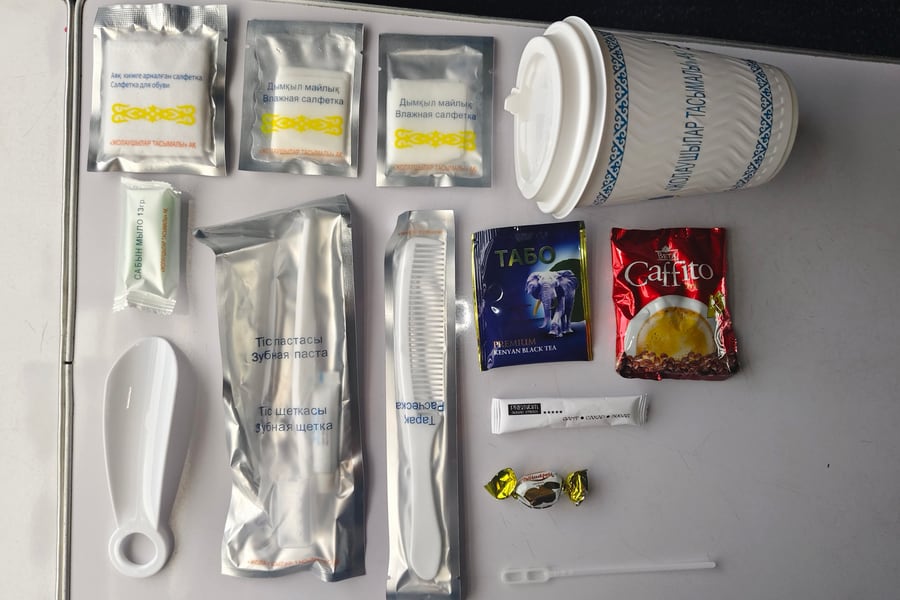
Train 077's coaches were built in 2019–2021. The operator lists four-berth kupe compartments, nine to a coach, and open platskart coaches of 54 berths, both air-conditioned with sockets, and a coach with one compartment for passengers with reduced mobility. Bedding is in the fare, and the restaurant car delivers to the compartment.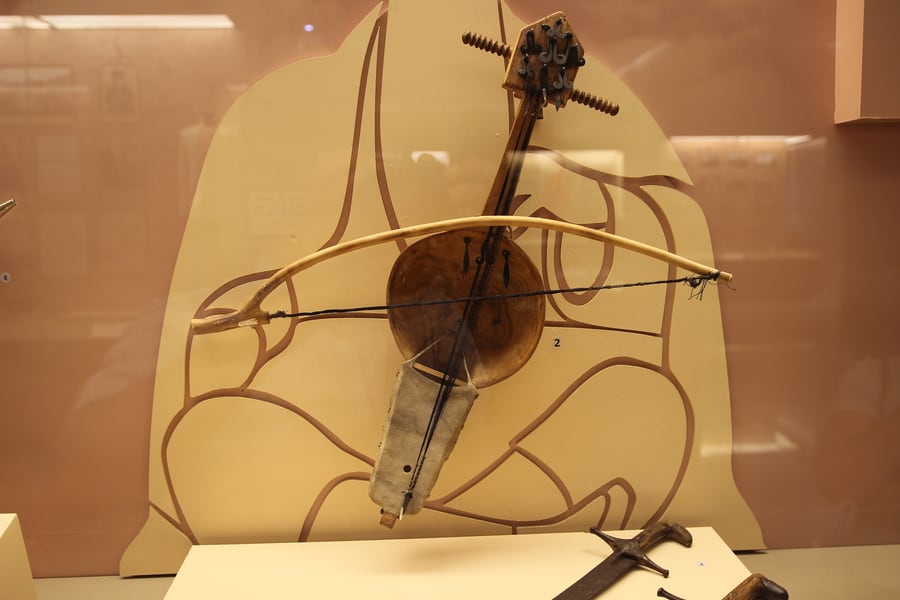 Muzaffar Turgunov / Wikimedia Commons · CC0 · 2012 · cropped
The kobyz
A two-stringed fiddle bowed with horsehair, its neck and body carved from one block of wood and half covered in skin. It was once a sacred instrument, kept by shamans and healers, and Kazakh tradition says Korkyt Ata made it and played it while searching for a way to overcome death.Timetables
One train a day runs the whole way between Almaty and the Caspian in each direction: 077, Almaty-2 to Mangistau. A second daily train, 041, takes the same line west as far as Shalkar and then the older route on to Atyrau. The times below are the operator's own, read from the route detail behind each train on bilet.railways.kz in October 2026 for departures between 25 October and 6 December, and checked across at least fourteen consecutive dates each way. Kazakhstan keeps a single time zone, so none of the times jumps.
Almaty to Mangistau and Atyrau
Departure times from each station, arrival at the last; the day is the day of the journey. A dash means the train does not call.
| Station | 077 | 041 |
|---|---|---|
| Almaty-2 | 23:57 day 1 | — |
| Almaty-1 | 00:45 day 2 | 22:30 day 1 |
| Shu | 06:10 | 04:07 day 2 |
| Taraz | 10:02 | 08:19 |
| Shymkent | 14:33 | 12:23 |
| Turkestan | 18:21 | 16:17 |
| Kyzylorda | 00:29 day 3 | 22:35 |
| Toretam | 03:58 | 02:00 day 3 |
| Aral Tenizi | 07:58 | 06:02 |
| Shalkar | 12:58 | 10:06 |
| Kandyagash | — | 15:21 |
| Makat | — | 23:13 |
| Beineu | 22:07 | — |
| Shetpe | 04:29 day 4 | — |
| Mangistau | 05:50 | — |
| Atyrau | — | 01:30 day 4 |
Mangistau to Almaty
| Station | 077 |
|---|---|
| Mangistau | 08:31 day 1 |
| Shetpe | 10:06 |
| Beineu | 16:48 |
| Shalkar | 01:35 day 2 |
| Aral Tenizi | 05:54 |
| Toretam | 09:59 |
| Kyzylorda | 14:00 |
| Turkestan | 20:57 |
| Shymkent | 01:08 day 3 |
| Taraz | 05:59 |
| Shu | 10:06 |
| Almaty-1 | 15:36 |
| Almaty-2 | 16:02 |
What the timetable is doing
077 takes 2 days 5 hr 53 min west and 2 days 7 hr 31 min back, on every date scanned. Westbound it crosses the Aral country in the early morning; eastbound it leaves Mangistau after breakfast and has the Mangyshlak desert and Beineu in daylight, and reaches the Aral before dawn. 041 leaves Almaty-1 at 22:30 and reaches Atyrau, at the mouth of the Ural, in 2 days 3 hr. It changes its times in mid-November: until 18 November it arrived at 02:29, an hour later. Back, 041 leaves Atyrau at 14:22 and is in Almaty-1 at 18:29 on the third day.
The operator also lists a Talgo on this route, 111 Almaty–Mangistau, in Tulpar-Talgo coaches of 2016, but none was on sale on any date between 25 October and 6 December 2026. Sales open about six weeks ahead.
Departures are published by the operator: Qazaqstan Temır Joly · bilet.railways.kz (opens in a new tab).
Tickets
Tickets are sold by Qazaqstan Temır Joly through its own system at bilet.railways.kz, in Kazakh, Russian and partial English, and at station ticket offices; sales open about six weeks ahead. On train 077 through to Mangistau, a berth in a four-berth kupe compartment was 37,832 ₸ on every date sampled between 25 October and 6 December 2026, and an open platskart berth 22,013 ₸, once 17,675 ₸. Bedding is included.
Berths run short close to departure: for the last days of October platskart was sold out on several dates and kupe was down to a handful. To Atyrau on train 041 the fares are lower — 24,842 ₸ in kupe and 14,924 ₸ in platskart.
Book your tickets
Almaty to Mangistau, four-berth kupe
37,832 ₸ on every sampled date
A berth in a four-berth compartment on train 077, three nights with bedding included.
Book Tickets (opens in a new tab, on bilet.railways.kz)via bilet.railways.kzAlmaty to Mangistau, platskart
17,675 – 22,013 ₸ depending on date
An open-plan berth in a 54-berth platskart coach on train 077.
Book Tickets (opens in a new tab, on bilet.railways.kz)via bilet.railways.kzAlmaty to Atyrau, four-berth kupe
24,842 ₸ on train 041
A berth in a four-berth compartment on the daily train 041 to Atyrau.
Book Tickets (opens in a new tab, on bilet.railways.kz)via bilet.railways.kzRail Passes
No rail pass covers Kazakhstan, so there is nothing to buy instead of a ticket. Interrail and Eurail describe a network of 33 countries, and Kazakhstan is not one of them.
The answer for this journey is the plain fare, bought from the operator: about 38,000 tenge for a kupe berth all the way from Almaty to Mangistau, which is three nights' bed as well as the ride. Checked against interrail.com in October 2026.
Places to Visit
Train 077 makes thirty-nine stops between its termini, most of them for a few minutes. These four are worth getting off for: a city on the Syr Darya, the town the sea left, a lone mountain in Mangystau, and the Caspian shore at the end of the line.
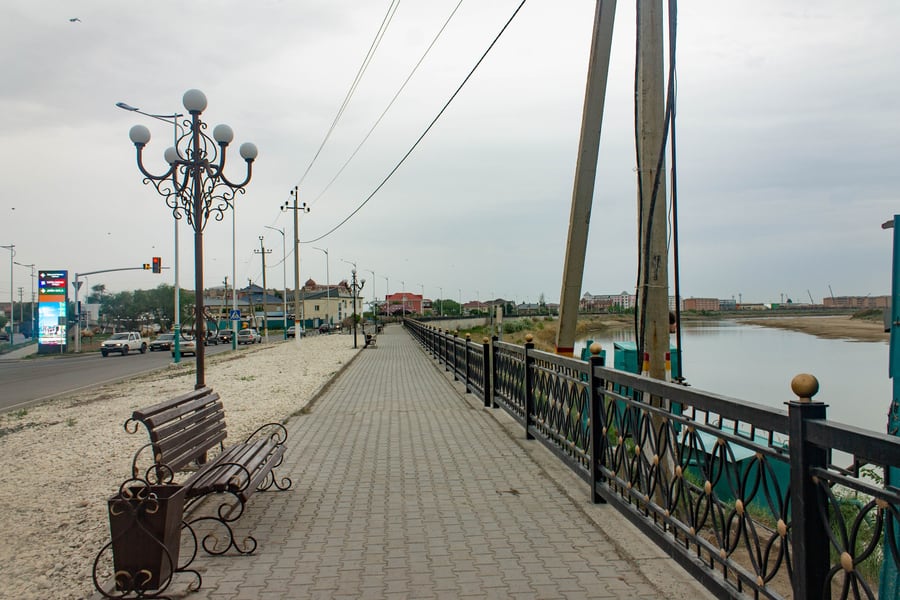 Nikolai Bulykin / Wikimedia Commons · CC BY-SA 4.0 · 2022 · cropped
Kyzylorda
The city grew round Ak-Mechet, a Kokand fortress built on the Syr Darya in 1817; Russian troops took it in 1853 and named it Fort Perovsky. Renamed Kzyl-Orda, the red city, in 1925, it was capital of the Kazakh ASSR until 1927. Some 240,000 people live here, and an embankment follows the river through the centre.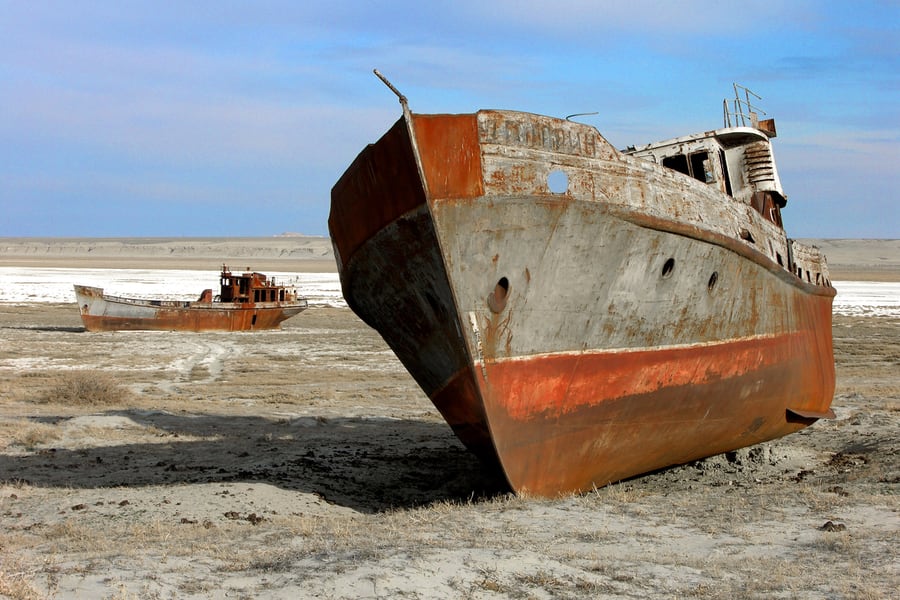 Zhanat Kulenov / Wikimedia Commons · CC BY-SA 3.0 IGO · 2006 · cropped
Aral and the ship cemetery
For most of the twentieth century Aral was a fishing port with its own ship-repair yard. Since the sea began to retreat in 1960 it has been landlocked, at one time about 100 kilometres from the water. The Kokaral dam of 2005 brought the North Aral back to within twelve kilometres, and boats left behind on the old seabed of Zhalanash Bay were still there when this was photographed in 2006.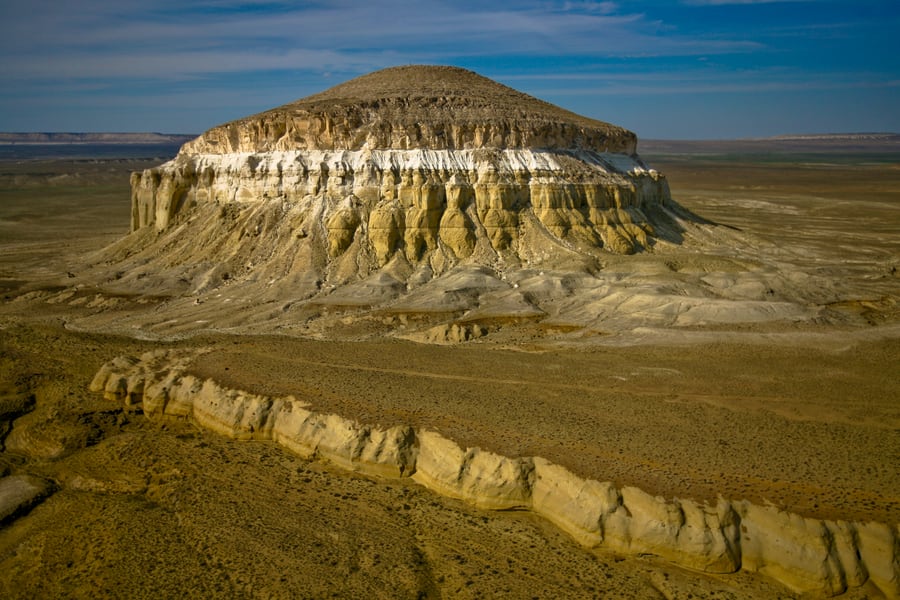 Ashina / Wikimedia Commons · CC BY-SA 3.0 · 2008 · cropped
Sherkala
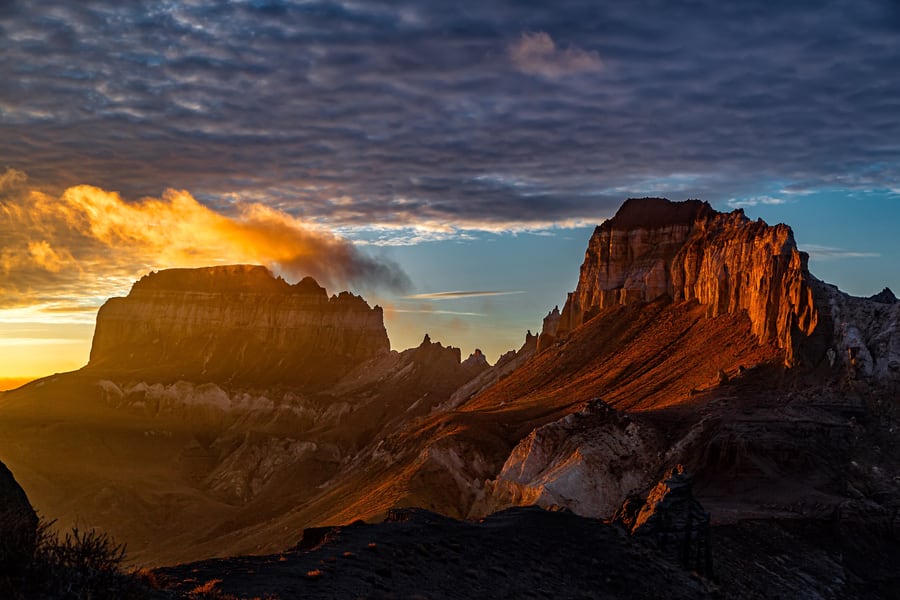
A lone mountain near Shetpe, steep on its south and east sides and likened to a yurt, a drinking bowl or a sphinx. Its name is Persian for Lion's Castle. The remains of a medieval caravanserai and fort lie on top and at its foot, and the ruins of Kyzylkala, a town on the Silk Road, are close by.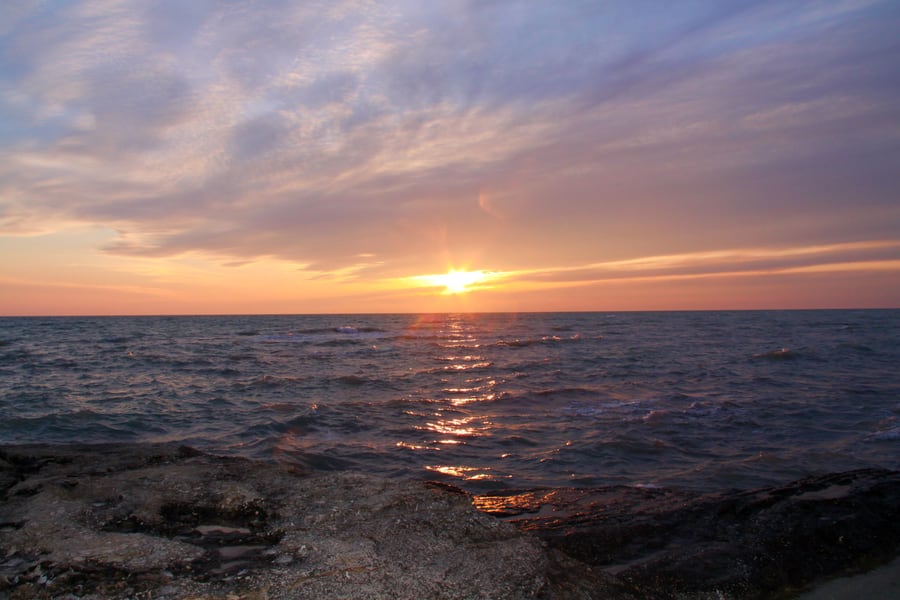 Rassim / Wikimedia Commons · CC BY-SA 4.0 · 2011 · cropped
Aktau and the Caspian
A port city on the Mangyshlak peninsula and the east shore of the Caspian, named for its white hills. It began in 1958 as a settlement of uranium prospectors and was called Shevchenko from 1964 to 1991, after the Ukrainian poet exiled nearby. The region around it keeps old necropolises and underground mosques, Beket-Ata among them.Where to Sleep
The train is the bed for three nights. What is needed is somewhere in Aktau after a 05:50 arrival at Mangistau, 13 kilometres out of the city — and both hotels below belong to the same international group and are booked through its own website.
Where to stay
Holiday Inn Aktau
Building 73, 4th Microdistrict, central Aktau
A city-centre hotel less than a kilometre from the Caspian Sea, with free wi-fi, a gym and a restaurant.
Check Availability (opens in a new tab, on ihg.com)via ihg.comHoliday Inn Aktau - Seaside
Microdistrict 15, Samal, Aktau
A hotel on the Caspian coast about a hundred metres from the beach, with a pool and a fitness centre.
Check Availability (opens in a new tab, on ihg.com)via ihg.comQuestions or corrections
Planning this trip and stuck on something, or spotted a time, fare or detail that has changed? Send us a message about Almaty to the Caspian. We read every one, and we update this page when something has changed.