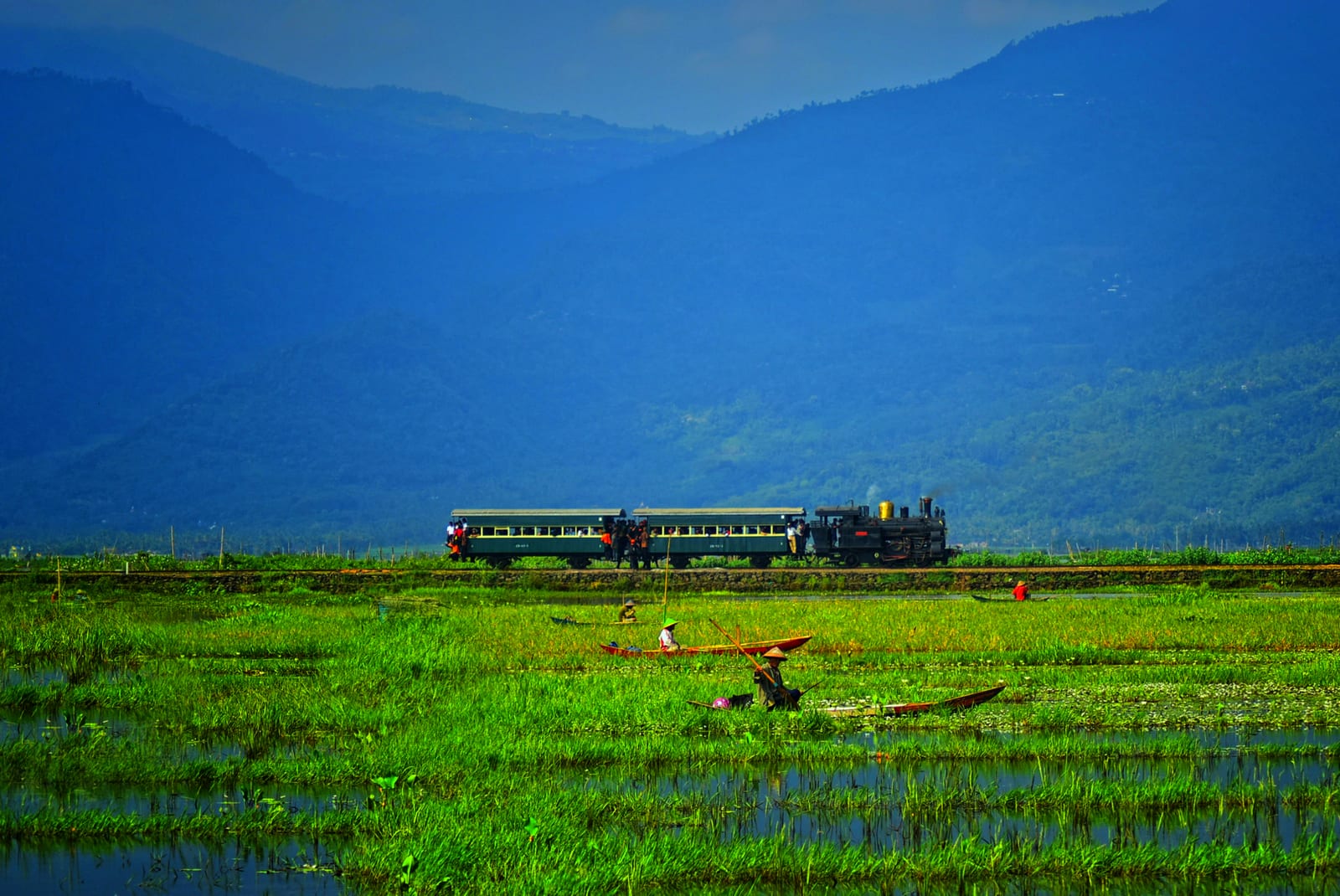
The Ambarawa Rack Railway
Devanocturno / Wikimedia Commons · CC BY-SA 4.0
- DistanceAmbarawa–Bedono · 9 km (rack) · Ambarawa–Tuntang · 7 km (flat)
- DurationAbout 1 hour each way
- Best seasonDry season (April–October); the rack line runs for chartered groups
Introduction
Some trains are fast, some are scenic, and a very few are simply survivors — machines that ought to have vanished a century ago and somehow still do their work. The Ambarawa rack railway, in the hills of Central Java, is one of those. Here, on a short, ferociously steep mountain line, a wood-fired cog locomotive built in Germany in 1902 still grips a toothed rail and hauls itself uphill exactly as it was designed to do — one of only a handful of working rack railways left anywhere on earth.
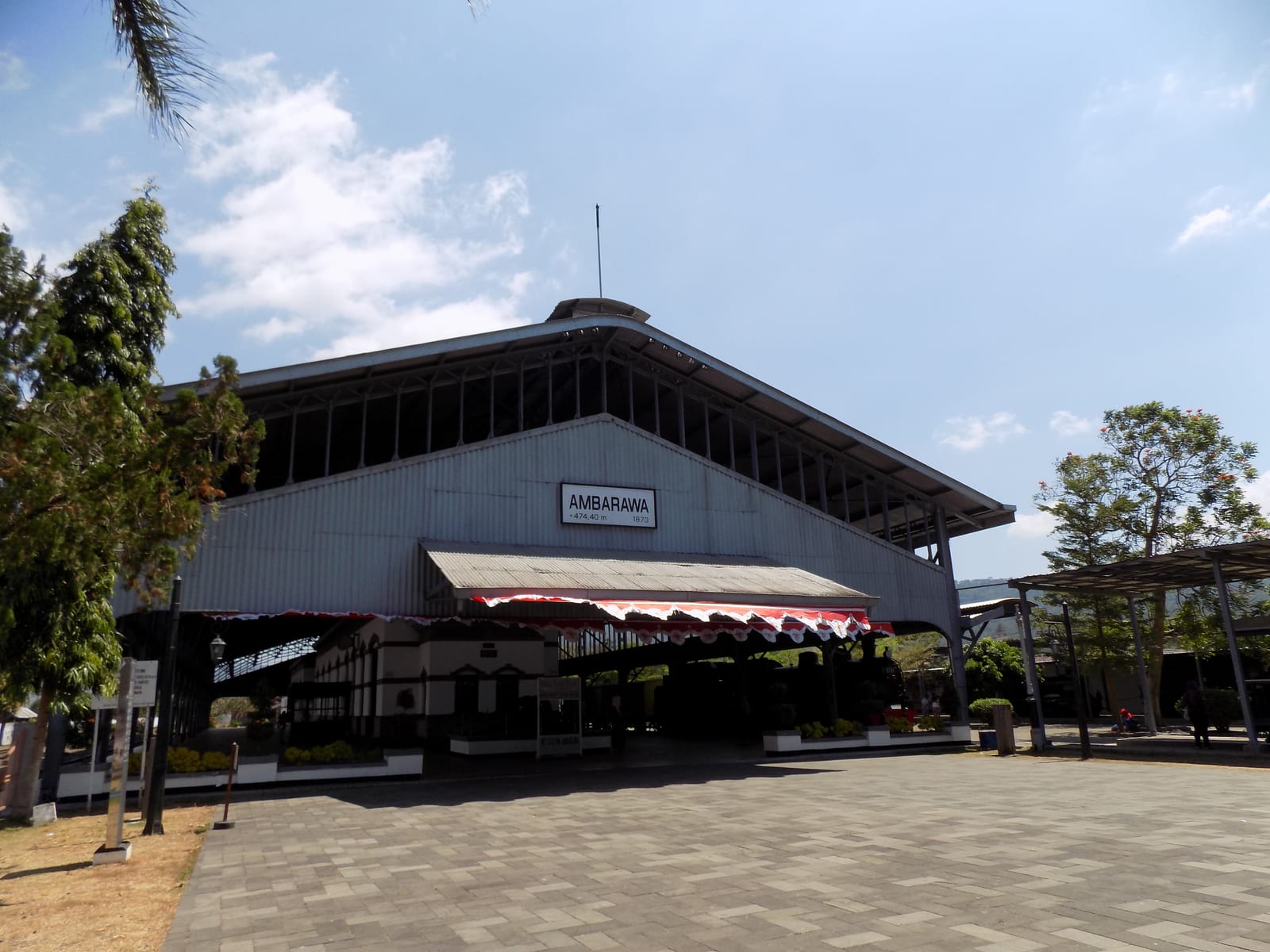
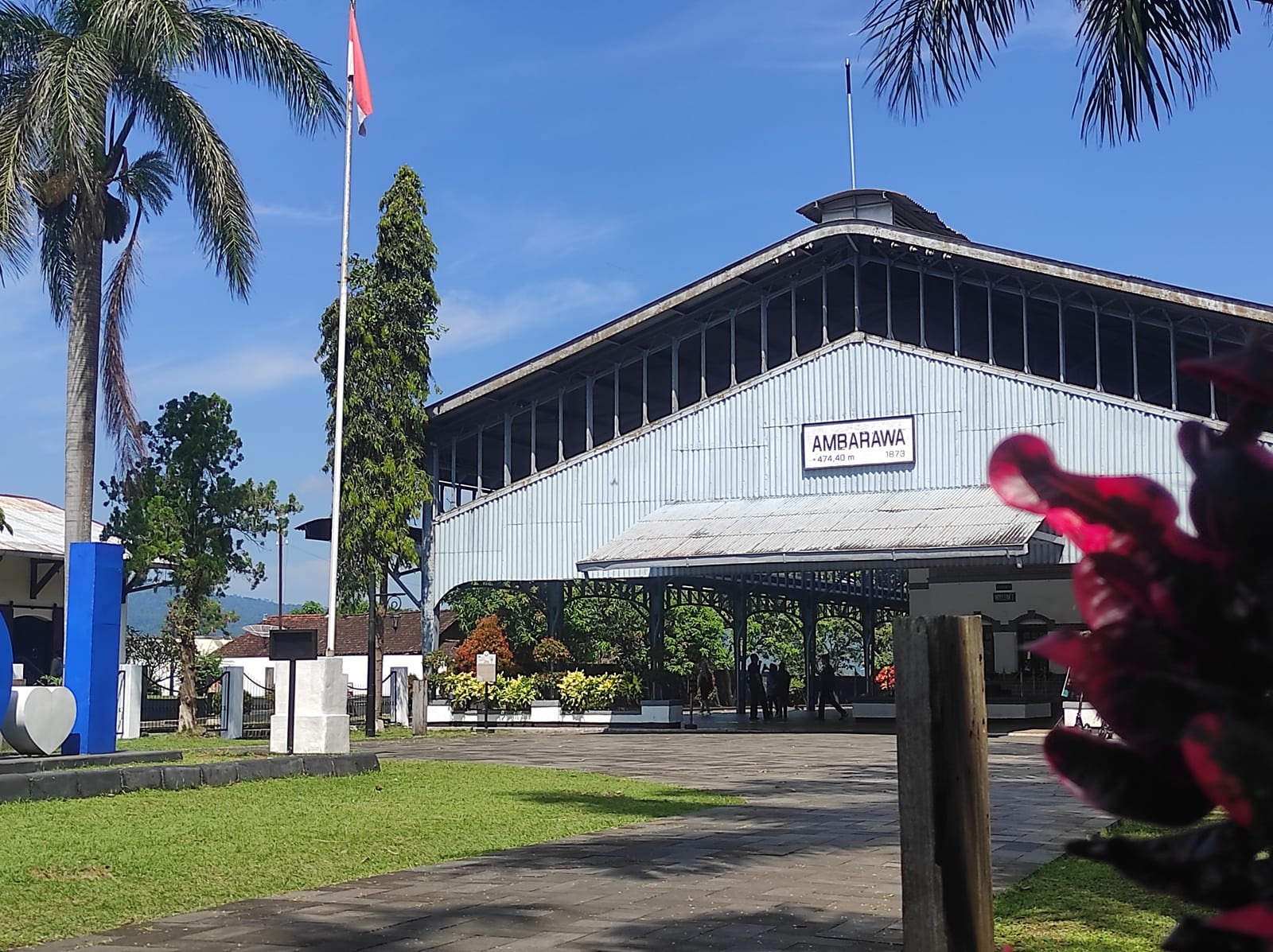
It all centres on a beautiful ghost of a station. Ambarawa was opened by the Dutch in 1873 as Willem I, named for the fortress beside it, a grand country junction built when this was a strategic corner of the colony. When the trains stopped, instead of demolishing it they kept it, and in the 1970s turned it into one of Asia's great railway museums — dozens of steam locomotives ranged under long tiled roofs, in a little town set among rice fields and volcanoes beside the reedy lake of Rawa Pening.
From this station two heritage trains still run. One is a gentle flat ride down to Tuntang, along the lakeshore — the easy, turn-up-and-go trip anyone can take at a weekend. The other is the famous one: the rack climb up the mountain to Bedono, where the cog engine bites the toothed centre rail and grinds up gradients no ordinary train could hold.
Worth knowing: the rack ride to Bedono runs by charter, not to a daily timetable — it is booked by groups, so an individual visitor turning up will usually ride the flat line to Tuntang instead. If the cog climb is what you've come for, arrange it with the museum well in advance, or join a group departure. More on this in the timetable below.
The Journey
You begin among the exhibits. The platforms at Ambarawa are lined with retired locomotives — squat colonial tank engines, a giant articulated machine or two, rows of wooden carriages — all under the long roofs of the 1873 station, with its cast-iron columns and its old Dutch nameboards. It feels less like a museum than a working shed that time forgot, which is more or less what it is: somewhere in the yard, a fire is being lit under a hundred-year-old boiler.
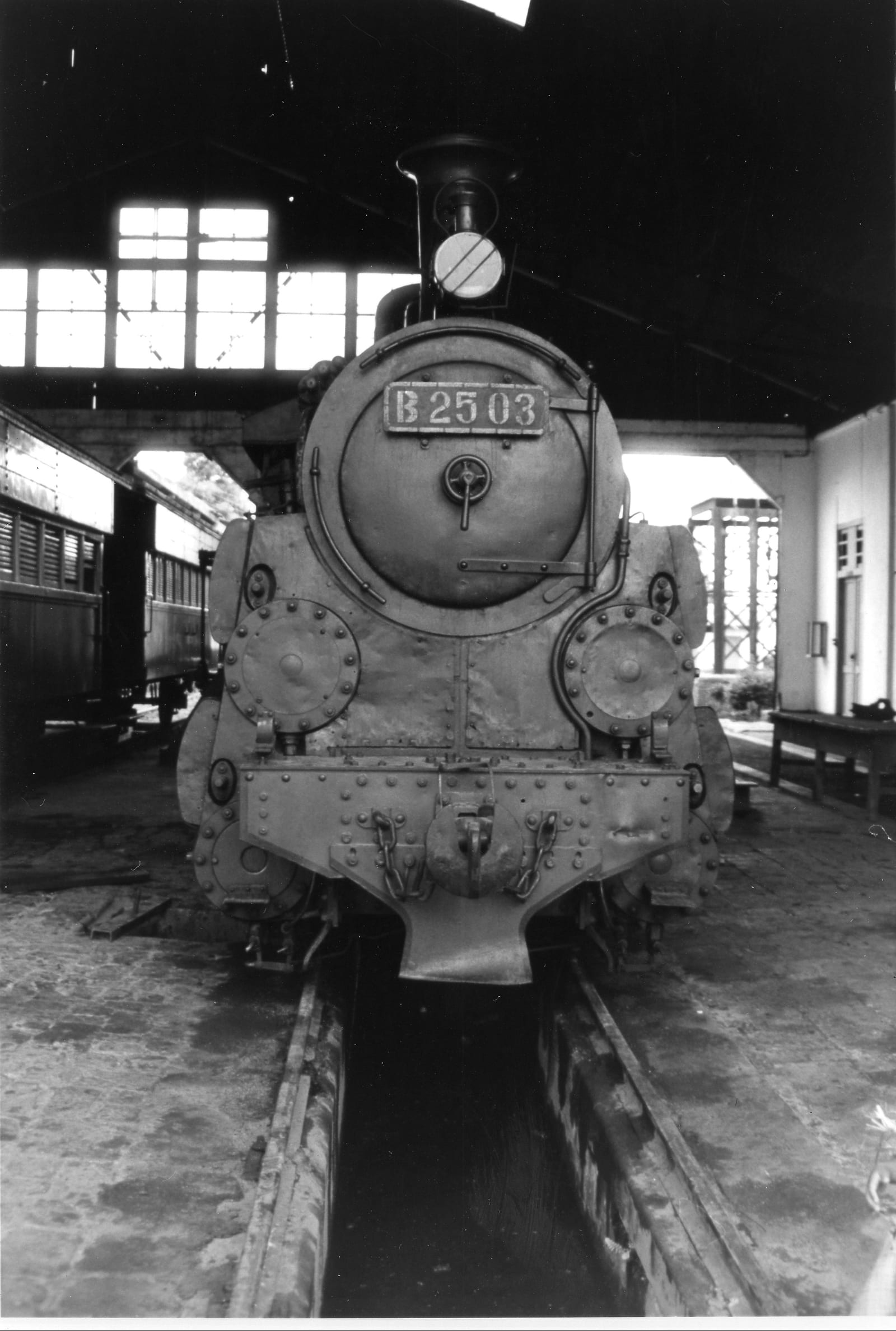
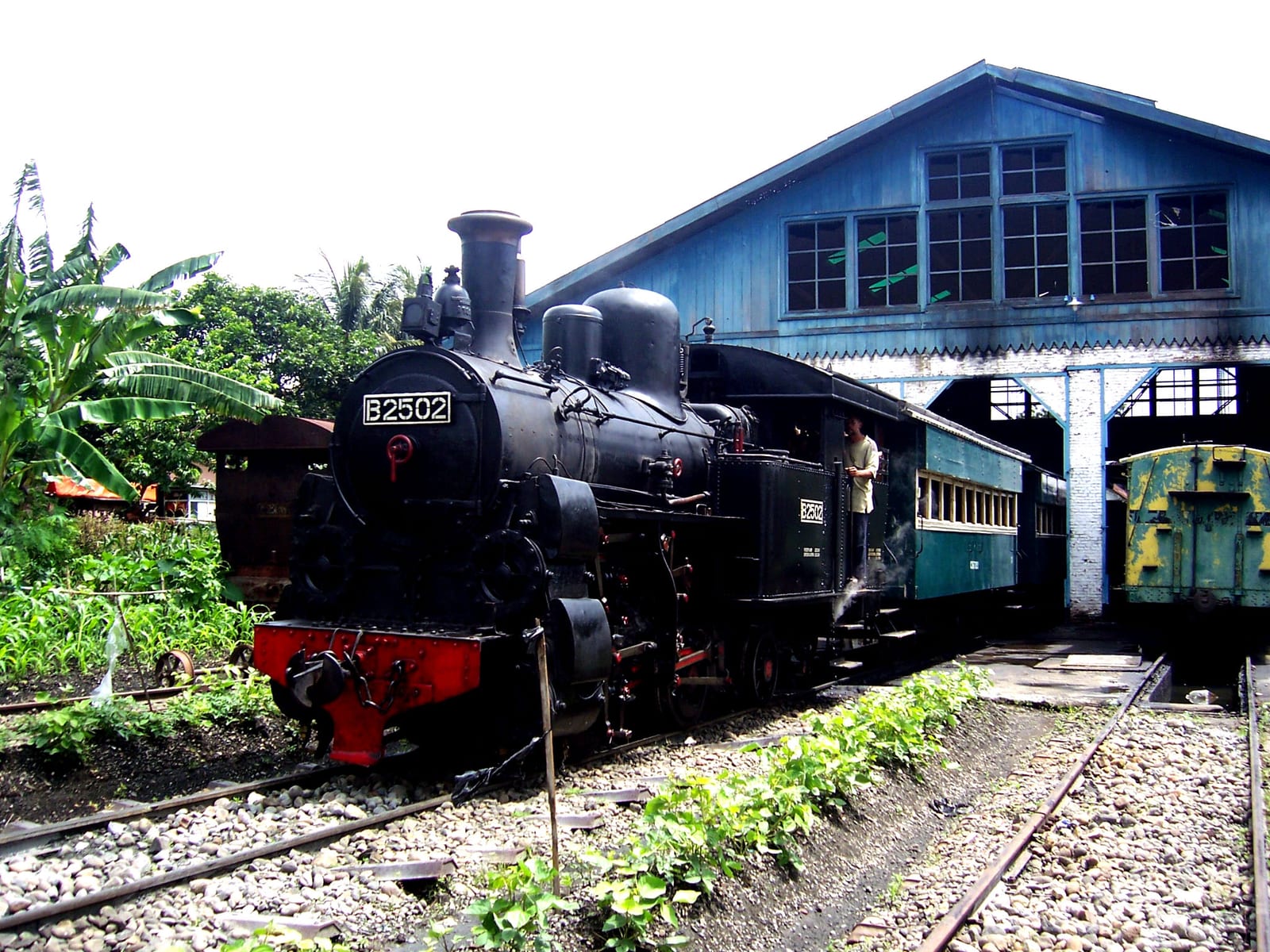
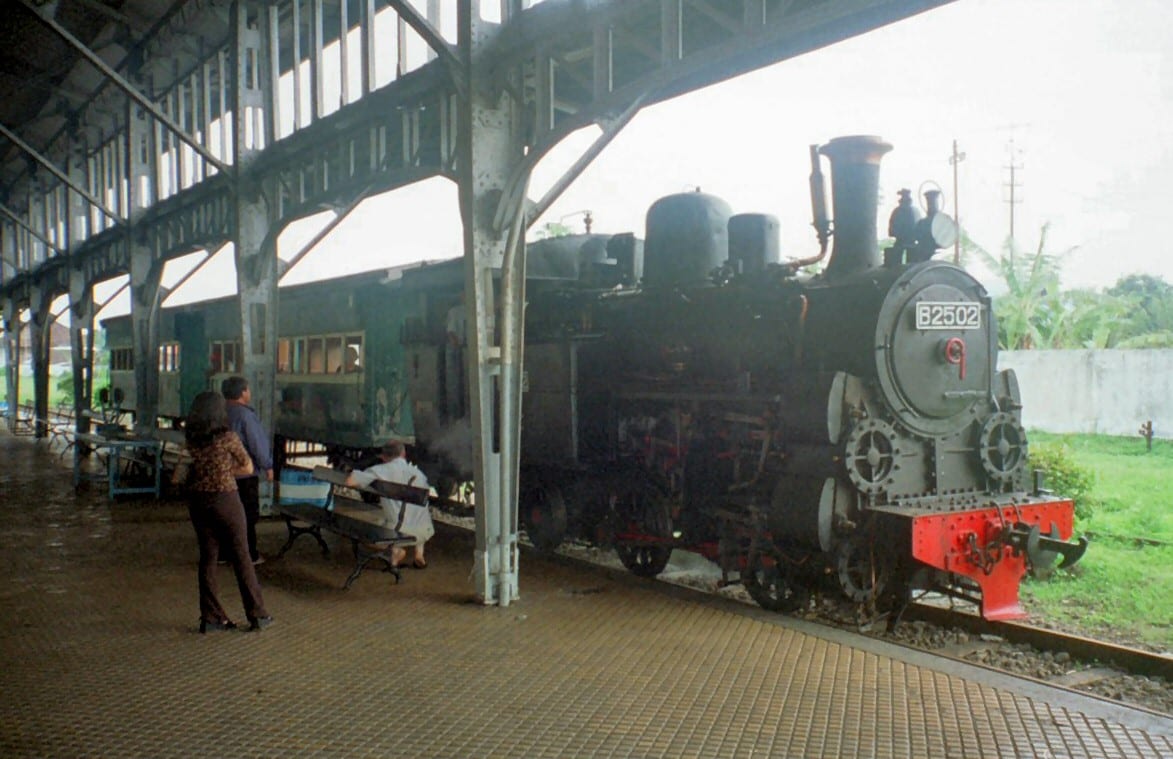
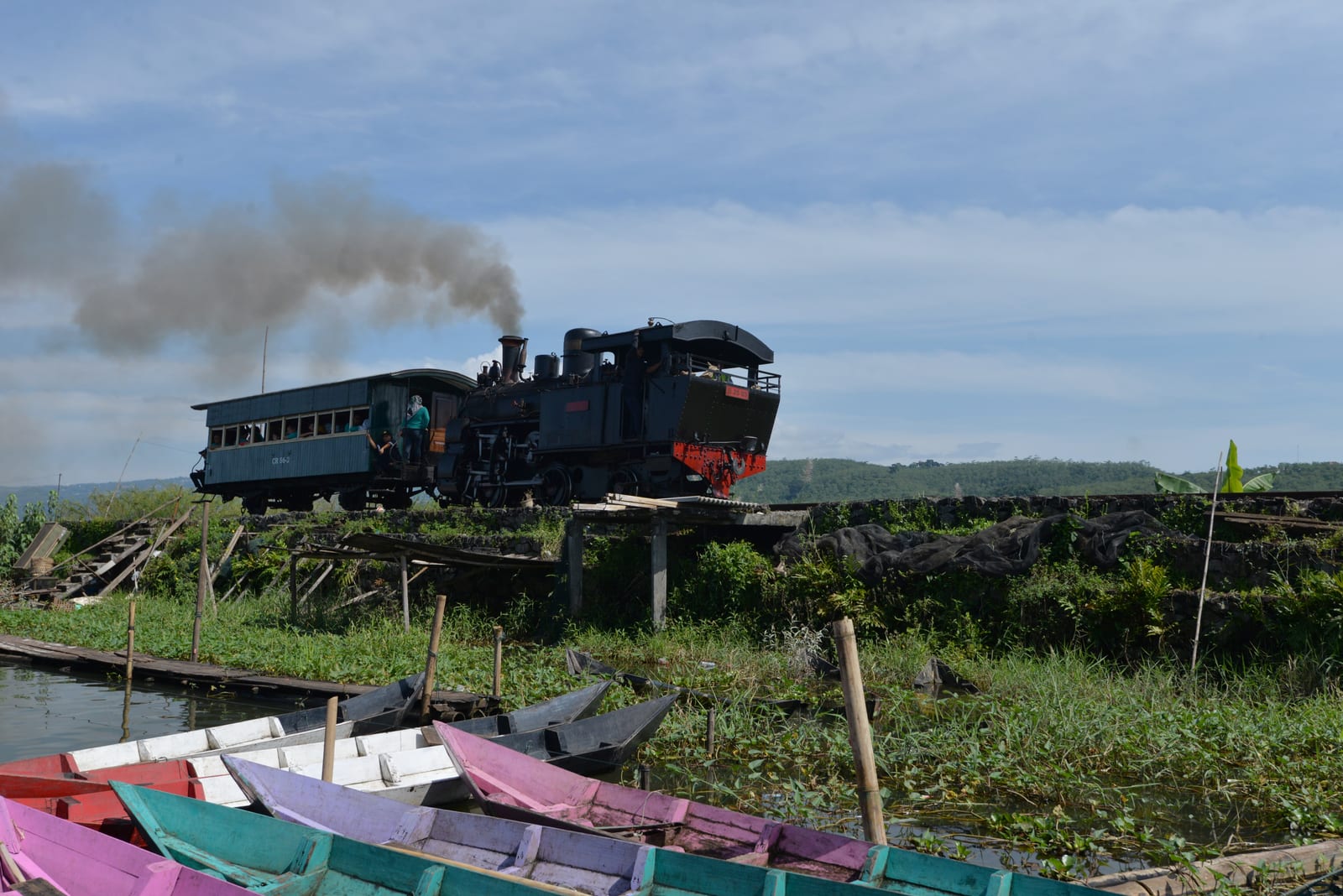
The engine for the mountain is a B25, a little 0-4-2 cog locomotive built by Maschinenfabrik Esslingen in 1902 and still fired by wood — you can smell the smoke and hear the crackle as it raises steam. It backs onto a rake of open-sided timber coaches, and the guard waves you aboard slatted wooden benches with the windows already down. Then it sets off, and for a while it is just a charming slow train through the paddies, the volcanoes floating on the skyline, farmers straightening up to watch it pass.
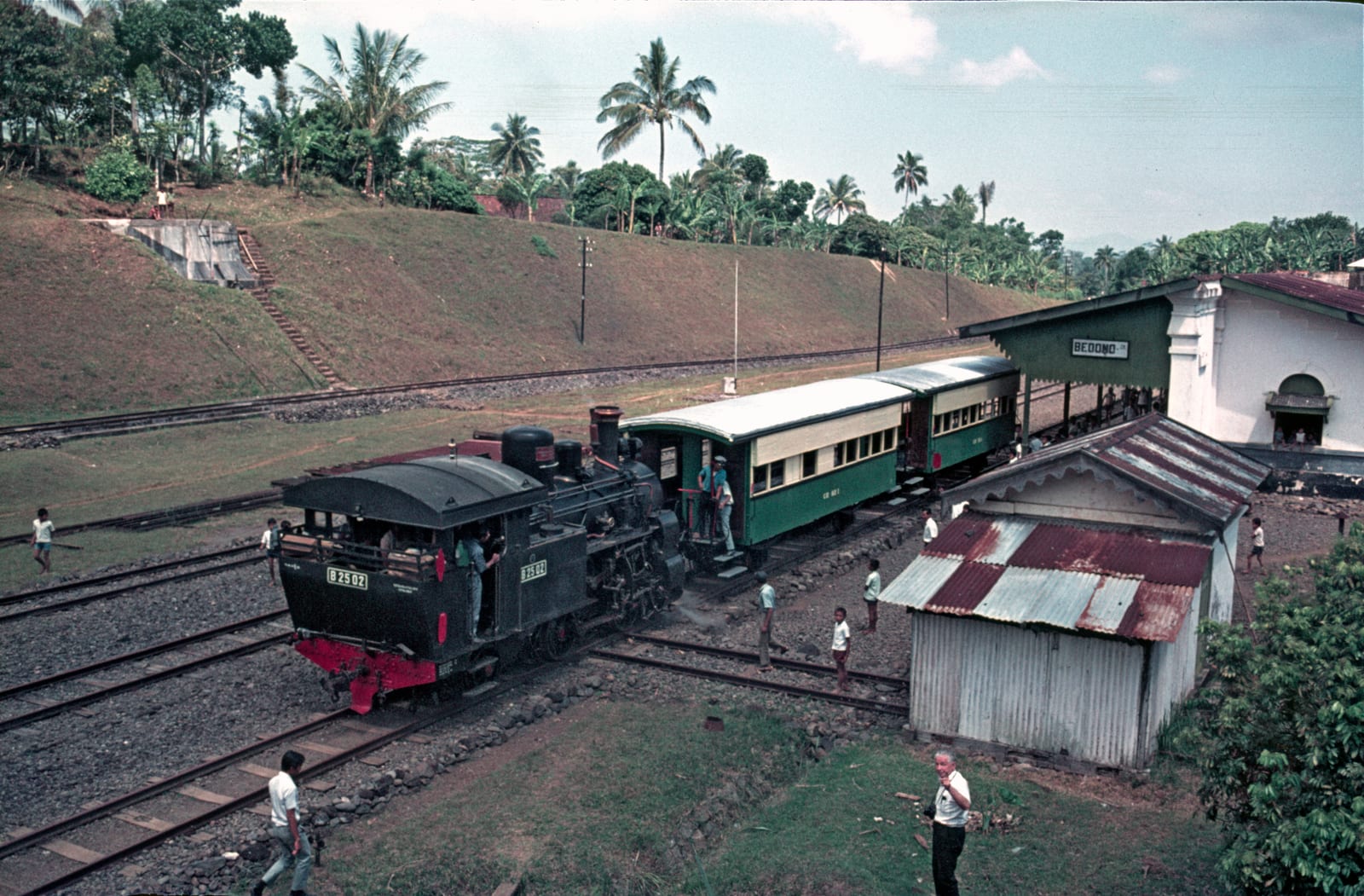
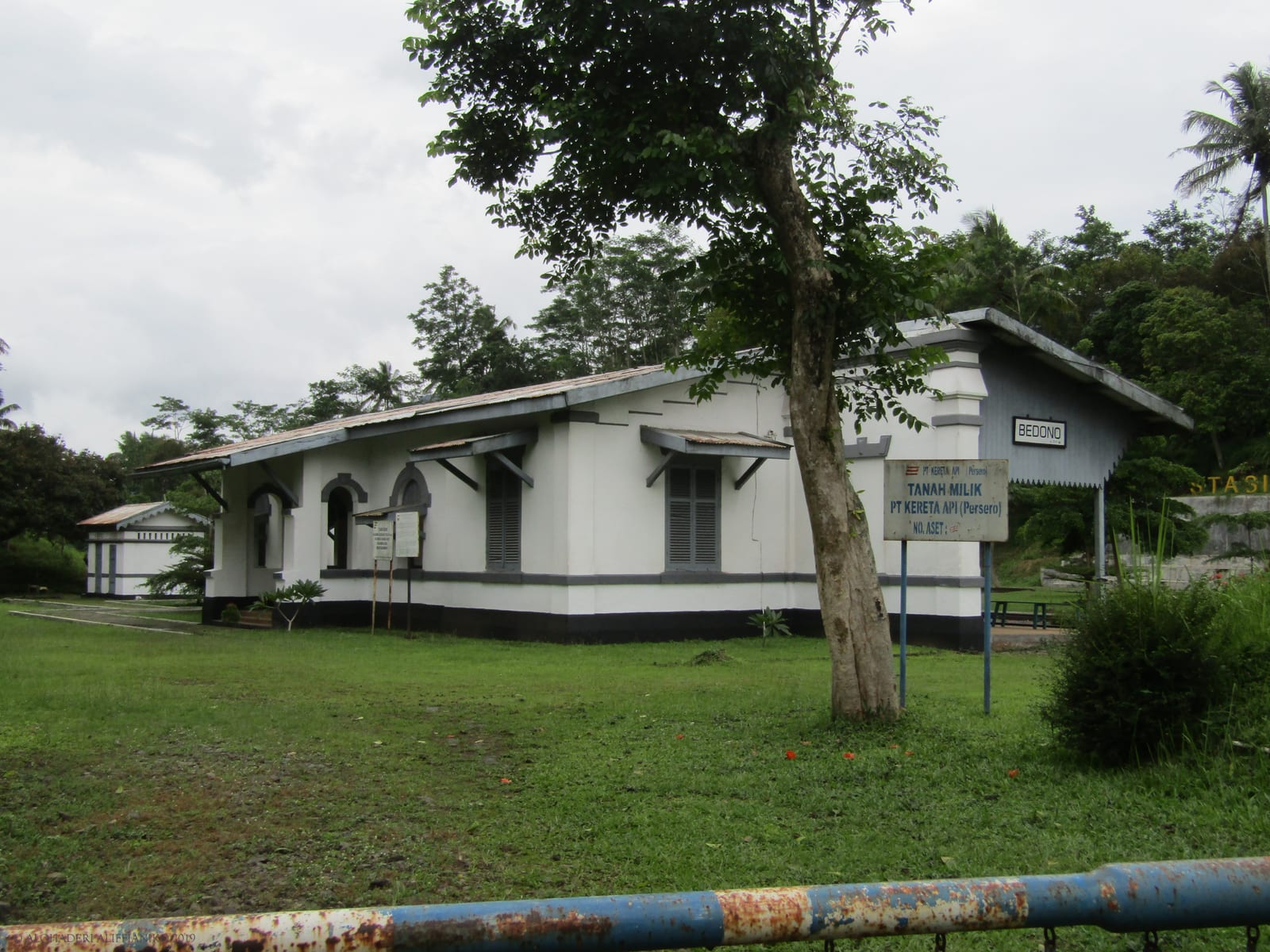
The drama comes on the climb toward Bedono. The gradient steepens brutally — up to 6.5%, far more than an ordinary train can grip — and here the line's secret comes into play: a third, toothed rail laid between the running rails. A cog wheel under the locomotive drops into those teeth and the engine begins to walk itself up the hill, barking hard, barely faster than you could climb on foot. This is the Abt rack system, completed in 1905, and it is the only stretch of rack railway ever built on Java. Riding it, you are part of a tiny, dwindling club of travellers anywhere who still ascend a mountain by cog and steam.
The gentler alternative — and the one most visitors actually ride — runs the other way, out of Ambarawa onto the flat and down to Tuntang, seven easy kilometres to the shore of Rawa Pening lake. There is no rack here and no mountain, just rice fields, water buffalo and the wide reed-fringed lake with the peaks beyond, all at the pace of a vintage steam train on a lazy weekend. It lacks the theatre of the cog climb, but it is lovely in its own right, and it is the ride you can simply turn up and take.
Either way, the appeal is the same: a genuine encounter with a machine and a method that the rest of the world has almost entirely lost. There is no restored-for-tourists gloss here that quite hides the fact that these are old engines, on an old line, doing an old job — and that is exactly why it is worth the trip into the Javanese hills.
Along the route
Frank Stamford / Wikimedia Commons · CC BY 2.0One of the last rack railways on earth
Between Jambu and Bedono the mountain grows too steep for ordinary wheels — up to 6.5% — so a cog bites a third, toothed rail laid between the running rails. Completed in 1905, it is the only rack section ever built in Java.kitmasterbloke / Wikimedia Commons · CC BY 2.0Real steam from 1902
This is not a replica. The engines that climb the rack are genuine B25 cog locomotives, built in Germany in 1902 and still fired by wood — machines older than the aeroplane, doing the exact job they were made for on the exact hill.Saverailfansindo / Wikimedia Commons · CC BY-SA 3.0A station out of time
The line begins at Ambarawa, opened by the Dutch as Willem I in 1873 beside a military fort and now one of Asia's great railway museums. Dozens of preserved locomotives stand under its long roofs, among rice fields below the volcanoes.A bit of history
Culture & experiences along the way
Hullie / Wikimedia Commons · Public domainRiding the antique train
The carriages are as old as the engines — timber-bodied coaches with slatted seats and windows thrown open to the warm air, the smell of woodsmoke drifting back from the funnel. It is slow, jolting and utterly charming, the locomotive barking as it works, children waving from the paddies as you pass. Bring a hat and let it take its time.Saverailfansindo / Wikimedia Commons · CC BY-SA 4.0 · croppedThe cog climb to Bedono
The famous ascent — Ambarawa up through Jambu to Bedono, where the cog engine grips the rack and grinds up the mountain — is the reason enthusiasts come. Be aware it runs by charter, not to a daily timetable: the rack train is booked by groups, so a solo visitor usually rides the flat line instead. If the cog climb is your dream, arrange it well ahead through the museum, or join a group departure.Nuryahya64 / Wikimedia Commons · CC BY-SA 4.0The lakeside run to Tuntang
The ride anyone can just turn up for is the flat heritage train down to Tuntang, seven kilometres each way at weekends, rolling gently past rice fields to the shore of Rawa Pening lake with the volcanoes beyond. It is short, cheap and lovely — the easy way to ride behind vintage steam here without booking a whole train.Timetables
There are two very different services here, and it is important to know which is which before you plan a visit.
The flat train to Tuntang — the walk-up ride. This is the regular heritage service, running mainly at weekends and public holidays, with several departures across the day when there are enough passengers to fill a train. It covers the 7 km to Tuntang in about 30 minutes each way, past rice fields and the shore of Rawa Pening, and a return ticket costs around Rp 50,000. You buy it on the day at the museum — no group booking needed.
The rack train to Bedono — by charter only. The famous cog climb up the mountain, 9 km each way behind a wood-fired 1902 locomotive, does not run to a fixed daily timetable. The rack train is chartered by groups (up to about 120 passengers) and booked two to three weeks ahead, so it only operates for pre-arranged parties and special events — most often in the dry season. An individual visitor cannot usually just turn up and ride it.
| Ride | When | Distance | Notes |
|---|---|---|---|
| Ambarawa → Tuntang (flat) | Weekends & holidays, several daily | 7 km, ~30 min | Turn up and buy at the museum |
| Ambarawa → Bedono (rack) | By charter, booked ahead | 9 km, ~1 hr | Group booking / special departures only |
Good to know:
- The museum is open most days, roughly 08:00 to 16:00, and is well worth an hour or two whether or not a train is running — the collection of locomotives is superb.
- To ride the cog climb, plan ahead. Contact the museum directly to charter the rack train or to ask whether you can join a group departure; leave two to three weeks. Don't travel out expecting a walk-up cog ride.
- Come in the dry season. April to October gives the best chance of the rack train operating and the clearest views of the volcanoes and lake.
- Getting there. Ambarawa is about 40 km south of Semarang and an easy day trip from Semarang, Yogyakarta or Solo by road.
Days, times and fares as of 2026 and subject to change; heritage operations vary with demand and season. Confirm the current schedule — and arrange any rack charter — with the museum before you travel (see the Tickets section below).
Tickets
The line is run as part of the Ambarawa Railway Museum, under Indonesia's national operator KAI and its heritage arm. There are really two things to book, and they work quite differently.
For the flat weekend train to Tuntang, you simply pay at the museum on the day — a return ticket is inexpensive (around Rp 50,000), and it includes the ride and museum entry. No advance booking is needed; just check that a train is scheduled for the day you plan to come.
For the rack train to Bedono, you must arrange it in advance. The cog service is chartered by groups rather than sold seat-by-seat, so the practical routes to riding it are to book the whole train with a party, or to join an organised group departure. Contact the museum two to three weeks ahead to check availability, prices and dates — and to confirm the wood-fired locomotive will be steaming, as heritage operations can be affected by maintenance and weather.
Below is the museum's official page on the KAI Heritage site for current information, opening hours and contact details.
Book your tickets
Ambarawa heritage train · to Tuntang
The weekend steam ride anyone can board
The regular vintage tourist train from Ambarawa's 1873 station down to Tuntang, past rice fields and Rawa Pening lake — about 30 minutes each way, at weekends and holidays. Buy at the museum; no group booking needed. This is the walk-up ride.
Book Tickets (opens in a new tab, on Ambarawa Railway Museum (KAI))via Ambarawa Railway Museum (KAI)The Bedono rack train · by charter
The cog climb — booked by groups
The mountain rack ride to Bedono behind a wood-fired 1902 cog locomotive. It does not run to a daily timetable — the rack train is chartered by groups (up to ~120), booked two to three weeks ahead. Contact the museum to arrange or join a departure.
Book Tickets (opens in a new tab, on Ambarawa Railway Museum (KAI))via Ambarawa Railway Museum (KAI)Rail Passes
No rail pass covers the Ambarawa trains. Interrail and Eurail are European schemes, and Indonesia is not among the 33 countries in Interrail's list of covered railway companies. The weekend train to Tuntang is paid for at the museum on the day, and the rack train to Bedono is chartered in advance by groups.
Checked October 2026 against Interrail's list of railway companies (opens in a new tab).
Places to Visit
The rack railway sits in one of the loveliest and most historic corners of Central Java, and it pairs naturally with the region's bigger draws — a lake on its doorstep, a ruined Dutch fort in the town, temples and volcanoes on the slopes above, and three of Java's most rewarding cities within an easy day's reach.
All of them are comfortably reachable, and all of them are connected — fittingly, for a place like this — by KAI's modern trains.
 PL 05 SIGIT / Wikimedia Commons · CC BY-SA 4.0 · cropped
Rawa Pening
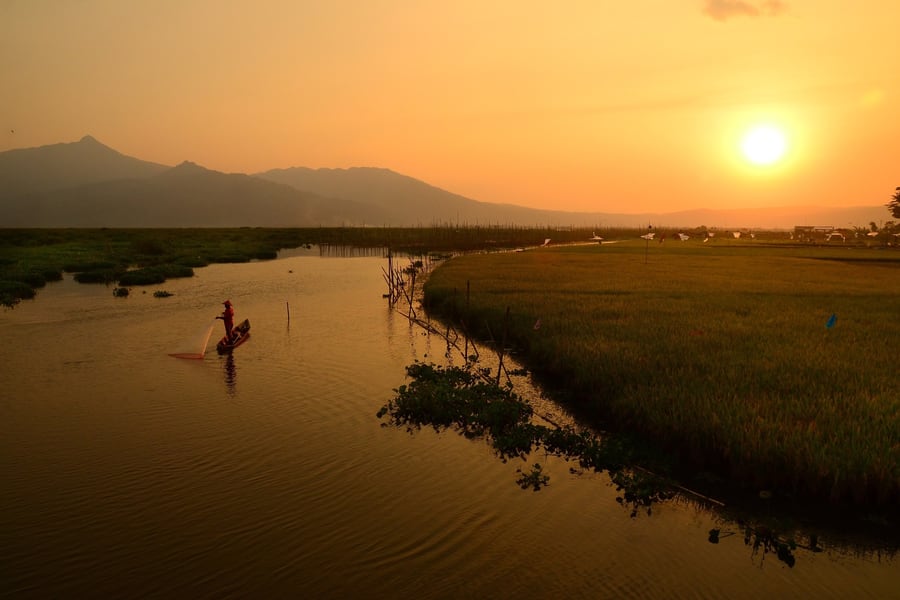
The shallow, reed-fringed lake the Tuntang train runs down towards, filling the floor of the Ambarawa basin between here and Salatiga — some 2,500 to 2,670 hectares of it. Dawn and dusk are the hours: fishermen pole flat boats through the water hyacinth and the volcanoes catch the light. That hyacinth is also the lake's problem, dumping hundreds of tonnes of sediment a year; the water level has fallen sharply since the 1980s.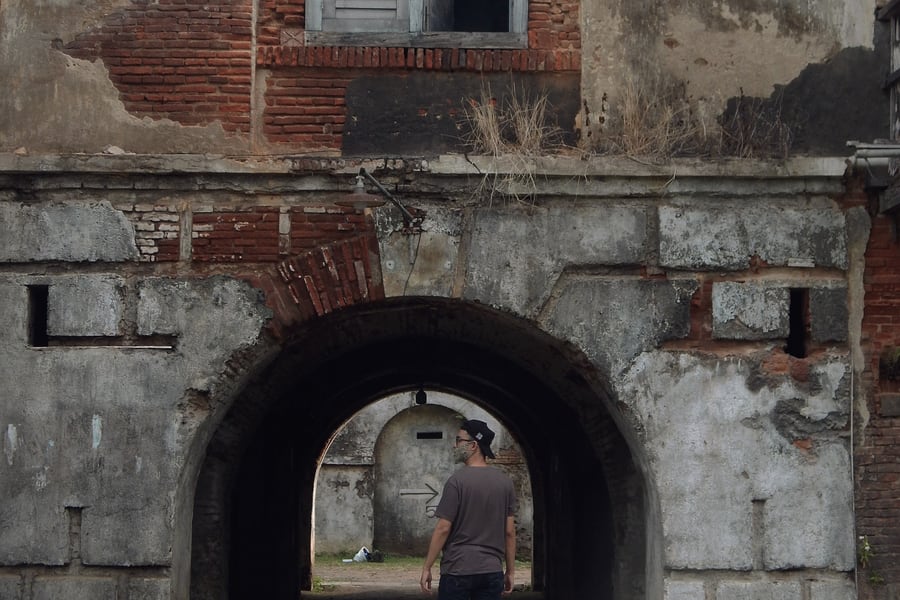 Jay Mambrasar / Wikimedia Commons · CC BY-SA 4.0 · cropped
Ambarawa and Fort Willem I
The town holds more than the railway. Fort Willem I — Benteng Pendem, the "buried fort" — is why the station is called Willem I at all: a Dutch garrison work raised between 1834 and 1845 at a strategic crossroads after the Java War, and later a barracks, a store and, for most of the last century, a prison. It stands roofless and weathered a short way from the museum. The Palagan Ambarawa monument nearby remembers the battle of 1945.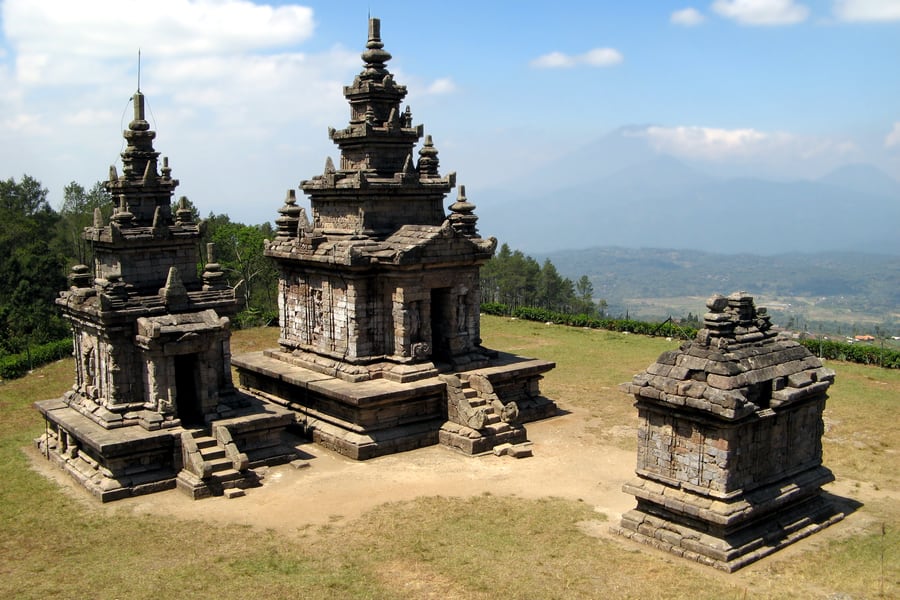 Michael Gunther / Wikimedia Commons · CC BY-SA 4.0 · cropped
Gedong Songo
Up on the flank of Mount Ungaran at about 1,270 metres, nine small Hindu temples dedicated to Shiva and Parvati are scattered across a volcanic slope in five groups, with sulphur springs steaming between them and the whole basin laid out below. They are eighth or ninth century — older than Borobudur, and with a fraction of the crowd. The hill resort of Bandungan, with its flower markets, sits on the road up.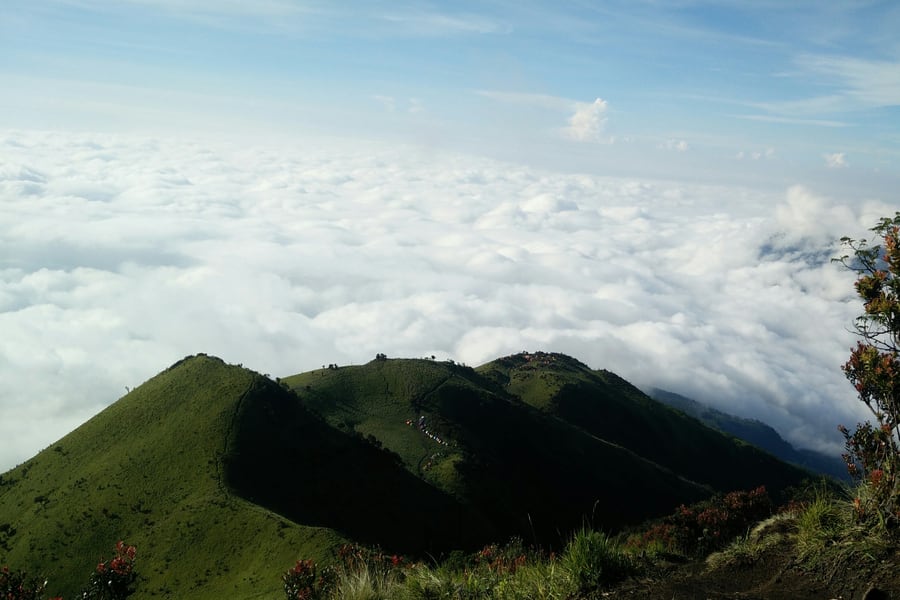 Tritanto / Wikimedia Commons · CC BY-SA 4.0 · cropped
Merbabu and Merapi
The skyline south of Ambarawa belongs to two giants. Merbabu, 3,145 metres and long quiet, became a national park in 2004. Behind it stands Merapi, 2,968 metres and the most active volcano in Indonesia — small eruptions every two or three years, serious ones about every decade; the 2010 eruption killed 353 people. A 1,500-metre saddle and the farming village of Selo lie between them. First light is the time to look.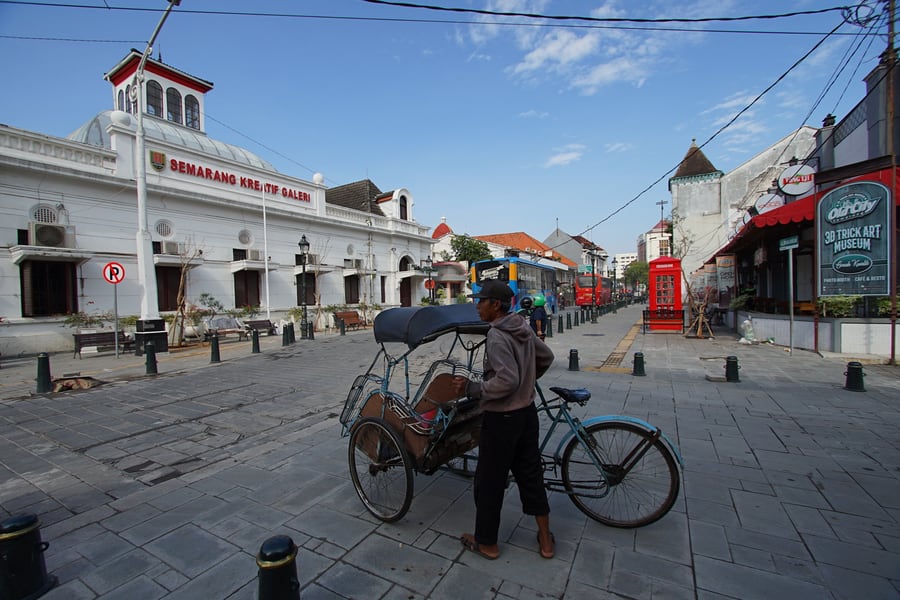 Ivuvisual / Wikimedia Commons · CC BY-SA 4.0 · cropped
Semarang's Kota Lama
The port city an hour north, and the reason a Dutch railway came here at all. Its old town — 31 hectares of it, nicknamed Little Netherlands — has been pulled back from dereliction: more than fifty colonial buildings restored, cobbles relaid, becak drivers waiting outside the cafés. The Blenduk Church of 1753, under its copper dome, is the oldest thing in it. Semarang's Chinatown and its street food are a short walk away.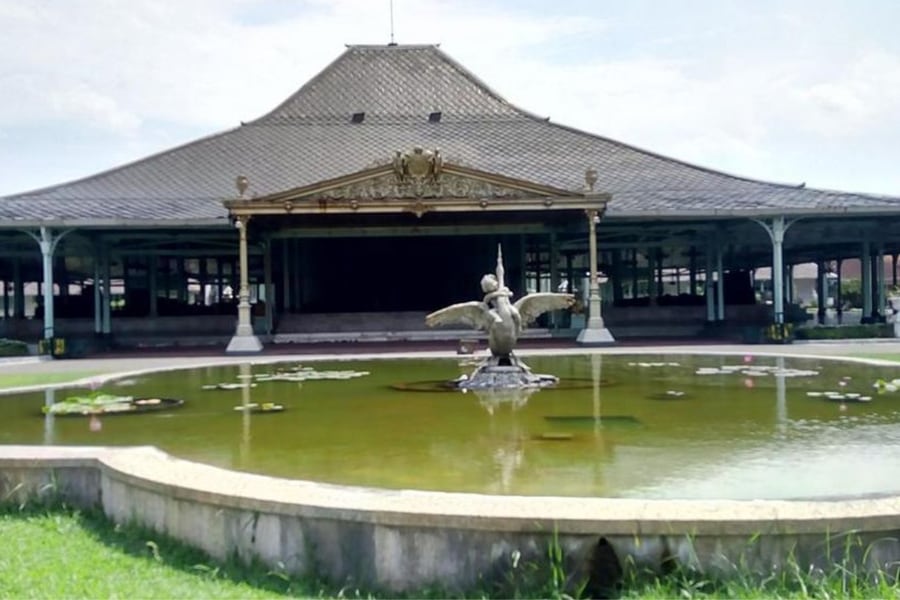 SakaReksapustaka / Wikimedia Commons · CC0 · cropped
Yogyakarta and Solo
Both courtly capitals are an easy run south, and reaching them by modern train from a steam museum is a fitting way round. Yogyakarta keeps its sultan's Kraton and is the gateway to Borobudur and Prambanan. Solo — Surakarta — is quieter and more formal, with the Pura Mangkunegaran founded in 1757 by Raden Mas Said, whose great open pendopo still hosts gamelan and dance. Batik is the other reason to go to either.Where to Sleep
Ambarawa is a small town, and most travellers visit as a day trip — but there is real pleasure in staying up in the cool hills nearby rather than rushing back to the city.
The obvious base is Bandungan, the hill resort just above Ambarawa, where the air is fresh and the views run out over the volcanoes and Rawa Pening. It has a long-standing collection of hotels and guesthouses of every standard, from simple family-run places to comfortable resort hotels with pools and gardens, many built for weekending Semarang families. Staying here lets you catch the museum early, before the day-trip crowds and the heat.
For more choice — and better dining — the port city of Semarang, about 40 km north, has the full range of international and boutique hotels, including some atmospheric heritage places in the restored old town. To the south, the royal cities of Yogyakarta and Solo are close enough to use Ambarawa as an outing from either, and both have wonderful accommodation, from backpacker guesthouses to heritage retreats near the temples.
Wherever you choose, weekends are when the heritage trains run — so if riding the steam train is the point of the trip, plan your night around a Saturday or Sunday, and book ahead in the busy dry-season and holiday periods.
Questions or corrections
Planning this trip and stuck on something, or spotted a time, fare or detail that has changed? Send us a message about The Ambarawa Rack Railway. We read every one, and we update this page when something has changed.