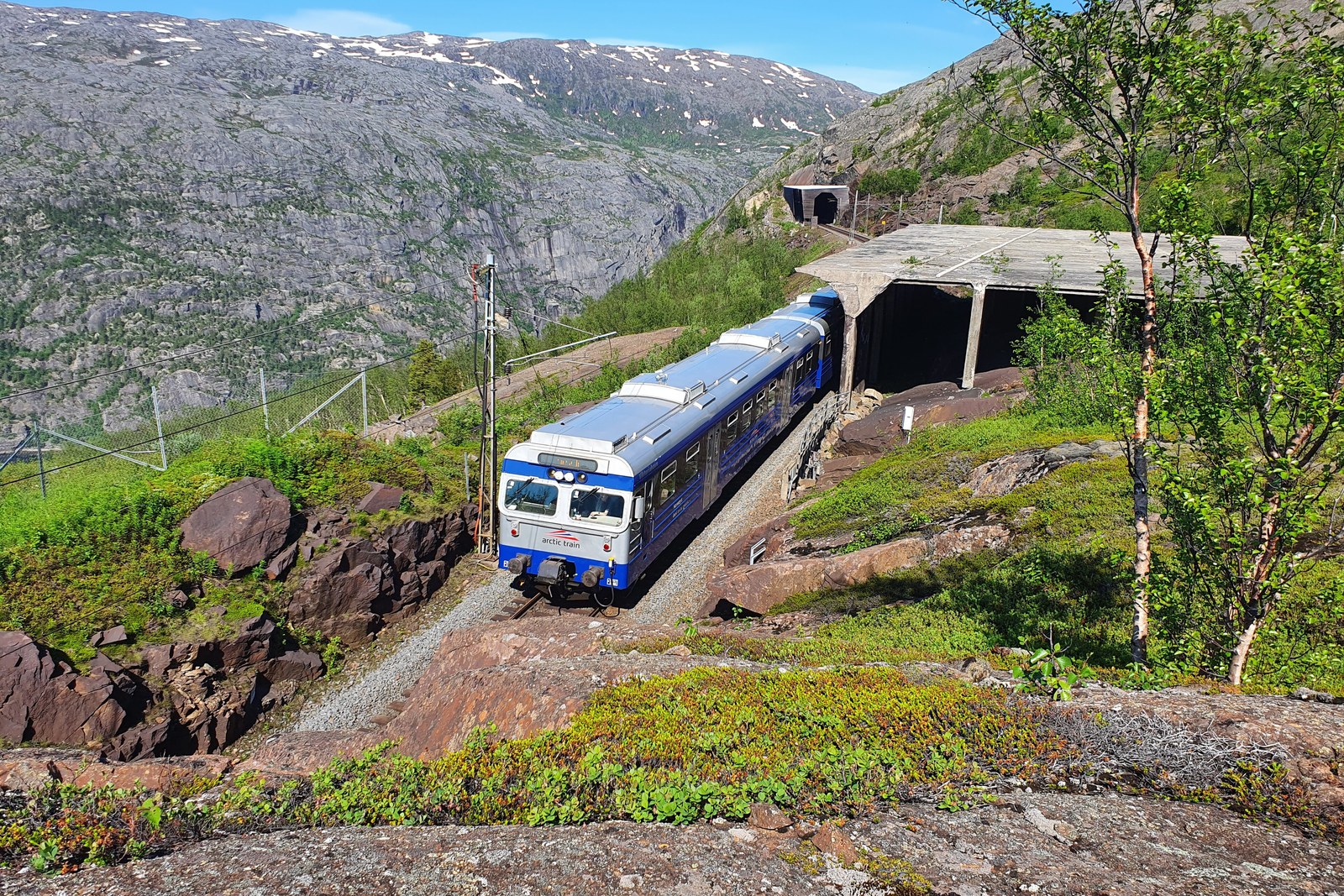
The Arctic Train to Narvik
Kolbkorr / Wikimedia Commons · CC BY-SA 4.0 · cropped
- DistanceKiruna–Narvik · about 170 km
- DurationAbout 3 hours (overnight from Stockholm)
- Best seasonJune–July for the midnight sun; winter for the aurora
Introduction
Ride to the end of Sweden's railway network and you come to something extraordinary: a line that climbs over the roof of the country, crosses into Norway, and drops down to a fjord on the edge of the Arctic Ocean. This is the Iron Ore Line — the Malmbanan — the northernmost railway in Sweden, and the passenger trains that share it make one of the great journeys of the far north.
The line was built for iron. Opened through to the coast in 1903, it carries ore from the huge mines at Kiruna and Malmberget down to Narvik, the one deep-water port in the region that never freezes — and to this day the heaviest trains in Sweden, 8,600 tonnes of ore apiece, grind over these mountains to the sea. You share the rails with them.
For the traveller, the magic is the country in between. The passenger train climbs from the mining city of Kiruna through Abisko, past the ice-carved gates of Lapporten, up to the frontier and over the top, then falls away down the Norwegian side to the fjord at Narvik — barely three hours, but unforgettable. Most people reach the start of it on the famous overnight Arctic Circle train from Stockholm, going to sleep in the south and waking among the mountains. In summer the sun never sets on any of it; in winter the same skies blaze with the northern lights.
The Journey
Most travellers begin far to the south, aboard the overnight train from Stockholm — the "Arctic Circle train" — which leaves the capital in the early evening and runs all night up the length of Sweden. You wake somewhere past Boden with the landscape transformed: no more farms and forest, but open fell, birch scrub and mountains, and the mining towns of the north sliding by.
The scenic heart of the journey is the last stretch, from Kiruna to the sea. Kiruna is Sweden's northernmost city, huddled beneath the iron mountain of Kiirunavaara — and famously in the middle of being moved, building by building, as the mine eats away the ground beneath the old centre. From here the train climbs west into the mountains.
At Abisko the line reaches its most beautiful point, running along the shore of the great lake Torneträsk beneath Lapporten — the "Lapp Gate," a perfect U-shaped valley gouged by the ice. This is the gateway to Abisko National Park and the start of the Kungsleden, the King's Trail. Beyond, the train climbs to the frontier station of Riksgränsen, tops out around 540 metres, and crosses into Norway — then plunges down through tunnels and along mountain ledges, with the fjord suddenly far below, to journey's end at Narvik.
A few things worth knowing about the run:
- It uses the Iron Ore Line (Malmbanan), Sweden's northernmost railway, opened through to Narvik in 1903 and electrified throughout.
- The scenic Kiruna–Abisko–Narvik leg takes about three hours; the whole trip from Stockholm is an overnight one.
- The high point is about 540 m near Riksgränsen, where the line crosses into Norway.
- In summer the midnight sun means round-the-clock daylight; in winter the skies are famous for the aurora.
One important note: in 2026 major engineering works on the line are disrupting the through night train — for part of the year you may need to change at Boden (a daytime train between Narvik and Boden, connecting with the night train to and from Stockholm) rather than travel straight through. Always check the current routing with the operator before you book.
Along the route
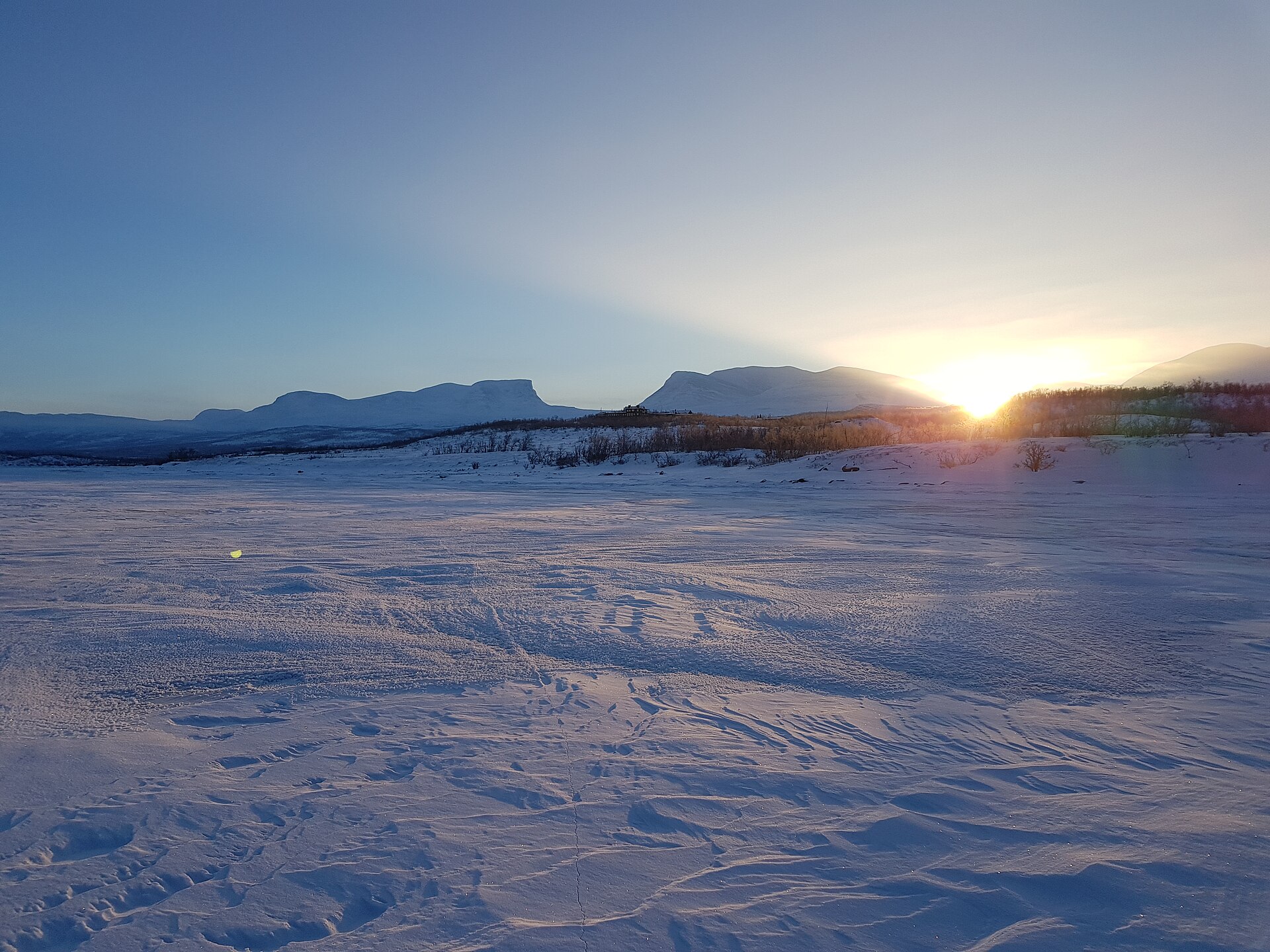
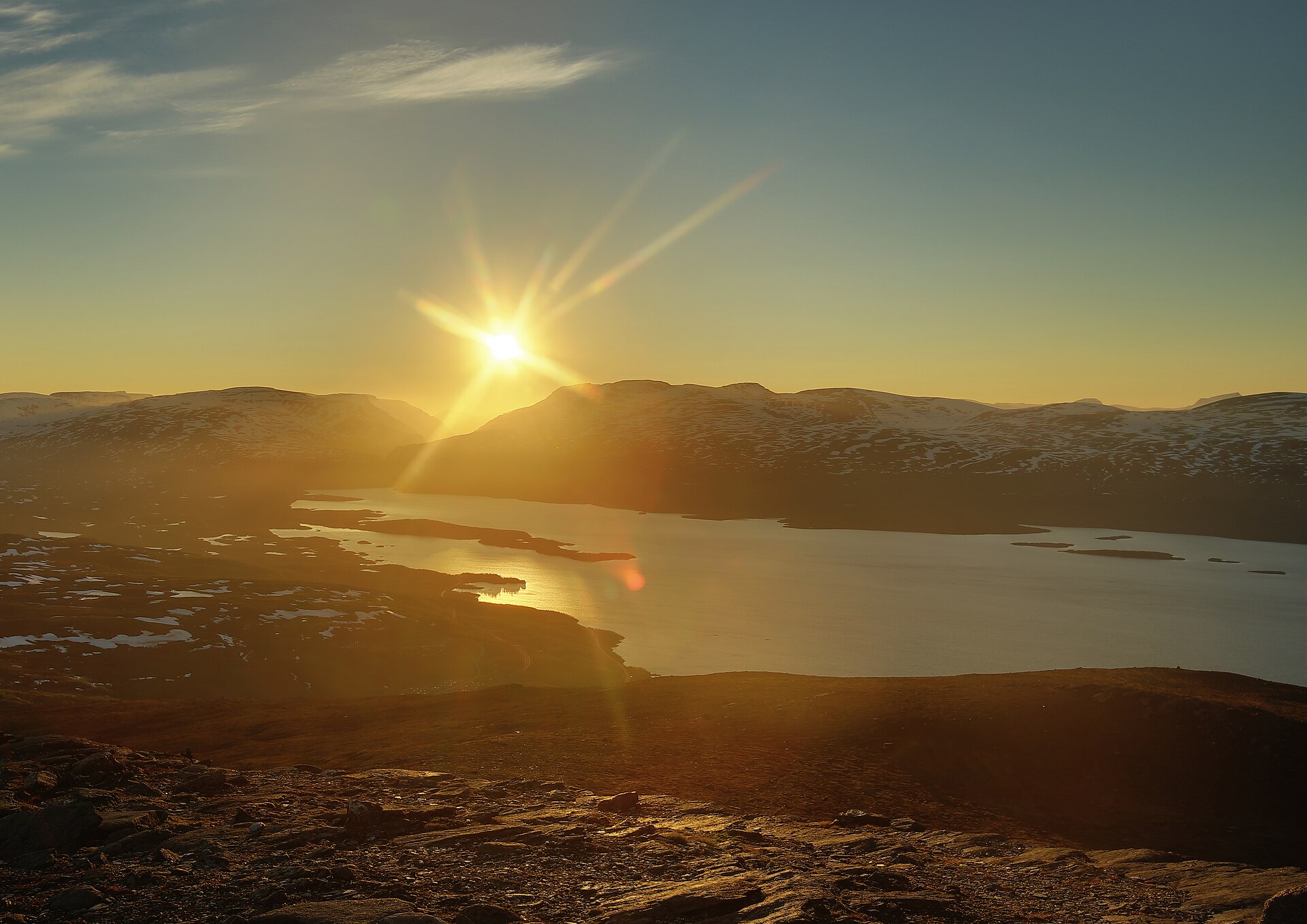
Jojoo64 / Wikimedia Commons · CC BY-SA 4.0The midnight-sun railway
This is as far north as trains go in Sweden, well above the Arctic Circle, and in high summer the sun never sets — you can ride through Abisko's mountains at midnight in broad gold daylight. Come winter, the same dark skies are among the best places on earth to see the northern lights.MPotter-Adams / Wikimedia Commons · CC BY-SA 4.0Abisko and Lapporten
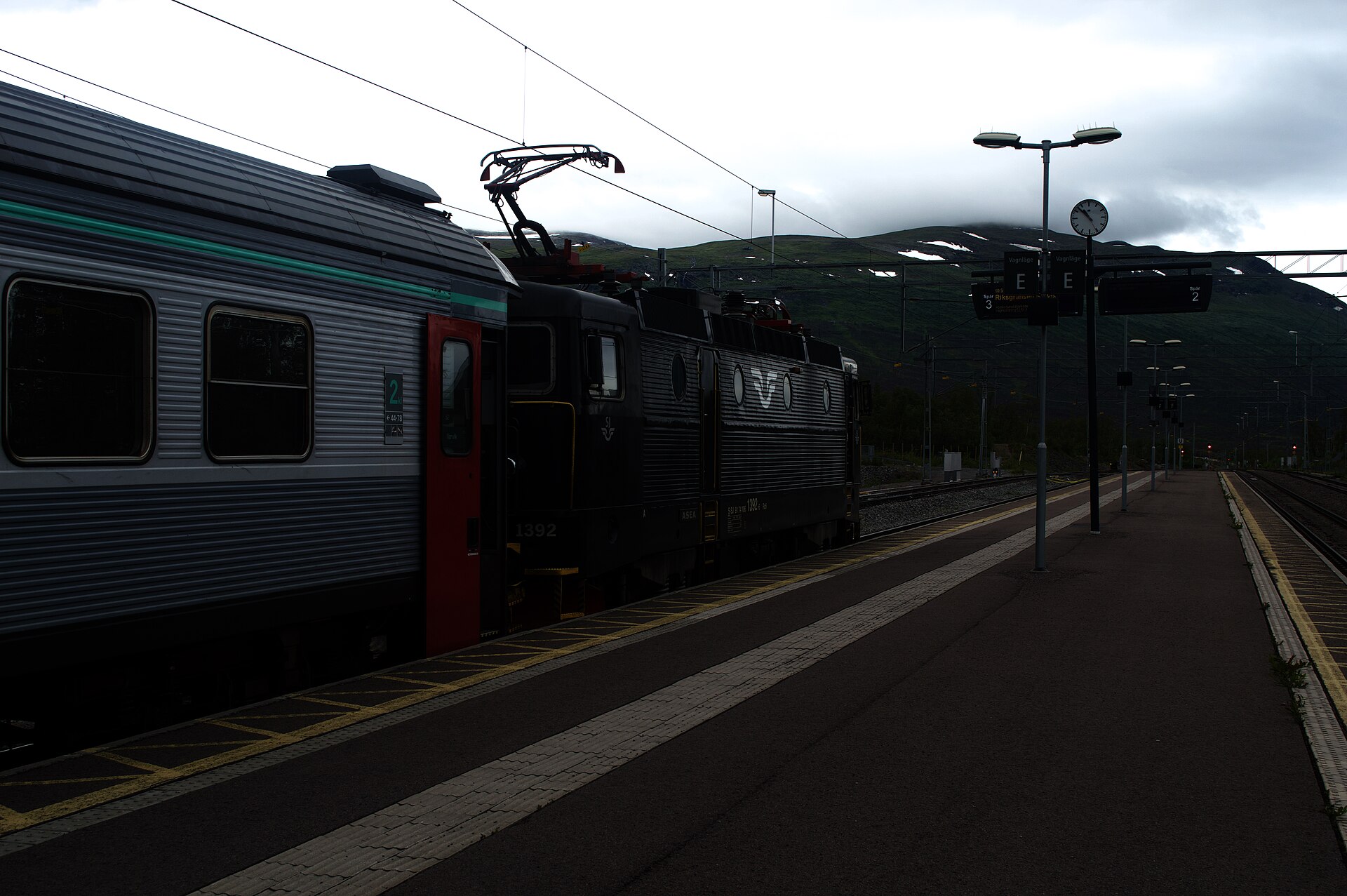
The scenic climax is Abisko, on the shore of Lake Torneträsk, framed by Lapporten — the perfect U-shaped valley the ice age carved into the mountains. It is the gateway to Abisko National Park and the start of the Kungsleden, the King's Trail, Sweden's greatest hiking route.Kabelleger / David Gubler / Wikimedia Commons · CC BY-SA 4.0The line iron built
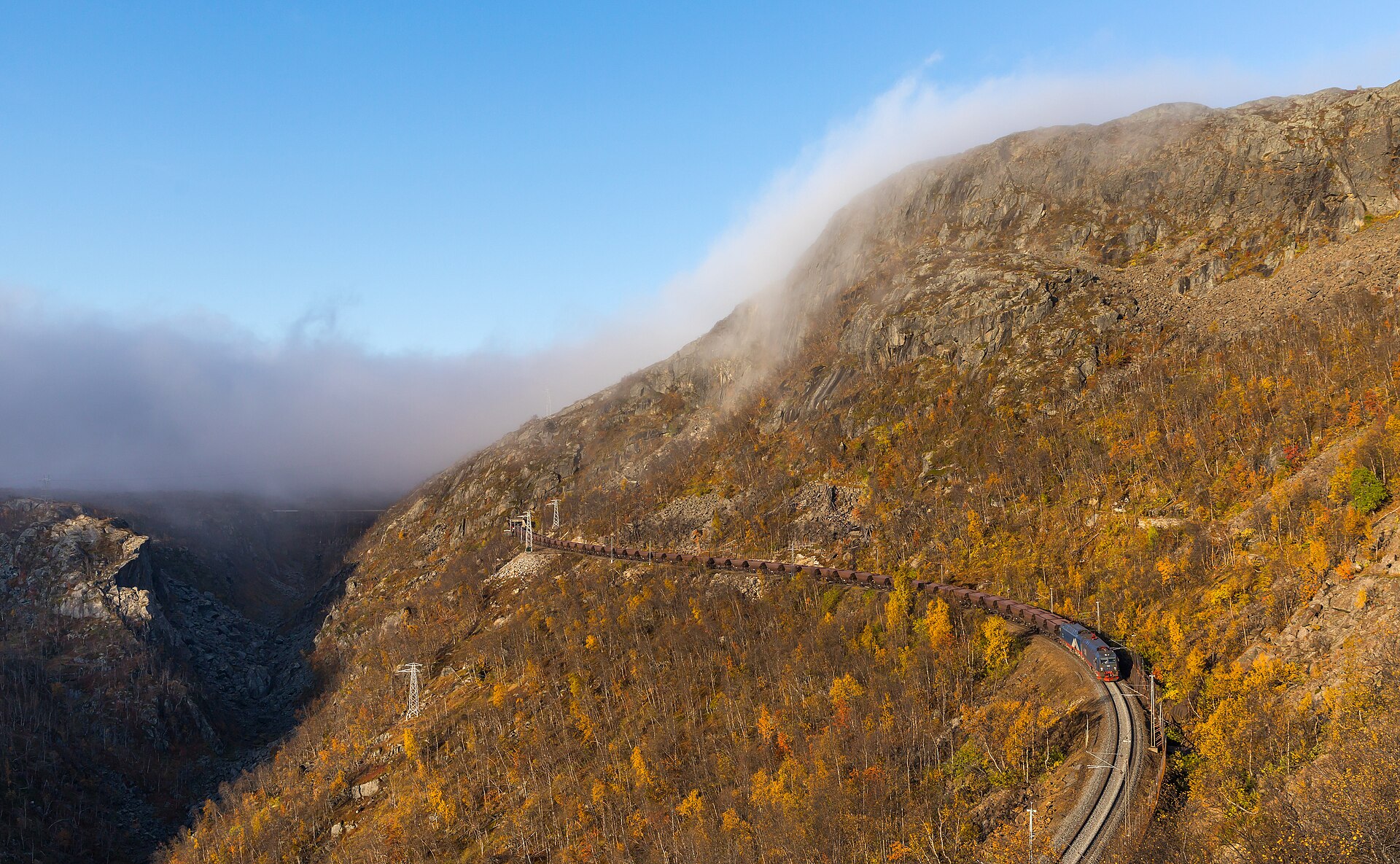
The railway exists because of iron. Opened through to Narvik in 1903, it hauls ore from the great mines at Kiruna and Malmberget in 8,600-tonne trains to the one port that never freezes — Narvik, on the Norwegian coast. Riding it, you share the mountains with the longest, heaviest trains in the country.A bit of history
Culture & experiences along the way
Phil Richards / Wikimedia Commons · CC BY-SA 2.0Over the mountains to the sea
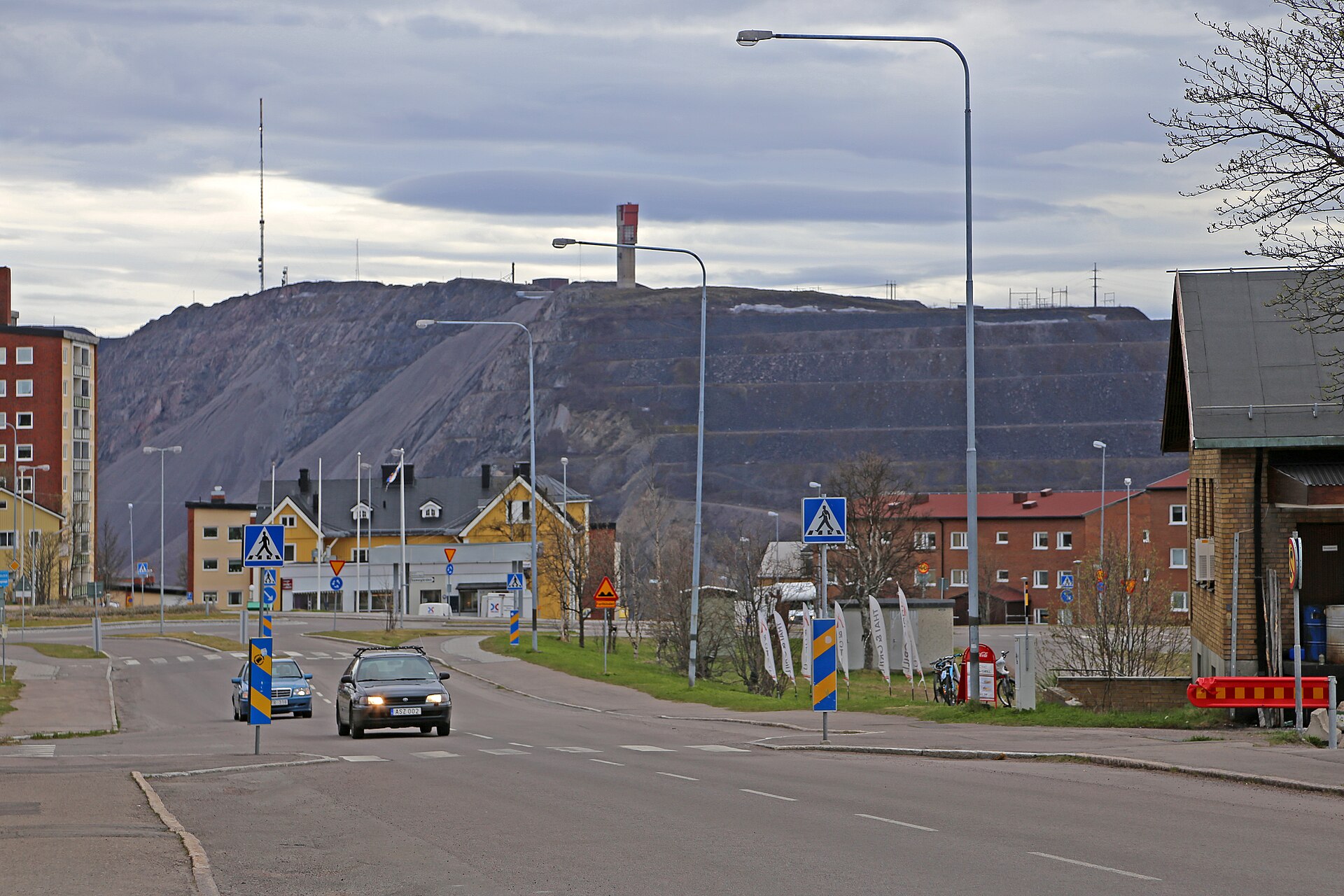
From Kiruna the passenger train climbs through Abisko to the frontier at Riksgränsen, tops out around 540 metres, and then drops down the Norwegian side through tunnels and along ledges to the fjord at Narvik — barely three hours, but one of the most dramatic descents in Scandinavia.W. Bulach / Wikimedia Commons · CC BY-SA 4.0Kiruna, the city that moves
Kiruna is Sweden's northernmost city — and the only one being physically relocated, building by building, because the iron mine beneath it is undermining the old centre. It is a fascinating, otherworldly place, and the usual starting point for the ride to Narvik.Zaki Habibi / Wikimedia Commons · CC BY-SA 4.0Walking the King's Trail
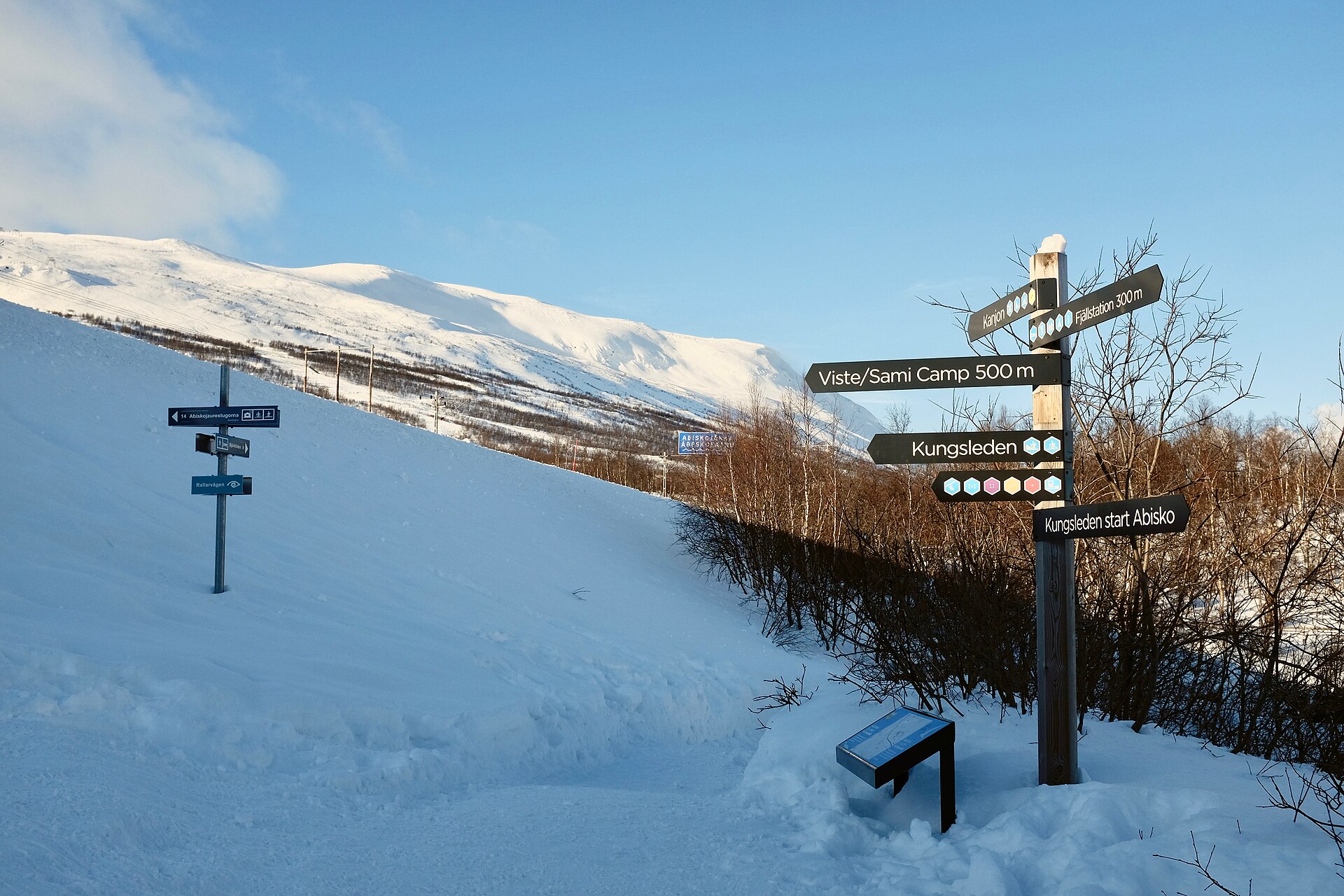
Get off at Abisko and you are at the northern trailhead of the Kungsleden, which runs 440 km south through the mountains past Sweden's highest peak, Kebnekaise. Even a day's walk from the station — to Lapporten, or up the Aurora Sky Station chairlift — is unforgettable.Timetables
There are two ways to think about the timetable: the overnight train from Stockholm, and the short scenic run over the mountains at the northern end.
The Arctic Circle night train (Stockholm ⇄ Narvik). In normal operation the sleeper runs roughly (as of 2026):
| Depart | Arrive | |
|---|---|---|
| Stockholm C → Narvik | 18:09 | 12:45 (next day) |
| Narvik → Stockholm C | 15:11 | 10:17 (next day) |
It calls at Uppsala, Sundsvall, Umeå, Boden, Gällivare, Kiruna, Abisko and Riksgränsen on the way to Narvik — so you can also use it just for the scenic northern section.
⚠️ 2026 works. Major track works on the line are disrupting the direct service through much of 2026: for parts of the year the through night train does not run end to end, and you may instead travel by day train between Narvik and Boden and change there onto the night train to or from Stockholm. This is exactly the kind of thing that changes month to month, so check the current routing and times with the operator before booking — don't assume the direct sleeper is running.
The scenic day train (Kiruna – Abisko – Narvik) takes about three hours over the mountains and is the part everyone remembers; it runs year-round, though frequency is limited, so check times in advance.
Full, live timetables are on the operators' sites — see the Tickets section below.
Tickets
The trains are run by Sweden's national operators — SJ and, on the night service, Vy (under a state contract) — and tickets are booked directly:
- Online, at sj.se (opens in a new tab) (English site, e-tickets); the night-train service is also sold via vy.se.
- At the station, at Stockholm Central, Kiruna, Narvik and the main stops.
For the night train, you choose your comfort level: a seat, a couchette (a berth in a shared 6-berth compartment), or a private sleeper with more space and, in the premium options, your own washbasin or shower. Berths sell out well ahead in the summer midnight-sun season and around the winter aurora peak, so book early.
For the scenic day leg (Kiruna–Abisko–Narvik), an ordinary seat is all you need for the three-hour ride over the mountains.
Two practical notes. First, because of the 2026 engineering works (see Timetables), confirm the current routing before you pay — the journey may involve a change at Boden. Second, fares vary a lot with how far ahead you book and the season, so we don't quote a figure here; the current prices and live timetables are on the operators' sites above.
Book your tickets
Night train · Stockholm to Narvik
The Arctic Circle sleeper
The classic way to reach the far north — an overnight sleeper from Stockholm up through Lapland to Narvik, waking among the mountains. Berths from couchette to private sleeper. Booked with the operator; check current routing (see below) before you travel.
Book Tickets (opens in a new tab, on SJ / Vy)via SJ / VyKiruna – Abisko – Narvik
The scenic day train
Already in the north? The day train over the mountains from Kiruna through Abisko to Narvik takes about three hours and is the scenic heart of the line — big windows, big country. Booked with the operator.
Book Tickets (opens in a new tab, on SJ / Vy)via SJ / VyRail Passes
Interrail passes are valid. Interrail's table of railway companies lists SJ and Vy as included in Sweden, and its Sweden page says trains on the Iron Ore Line from Luleå to Narvik are included in the pass. A one-country Interrail Sweden Pass covers Sweden only, so the last stretch into Norway needs the Interrail Nordic Pass, valid in Denmark, Norway, Sweden and Finland, or a Global Pass.
Reservations are compulsory on SJ's night trains, even with a first-class pass. The reservation fees with a pass are:
| On SJ's night train | Fee |
|---|---|
| Seat | €3.50 (SEK 40) |
| Bed in a 6-berth couchette | €22 (SEK 250) |
| Bed in a 3-berth sleeper | €36 (SEK 405) |
| Private sleeper with bathroom, up to 2 people | €71 (SEK 800), per cabin |
A pass pays if you ride the night train up from Stockholm. For the short daytime hop from Kiruna to Narvik alone, a ticket is simpler.
Checked October 2026 against interrail.com (opens in a new tab), Interrail's Sweden page (opens in a new tab), its One Country Pass page (opens in a new tab) and night-train reservation fees (opens in a new tab).
Places to Visit
This short line strings together some of the most remarkable places in the European Arctic.
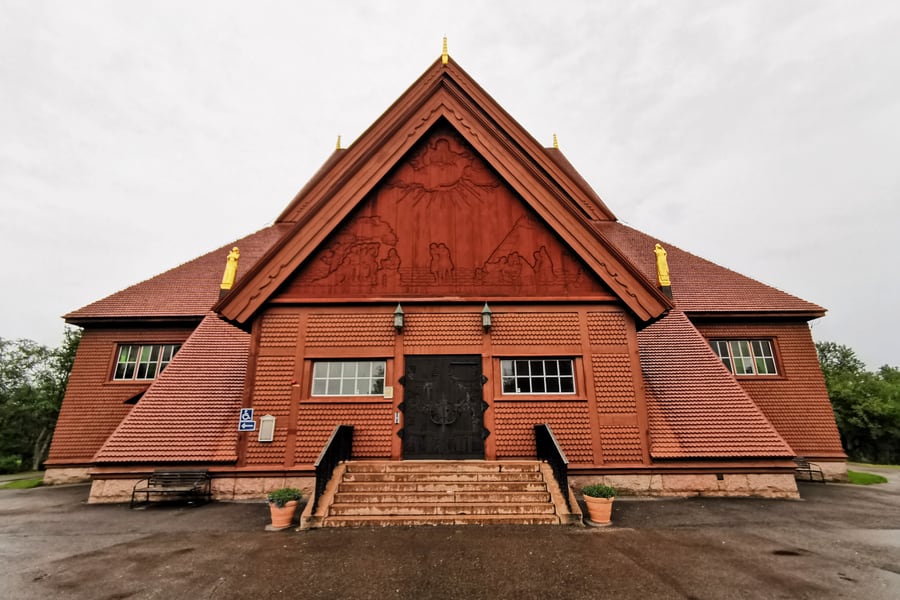
Kiruna, at the Swedish end, is the country's northernmost city and one of its strangest sights: the whole town centre is being physically relocated a few kilometres east, because the enormous LKAB iron mine beneath it is making the old ground unstable. The historic wooden church — voted the country's favourite pre-1950 building in 2001 — was itself moved five kilometres east over two days in August 2025, all 672 tonnes of it, carried whole on self-propelled transporters and broadcast live as slow TV. Kiruna is also a base for the original ICEHOTEL at nearby Jukkasjärvi, rebuilt from the river ice each winter.
Abisko, half an hour on, is the jewel. Abisko National Park sits on Lake Torneträsk beneath Lapporten, and thanks to a rain-shadow "blue hole" of clear sky it is one of the most reliable places on earth to see the northern lights — you can ride a chairlift to the Aurora Sky Station to watch them. In summer the same spot has round-the-clock daylight, and the station is the northern trailhead of the Kungsleden, the 440-km King's Trail south toward Kebnekaise, Sweden's highest mountain.
Narvik, over the border in Norway, is the journey's end: a dramatic port town wedged between steep mountains and the deep blue Ofotfjord. Its War Museum tells the story of the fierce 1940 battles here; a cable car climbs Narvikfjellet for enormous views over the fjords; and the harbour still ships the iron ore that the railway was built to carry.
Between them, the mountain stops — Riksgränsen, a tiny ski resort right on the frontier where you can ski under the midnight sun in June, and Björkliden — are worth a pause for the scenery alone.
 Netha Hussain / Wikimedia Commons · CC BY-SA 4.0 · cropped
Kiruna church
One of Sweden's largest wooden buildings, designed by Gustaf Wickman, built 1909–12 and consecrated on 8 December 1912 — a Gothic Revival outline borrowed from Sámi huts and Norwegian stave churches, with an Art Nouveau altarpiece by Prince Eugen. In 2001 it was voted the country's favourite building from before 1950. Over two days in August 2025 all 672 tonnes of it were driven five kilometres east on self-propelled transporters, live on national television, to escape the mine.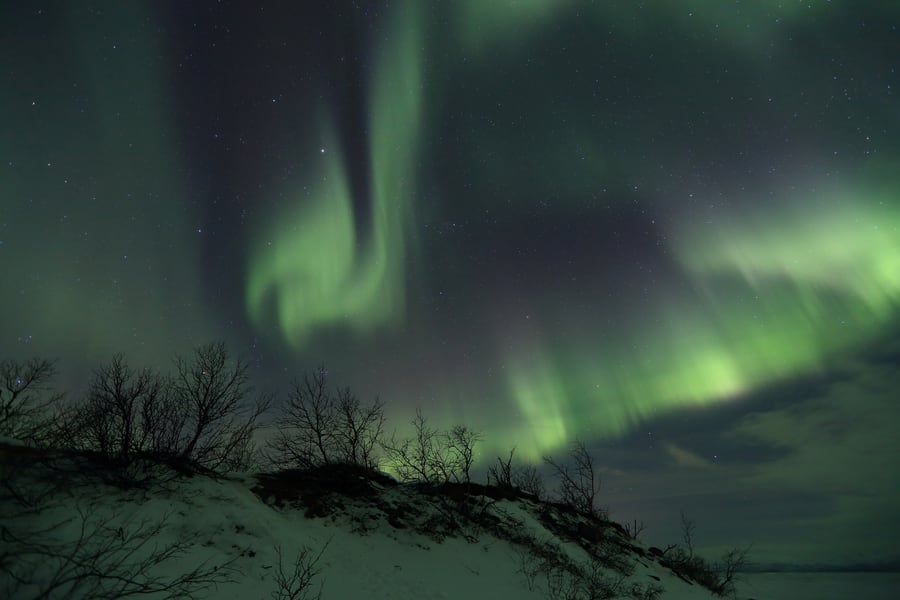 Pavel.shyshkouski / Wikimedia Commons · CC BY-SA 4.0 · cropped
The northern lights
Abisko sits 195 km north of the Arctic Circle with no light pollution and a rain-shadow that keeps the sky unusually clear, which is why it has a reputation as one of the most dependable aurora spots anywhere. A chairlift runs up Mount Nuolja to the Aurora Sky Station. The lights are a winter act — but the same latitude gives you round-the-clock sun in summer, so the mountain never really goes dark for long.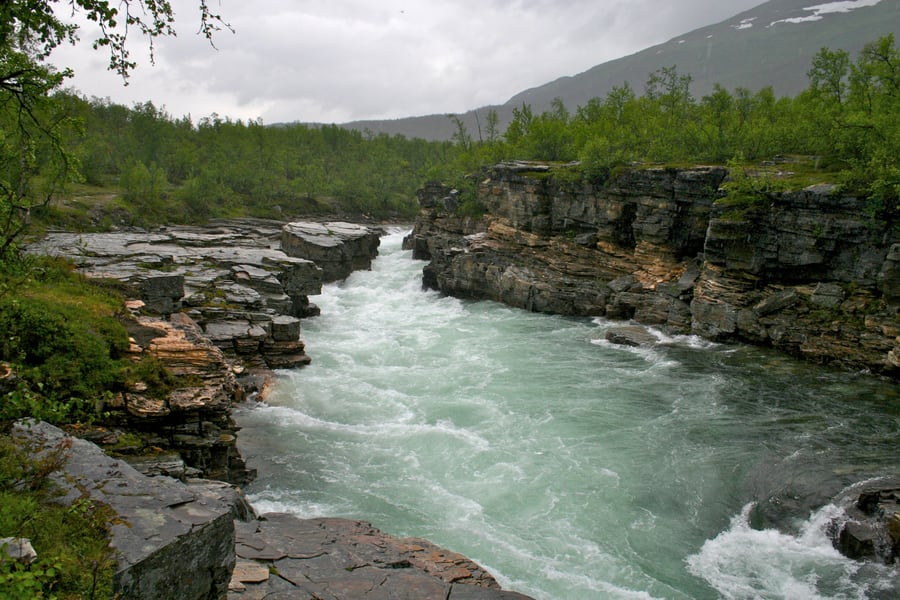 Silverkey / Wikimedia Commons · CC BY-SA 3.0 · cropped
The Abiskojåkka canyon
The park was founded in 1909, the same year Sweden passed its first conservation laws, and covers 77 km². Its best short walk is the gorge the Abiskojåkka has sawn through the rock on its last run to Torneträsk — the river drains a 520 km² block of high fell, falls 147 metres from Abiskojaure over its final ten kilometres, and is the lake's largest feeder. The Kungsleden follows the water.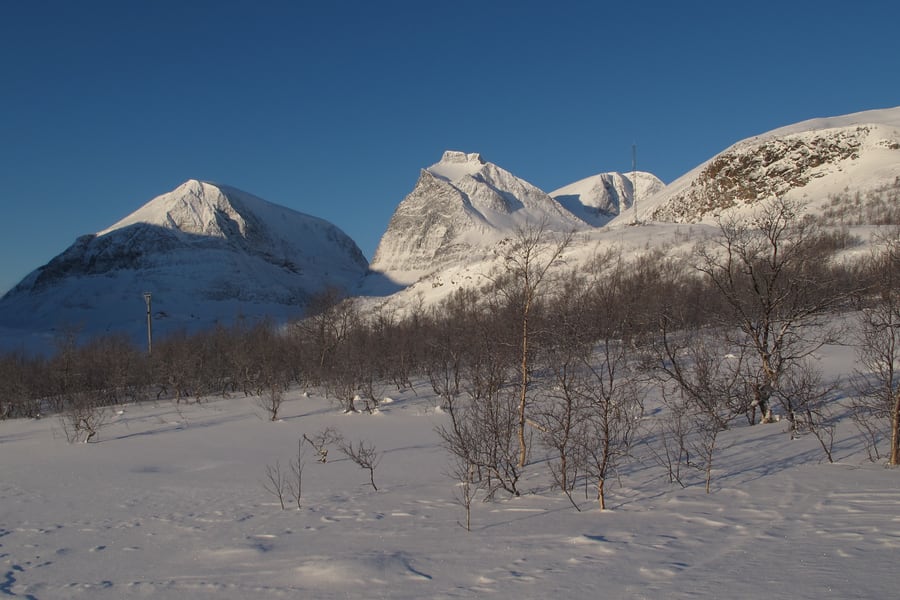 Tadeáš Gregor / Wikimedia Commons · CC BY-SA 4.0 · cropped
Kebnekaise
Sweden's summit, and an unusual one: the glaciated southern peak was long the higher of the two at 2,120 m, but it has melted down roughly 24 metres in fifty years, so the ice-free northern peak at 2,096.8 m now holds the official title. It stands west of Kiruna near the Kungsleden, with the mountain station about 19 km in from the road end at Nikkaluokta — three to seven hours' walk.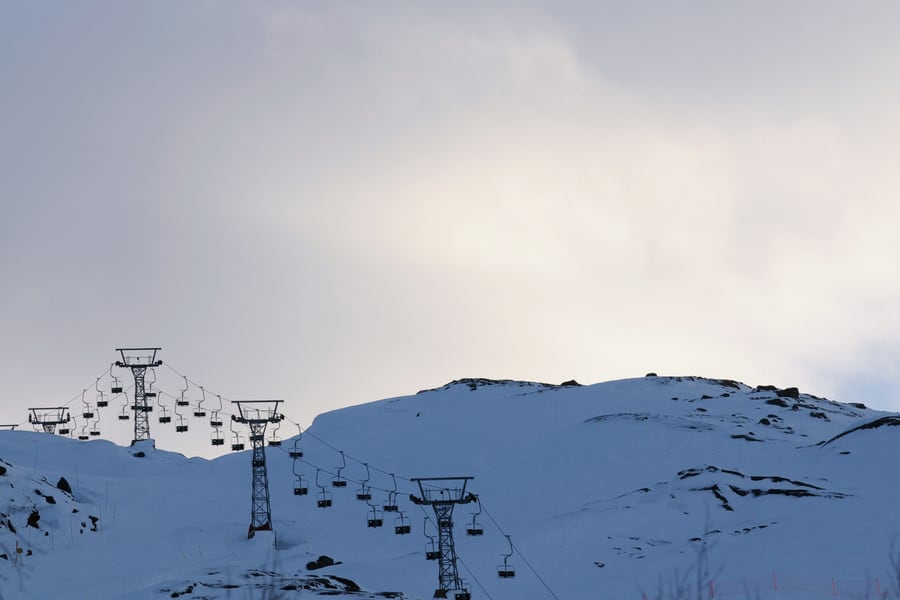 Johannes Jansson/norden.org · CC BY 2.5 DK · cropped
Riksgränsen
The most northerly ski resort in the world, about 200 km above the Arctic Circle and right on the Norwegian border — one piste crosses into Norway and back, with nobody checking. The season runs February to June, and from late May the lifts turn under the midnight sun. The village exists only because of the railway: it was thrown up around 1900 for the construction, and trains began running in 1902.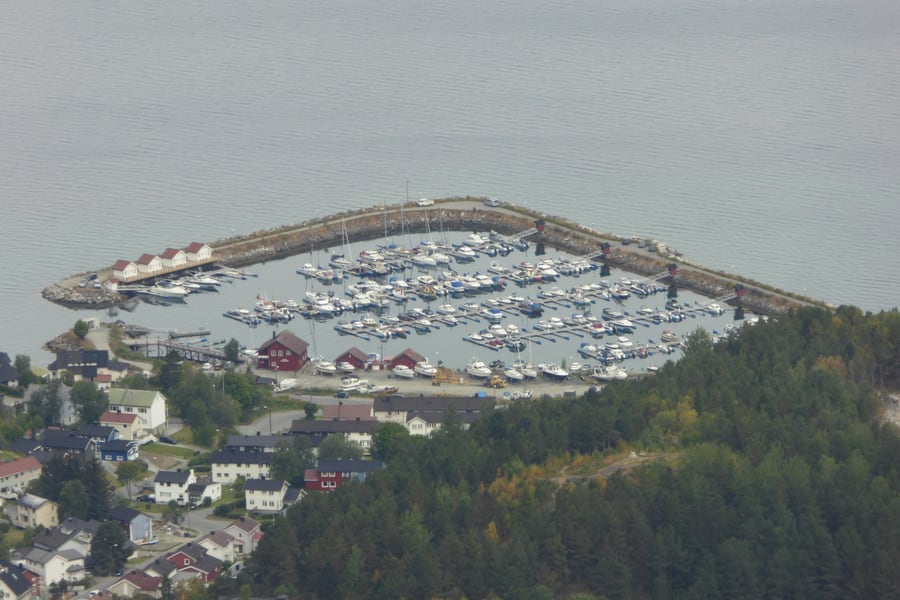 Nemo bis / Wikimedia Commons · CC BY-SA 4.0 · cropped
Narvik
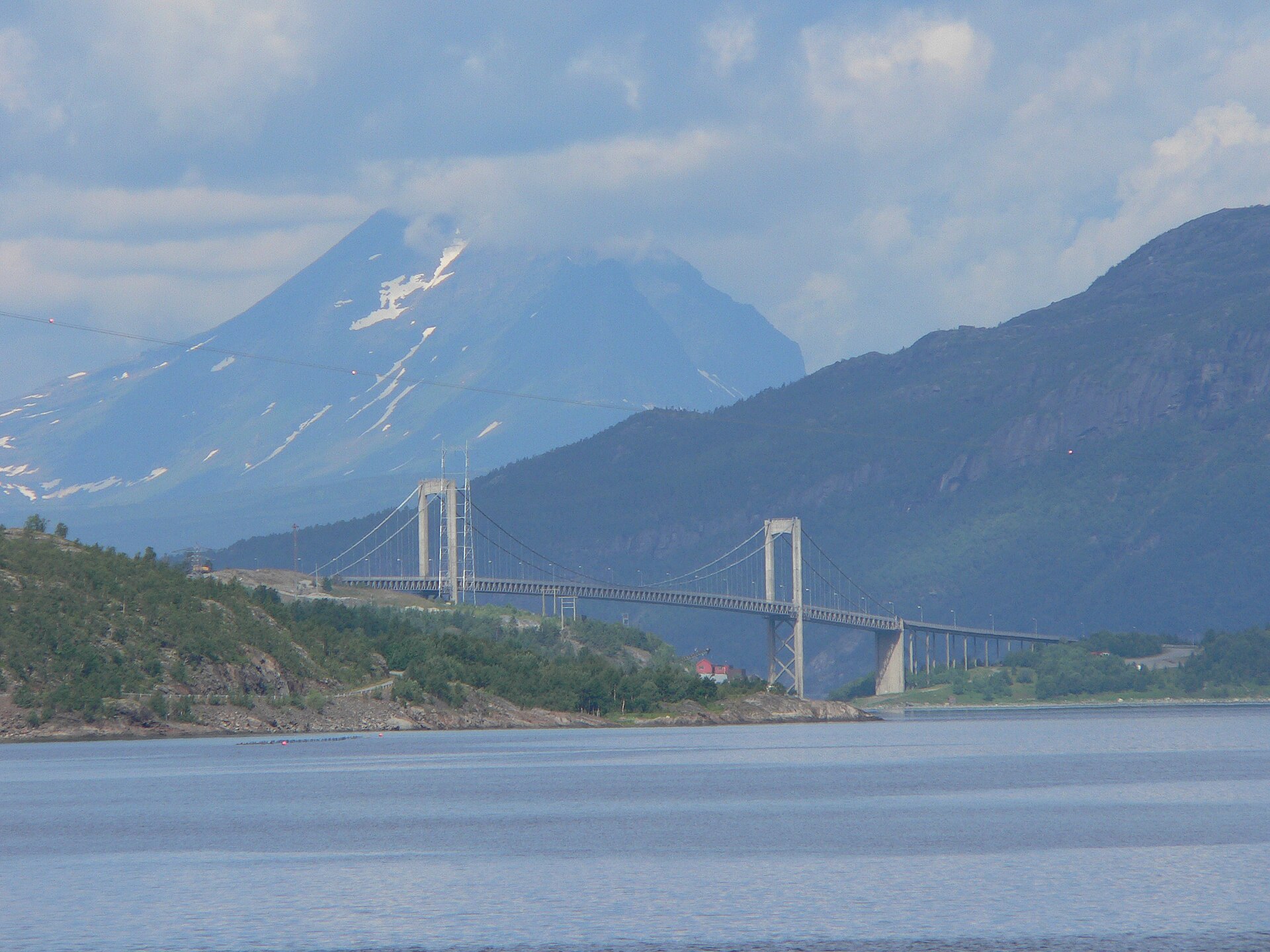
The line's whole reason for existing: a port of about 21,500 people that the Gulf Stream keeps ice-free all year, which is why Swedish ore comes over the mountains to leave from a Norwegian fjord. LKAB still ships some 25 million tonnes a year through here. In 1940 the town was fought over bitterly — the Allies retook it on 28 May, their first infantry victory of the war, then withdrew ten days later.Where to Sleep
On this journey, one of the beds is the train itself — a night in a sleeper rolling north through Lapland is part of the experience, and for many the best night's sleep of the trip. But the places at either end and in the middle are worth stopping for.
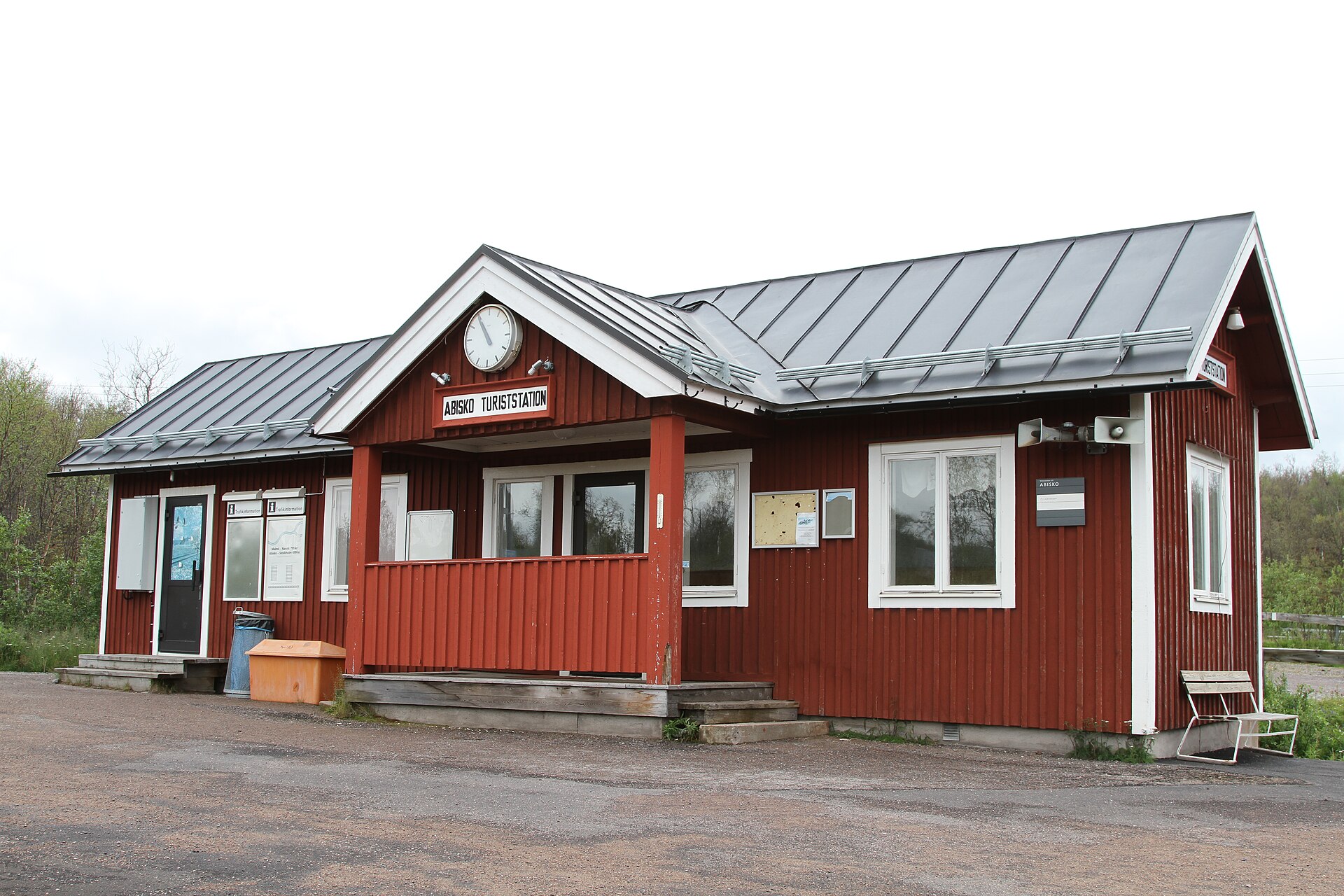
In Abisko, the obvious base is the Abisko Turiststation (the STF mountain lodge) right by the little station, with rooms, cabins and a hostel, the national park at the door and the Aurora Sky Station above — the single best place to break the journey, in summer for the midnight sun and hiking, in winter for the northern lights. Nearby Björkliden and the frontier resort of Riksgränsen have mountain hotels for skiers and walkers.
In Kiruna, there are practical town hotels near the (newly relocated) centre, and — a short drive away at Jukkasjärvi — the famous ICEHOTEL, where you can sleep on a bed of ice under reindeer hides, with warm rooms alongside for the faint-hearted.
In Narvik, at the Norwegian end, hotels cluster around the harbour and the town centre, many with views over the Ofotfjord and the mountains — a fine place to spend a night before turning back, or before carrying on into the Norwegian fjords.
As ever, we keep this to the shape of the trip rather than specific bookings. Decide whether your nights are spent on the train, under the aurora at Abisko, or on the fjord at Narvik — then book the sleeper and the rooms to match, well ahead in the busy summer and winter seasons.
Questions or corrections
Planning this trip and stuck on something, or spotted a time, fare or detail that has changed? Send us a message about The Arctic Train to Narvik. We read every one, and we update this page when something has changed.