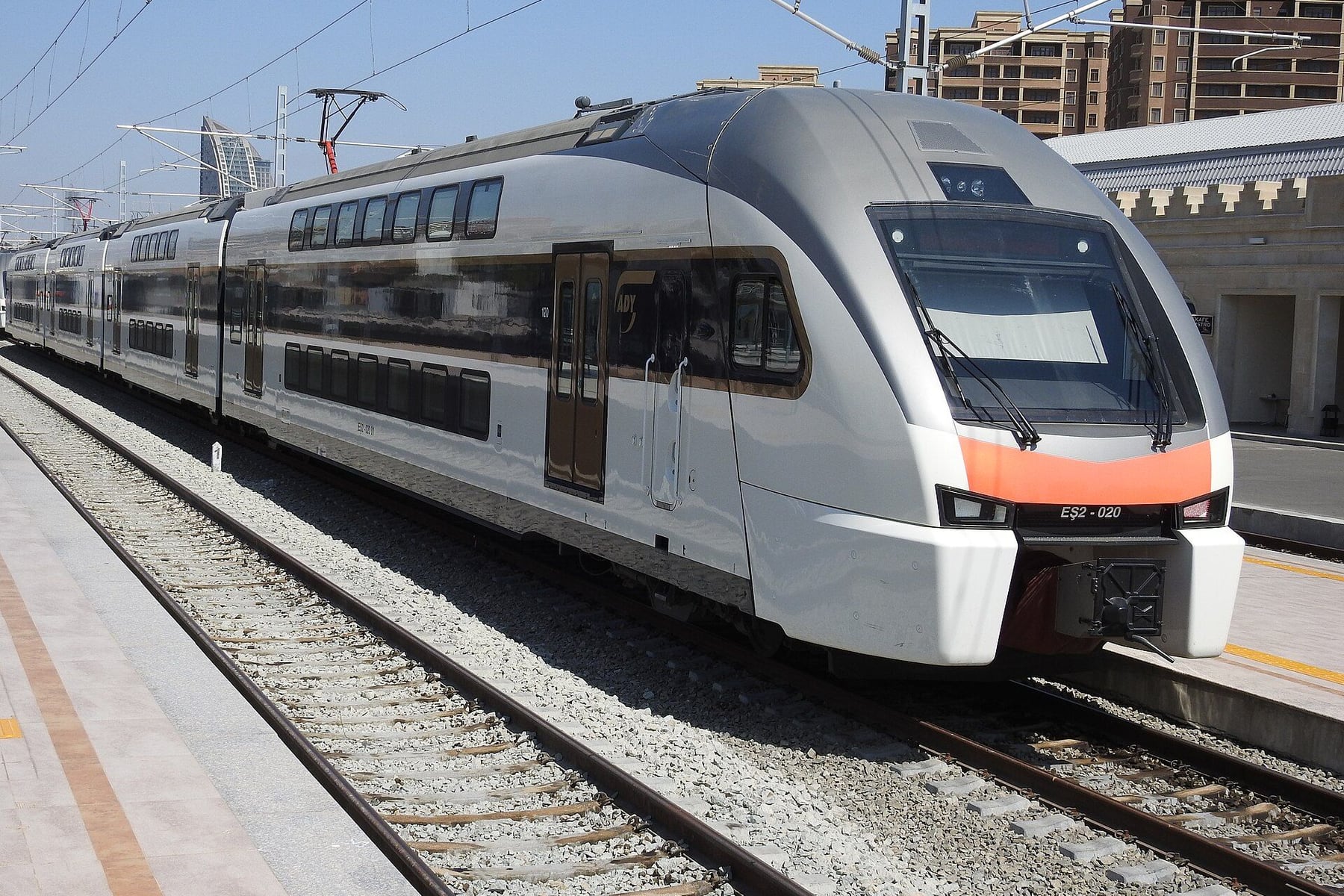
Baku to Sumqayıt by Sabunçu
shankar s. / Wikimedia Commons · CC BY 2.0 · 2017 · cropped
- DistanceBaku to Sumqayıt by Pirşağı · 12 stops
- Duration52 minutes end to end
- Best seasonAll year · about 30 trains each way on weekdays
Introduction
Azerbaijan's railways began here. On 20 January 1880 a line opened from Baku to Sabunçu and Suraxanı, out on the Absheron peninsula, and it was built for oil: the wells of Sabunçu and Balaxanı were the reason for it, and passengers came later. In July 1926 the same line became the first electrified railway anywhere in the Soviet Union.
Today it is the busiest railway in the country. Azerbaijan Railways rebuilt the old suburban routes around the peninsula between 2019 and 2020 as the Absheron circular railway, and by October 2026 it had carried 9.3 million passengers that year. This page follows its northern half: from Baku station out through Sabunçu and the oil villages of Zabrat and Məmmədli, down to the Caspian at Pirşağı, Görədil and Novxanı, and on to Sumqayıt, the country's second city. It takes 52 minutes.
It is a commuter line, and that is what makes it worth an afternoon. The trains are modern Stadler units, there are about thirty a day each way on weekdays, and at the main stations you pay at the turnstile with a contactless bank card, so there is nothing to plan. Out of the window are the things that made Baku: pumpjacks standing among village houses, the dry steppe of the Absheron, and then the sea. Get off at Məmmədli for Yanar Dag, a hillside fed by natural gas that burns day and night, and start or finish at the railway museum in the 1926 station building where the first electric trains set out.
The Journey
Trains start from Baku station, in the city centre beside 28 May metro. Next to the main building stands the old Sabunçu station of 1926, in the national style with lions carved on its clock tower; it was built for the electric trains to Sabunçu and opened the day they started running, and it is now the Azerbaijan Railway Museum.
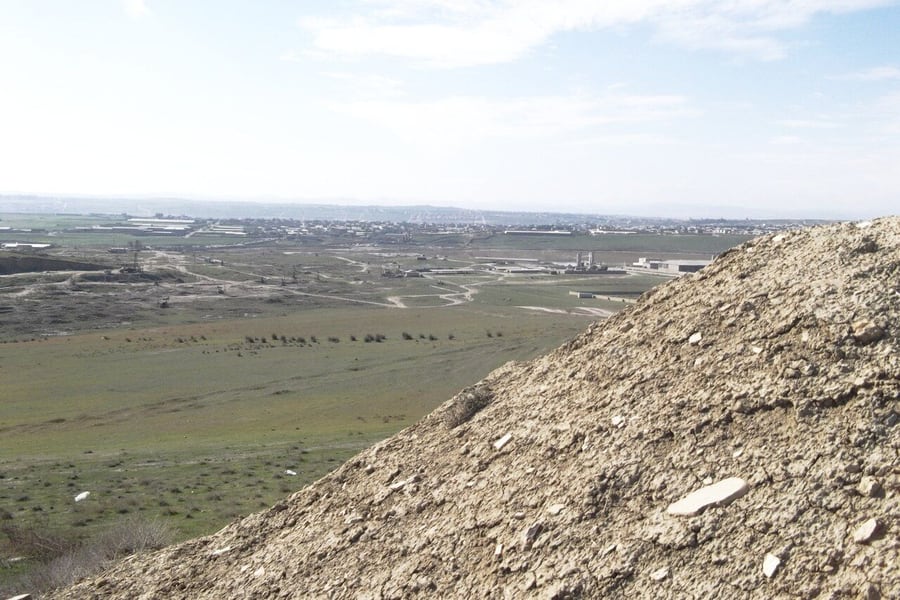
The first stops are in the city: Keşlə, then Koroğlu, where the line meets the metro, and Bakıxanov. By Sabunçu, sixteen minutes out, the train is on the alignment of 1880. This is oil country, and has been for a long time: at neighbouring Balaxanı a well 35 metres deep was dug by hand in 1593, and an oil-distilling works was built there in 1837. A century ago the fields were a forest of wooden derricks. The derricks have gone, but the pumpjacks have not, and between Sabunçu and Zabrat they stand in yards and on waste ground among the houses.
Out to the sea
Beyond the two Zabrat stops the houses thin out. Məmmədli is the halt for Yanar Dag, the burning hillside, and after it the line runs across the low steppe of the peninsula to the coastal villages. Pirşağı comes 35 minutes out of Baku; Görədil and Novxanı follow, with the Caspian close at hand. This was the last part of the circle to come back into use: it was rebuilt and reopened to passengers on 18 March 2020.
The run ends at Sumqayıt, 52 minutes from Baku. A suburb founded in 1944 and made a city in 1949, it grew into an industrial centre and is now the second-largest city in Azerbaijan, with about 427,000 people and a seafront promenade.
The trains
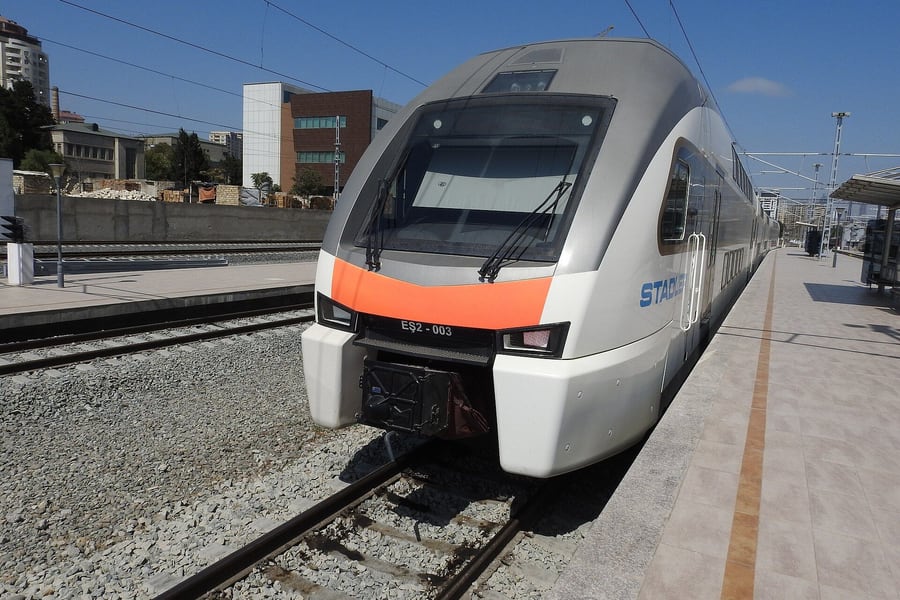
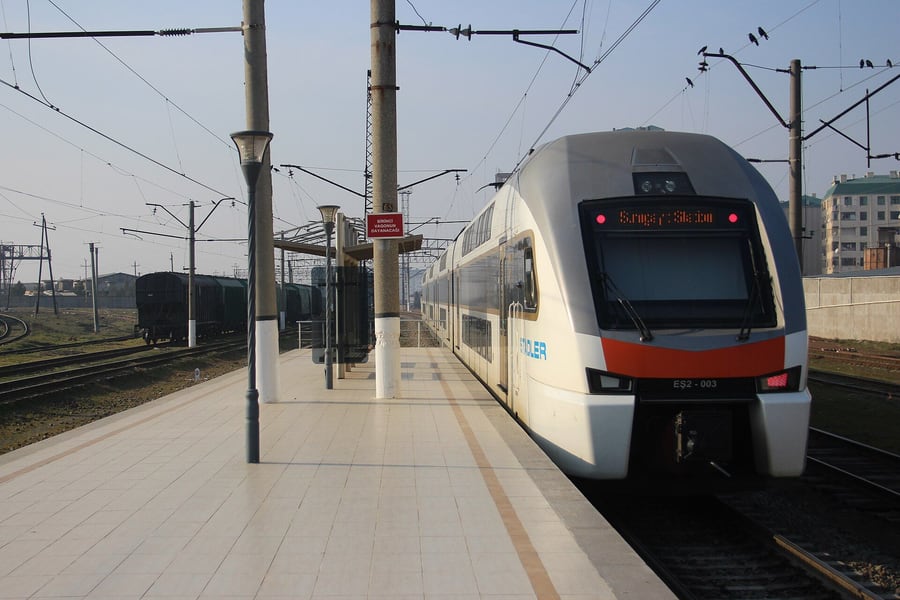
The suburban trains are Stadler's. The double-deck electric units, numbered EŞ2 on the cab, are Stadler KISS trains, a type branded Eurasia for Russia, Georgia and Azerbaijan; the photographs on this page show them at Baku in 2017 and at Xırdalan in 2020. They are a long way from the first electric trains of 1926, and from the oil trains for which the line was laid.
The other half of the circle
From Sumqayıt the circle runs back to Baku the other way, by Xırdalan and Biləcəri. In the September 2026, the latest notice from Azerbaijan Railways, trains on that side ran only between Baku and Xırdalan while a railway bridge between Xırdalan and Biləcəri was rebuilt; ADY said passenger trains between Xırdalan and Sumqayıt would return when the work was finished. Until then, ride out and back by Pirşağı.
Along the route
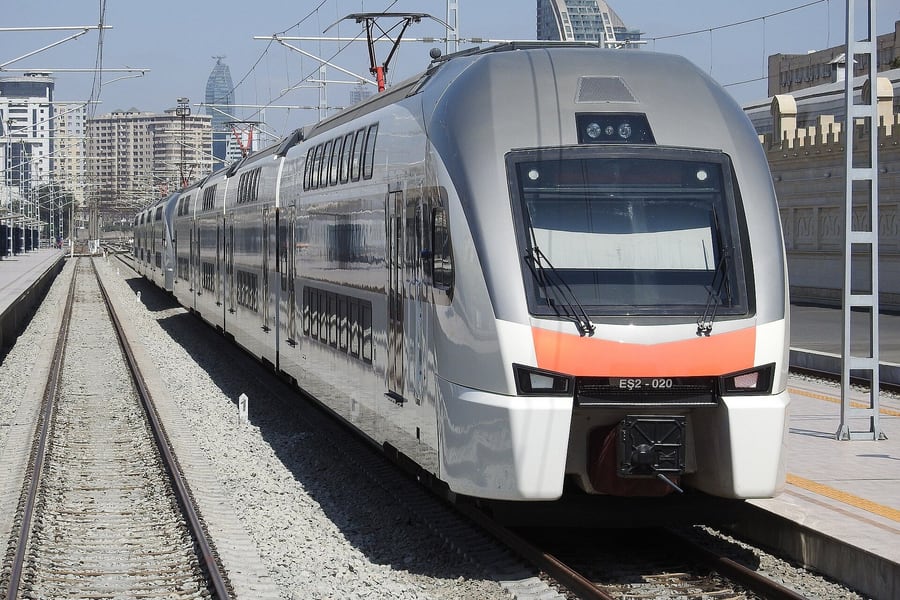 shankar s. / Wikimedia Commons · CC BY 2.0 · 2017 · cropped
Out of Baku
Trains leave Baku station, beside the 1926 building where the first electric trains started. Koroğlu, two stops out, is the change for the metro and the stop for the National Gymnastics Arena.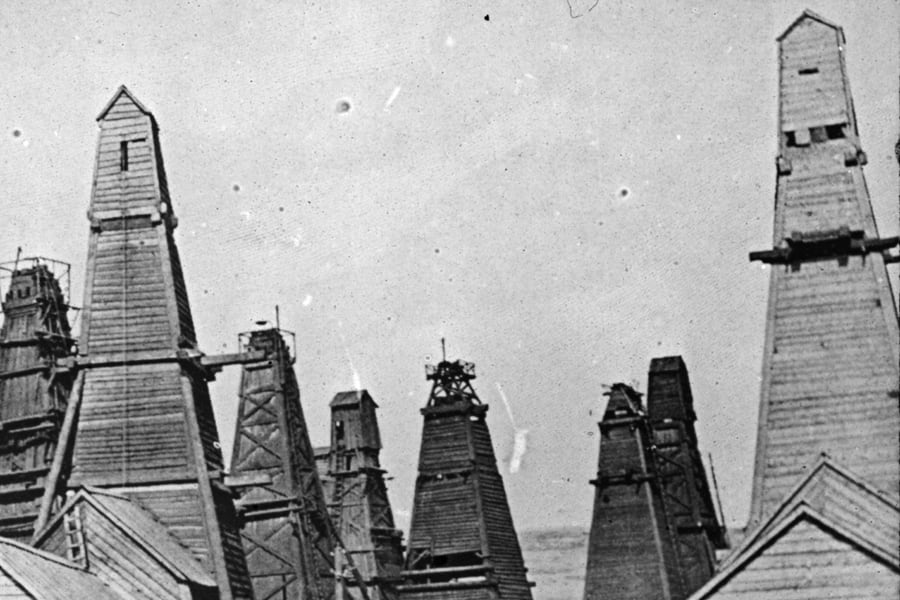 Unknown photographer, 1904 / Wikimedia Commons · Public domain · cropped
Sabunçu and the oil
The line of 1880 was built to carry oil, and oil workers, out of the fields at Sabunçu and Balaxanı. In 1904 the derricks stood as close as trees; pumpjacks still stand among the houses at Zabrat.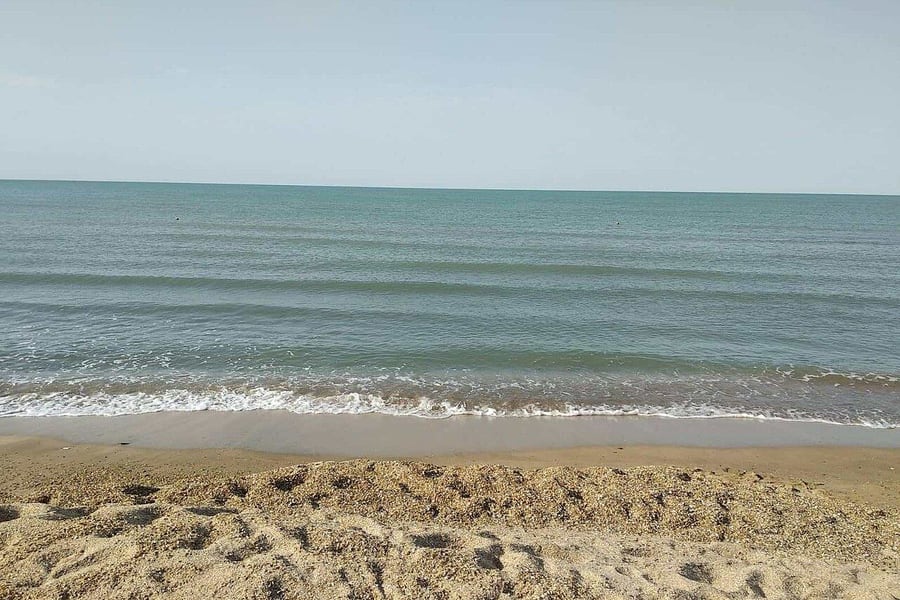 Həlimə / Wikimedia Commons · CC BY-SA 4.0 · 2018 · cropped
Down to the Caspian
After Məmmədli the line reaches the villages of Pirşağı, Görədil and Novxanı, the last two running down to Caspian beaches. This stretch was rebuilt and reopened to passengers on 18 March 2020.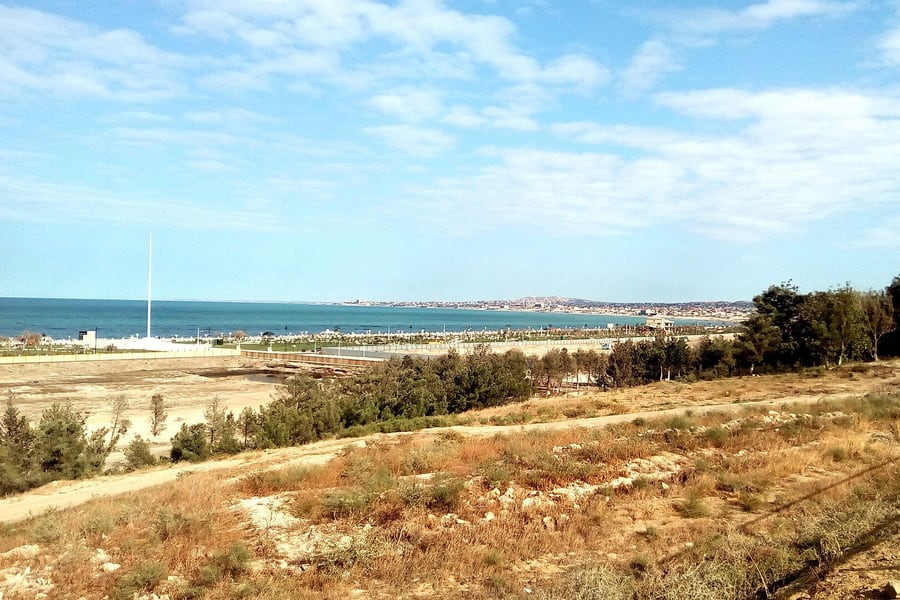 Tərxan Paşazadə / Wikimedia Commons · CC BY-SA 4.0 · 2016 · cropped
Into Sumqayıt
Sumqayıt is Azerbaijan's second city, about 427,000 people, made a city in 1949 and built up as an industrial centre. The trains from Baku by Pirşağı end here, 52 minutes out.A bit of history
Timetables
Azerbaijan Railways runs separate timetables for weekdays, Saturdays and Sundays on the Absheron circle. On weekdays the trains between Baku and Sumqayıt by Pirşağı run from early morning until 23:00, every fifteen to thirty minutes at the busiest times, with a gap in the middle of the day. Ordinary trains call at all twelve stops, and the run takes 52 minutes.
A selection of weekday trains from the timetable ADY published from 1 July 2026:
| Train | Baku | Sabunçu | Pirşağı | Sumqayıt |
|---|---|---|---|---|
| 6601 | 06:37 | 06:53 | 07:12 | 07:29 |
| 6613 | 09:15 | 09:31 | 09:50 | 10:07 |
| 6623 | 12:00 | 12:16 | 12:35 | 12:52 |
| 6627 | 15:50 | 16:06 | 16:25 | 16:42 |
| 6637 | 18:15 | 18:31 | 18:50 | 19:07 |
| 6663 | 23:00 | 23:16 | 23:35 | 23:52 |
| Train | Sumqayıt | Pirşağı | Sabunçu | Baku |
|---|---|---|---|---|
| 6602 | 06:18 | 06:36 | 06:55 | 07:10 |
| 6674 Express | 08:00 | ↓ | ↓ | 08:54 |
| 6622 | 09:34 | 09:52 | 10:11 | 10:26 |
| 6636 | 15:00 | 15:18 | 15:37 | 15:52 |
| 6648 | 18:57 | 19:15 | 19:34 | 19:49 |
| 6664 | 22:02 | 22:20 | 22:39 | 22:54 |
That timetable has 28 weekday trains each way. The morning express, 6674, calls only at Bakıxanov, at 08:37, on its way into Baku, and one train each way runs only between Baku and Zabrat-2. Between 12:00 and 15:00 there are no departures from Baku.
ADY has added trains since. From 17 September 2026 there are new departures from Baku at 06:46 and 10:45, and from Sumqayıt at 05:55 and 11:50, which brought the whole circle to 100 weekday trips. The Saturday and Sunday timetables, and any changes since, are posted on ADY's website and in its ADY Mobile app; ADY also announces public-holiday changes on its Telegram channel, where holidays usually run to the weekend timetable.
As of November 2026, from the weekday timetable in force from 1 July 2026 and ADY's notices of August and September. Check the current times at ticket.ady.az (opens in a new tab) or on ADY's Telegram channel (opens in a new tab).
Tickets
There is nothing to book. Suburban trains are boarded through turnstiles at the stations, and the fare is paid there: by contactless Visa or Mastercard bank card, by QR code or NFC through the ADY Mobile app, or, at Baku, Sumqayıt and Koroğlu, by SIMA Pay, ADY's face-recognition payment. Card payments are taken from the account on the day of travel.
We could not read a current fare from Azerbaijan Railways, so this page quotes none; the operator posts the suburban fare table on its website. Children under seven travel free with an adult.
Book your tickets
Baku to Sumqayıt by Pirşağı
Pay at the turnstile
About thirty trains each way on weekdays, 52 minutes end to end, paid for with a contactless bank card or the ADY Mobile app.
Book Tickets (opens in a new tab, on ADY)via ADYRail Passes
No rail pass covers this line, and none is needed: Azerbaijan has no national multi-journey ticket, and a suburban ride is paid at the turnstile with a bank card.
Checked November 2026.
Places to Visit
One end of the line is a museum about it, the middle has a hillside on fire, and the far end is the Caspian. Start at the museum by Baku station, ride out to Məmmədli for Yanar Dag, and carry on to Sumqayıt for the sea before the train back.
 Simplellali / Wikimedia Commons · CC0 · 2023 · cropped
The Azerbaijan Railway Museum
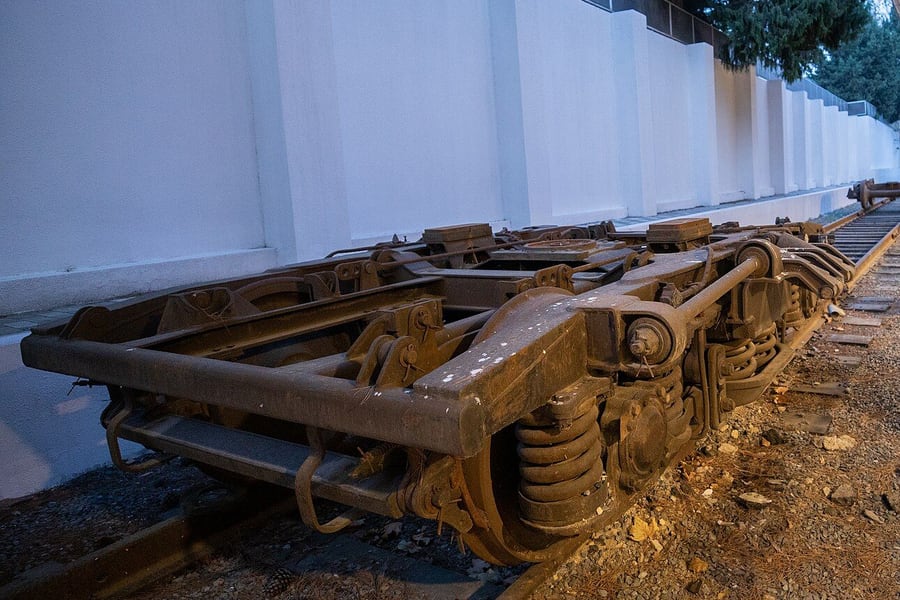
The museum fills the Sabunçu station of 1926, the building in Baku where the first electric trains to Sabunçu started on 6 July 1926, built in the national style with carved lions on its clock tower. It opened on 19 November 2019 and reopened with new exhibits on 28 December 2023: photographs of the first railway, train models, and old bogies lined up on a stub of track outside.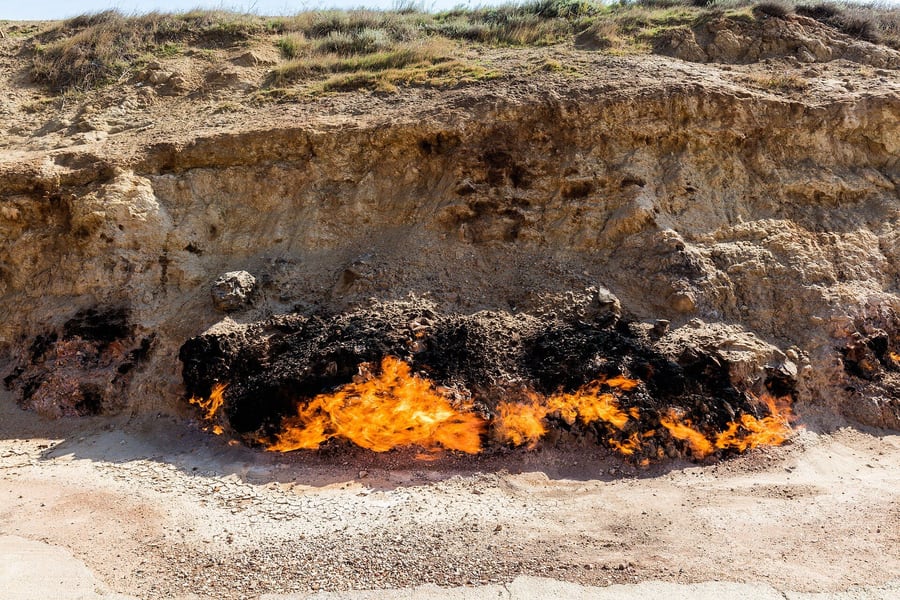 Diego Delso / Wikimedia Commons · CC BY-SA 4.0 · 2016 · cropped
Yanar Dag, the burning hillside
A natural gas fire that burns without stop along the foot of a hillside, with flames up to three metres high from a thin layer of sandstone. The site, in the village of Məmmədli, has been a state reserve since 2007; a museum and an exhibition of cromlech stones opened there after renovation in 2017–19.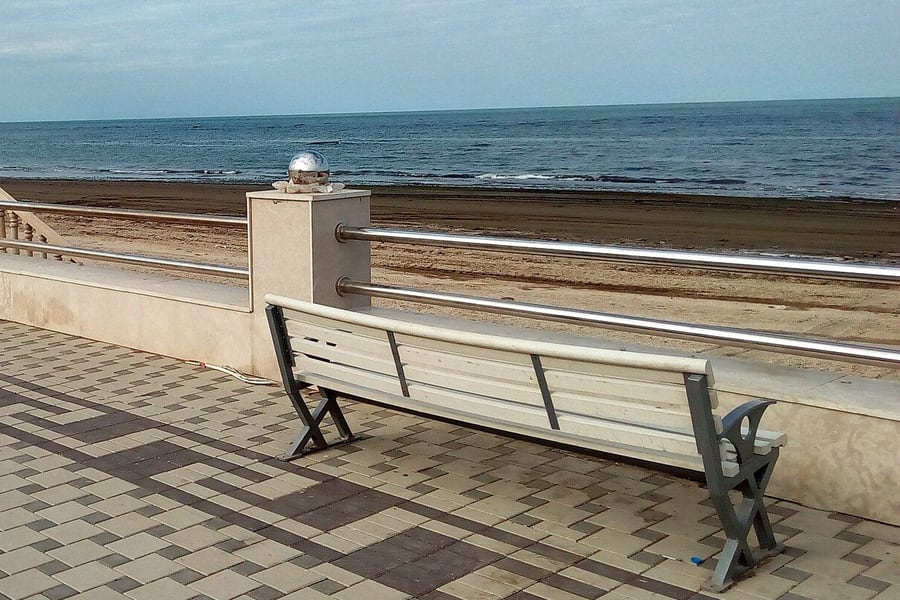 Tərxan Paşazadə / Wikimedia Commons · CC BY-SA 4.0 · 2016 · cropped
The Sumqayıt seafront
The end of the line is a Caspian city: a paved promenade runs along the sea, with a broad sandy beach below it. Sumqayıt grew from a suburb of Baku founded in 1944 into the country's second-largest city, about 31 kilometres from the capital.Where to Sleep
Stay in Baku. The whole line is an hour's ride from the city centre, Baku station is the first stop, and the last train back from Sumqayıt leaves at about ten at night, so the trip fits in a day with room to spare. The station is about two kilometres from İçərişəhər, the walled old city, where most visitors stay.
Questions or corrections
Planning this trip and stuck on something, or spotted a time, fare or detail that has changed? Send us a message about Baku to Sumqayıt by Sabunçu. We read every one, and we update this page when something has changed.