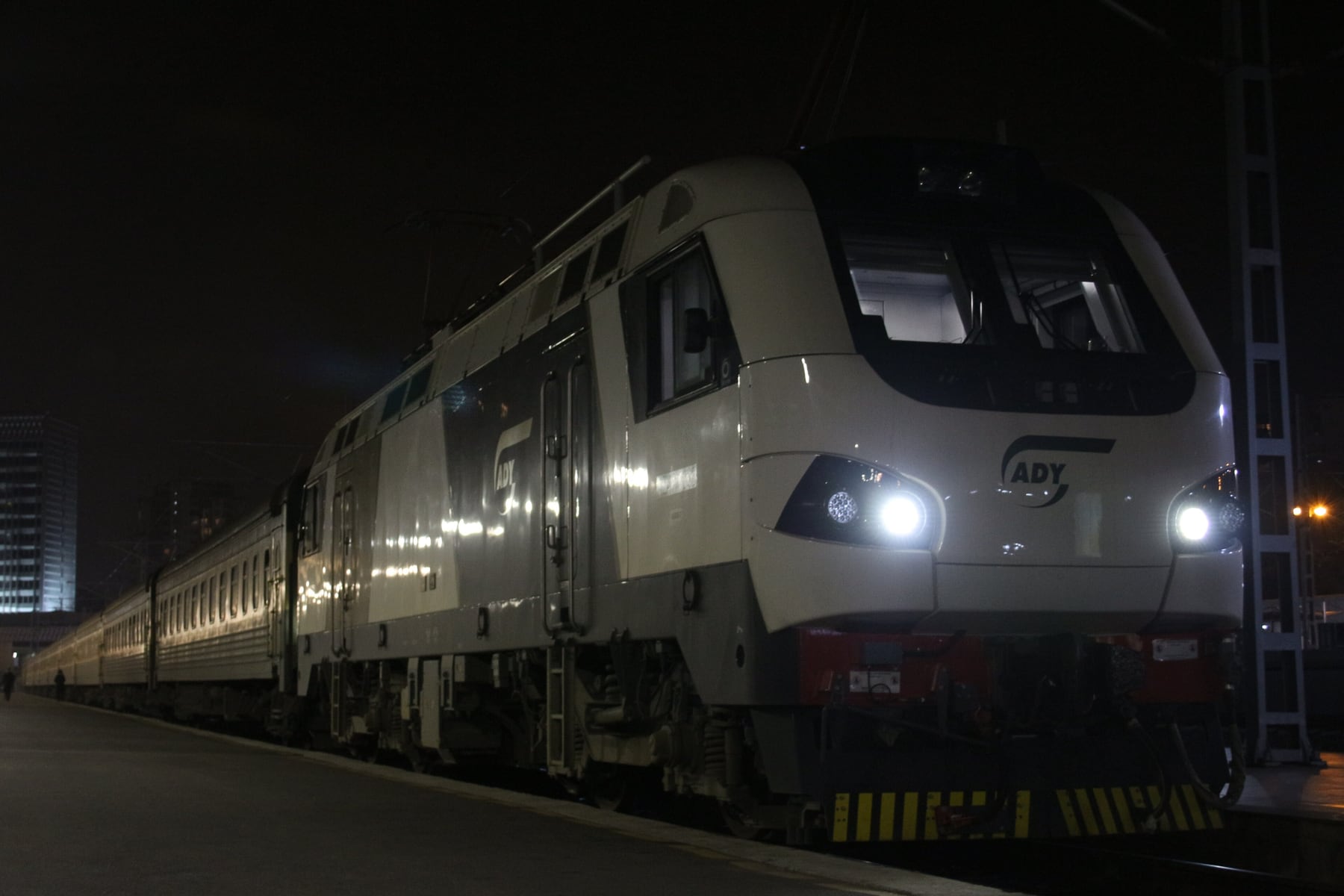
Baku to Tbilisi
Superalbs / Wikimedia Commons · CC BY-SA 4.0 · 2020 · cropped
- DistanceAbout 560 km, Baku to Tbilisi
- Duration9 h 31 min westbound, 9 h 32 min eastbound
- Best seasonNightly all year, in both directions
Introduction
For six years there was no train between the two largest cities of the South Caucasus. The overnight service from Baku to Tbilisi went in March 2020, when Azerbaijan closed its land borders, and it stayed gone long after the reason for closing them had faded. It came back on 26 May 2026, under an agreement between the two governments, and it came back as a different train: seven Swiss-built sleeping cars, 146 berths, a dining car for twenty-eight, and a shower in every carriage. It leaves Baku at 23:10, crosses the border in the dark and is in Tbilisi at 08:41 — 560 kilometres of the railway that was laid to carry Baku's oil to the Black Sea, covered while you are asleep on it.
One thing has to be said before any of the rest, because it decides whether this journey is available at all. Azerbaijan's land borders remain shut under a special quarantine regime first imposed in 2020 and extended, most recently, to 1 October 2026 — and Azerbaijan Railways states on its own booking system that citizens of countries without a visa-free travel regime with Azerbaijan are not permitted to travel to Georgia by rail. An Azerbaijani e-visa, which is what British, Irish, EU, American and Australian passport holders normally use, is not a visa-free regime. For most readers of this page the train is therefore something to watch rather than something to book, and the thing worth watching is the quarantine regime's next expiry date.
The Journey
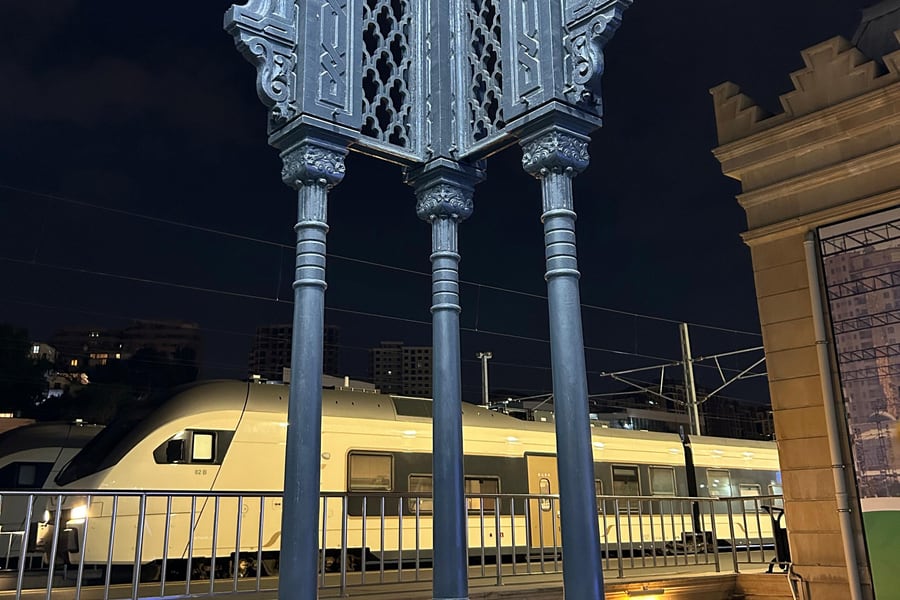
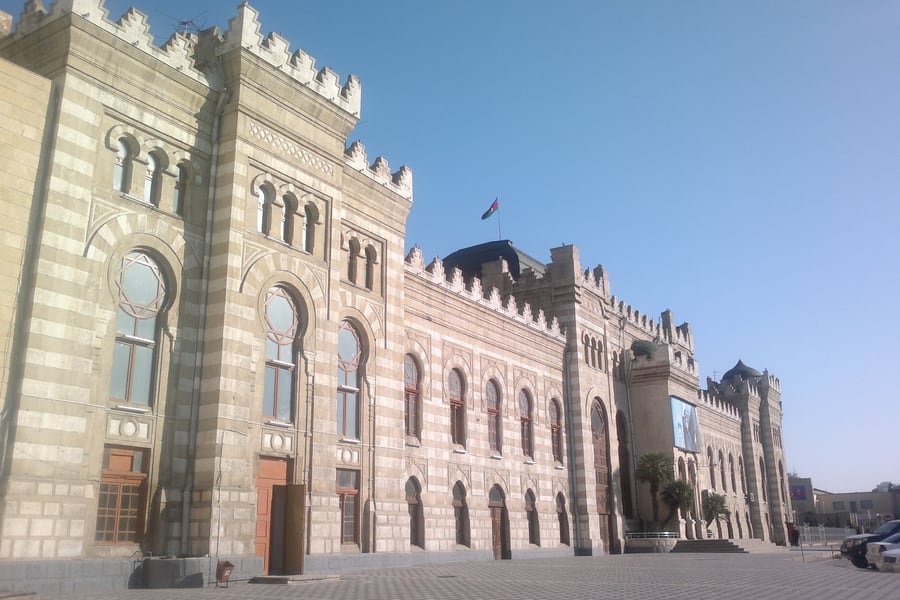
Baku station stands where the railway ended in 1883, a few streets back from the Caspian. The building the trains leave from now is the sixteen-storey block of 1976, reopened after reconstruction in February 2017; the one worth looking at is next to it, a battlemented pile of 1884 that opened as the Tbilisi Station and was designed by Chrisanf Vasilyev, the architect of the railway itself. The name was not sentimental. Tbilisi was the point of the line, and the point of Tbilisi was the Black Sea beyond it.
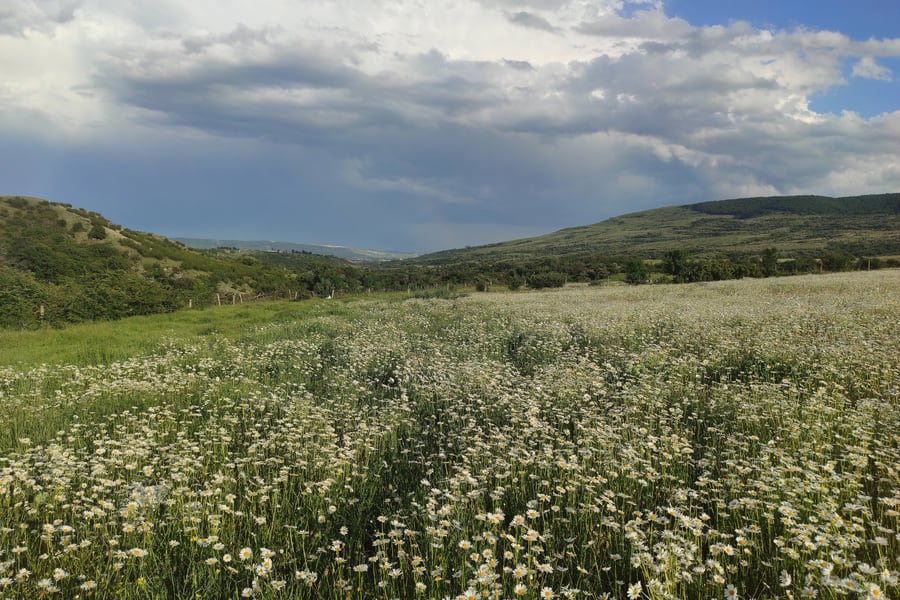
The 23:10 is away past Bilajari, the junction where the Absheron lines diverge, inside twenty minutes, and then the peninsula's refineries give out and there is nothing to see for hours. The railway runs west along the Kur–Araz lowland, the broad plain that carries the Kura down to the Caspian, through Kurdamir and Ujar. Yevlakh comes at the point where the line meets the river; the train calls, and beyond it the country begins to rise towards the Lesser Caucasus.
Ganja, and then the border
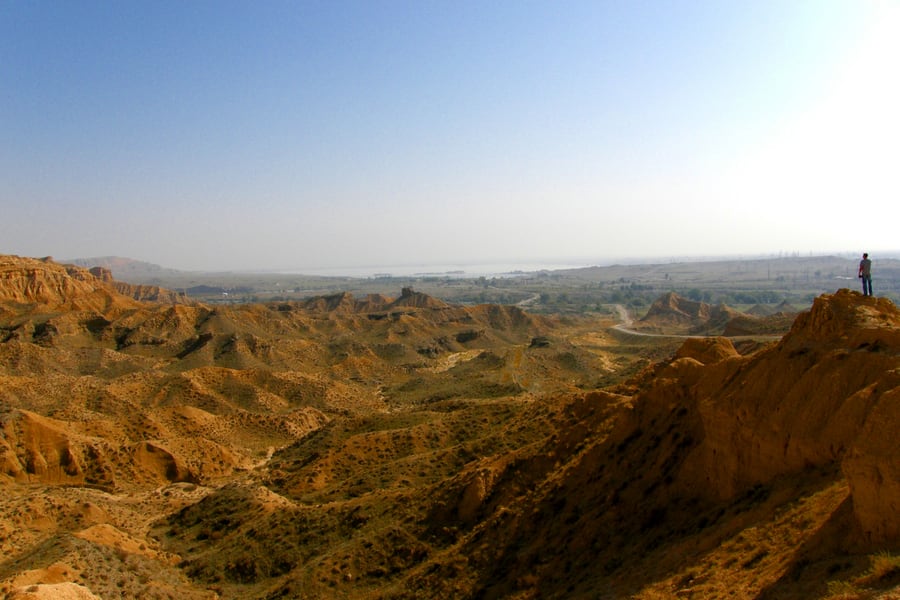
Ganja is the second city of Azerbaijan and the only stop of any size before the frontier. The train is there in the small hours, long enough for a few passengers, then runs on through Dallar, Tovuz and Aghstafa into Ceyrançöl — an eroded steppe of clay ridges and gullies that in daylight looks like nowhere else on the route, and which the sleeper crosses twice without anyone seeing it.
Boyuk Kasik is the last station in Azerbaijan and where the night stops being restful. Passports and customs are worked here, with migration staff on the platform, and then again on the Georgian side at Gardabani, the first stop across the line. Between the two the train sits still for a while. It is the standard arrangement on this frontier and it is done in the carriages rather than in a hall.
Down the Kura into Tbilisi
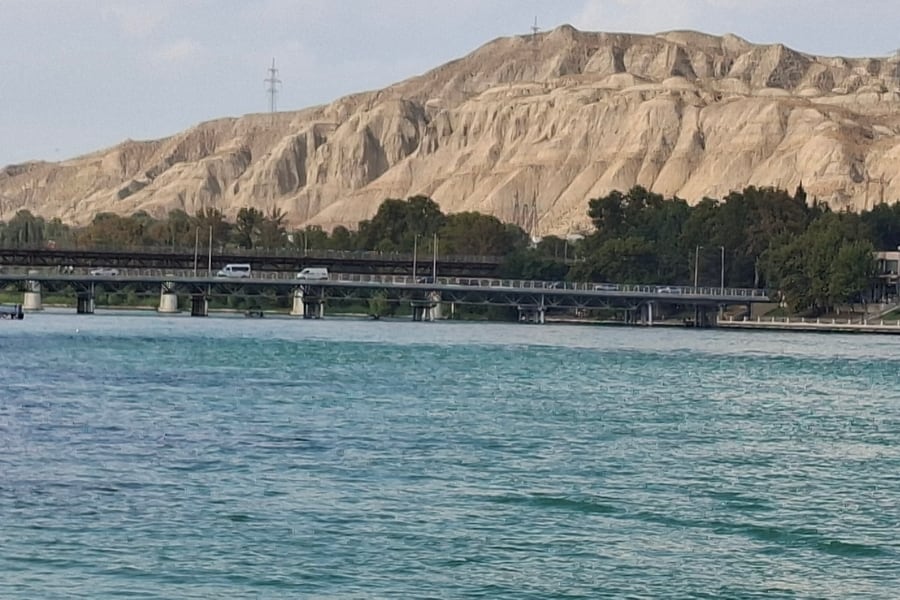
From Gardabani the last forty minutes follow the Kura upstream into Georgia's capital, and by then it is light. Tbilisi Central is a concrete slab of the Soviet 1970s with the tracks running below it; the metro is inside the same building, and Rustaveli and the Old Town are a few stops down the line. The Kura here is the same river the train has been following since Yevlakh, six hundred kilometres and one border earlier.
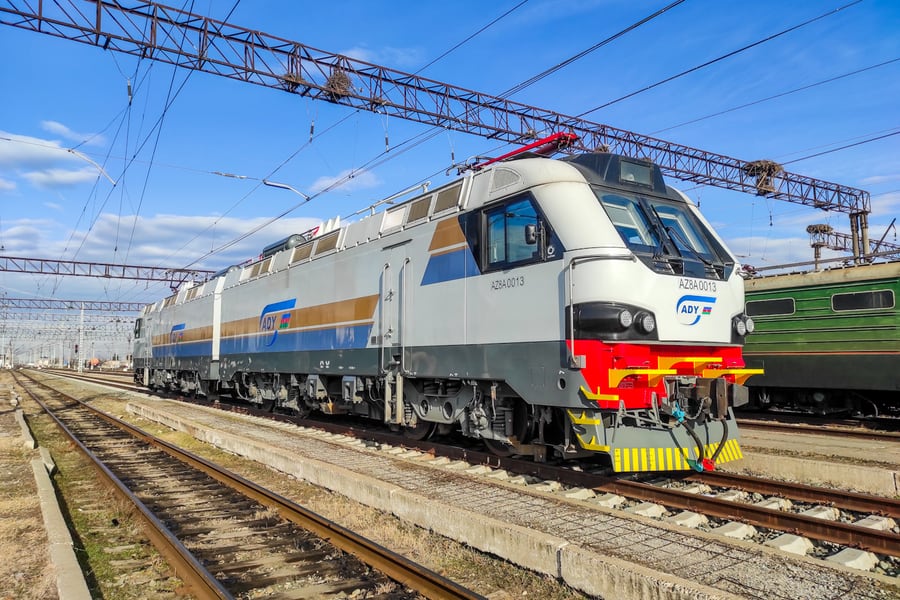
The traction changes at the frontier — Azerbaijani AZ4A and AZ8A electrics, both Alstom-built, work the eastern end under 3 kV DC, and Georgian Railway takes the train on from there. Both networks are 1,520 mm Russian broad gauge, so nothing has to be lifted or regauged, which is precisely what makes the newer Baku–Tbilisi–Kars line to the west of here so awkward: it meets standard gauge at Akhalkalaki, and it has never carried a passenger.
Along the route
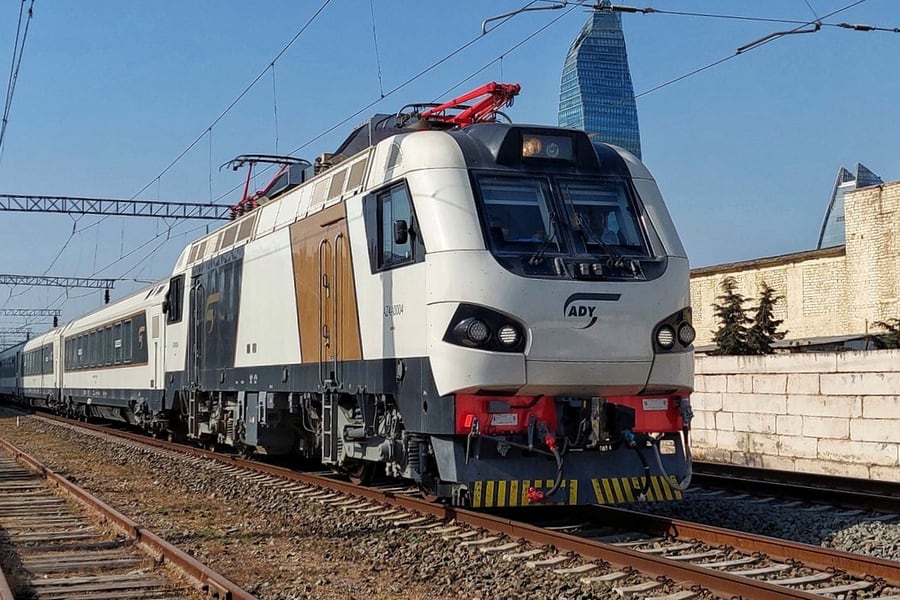
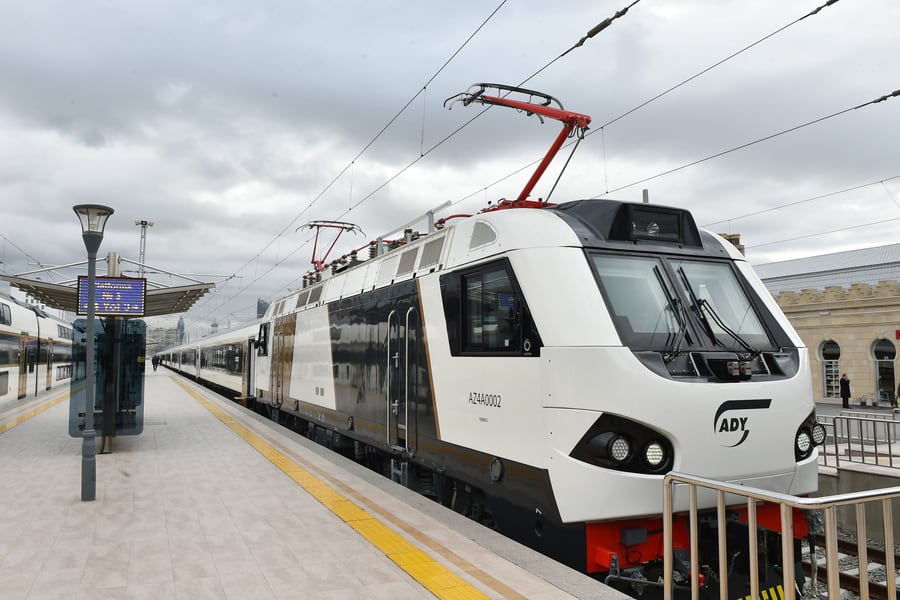 Press centre of the President of Azerbaijan / Wikimedia Commons · CC BY 4.0 · 2019 · cropped
Out of Baku at 23:10
The train leaves the Caspian and is at Bilajari, the junction above the city, within twenty minutes. Everything after that is dark: Kurdamir, the Shirvan plain, and the Kura somewhere off to the left.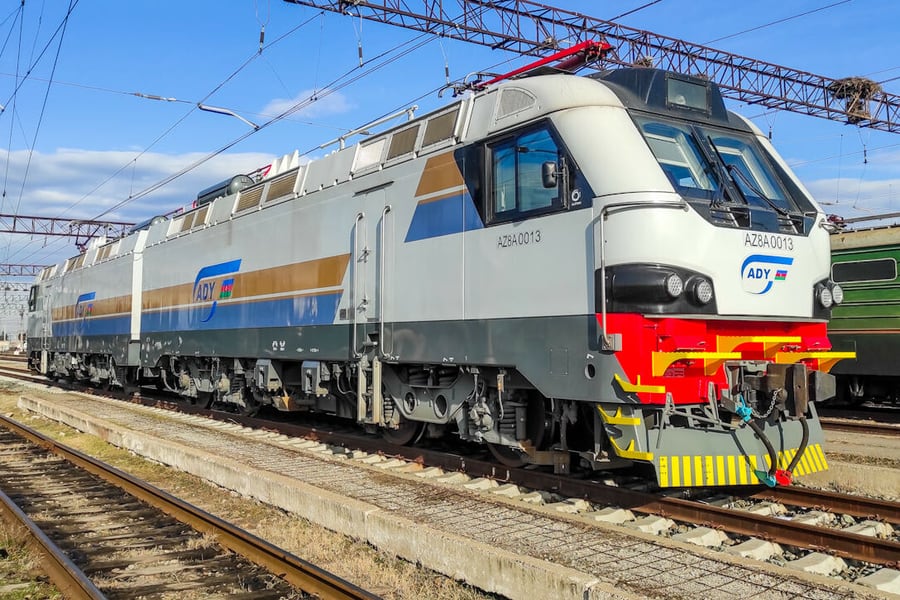 Az_Railways / Wikimedia Commons · CC BY 4.0 · 2022 · cropped
Boyuk Kasik, and the border
Passports and customs are done at the last Azerbaijani station, then again at Gardabani on the Georgian side. Migration staff work the platform at Boyuk Kasik while the train stands.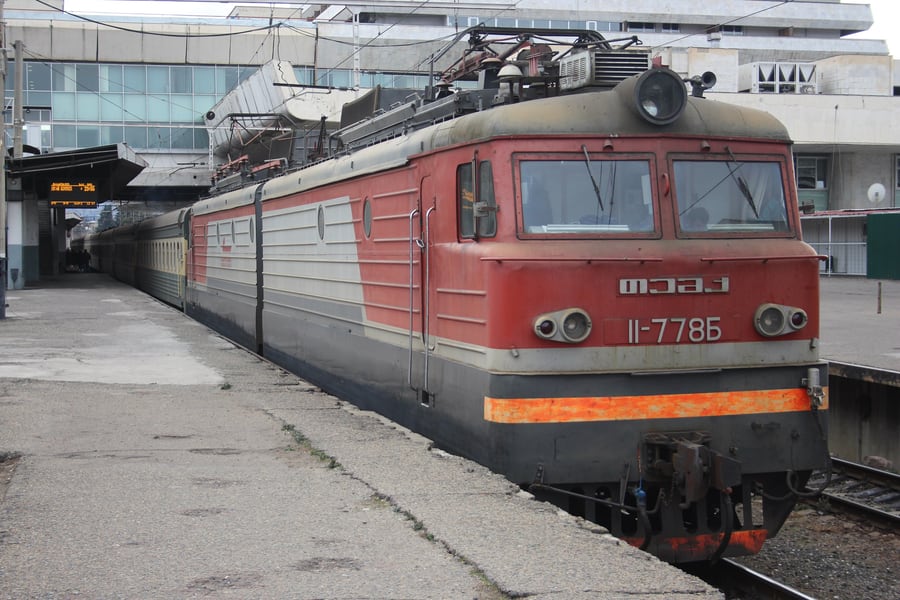 Superalbs / Wikimedia Commons · CC BY-SA 4.0 · 2020 · cropped
Into Tbilisi at 08:41
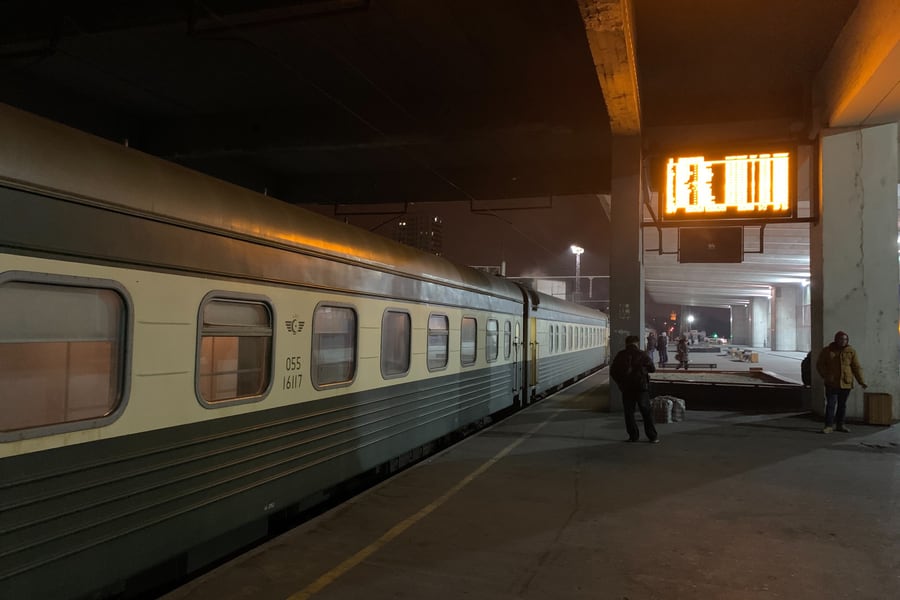
The last hour runs up the Kura into the city. A Georgian VL11, a two-part electric, has had the train since the frontier and brings it under the concrete slab of Tbilisi Central.A bit of history
Culture & experiences along the way
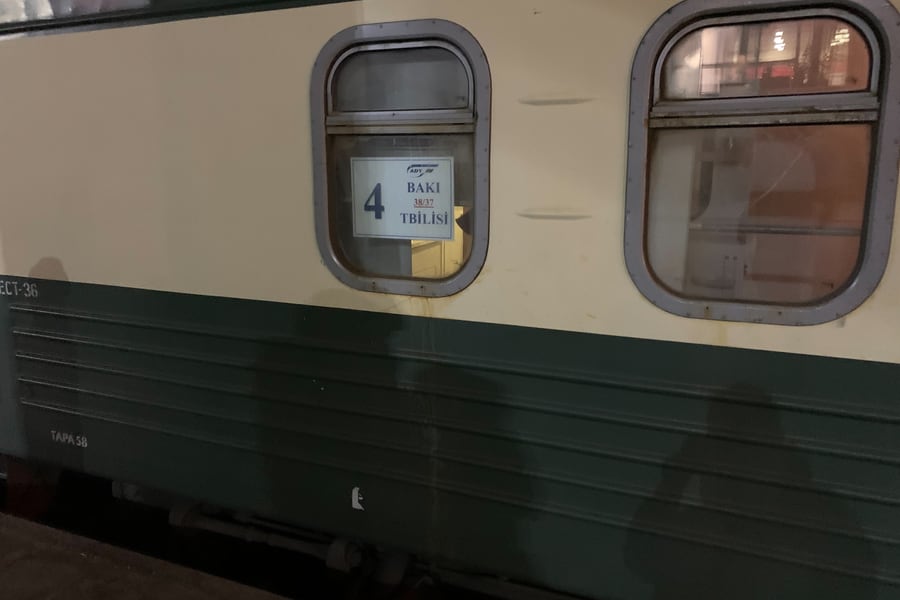
 Travelarz / Wikimedia Commons · CC BY-SA 3.0 PL · 2016 · cropped
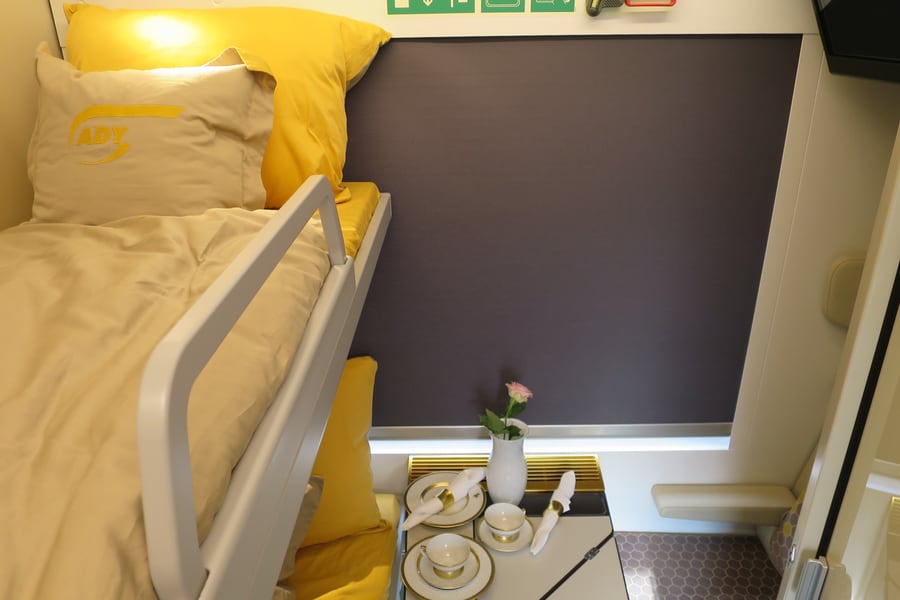
Seven Swiss carriages and a dining car
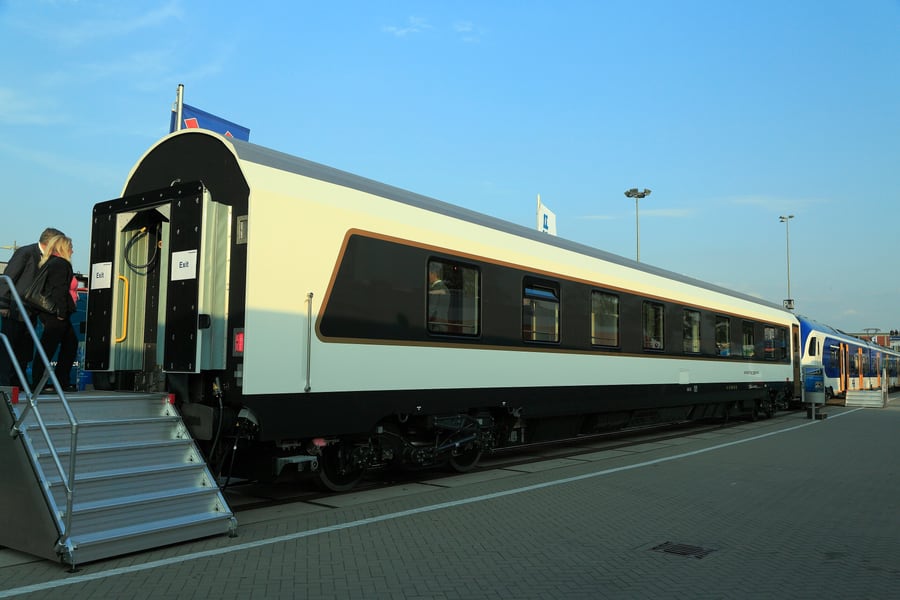
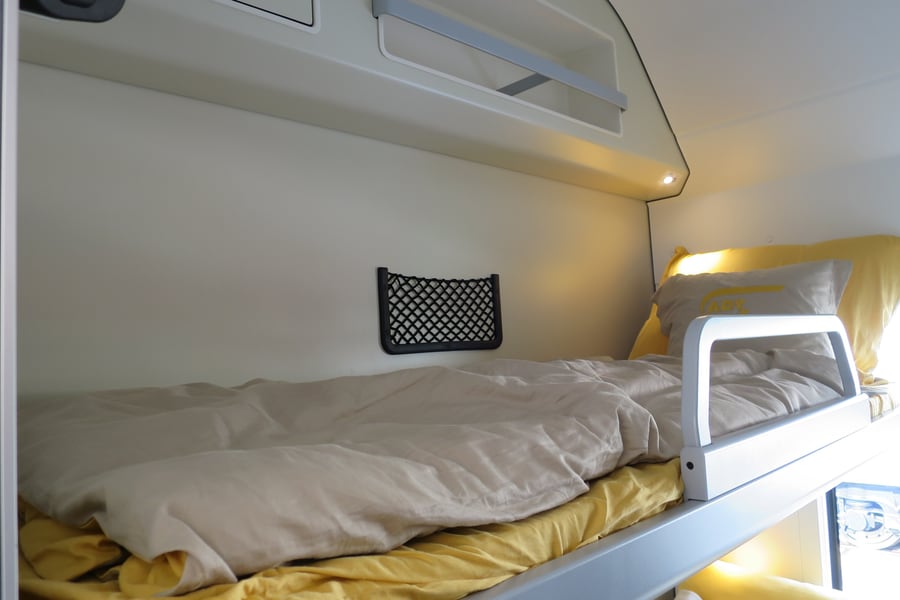
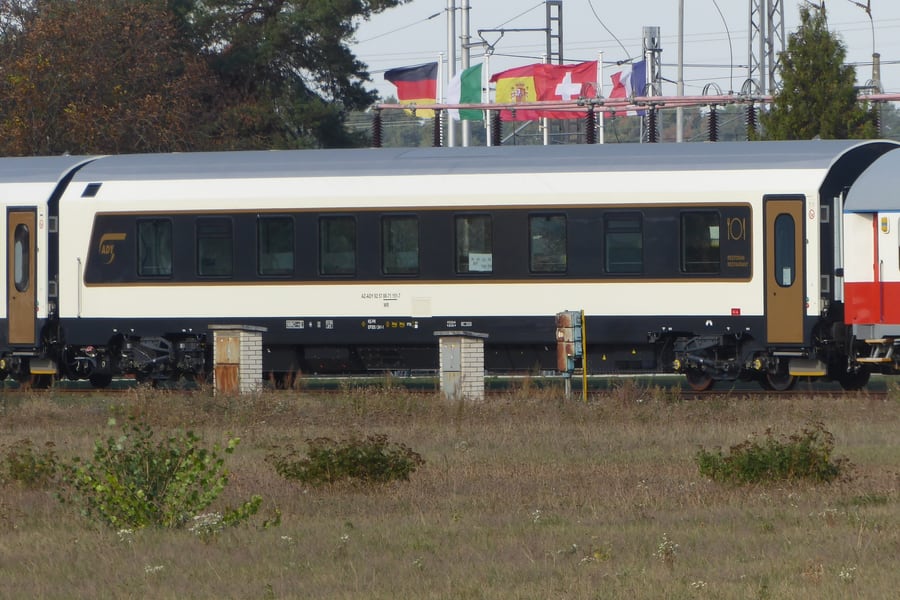
The formation is Stadler-built and new to the route: seven carriages, 146 berths and a restaurant car seating 28. Accommodation runs from Comfort, in four-berth compartments, to Luxury, where the compartment is for two and the fare includes the station VIP lounge. Every compartment has a control panel for its own lighting, temperature and announcements, and a card key to the door.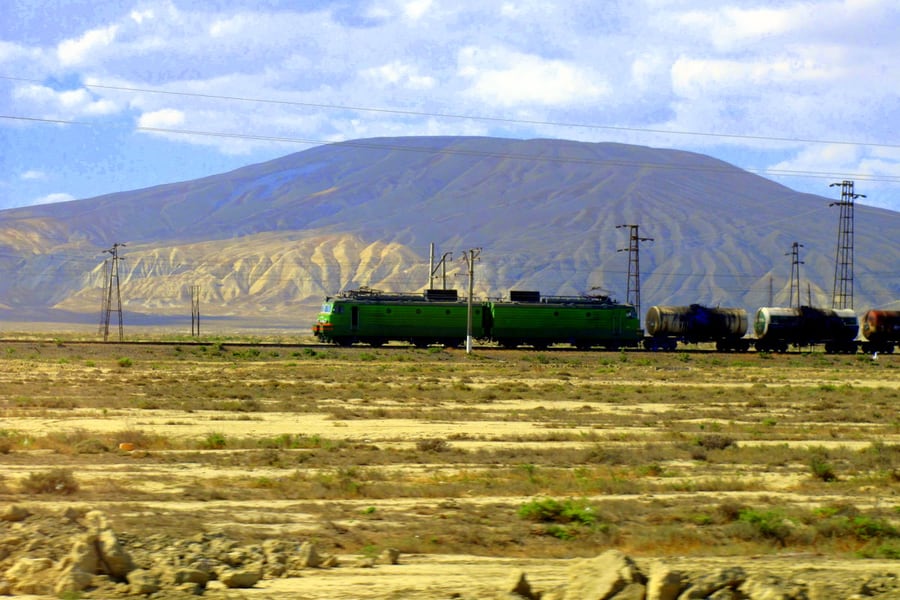 Peretz Partensky / Wikimedia Commons · CC BY-SA 2.0 · 2009 · cropped
A railway that was built for kerosene
This is the Transcaucasus line, driven through to Baku in 1883 to move oil to the Black Sea, and the first shipment left Baku freight station for Tbilisi on 8 May that year. It is why the Nobel brothers and the Rothschilds were in Baku at all. Oil still moves over the same alignment, in tank trains the sleeper passes in the night.Timetables
One train runs each way, every night, and it has done since the service resumed on 26 May 2026. Azerbaijan Railways numbers it 38 westbound and 37 eastbound.
| Station | 38 · Baku → Tbilisi | 37 · Tbilisi → Baku |
|---|---|---|
| Baku | 23:10 | 06:32 (+1) |
| Bilajari | ↓ | ↑ |
| Yevlakh | ↓ | ↑ |
| Ganja | ↓ | ↑ |
| Aghstafa | ↓ | ↑ |
| Boyuk Kasik | ↓ | ↑ |
| Gardabani | ↓ | ↑ |
| Tbilisi | 08:41 (+1) | 21:00 |
Nine hours thirty-one minutes westbound, nine hours thirty-two eastbound, for about 560 kilometres. The operator publishes no intermediate times for this train — the stop list above is its own, from the routes page, but only the departure and arrival appear in the booking system, so the calls at Bilajari, Yevlakh, Ganja, Aghstafa, Boyuk Kasik and Gardabani are shown here without clock times rather than with invented ones.
The booking system offers a fare for every date checked between 2 September and 28 October 2026, which is what confirms the train runs daily rather than on set days of the week. Selling closes twenty minutes before departure. Alongside train 38 the same search returns a second number, 46, at exactly the same times, offering Standard+ four-berth accommodation at a lower fare; the operator's description of the service covers only 38/37.
As of September 2026. Times and dates are checked at ticket.ady.az (opens in a new tab), which is where the train is sold.
Tickets
Tickets come from Azerbaijan Railways, online or at a station, and a valid international passport is required to buy one and to be carried on the train. Fares move with demand: the same Comfort berth that costs 87.75 manats on a quiet midweek night in September is dearer on a Friday, and the system's own date grid ran between about 72 and 235 manats over the two months checked. Booking closes twenty minutes before departure.
Two things are checked besides the ticket. Georgia has required health and accident insurance of everyone entering the country since 1 January 2026, in English or Georgian, printed or on a phone. And the rail crossing itself is open only to citizens of countries that hold a visa-free regime with Azerbaijan, which is the restriction described in the introduction.
Book your tickets
Comfort, Baku to Tbilisi
A berth in a four-person compartment
The cheapest berth on train 38 itself, and the class most of the train is made up of.
Book Tickets (opens in a new tab, on ticket.ady.az)via ticket.ady.azComfort+, Baku to Tbilisi
Eight berths on the whole train
The same four-berth compartment sold with fewer people in it, and it sells out first.
Book Tickets (opens in a new tab, on ticket.ady.az)via ticket.ady.azLuxury, Baku to Tbilisi
Two berths, and the VIP lounge at the station
Twenty-four berths in compartments for two, with lounge access at both ends included.
Book Tickets (opens in a new tab, on ticket.ady.az)via ticket.ady.azRail Passes
Neither end of this journey is in the pass area. Azerbaijan is not among the 33 countries the Interrail Global Pass covers, and neither is Georgia; nor does either appear among the thirty-one One Country Passes on sale — checked against interrail.com in September 2026.
It costs nothing to lose. The fare is low by European standards and a pass would buy no reduction on an international sleeper in any case: a berth in Comfort starts at 87.75 manats for the whole 560 kilometres, which is roughly what a couple of hours on a fast train costs elsewhere. Tickets are bought straight from Azerbaijan Railways, and because there is one train a night the date is the thing worth planning, not the class.
Places to Visit
The sleeper is a night train, so the places worth the detour are at its two ends and in the one city it serves in between. Baku's old town is close enough to the station to fill an afternoon before the 23:10; Ganja is a stop rather than a visit, unless the journey is broken there on a separate ticket; and Tbilisi is delivered at breakfast time with the whole day ahead of it.
Azerbaijan's better-known sights in Baku are the modern ones — the Flame Towers, the Heydar Aliyev Center — and they are worth seeing. What follows is the older city, which is what the railway arrived at in 1883 and what still stands closest to the station.
 Gvido Pētersons / Wikimedia Commons · CC BY-SA 3.0 · 2014 · cropped
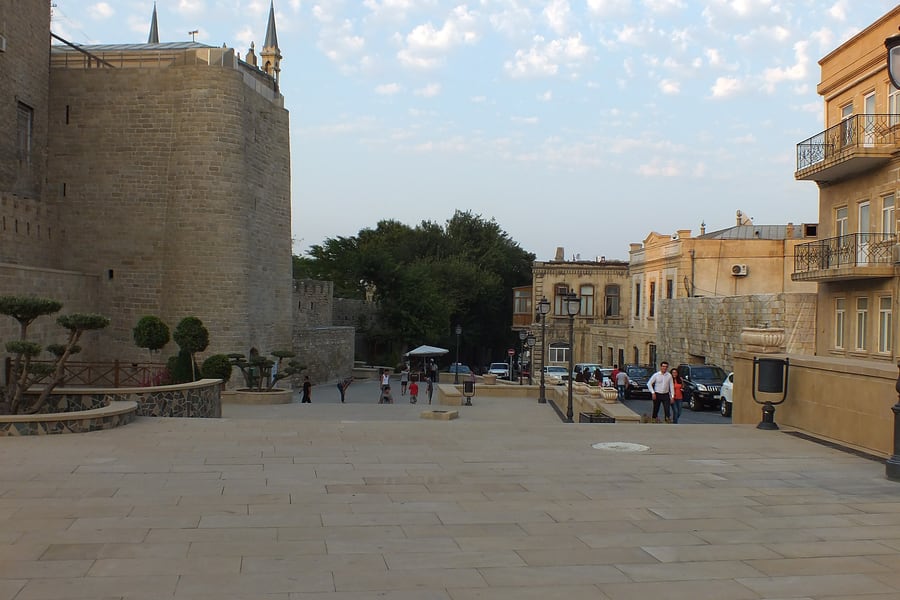
İçərişəhər, the walled city of Baku
Twenty-two hectares of lanes inside a fortress wall, ten minutes from the station and on the UNESCO list since 2000. The Maiden Tower at its seaward corner is a cylinder of stone nobody has satisfactorily explained — dated to the twelfth century, built on something older, and argued over ever since. The Palace of the Shirvanshahs, up the hill, is the fifteenth-century seat of the dynasty that ruled from here.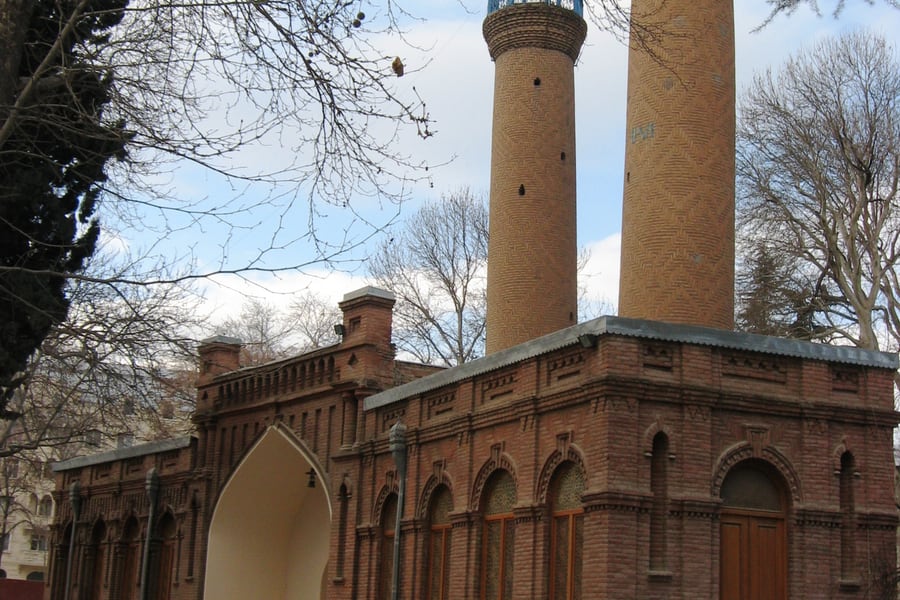 Interfase / Wikimedia Commons · Public domain · 2012 · cropped
The Juma mosque at Ganja
Ganja is the second city of Azerbaijan and the train's fourth stop, reached in the small hours. Its Friday mosque was built in 1606 under Shah Abbas I, in red brick with a pair of minarets, and stands in the square at the head of the old caravan road. The city was the birthplace of the poet Nizami, and the medieval walls a Mongol army destroyed in 1235 are still traceable at its edge.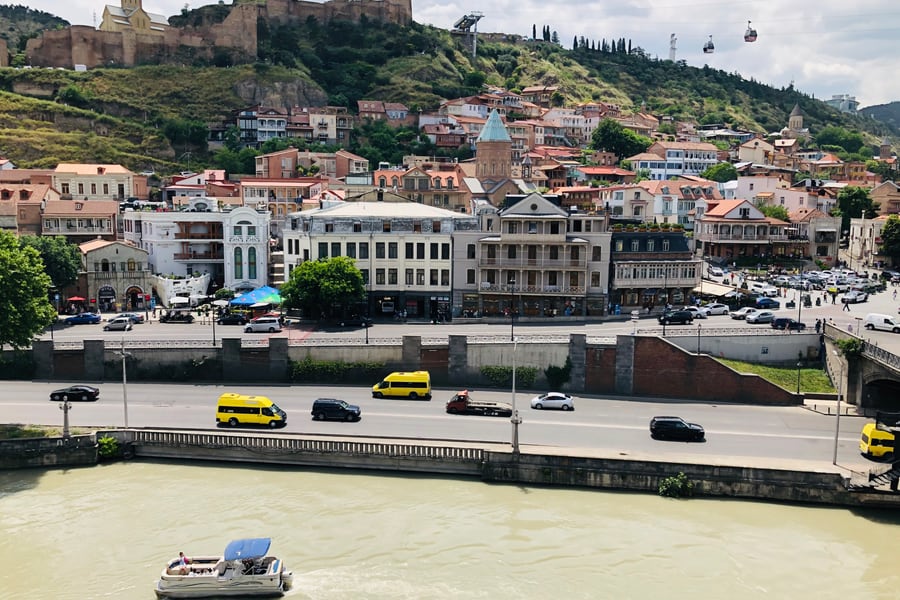 GeoO / Wikimedia Commons · CC BY-SA 4.0 · 2019 · cropped
Old Tbilisi, under Narikala
The train arrives with the morning, which is the right time to walk into the Old Town. Wooden balconies hang over the streets below the Narikala fortress; the sulphur baths of Abanotubani are domed brick half-buried in the ground, and the reason the city stands where it does. A cable car climbs to the fortress from the riverside park, and the whole quarter is about three kilometres from the station.Where to Sleep
The train is the bed for the night in the middle, which leaves one night at each end. Baku station sits about two kilometres from İçərişəhər, and the walled city is where most visitors want to be: small hotels inside the fortress walls, and the Maiden Tower a couple of minutes away. In Tbilisi the station is north of the centre, with the metro in the building, and the Old Town under Narikala is three stops down the line.
Where to stay
Sultan Inn Boutique Hotel
Inside the walls of İçərişəhər, Baku
Eleven rooms on two floors on Böyük Qala Street, inside the old fortress walls and overlooking the Maiden Tower.
Check Availability (opens in a new tab, on sultaninnhotel.az)via sultaninnhotel.azKopala Hotel Tbilisi
On Chekhov Street, below Narikala
Thirty-four rooms in the Old Town under the fortress, with its own restaurant looking over the roofs.
Check Availability (opens in a new tab, on kopala.ge)via kopala.geQuestions or corrections
Planning this trip and stuck on something, or spotted a time, fare or detail that has changed? Send us a message about Baku to Tbilisi. We read every one, and we update this page when something has changed.