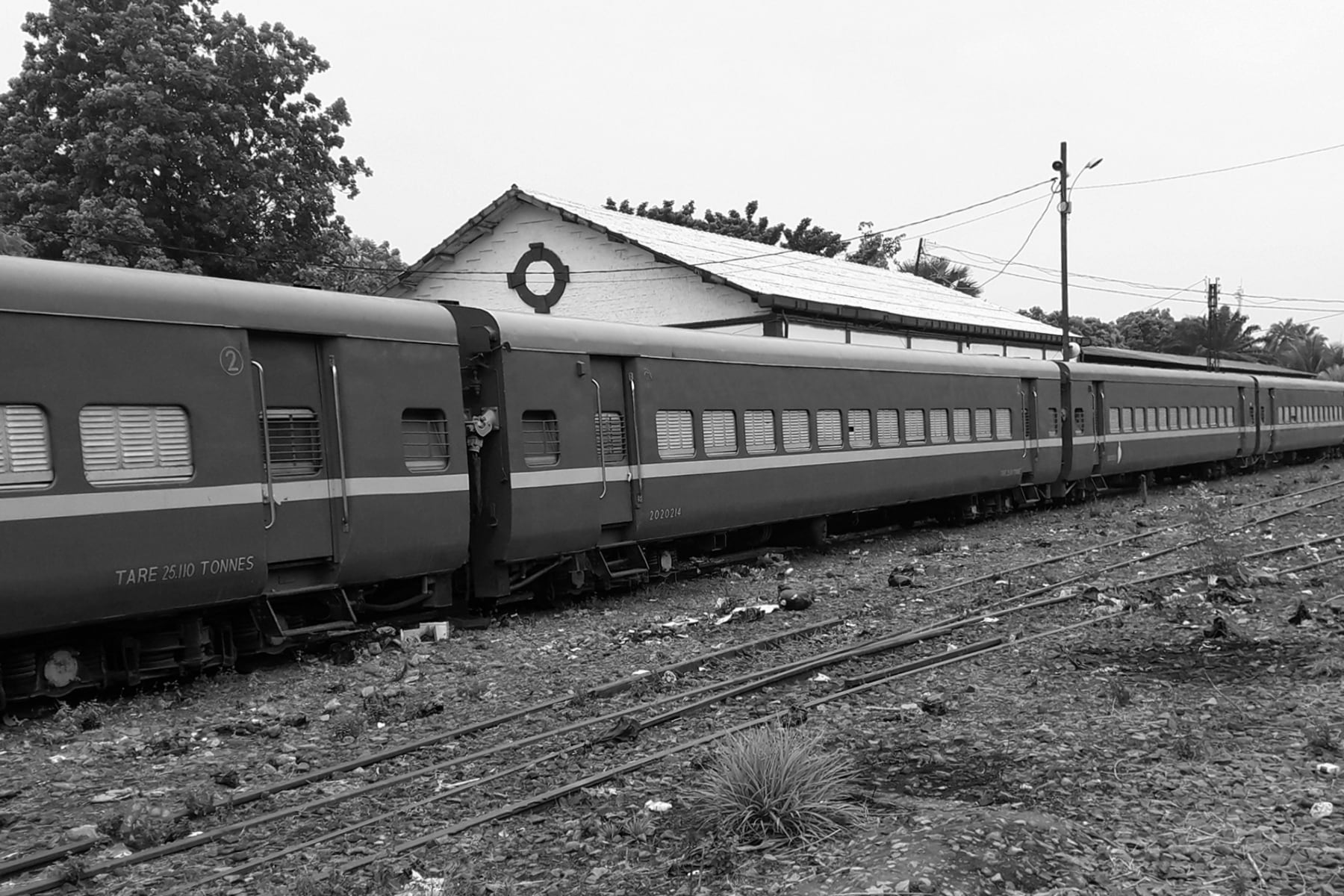
Bamako to Kayes
Modibo DAMA / Wikimedia Commons · CC BY-SA 4.0 · 2020 · cropped
- DistanceBamako to Kayes · about 495 km by rail, against 612 km by road
- DurationAbout 15 hours advertised; the relaunch train was booked for nineteen
- Best seasonNovember to February, the cool dry months · Kayes in April reaches 48 °C
Introduction
Where this railway stands, September 2026. Mali's only passenger train is not running to a published timetable. It came back on 9 June 2023 after five years off, and it stopped again on 24 November 2023, when train n°15 derailed nine kilometres short of Mahina with 410 people on board. The damage was largely made good — and then the rains of 30 August 2024 carried away more than a hundred metres of formation at Kassaro and dropped a bridge deck by a metre and a half. A train did run the length of the line on a special working at the end of July 2026, the first run reported since the derailment, but no days, no frequencies, no fares and no booking arrangements have been published to go with it. Everything below is the journey as SOPAFER-Mali itself last advertised it, with every figure dated.
Mali has one railway. It is 649 kilometres of metre gauge, it was built to give a landlocked colony a route to the Atlantic, and today it reaches no ocean at all — the through working to Dakar stopped in 2010 and the Senegalese half is a separate project. What is left is the Malian section between Bamako and Kayes: about 495 kilometres down the valley of the Bakoy and then the Senegal, past Kati, Kita, Toukoto, the iron bridge at Mahina and the red country around Diamou.
It is not a scenic railway and nobody built it to be one. It is the road the west of the country depends on, in a region where the alternative is a national highway half as long again that dissolves every rainy season. Fifty-odd villages stand along the line. When the train stops running, as it has now for the better part of three years, people leave them.
The Journey
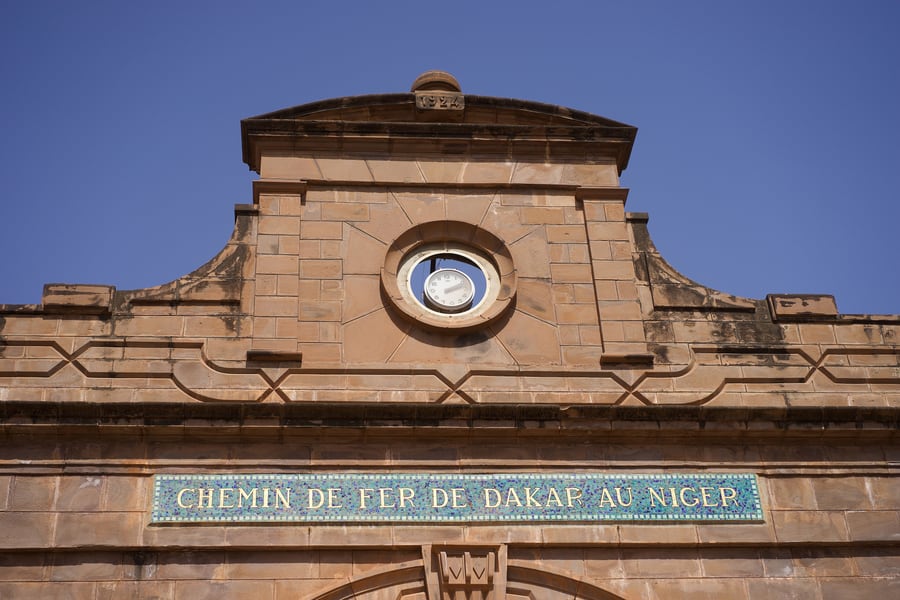
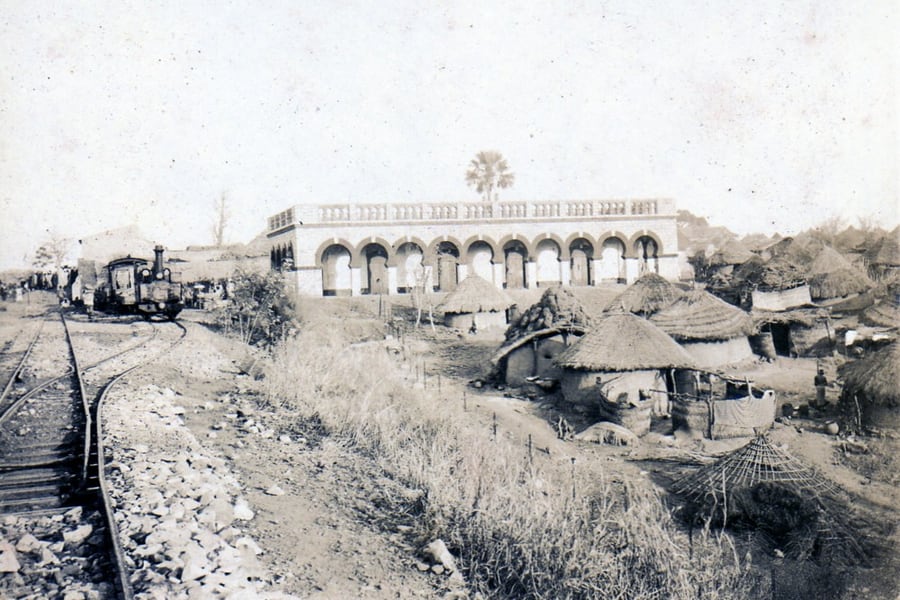
The train leaves Bamako from a sandstone station with Chemin de Fer de Dakar au Niger cut into the pediment — the name the line carried when the rails reached the city in 1904, and a name that has outlived both the company and the through service it describes. The first hour is suburban: Korofina, where the central workshops are, then Kati, the first stop out of the capital, and away into open country.
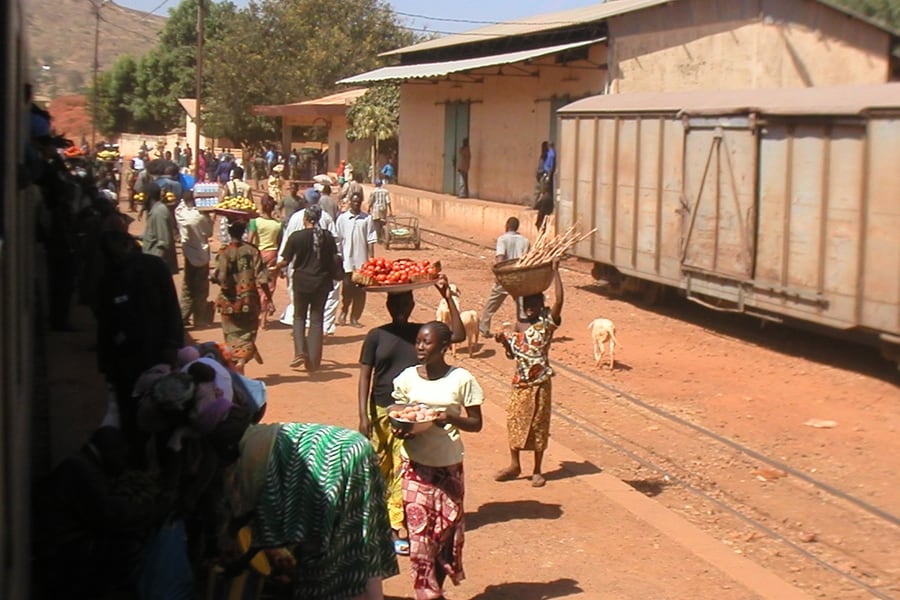
Kita is a hundred and eighty kilometres on, the biggest place between the two ends of the line and the busiest of its stops. Kita is where the train fills: cotton and groundnuts from the surrounding cercle, traders with produce for Bamako, and a market on the trackside that assembles while the coaches stand and disperses when they pull out. Beyond it the ground reddens and the woodland thins.
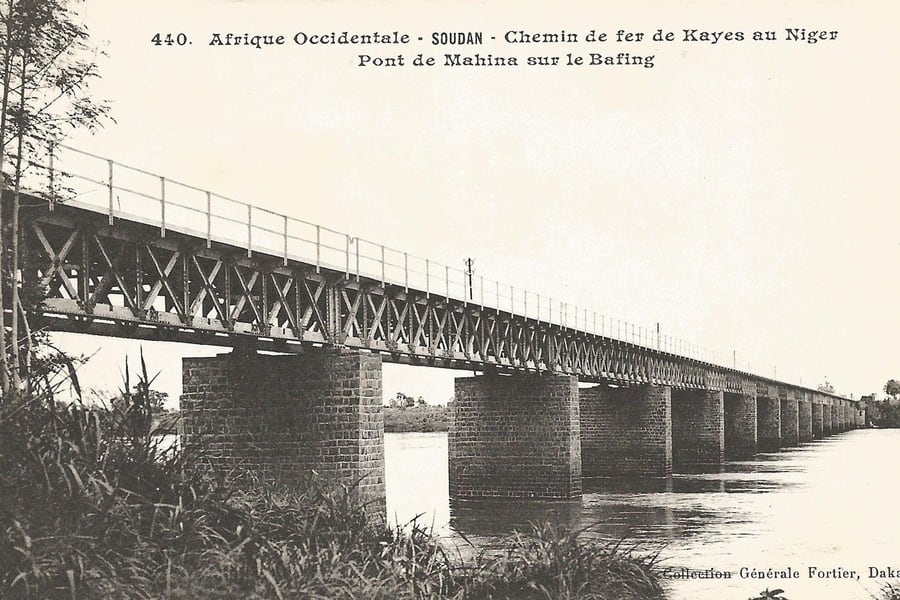
Toukoto follows, and after it the line meets water. At Mahina, kilometre 116 from Kayes, it crosses the Bafing on an iron viaduct of sixteen 25-metre spans — four hundred metres of lattice finished in August 1895, and still the crossing the trains use. Six kilometres north, out of sight of the line, the Bafing meets the Bakoy at Bafoulabé and the two become the Senegal. From there the railway follows the new river down: past the Gouina falls, where it spreads to five hundred metres and drops sixteen of them, past Diamou, into Kayes — the furthest point a boat can reach up the Senegal, and the reason the railway was begun where it was.
The train itself
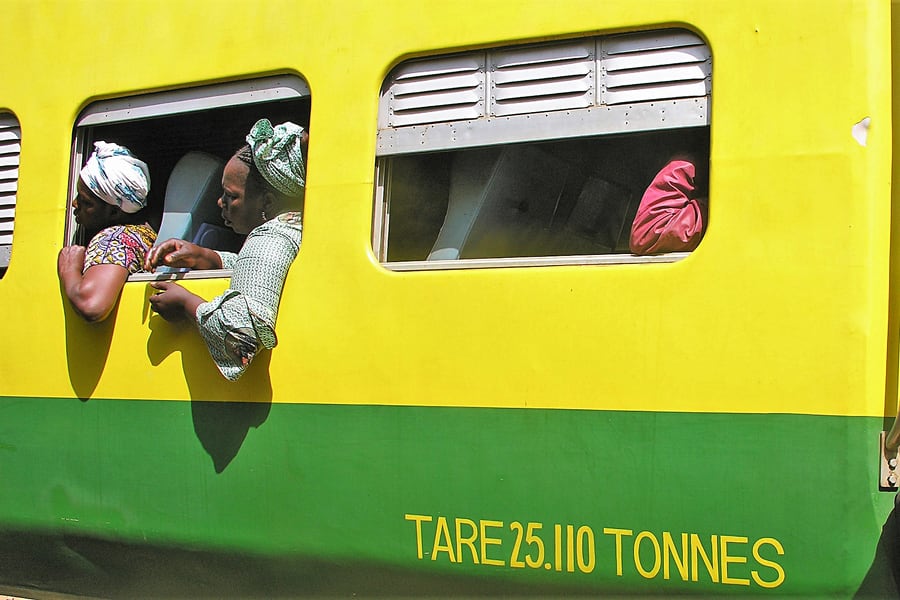
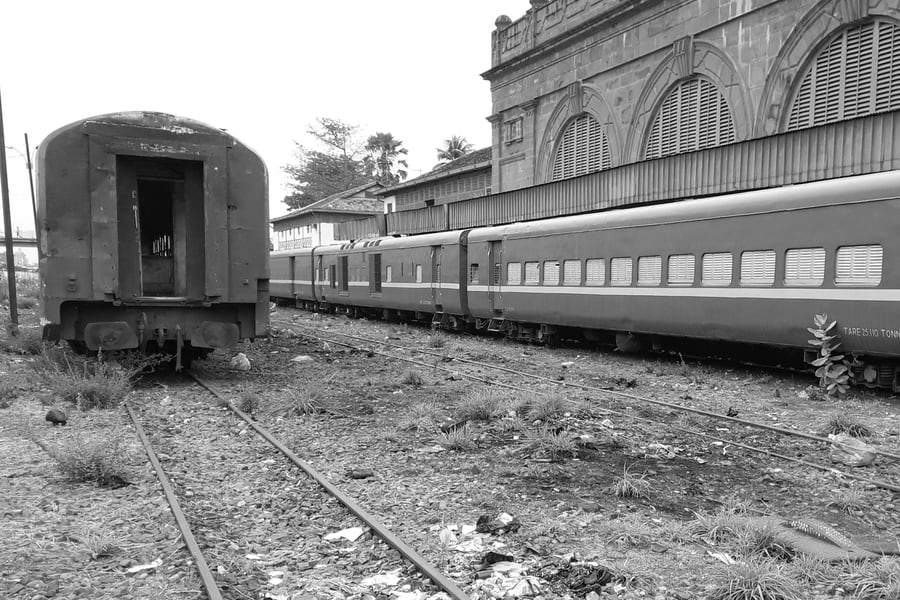
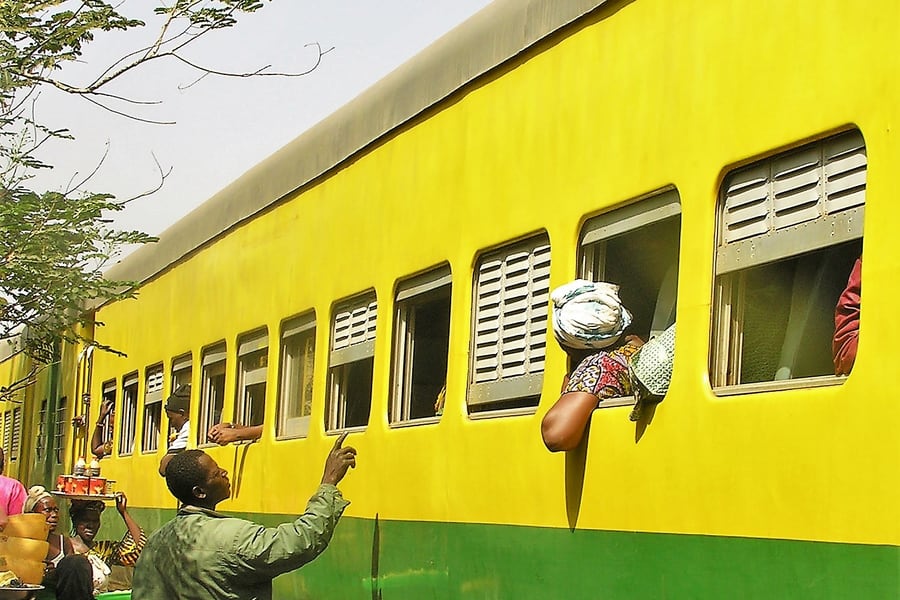
The stock is plain and the point of it is the windows. Yellow over green, louvred vents above each opening against the heat, and nothing painted on the side except TARE 25.110 TONNES — no name, no livery, no brand. The windows drop all the way down, which is not a detail: the trading at the halts happens through them, money one way and a basin of fruit the other, without anyone leaving the seat. There are two classes, both seated, and the difference between them is padding and how many people are in the saloon.
Two main-line locomotives were in traffic when the service last ran, CC2205 and CC2207, both based at Bamako. CC2207 took the relaunch train out of Kayes at eight in the morning on 9 June 2023. The ministry stated in October 2024 that both, and the coaches, were serviceable and ready — the obstacle by then was the track.
What the run is actually like
Advertised at about fifteen hours, and it has never been a fifteen-hour railway in practice. The railwayman travelling on the first train back told AFP that Bamako was expected at three in the morning — nineteen hours from an eight o'clock start, with a stop at every station on the way. Passengers took it anyway, and said why: the road is bad and the road is not safe. Makan Kanté, travelling on the first train, gave the other half of the answer — "even if it takes time, I will arrive home rested."
Along the route
 MarcJP46 / Wikimedia Commons · CC BY-SA 4.0 · 2011 · cropped
Coaches that carry only their weight
Yellow over green, louvred window vents against the heat, no branding beyond TARE 25.110 TONNES painted on the solebar. Windows drop right down, which is how the trading works.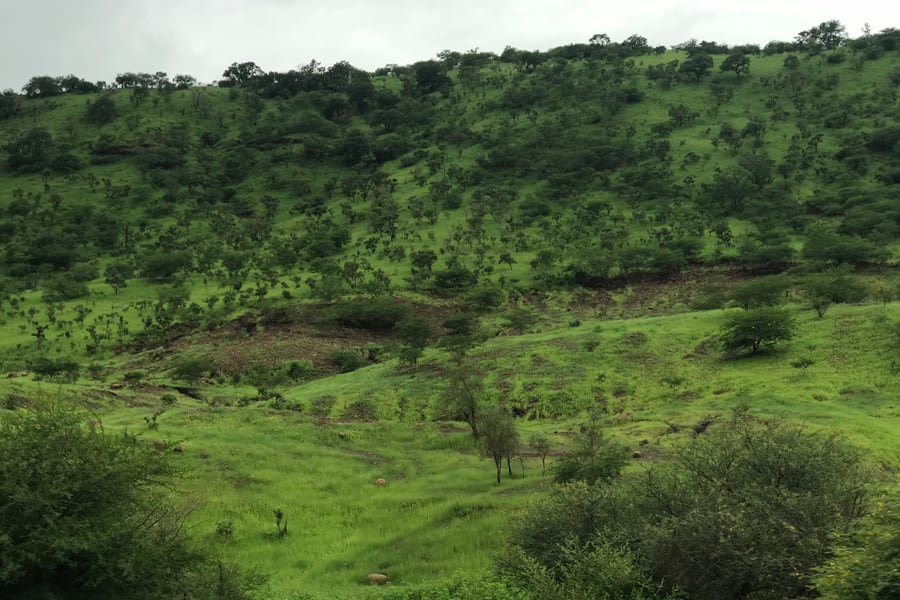 Sylghft / Wikimedia Commons · CC BY-SA 4.0 · 2018 · cropped
Green for three months
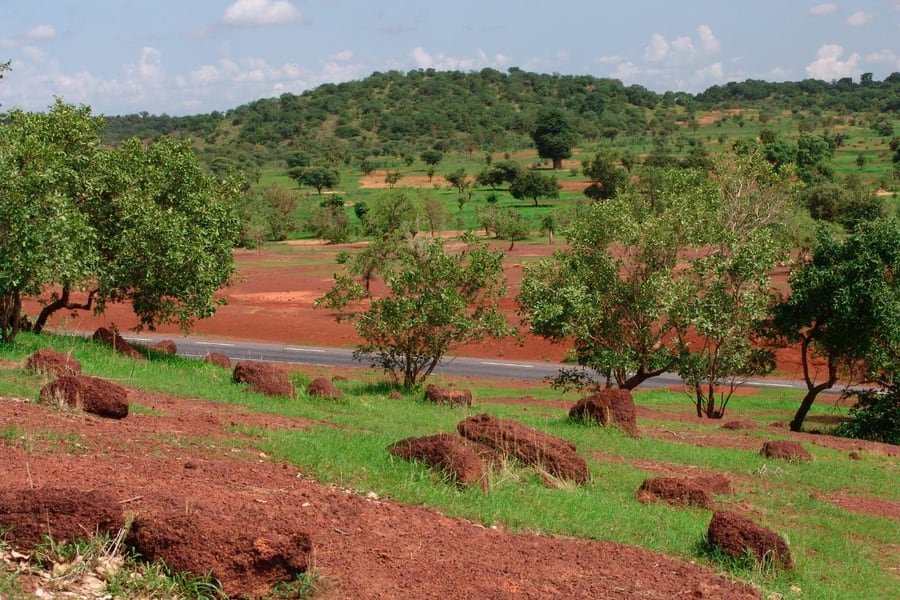
The rains run June to September and turn the whole Kayes region the colour of the photograph above — and they are also what washed the formation away at Kassaro in August 2024.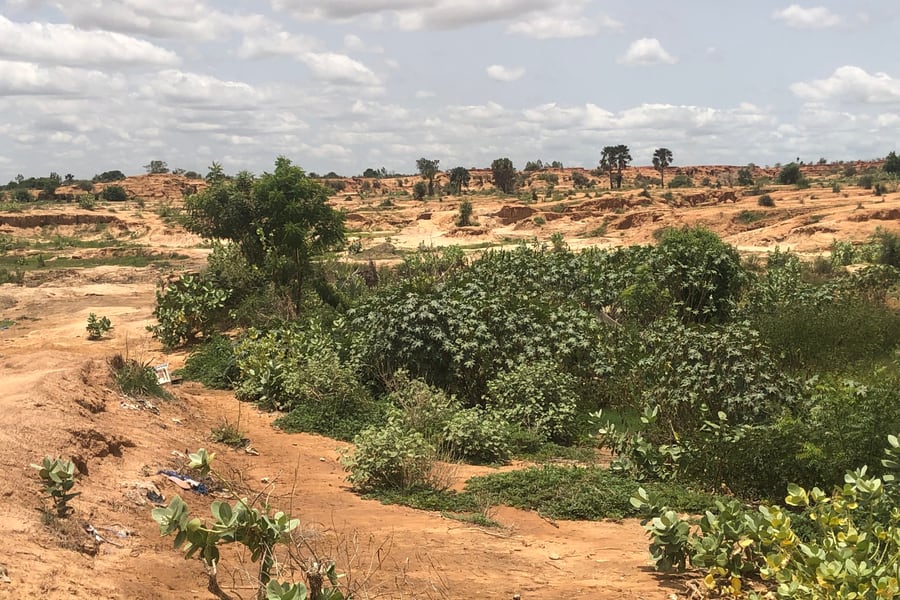 Dinx77 / Wikimedia Commons · CC BY-SA 4.0 · 2023 · cropped
Laterite country
West of Kita the ground turns red and breaks into low sandstone shelves and cliffs. By Diamou the trees are thinning and the Sahel proper has begun.A bit of history
Culture & experiences along the way
 PGskot / Wikimedia Commons · CC BY-SA 4.0 · 2005 · cropped
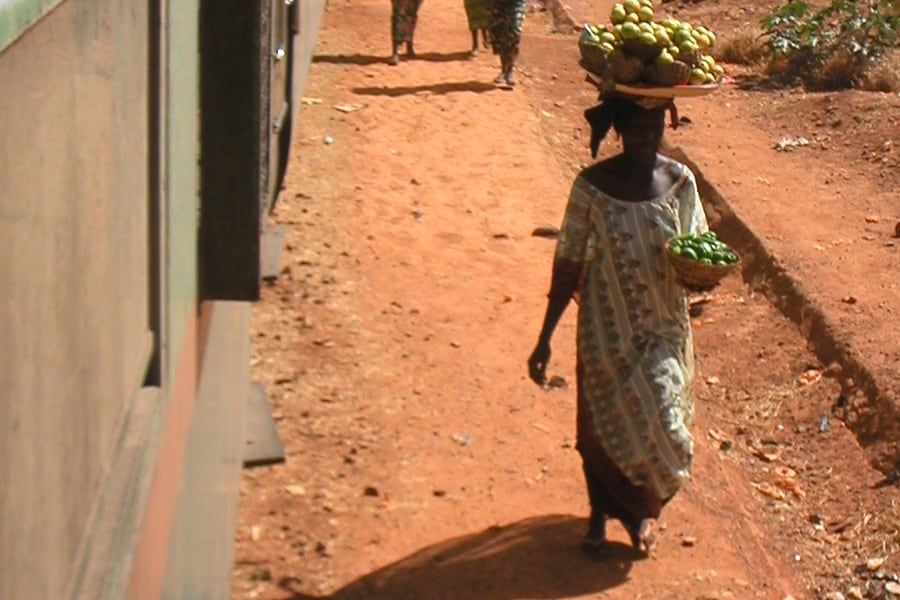
The market that meets the train
At Kita and at every halt with a name, the trackside becomes a market for as long as the train stands there — fruit and vegetables carried up to the dropped windows in basins, on heads, in baskets. Fanta Dembélé, who sells juice at Kita station, put it plainly in 2023: "if the train does not come, we have no money."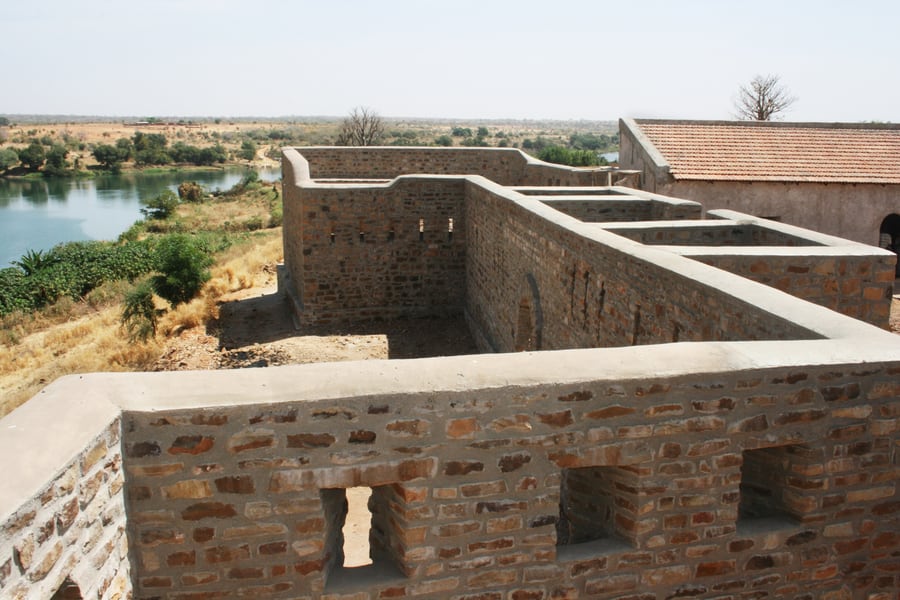 Olivier Epron / Wikimedia Commons · CC BY 3.0 · 2009 · cropped
Fort de Médine, twelve kilometres from Kayes
Faidherbe's fort of 1855, on a bluff above the Senegal, which held out against El Hadj Omar Tall's siege and is now an open-air museum of the conquest — the gun positions, the École des otages, the slave market and a princess's grave. A local guide walks visitors round it; almost nobody else does.Timetables
The last timetable published for this line is the relaunch programme announced on 9 June 2023, when the train went back on the road after five years off it. Three round trips a week, under a five-year transport plan, with a stop at every station on the route:
| Departs | Days | Arrives | Journey |
|---|---|---|---|
| Bamako | Mondays, Thursdays, Saturdays | Kayes, the same night | about 15 hours advertised |
| Kayes 08:00 | Tuesdays, Fridays, Sundays | Bamako, around 03:00 next morning | 19 hours, as booked in June 2023 |
The two figures are both real and the gap between them is the point. Fifteen hours is the plan. Nineteen is what the crew of the first train back expected on the day — away from Kayes at eight in the morning behind locomotive CC2207, into Bamako at three the following morning. Take the longer number.
Whether it is running
SOPAFER-Mali has no website, sells nothing online, and publishes no schedule anywhere a traveller outside Mali can read it. What can be established, as of September 2026:
- The service stopped on 24 November 2023, when train n°15 derailed nine kilometres short of Mahina carrying 410 passengers. Nobody was killed; two SOPAFER staff were slightly hurt; the rolling stock and the track were both badly damaged.
- By October 2024 the transport ministry said that damage had largely been repaired and that CC2205, CC2207 and the coaches were ready to work. By then the obstacle had moved: the storms of 30 August 2024 removed more than 100 metres of formation at Kassaro, near Kita, collapsed a bridge wingwall and dropped the deck by 1.5 metres.
- Through 2025 nothing ran. The promise of new locomotives, made after a ministerial visit to Russia, had produced none by May 2025, and no rebuilding of the Kassaro bridge was visible.
- At the end of July 2026 a train worked Bamako–Kayes as a special. It was not accompanied by a published calendar, a fare list or any booking arrangement, and one working is not a service.
The practical answer is the one Malians already use: ask at the station, at Bamako or at Kayes, a few days ahead. Nothing about this train is sold online, and no third-party site claiming a current Bamako–Kayes timetable has a source behind it.
Tickets
Tickets are bought in cash at the station window, on the day or a day or two before. There is no online sale, no agency and no reservation system: when the service reopened in June 2023 the queue formed at the Kayes booking office the afternoon before the first train, which is how this railway has always worked.
The fares below are the ones charged on that first day, Kayes to Bamako, and nothing newer has been published. Both are for the full run; shorter journeys are priced down the line. Take enough cash for the return as well — Kayes has banks, the halts do not.
Book your tickets
Second class
9,715 FCFA, Kayes to Bamako
Bench seating in the louvred saloons, and the class the line actually travels in.
via SOPAFER-MaliFirst class
14,290 FCFA, Kayes to Bamako
Padded seats and fewer of them, in a run that occupies most of a day and part of a night.
via SOPAFER-MaliRail Passes
No rail pass covers Mali. Interrail and Eurail stop far to the north, there is no West African equivalent, and SOPAFER-Mali sells nothing but single journeys at its own windows — no season ticket, no multi-journey card and no online product of any kind as of September 2026.
That is the right answer for a country with one railway and one passenger train on it. There is a single fare to pay in one of two classes, it is bought in cash at a station, and there is nothing to amortise across a network that does not exist. The only other rail travel Mali has ever offered was the through working to Dakar, which ended in 2010; the Senegalese half of the line is being rebuilt as a separate national project, and if it ever meets the Malian half again, that will be the moment to ask the question afresh.
Places to Visit
Almost everything worth stopping for on this line is water or rock. The railway spends its second half beside the Senegal and the rivers that make it, and the Senegal in this reach is not a calm river: it falls over sills at Gouina and Félou, its flow there swells and shrinks by a factor of nearly two hundred between the seasons, and the towns along it are where people cross it. Mali's famous places — Djenné, Timbuktu, the Bandiagara escarpment — are nowhere near here, and this page does not pretend otherwise.
⚠️ Read the security note in Practical Information before planning any of it. The UK Foreign, Commonwealth & Development Office advises against all travel to the whole of Mali, and every suggestion below is written on the understanding that a reader is checking their own government's current advice first.
 lancine.kounfantoh.fofana / Wikimedia Commons · CC BY-SA 4.0 · 2019 · cropped
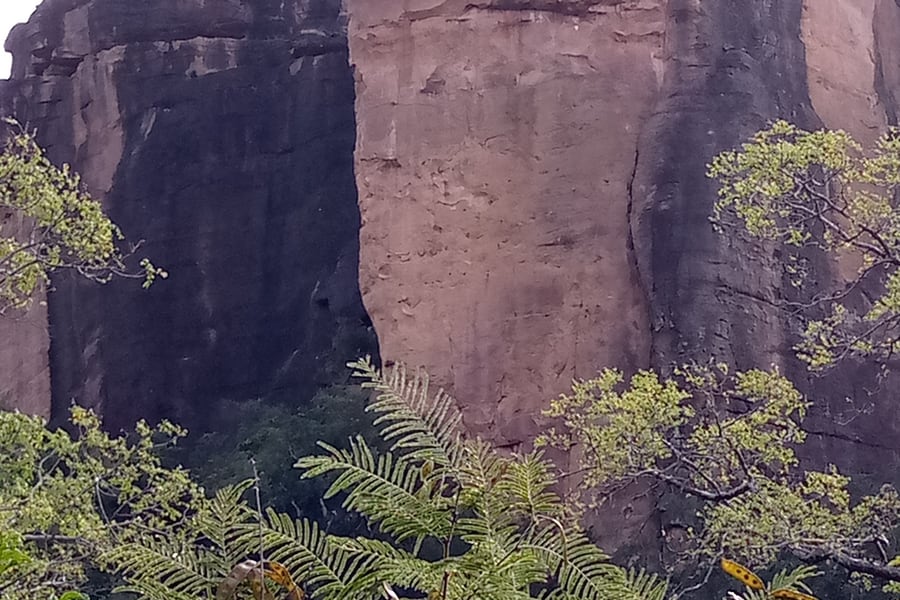
Kita and its mountain
Kita sits on the eastern slope of its own mountain, 180 km out of Bamako — Kita-kulu in Bambara, a wall of red sandstone known for its caves and rock paintings. The town is the largest transit point on the line, a cotton and groundnut centre, and the site of an annual Catholic pilgrimage. It is also where the station market is busiest — hundreds of women trading up to the windows — which makes it the one stop a passenger really sees.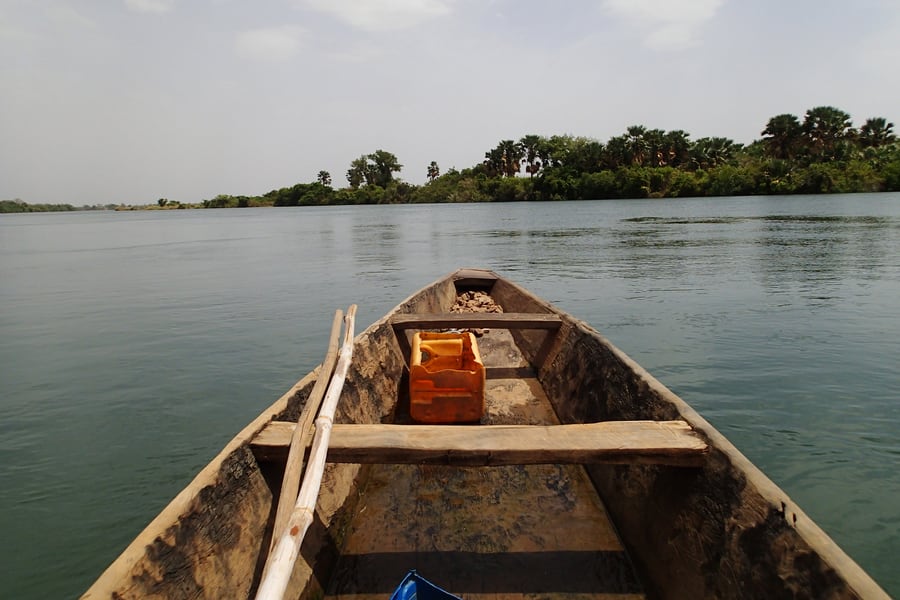 Freepius / Wikimedia Commons · CC0 · 2014 · cropped
Bafoulabé, where two rivers become one
Six kilometres north of the railway bridge at Mahina, the Bafing and the Bakoy meet and become the Senegal. Bafoulabé is Bambara for the meeting of two rivers, and the town of twenty thousand people that grew at the junction is still reached from the far bank by ferry and by pirogue — no bridge carries the road across, so everything that arrives, people and motorbikes and livestock, arrives by water.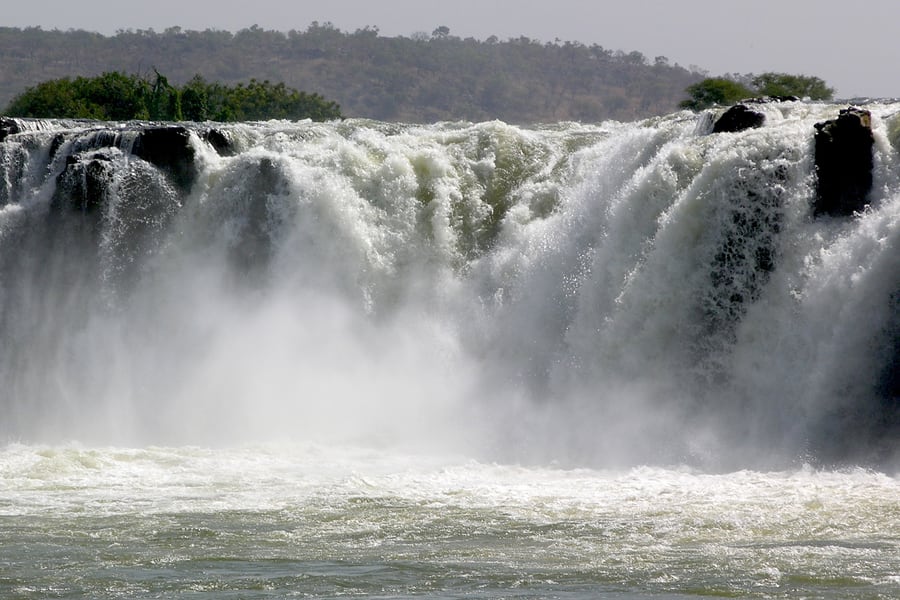 Jacques Taberlet / Wikimedia Commons · CC BY-SA 3.0 · 2005 · cropped
The Gouina falls
Between Bafoulabé and Diamou the Senegal spreads to 500 metres and drops 16 of them over a rock sill. The difference between seasons is the whole story: 12 cubic metres a second in the dry months against 2,430 in the rains. A 140 MW power station at the falls was inaugurated in December 2022 and now takes part of that flow.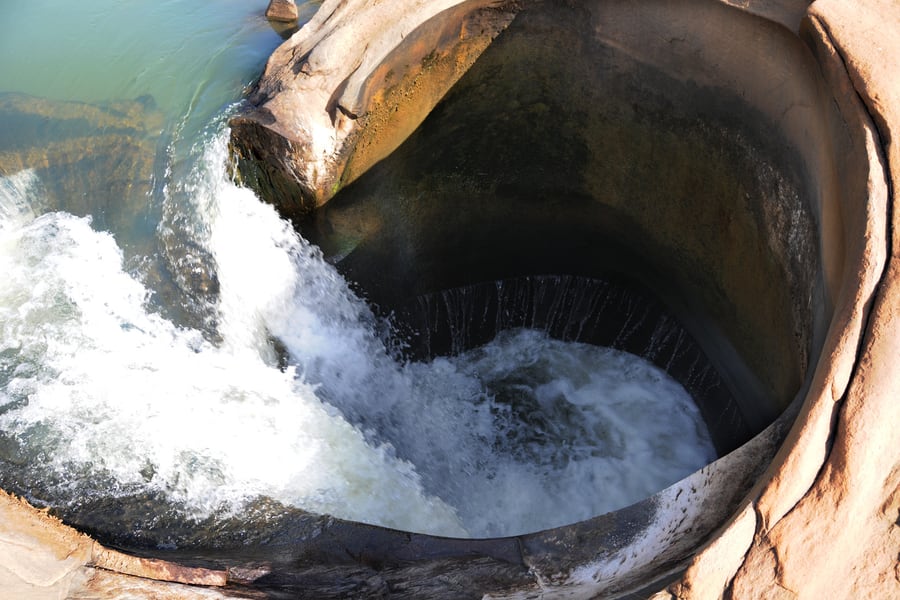 Jacques Taberlet / Wikimedia Commons · CC BY 3.0 · 2008 · cropped
The Félou falls
Fifteen kilometres upstream of Kayes the river falls 13 metres down an irregular staircase of rock, scoured into ledges and plunge pools. A small power station has stood here since the 1920s and a 62.3 MW run-of-the-river plant replaced it after 2009, so what reaches the ledges now is what the station does not take.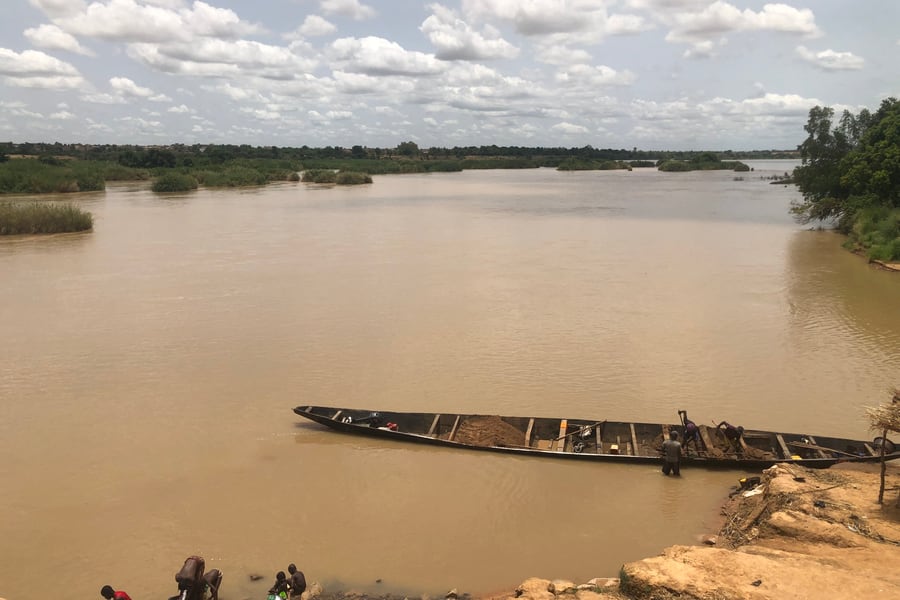 Dinx77 / Wikimedia Commons · CC BY-SA 4.0 · 2023 · cropped
Kayes and the Senegal
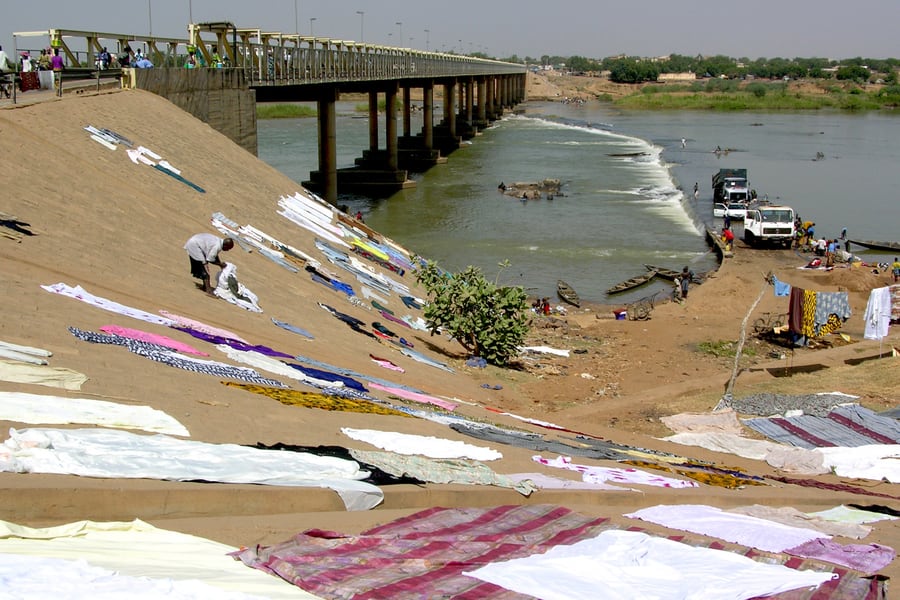
The end of the line, and the furthest point a boat can reach up the Senegal — which is the whole reason a railway was started here rather than anywhere else. The river is the town's street: pirogues, sand-diggers working the bed, washing laid out on the bank, and the bridge and its causeway carrying everything else.Where to Sleep
Bamako is where the beds are. The capital has a proper hotel trade, most of it within a short drive of the station, and the two below are the ones whose own pages can be read and booked directly.
Kayes is the harder end, and there is nothing honest to link. The Hôtel du Rail — the stone hotel built facing the station, with the garden of round huts in front of it and the oldest rooms in the city — is the place every traveller is pointed to, and it has no website of its own. It appears in guidebooks and directories, and it is reached by telephone. We do not send readers to a booking aggregator dressed up as a hotel link, so there is no Kayes card here; ask at the station or through your accommodation in Bamako before you travel.
Where to stay
Azalaï Hotel Bamako
15 km from the airport and from the business district
The group's flagship in Mali — one restaurant, two bars, an outdoor pool, a spa and a fitness club.
Check Availability (opens in a new tab, on azalai.com)via azalai.comGrand Hotel Bamako
In the historic quarter, 2 km from the business district
The hotel Azalaï Hotels Group began with in 1994, and the closer of the two to the middle of the city.
Check Availability (opens in a new tab, on azalai.com)via azalai.comPractical Information
Security
The UK Foreign, Commonwealth & Development Office advises against all travel to the whole of Mali, with no regional exception, and that advice was last updated on 10 July 2026. It records a high threat of kidnapping and criminal activity across the country including in Bamako, and it says plainly that travellers should not attempt to leave Mali by overland routes to neighbouring countries because of attacks on the national highways. Armed groups have imposed blockades on routes in southern and western Mali.
That is a fact about this journey, not an aside, and it is stated here once and without decoration. Check your own government's current advice, and understand that travel insurance is generally void against advice of this kind.
Heat
Kayes is nicknamed the pressure cooker of Africa, and it earns it. On 3 April 2024 the town recorded 48.5 °C — the highest temperature ever measured in Mali. March to May is the season to avoid; November to February is the cool dry window, and the rains run roughly June to September — which is also when the formation washes out.
Practicalities
- Language. French is the working language of administration and of the railway. Bambara is what is spoken along the line.
- Money. The West African CFA franc (XOF), cash. Bamako and Kayes have banks; nothing in between does.
- Tickets. Bought at the station window, in person. There is no online sale of any kind.
- Food comes from the trackside. Sellers work every halt with fruit, cooked food and drinks, handed up through the windows; that is how the train is provisioned.
- The road alternative is worse. The Bamako–Kayes national highway is 612 km against the railway's 495, and in the rainy season it carries the traffic of a region on a surface that strands coaches and lorries for days.
Questions or corrections
Planning this trip and stuck on something, or spotted a time, fare or detail that has changed? Send us a message about Bamako to Kayes. We read every one, and we update this page when something has changed.