Bangkok–Chiang Mai Sleeper
Supanut Arunoprayote / Wikimedia Commons · CC BY 4.0
- Distance751.42 km · metre gauge
- DurationAbout 12½ hours, overnight
- Best seasonNov–Feb (cool, dry)
Introduction
First, the thing that will otherwise ruin your evening: the train does not leave from Hua Lamphong.
Since January 2023, Thailand's long-distance trains have departed from Krung Thep Aphiwat Central Terminal, out at Bang Sue — an enormous new station well north of the old one. Hua Lamphong, the beautiful domed terminus in the middle of Bangkok that appears in every photograph ever taken of Thai railways, now handles ordinary and commuter trains only. A great deal of travel writing has not caught up. Anyone who arrives at the wrong one will not be catching a sleeper.
With that out of the way: this is one of the world's great overnight trains, and it is absurdly cheap.
The Northern Line runs 751 kilometres from Bangkok to Chiang Mai on metre-gauge track, and it took a very long time to arrive. The first stretch, Bangkok to Ayutthaya, opened on 26 March 1896. The rails did not reach Chiang Mai until 1 January 1922 — twenty-six years, because of what sits in the way.
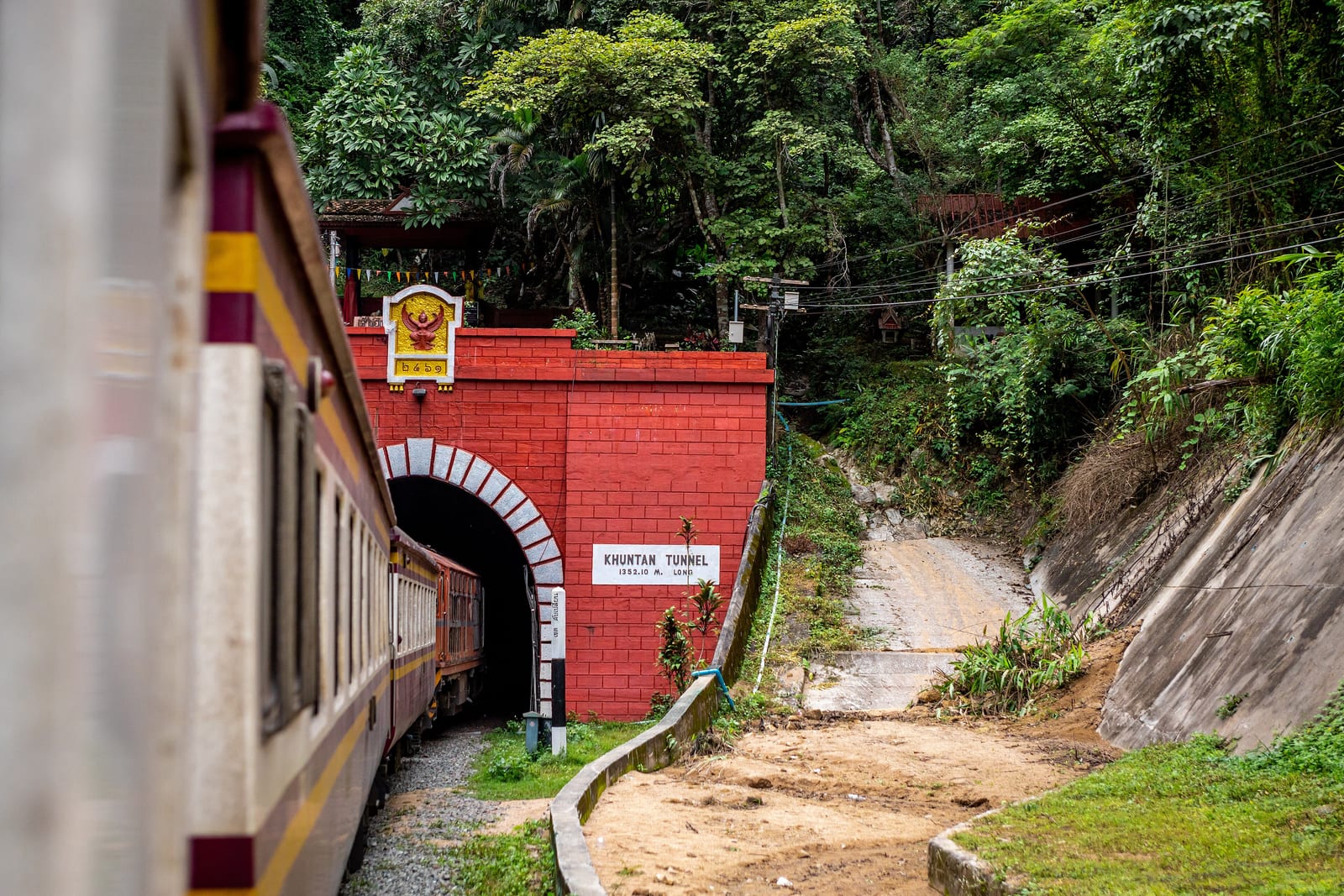
What sits in the way is the Khun Tan Tunnel.
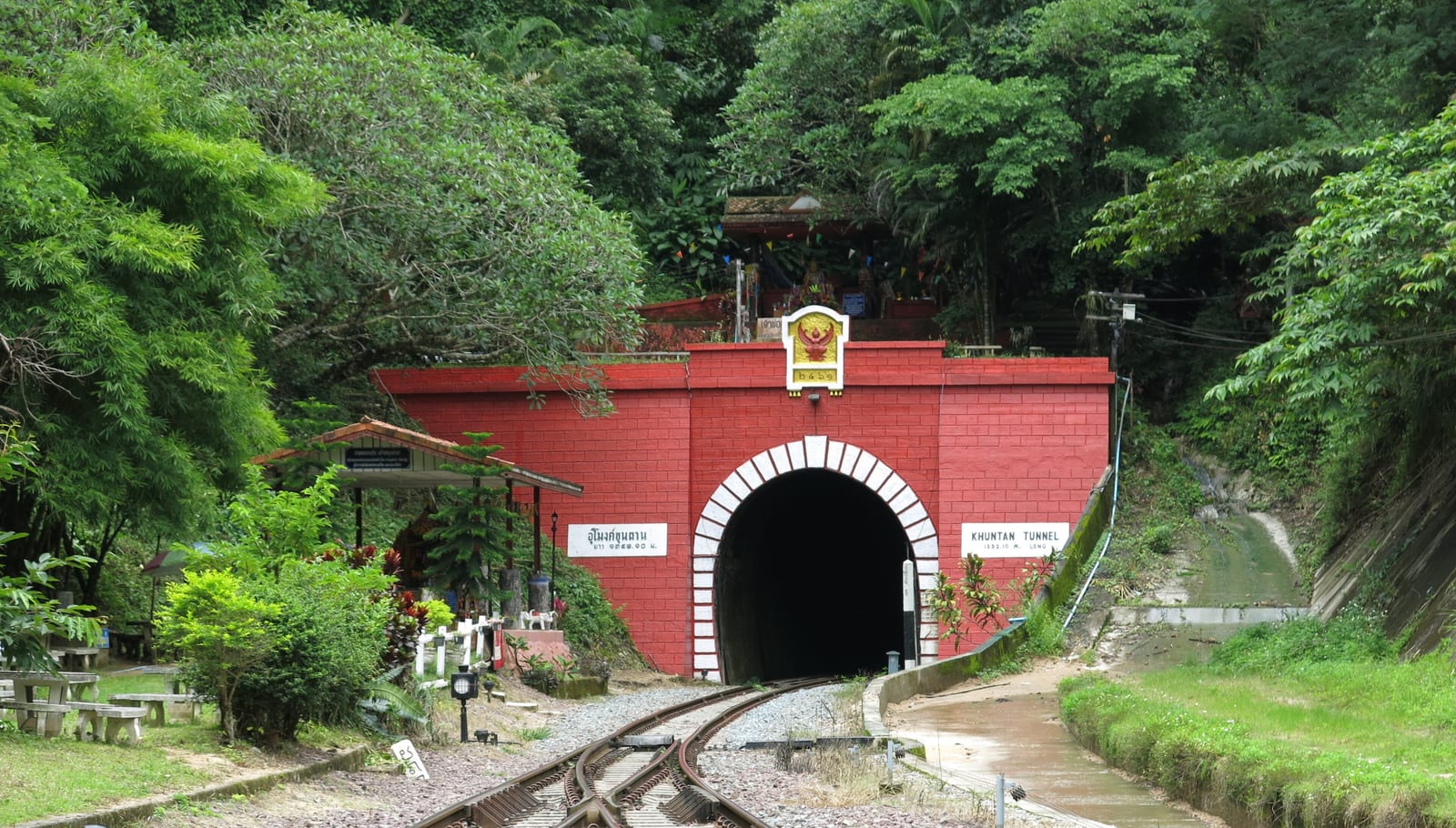
It is the longest railway tunnel in Thailand, about 1,352 metres, and it took eleven years to dig — from 1907 to 1918. The man who drove it was a German engineer named Emil Eisenhofer. It nearly broke him and it did break a great many other people: over a thousand workers died in that mountain, from accidents, from suffocation, from malaria, from tigers, and from fighting each other. Work stopped partway through when Thailand entered the First World War and the German engineers were arrested.
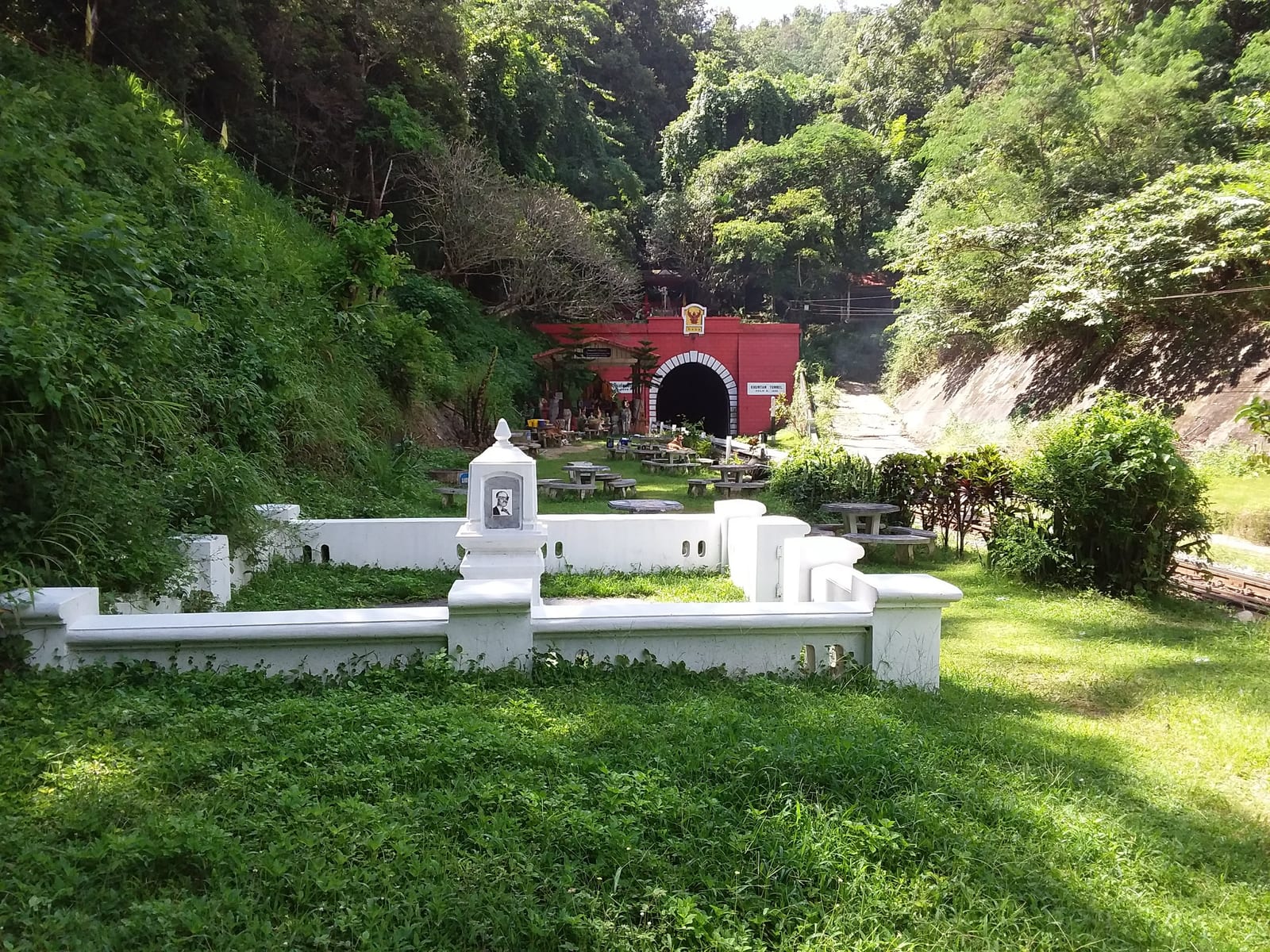
And here is the part that stays with you. Eisenhofer went home. Then he came back — he returned to Thailand later in life and died here in 1962, forty-four years after the tunnel was finished. His ashes are in a memorial at the tunnel's mouth, because he wanted to rest where he had worked. The monument honours him and the workers who died alongside him.
Your train goes through their tunnel in the dark before dawn, in about a minute, and almost everyone aboard is asleep.
So the night train it is: a lower berth, dinner in the dining car, the hills folding in around Lampang as you wake, and Chiang Mai for breakfast. But somewhere near the end, when the noise closes up and the windows go black for a minute, it is worth being awake.
The Journey
Krung Thep Aphiwat is not a romantic place. It is vast, air-conditioned, clean and slightly bewildering, and it feels like an airport that has mislaid its aeroplanes. Give yourself time; the platforms are a walk.
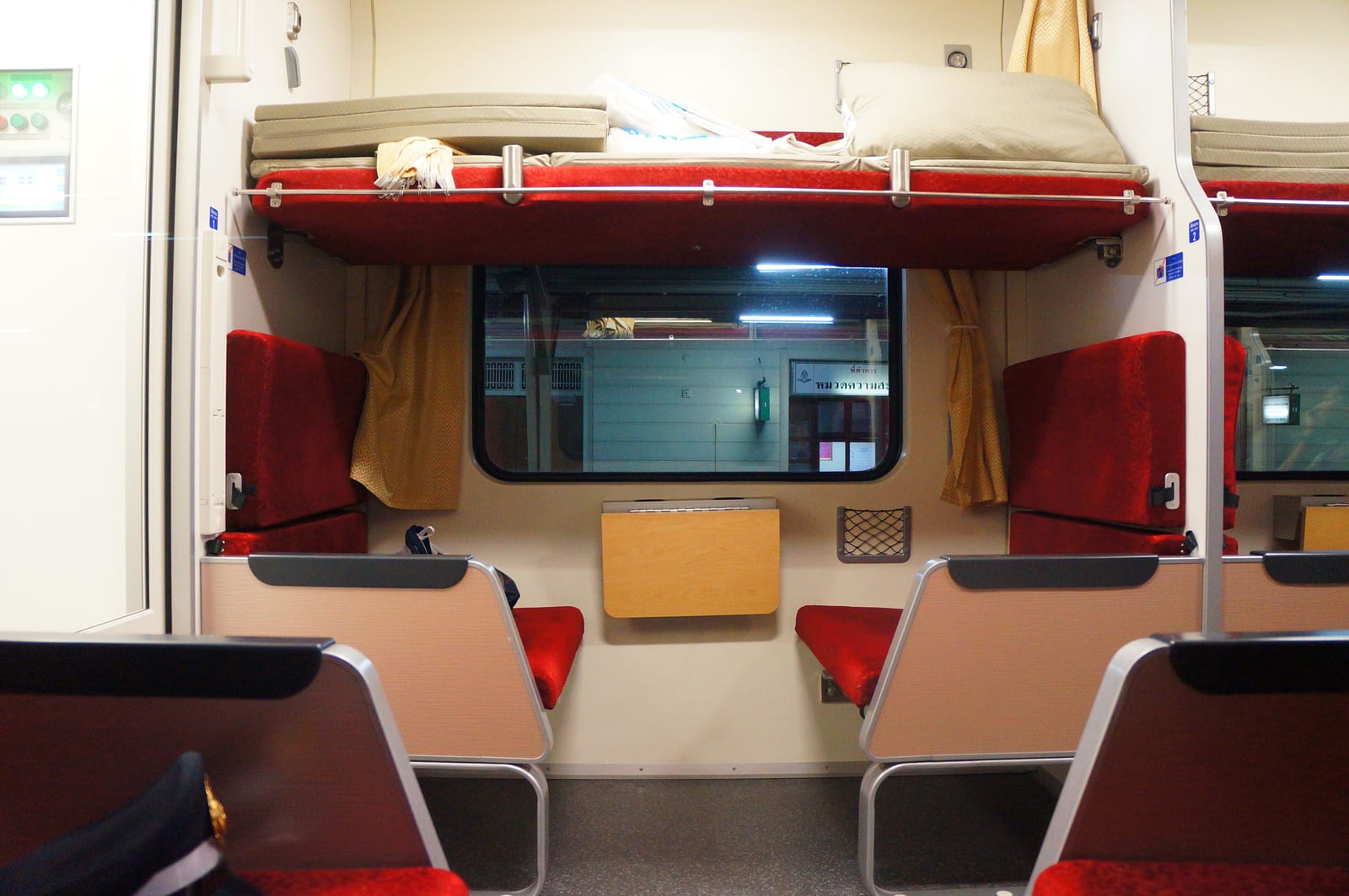
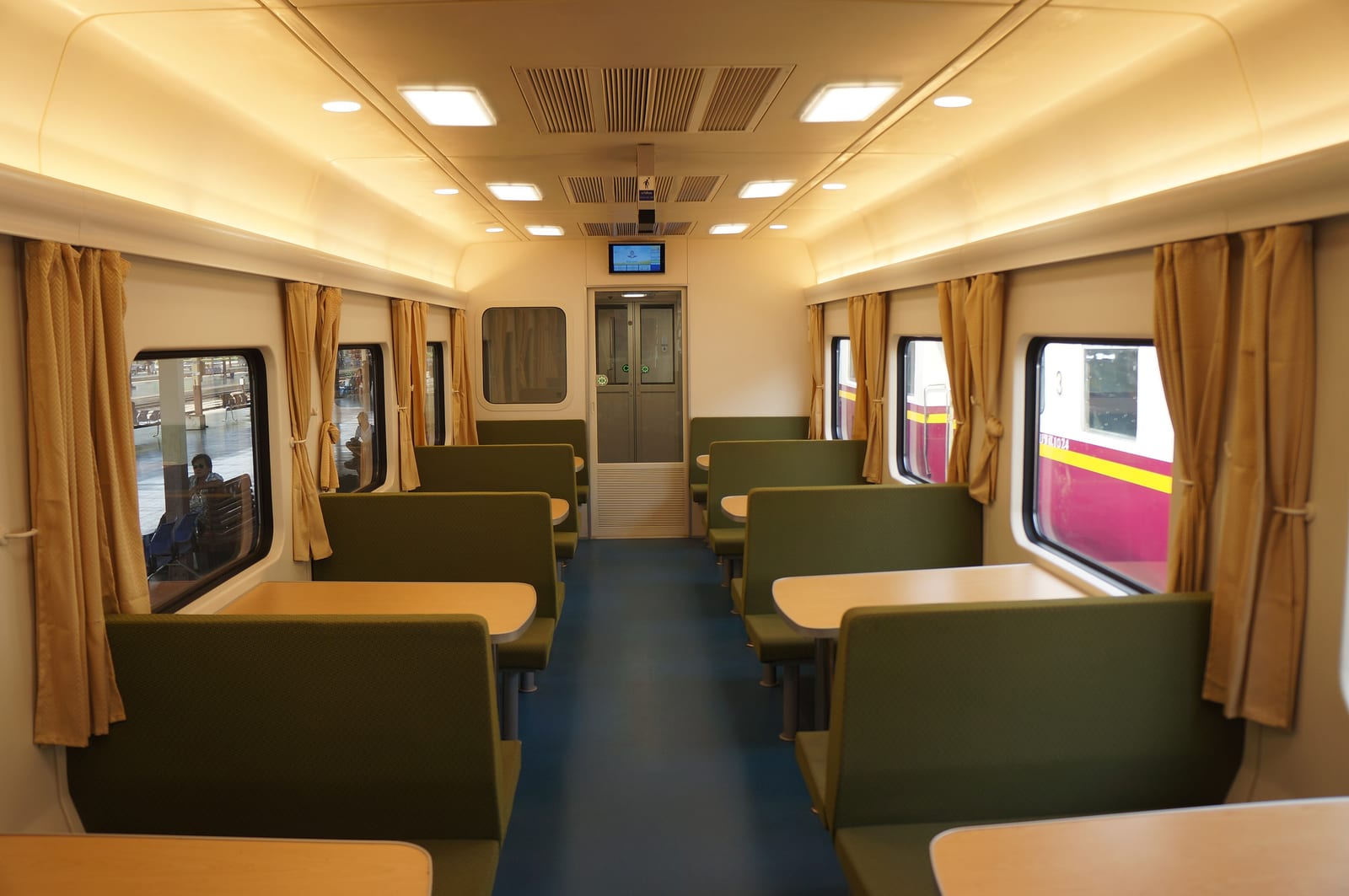
Then you find your carriage, and it is fine — better than fine. Trains 9 and 10 run the newest Chinese-built sleeping cars, with power sockets and information screens, in first class and second class air-conditioned. Second class is the one to have: an open carriage of facing seats, wide windows, and a corridor down one side.
18:40, and out through the Bangkok suburbs while the light goes.
The first hours are the central plains — flat, wet, green, endlessly worked. Ayutthaya goes by in the dusk, and if you have any sense you are in the dining car by now, because the dining car on a Thai sleeper is one of the small perfect things in travel: fluorescent-lit, rattling, serving decent food and cold beer to a carriage of people who are all quietly delighted with themselves.
Somewhere north of there the attendant works down the carriage folding the seats into beds. Sheets, a blanket, a curtain, a little reading light. Book a lower berth — it costs slightly more, it has the window, and you can lie there and watch the level crossings go past.
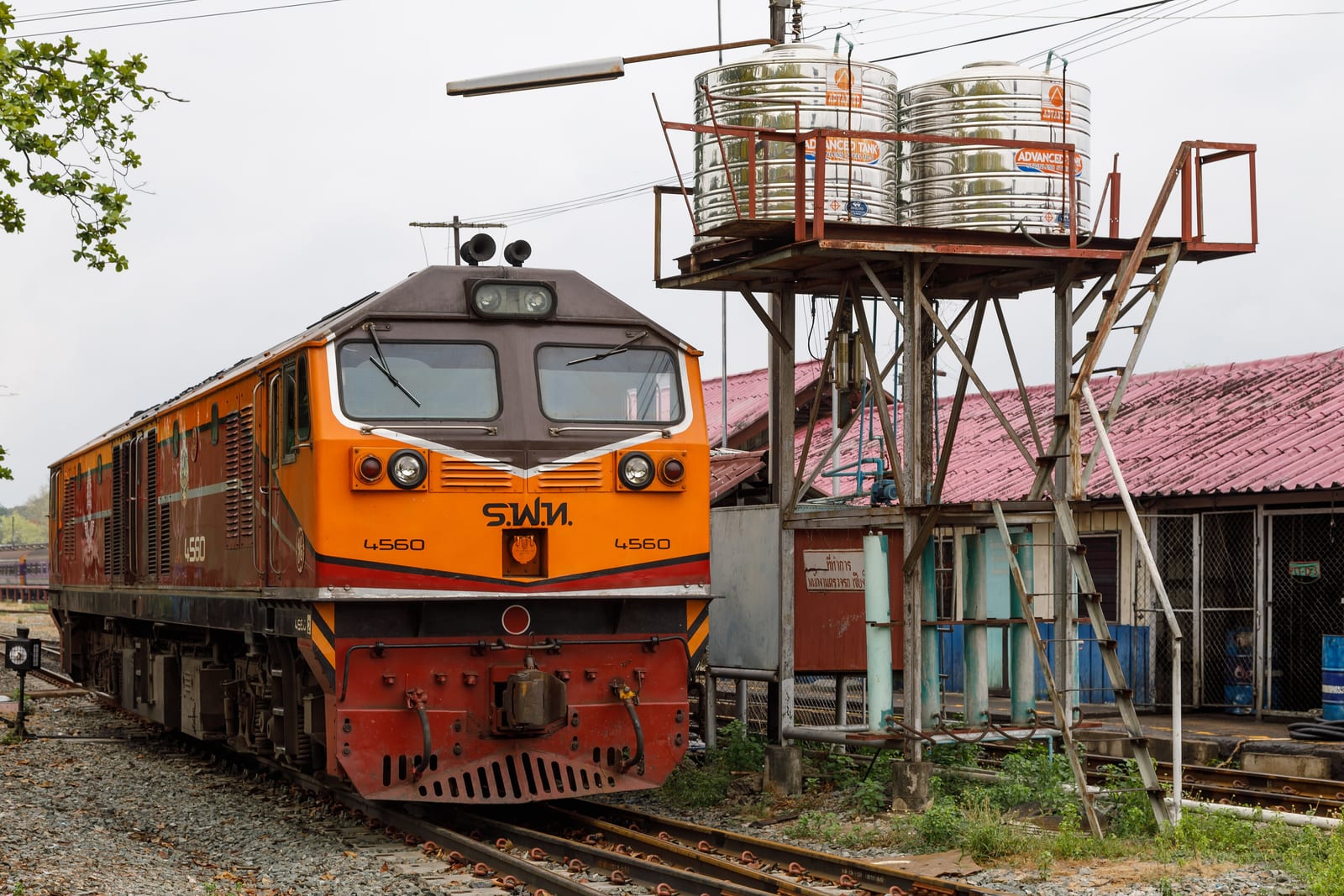
The line climbs overnight, through Phitsanulok and Den Chai and up into the hills around Lampang. And then, in the dark, it reaches Khun Tan.
The station is the highest in Thailand, at 578 metres. Beside it is the tunnel — 1,352 metres, eleven years, a thousand dead, and Eisenhofer's ashes in a memorial at the portal, which you will not see because it is still dark. The train goes in. The sound closes up, the windows go black, and about a minute later you are out the other side and into Lamphun province. It is the most significant minute of the journey and the entire train sleeps through it.
Curiously, the tunnel is bigger than it needs to be. It was bored for standard gauge before the line was regauged to a metre, so the train runs through a hole cut for a larger railway that never came.
You wake up somewhere in the last hour, and this is the reward. The plains have gone. The country is folded and green and full of mist sitting in the valleys, the train is working along the side of the hills, and the light is the pale gold you only get at that hour. Coffee. Eggs, if you want them.
Chiang Mai at 07:15, with the whole day in front of you and a night's sleep behind — which is the entire argument for a sleeper, and this one makes it better than almost anywhere.
Along the route
Werner Röpke / Wikimedia Commons · CC BY-SA 4.0The man who stayed
Emil Eisenhofer was the German engineer who drove the Khun Tan tunnel through the mountain between 1907 and 1918. His ashes are in a memorial at its mouth — he wanted to rest where he had worked. He returned to Thailand late in life and died here in 1962, forty-four years after the tunnel opened.Supanut Arunoprayote / Wikimedia Commons · CC BY 4.0Eleven years and a thousand lives
Over a thousand workers died boring Khun Tan — of accidents, suffocation, malaria, tiger attacks, and fights among themselves. The memorial at the portal honours them alongside Eisenhofer. You pass through their work in about ninety seconds.DocRiver555 / Wikimedia Commons · CC BY-SA 4.0The highest station in Thailand
Khun Tan, at 578 metres, is as high as Thai railways get. The tunnel beneath it is the country's longest — and it is wider inside than it needs to be, because it was bored for standard gauge before the line was regauged to a metre.A bit of history
Culture & experiences along the way
MNXANL / Wikimedia Commons · CC BY-SA 4.0The berth made up at dusk
The best moment on any sleeper: somewhere north of Ayutthaya the attendant comes through, folds the seats away and builds your bed — sheets, blanket, curtain, reading light. Book a lower berth if you can. It has the window.MNXANL / Wikimedia Commons · CC BY-SA 4.0Breakfast as the hills arrive
Wake up and the central plains have gone — the country is folded, green and misty, and the train is working uphill through Lampang. The dining car does eggs and terrible, excellent coffee. This last hour is the whole reason to take the train.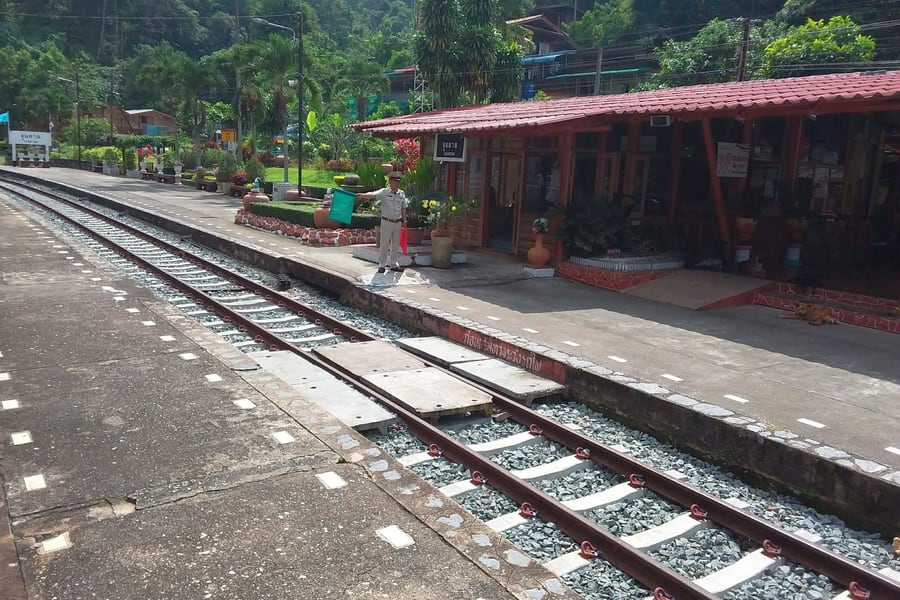 Werner Röpke / Wikimedia Commons · CC BY-SA 4.0 · cropped
Getting off at Khun Tan
You can. The station sits at the tunnel mouth, in Doi Khun Tan National Park, and the memorial is right there. Almost nobody does it — but a stop here, and a walk up into the pines, turns a night train into a proper trip.Timetables
There are three overnight sleepers a night, and they all leave from Krung Thep Aphiwat Central Terminal — not Hua Lamphong.
How they run:
| Train | Departs Bangkok | Arrives Chiang Mai | Duration |
|---|---|---|---|
| No. 9 (Special Express) | 18:40 | 07:15 | ~12½ h |
| No. 13 | 20:05 | 08:45 | ~12½ h |
| No. 51 | 22:30 | 11:40 | ~13 h |
Good to know:
- The station moved in January 2023. Long-distance trains go from Krung Thep Aphiwat (Bang Sue). Hua Lamphong keeps ordinary and commuter services. This is the single most common way to get this trip wrong.
- No. 9 is the one. It has the newest Chinese-built (CNR) sleeping cars — power sockets, information screens, properly made-up berths — and it lands you in Chiang Mai at a civilised 07:15 with the whole day ahead.
- No. 51 trades sleep for scenery. Arriving at 11:40 means you spend the whole morning in the northern hills in daylight, which is the prettiest part of the line. If you don't need the day at the far end, it is a real option.
- Lower berths are worth it. They're wider, they have the window, and they cost only a little more. Uppers are fine, but you're sleeping in a shelf with no view.
- Both directions are overnight. Coming back, the same trains run Chiang Mai to Bangkok on a mirrored schedule.
- Book as far ahead as you can. The modern sleepers are popular and the good berths go first — especially over Thai holidays and in the November-to-February high season.
- Khun Tan is a real station. If you want the tunnel, the memorial and Doi Khun Tan National Park, you can get off there. You'll need a day train to do it in daylight.
Tickets
Tickets come from the State Railway of Thailand, and this is one of the best-value overnight trains anywhere — a bed and 751 kilometres for less than a cheap hotel room. Nearly everyone should book a 2nd class air-conditioned sleeper: an open carriage of berths behind curtains, made up by the attendant in the evening, and on trains 9 and 10 these are the new Chinese-built cars. First class is a two-berth cabin with a door, worth it as a pair and not worth it alone.
Within second class the choice that matters is the berth: the lower is wider, has the window and costs a little more. Book at dticket.railway.co.th (opens in a new tab), SRT's own system — cheapest but not friendliest. Bring a layer, because the air conditioning is genuinely cold, and go to Krung Thep Aphiwat, not Hua Lamphong.
Book your tickets
Special Express No. 9
The one to book
Leaves Krung Thep Aphiwat at 18:40 and reaches Chiang Mai at 07:15 — about twelve and a half hours. Uses the newest Chinese-built sleeping cars, with power sockets and proper berths, in 1st class and 2nd class air-conditioned. Sells out first, for good reason.
Book Tickets (opens in a new tab, on State Railway of Thailand)via State Railway of Thailand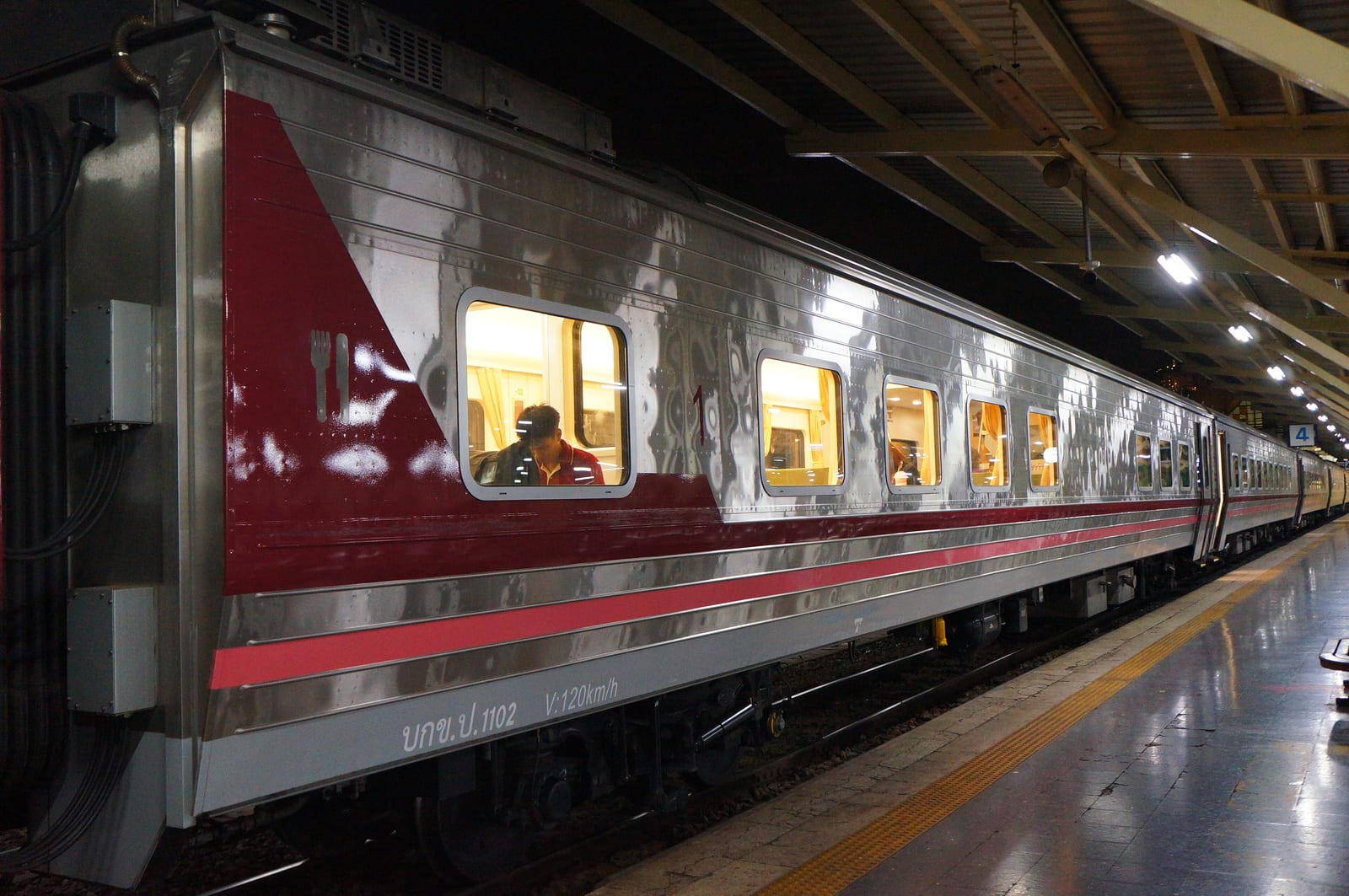
Trains No. 13 and No. 51
The later departures
No. 13 leaves at 20:05 and arrives 08:45; No. 51 leaves at 22:30 and gets in at 11:40. Both carry sleepers, and No. 51's late arrival means you see far more of the northern hills in daylight — at the cost of half a morning.
Book Tickets (opens in a new tab, on State Railway of Thailand)via State Railway of ThailandRail Passes
No international rail pass covers this train. Interrail and Eurail are European schemes, and Thailand is not among the 33 countries in Interrail's list of covered railway companies. Tickets are bought from the State Railway of Thailand for a named train and berth.
Some travel guides describe a 20-day SRT rail pass for tourists. We could not reach the railway's own website to confirm it is still sold, so ask at the station before planning around one.
A pass would add little anyway. A sleeper berth to Chiang Mai costs less than a cheap hotel room.
Checked October 2026 against Interrail's list of railway companies (opens in a new tab).
Places to Visit
The line's stops are worth breaking the journey for — and almost nobody does, which is their loss. The sleeper makes it easy to treat the route as a series of towns rather than one overnight hop: get off, spend a day, pick up the next train north.
Den Chai is the station for Phrae, a quiet old teak town most visitors have never heard of, with the best surviving teak mansions in the north — and no reason at all to be as overlooked as it is.
 Gary Todd / Wikimedia Commons · CC0 · cropped
Ayutthaya
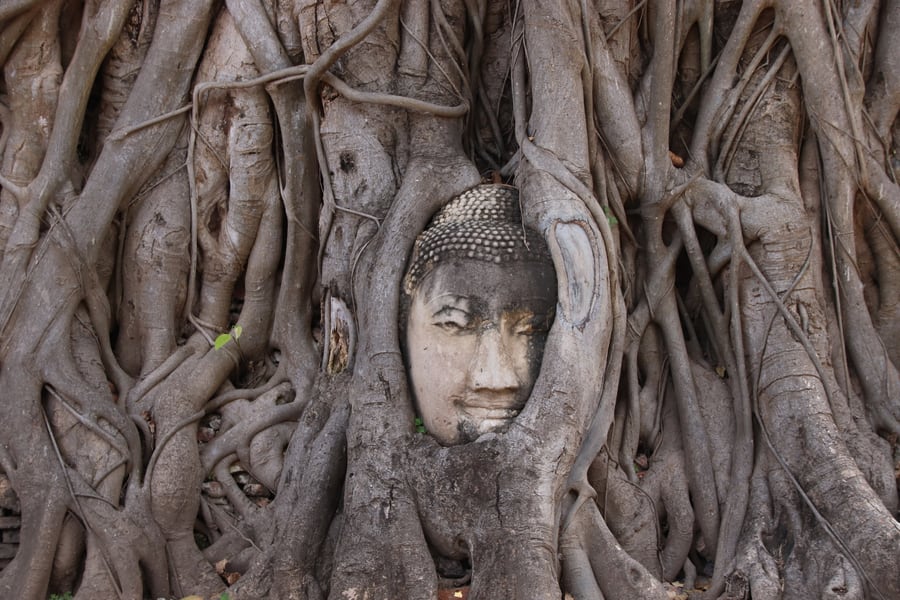
An hour or so out of Bangkok, and the first station on the line when it opened in 1896. Capital of the Siamese kingdom until it was sacked in 1767 and largely left as it fell: brick prangs, rows of headless Buddhas, and the famous stone head grown into the roots of a fig tree at Wat Mahathat. UNESCO-listed, flat enough to cycle, and easily a full day if you let it be one.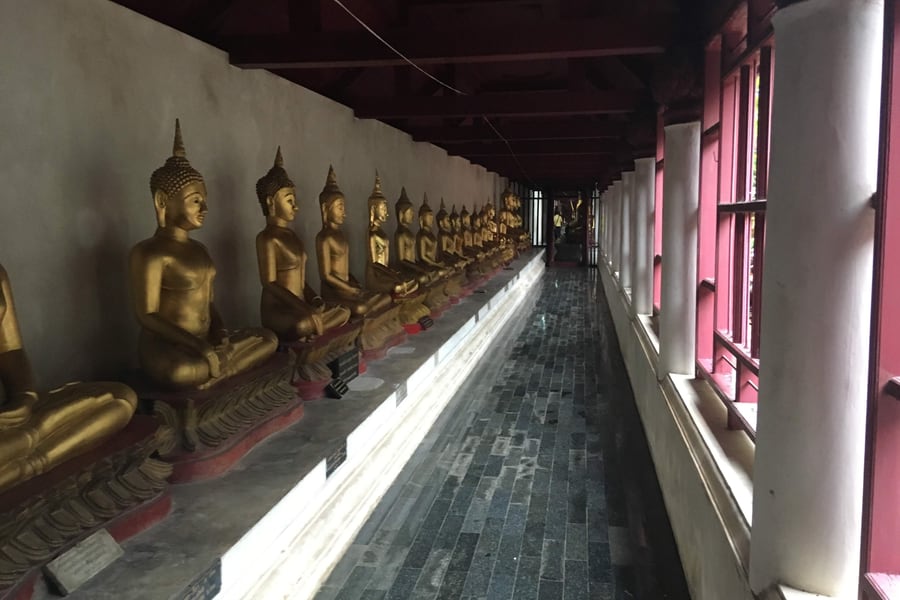 Christophe95 / Wikimedia Commons · CC BY-SA 4.0 · cropped
Phitsanulok
The halfway city, and the sensible place to break a northbound run. Wat Phra Si Rattana Mahathat holds one of the most revered Buddha images in the country, and its cloisters are lined with rank on rank of smaller ones. The town itself is workaday rather than pretty — but it is the jumping-off point for Sukhothai, and a night in a real place.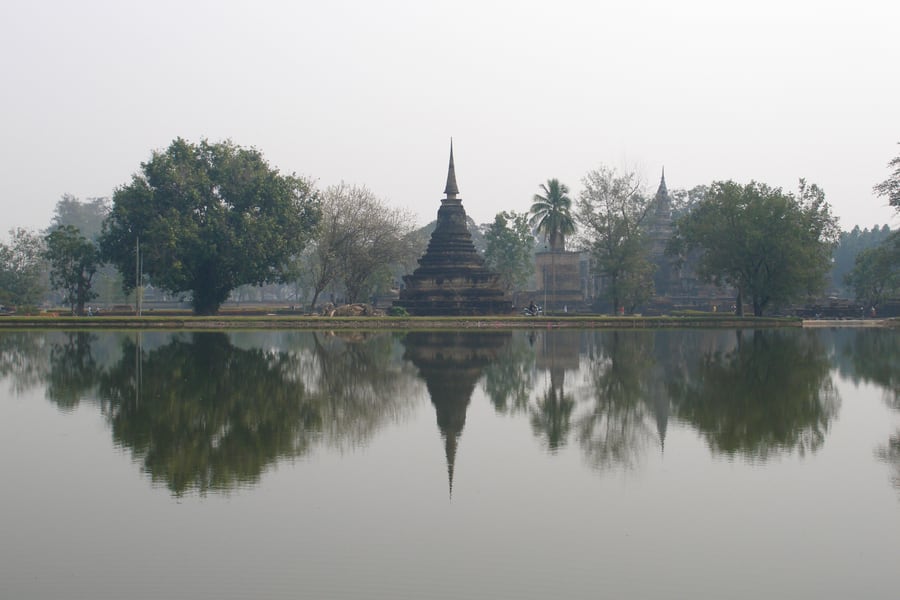 © Vyacheslav Argenberg / http://www.vascoplanet.com/ · CC BY 4.0 · cropped
Sukhothai
An hour west of Phitsanulok, and for many people the finer ruin of the two: Thailand's first capital, its chedis and seated Buddhas standing among lawns and lily ponds rather than city streets. Quieter, greener and more coherent than Ayutthaya. Hire a bicycle and go early, before the heat arrives and the coaches do.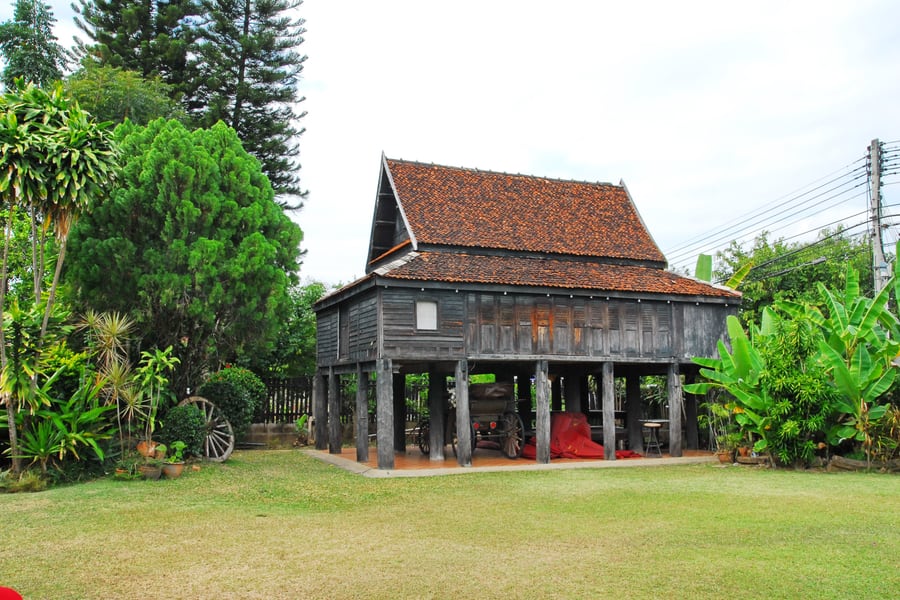 Thanate Tan / Wikimedia Commons · CC BY 2.0 · cropped
Lampang
A genuinely lovely, under-visited town of teak houses and Burmese-influenced temples, still known for the horse carriages working its streets. Ban Sao Nak — the house of many pillars — is the finest of the old teak mansions, and Wat Phra That Lampang Luang, just outside town, is one of the great wooden temples of Thailand.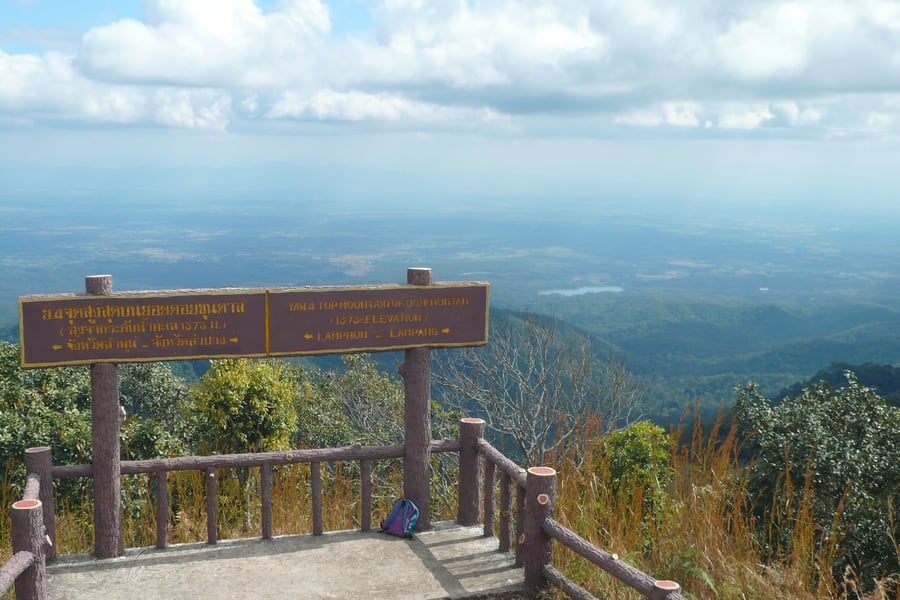 gary4now / Wikimedia Commons · CC BY 3.0 · cropped
Khun Tan
The station at the tunnel mouth, 578 m, the highest on the Thai network, sitting inside Doi Khun Tan National Park. Almost nobody gets off. Those who do find pine forest, a walkable ridge with a long view over two provinces, and a very quiet sense of what it cost to put a railway through here at all. Get off.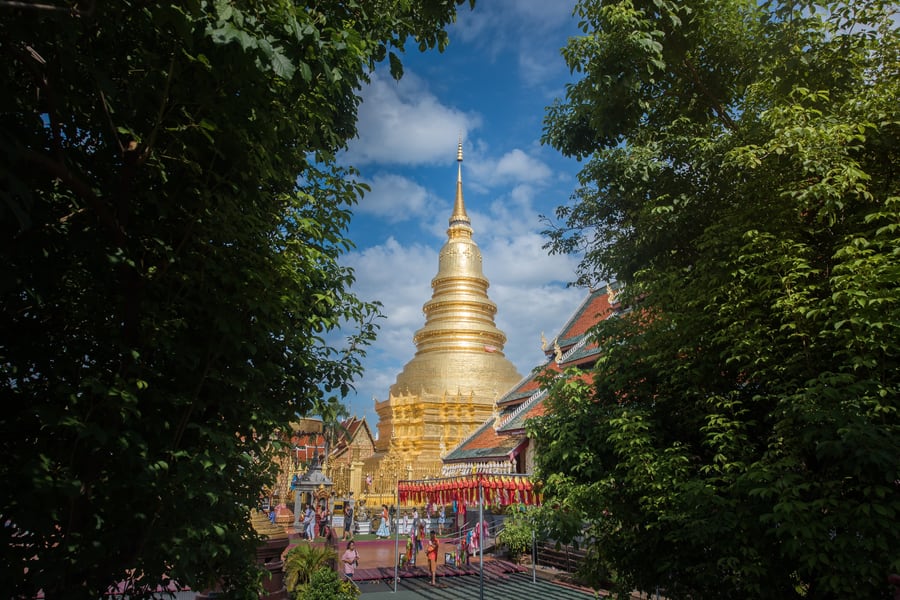 Nawit science / Wikimedia Commons · CC BY-SA 4.0 · cropped
Lamphun
A small, old city just short of Chiang Mai and considerably older than it. Wat Phra That Hariphunchai and its gilded chedi are among the most important religious sites in the north, and the town runs at a fraction of Chiang Mai's pace. Twenty minutes further on and you would miss it entirely, which is precisely the reason to stop.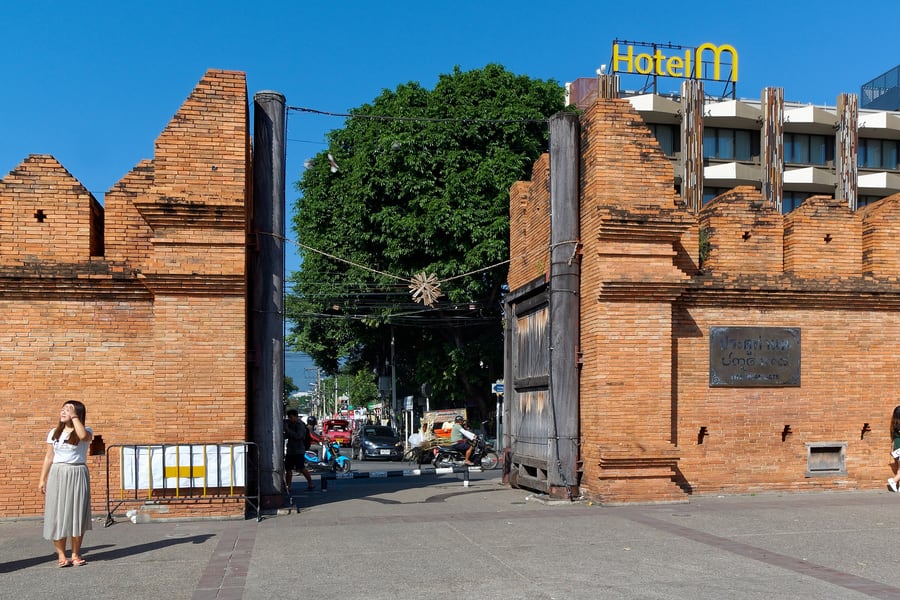 Jakub Hałun / Wikimedia Commons · CC BY-SA 4.0 · cropped
Chiang Mai
The end of the line, 751 kilometres and one night from Bangkok. The walled old city — Tha Phae Gate is its surviving eastern entrance — holds three hundred-odd temples inside a square moat, with the mountain temple of Doi Suthep above and the night markets below. Northern Thai cooking is its own thing entirely, and worth the trip on its own.Where to Sleep
The train is the hotel — that's most of its appeal. You go to bed in Bangkok and get up in Chiang Mai, and you have paid for the night once.
Your berth is the whole decision. A lower berth in 2nd class air-conditioned is the sweet spot: wide enough, curtained, made up properly, with the window beside you. 1st class buys a two-berth cabin with a door, which is worth it for a couple and pointless alone. Bring a layer — the air conditioning is fierce — and an eye mask if you're fussy, because the carriage lights stay dim rather than off.
At either end:
- Bangkok — stay wherever you like, but understand that Krung Thep Aphiwat is out at Bang Sue, not in the centre. It's on the MRT, which is the sane way to reach it; allow more time than feels necessary, and don't rely on a taxi in the evening traffic.
- Chiang Mai — arriving at 07:15 means you land before check-in almost anywhere. Either book the previous night so the room is yours on arrival, or pick somewhere that will hold your bag and feed you breakfast while you wait. The old city is a few minutes from the station.
If you want to break the journey rather than sleep through it, the two places worth a night are Lampang — teak temples, horse carriages, almost no tourists — and Khun Tan, where the national park has simple bungalows and campsites right by the tunnel. Waking up at the highest station in Thailand, walking down to Eisenhofer's memorial before the day trippers exist, and catching a later train on to Chiang Mai is a considerably better trip than sleeping straight through it. It costs you a day. It's worth the day.
Questions or corrections
Planning this trip and stuck on something, or spotted a time, fare or detail that has changed? Send us a message about Bangkok–Chiang Mai Sleeper. We read every one, and we update this page when something has changed.