The Bogor–Sukabumi Line
NFarras / Wikimedia Commons · CC BY-SA 4.0
- DistanceBogor–Sukabumi–Cipatat · about 115 km
- DurationA day, with a change at Sukabumi
- Best seasonDry season (May–September) for the clearest volcano views
Introduction
Just south of Jakarta, where the plain of West Java crumples up into volcanoes, runs one of Indonesia's oldest and most endearing railways. It is not fast — you will crawl, at times, at little more than walking pace — and it is gloriously cheap. But it climbs into some of the loveliest country in Java, in the shadow of two great volcanoes, and it slips through the first railway tunnel ever bored in Indonesia. This is the old line from Bogor to Sukabumi and on to Cianjur.
The Dutch built it early. Bogor to Sukabumi opened in 1881–82, and the line pushed on to Cianjur in 1883 — the first railway to reach the Priangan, the highland heart of West Java, laid to carry down its coffee and tea. More than a century and a quarter later you can still ride that same alignment, over its old bridges and through its old cuttings, on two humble trains: the smart little Pangrango from Bogor down to Sukabumi, and the ultra-cheap local Siliwangi onward through the hills to Cianjur.
The journey's showpiece is the Lampegan Tunnel, a 686-metre bore begun in 1879 — the oldest railway tunnel in the country. Around it the line threads a landscape of stepped rice fields, tea gardens and forested slopes, all beneath the twin peaks of Gede and Pangrango, the volcanoes that give the flagship train its name. It is a two-train ride, with a change at Sukabumi, and it asks for a little patience. What it gives back is a slow, green, unhurried day on the oldest road into the mountains of West Java — and a genuine piece of railway history under the wheels.
The Journey
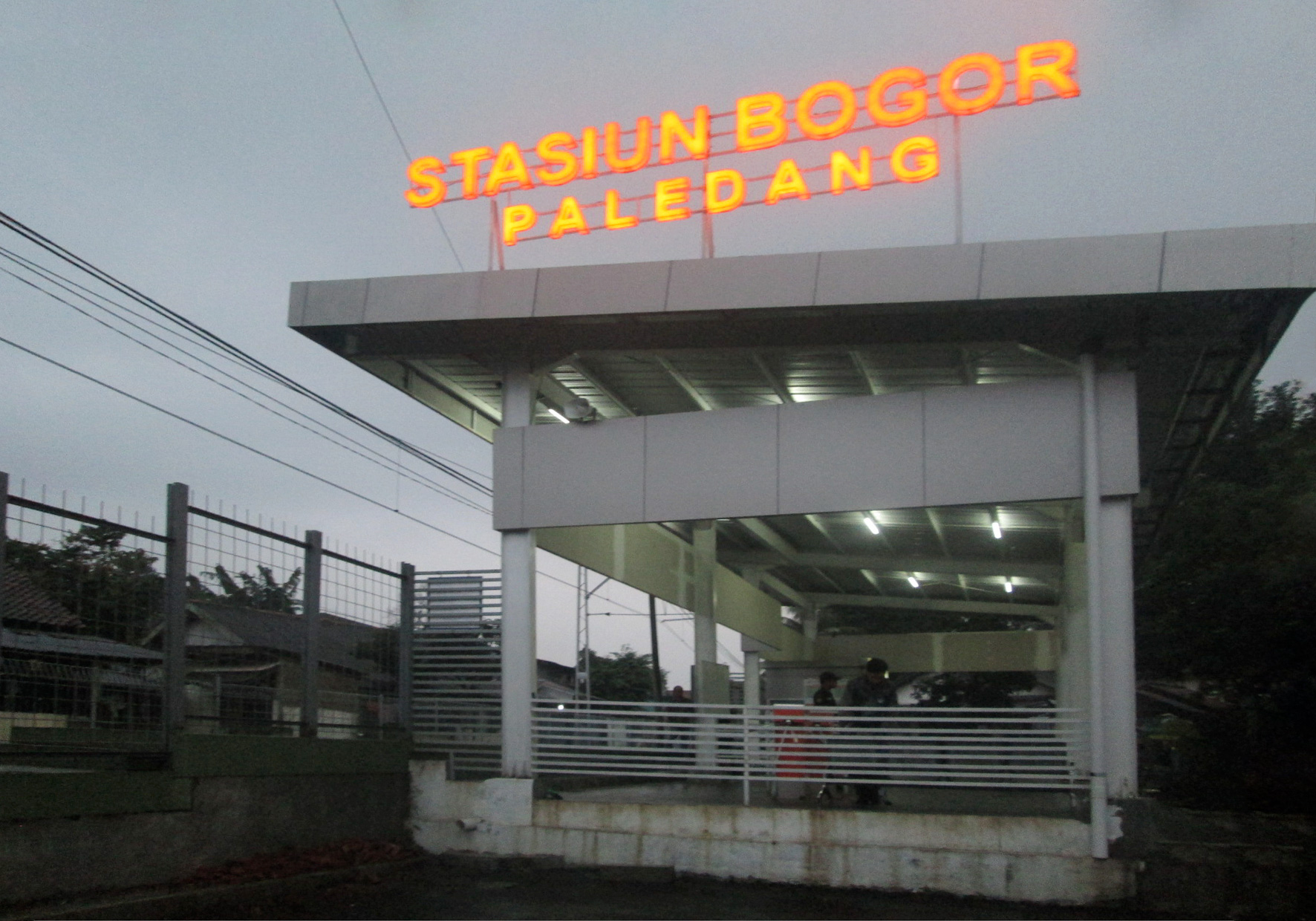
The journey begins at Bogor Paledang, an easy trap for the unwary: it is a small, separate terminus tucked right beside Bogor's main station, which handles only the electric commuter trains up to Jakarta. The intercity to the mountains leaves from Paledang, and it is here you board the Pangrango.
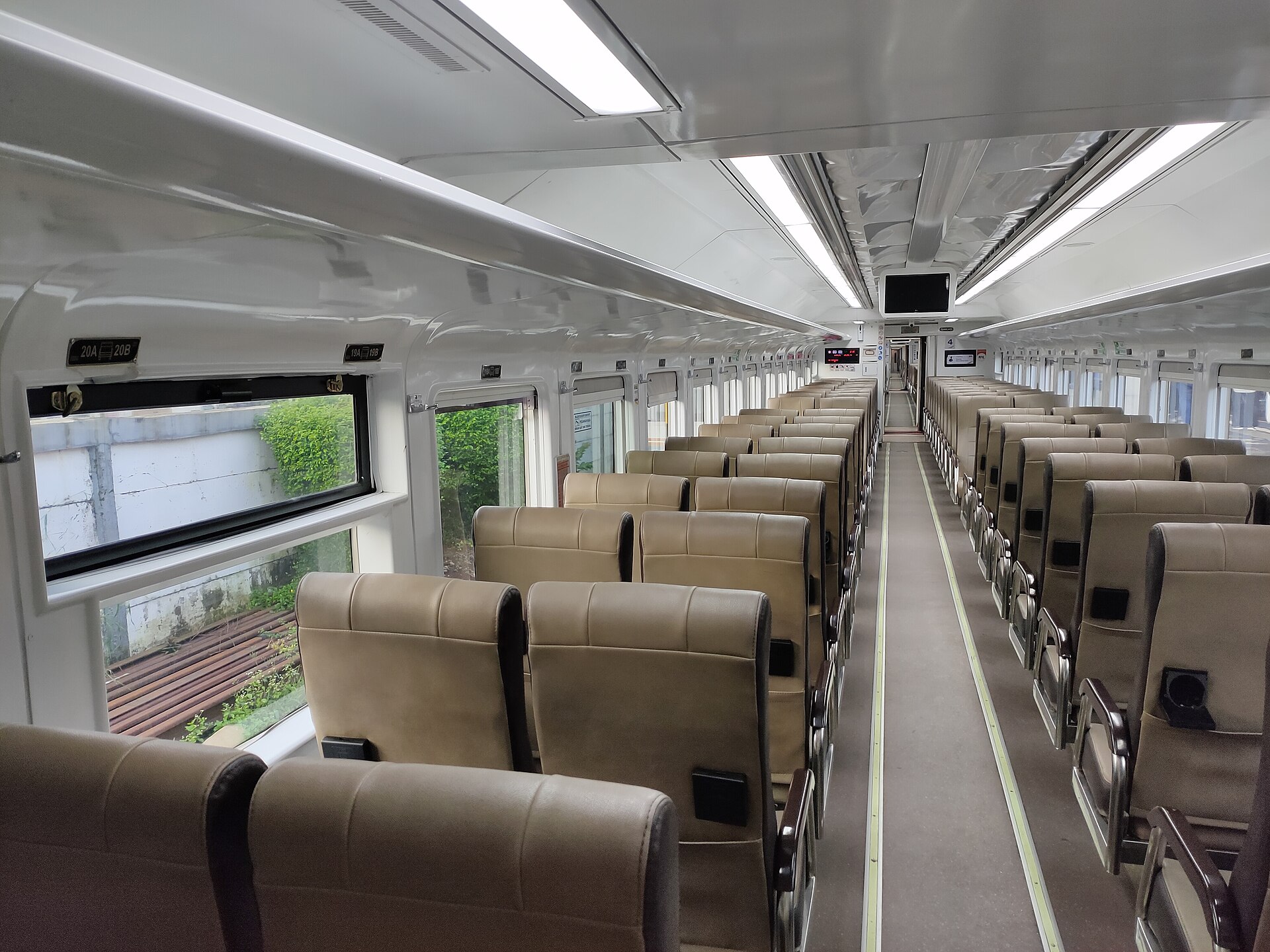
The Pangrango is a proper little intercity — clean, air-conditioned, with both Economy and Executive coaches — and it takes its time. For the next hour and three-quarters it drops southward through Cicurug, Cibadak and a string of small towns, rarely exceeding 40 km/h and often much less, as the line works its way up into the hills. The reward for the pace is the window: rice paddies stepped down the valleys, tea and rubber on the slopes, and, when the cloud lifts, the great volcanic bulk of Gede and Pangrango filling the sky to the east. This is the shoulder of the Gede Pangrango National Park, and the ride skirts its edge the whole way to Sukabumi.
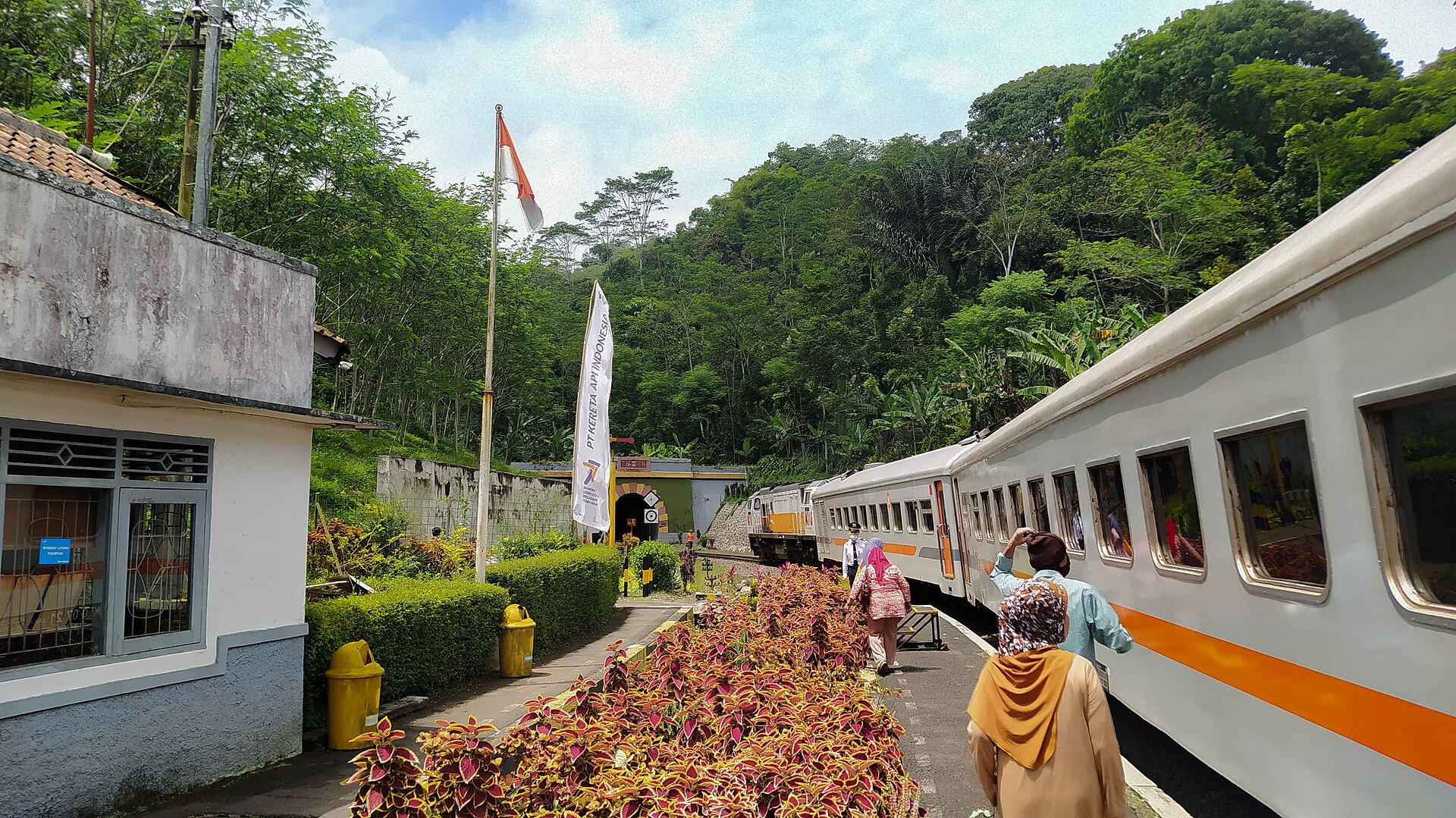
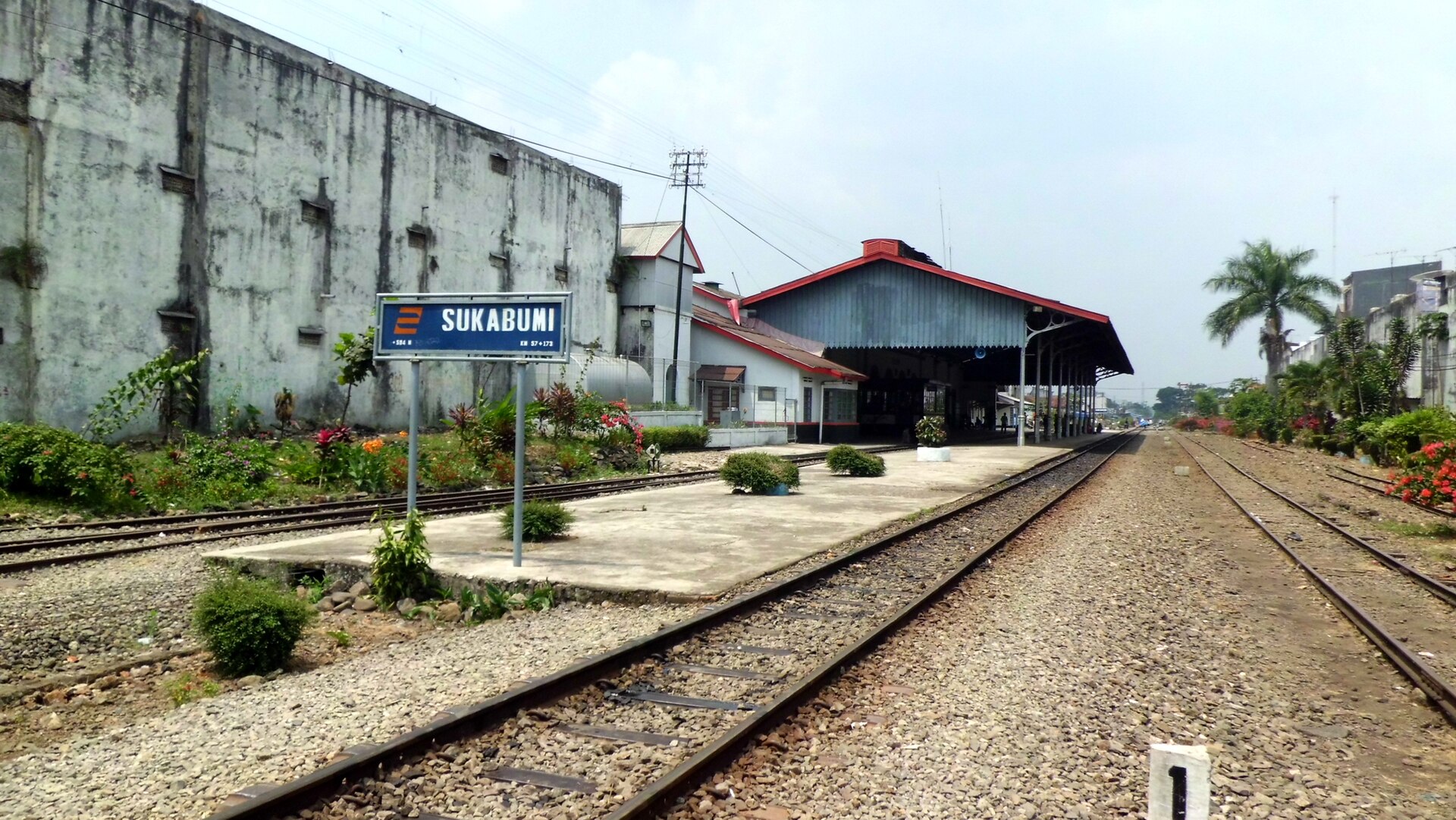
At Sukabumi the through traveller changes trains. The Pangrango ends here; to continue you cross to the Siliwangi, a humble local service that carries on toward Cianjur — and it is on this leg that the line's great landmark comes. Beyond Sukabumi the railway climbs and curves through steep green country near Cireungas, then plunges into the Lampegan Tunnel: 686 metres of darkness bored between 1879 and 1882, the first railway tunnel in Indonesia. Legend gives it its name from a Dutch overseer's shout into the workings — "lamp pegang", "hold the lamp" — and the little station at its western portal, hemmed in by jungle, is one of the most photographed spots on the whole network. The tunnel has had a hard life, collapsing and being rebuilt more than once, but the trains run through it still.
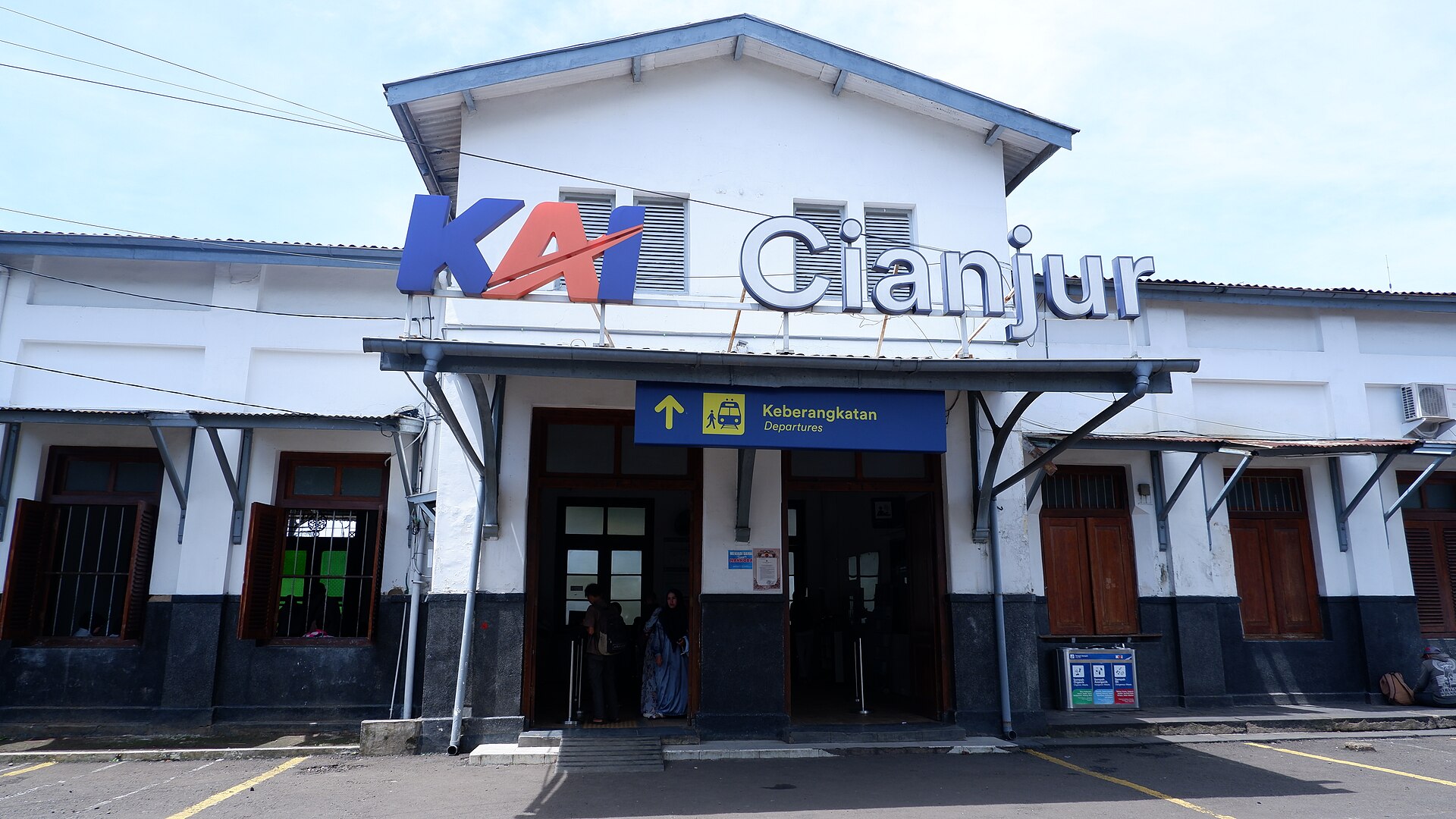
Out the far side the Siliwangi ambles on into the rice bowl of Cianjur, and — track works permitting — beyond to Cipatat. The fares here are almost nothing, a few thousand rupiah for the ride, and the going is slow and rural: level crossings, market platforms, the everyday traffic of West Java's hill country. One caution for planners: you cannot yet ride this line all the way through to Bandung. The final gap, Cipatat to Padalarang, is only partly reactivated, so the Siliwangi stops at Cipatat; to reach Bandung you finish by road. But that hardly matters. The point of this journey is not to get anywhere quickly. It is to spend a slow green day on the oldest railway in the West Java highlands, watching the volcanoes come and go, and to feel your train drop into the dark of a tunnel that has been swallowing trains since 1882.
Along the route
NFarras / Wikimedia Commons · CC BY-SA 4.0Indonesia's first railway tunnel
Between Sukabumi and Cianjur the line burrows through the Lampegan Tunnel, 686 metres bored between 1879 and 1882 — the first railway tunnel built in Indonesia. Its name comes, they say, from a Dutch foreman's shout in the dark: lamp pegang, hold the lamp.Ari adiyatma / Wikimedia Commons · CC BY-SA 4.0Under the Gede-Pangrango volcanoes
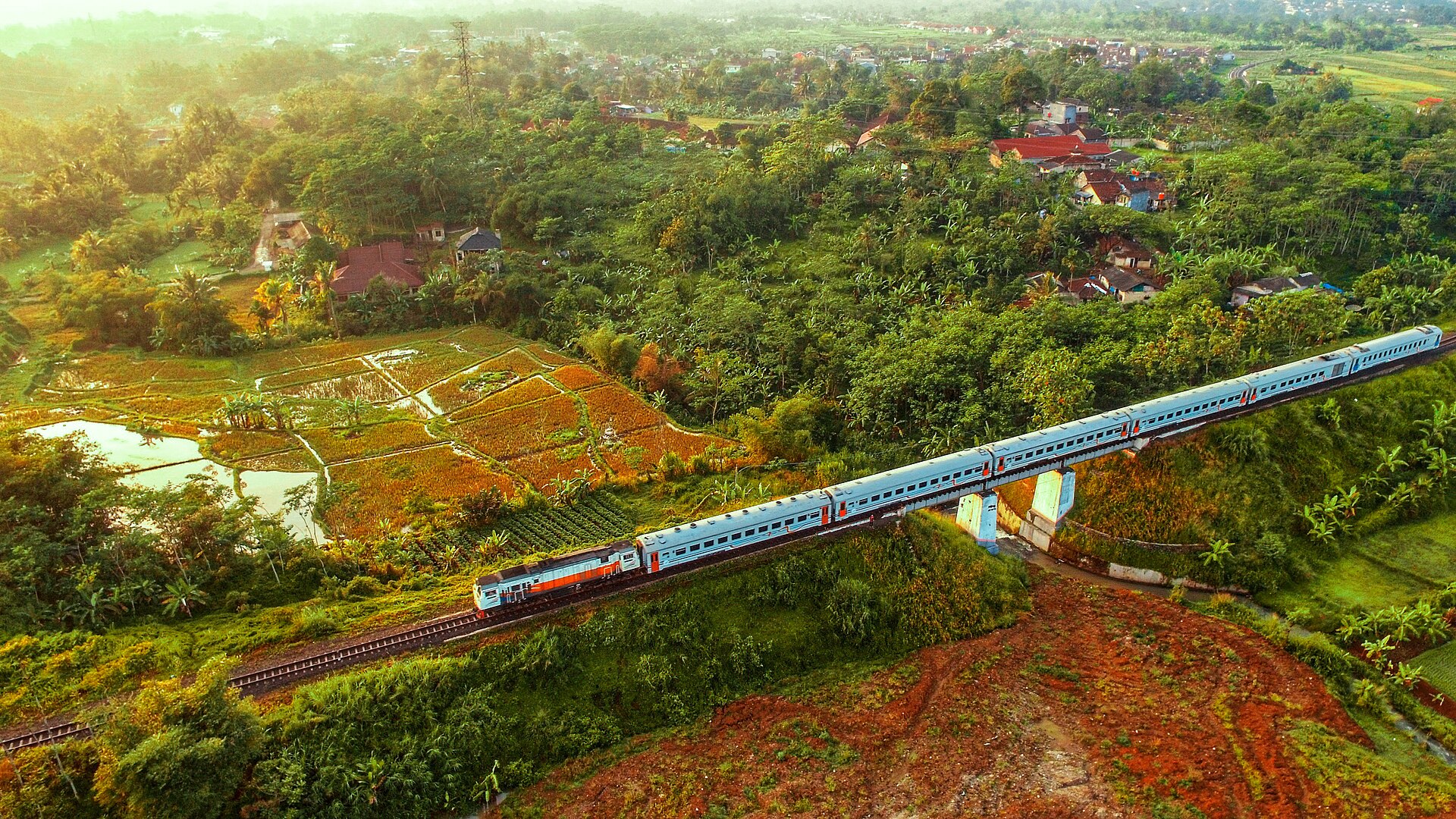
The whole ride runs in the shadow of two great volcanoes, which give the flagship train its name. Their forested slopes make up a UNESCO biosphere reserve, and on a clear morning the twin peaks stand over the rice terraces.KITLV, Leiden University Libraries / Wikimedia Commons · CC BY 4.0The oldest road into the Priangan
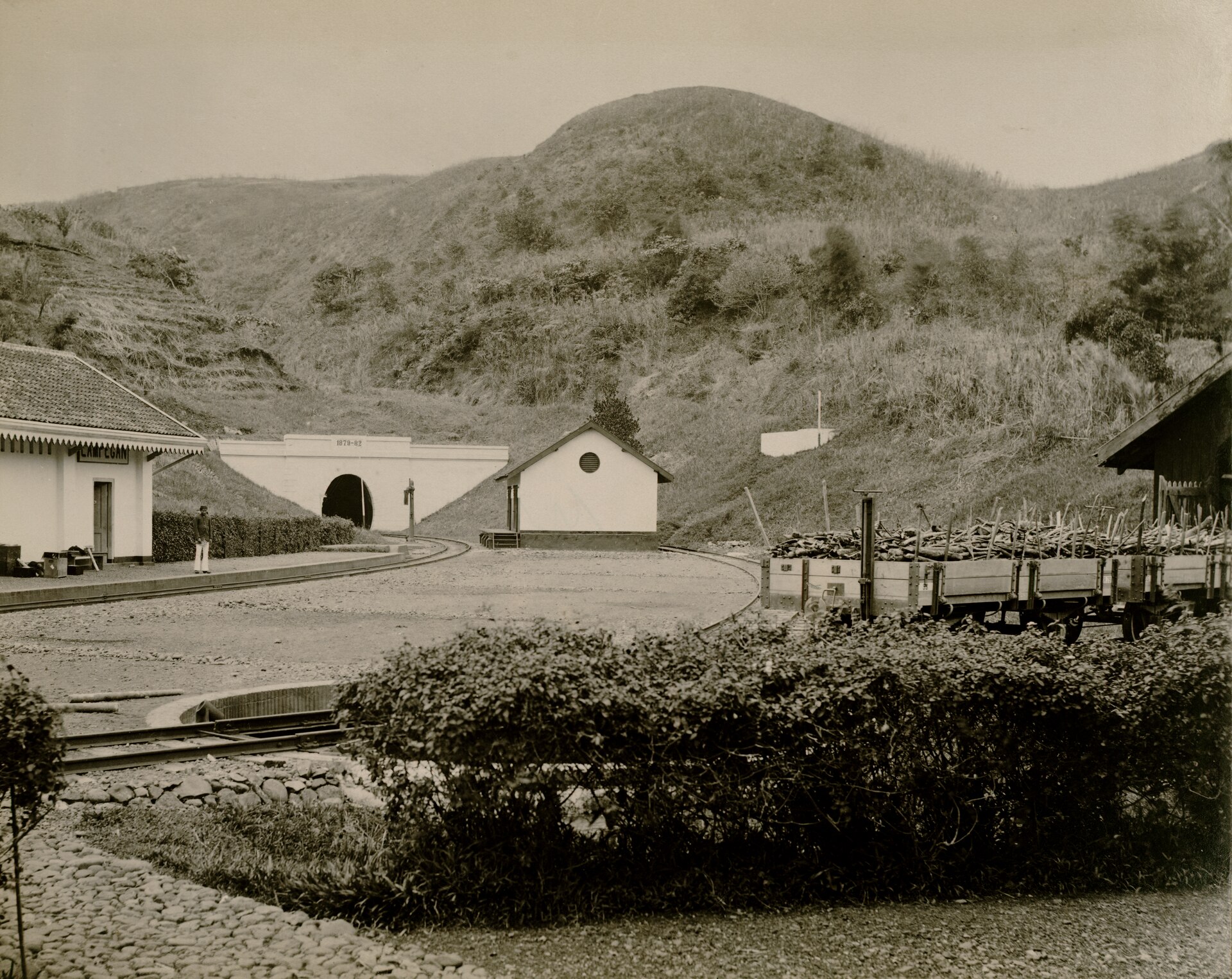
The Dutch Staatsspoorwegen opened Bogor to Sukabumi in 1881 and pushed on to Cianjur in 1883 — the first line into the highland heart of West Java. You ride the same alignment today, over some of the oldest bridges still in daily use in the country.A bit of history
Culture & experiences along the way
Afrogindahood / Wikimedia Commons · CC BY-SA 4.0Down from Bogor on the Pangrango
Begin at Bogor Paledang, the little terminus beside Bogor's busy commuter station. The Pangrango — an air-conditioned intercity with Economy and Executive coaches — takes about an hour and three-quarters down to Sukabumi, crawling at 20–40 km/h through rice paddies, tea and volcano views. One of the loveliest cheap rides in Indonesia.Lokallan / Wikimedia Commons · CC BY-SA 4.0On to Cianjur on the Siliwangi
Change at Sukabumi for the Siliwangi, a humble local train that carries on through Lampegan toward Cianjur and Cipatat. This is rural West Java at its most unhurried — level crossings, market towns, and fares of just a few thousand rupiah, some of the cheapest tickets on earth. Slow, basic, and a wonderful way to watch it all go by.Mirani Pramitasari / Wikimedia Commons · CC BY-SA 4.0A base for the mountains
The line is also the way into some of West Java's best hill country. Sukabumi and Cianjur are gateways to the Gede Pangrango National Park, the tea gardens and waterfalls around Cibodas and Selabintana, and the resort belt of Puncak. Break your journey and you can be walking in cloud forest beneath a volcano within the hour.Timetables
This is a two-train journey, so there are two timetables to line up — the Pangrango from Bogor to Sukabumi, then the Siliwangi onward to Cianjur and Cipatat.
Pangrango — Bogor Paledang ⇄ Sukabumi (about 1 hour 45 minutes, four times a day each way):
| Direction | Departures |
|---|---|
| Bogor Paledang → Sukabumi | 07:50 · 12:55 · 17:20 · 21:45 |
| Sukabumi → Bogor Paledang | 05:10 · 10:30 · 14:55 · 19:20 |
Siliwangi — Sukabumi ⇄ Cianjur ⇄ Cipatat (about 2¼–2½ hours, three times a day each way):
| Direction | Departures |
|---|---|
| Sukabumi → Cianjur → Cipatat | 05:15 · 10:50 · 16:45 |
| Cipatat → Cianjur → Sukabumi | 07:55 · 14:00 · 19:30 |
Good to know:
- Board at Bogor Paledang, not Bogor. The main Bogor station handles only the KRL commuter trains to Jakarta; the Pangrango leaves from the small Paledang terminus right next to it.
- Mind the connection at Sukabumi. The two trains are separately timed and separately ticketed. Plan the change with a comfortable gap — the morning Pangrango arriving into Sukabumi lines up reasonably with the late-morning Siliwangi, but check the current times, as they shift with each timetable revision.
- Sit on the left going south for the best of the Gede–Pangrango volcano views on the run down from Bogor.
- The Siliwangi is dirt cheap. Fares are just Rp 2,000–5,000 — genuinely among the lowest train fares in the world — but it is a basic economy train, so bring your own refreshments.
- You can't ride through to Bandung. The Siliwangi terminates at Cipatat; the last stretch to Padalarang and Bandung is not yet reopened to passengers, so finish by road if Bandung is your goal.
Times as of the 2026 (Gapeka 1 February 2025) timetable and subject to change. Confirm current schedules and fares with the operator, KAI, before you travel (see the Tickets section below).
Tickets
Both trains are run by Kereta Api Indonesia (KAI), and both are booked through the same official channels: the KAI website, the "Access by KAI" app, station counters, or travel platforms such as Traveloka and Tiket.com. Because this is a two-train journey with a change at Sukabumi, you buy two separate tickets — one for the Pangrango, one for the Siliwangi.
The Pangrango is a reserved-seat intercity, so it is worth booking ahead, especially at weekends and on holidays; choose Executive for a little more room or Economy to save a few thousand rupiah. Fares are low by any standard. The Siliwangi is a basic local economy train with famously tiny fares — a few thousand rupiah for the whole run — and seats are simple and unreserved-feeling; buy it on the day if the app won't sell it in advance.
Foreign cards can be temperamental on the Indonesian booking sites, so the app and the station counters are the reliable fallbacks. Below, KAI's booking channel for the Pangrango and its main site for the Siliwangi and live times.
Book your tickets
Pangrango · Bogor to Sukabumi
The air-conditioned run into the highlands
The intercity leg, Bogor Paledang to Sukabumi, in Economy or Executive class — about an hour and three-quarters for a modest fare. Four departures a day each way; reserved seats, easily booked through KAI's app and website. This is the comfortable half of the journey.
Book Tickets (opens in a new tab, on Kereta Api Indonesia (KAI))via Kereta Api Indonesia (KAI)Siliwangi · Sukabumi to Cipatat
The local train past Lampegan
The onward local leg through the Lampegan Tunnel to Cianjur and Cipatat — a basic economy service for a token fare of just a few thousand rupiah, among the cheapest train tickets anywhere. Buy through the same KAI channels; check current times before you set out.
Book Tickets (opens in a new tab, on Kereta Api Indonesia (KAI))via Kereta Api Indonesia (KAI)Rail Passes
No rail pass covers this journey. Interrail and Eurail are European schemes, and Indonesia is not among the 33 countries in Interrail's list of covered railway companies. KAI sells the Pangrango and the Siliwangi as two separate tickets, through its website and app or at the station.
Checked October 2026 against Interrail's list of railway companies (opens in a new tab).
Places to Visit
The line begins and ends in places worth lingering over, and runs past the gateway to some of West Java's finest mountains: Bogor at the top, the old Dutch hill retreat from steamy Batavia; the twin volcanoes of Gede and Pangrango dominating the whole ride south; and, on the line itself, the oldest railway tunnel in the country.
None of these are polished tourist towns — but that is rather the point of a journey down the oldest, slowest railway in the highlands.
 Apri DAV / Wikimedia Commons · CC BY-SA 4.0 · cropped
The Bogor Botanical Gardens
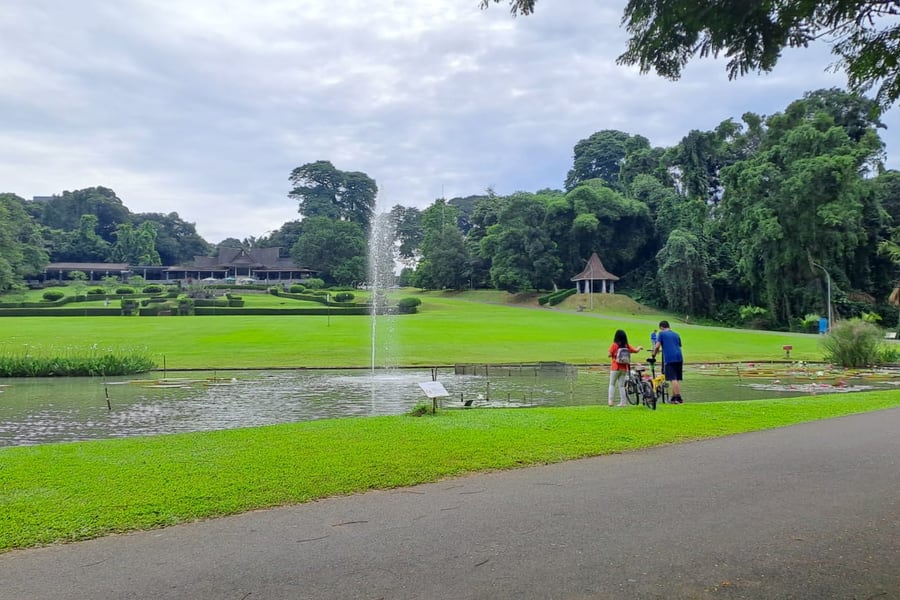
The reason to arrive early. Founded on 18 May 1817 by Caspar Reinwardt, the oldest botanical garden in Southeast Asia spreads over 87 hectares in the middle of Bogor: nearly 14,000 specimens from more than 3,300 species, some 500 kinds of orchid, giant waterlilies grown from Amsterdam seed of 1860, and a memorial to Olivia Raffles under the trees. The Astrid avenue and its long pond are the set piece.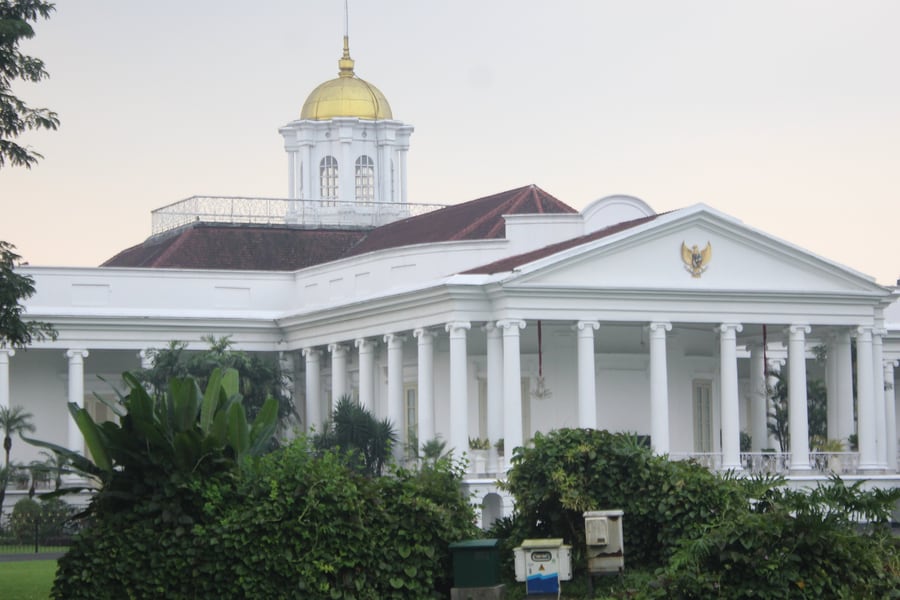 Nafisathallah / Wikimedia Commons · CC BY 4.0 · cropped
Istana Bogor
Beside the gardens and sharing their lawns: the white palace the Dutch built as Buitenzorg — "without a care" — as a retreat from the heat and disease of Batavia, after Van Imhoff found the spot in 1744. Spotted deer from India and Nepal, brought over by Governor-General Daendels, still graze in front of it. It is a working presidential palace, so visits are by arranged group only — you cannot simply turn up.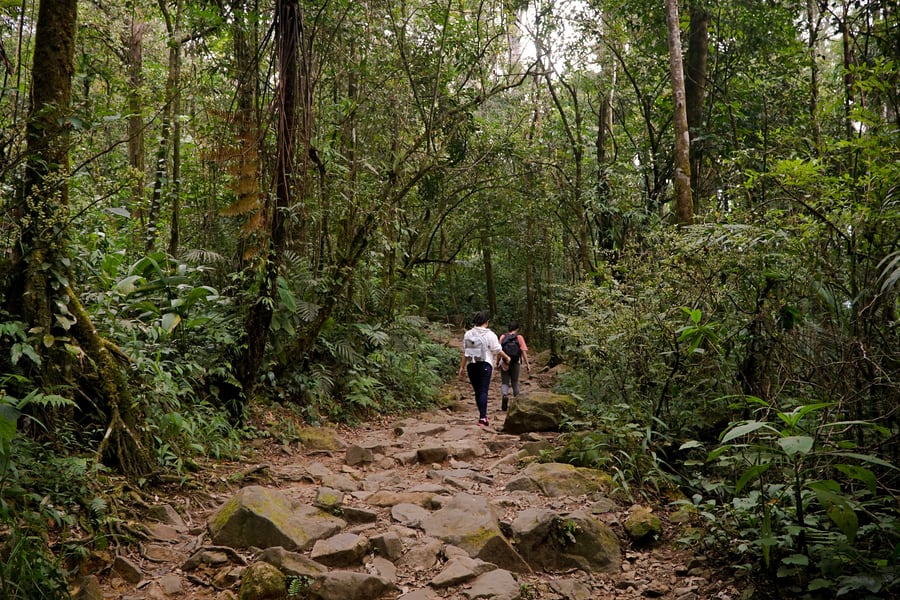 Pompyjunus / Wikimedia Commons · CC BY-SA 4.0 · cropped
Gede Pangrango National Park
The twin volcanoes that dominate the whole ride south — Gede at 2,958 metres and Pangrango at 3,019 — and the 152 square kilometres of montane forest around them, made a national park in 1980 and a UNESCO biosphere reserve as early as 1977. Waterfalls, hot springs and a night climb to the crater rim for sunrise are the draws. Trails are permit-controlled and the summit routes close from time to time.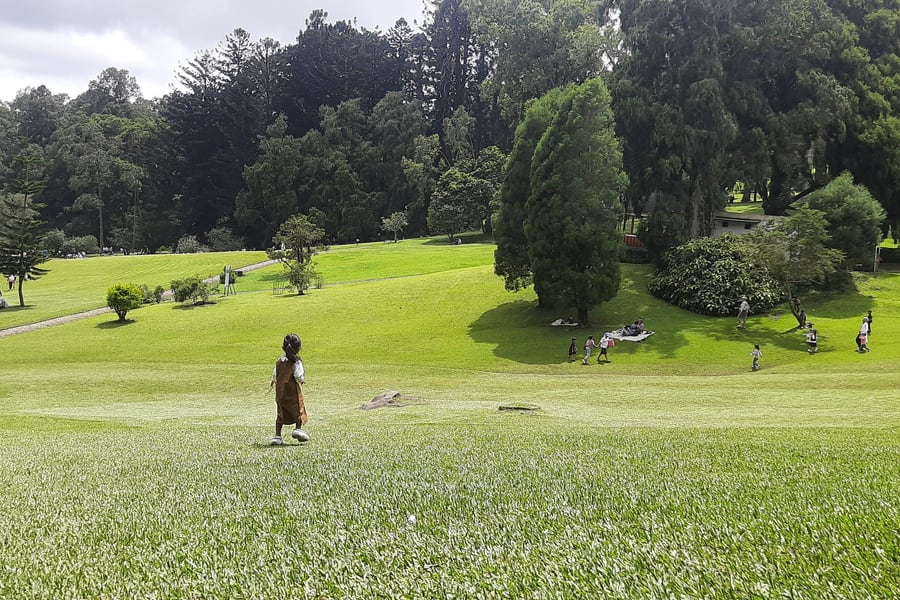 Eka Abdullah / Wikimedia Commons · CC BY-SA 4.0 · cropped
Cibodas Botanical Garden
The main gate to the national park, and lovely in its own right. Teijsmann laid it out in 1852 as a highland branch of the Bogor gardens, at 1,300 to 1,425 metres where subtropical species will grow: 85 hectares of lawns, conifers and moss garden, and nearly 11,000 living specimens. Cinchona was first grown in Indonesia here, in 1854, for quinine. The mist comes down most afternoons and the air turns properly cold.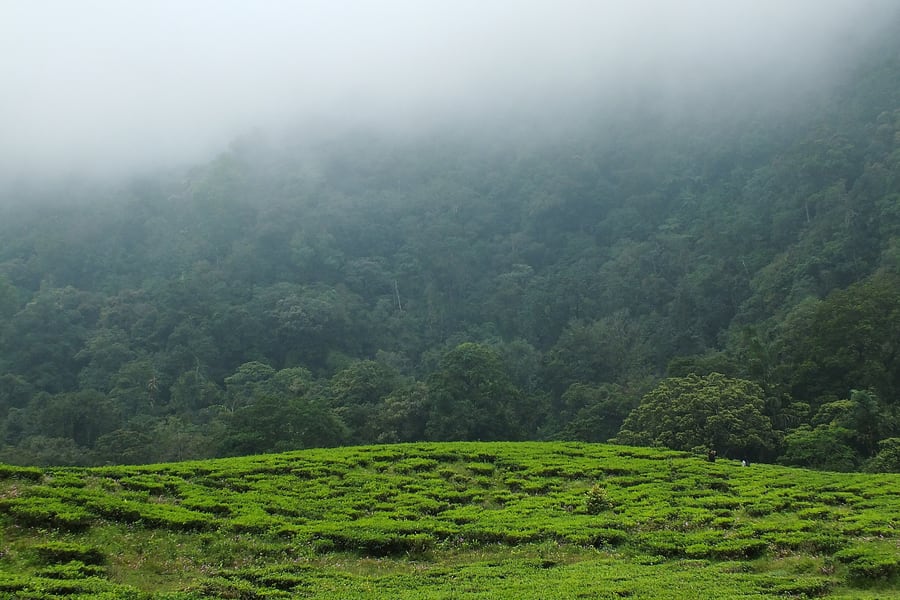 Rizky derian / Wikimedia Commons · CC BY-SA 4.0 · cropped
The Puncak pass
North of the line, and the classic Jakarta weekend: a pass climbing to around 1,700 metres between tea estates, with Gunung Mas open to walkers and Telaga Warna — a little crater lake in a nature reserve, whose colour shifts with the algae in it — near the top. Go on a weekday if you can. At weekends the Puncak road is one of the most thoroughly jammed stretches of tarmac in Indonesia.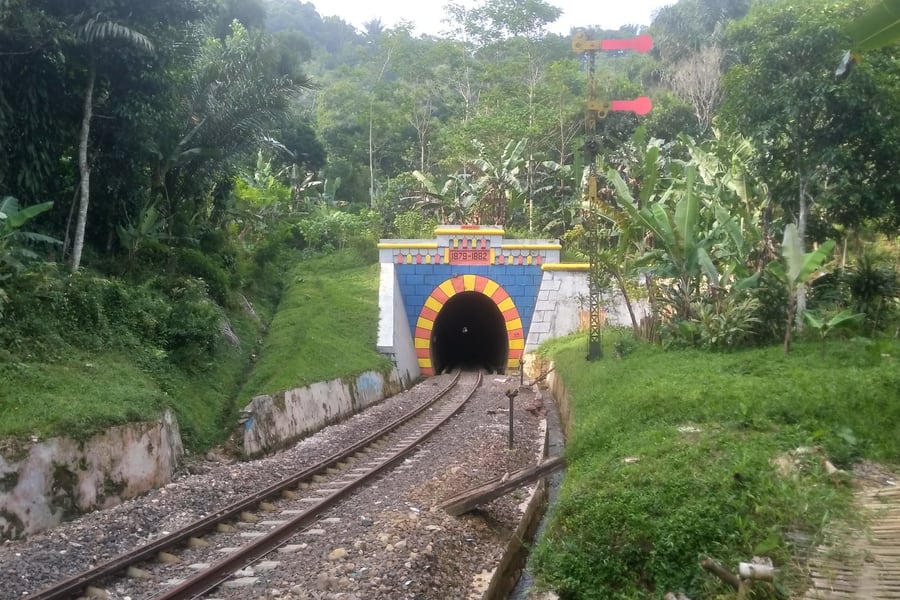 Lokallan / Wikimedia Commons · CC BY-SA 4.0 · cropped
The Lampegan Tunnel
The star of the line itself. Bored between 1879 and 1882 near Cibeber and 686 metres long, it was the first railway tunnel in Indonesia, and it takes its name from a Dutch supervisor's shout of "lamp pegang" — hold the lamp. It collapsed and was rebuilt around 2000, then fully restored by 2010. The little station at its mouth, with the jungle pressing in on the cutting, is worth getting off the Siliwangi for.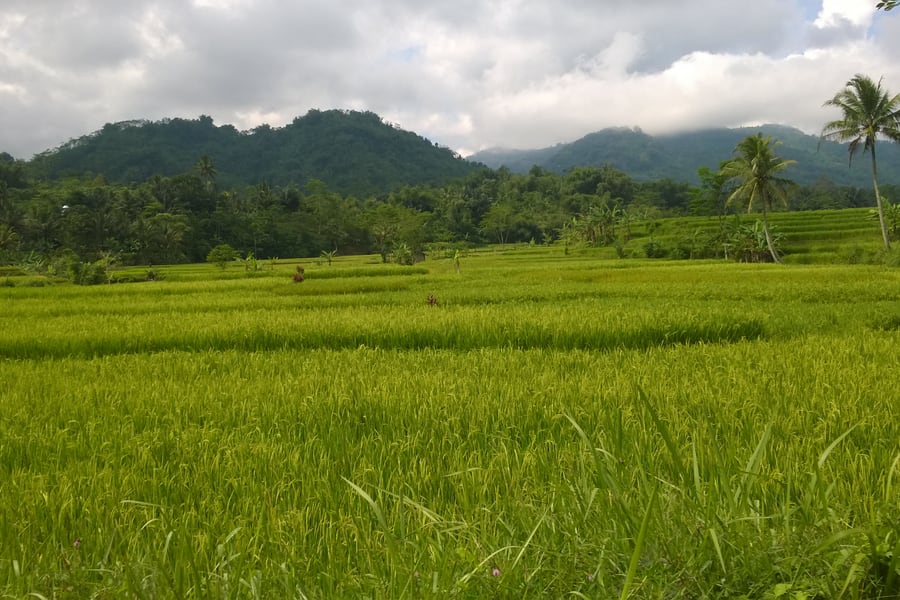 Gilangsmntr / Wikimedia Commons · CC BY-SA 4.0 · cropped
Sukabumi and Cianjur
The midpoint and the far end of the ride, and workaday highland towns rather than polished ones. Sukabumi is useful as a base, close to the southern trailheads, the tea estates and hill resorts like Selabintana. Cianjur sits among the rice terraces the region is known for — Cianjur rice is prized right across Java — with the Gede-Pangrango massif standing behind it.Where to Sleep
Because this is a slow, break-it-up sort of journey, where you sleep depends on how far you want to go and which mountains you want to be near.
Bogor, at the start, has the widest choice — from comfortable business hotels near the Botanical Gardens to guesthouses and boutique stays, plus cooler resort places up toward the Puncak pass, where the hotels look out over tea plantations. It is an easy, pleasant base from which to ride the line as a day trip and return.
Along the way, Sukabumi is the practical midpoint, with a spread of simple and mid-range town hotels, and it makes a good base for the southern side of the Gede Pangrango park and the Selabintana hill resort just outside town. Up on the park's northern flank, around Cibodas, there are guesthouses and mountain lodges close to the trailheads and the botanical garden — the place to stay if you want to walk in the cloud forest.
At the far end, Cianjur offers modest local accommodation amid the rice country. Wherever you stop, prices are low and booking is rarely difficult except around Indonesian public holidays and the long Idul Fitri season, when the hill resorts near Jakarta fill up fast — reserve ahead then, and reserve your Pangrango seat at the same time.
Questions or corrections
Planning this trip and stuck on something, or spotted a time, fare or detail that has changed? Send us a message about The Bogor–Sukabumi Line. We read every one, and we update this page when something has changed.