The Santa Teresa Tram
Júlia Lanz / Wikimedia Commons · CC BY 2.0 · 2015 · cropped
- Distance6 km · Carioca to Dois Irmãos
- DurationAbout 23 minutes each way
- Best seasonEvery day; Silvestre trips on weekdays
Introduction
The bridge that carries the tram into Santa Teresa was built to carry water. The Carioca Aqueduct was finished in 1750 to bring the Carioca river from the hills to a fountain in the middle of colonial Rio de Janeiro: 270 metres of whitewashed stone, 17.6 metres high, on 42 double arches. When the city stopped needing it, the aqueduct was given a second job. On 1 September 1896 electric trams began running along its top, and they still do.
The aqueduct also decided the shape of the railway. The line was rebuilt for electric traction on a gauge of 1,100 millimetres, an unusual width chosen because it was the widest the top of the arches could take, and every tram on the line has been built to fit it since.
From the Carioca terminal in the city centre the yellow open-sided cars cross the arches above Lapa and climb the Santa Teresa ridge through narrow cobbled streets, past old mansions and forest, to Dois Irmãos. Since June 2026 some trips go on to Silvestre, on a branch that had not carried passengers for nearly twenty years.
The Journey
Trams leave from the Carioca terminal, officially Estação Motorneiro Nelson Correia da Silva, the only stop on the line with a station building. It stands on a garden loop between the conical Metropolitan Cathedral and the Petrobras headquarters, a short walk from Carioca metro station.
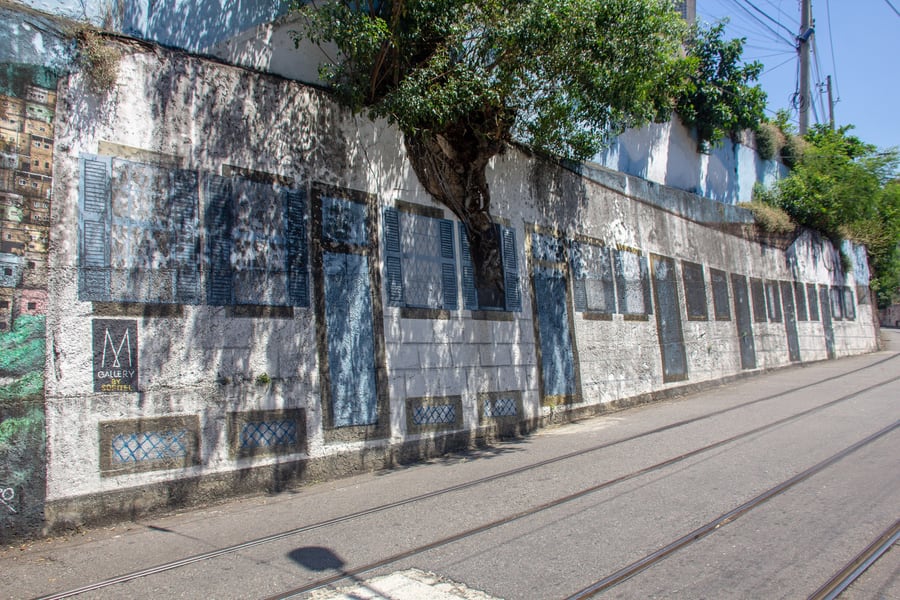
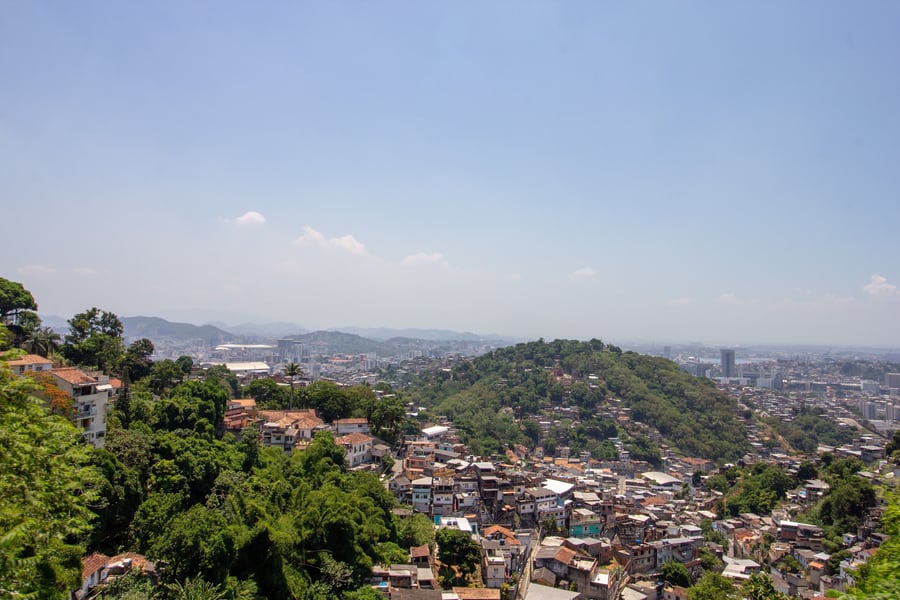
Within a few minutes the tram is on the aqueduct, running along the top of the arches above the squares of Lapa, then onto the hillside at the far end. From there it climbs through Santa Teresa on narrow cobbled streets, by way of Largo do Curvelo and Largo dos Guimarães, the neighbourhood's centre, to Largo do França and the terminus at Dois Irmãos. The main line is 6 kilometres long, and the ride to Dois Irmãos takes about 23 minutes. Openings between the houses give long views over the city below.
The branches
Three branches leave the main line. The Paula Mattos branch, reopened in January 2025, runs to Largo das Neves; a short spur up Rua Francisco Muratori is used for a single early trip. Beyond Dois Irmãos, the Silvestre branch adds 2.9 kilometres through Atlantic forest. It was reopened to passengers on 11 June 2026 after more than twenty years without service, at first with four trips a day on weekdays.
The trams
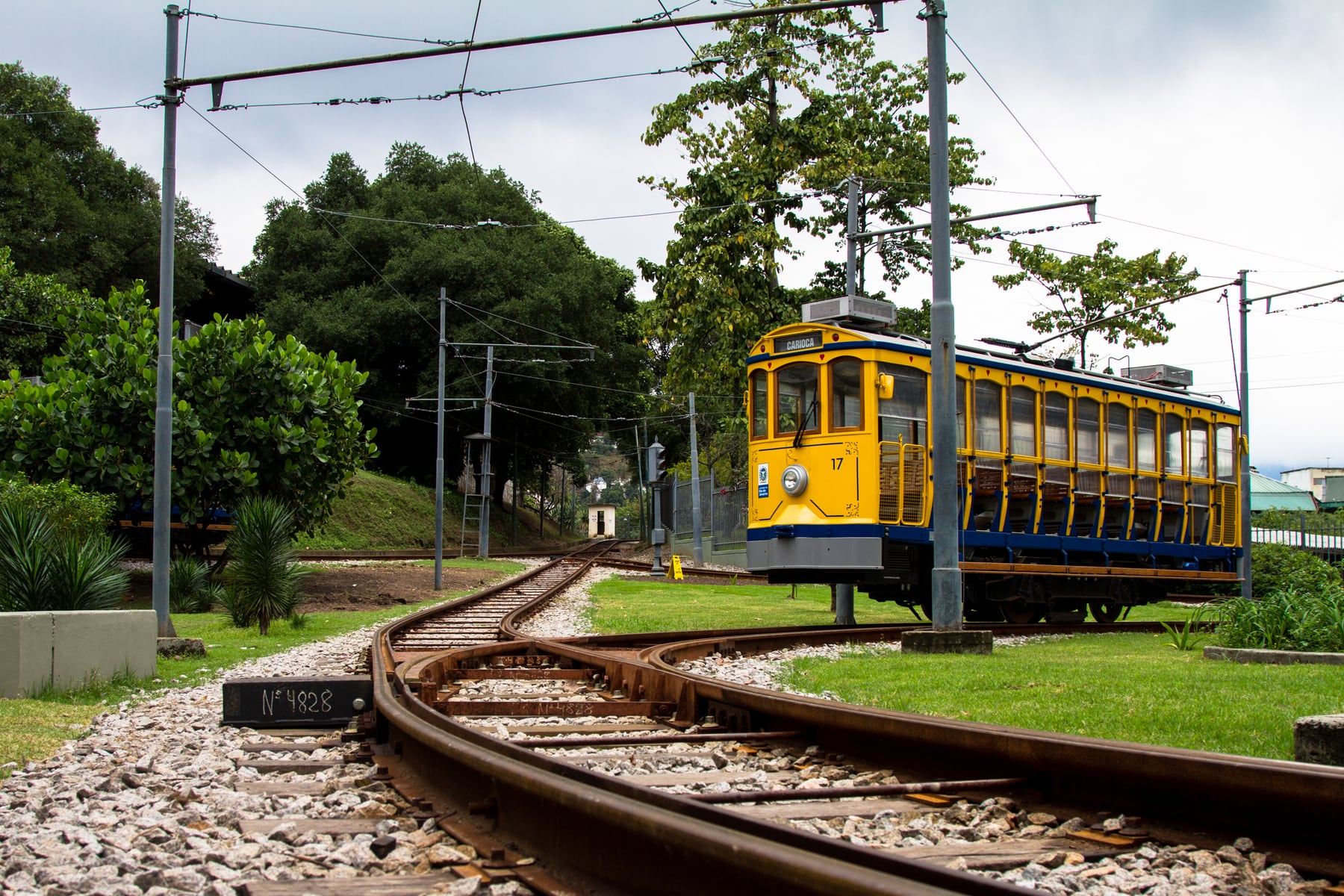
The cars are two-axle open trams in yellow with blue trim, with crosswise wooden benches and running boards along the sides. They look like the cars that worked the line for most of the twentieth century, but they are replicas: after a fatal derailment on 27 August 2011 closed the line, the state ordered 14 new trams from T'Trans of Três Rios. Eight were delivered, numbered 16 to 23, before the builder went bankrupt, and the first came in August 2014. They draw 600 volts from an overhead wire.
Service came back in stages: Carioca to Largo do Curvelo on 27 July 2015, Largo dos Guimarães that December, Largo do França in October 2018, and the whole line to Dois Irmãos on 21 January 2019.
Along the route
 Mike Peel (www.mikepeel.net) / Wikimedia Commons · CC BY-SA 4.0 · 2019
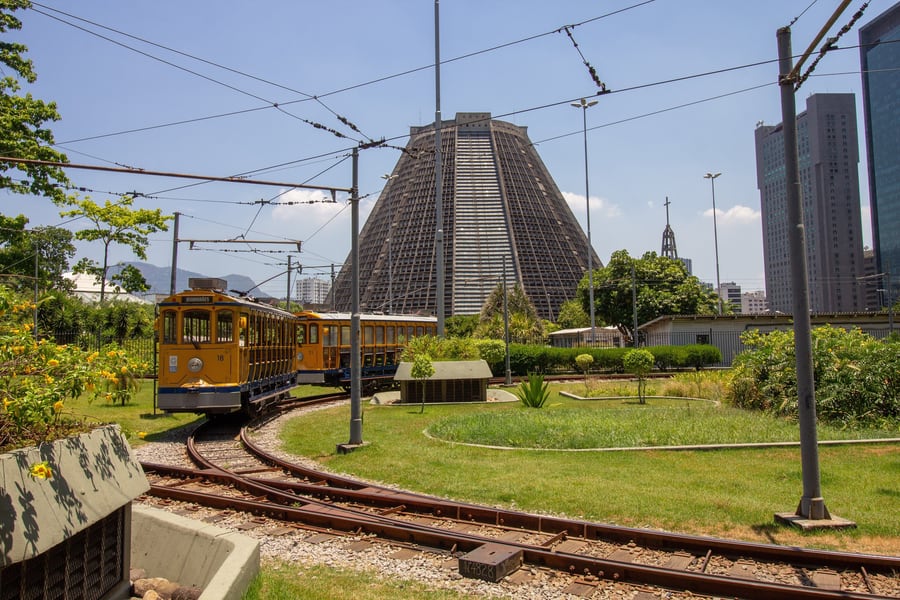
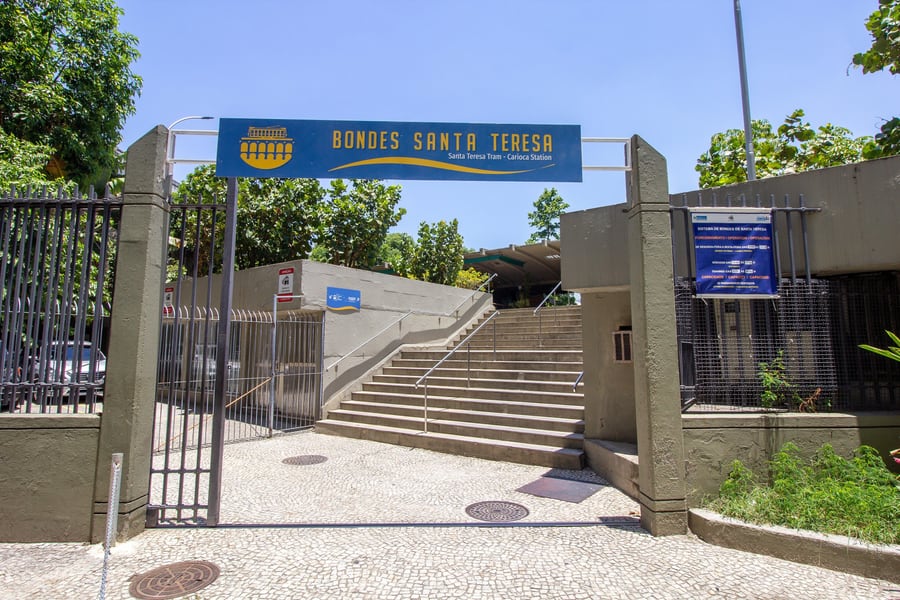
Carioca terminal
The only stop on the line with a station building, named Estação Motorneiro Nelson Correia da Silva. Trams turn on a garden loop beside the Metropolitan Cathedral, a short walk from Carioca metro station.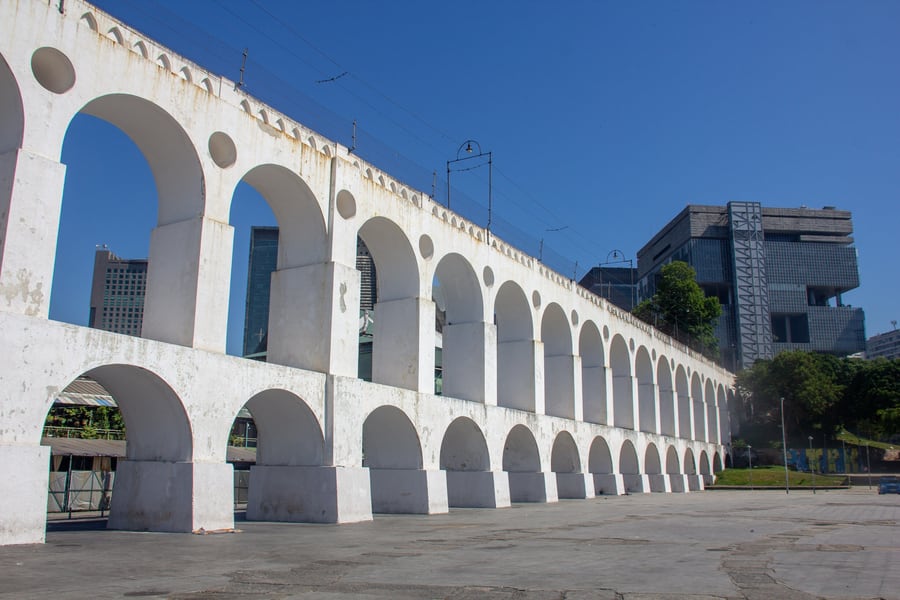 Mike Peel (www.mikepeel.net) / Wikimedia Commons · CC BY-SA 4.0 · 2019
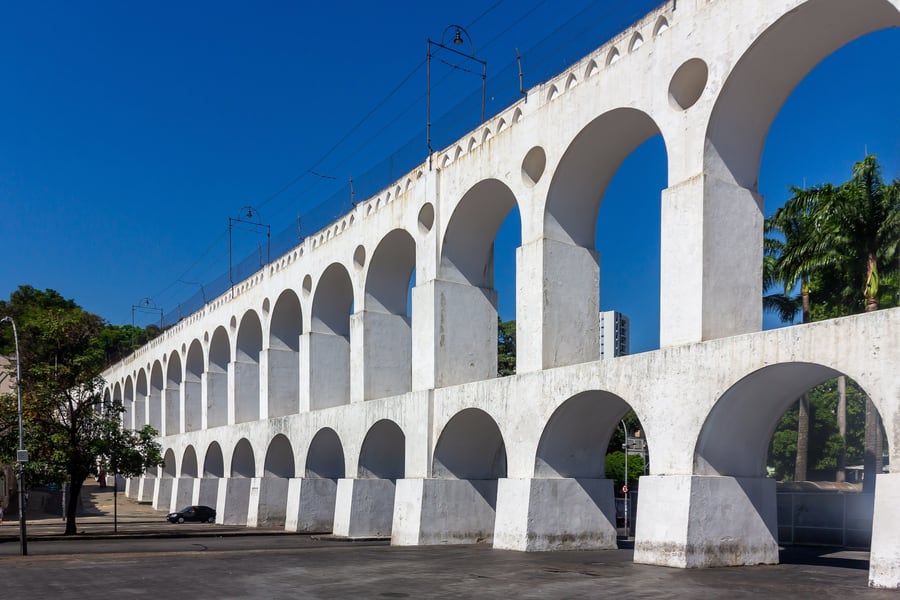
The Carioca Aqueduct
Built for water and inaugurated in 1750: 270 metres long and 17.6 metres high on 42 double arches. The tram runs along the top above the squares of Lapa, as it has since 1896.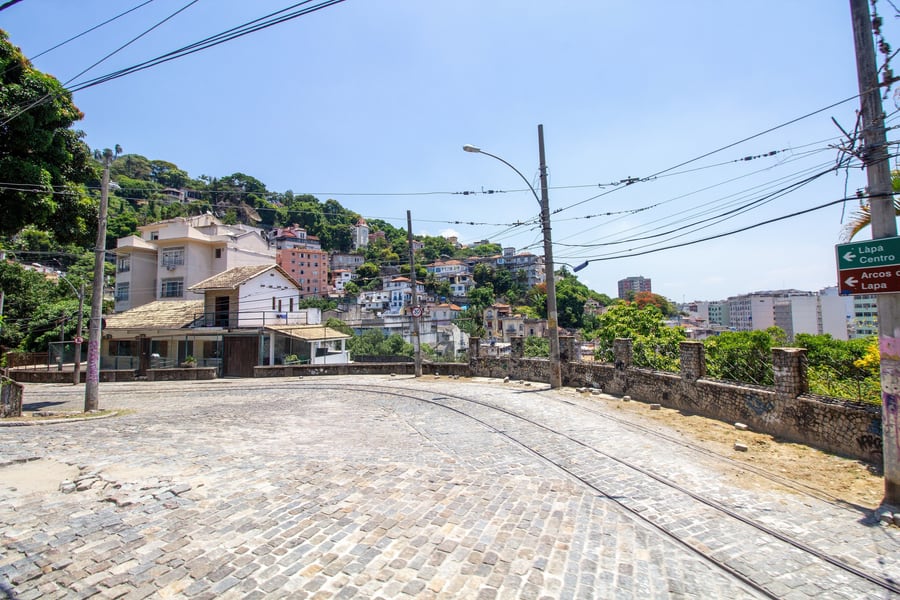 Mike Peel (www.mikepeel.net) / Wikimedia Commons · CC BY-SA 4.0 · 2019
Rua Francisco Muratori
A short spur off the main line, laid in the cobbles of a residential street and worked by a single early trip a day. Its top end is a cobbled turning with signs pointing back to Lapa.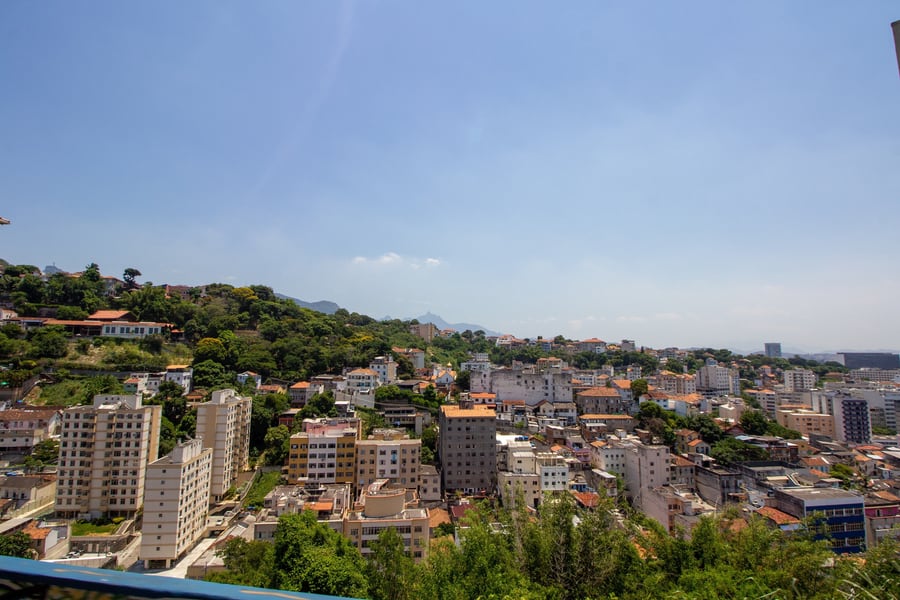 Mike Peel (www.mikepeel.net) / Wikimedia Commons · CC BY-SA 4.0 · 2019
The upper line
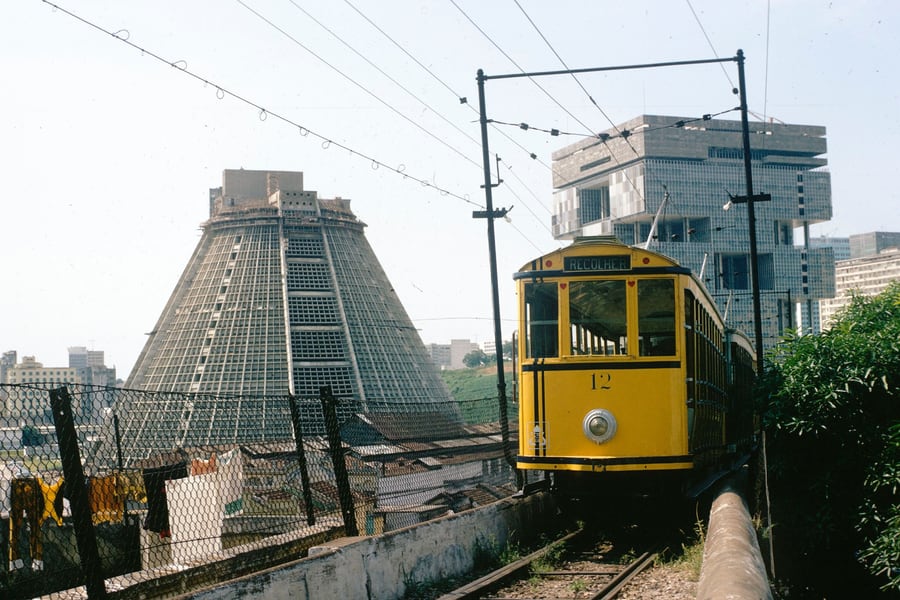
Past Largo dos Guimarães the line keeps climbing along the ridge to Largo do França and Dois Irmãos, with openings between the houses over the city below. Beyond, the Silvestre branch runs on through Atlantic forest.A bit of history
Culture & experiences along the way
 Rjcastillo / Wikimedia Commons · CC BY 4.0 · 2024 · cropped
Selarón's staircase
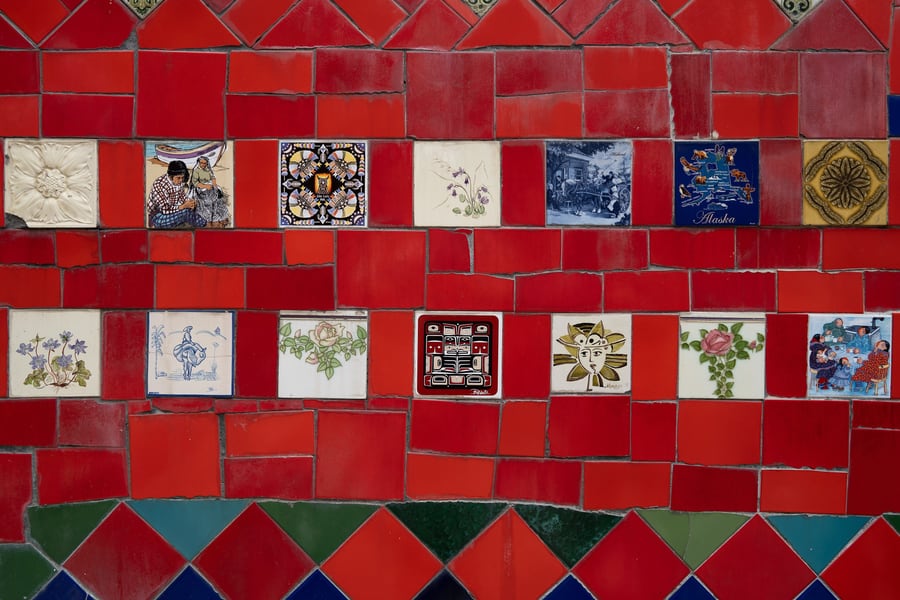
From 1990 the Chilean artist Jorge Selarón, who had settled in Rio in 1983, covered the 215 steps between Lapa and Santa Teresa in tiles: red, green, yellow and blue, mixed with tiles sent from all over the world. He called the work never complete. The city listed it in 2005.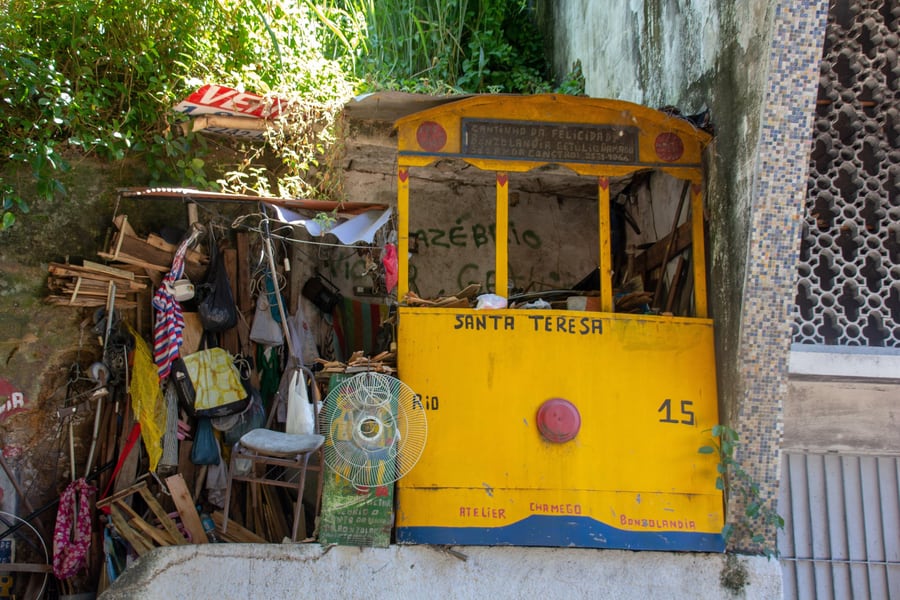 Mike Peel (www.mikepeel.net) / Wikimedia Commons · CC BY-SA 4.0 · 2019
Getúlio Damado's Bonzolândia
On Rua Leopoldo Fróes the artist Getúlio Damado works in an open-air studio he calls Bonzolândia, making art from things other people throw away. Among his pieces are Santa Teresa trams, and one stands at the studio's door.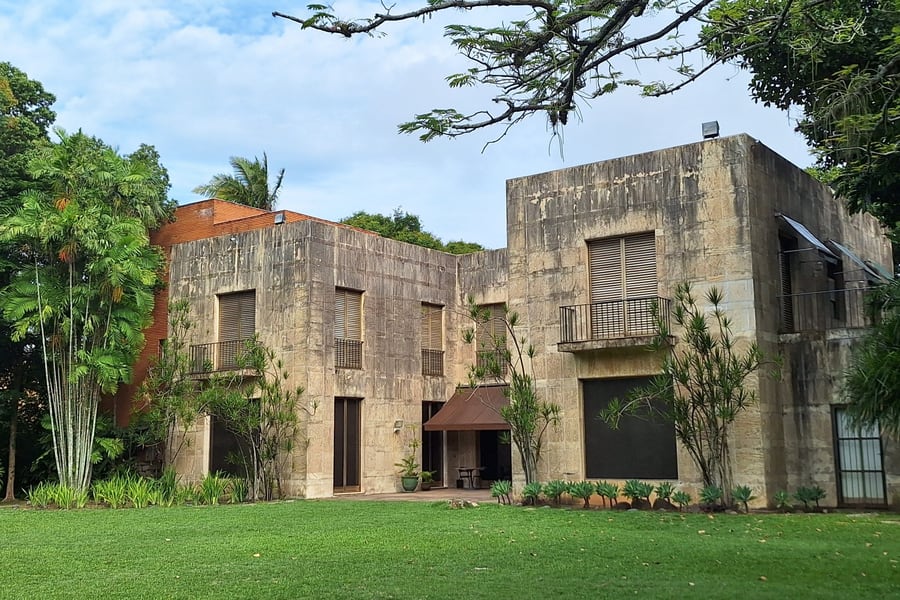 Fulviusbsas / Wikimedia Commons · CC BY 4.0 · 2024 · cropped
Debret at the Chácara do Céu
The collector Raymundo Ottoni de Castro Maya left his modernist house on the hill as a museum, open since 1972. Beside works by Matisse, Modigliani, Portinari and Di Cavalcanti, it keeps more than 500 original works by Jean-Baptiste Debret, who recorded Brazilian life in the early nineteenth century.Timetables
The tram runs every day from the Carioca terminal. The pattern below is the one published by the Rio de Janeiro state government, operator of the line: the main line and the Paula Mattos branch as announced in March 2025, and the Silvestre branch as fixed in July 2026, after its trial period.
| Route | Days | Hours | Frequency |
|---|---|---|---|
| Carioca – Dois Irmãos | Monday to Friday | 08:00–17:00 | About every 20 minutes |
| Carioca – Dois Irmãos | Weekends and holidays | 09:00–17:00 | About every 20 minutes |
| Carioca – Largo das Neves (Paula Mattos) | Daily | Same hours | About hourly |
| Carioca – Silvestre | Monday to Friday | 10:00, 11:00, 14:00, 15:00 | Four trips |
The ride from Carioca to Dois Irmãos takes about 23 minutes.
As of November 2026. The state government's public service page (opens in a new tab) points to the current timetable and fares.
Tickets
One fare covers the whole line: R$ 20 for a return trip, which includes getting off and back on again in each direction on the same day. That makes it easy to ride up to Dois Irmãos, walk part of the way down through Santa Teresa and catch a later tram back to Carioca.
Travel is free for registered Santa Teresa residents, uniformed public-school pupils with their school card, people over 65 and holders of the state's Vale Social card. Fare as published by the state government; checked November 2026.
Book your tickets
Return ticket
R$ 20 · whole line
Up and back on the same day, with getting off and on again in each direction.
via Central Logística RJRail Passes
No rail pass covers the Santa Teresa tram. Interrail and Eurail are European schemes, and Brazil is not among the countries in Interrail's list of covered railway companies. The line sells only its own R$ 20 return fare.
Checked November 2026 against Interrail's list of railway companies (opens in a new tab), updated 21 October 2026.
Places to Visit
The tram links two very different parts of Rio: the old centre around Largo da Carioca, with its colonial convent and its modern cathedral, and the hilltop neighbourhood of Santa Teresa, with its mansions, gardens and views over Guanabara Bay.
 Bruna Prado / MTur / Wikimedia Commons · Public domain
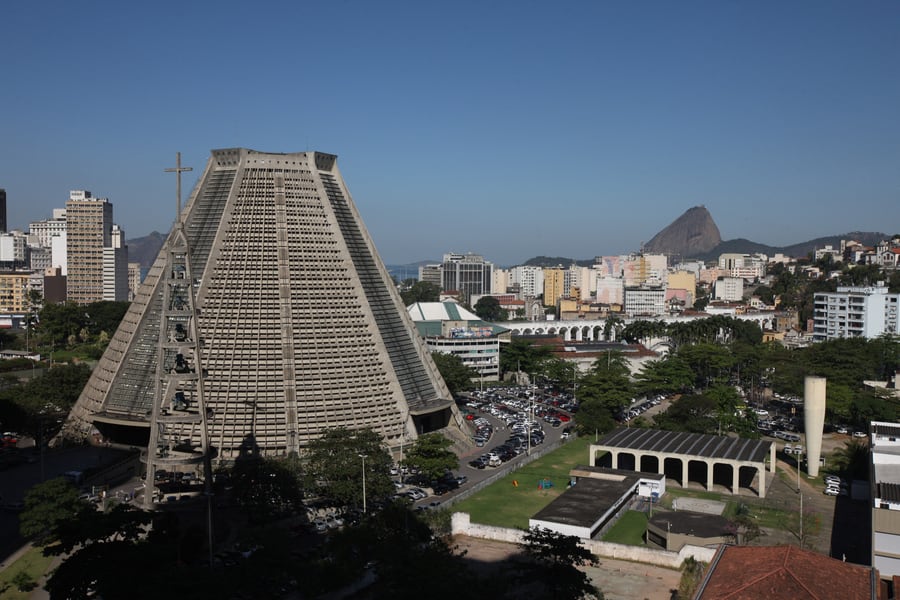
Metropolitan Cathedral
Rio's cathedral of St Sebastian, a cone of concrete 75 metres high and 106 metres across at the base, designed by Edgar Fonseca on the model of a Mayan pyramid and built between 1964 and 1979. Four stained-glass windows rise 64 metres from floor to ceiling, and the nave holds 20,000 people standing. It stands beside the tram's Carioca terminal.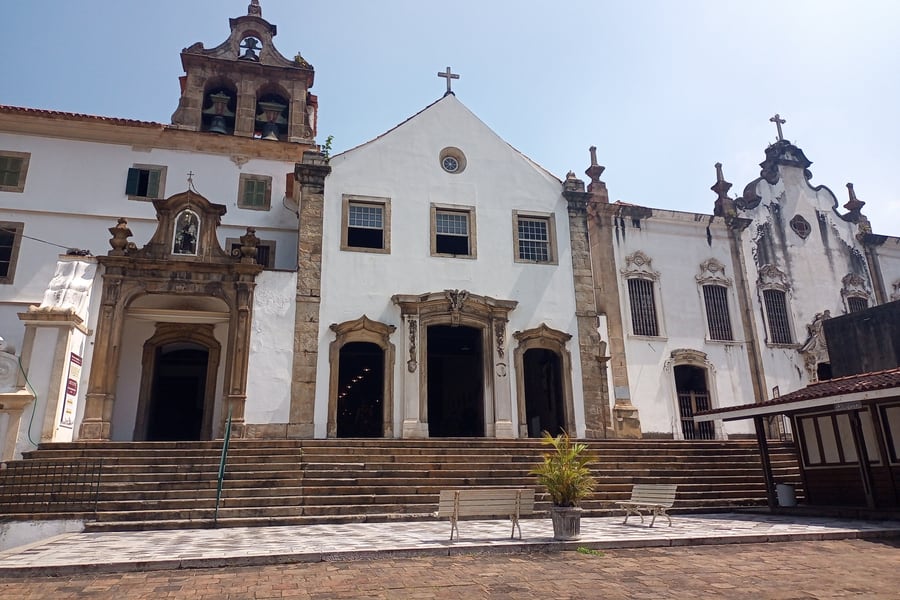 Rafael Deminicis / Wikimedia Commons · CC BY 4.0 · 2024 · cropped
Convento de Santo Antônio
The Franciscan convent on the hill above Largo da Carioca, begun on 4 June 1608 and finished in 1620; the first mass was said in its church in 1615. With the neighbouring church of the Third Order of St Francis of Penance it is one of the oldest colonial groups left in the city, a few minutes' walk from the tram terminal.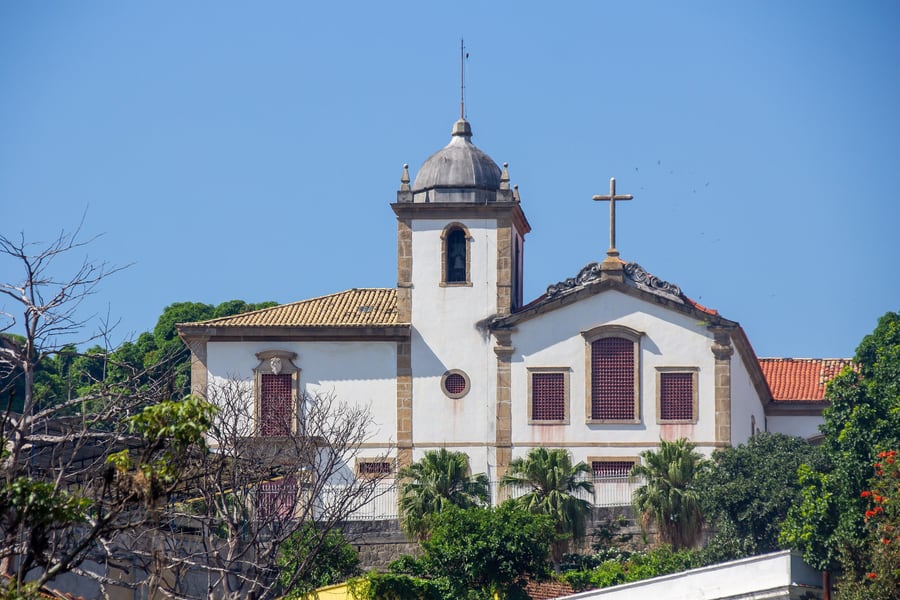 Mike Peel (www.mikepeel.net) / Wikimedia Commons · CC BY-SA 4.0 · 2019
Convento de Santa Teresa
The convent of Discalced Carmelite nuns that gave the hill and the neighbourhood their name, begun in 1750 and lived in by its first nuns from 1757. It was the first convent for women in Rio. The order is enclosed: the nuns follow mass behind grilles, and the church stands at the Lapa end of the ridge above the aqueduct.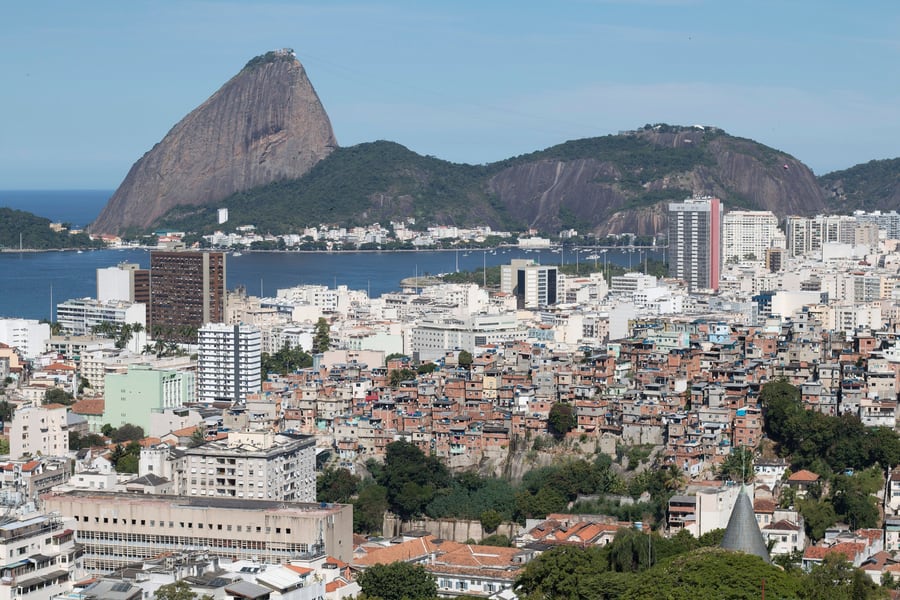 Sebástian Freire / Wikimedia Commons · CC BY-SA 2.0 · 2018
Parque das Ruínas
The shell of the mansion of Laurinda Santos Lobo, a patron who gathered Villa-Lobos, Tarsila do Amaral and Isadora Duncan here in the 1920s and 1930s. Abandoned after her death in 1946, it reopened as a park and cultural centre in 1997, in brick, steel and glass, and was renamed Parque Glória Maria in 2023. Its terraces look over the centre, the aqueduct and Sugarloaf.Where to Sleep
Stay on the ridge in Santa Teresa itself, a short walk from the tram stops, or in the city centre at the Carioca end of the line, where the large hotels are close to the metro.
Where to stay
Santa Teresa Hotel RJ - MGallery
On the ridge in Santa Teresa
A hotel in the buildings of a coffee farm of 1850 on Rua Almirante Alexandrino, with gardens and views over Guanabara Bay.
Check Availability (opens in a new tab, on mgallery.accor.com)via mgallery.accor.comWindsor Guanabara
In the city centre
A large hotel of 542 rooms and suites in central Rio, a few minutes from the metro.
Check Availability (opens in a new tab, on windsorhoteis.com)via windsorhoteis.comQuestions or corrections
Planning this trip and stuck on something, or spotted a time, fare or detail that has changed? Send us a message about The Santa Teresa Tram. We read every one, and we update this page when something has changed.