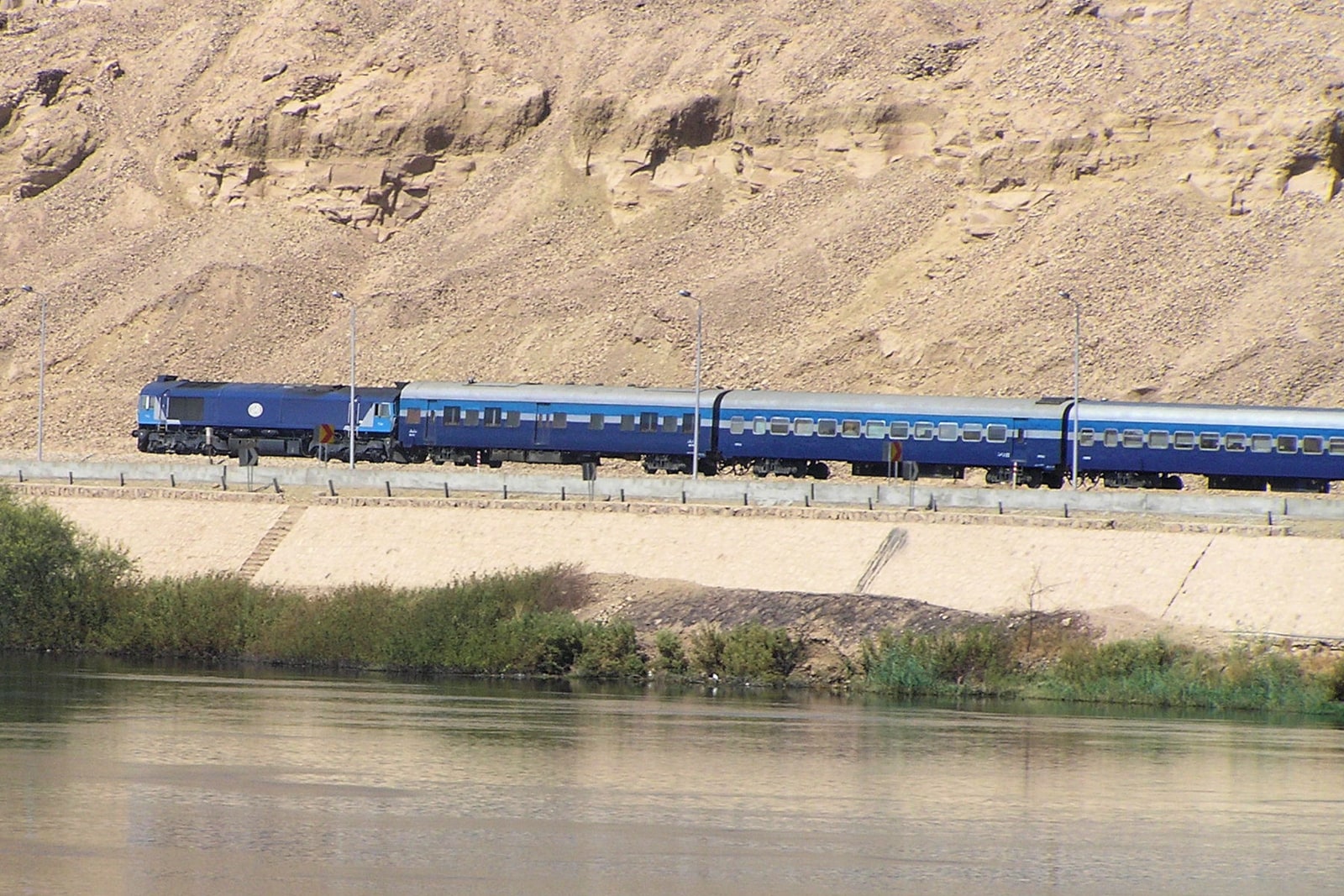
Cairo to Aswan Sleeper
Industrial Wales / Wikimedia Commons · CC BY-SA 2.0
- DistanceCairo–Aswan · the Nile Valley main line
- DurationAbout 13–14 hours, overnight
- Best seasonOctober–April (cooler)
Introduction
There is no more romantic way to travel Egypt than to go to bed in Cairo and wake up on the Nile. The overnight sleeper runs the length of Upper Egypt down the Nile Valley main line, and by the time your breakfast tray arrives the window is full of palm groves, feluccas and the pale desert edge — with the temples of Luxor, Edfu, Kom Ombo and Aswan waiting at the far end.
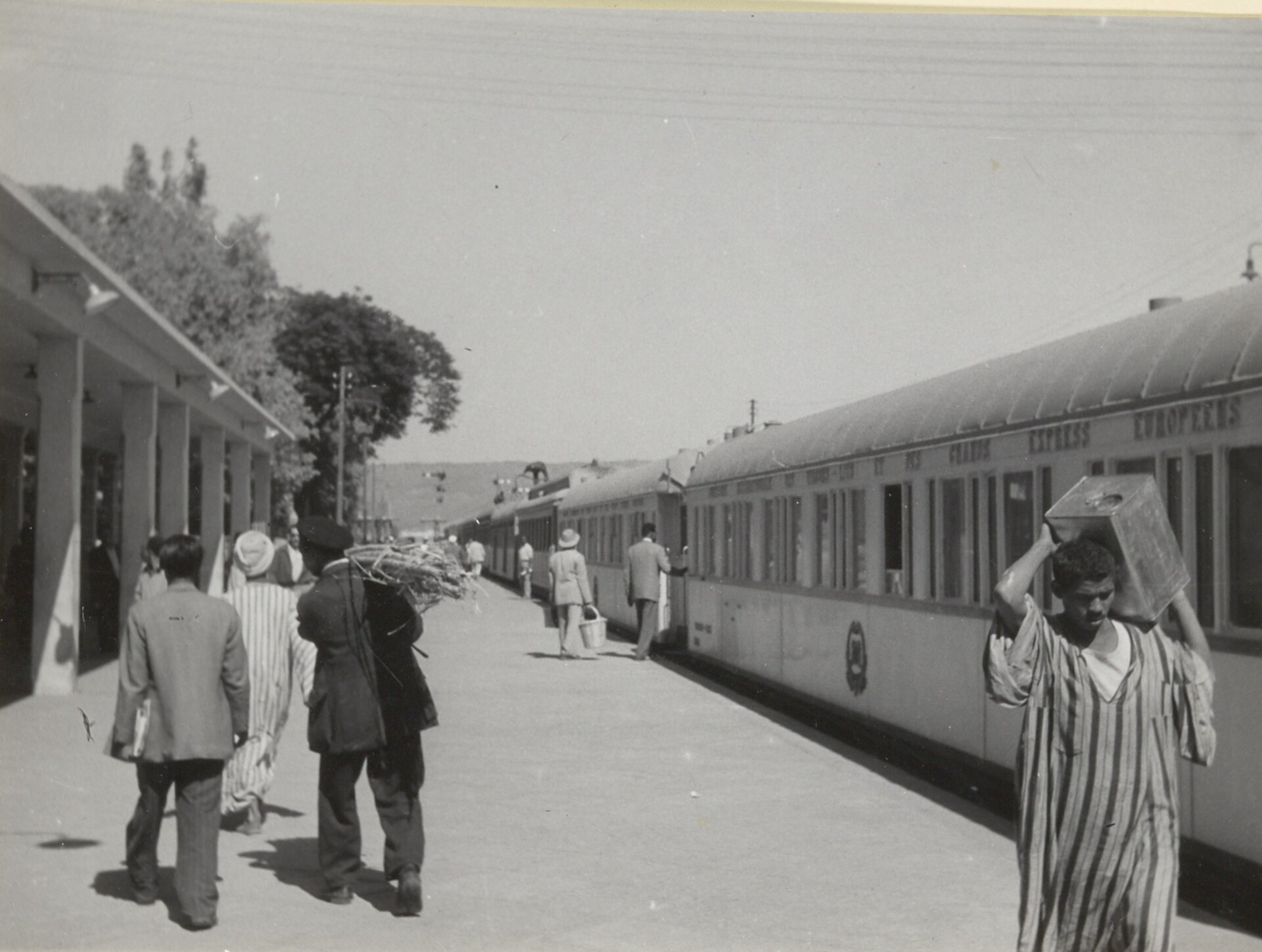
The line itself is a piece of history. Egypt opened the first railway in Africa and the Middle East in 1854 — engineered by Robert Stephenson, and older than the Suez Canal by fifteen years — and the tracks reached Luxor and Aswan in 1898. Ever since, the night train down the valley has been one of the classic journeys of world travel, carrying pilgrims, traders, tourists and Egyptians going home.
Today the sleepers are run by Abela Trains in lockable two-berth cabins, with dinner and breakfast brought to your seat and included in the fare. You climb aboard in the Cairo evening, eat as the city lights fall away, and sleep as the train works south — to wake among the greatest antiquities on earth.
The Journey
The journey begins in Cairo in the evening — no longer at the grand lotus-columned concourse of Ramses, but out at Bashteel, the new Upper Egypt terminus on the western edge of the city, with a second pick-up at Giza twenty minutes later. You find your cabin, the steward folds down the berths, and as the train pulls away dinner is served at your seat while the lights of the city and its suburbs slide by. Somewhere past the pyramids the country goes dark, and you sleep.
You wake to a different world. Overnight the train has run south into Upper Egypt, and the window now frames the Nile Valley itself: a green ribbon of sugar cane, banana and date palm hemmed on both sides by the desert, with feluccas leaning across the water and villages of mud brick going about the morning. Breakfast comes to the cabin as the temples begin — this is the stretch every traveller remembers.
The line follows the river through the great sites of the south. It calls at Luxor, ancient Thebes, for Karnak and the Valley of the Kings; runs on past Edfu, with the best-preserved temple in Egypt; and skirts Kom Ombo, whose temple stands right on the bank. By late morning it reaches Aswan, the gentle city at the First Cataract, where the granite boulders break the Nile and the excursions to Philae and Abu Simbel begin.
A few things worth knowing about the run:
- It follows the Nile Valley main line, part of the network Egypt began in 1854 — the oldest railway in Africa and the Middle East.
- The overnight sleeper takes roughly 13–14 hours, Cairo to Aswan, calling at Luxor, Esna, Edfu and Kom Ombo.
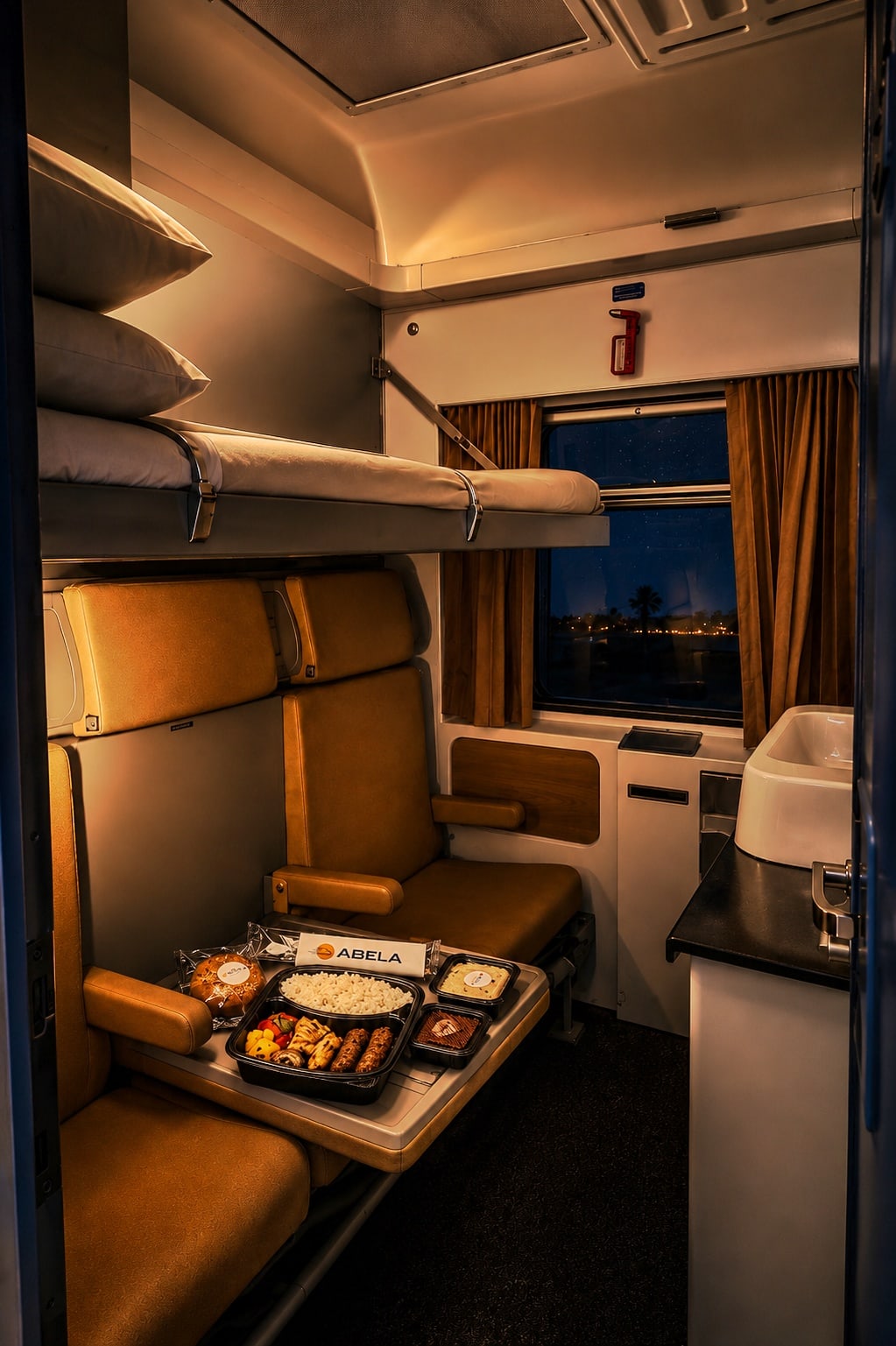
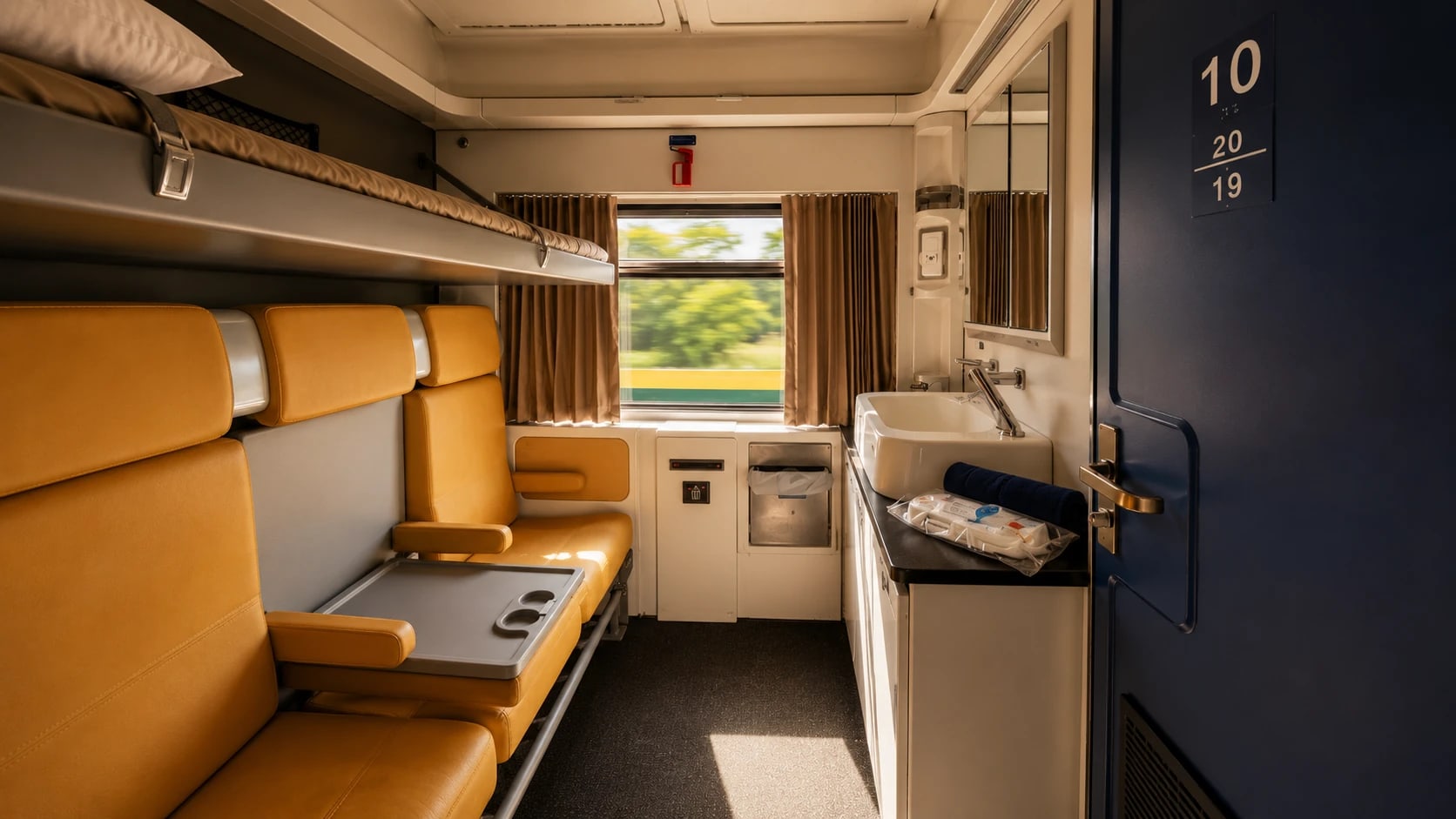
- Trains run in lockable two-berth cabins with a washbasin; dinner and breakfast are included.
- Fast day trains cover the same route if you would rather see the whole valley in daylight.
Many travellers ride the sleeper down and break the journey on the way back — a night in Luxor for the west-bank tombs, another in Aswan for the river — turning one train into a tour of the Nile.
Along the route
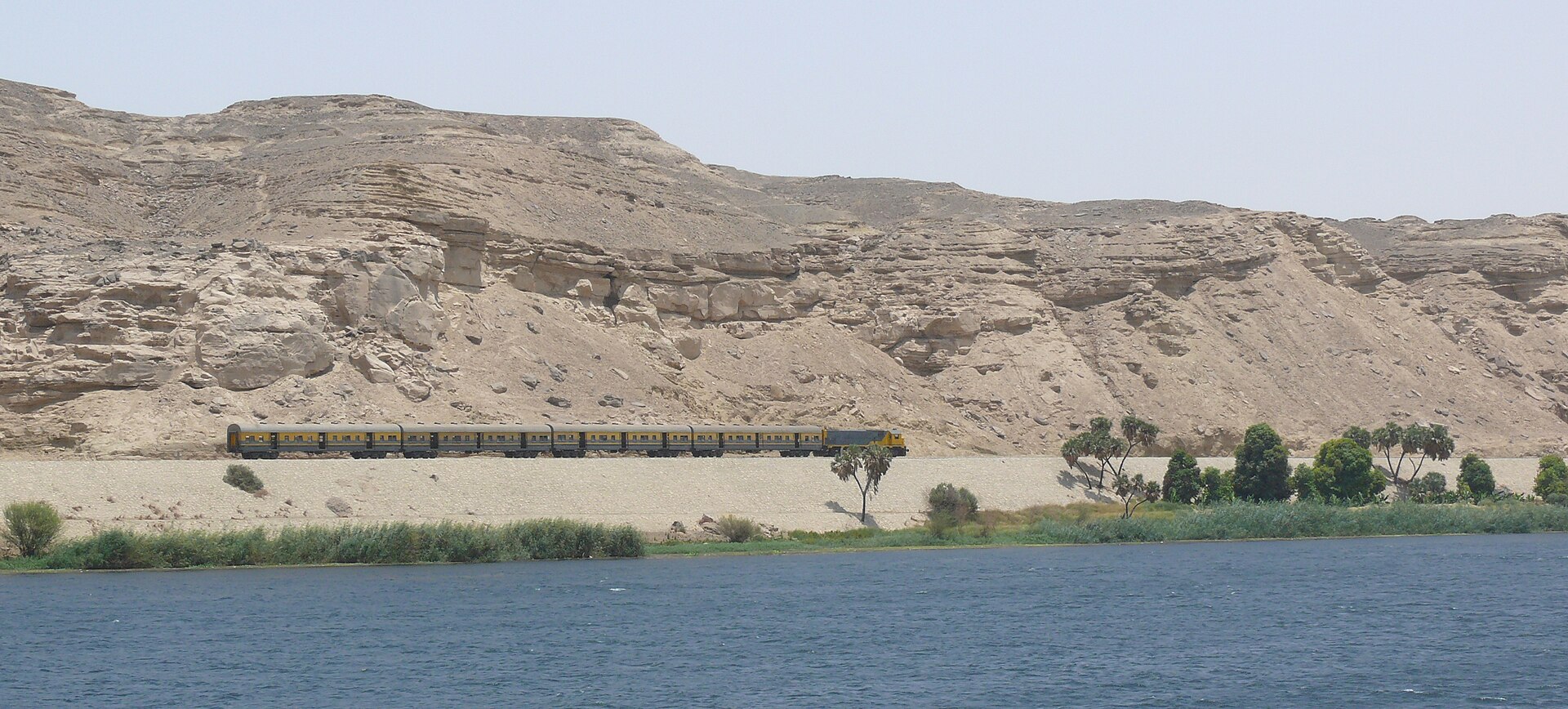
Marc Ryckaert (MJJR) / Wikimedia Commons · CC BY 3.0Waking up on the Nile
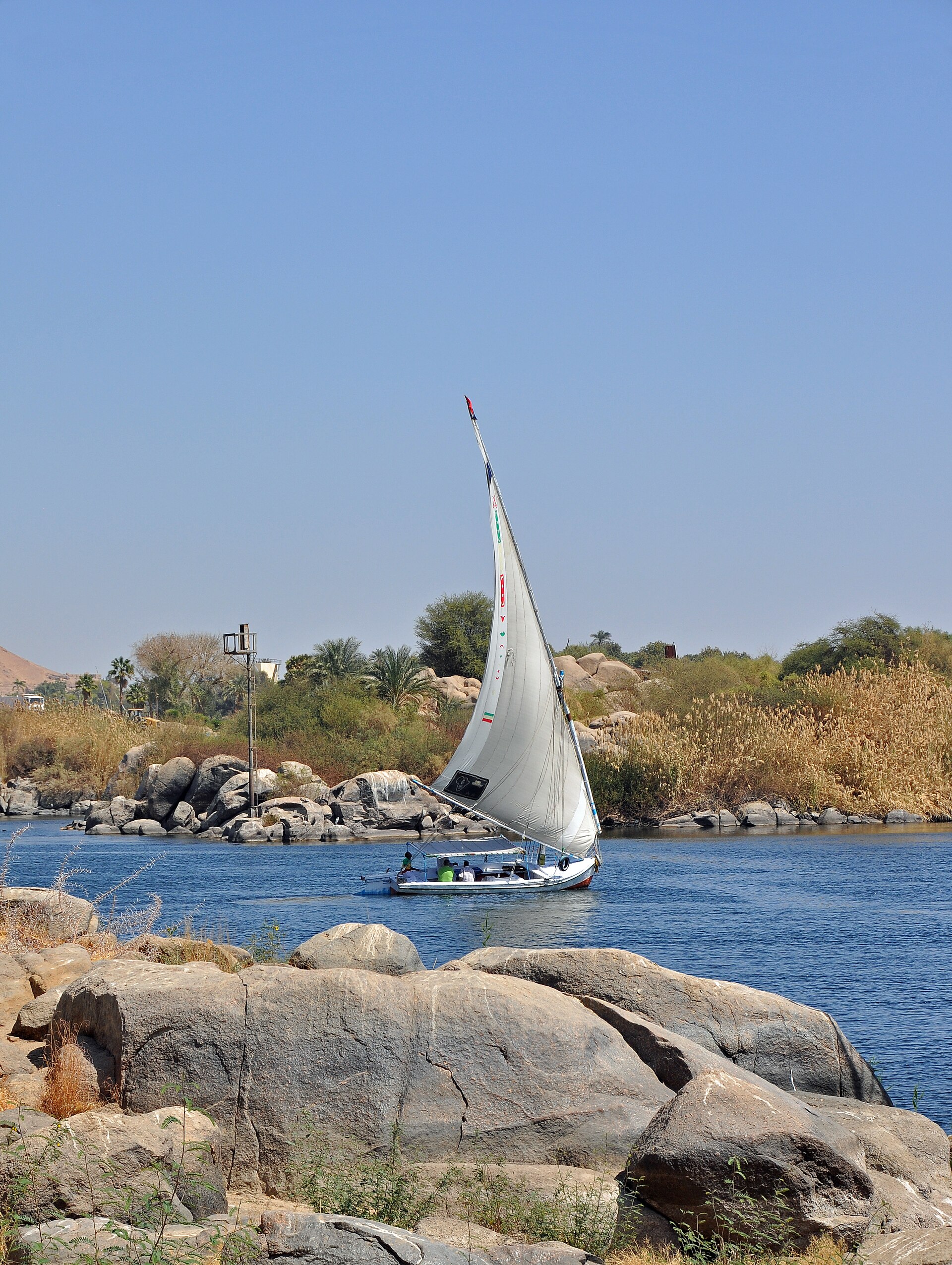
You go to sleep somewhere in the Delta and wake to the river valley — palm groves, mud-brick villages, feluccas under sail and the desert edge close on either side. Breakfast comes to your cabin as Upper Egypt slides past the window; it is the whole reason to take the train.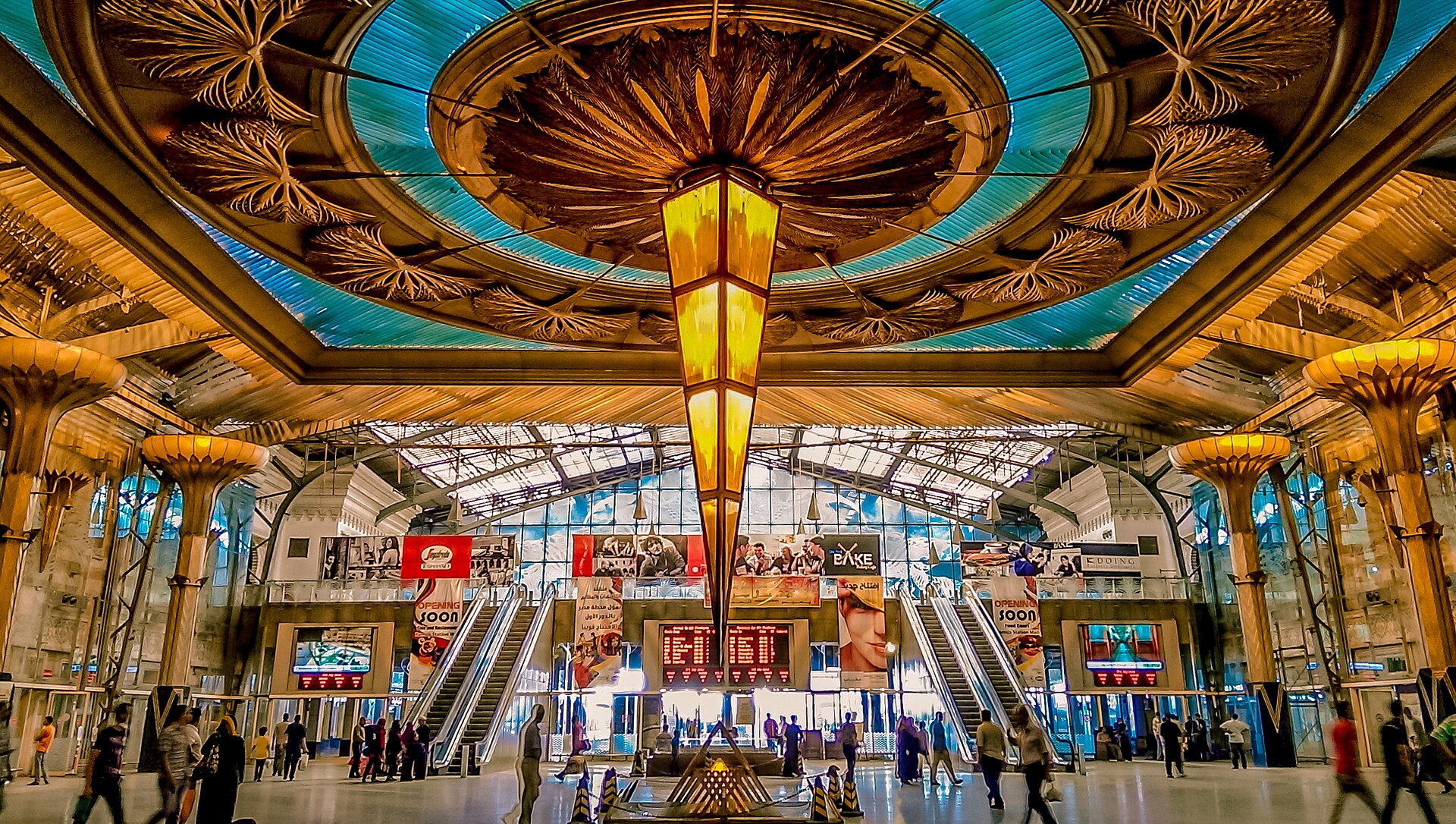 Osama Khalil / Wikimedia Commons · CC BY-SA 4.0
Africa's oldest railway
The line you are riding is history in itself. Egypt opened the first railway in Africa and the Middle East in 1854 — engineered by Robert Stephenson, older than the Suez Canal — and the Nile Valley main line reached Luxor and Aswan in 1898.Marc Ryckaert / Wikimedia Commons · CC BY-SA 4.0A string of temple towns
No other train sets you down among so much. The line threads the great sites of the Nile — Karnak and the Valley of the Kings at Luxor, the temple of Horus at Edfu, crocodile-god Kom Ombo on the riverbank, and Philae and Abu Simbel out from Aswan.A bit of history
Culture & experiences along the way
 Abela Trains
The overnight sleeper
The sleeper runs in lockable two-berth cabins with a washbasin, and dinner and breakfast are brought to your seat and included in the fare. Cabins come in three vintages — the newest "Elite" refit, the Spanish refurbishment and the original German interiors — but all give you a bed, a door that locks, and the river for company.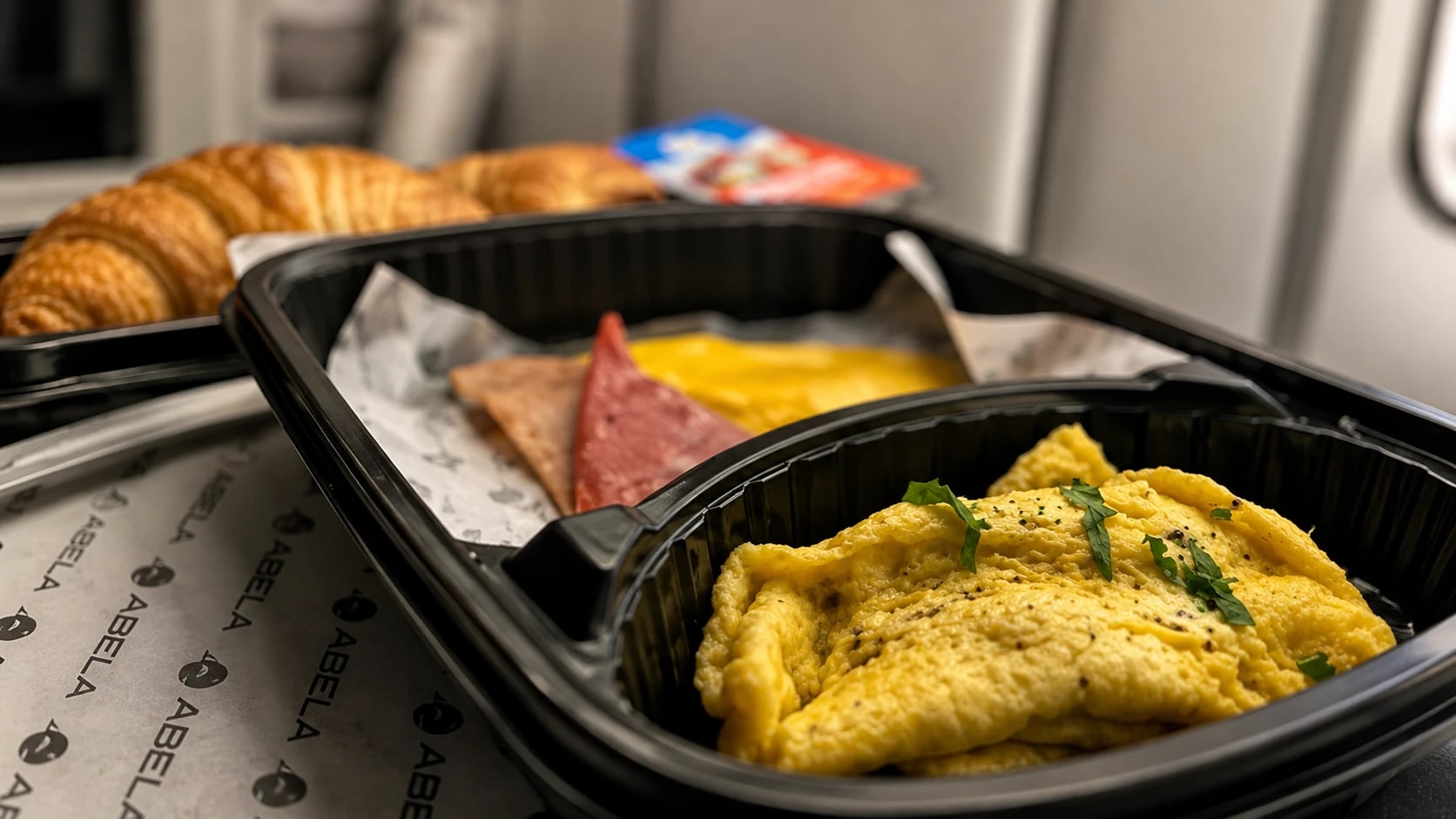 Abela Trains
Dinner and breakfast on board
Both meals are in the fare and come to your cabin on a tray: dinner in the evening, breakfast in the morning with the Nile Valley outside the window. For a sit-down meal instead, Abela sells dinner and breakfast in the Elite Royal Club Car, its dining car, as an optional extra.Diego Delso, delso.photo, License CC BY-SA · Wikimedia CommonsLuxor — Karnak and the Kings
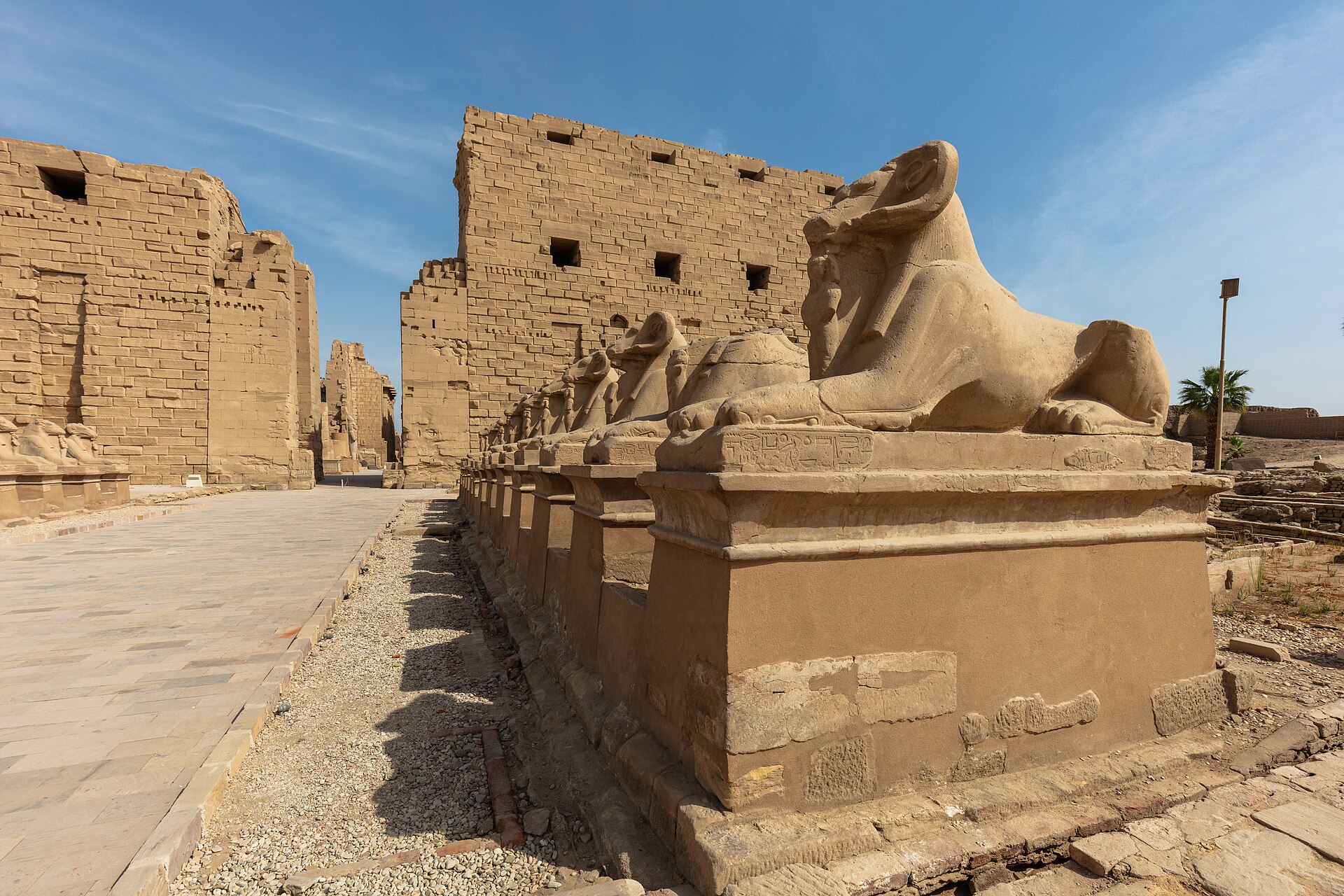
Luxor is the great stop halfway down: ancient Thebes, with the vast temple complex of Karnak, the Luxor temple in the heart of town, and across the river the Valley of the Kings and the tomb of Tutankhamun. Many travellers break the journey here for a day or two.Diego Delso, delso.photo, License CC BY-SA · Wikimedia CommonsAswan and Abu Simbel
At the end of the line, Aswan is the gentlest of Egyptian cities — feluccas on the Nile, the island temple of Philae, and the great High Dam. From here the classic excursion runs south to Abu Simbel, where Ramesses II carved four giants of himself out of the cliff.Timetables
The sleeper runs every day, all year, in both directions — the classic pair is train 86 southbound and train 87 northbound — leaving in the evening and arriving the next morning. Abela runs several sleeper departures each evening on this route, so 86/87 are the times to plan around rather than the only ones available.
The Cairo end has moved. These trains no longer use Cairo Ramses. Since late 2024 they start from Bashteel, also signed as Upper Egypt station, a new terminus out in the Giza governorate on the west side of Greater Cairo — so allow for the cross-city journey, and don't turn up at Ramses. All trains then call at Giza twenty minutes later, which is the more convenient boarding point if you are staying near the pyramids.
Real times (as of August 2026 — confirm before travelling):
| Train 86 (southbound) | Train 87 (northbound) | |
|---|---|---|
| Cairo Bashteel (Upper Egypt) | dep 19:45 | arr 06:25 |
| Giza | dep 20:15 | arr 06:05 |
| Luxor | arr 06:10 | dep 20:35 |
| Edfu | arr 07:40 | dep 18:55 |
| Kom Ombo | arr 08:40 | dep 18:00 |
| Aswan | arr 09:25 | dep 17:15 |
So it is a genuine overnight: away from Cairo after dinner, breakfast on the cabin table as the Nile Valley temples begin, and into Aswan mid-morning — about 13–14 hours end to end. Cabins are lockable two-berth with a washbasin; dinner and breakfast are included.
If you would rather see the valley in daylight, fast day trains run the same Cairo–Luxor–Aswan route — a long day in an ordinary seat, but the whole Nile in the window.
The sleeper has a limited number of cabins per train and sells out in the busy season (roughly October to April), so book ahead — a train that is full online is full at the station too.
Times as of August 2026, from the operator's published schedule. Confirm current schedules and fares with the operator — see the Tickets section below.
Tickets
The sleeper is sold separately from Egypt's ordinary trains and is priced per cabin, with dinner and breakfast included in the fare. It is run by Abela Trains (which took over Egypt's sleeping-car service in 2023, having previously traded as Watania), and the simplest way to book is directly through the operator's website. Fares are quoted in a foreigner tariff distinct from the domestic price, so buy the sleeper as its own ticket rather than assuming a rail pass will cover it.
Cabins come in three vintages, and it is worth knowing which you are booking: the newest Elite interiors, refurbished in 2025–26; the Spanish cabins, refitted in the 2000s; and the original German interiors from the 1980s. All are lockable two-berth compartments with a washbasin and the same meal service — the difference is age and polish, not the view. Abela also sells the Luxor–Aswan stretch of the same trains on its own, a little over three hours with a light snack, and dinner and breakfast in the Elite Royal Club Car as an optional extra.
Book well ahead in the October-to-April high season, when the limited cabins fill quickly. The options below link to Abela Trains, the operator. Details checked October 2026 against abelatrains.com (opens in a new tab); confirm cabins, times and fares before you travel.
Book your tickets
The Nile Sleeper · Cairo to Aswan
Two-berth cabin, dinner & breakfast
The overnight service in a lockable two-berth cabin with a washbasin, dinner and breakfast included, leaving Cairo in the evening and reaching Aswan next morning by way of Luxor, Edfu and Kom Ombo. Booked directly with the operator, Abela Trains.
Book Tickets (opens in a new tab, on Abela Trains)via Abela Trains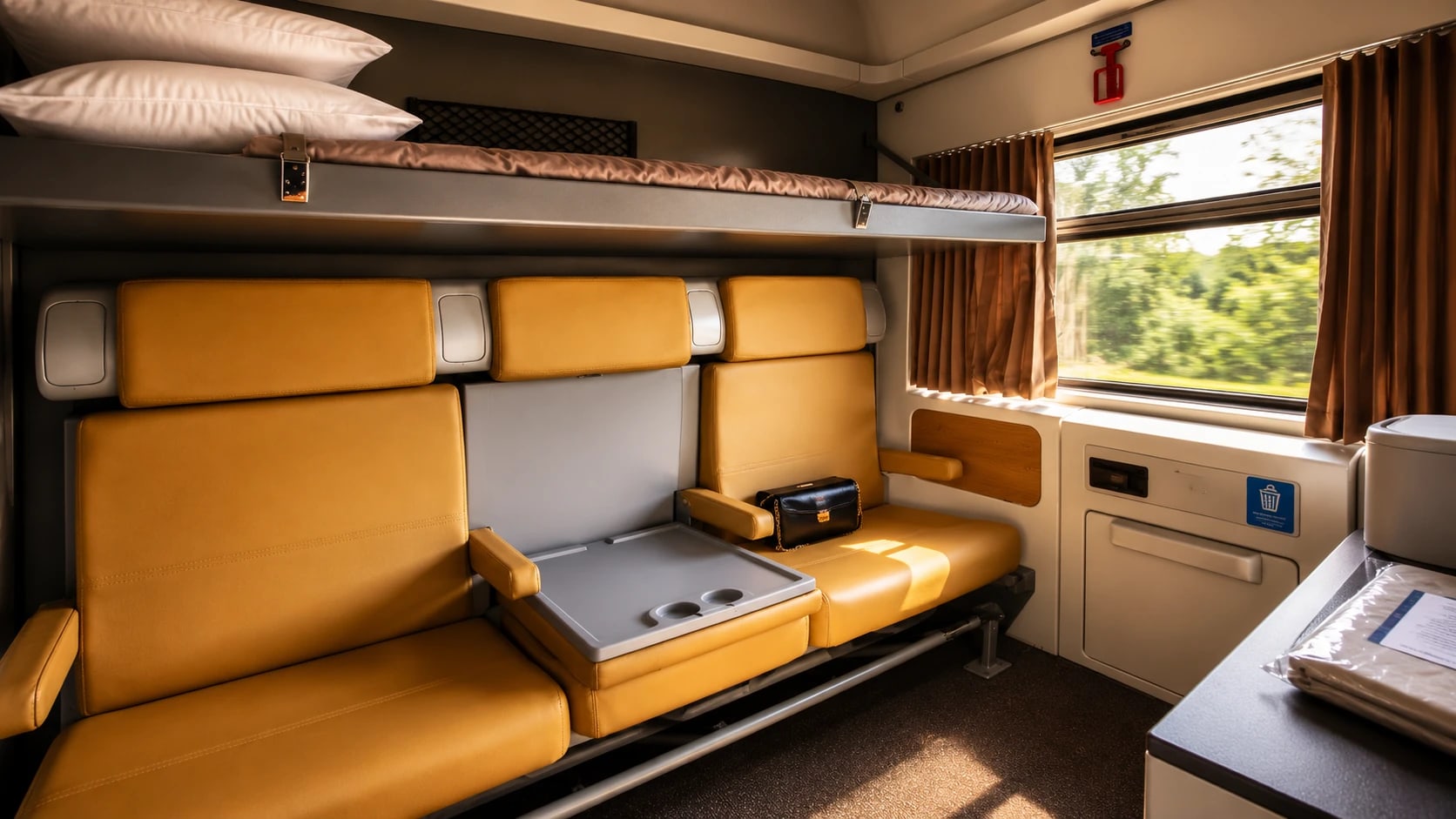 Abela Trains
Elite cabin
The newest refit
Abela's most recently refurbished cabins (2025–26), the smartest way to travel the line, with the same dinner-and-breakfast service and the same view of the Nile at dawn. Reserve with the operator alongside the standard sleeper.
Book Tickets (opens in a new tab, on Abela Trains)via Abela TrainsRail Passes
No rail pass covers the sleeper. Interrail and Eurail are European schemes, and Egypt is not among the 33 countries in Interrail's list of covered railway companies (opens in a new tab). Abela Trains sells the sleeper by the cabin, dinner and breakfast included, at a tariff for foreign visitors.
Checked October 2026 against Interrail's list of covered railway companies (opens in a new tab).
Places to Visit
The whole point of this train is what waits along it. The line strings together the great sites of the Nile, and any of them will reward a day off the sleeper.
Taken together they are several days of the finest antiquities on earth, and the sleeper is the thread that runs through them. Most travellers work southwards — Cairo, then Luxor for two or three nights, then Aswan — and pick up Abu Simbel as a day trip from the far end. If you have less time, Luxor alone justifies the ride.
The one thing worth knowing before you book: the temples at Edfu and Kom Ombo stand almost on the track, and southbound you pass them over breakfast in the early morning — but the sleeper does not stop long enough to visit either. Cruise boats moor at both; train travellers generally see them on a road excursion from Luxor or Aswan. Plan for that rather than expecting the train to set you down at the gate.
 kallerna / Wikimedia Commons · CC BY-SA 4.0 · cropped
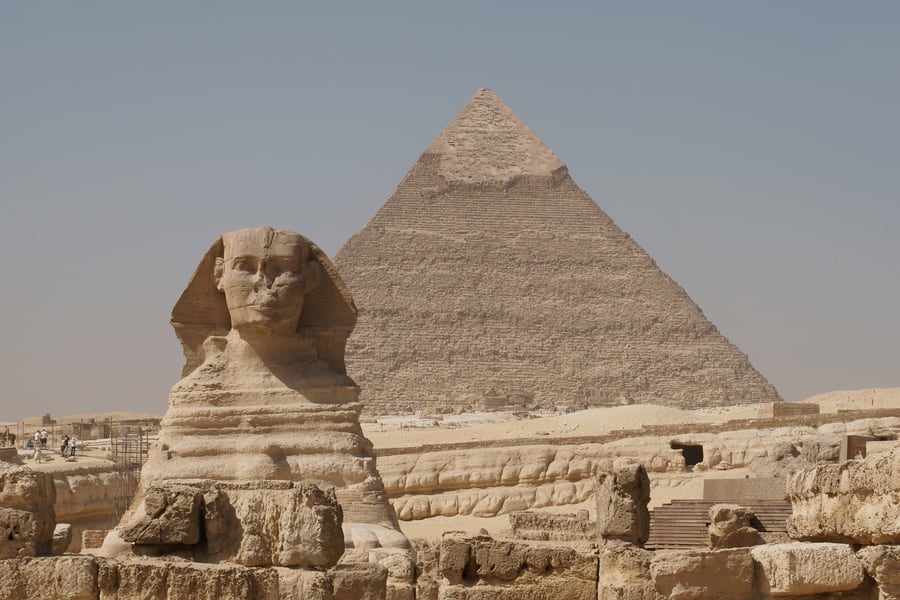
Giza
The plateau sits on the edge of the city, close to Giza station where the sleeper makes its second call, and it is the reason most people come. Khufu's Great Pyramid and Khafre's — still wearing its cap of casing stone — stand above the Sphinx, carved from a single outcrop of limestone and facing the sunrise. Go early or late: the light is better, the coach parties thinner, and the desert edge is a short walk from the last streets of Giza.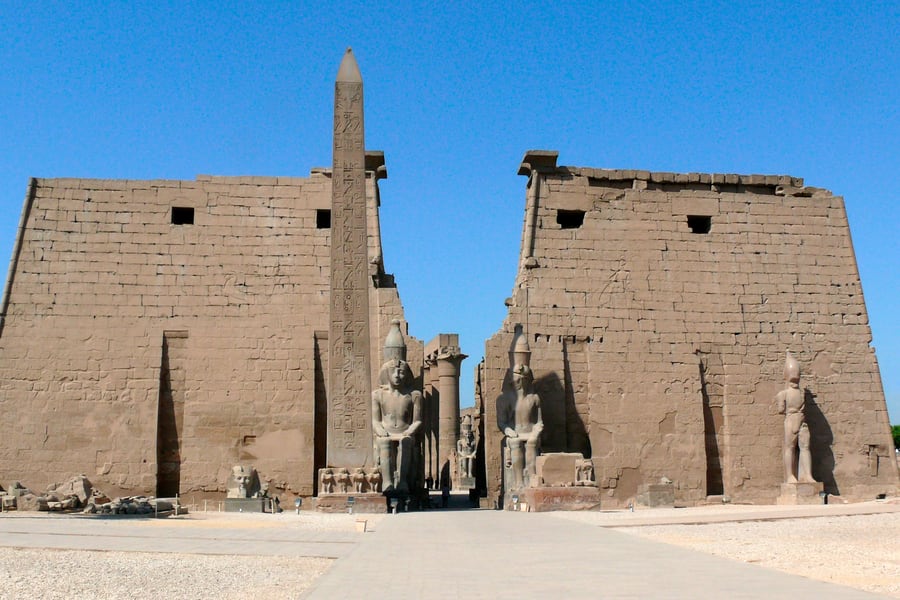 Ad Meskens / Wikimedia Commons · CC BY-SA 3.0 · cropped
Luxor Temple
Unlike Karnak, this one stands in the middle of the modern town, floodlit after dark and a five-minute walk from the station. Begun around 1400 BC under Amenhotep III and enlarged by Ramesses II, it is fronted by colossi and a single obelisk — its twin has stood in the Place de la Concorde in Paris since the 19th century. The Abu Haggag Mosque still sits on top of the ancient columns, worship unbroken for 3,400 years.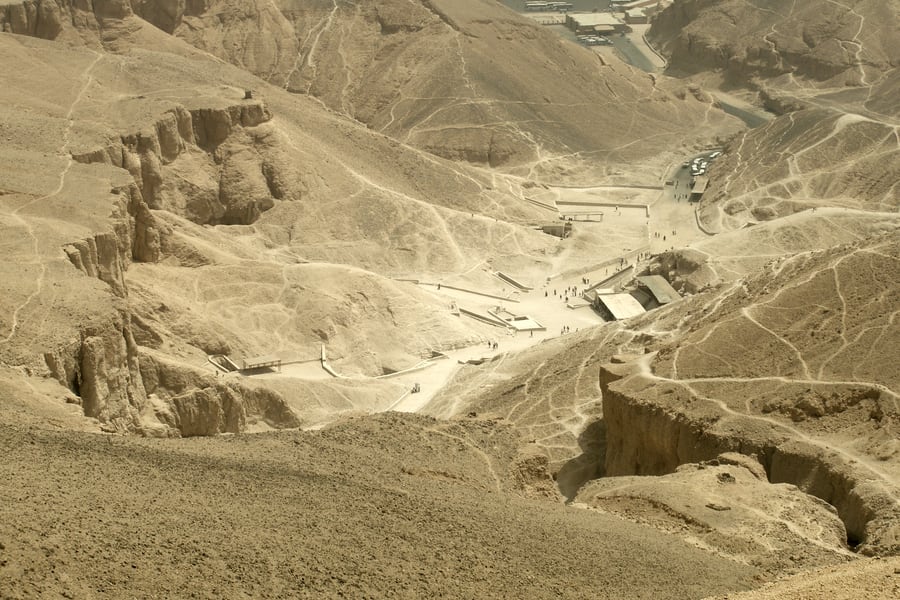 © Vyacheslav Argenberg / http://www.vascoplanet.com/ · CC BY 4.0 · cropped
Valley of the Kings
Across the river, the pharaohs of the New Kingdom cut their tombs into a dry limestone valley for nearly 500 years, from about 1539 to 1075 BC. 65 tombs and chambers are known; only about eighteen can be opened to visitors and they are rarely all open at once, so what you see is luck as much as planning. Tutankhamun's, found by Howard Carter in November 1922, needs a separate ticket, as does the West Valley.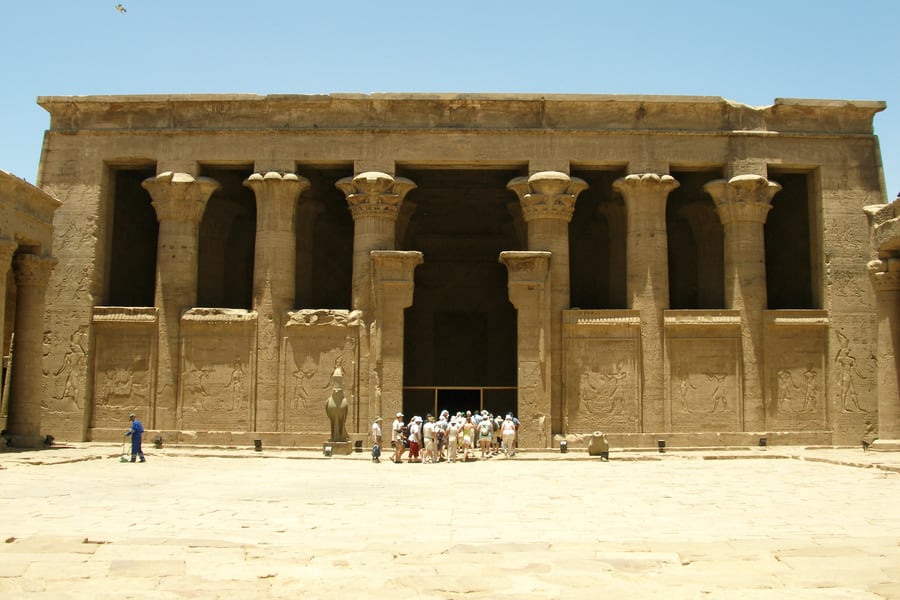 © Vyacheslav Argenberg / http://www.vascoplanet.com/ · CC BY 4.0 · cropped
Edfu
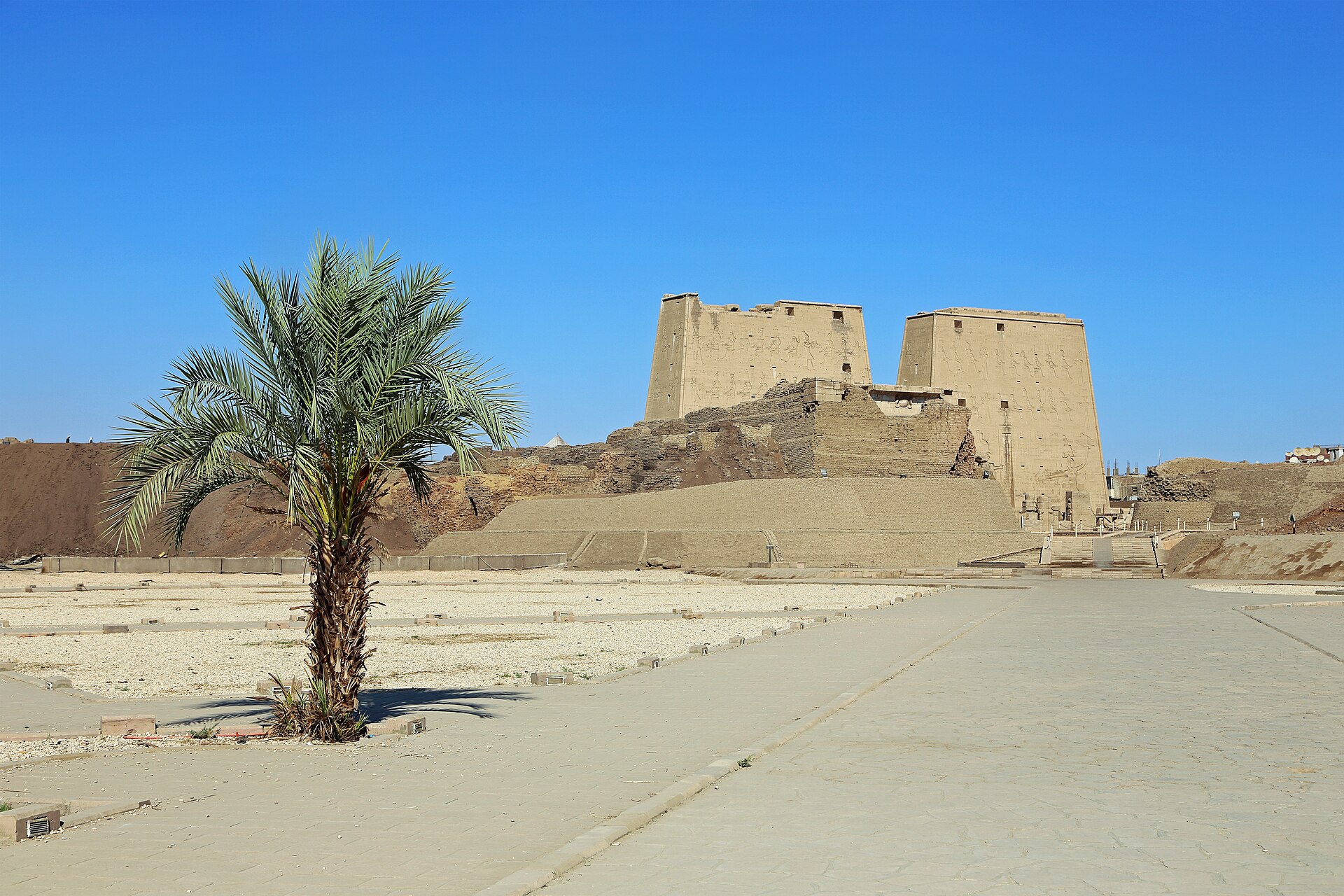
The most complete ancient temple in Egypt, and the line runs past it. Work began on 23 August 237 BC under Ptolemy III and finished in 57 BC under Ptolemy XII — 180 years of building. It survived because it vanished: 12 metres of drifting sand and Nile silt buried it until Auguste Mariette dug it out from 1860. Roof, walls and columns all stand, which almost nowhere else in Egypt can claim.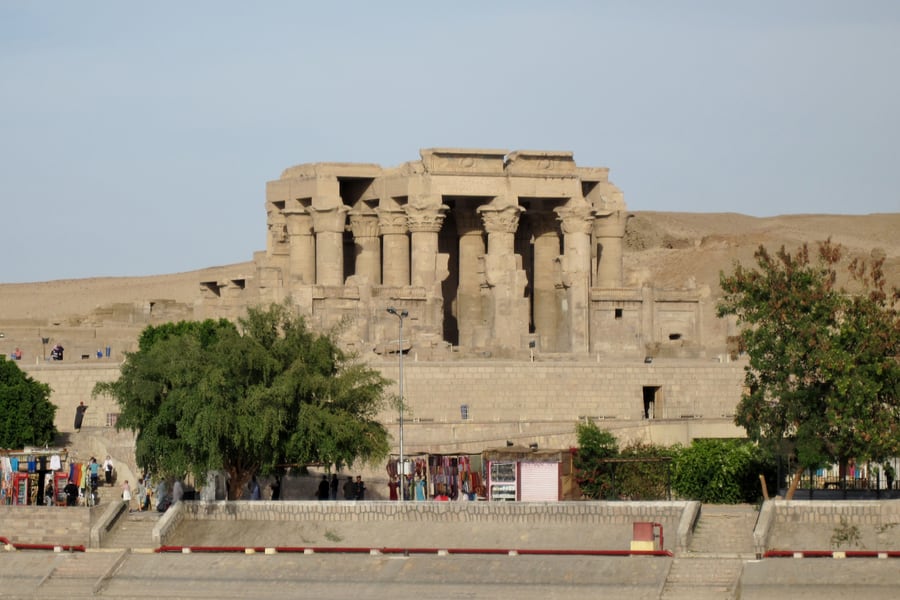 Olaf Tausch / Wikimedia Commons · CC BY 3.0 · cropped
Kom Ombo
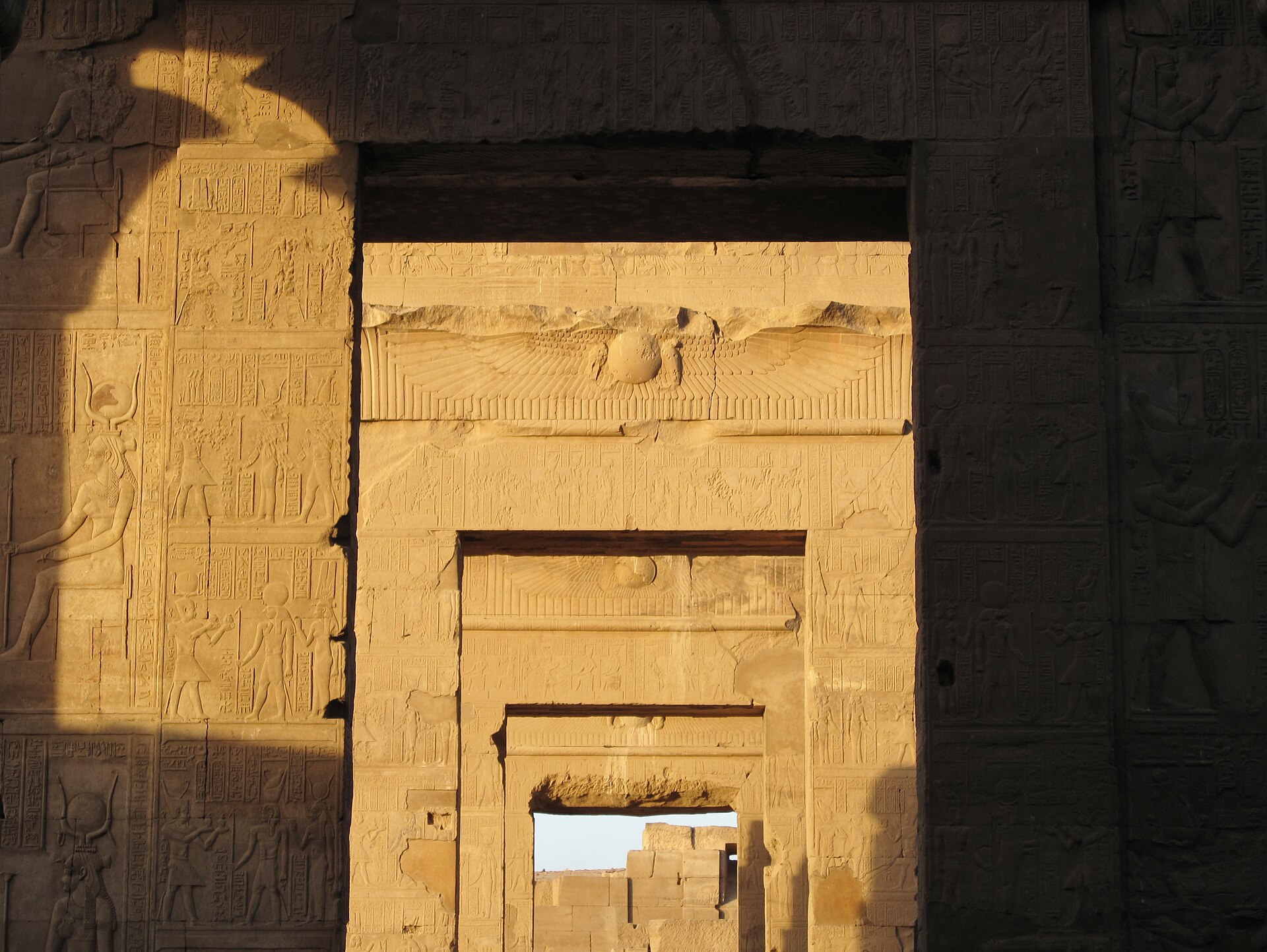
Built between about 180 and 47 BC, this Ptolemaic temple stands right on the riverbank between Edfu and Aswan — and it is two temples in one. The southern half belongs to the crocodile god Sobek, the northern to the falcon-headed Haroeris, with courts, halls and sanctuaries doubled all the way through. A relief on the inner rear wall appears to show surgical instruments; a museum beside it holds mummified crocodiles from the site.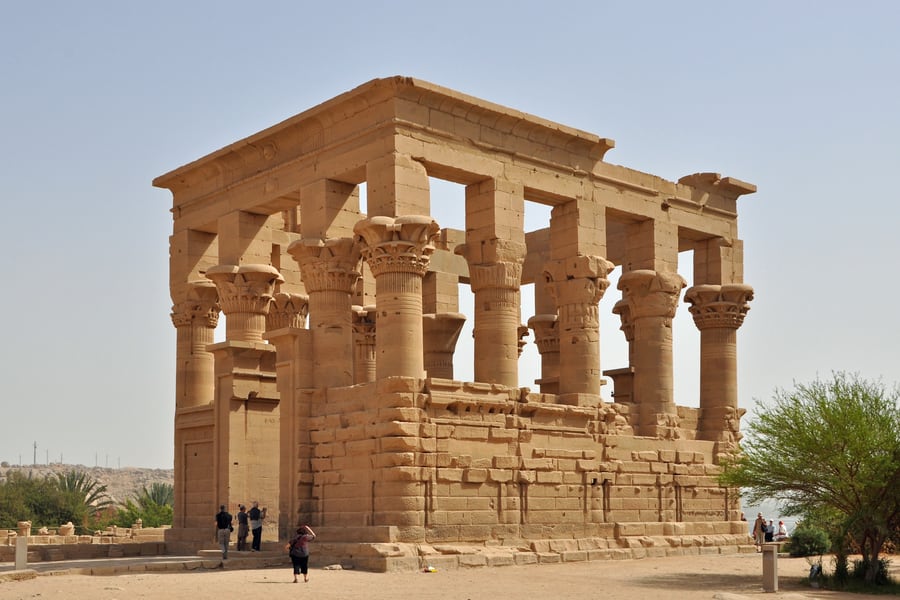 Marc Ryckaert / Wikimedia Commons · CC BY 3.0 · cropped
Philae
The temple of Isis is not where it was built. When the High Dam threatened to drown it, a UNESCO campaign took the complex apart into some 40,000 pieces between 1977 and 1980 and rebuilt it on Agilkia Island, about 12 metres higher. You reach it by boat from Aswan. Trajan's Kiosk, the roofless colonnade on the water's edge, is the image everyone knows. Isis was worshipped here until AD 537.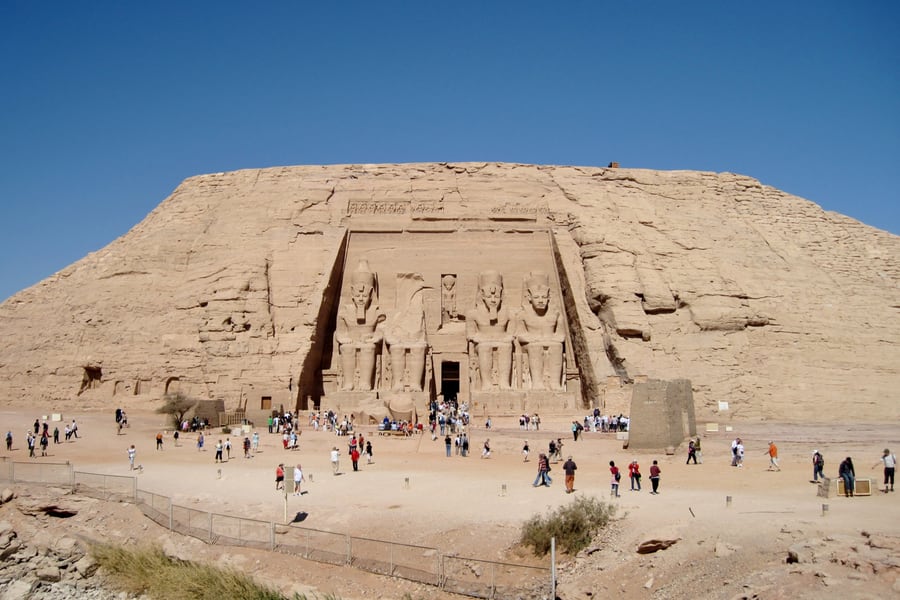 Olaf Tausch / Wikimedia Commons · CC BY 3.0 · cropped
Abu Simbel
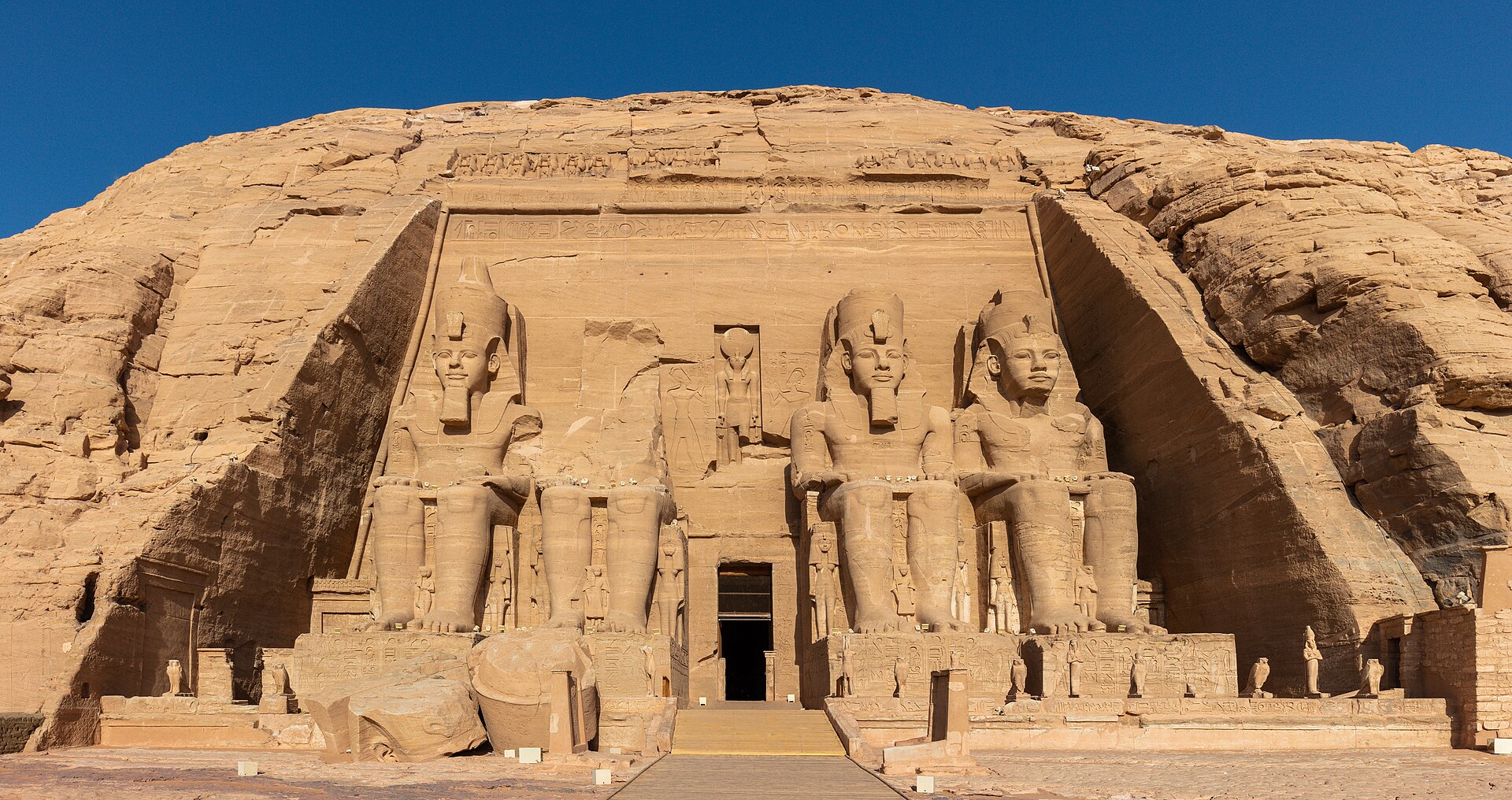
Ramesses II cut two temples into the cliff here in the 13th century BC, the greater one fronted by four seated colossi of himself, 20 metres high. The whole thing was sawn up and moved in 1968 — the Great Temple 208 metres inland and 65 metres higher — and the hill it now stands in is artificial, built from 300,000 tons of the original mountain. On 22 February and 22 October the sun still reaches the inner sanctuary.Where to Sleep
On the night you travel, your bed is the train — a berth in a two-berth cabin, which is much of the charm. Where to sleep is really a question of the ends and the stops. In Cairo, stay near the centre or Giza for an easy evening departure; the city has hotels at every level, from backpacker hostels to grand old Nile-side names. Luxor and Aswan are the two places most travellers break the journey, and both are lovely to linger in: Luxor for the temples and the west-bank tombs, Aswan for the slow river and the feluccas. Aswan in particular has some of Egypt's most romantic hotels, including a famous old pile above the cataract where Agatha Christie is said to have written. Because the sleeper connects the three so neatly, the usual plan is a night on the train down, then a night or two each in Luxor and Aswan on the way back. Bear in mind that Upper Egypt is very hot from May to September; the comfortable season for both the train and the sightseeing is October to April, which is also when beds and cabins are in shortest supply — so book ahead.
Questions or corrections
Planning this trip and stuck on something, or spotted a time, fare or detail that has changed? Send us a message about Cairo to Aswan Sleeper. We read every one, and we update this page when something has changed.