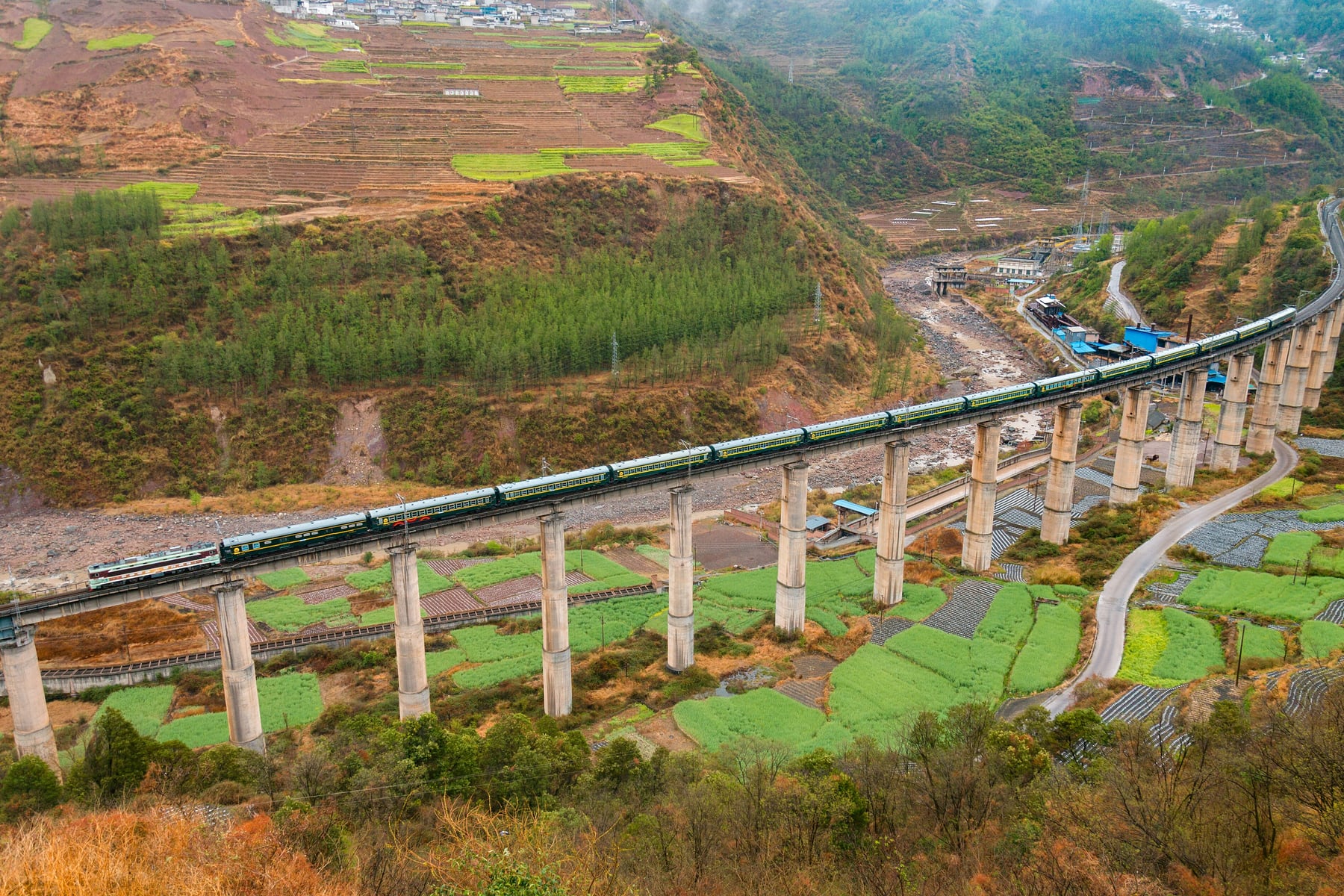
The Chengdu–Kunming Railway
Saigyouji-Noriko / Wikimedia Commons · CC BY-SA 4.0 · 2025 · cropped
- Distance616 km, Emei to Panzhihua South
- DurationTwo days, with a night in Puxiong
- Best seasonMarch to May, and October
Introduction
The Chengdu–Kunming railway — 成昆铁路, Chéngkūn Tiělù — opened on 1 July 1970 after twelve years of stop-start work, 1,083 kilometres through the gorges of the Dadu and Anning rivers and across a major fault zone. When it opened, its 427 tunnels and 991 bridges made up 41.6 per cent of the line. Since 26 December 2022 a new double-track railway has carried the through traffic in about six hours, and the old line south of Emei is left mostly to freight.
Two passenger trains still use it. The 5619 runs from Emei to Puxiong, and the 5633 from Puxiong to Panzhihua South. Both stop at every station and take most of a day, and their passengers are mostly the Yi people of the Liangshan mountains, travelling to school, to market or to see family. The whole 616 kilometres costs ¥45 in hard seat, and the shortest hop costs ¥2.
This page rides both trains, with a night in Puxiong in between, and comes back by high-speed train in about four and a half hours.
The Journey
Day one: Emei to Puxiong on the 5619
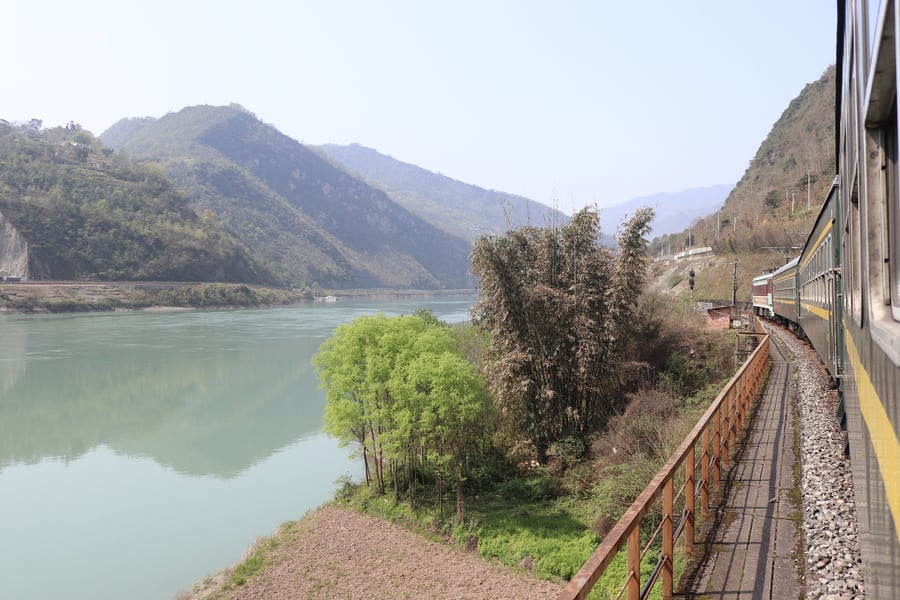
The 5619 leaves Emei at 09:08 and within an hour is in the valley of the Dadu River, running along its left bank past Shawan and Ebian. After Jinkouhe the valley closes into a gorge, and the line runs from tunnel to tunnel along the cliffs. Guancunba, at 12:12, is the first station in China built partly inside a tunnel, and it is where the 5619 meets the 5620 coming the other way. A few kilometres on, the Yixiantian Bridge crosses a side gorge so narrow that from the bottom you see only a strip of sky.
Past Hanyuan the line turns up the Niuri River, a short, steep valley where debris flows have cut the railway more than once, most recently in 2019 and 2020. Beyond Baiguo it climbs the Naituo spiral, three levels of track that gain 196 metres to Naituo station, and then crosses the valley on the high Tiema Bridge. The train reaches Puxiong at 16:42.
Day two: over the watershed on the 5633
The 5633 leaves Puxiong at 07:15 and climbs to the Shamalada Tunnel, 6,379 metres long and 2,280 metres up. It was the longest railway tunnel in China when it was holed through in 1966, and it carries the line under the watershed between the Dadu and the Anning. On the far side the line runs down the Sunshui River to Xide and into the broad Anning valley, among fields and wind turbines, to Xichang at 11:10. After a 24-minute stop at Xichang South it carries on down the Anning, past Dechang and Miyi, to Panzhihua South at 16:33. Xinhua puts the average speed at under 40 km/h.
The train
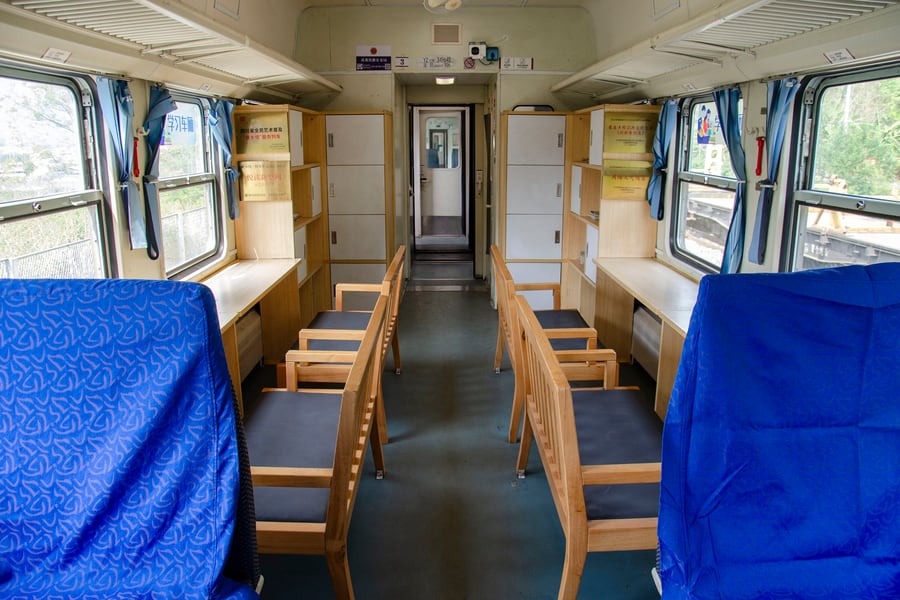
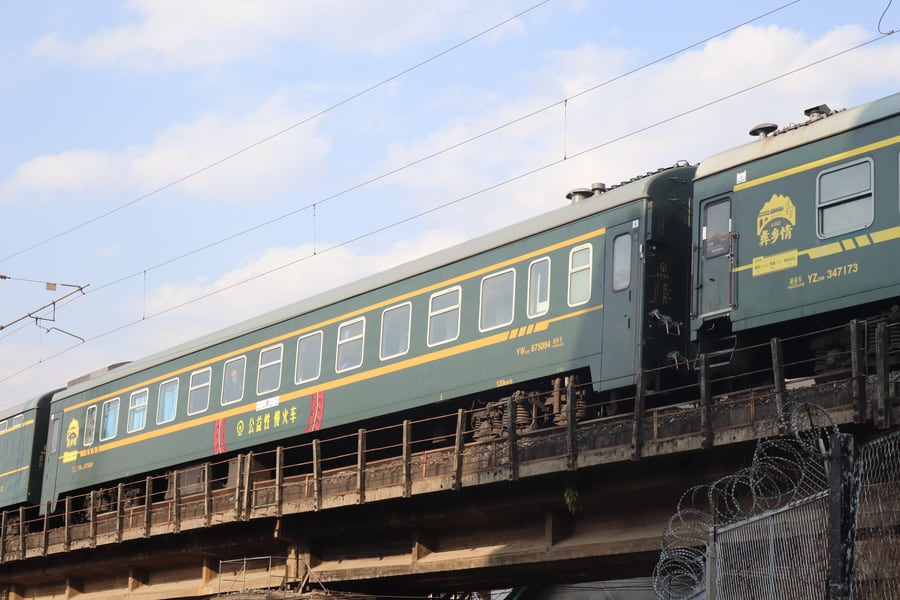
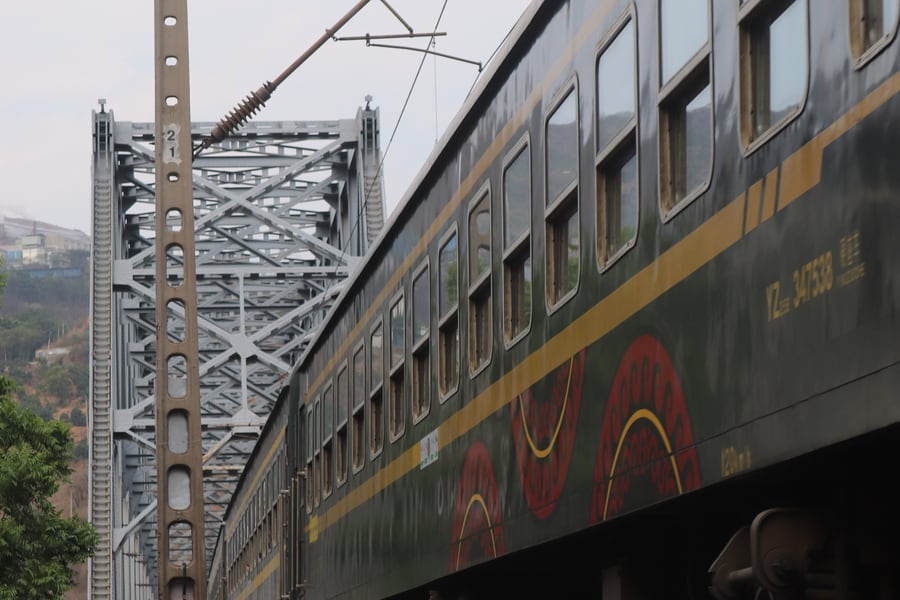
The two trains share one set of hard-seat coaches, types 25B and 25G, in green with a yellow stripe. In recent years they have usually run behind an SS3 or SS3B electric locomotive, and an HXD3C was photographed on the 5633 in January 2026. Since early 2023 the coaches have carried the name Yixiangqing — 彝乡情, feeling for the Yi homeland — and include a study carriage with desks and bookshelves for children going to school, and a carriage for large luggage, where passengers travel with baskets of produce and live poultry.
Along the route
 MNXANL / Wikimedia Commons · CC BY-SA 4.0 · 2023 · cropped
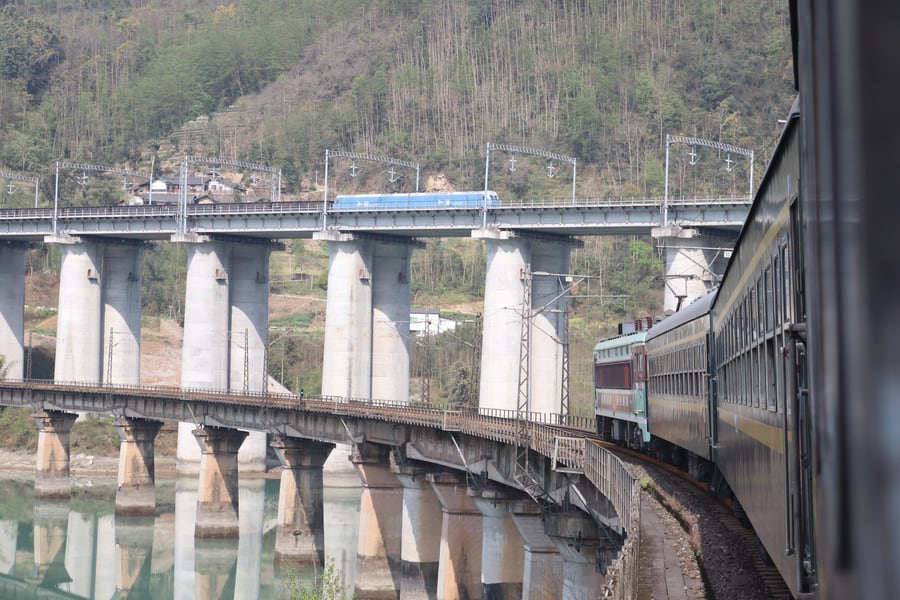
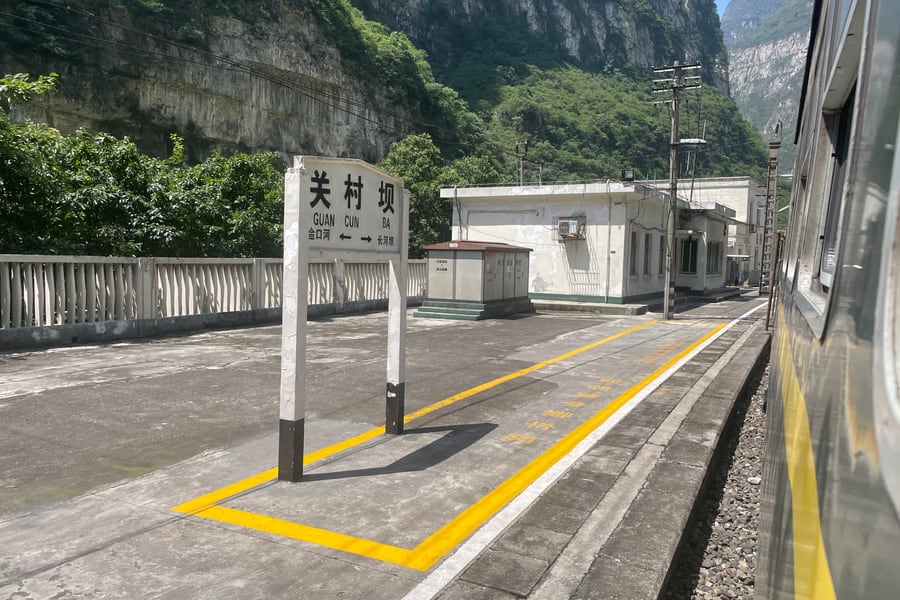
Guancunba, the station in a tunnel
Built in 1966 deep in the Jinkou canyon, Guancunba was the first station in China laid out partly inside a tunnel. The 5619 and 5620 cross here every day, and the Railway Corps Museum stands beside it.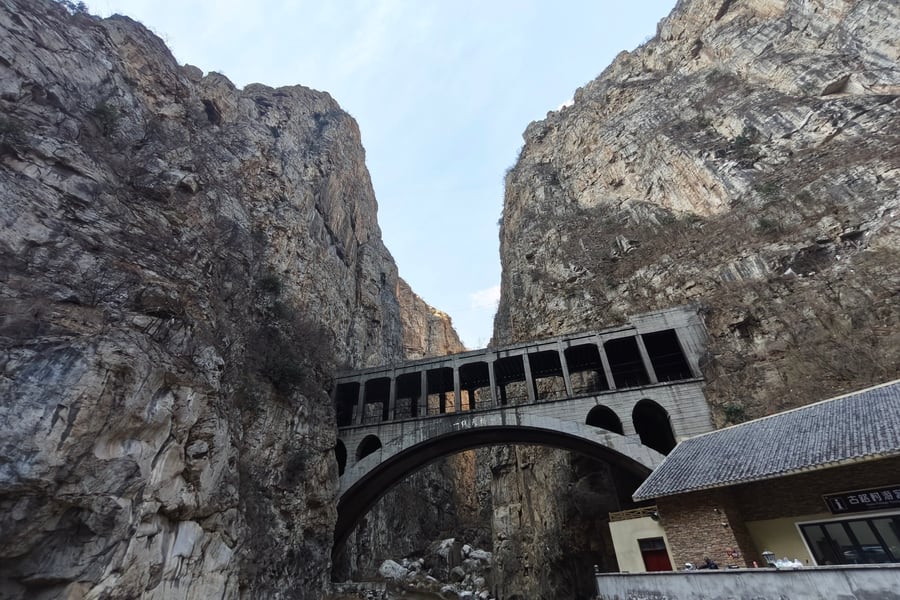 Liuxingy / Wikimedia Commons · CC BY-SA 4.0 · 2026 · cropped
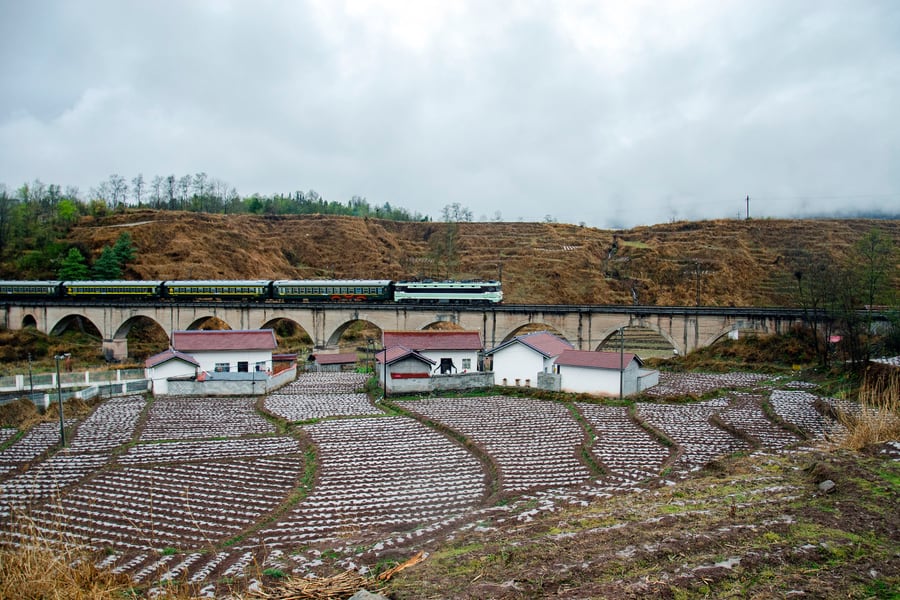
The Yixiantian Bridge
A stone arch with a 54-metre span, built in 99 days in 1966 across a gorge about 50 metres wide and over 200 deep. No stone railway arch in China had a wider span, and it now carries a roof against falling rock.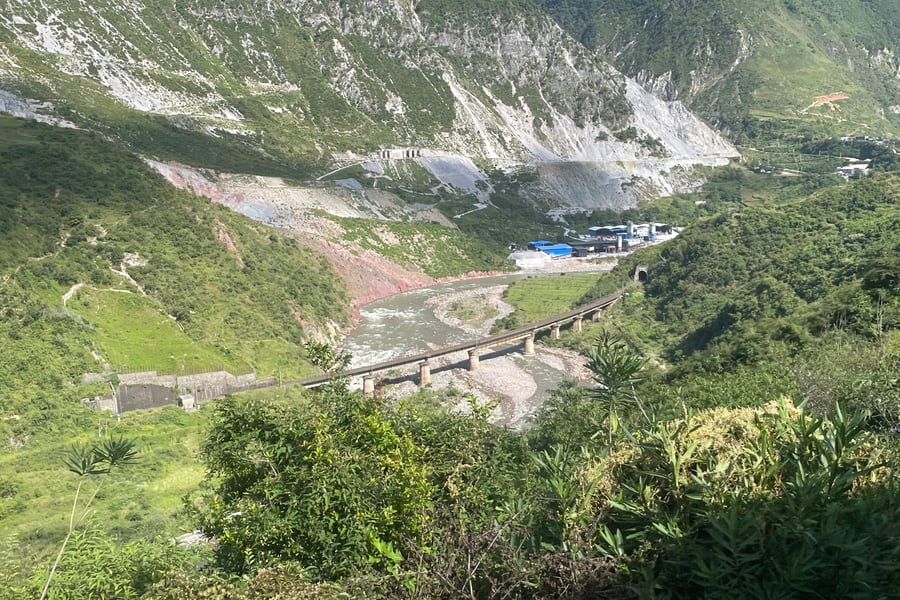 MNXANL / Wikimedia Commons · CC BY-SA 4.0 · 2023 · cropped
The Naituo spiral
Between Baiguo and Naituo the line climbs 196 metres on three levels of track. Just beyond Naituo station it crosses the valley on the high Tiema Bridge, the one in the picture at the head of this page.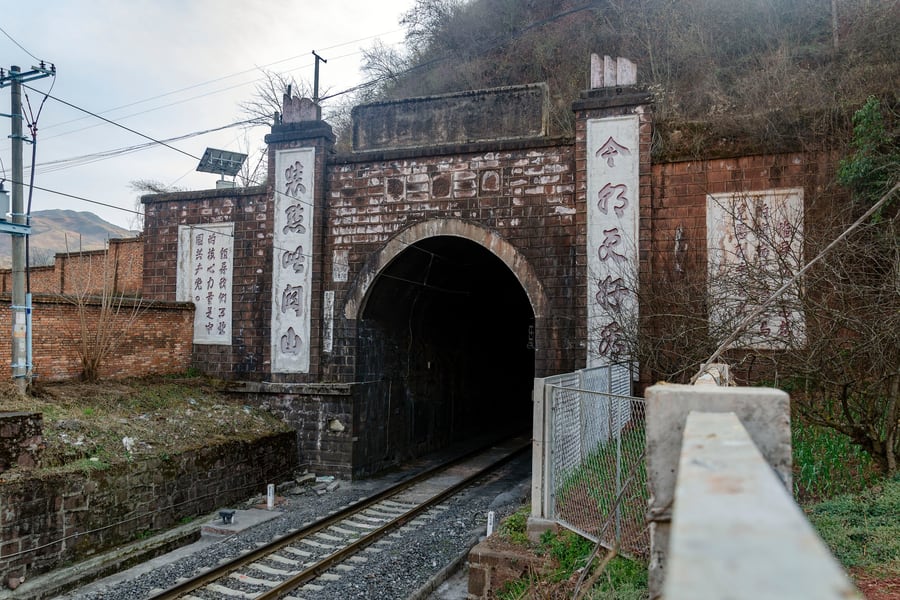 Saigyouji-Noriko / Wikimedia Commons · CC BY-SA 4.0 · 2025 · cropped
The Shamalada Tunnel
At 2,280 metres the 5633 passes under the watershed between the Dadu and the Anning. The tunnel is 6,379 metres long, and when it was holed through in 1966 it was the longest railway tunnel in China.A bit of history
Culture & experiences along the way
 MNXANL / Wikimedia Commons · CC BY-SA 4.0 · 2023 · cropped
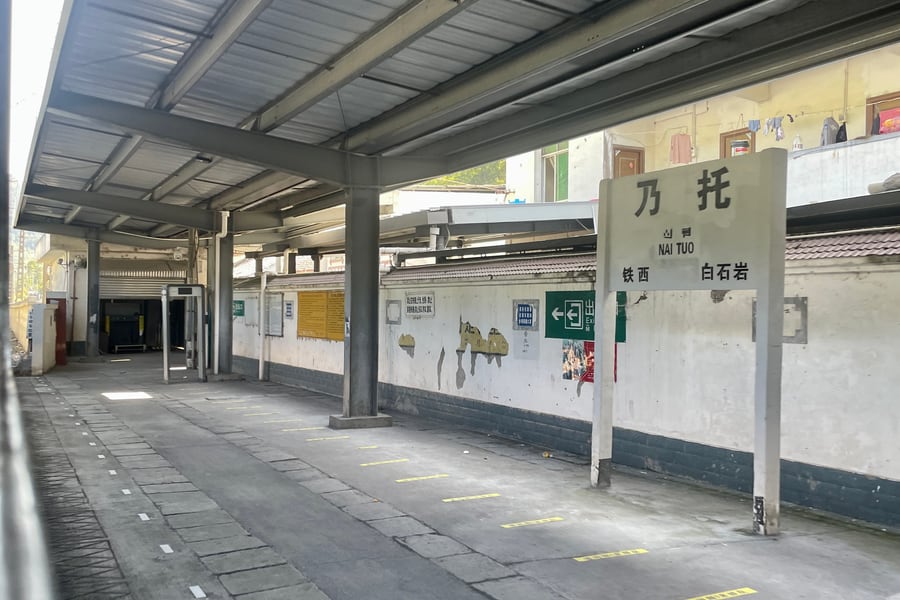
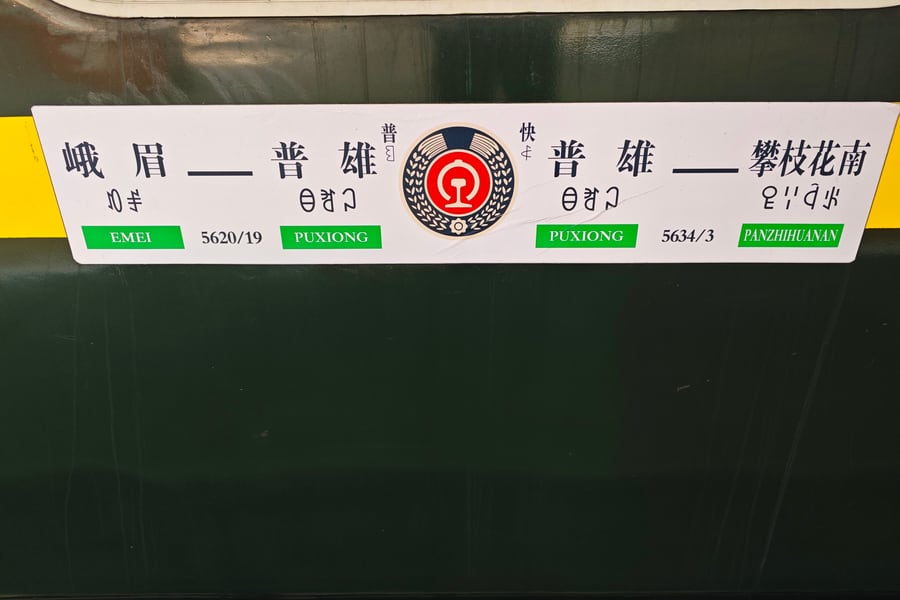
Three scripts on the nameboard
Station names in Liangshan are written in Yi as well as Chinese and pinyin. Naituo's is ꆻꄧ, liet tuo. The script is the Liangshan standard Yi syllabary, drafted from the traditional script in 1974 and approved by the State Council in 1980, and it is used on official signs across the prefecture.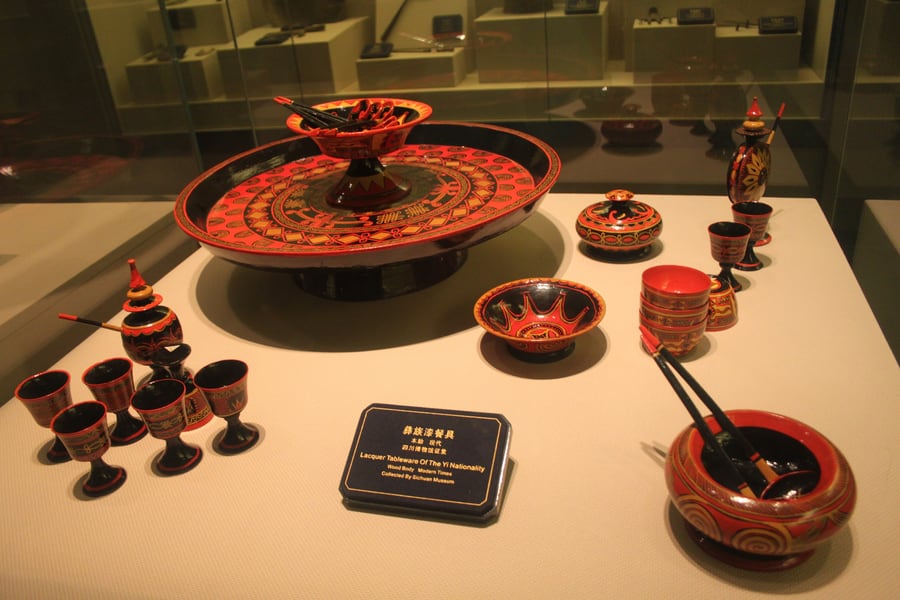 Gary Todd / Wikimedia Commons · CC0 · 2010 · cropped
Yi lacquerware from Xide
Xide, where the 5633 calls at 09:53, is the home of Yi lacquerware, listed as national intangible heritage in 2008. Bowls, cups and trays are painted in three colours only — red, yellow and black — with patterns of sun, moon and mountains, and a piece can take forty stages to make.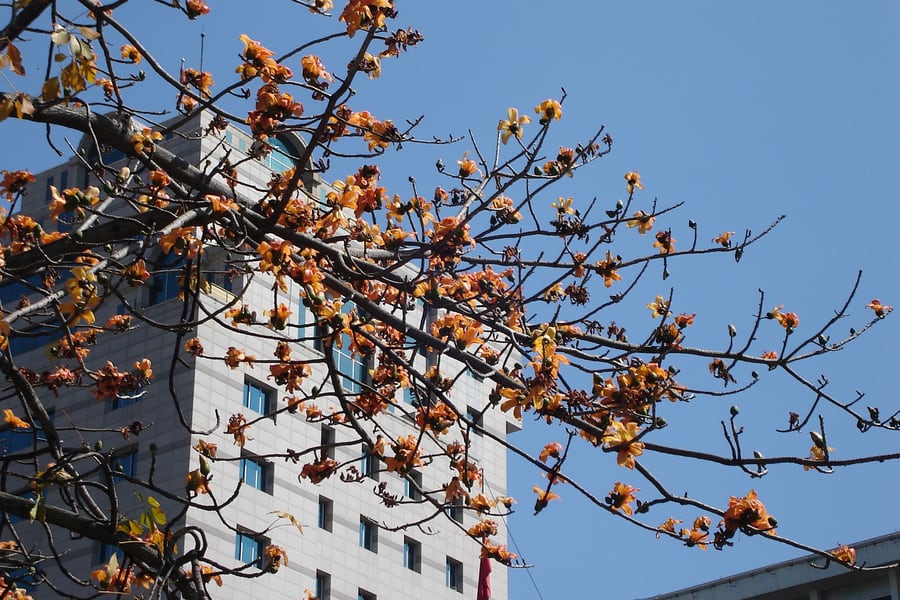 Freezeblue / Wikimedia Commons · CC BY-SA 3.0 · cropped
The city named after a flower
Panzhihua is the only city in China named after a flower. Panzhihua is a Chinese name for the kapok tree, which blooms orange-red on bare branches from February to April, before its leaves come out. The city was founded in 1965 to mine the iron ore the railway was built to reach.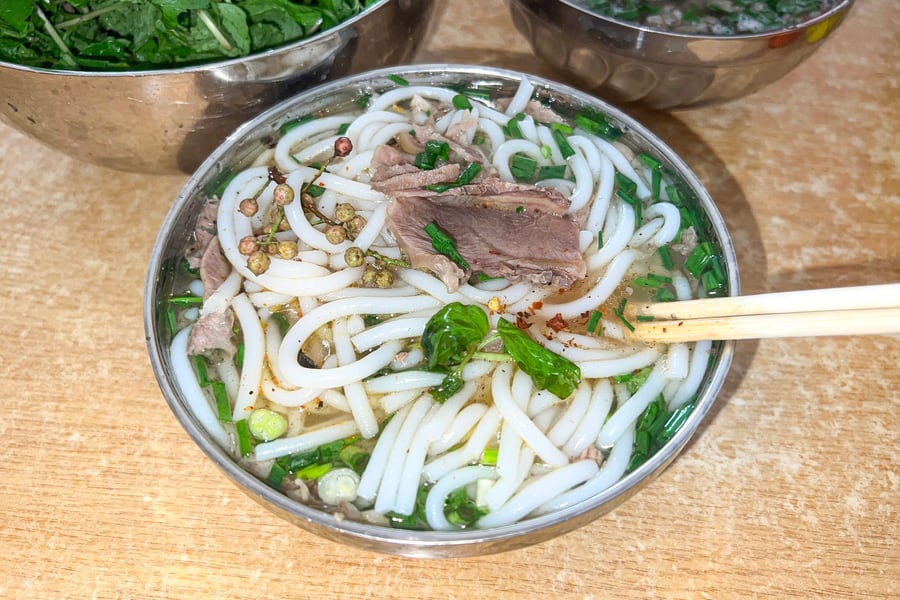 N509FZ / Wikimedia Commons · CC BY-SA 4.0 · 2023 · cropped
Mutton rice noodles
Panzhihua starts the day with mutton rice noodles from Yanbian county, made by the rule of "one big, two white, four green": big slices of mutton, white noodles in a white broth, and green Sichuan pepper, spring onion, coriander and mint on top. In 2021 they were named among Sichuan's hundred dishes for travellers.Timetables
Both slow trains run daily and stop at every station; the tables give departure times. Times are from 12306 for Thursday 15 and Sunday 18 October 2026, and were the same on both days — as of October 2026.
| 5619 | Emei → Puxiong |
|---|---|
| Emei | 09:08 |
| Jinkouhe | 11:59 |
| Guancunba | 12:14 |
| Hanyuan | 12:42 |
| Ganluo | 14:04 |
| Naituo | 15:38 |
| Puxiong | 16:42 |
| 5633 | Puxiong → Panzhihua South |
|---|---|
| Puxiong | 07:15 |
| Xide | 09:53 |
| Xichang | 11:20 |
| Xichang South | 11:52 |
| Miyi | 14:47 |
| Panzhihua South | 16:33 |
The other way, the 5634 leaves Panzhihua South at 08:30 and reaches Puxiong at 17:33, and the 5620 leaves Puxiong at 08:00 and reaches Emei at 15:49. The 5620 does not set down or pick up at Guancunba, where it waits for the 5619.
Getting there and back. The D251 leaves Chengdu South at 07:05 and calls at Emei at 08:24, in time for the 5619. From Panzhihua South nineteen high-speed trains a day run to Chengdu, the first, C60, at 06:01, arriving at Chengdu East at 10:31.
12306 sells only about two weeks ahead, so later dates could not be checked. Times are published by the operator: China Railway · 12306 (opens in a new tab).
Tickets
The slow trains are hard seat only, and every ticket is sold on 12306 against your passport, with a standing ticket at the same price once the seats are gone. Emei to Puxiong is ¥18.5 and Puxiong to Panzhihua South ¥26.5; the shortest hop, Jinkouhe to Guancunba, is ¥2.
The high-speed run back from Panzhihua South to Chengdu East on the C60 is ¥199 in second class and ¥320 in first.
Book your tickets
 Liuxingy / Wikimedia Commons · CC BY-SA 4.0 · 2025 · cropped
Slow trains · Emei to Panzhihua South
¥18.5 to Puxiong, ¥26.5 on to Panzhihua South
Hard seat only, sold on 12306 against your passport, from ¥2 for one stop.
Book Tickets (opens in a new tab, on 12306.cn)via 12306.cn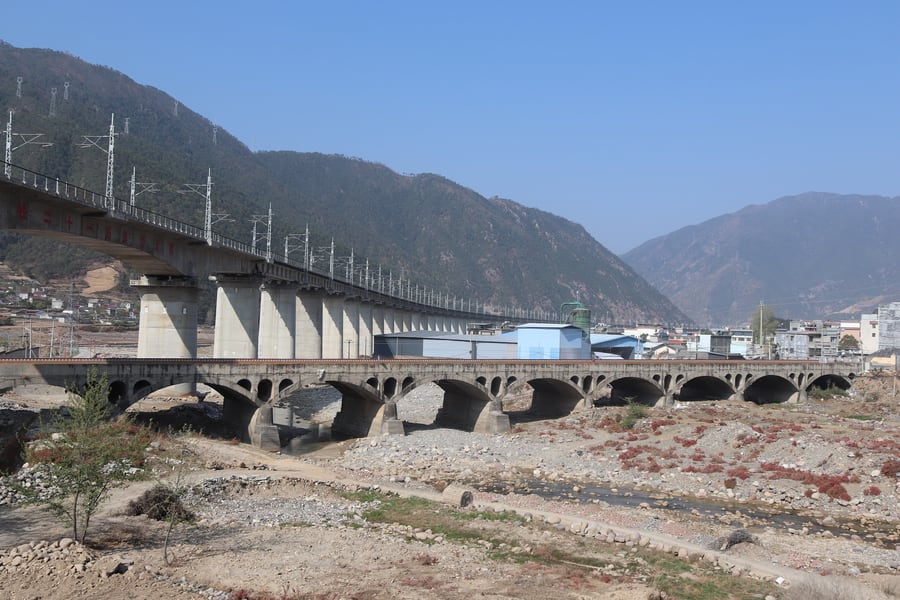 Liuxingy / Wikimedia Commons · CC BY-SA 4.0 · 2025 · cropped
High-speed · Panzhihua South to Chengdu
¥199 second class, ¥320 first, on the C60
The new line runs beside the old one for much of the way, and is back in Chengdu in about four and a half hours.
Book Tickets (opens in a new tab, on 12306.cn)via 12306.cnRail Passes
No rail pass covers this line. Interrail and Eurail are European passes and do not reach China, and China Railway sells its seats one journey at a time on 12306. At ¥45 for both slow trains there would be nothing for a pass to save.
Checked in October 2026.
Places to Visit
Mount Emei is above the town where the first train starts, and the Jinkou canyon is on the line itself, at Guancunba. Qionghai Lake is seven kilometres from the centre of Xichang, where the second train calls at two stations, and Panzhihua is where it ends.
 McKay Savage / Wikimedia Commons · CC BY 2.0 · 2006 · cropped
Mount Emei
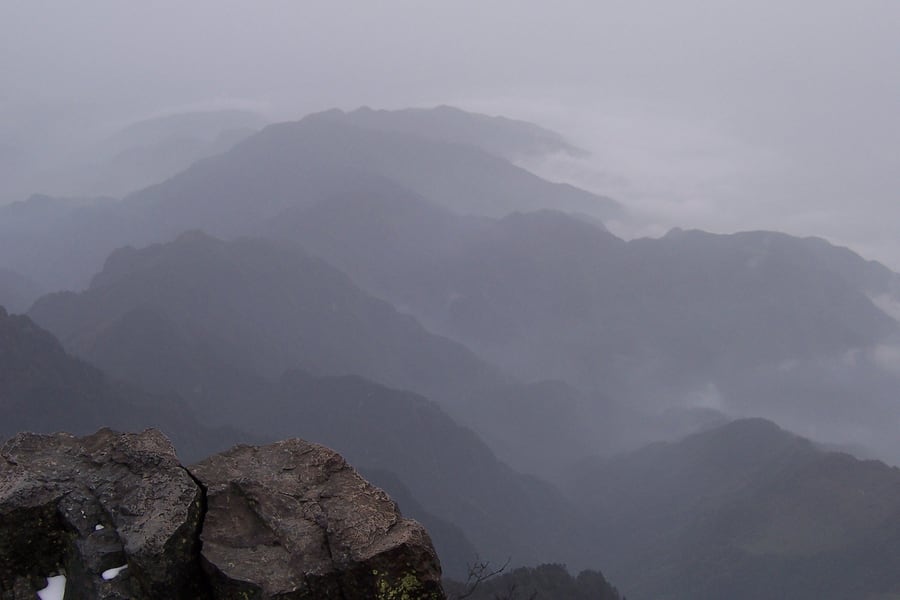
At 3,099 metres Emei is the highest of China's four sacred Buddhist mountains, held to be the place of enlightenment of the bodhisattva Puxian. The first Buddhist temple in China is said to have been built here in the first century, and 76 monasteries of the Ming and Qing remain. Cable cars run to the Golden Summit at 3,077 metres.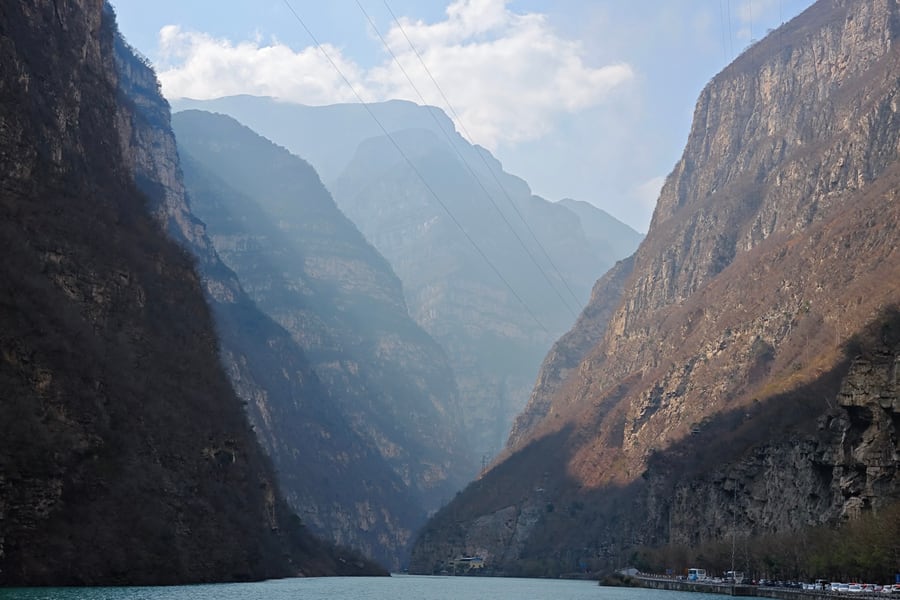 Liuxingy / Wikimedia Commons · CC BY-SA 4.0 · 2026 · cropped
The Jinkou canyon
The Dadu River's canyon at Jinkouhe is a national geopark, and the railway runs through the heart of it. Beside Guancunba station, halfway up the slope, the Railway Corps Museum keeps more than 1,100 objects from the soldiers who built the line. Below, the G245 road runs along the water, and boats now go into the canyon.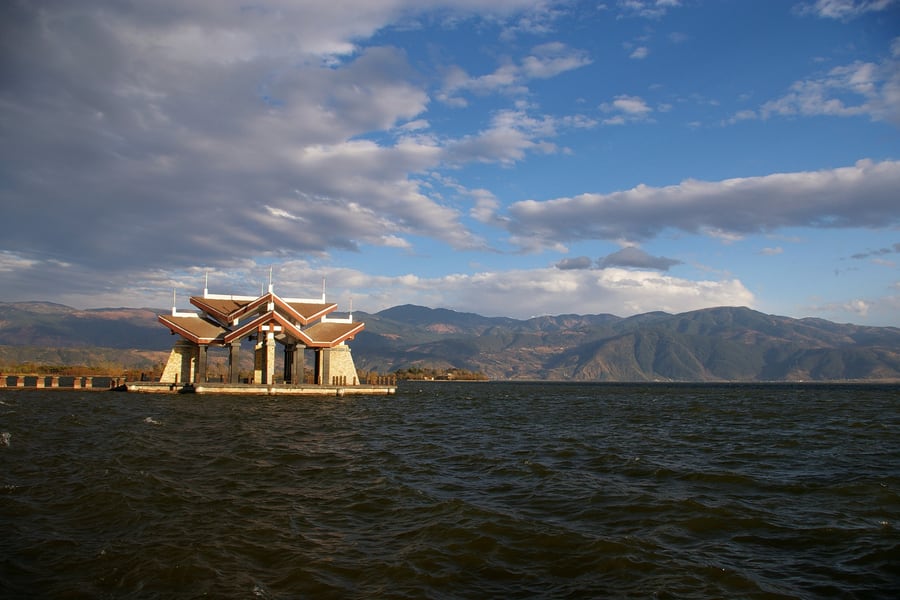 杨志强Zhiqiang / Wikimedia Commons · CC BY-SA 3.0 · cropped
Qionghai Lake
Sichuan's second-largest freshwater lake covers 27 square kilometres at the foot of Lushan, and is said to have formed when the ground sank in an earthquake in 116 BC. It is L-shaped and up to 18 metres deep. It is Xichang's water supply and the heart of a national scenic area, with a road and wetland parks along its shore.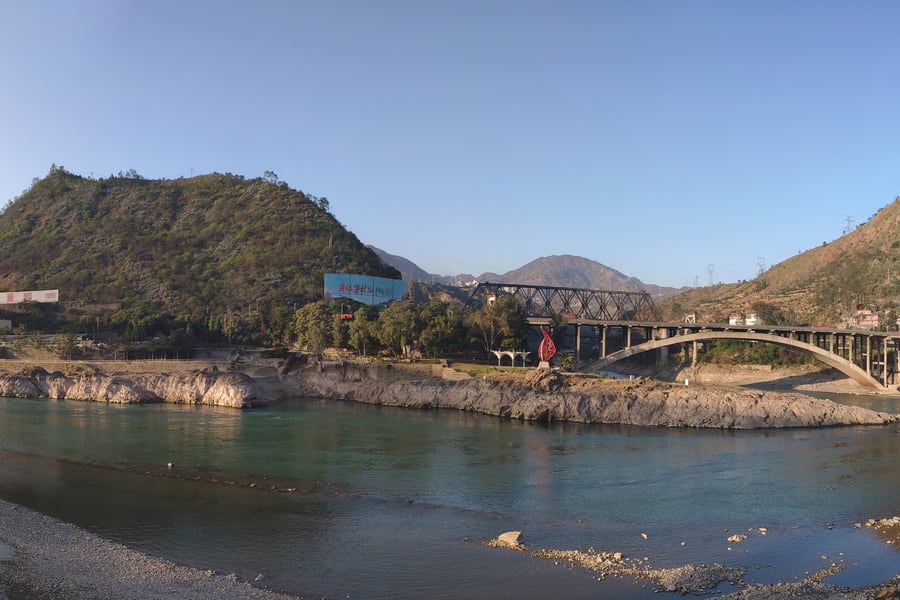 Zhangzj cet / Wikimedia Commons · CC BY-SA 4.0 · 2021 · cropped
Panzhihua
The steel city at the end of the line stands where the Yalong River flows into the Jinsha, the upper Yangtze. It was founded in 1965 as one of the Third Front's industrial bases, and the China Third Front Construction Museum, opened in 2015, tells that story in more than 10,000 objects. It is closed on Mondays.Where to Sleep
The 5619 reaches Puxiong in the late afternoon and the 5633 leaves early the next morning, so the night in between is spent in Puxiong, a small market town; arrange a room there before you travel. The hotels below are at either end, for a night before Mount Emei and a night in Panzhihua before the high-speed train back.
Where to stay
Le Méridien Emei Mountain Resort
On Mingshan Road South, Emeishan
Three restaurants, one serving Sichuan and Cantonese dishes, and indoor and outdoor pools, at the foot of the mountain.
Check Availability (opens in a new tab, on marriott.com)via marriott.comHampton by Hilton Panzhihua Central Plaza
On Central Plaza, Dong District
Hot breakfast and parking are included, and the hotel's own page puts the Third Front Construction Museum eight kilometres away.
Check Availability (opens in a new tab, on hilton.com)via hilton.comQuestions or corrections
Planning this trip and stuck on something, or spotted a time, fare or detail that has changed? Send us a message about The Chengdu–Kunming Railway. We read every one, and we update this page when something has changed.