Chișinău to Bucharest — the Prietenia, and two hours on the jacks at Ungheni
NAC / Wikimedia Commons · CC BY-SA 4.0 · 2024 · cropped
- Distance592 km, Chișinău to București Nord
- Duration13 hr 48 min south, 13 hr 38 min north
- Best seasonDaily, all year
Introduction
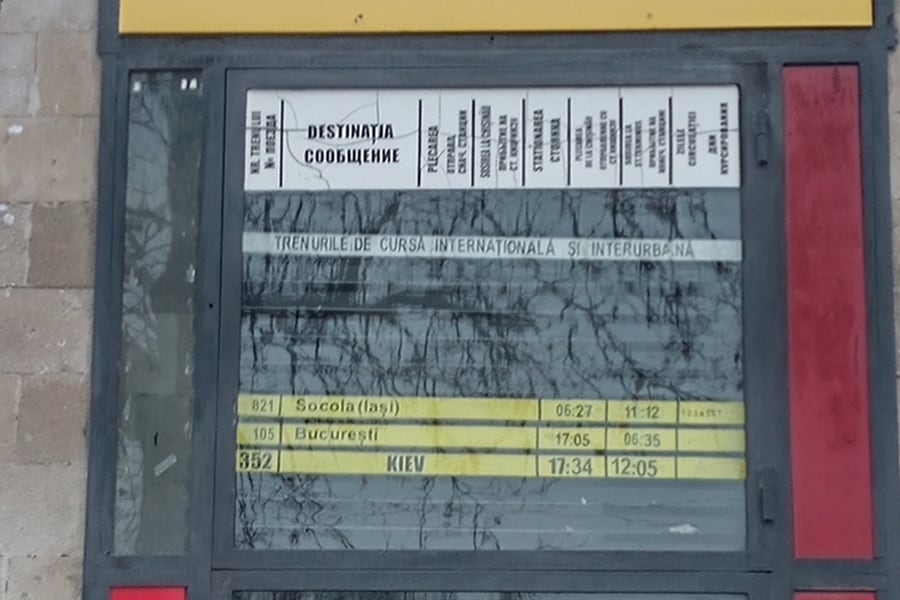
Train 105 leaves Chișinău at ten to five in the afternoon and reaches București Nord at twenty to seven the next morning — 592 kilometres and thirteen hours forty-eight minutes later. Both railways call it the Prietenia, the Friendship, and on the Romanian side it carries the numbers 401 and 402 instead. It is the most substantial thing Moldova's railway still does. Calea Ferată din Moldova's own timetable returns four passenger workings out of the capital and no more: this sleeper, a train to Kyiv, a weekend railcar to Iași and a local to Ungheni three days a week. Ask it for Bălți, for Ocnița or for Tiraspol and the board comes back empty.
What makes the night worth having is the two hours in the middle of it. Moldova's railways are 1,520 mm Russian broad gauge and Romania's are 1,435 mm standard, so a through carriage cannot simply run across the Prut. At Ungheni, the frontier station on the Moldovan bank, the train is taken apart: each carriage is drawn between a pair of lifting frames, jacked clear of the rails with the passengers still inside it, and set down on a different set of bogies. It goes in at 19:34 and leaves at 21:35, and the border formalities happen in the same two hours. Nothing else is asked of the traveller. Everybody aboard has a berth, because the booking system offers two classes of sleeping car and no seats at all.
The Journey
Out of Chișinău
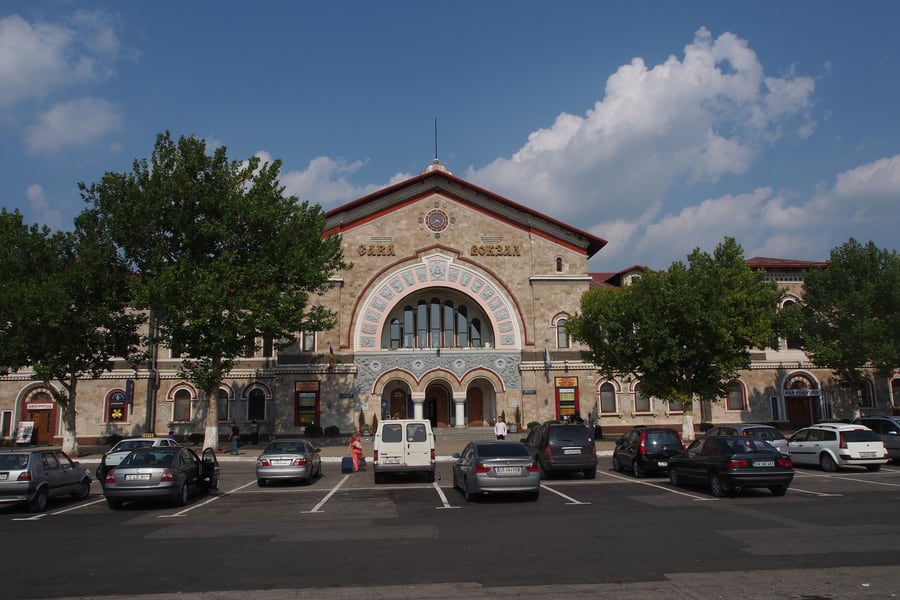
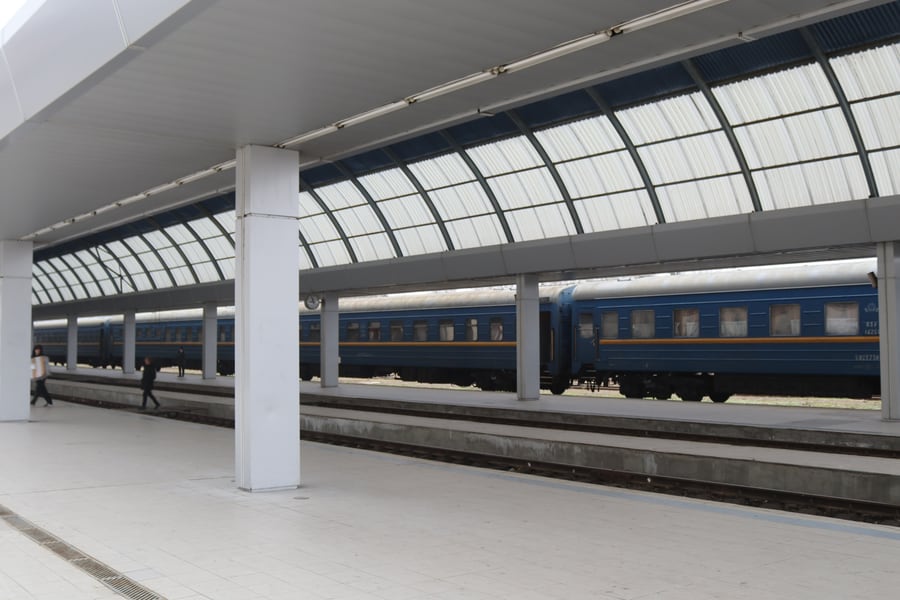
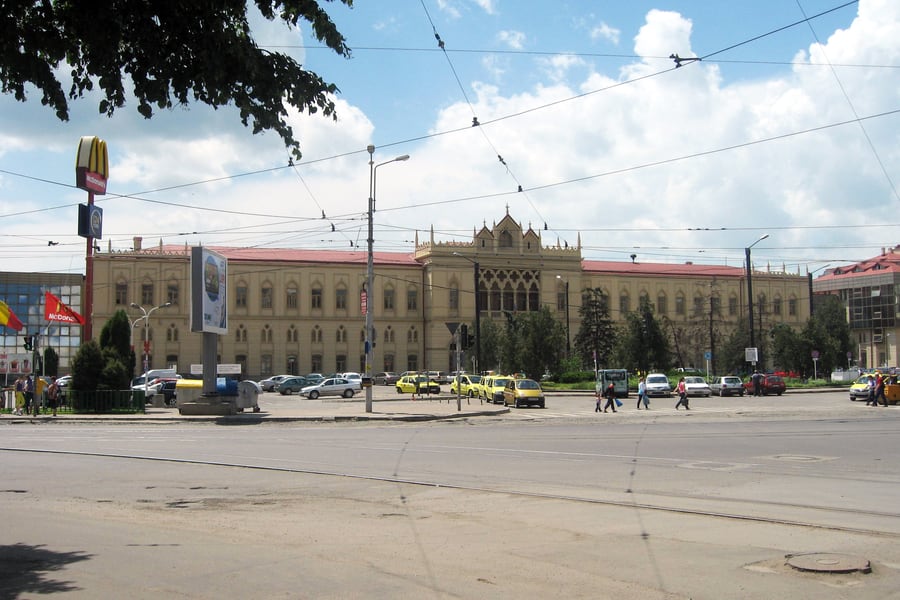
The station is a short walk below the centre of the city, and it is the second one on the site. The first was designed in the 1880s by Heinrich von Lonsky and built under Alexandru Bernardazzi, in the years after the railway reached Chișinău from Tiraspol; it was bombed in 1941 and again in 1944, and what stands now is the post-war rebuilding, finished in the 1950s in the heavy style of the period. International trains use platform 1, whose concourse can be closed off with barriers to make a customs hall — a detail that tells you what the station is mostly for these days.
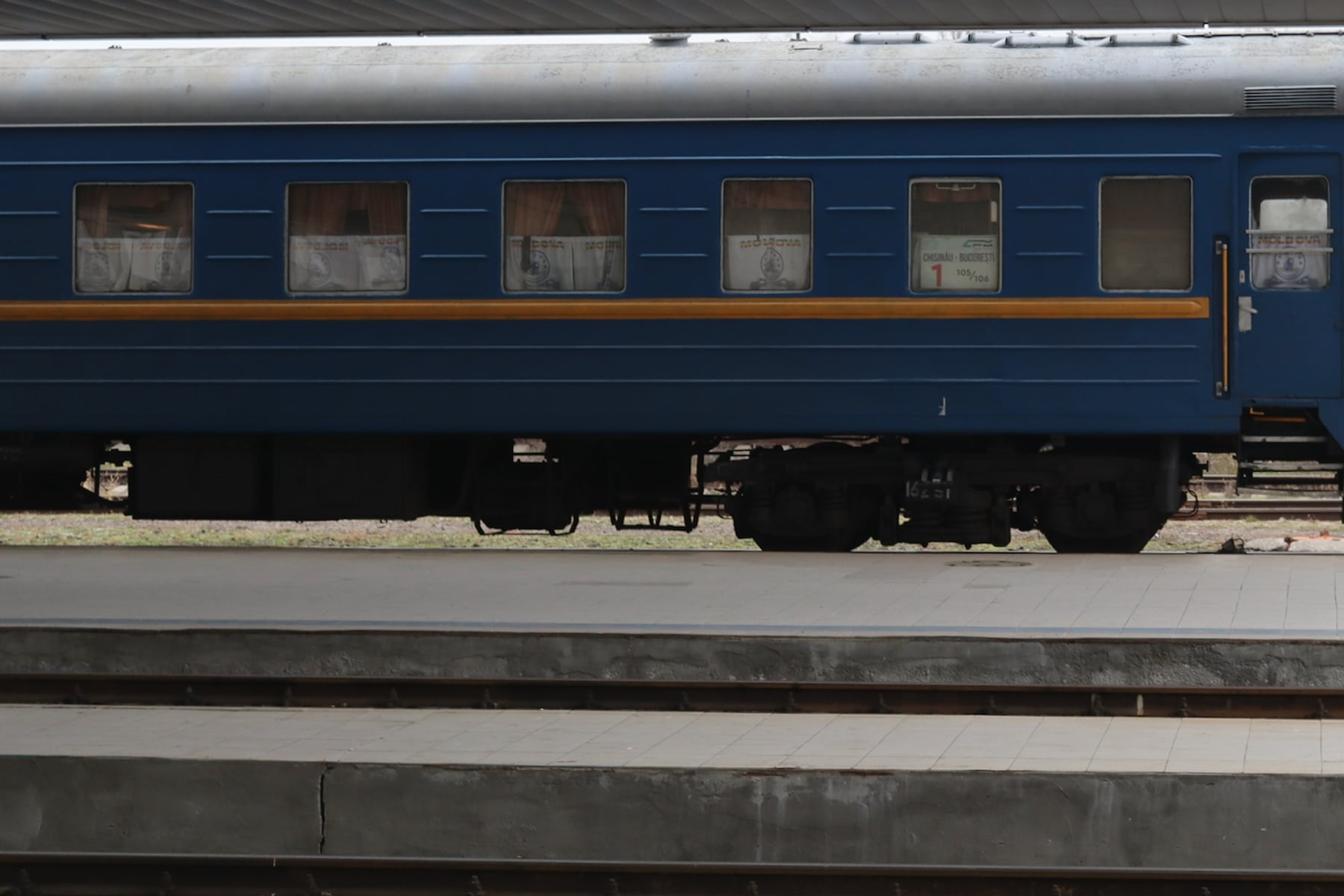
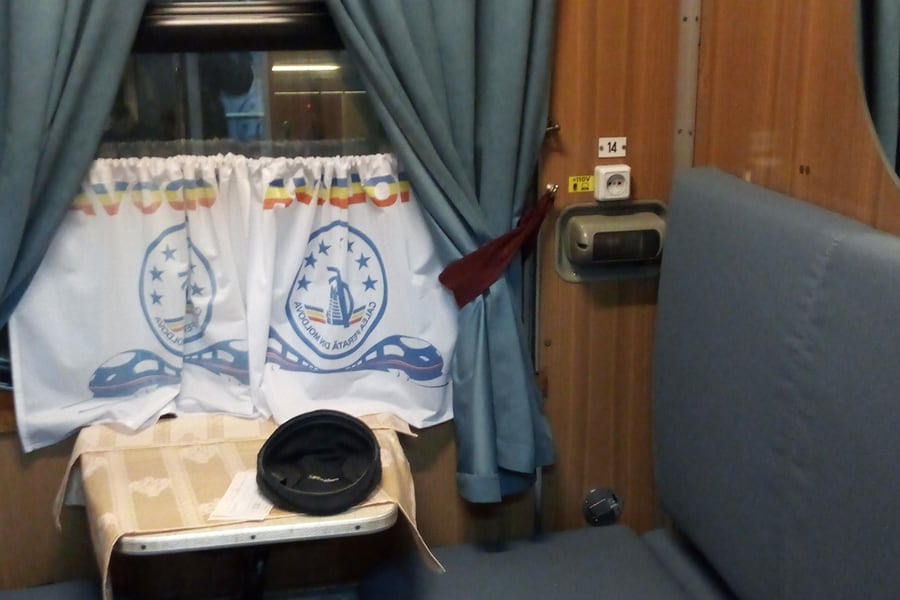
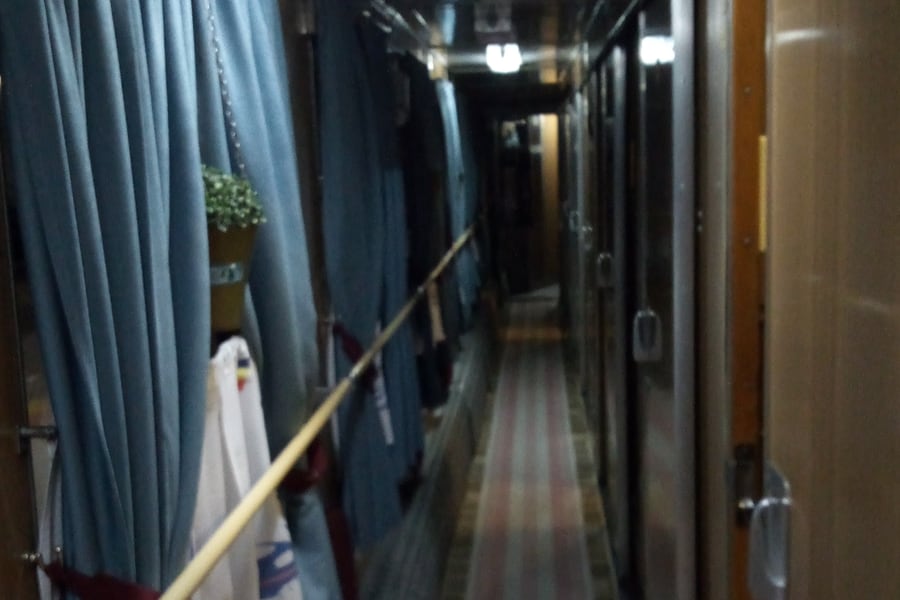
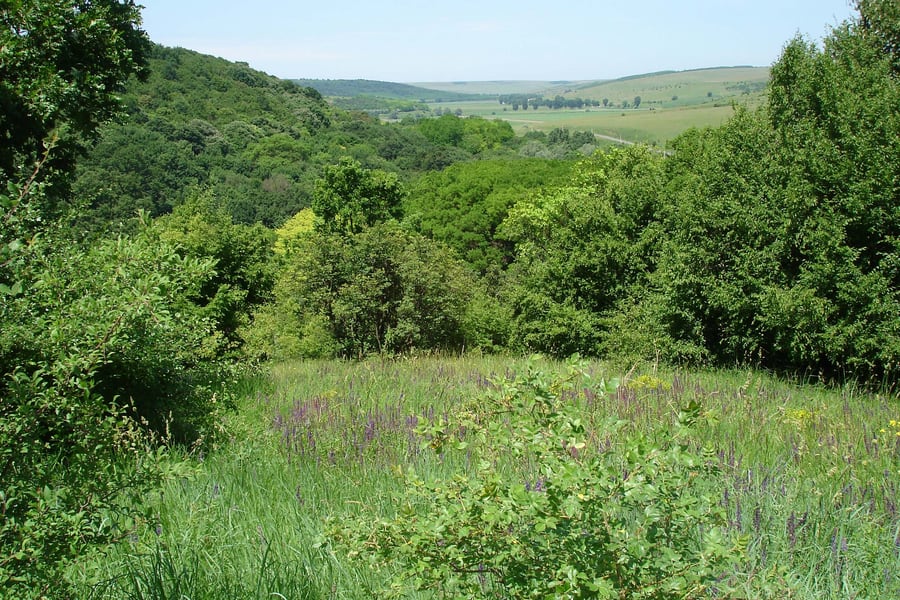
The train is a rake of blue Moldovan sleeping cars, ex-Soviet in pattern, with white curtains lettered MOLDOVA and a hand-sized route board in one window reading CHIȘINĂU – BUCUREȘTI and the numbers 105/106. It leaves at 16:50 and turns west almost at once, up through Strășeni and Călărași into the Codri — the wooded hills in the middle of the country, low and green and nothing like the steppe most people expect of Moldova. Cornești is the top of it. Ungheni, 107 kilometres out, comes up at 19:34, two hours and forty-four minutes after the capital.
Two hours at the break of gauge
Then everything stops. Moldova inherited the Russian gauge of 1,520 mm along with the rest of the Soviet railway; Romania, a few hundred metres away across the Prut, is on the European standard of 1,435 mm. The difference is eight and a half centimetres and it is enough to make a through carriage impossible without surgery.
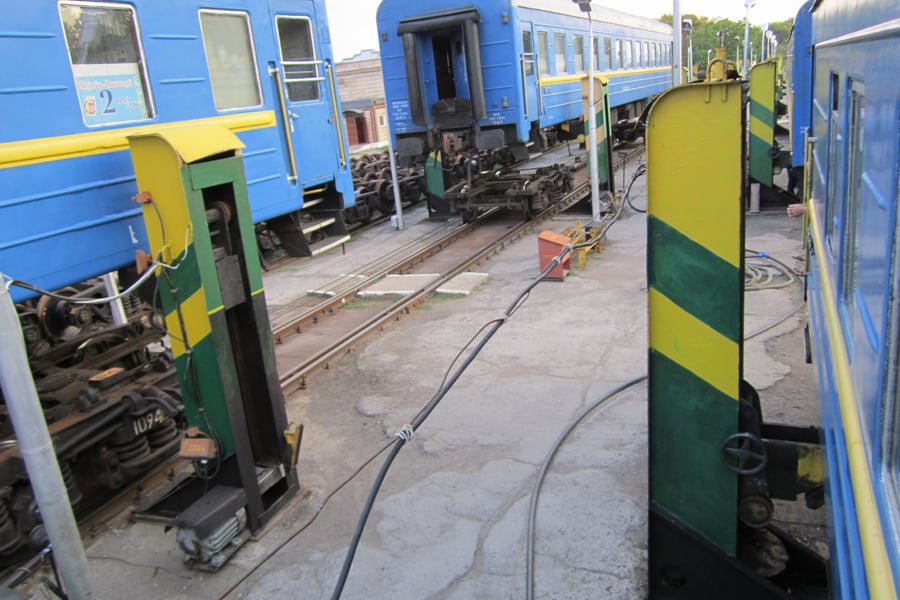
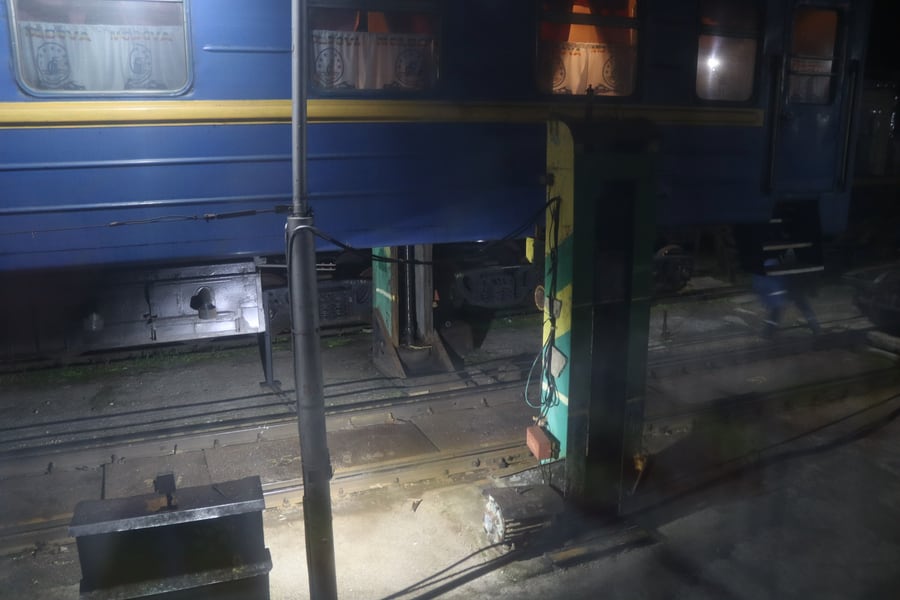
So the train is taken apart. Each carriage is drawn in turn between two green-and-yellow lifting frames, uncoupled, and raised off the track on jacks with everybody still aboard. The broad-gauge bogies are rolled out from underneath, standard-gauge ones are rolled in, and the body is lowered onto them. Passports and customs are dealt with in the same window. The operator's own timetable gives the arrival as 19:34 and the departure as 21:35 — two hours and one minute standing still, in what is otherwise a fairly brisk overnight run.
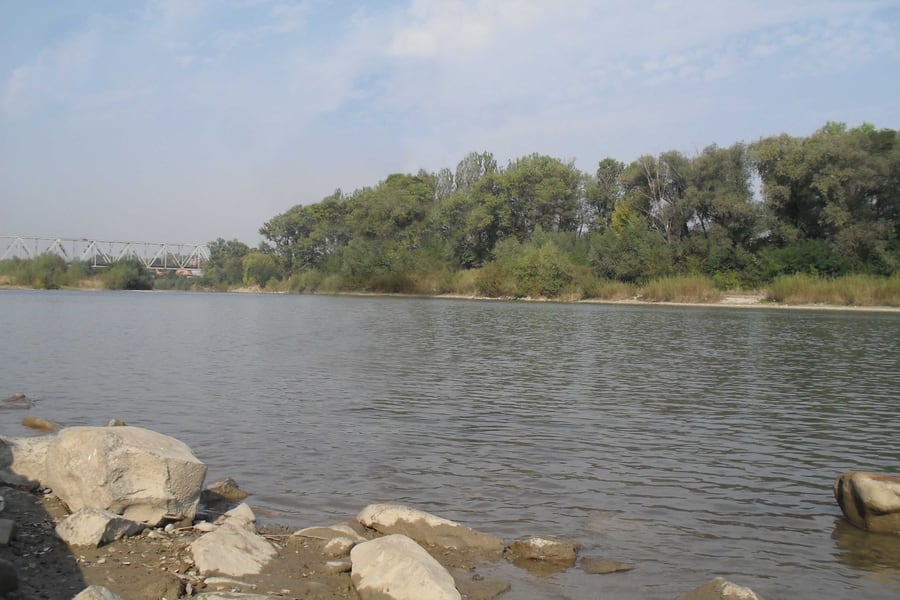
Beyond the station the line crosses the Prut on an iron bridge that Moldova has always called the Podul Eiffel and that Eiffel did not design: it was drawn by the Russian engineer Nikolai Belelubsky and built between 1874 and 1876, ahead of the war with Turkey. Iași, the first Romanian city, is reached at 23:08 and left at 23:28.
Down Moldavia in the dark
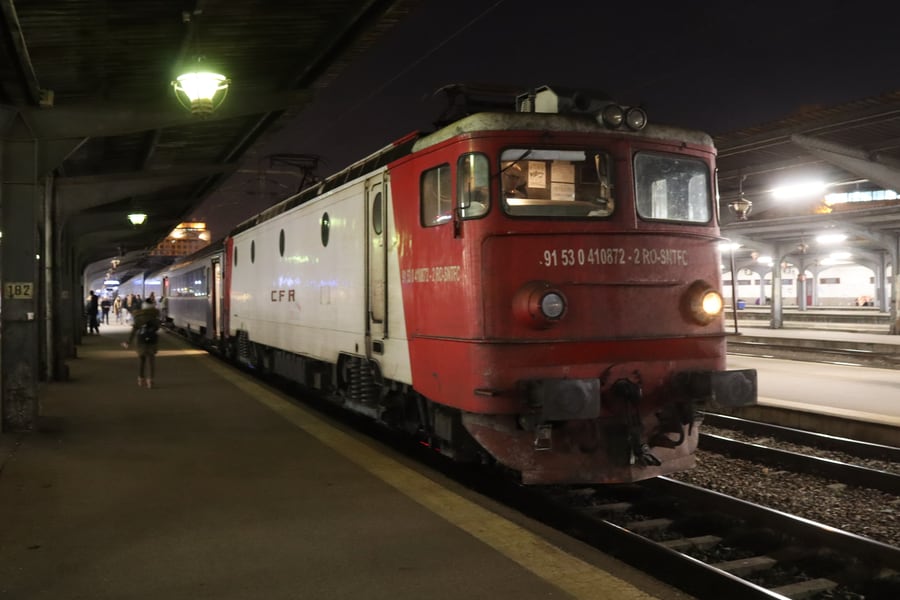
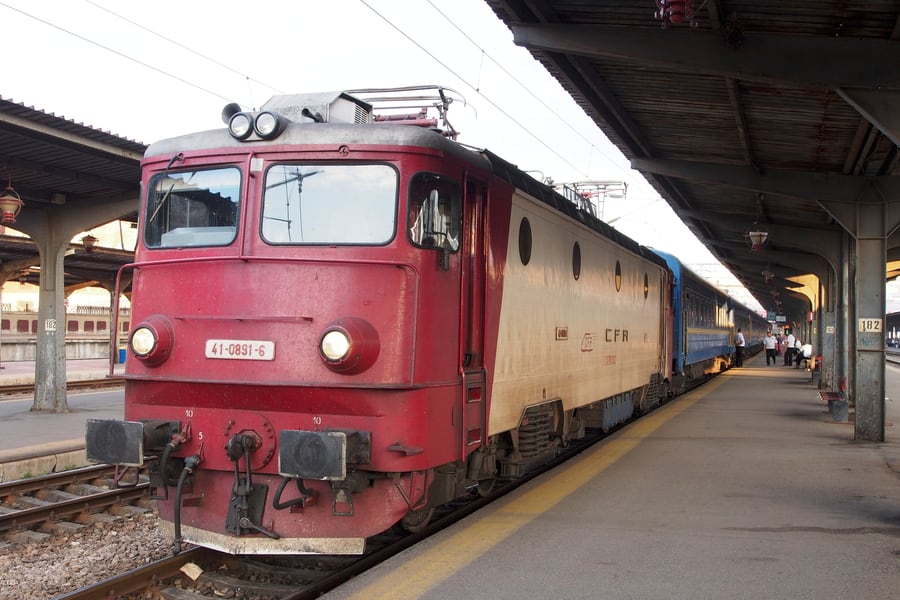
The rest is Romanian Moldavia in the small hours, and it goes quickly because the line is a main one and the train is now on standard-gauge bogies behind Romanian traction. Roman at 01:15, Bacău at 01:54, Adjud at 02:40, Mărășești at 03:04, Focșani at 03:30, Buzău at 04:39. Moldova's railway is unelectrified from end to end, so the wires overhead are the first the journey has seen; the locomotive at the Bucharest end is a CFR electric — 41-0891-6 in one photograph of this train, 410872 in another, both of them in the railway's red and cream. Ploiești at 05:50 is when people start folding bedding, and București Nord arrives at 06:38.
Northbound it is the same night in reverse and thirteen hours thirty-eight minutes long: away from Gara de Nord at 19:06, Iași at 02:03, into Ungheni at 04:09 and out at 06:03, Chișinău at 08:44. The jacking happens in the dark on that run, which is worth knowing if the bogie change is the reason for the ticket.
Since the autumn of 2025 the train has been longer than it looks. Ukrainian Railways carriages are attached at Chișinău and go on to Kyiv, which is how a passenger travels from Bucharest to the Ukrainian capital by rail again after five years without a through service.
Along the route
 NAC / Wikimedia Commons · CC BY-SA 4.0 · 2024 · cropped
Out of Chișinău at ten to five
The departure board is a short one: the operator's timetable returns four passenger trains out of the capital and nothing at all for Bălți, Ocnița or Tiraspol.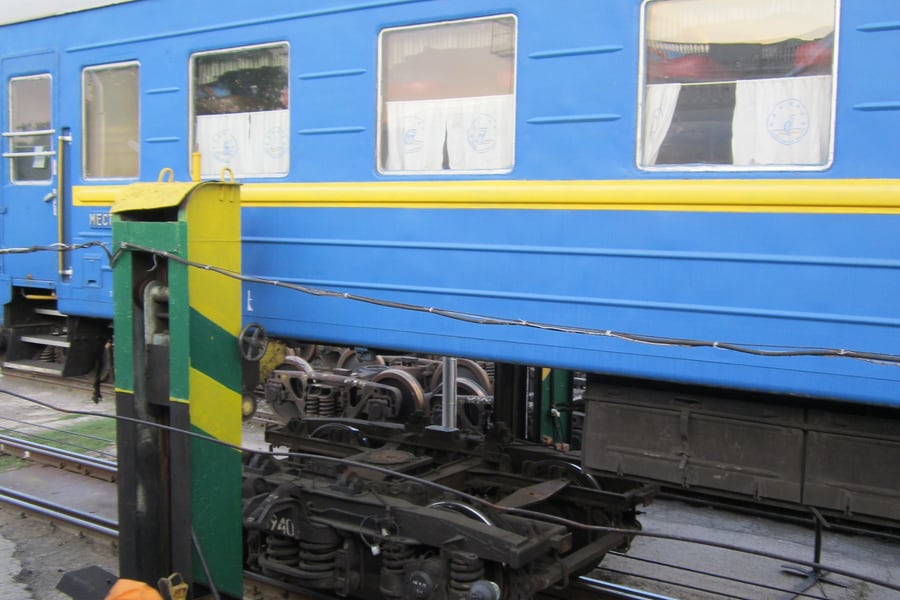 Simiprof / Wikimedia Commons · CC BY-SA 3.0 · cropped
Two hours on the jacks
In at 19:34, away at 21:35. The carriages are drawn one at a time between the lifting frames, raised with everyone still aboard, and lowered onto bogies eight and a half centimetres narrower.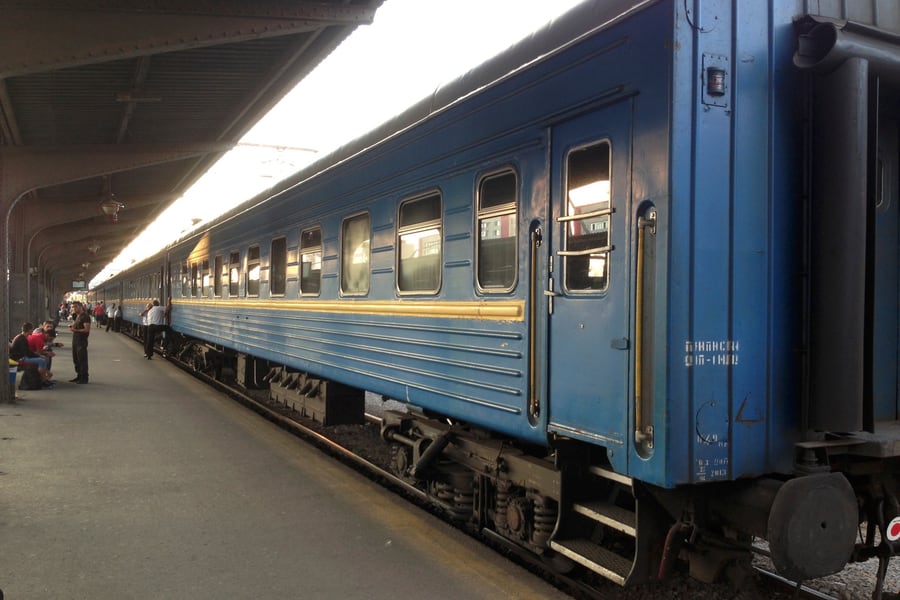 Clay Gilliland / Wikimedia Commons · CC BY-SA 2.0 · cropped
Into Gara de Nord at twenty to seven
Ploiești at ten to six is the wake-up call, and Bucharest arrives 592 kilometres and thirteen and three-quarter hours after Chișinău, on the far side of two frontiers.A bit of history
Culture & experiences along the way
 Clay Gilliland / Wikimedia Commons · CC BY-SA 2.0 · cropped
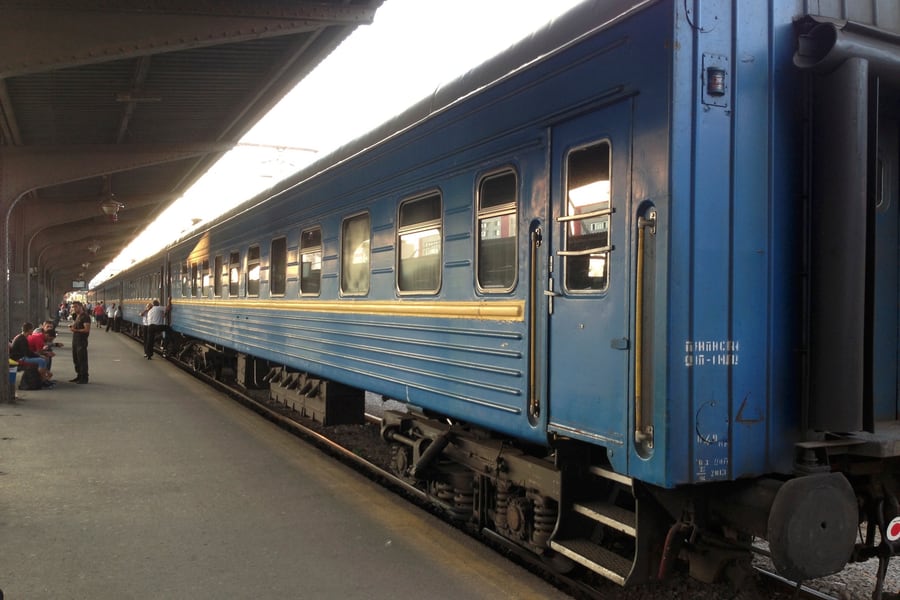
The carriages that go on to Kyiv
Ukrainian Railways coaches are attached to this train, which is how a passenger gets from Bucharest to Kyiv by rail again after five years without a through service. The protocol was signed in August 2025 and the three countries' foreign ministers opened the working on 10 October 2025. CFR Călători prices Bucharest to Kyiv at €75.90 in a four-berth sleeper. NAC / Wikimedia Commons · CC BY-SA 4.0 · 2024 · cropped
The bar, and a bottle of Chișinău
Nothing on this train is sold as a seat, so the counter with its fridge of bottles is the only space aboard that is not a compartment. The beer in the photograph is Chișinău, named for the city the train leaves from, and it was taken on the northbound working in November 2024.Timetables
One train a day each way, all year. Southbound it is 105 on Moldovan paperwork and 401 on Romanian; northbound, 106 and 402. Times below are as published by Calea Ferată din Moldova in August 2026, and are given in local time — Moldova and Romania keep the same clock.
| Station | 105 southbound | 106 northbound |
|---|---|---|
| Chișinău | 16:50 dep | 08:44 arr |
| Ungheni | 19:34 arr · 21:35 dep | 04:09 arr · 06:03 dep |
| Iași | 23:08 arr · 23:28 dep | 02:03 arr · 02:28 dep |
| Roman | 01:15 | 00:27 |
| Bacău | 01:54 | 23:42 |
| Adjud | 02:40 | 22:56 |
| Focșani | 03:30 | 22:12 |
| Buzău | 04:39 | 21:02 |
| Ploiești | 05:50 | 19:49 |
| București Nord | 06:38 arr | 19:06 dep |
The two hours at Ungheni are the bogie change and the border, and they are in the timetable rather than a delay. Southbound the whole run is 13 hours 48 minutes; northbound, 13 hours 38.
Availability was sampled for five separate September 2026 dates, in both directions, and the train was on offer on every one of them; the operator's timetable also marks all seven days of the week. CFR Călători states plainly on its own Moldova page that the Prietenia runs daily.
The live timetable is at railway.md (opens in a new tab) under Transportul de pasageri → Orarul trenurilor, and the same board on the Romanian side is published by CFR Călători (opens in a new tab). Both are worth a look before travelling: this is a single daily train across two frontiers, and it has been suspended before.
Tickets
Calea Ferată din Moldova sells this train from its own portal at on.railway.md (opens in a new tab), in Romanian and Russian, opening thirty days before departure. Only a limited allocation goes online — the portal says so — and the rest is sold at station ticket offices. Prices below were read from it on 31 August 2026 for September departures, in Moldovan lei; children pay about a third less.
CFR Călători sells the same train as 401/402 and prices it in euro. Its SMART Prietenia offer is €31 for a berth in a four-berth sleeping carriage in either direction, limited in number, neither refundable nor exchangeable and with no further reduction for children. Through to Kyiv in the Ukrainian carriages, the same operator quotes €75.90. A passport is needed: this is a train between a country inside the European Union and one outside it.
Book your tickets
First-class berth
Chișinău to București Nord
The dearer of the two classes CFM's booking system offers, in a single sleeping car.
Book Tickets (opens in a new tab, on railway.md)via railway.mdSecond-class berth
Chișinău to București Nord
The class most of the train is made up of, and about a tenth cheaper than first.
Book Tickets (opens in a new tab, on railway.md)via railway.mdBerth to Iași
Chișinău to Iași, five hours
The same train as far as the first Romanian city, for those who do not want the whole night.
Book Tickets (opens in a new tab, on railway.md)via railway.mdRail Passes
A rail pass is not worth buying for this journey, and the reason is a border rather than a price. Moldova is not an Interrail or Eurail country — it does not appear on Interrail's list of covered railways at all, checked in August 2026 — so no pass reaches Chișinău, Ungheni or any part of the Moldovan half of the run.
Romania is covered, on CFR Călători, which is the operator of 401/402 on its side of the Prut; Interrail lists five private Romanian operators as excluded, and CFR Călători is not one of them. A pass held for Romania is therefore useful for the Bucharest–Iași part of a wider trip, but a berth on a sleeping car is a separate purchase whatever the ticket, and the Moldovan section has to be bought outright. For a single crossing, the operator's own fare — about 850 lei, or CFR's €31 SMART Prietenia offer — is the whole cost, and a pass adds nothing to it.
Places to Visit
The train is at its two ends in daylight and everywhere else in the dark, so the places worth building a trip around are Chișinău, the frontier town of Ungheni, and the two Romanian cities the line runs through. Iași is reached at twenty past eleven at night southbound and two in the morning coming back, which makes it a stop to break the journey at rather than to see from the window.
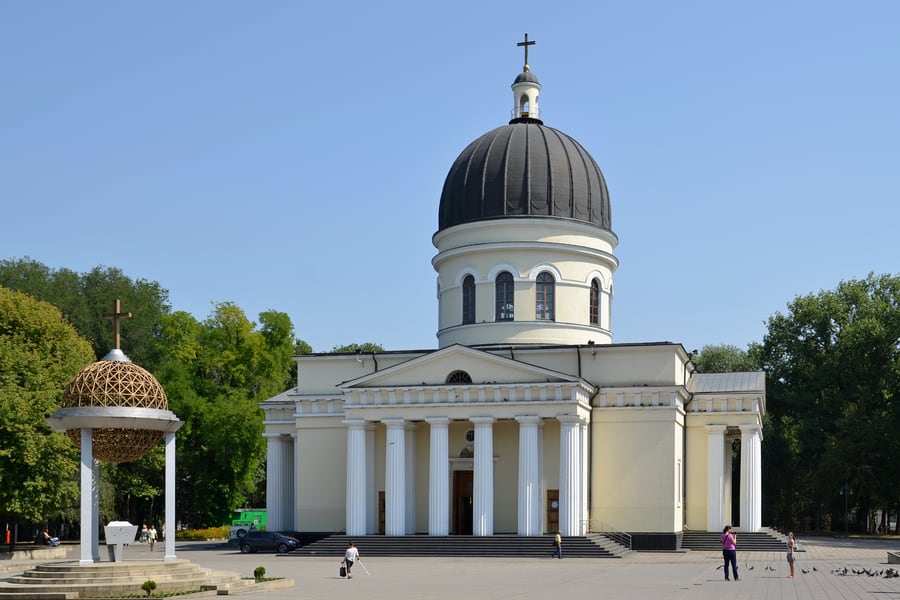 Pudelek / Wikimedia Commons · CC BY-SA 4.0 · cropped
The cathedral in the middle of Chișinău
The Cathedral of Christ's Nativity was built in 1830 to Abram Melnikov's design and stands in its own park at the centre of the city. Its bell tower was destroyed in 1962 and the cathedral spent the Soviet years as an exhibition centre; the tower that stands apart from it across the grass now went up in 1997. It is a walk of about fifteen minutes from the station.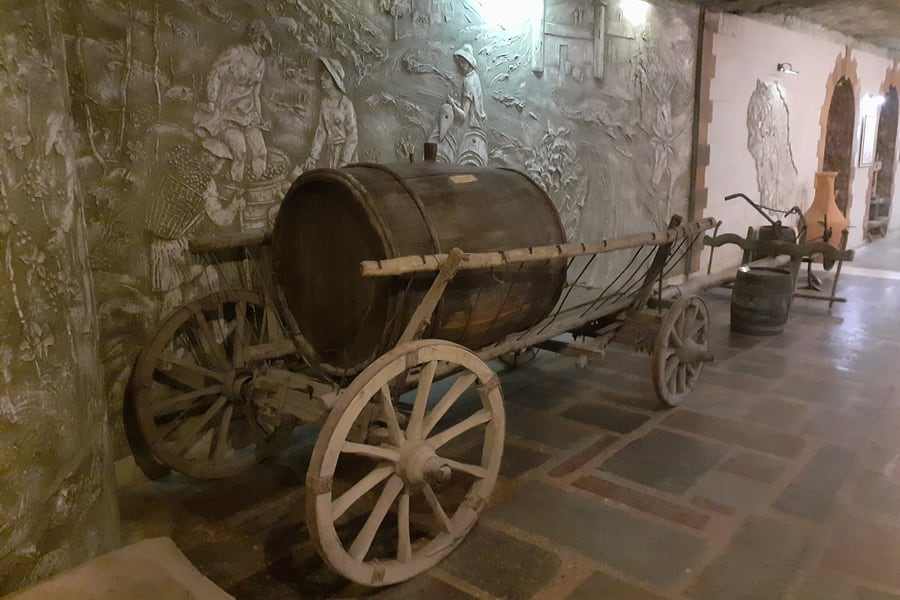 Mutialulu / Wikimedia Commons · CC0 · cropped
The cellars at Cricova
Fifteen kilometres north of Chișinău, under the town of Cricova, are underground wine cellars among the largest anywhere — the thing the country is best known for after the wine itself, and Moldova was the world's twenty-first largest wine exporter in 2021. The galleries are old workings, wide enough to be driven through rather than walked, and they are the usual way an afternoon before the evening train gets spent.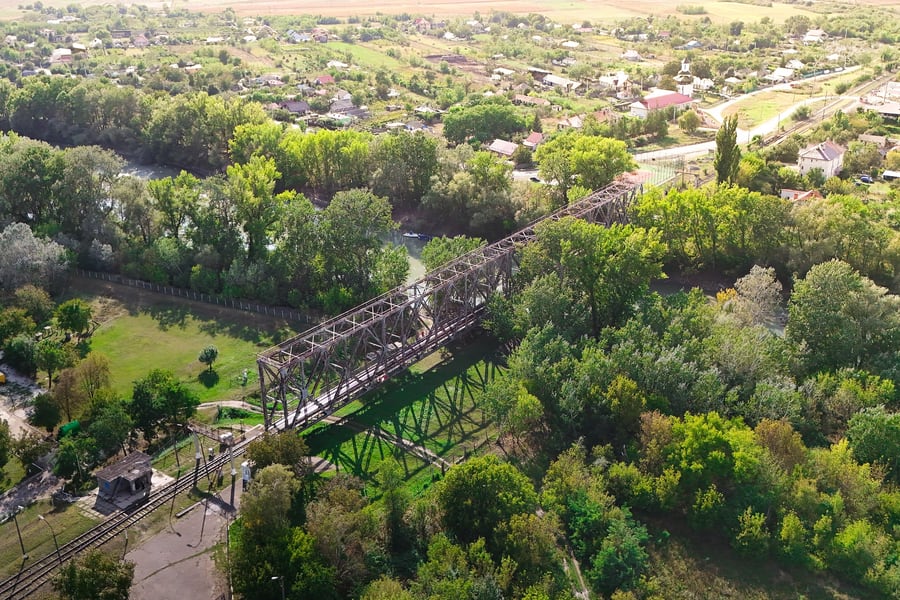 Ungheni shoot / Wikimedia Commons · CC0 · cropped
The bridge over the Prut at Ungheni
Moldova calls it the Podul Eiffel and the design is not his: the iron bridge that carries this train across the frontier was drawn by the Russian engineer Nikolai Belelubsky and built between 1874 and 1876, for the war with Turkey that began the year after. Five years of testing followed before civilian traffic was allowed over it in 1881.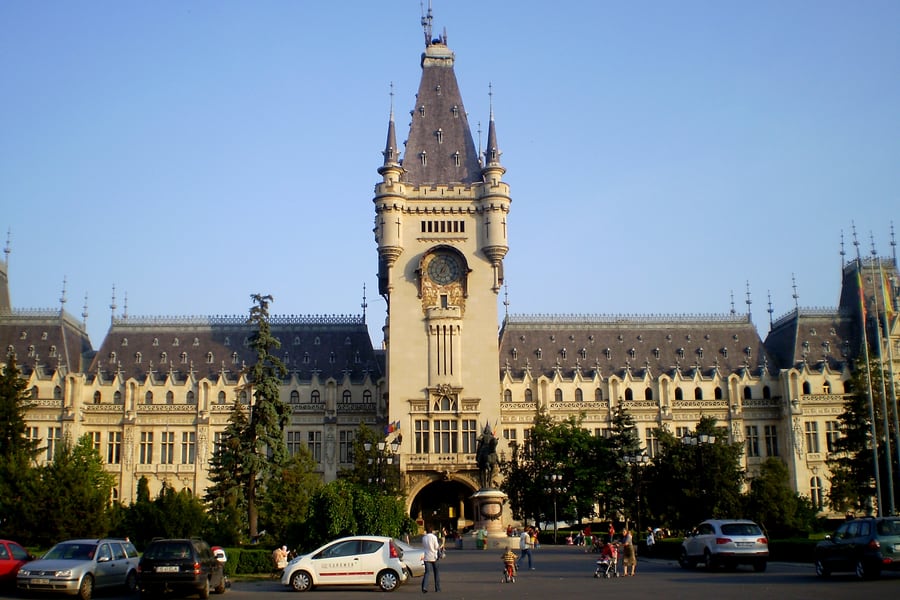 Argenna / Wikimedia Commons · CC BY 3.0 · cropped
The Palace of Culture at Iași
I.D. Berindei's flamboyant neo-Gothic rebuilding of the princely palace of Moldavia was begun in 1906, halted by the First World War, and finished on 11 October 1925. It was the county law court until 1955 and holds four museums now, under one name, the Moldavia National Museum Complex. The legend inherited from the older palace on the site says 365 rooms, one for each day of the year; the real count is 298.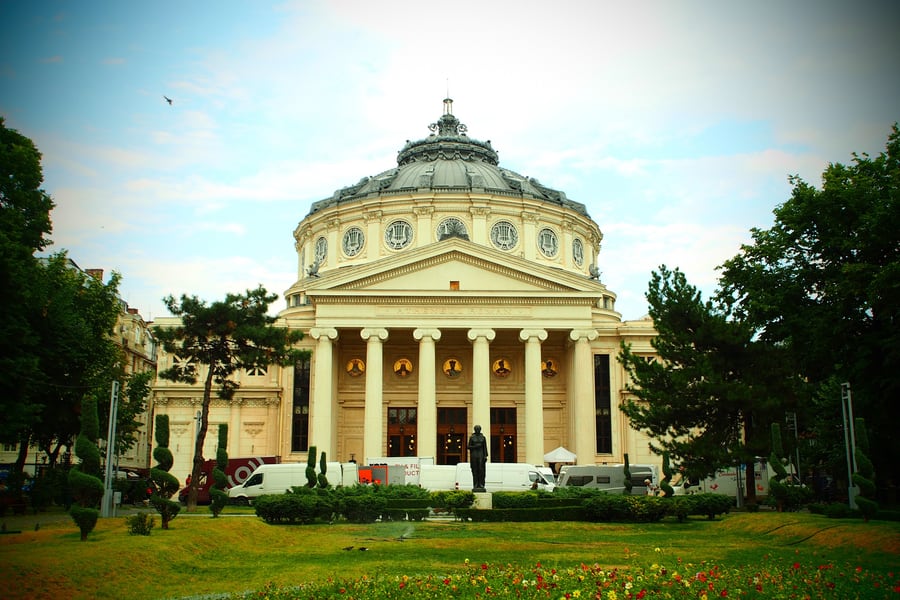 Ștefan Jurcă / Wikimedia Commons · CC BY 2.0 · cropped
The Athenaeum, Bucharest
The domed concert hall near Calea Victoriei was designed by the French architect Albert Galleron and inaugurated in 1888, though work went on until 1897. Part of the money came from a public subscription that ran for twenty-eight years behind the slogan Romanians still quote — Dați un leu pentru Ateneu, give one leu for the Athenaeum.Where to Sleep
The night itself is the accommodation, so a bed is only needed at either end — or in Iași, if the journey is being broken there rather than slept through. Chișinău's station is a walk below the centre and Bucharest's Gara de Nord is a short metro ride from it, which puts most of both cities within reach of an arriving train.
Where to stay
Bristol Central Park Hotel
In the centre of Chișinău
A hotel in the middle of the city with five room grades, from economy to the Ambassador suite, and its own conference halls.
Check Availability (opens in a new tab, on bristol.md)via bristol.mdUnirea Hotel & Spa
On Piața Unirii in Iași
A tall hotel in the centre of Iași with a spa and a top-floor restaurant looking over the city.
Check Availability (opens in a new tab, on hotelunirea.ro)via hotelunirea.roHello Hotels București
Three minutes from Gara de Nord
Opened in 2008 by the Continental group, a minute from the metro and three on foot from the station the train arrives at.
Check Availability (opens in a new tab, on continentalhotels.ro)via continentalhotels.roQuestions or corrections
Planning this trip and stuck on something, or spotted a time, fare or detail that has changed? Send us a message about Chișinău to Bucharest — the Prietenia, and two hours on the jacks at Ungheni. We read every one, and we update this page when something has changed.