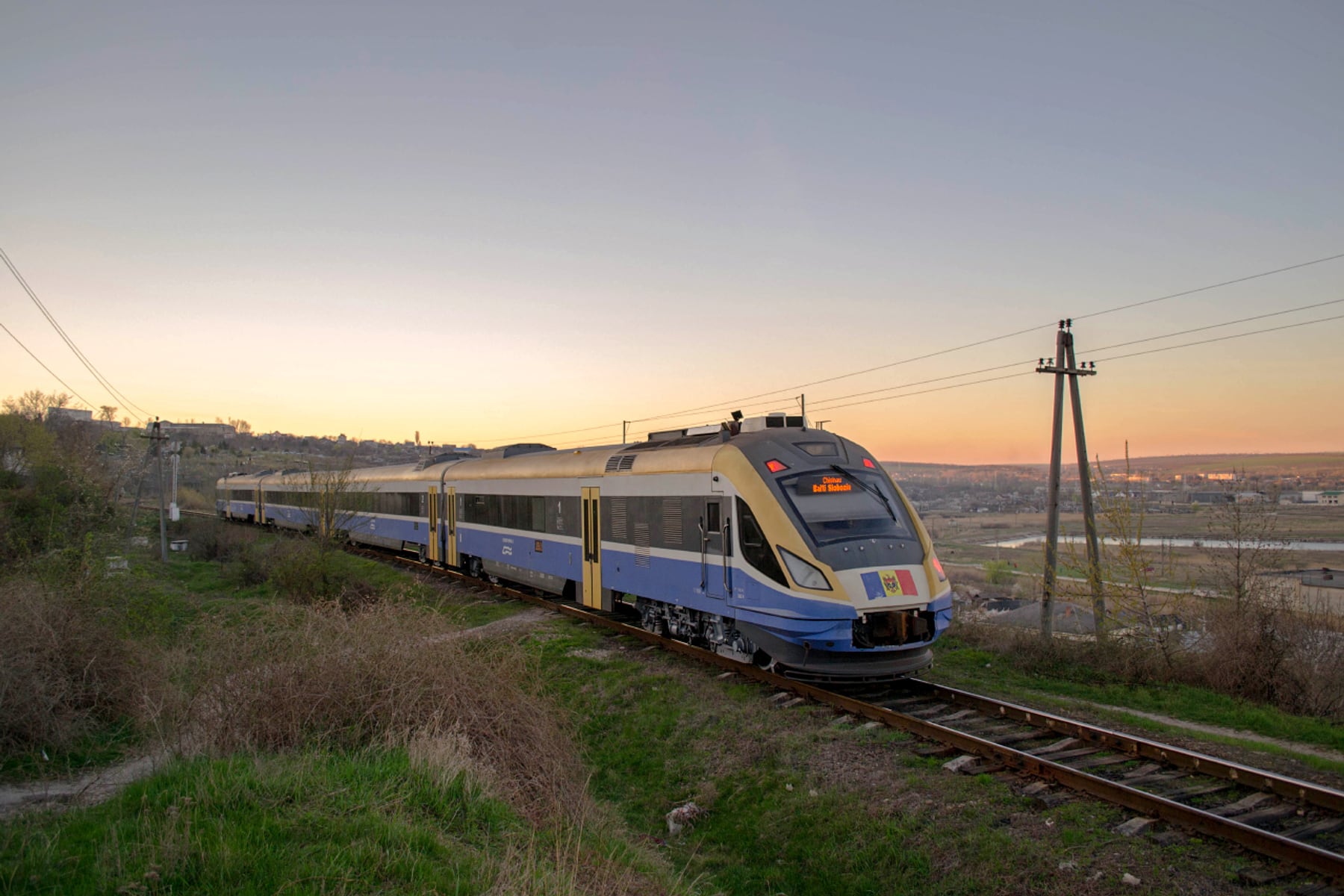
Chișinău to Iași — on Russian gauge across the Prut
Reaboi Veaceslav / Wikimedia Commons · CC BY-SA 4.0 · 2017 · cropped
- Distance124 km, Chișinău to Iași-Socola
- Duration4 hr 48 min out, 4 hr 40 min back
- Best seasonFridays, Saturdays and Sundays
Introduction
On Friday, Saturday and Sunday mornings a four-car diesel unit leaves Chișinău at 06:27 and reaches Iași-Socola, in Romania, at 11:15. It is train 821 on Calea Ferată din Moldova's board, 124 kilometres long, with three stops on the way, all of them in Moldova. It is the one train out of the country that crosses into the European Union without anybody touching its wheels.
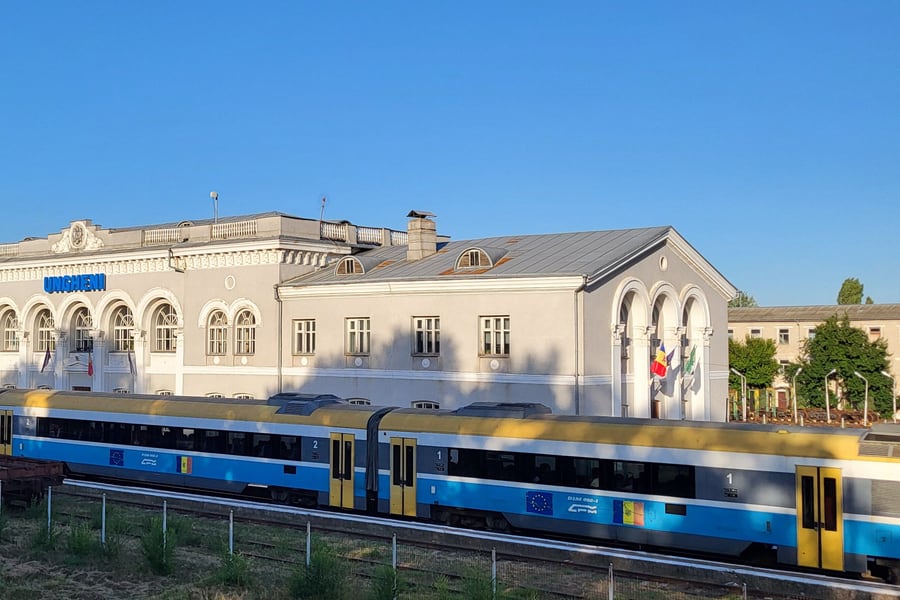
The reason is the track. Moldova's railways are 1,520 mm broad gauge and Romania's are 1,435 mm standard, which is why the night train to Bucharest stands two hours at Ungheni having its bogies changed. This train does not need to. The broad gauge carries on across the Prut, past the Romanian frontier station, as far as Socola on the southern edge of Iași. That is why the train ends there and not at the city's main station: when it was launched in September 2015, the railway's own director said reaching the centre would need about six more kilometres of broad-gauge track. The train goes as far as the rails allow and stops.
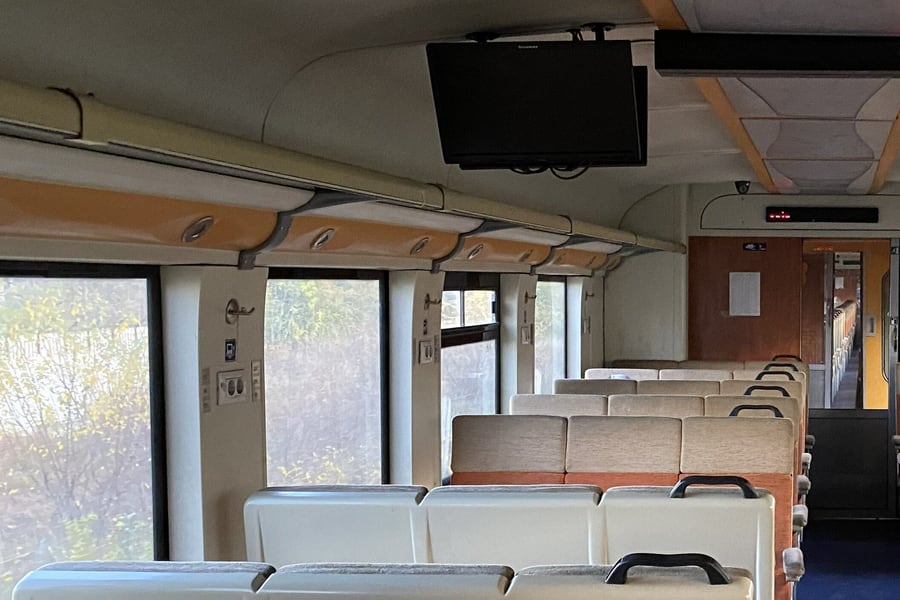
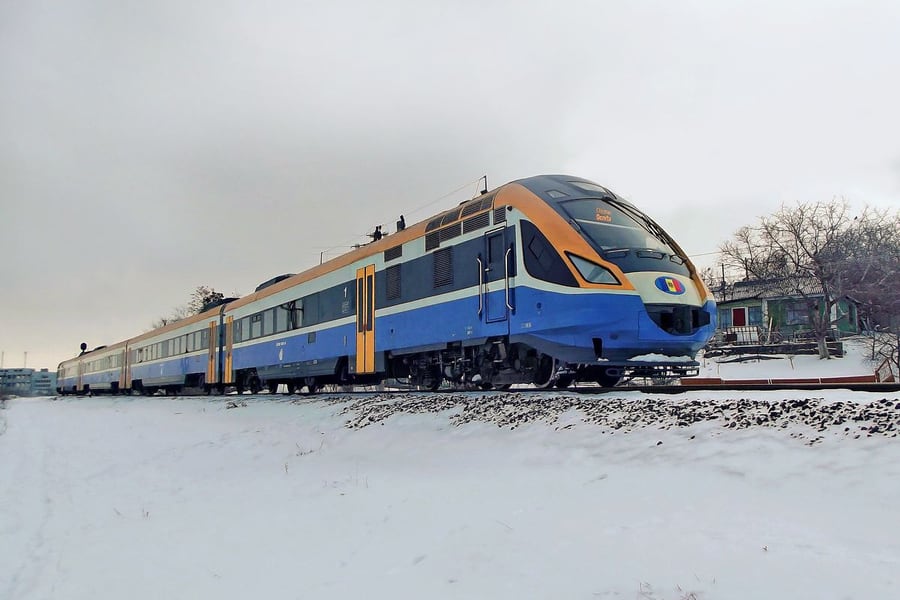
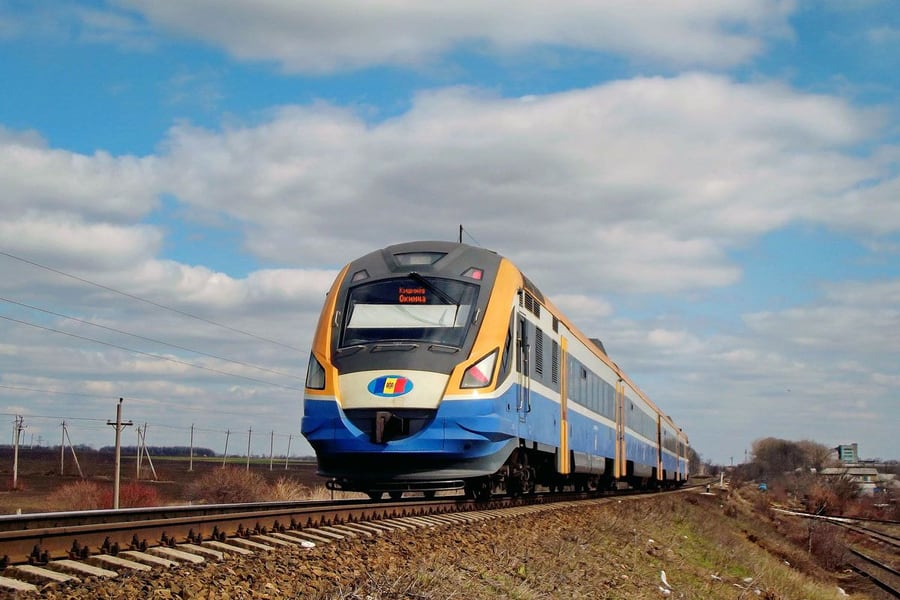
The unit itself is a D1, one of the Hungarian-built diesel trains of the Soviet years, rebuilt in Romania from 2012 with a new engine, air conditioning and Wi-Fi. It carries all three of its classes in one short train: a first-class car, a second-class car and two in third.
The Journey
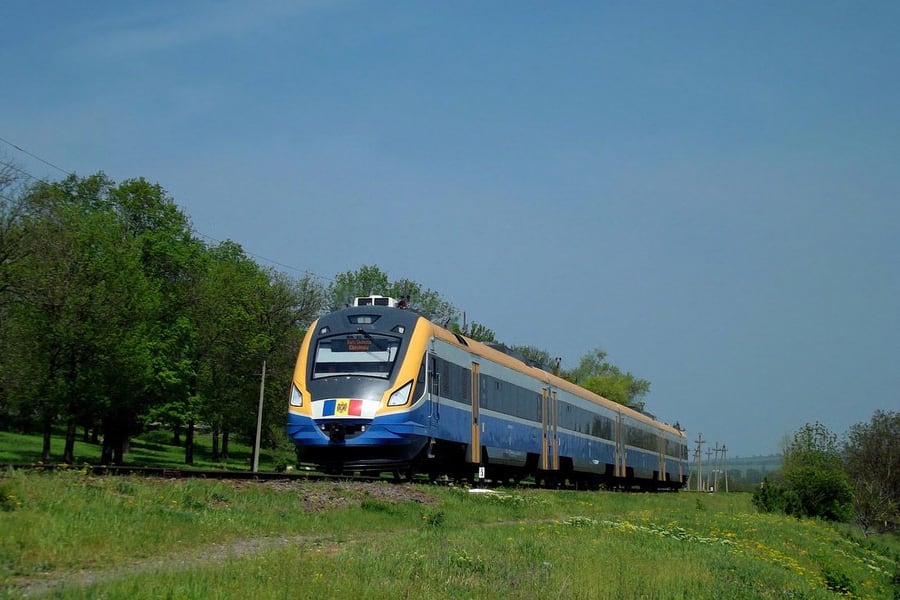
The train leaves from Chișinău's main station before most of the city is up and runs north-west into the Codri, the wooded hills at the centre of the country. Strășeni comes at 07:01 and Călărași at 07:37, both of them small stations on the line the Russian Empire built to Ungheni in 1875, ahead of its war with the Ottomans.
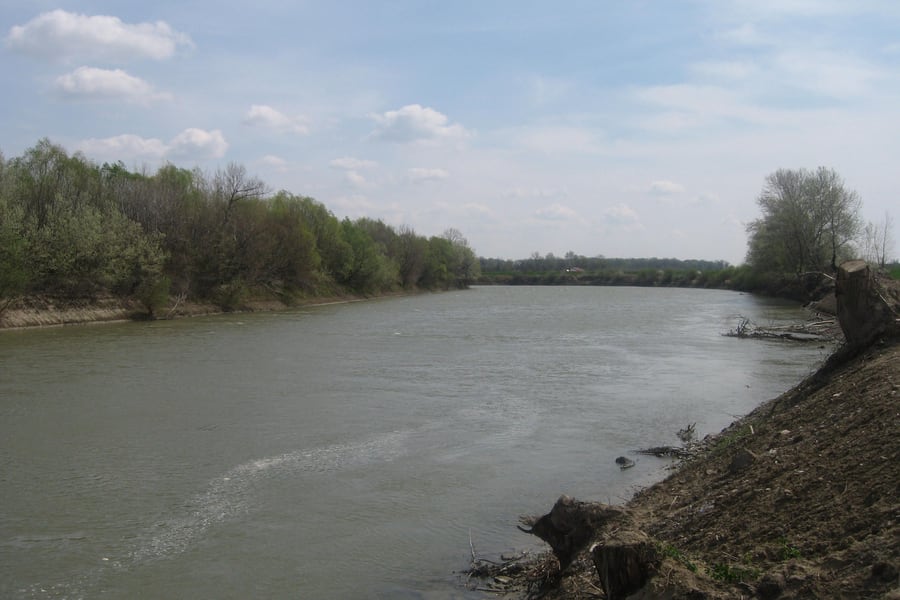
At Ungheni the train stands for thirty-six minutes, from 09:15 to 09:51, while Moldovan border and customs officers do their work. Then it crosses the Prut on the bridge Nikolai Belelubsky designed in the 1870s, which is known as the Podul Eiffel. The last seventeen kilometres, to Socola, take an hour and twenty-four minutes, Romanian frontier checks included. That is the whole journey: the capital of Moldova, the old capital of Moldavia, a river between them, and a train in no hurry.
Coming back, train 824 leaves Iași-Socola at 17:36, stands at Ungheni from 18:56 to 19:36, and reaches Chișinău at 22:16. With six hours in Iași between the two, it makes a day trip as well as a way across the border.
The train
The D1 is a four-car diesel multiple unit that Ganz-MÁVAG in Hungary built for the Soviet railways between the 1960s and the 1980s. From 2012 Moldova's railway sent its units to Romania to be rebuilt as the D1M, with most of their parts replaced, a Volvo Penta engine, air conditioning, wireless internet and ramps for wheelchair users. The rebuild gave them a new cab as well, which is why a Soviet-era train now looks like a modern regional unit. Its four cars are one in first class, one in second and two in third, and the booking system sells all three.
Socola
The terminus is a marshalling yard on the southern edge of Iași, not the station in the centre. Socola has its own history. During the First World War it held a Russian army depot, and in December 1917 a Bolshevik group that had taken over the unit there planned to seize power in Iași, then the refuge of Romania's government and king. Ukrainian and Romanian troops surrounded the camp at Socola and arrested the rebels. Socola Monastery, close by, is much older: Prince Alexandru Lăpușneanu finished it in 1562.
Along the route
 Visem / Wikimedia Commons · CC BY-SA 4.0 · cropped
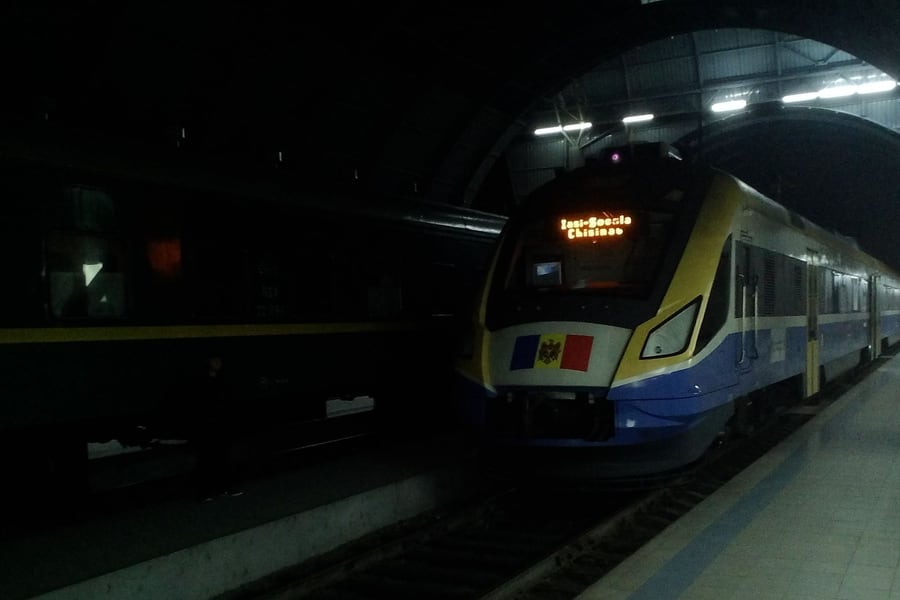
Away from Chișinău at 06:27
The weekend train for Iași leaves the capital at first light on Fridays, Saturdays and Sundays, its destination board reading Iași-Socola in orange letters.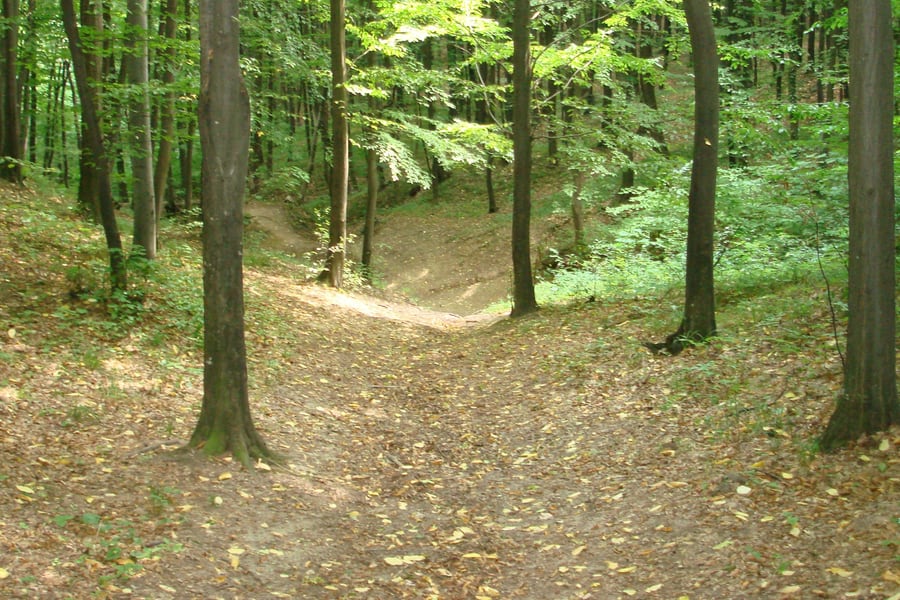 Zserghei / Wikimedia Commons · Public domain · cropped
Through the Codri
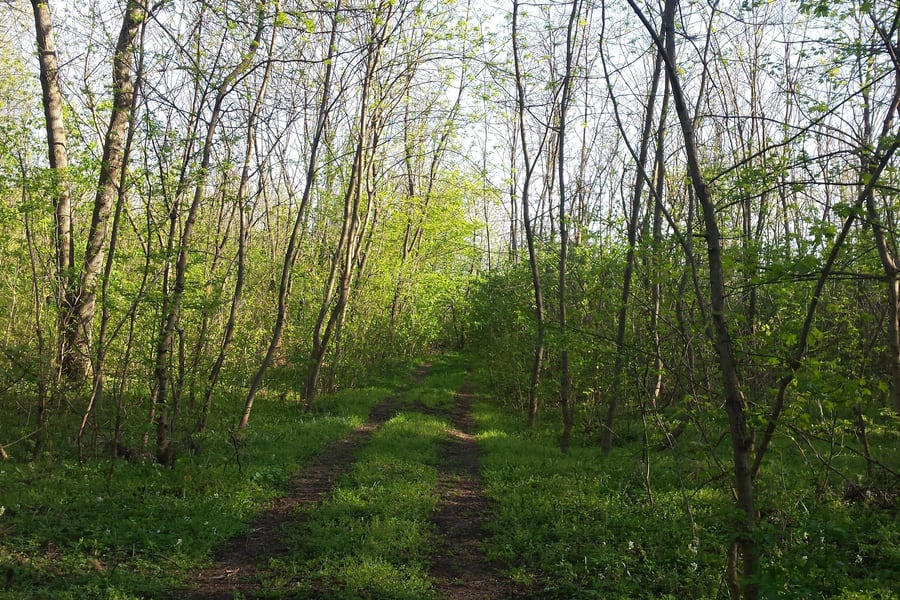
Past Strășeni the line climbs into the wooded hills at the heart of Moldova, the stretch the Russian Empire opened in 1875 on its way to the Prut.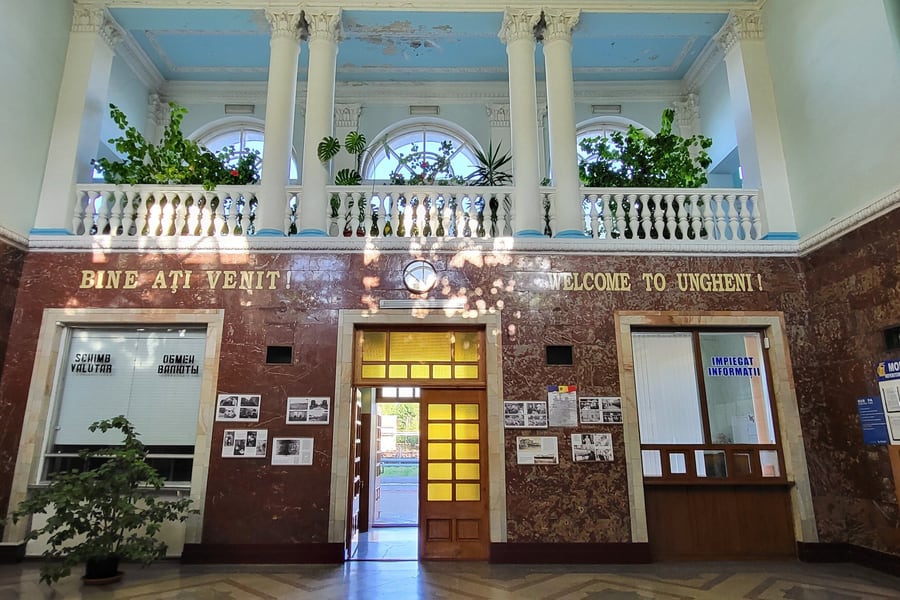 Vladikh / Wikimedia Commons · CC0 · cropped
Thirty-six minutes at Ungheni
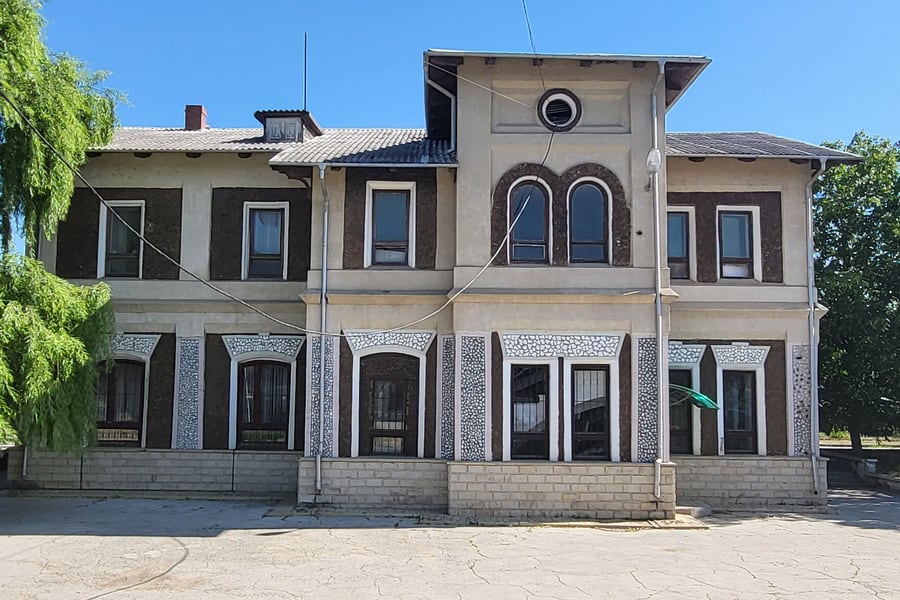
The frontier station on the Moldovan bank, with its welcome in two languages. The stop is for passports and customs, not for the wheels.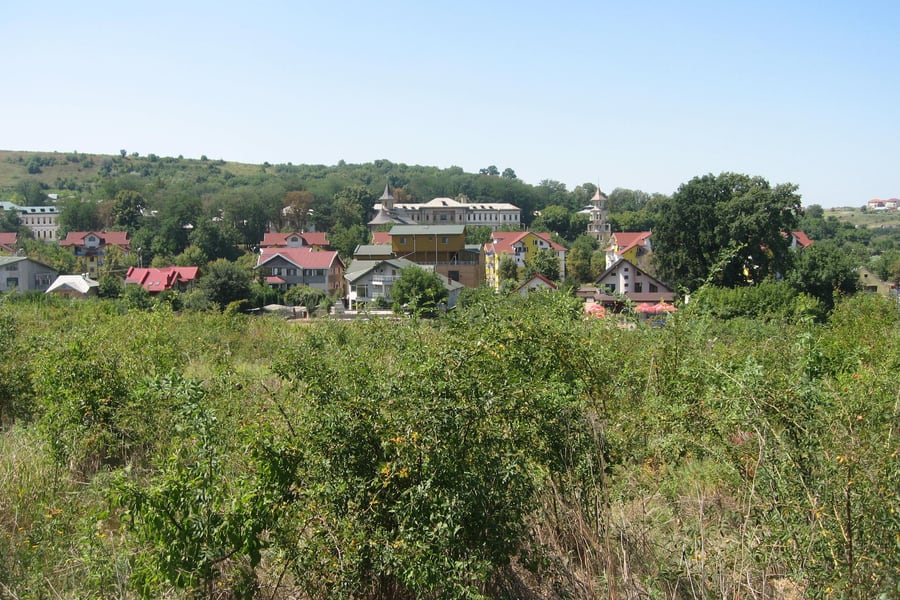 Cezar Suceveanu / Wikimedia Commons · CC BY 3.0 · cropped
Seventeen kilometres on the wrong gauge
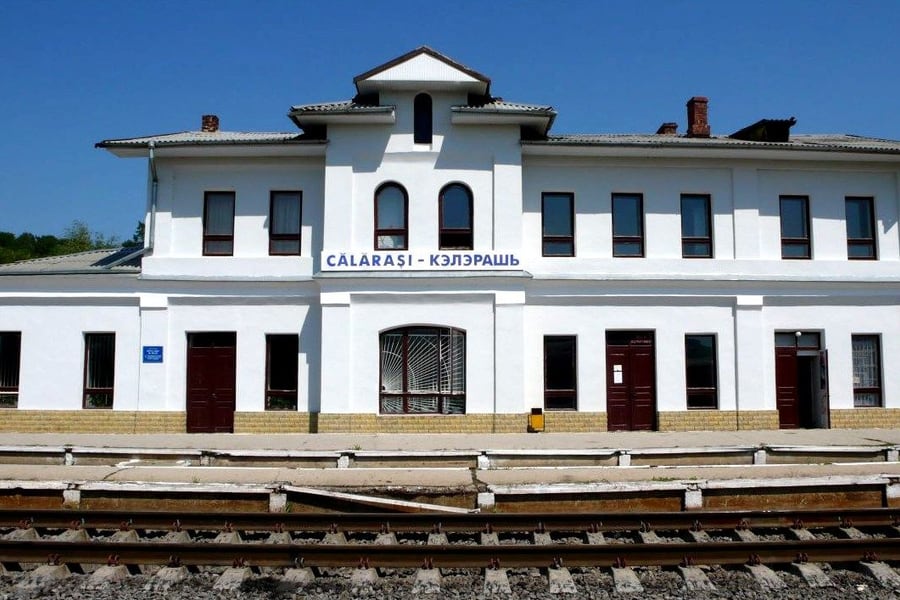
Over the river the broad gauge runs on into Romania, as far as Socola on the southern edge of Iași, where the track and the train both stop.A bit of history
Culture & experiences along the way
 Cezar Suceveanu / Wikimedia Commons · CC BY 3.0 · cropped
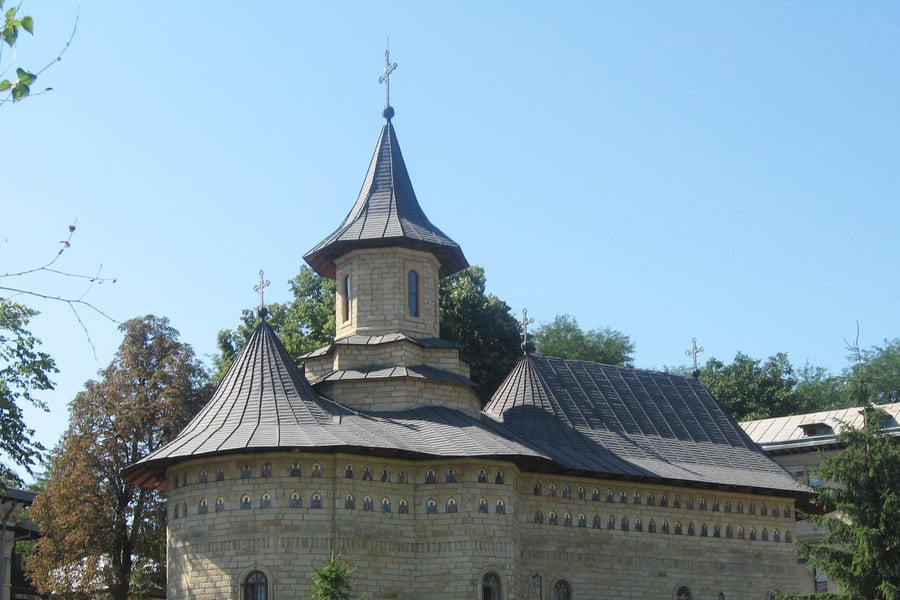
The school at Socola
Prince Alexandru Lăpușneanu finished Socola Monastery in 1562, a short walk from where the train now terminates. In 1803 it became a seminary and the first school to teach secondary pupils in Romanian rather than Greek or Slavonic. Since 1905 the grounds have been a psychiatric hospital, and the church serves it.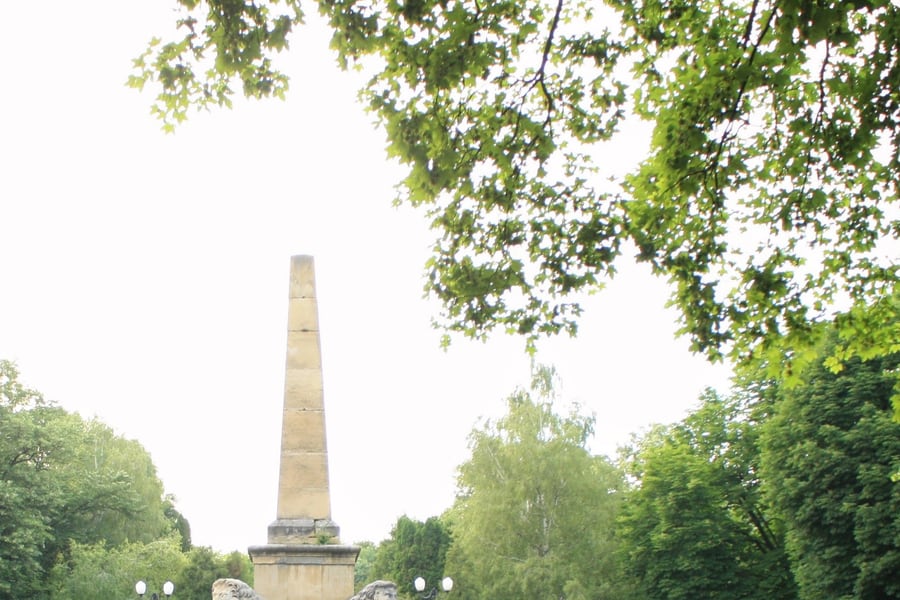 Sb2s3 / Wikimedia Commons · CC BY-SA 4.0 · cropped
Poetry in Copou Park
Iași's oldest public park was laid out from 1834, around the 13.5-metre Lions' Obelisk at its centre. It holds Eminescu's Linden Tree and the Mihai Eminescu Museum, and it is where the city goes for poetry festivals, photography exhibitions and craft fairs.Timetables
One train each way on Fridays, Saturdays and Sundays. It is 821 towards Iași and 824 back to Chișinău. Times below are as published by Calea Ferată din Moldova, as of November 2026, and confirmed against the booking system for 20, 21 and 22 November 2026.
| Station | 821 to Iași | 824 to Chișinău |
|---|---|---|
| Chișinău | 06:27 dep | 22:16 arr |
| Strășeni | 07:01 | 21:41 |
| Călărași | 07:37 | 21:06 |
| Ungheni | 09:15 arr · 09:51 dep | 18:56 arr · 19:36 dep |
| Iași-Socola | 11:15 arr | 17:36 dep |
The stand at Ungheni is the border, and it is built into the timetable. The whole run is 4 hours 48 minutes towards Iași and 4 hours 40 minutes back. On Mondays to Thursdays there is no train on this route; the Bucharest sleeper also calls at Iași, but it changes bogies at Ungheni on the way and reaches Iași at 23:08.
The live timetable is at railway.md (opens in a new tab), under Transportul de pasageri → Orarul trenurilor. Check it before travelling: this is a single weekend train across a frontier.
Tickets
Calea Ferată din Moldova sells this train from its own portal at on.railway.md (opens in a new tab), in Romanian and Russian, a few days ahead of departure; outside that window the portal sends buyers to the station ticket offices. Seats are numbered, and the fare is the same in both directions. Prices below were read from it on 16 November 2026, in Moldovan lei; children pay half.
There is no Romanian ticket for this train: the 17 kilometres on the far side of the Prut are run by the Moldovan railway on its own broad-gauge track. A passport is needed, because the train leaves Moldova and enters the European Union.
Book your tickets
First class
Chișinău to Iași-Socola
A numbered seat in the D1M's single first-class car.
Book Tickets (opens in a new tab, on railway.md)via railway.mdSecond class
Chișinău to Iași-Socola
A numbered seat in the second-class car, fifty lei less than first.
Book Tickets (opens in a new tab, on railway.md)via railway.mdThird class
Chișinău to Iași-Socola
The cheapest seat, in one of the train's two third-class cars.
Book Tickets (opens in a new tab, on railway.md)via railway.mdRail Passes
No rail pass covers this train. Moldova is not an Interrail or Eurail country and does not appear on Interrail's list of covered railways, checked in November 2026. The train is Calea Ferată din Moldova's from end to end, including the stretch inside Romania, so a pass valid in Romania does not reach it either.
Romania itself is covered, on CFR Călători only, and a pass is useful for travel on from Iași. For this journey alone, the operator's fare of 140 to 220 lei is the whole cost.
Places to Visit
The train runs in daylight in both directions, so the places along it can be seen from the window or reached from its stops. Ungheni is the frontier town where it waits; Iași, the old capital of Moldavia, is the reason to make the trip, and the six hours between arrival and the return working are enough for its centre.
 Diego Delso, delso.photo, License CC BY-SA · Wikimedia Commons · cropped
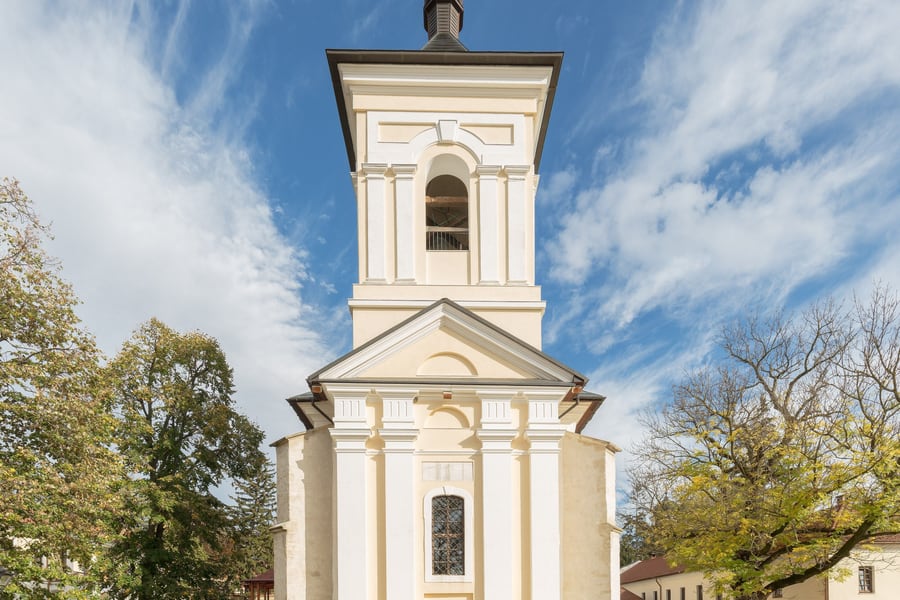
Căpriana Monastery
One of the oldest monasteries in Moldova, in the forest north-west of Chișinău that was once called the Codrii Lăpușnei. A deed of 1429 made it a royal monastery under Alexander the Good, and Petru Rareș rebuilt it in 1542–45. Of its three churches, the stone Church of the Dormition is the oldest standing in the country, and it holds the tomb of Metropolitan Gavril Bănulescu-Bodoni.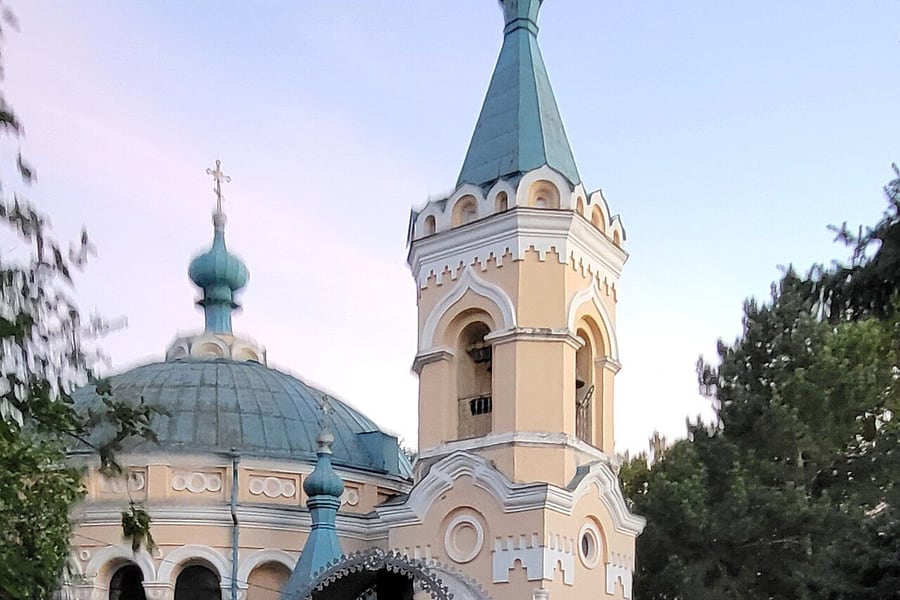 Vladikh / Wikimedia Commons · CC BY-SA 4.0 · cropped
The cathedral by Ungheni station
The Cathedral of St Alexander Nevsky stands next to the station the train waits at. It was built in 1903 to a design by Alexander Bernardazzi, on the spot where the imperial manifesto declaring war on the Ottoman Empire was read to the Russian army in 1877 — the war this railway was built for. In Soviet times it was a museum and a gym; it reopened for worship in 1991.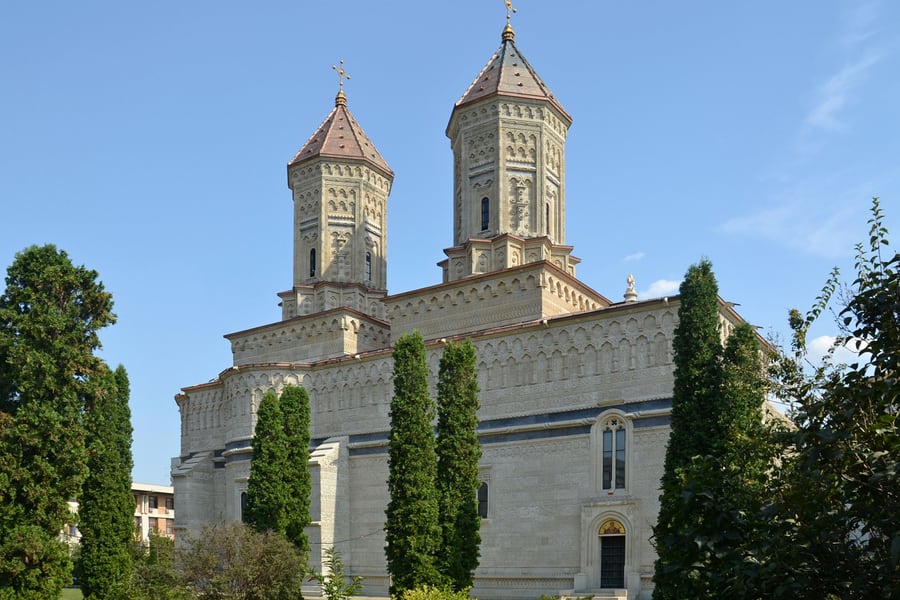 Pudelek / Wikimedia Commons · CC BY-SA 4.0 · cropped
The Three Hierarchs, Iași
Built in 1637–39 for Prince Vasile Lupu and covered from foot to towers in carved stone lace, more than thirty bands of it without a repeat. Lupu set up Moldavia's first printing press here in 1640, and the church holds the tombs of Dimitrie Cantemir and of Alexandru Ioan Cuza, the first ruler of the united Romanian principalities.Where to Sleep
The early start from Chișinău makes a night in the city beforehand the easy way to catch it. At the other end, the return train leaves the same evening, but Iași is worth more than one afternoon, and the train runs again two days in a row.
Where to stay
Nobil Luxury Boutique Hotel
In the centre of Chișinău
A boutique hotel in the city centre with a spa, a restaurant and its own conference hall.
Check Availability (opens in a new tab, on nobil.md)via nobil.mdGrand Hotel Traian
On Piața Unirii in Iași
A hotel of 68 rooms on the city's central square, at the same address since 1882.
Check Availability (opens in a new tab, on grandhoteltraian.com)via grandhoteltraian.comQuestions or corrections
Planning this trip and stuck on something, or spotted a time, fare or detail that has changed? Send us a message about Chișinău to Iași — on Russian gauge across the Prut. We read every one, and we update this page when something has changed.