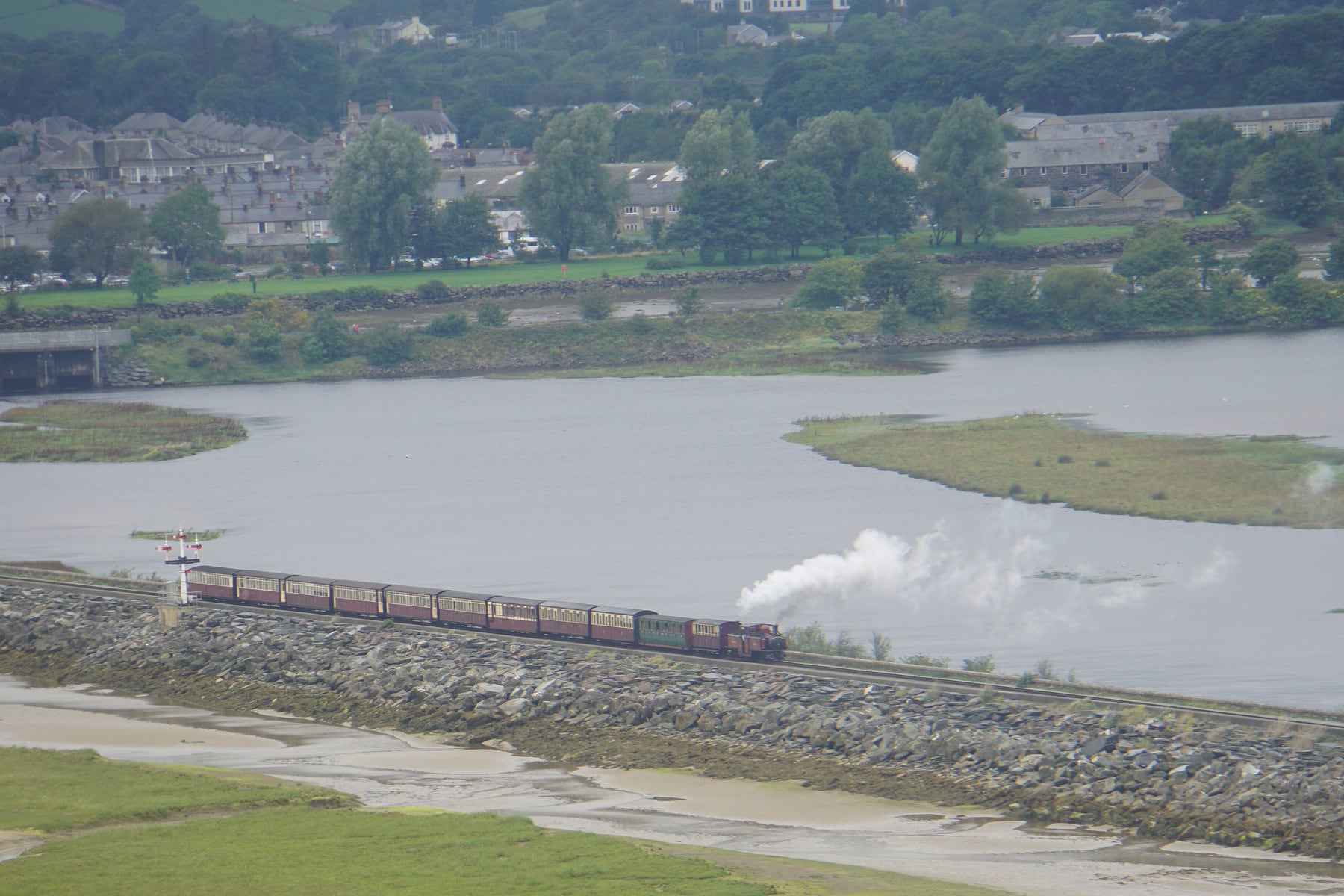
The Ffestiniog & Welsh Highland Railways
Bill Boaden / Wikimedia Commons · CC BY-SA 2.0
- DistanceAbout 40 miles in all · 13½ to Blaenau Ffestiniog, 25 to Caernarfon
- DurationAbout 1 h 15 min to Blaenau Ffestiniog, 2 h 15 min to Caernarfon
- Best seasonLate March to the end of October · Santa trains in December
Introduction
Two narrow-gauge railways meet at Porthmadog Harbour station, and one company runs them both. The Ffestiniog Railway climbs 13½ miles from the harbour to Blaenau Ffestiniog, the slate town that "roofed the world". The Welsh Highland Railway runs 25 miles the other way, past the foot of Snowdon and through the Aberglaslyn Pass to the castle at Caernarfon. Between them they cover about 40 miles of Eryri, the Snowdonia National Park, on track less than two feet wide.
They were built for different reasons, and it shows. The Ffestiniog opened in 1836 to carry slate down to the ships, graded so that loaded wagons could roll all the way to the sea by gravity; its operator calls it the oldest narrow-gauge railway in the world. The Welsh Highland was finished in 1923, failed within fourteen years and lay closed for six decades, until the Ffestiniog's own company and its volunteers rebuilt it and reopened it to Porthmadog in 2011.
Riding them today is a day out rather than a commute. Double-ended Fairlie locomotives, built in the railway's own works since 1879, work the Ffestiniog round a complete spiral and through a mountain tunnel; South African Beyer Garratts, the largest engines at this gauge, haul the long Welsh Highland trains over the shoulder of Snowdon. Trains run from late March to the end of October, out in the morning and back in the afternoon, with time to explore at the far end.
The Journey
Both railways start from Porthmadog Harbour station, on the old slate quays. Porthmadog itself exists because of the Cob, the embankment William Madocks built across the estuary of Traeth Mawr and finished in 1811; the first mile of the Ffestiniog runs along its top.
Porthmadog to Blaenau Ffestiniog
At the far end of the Cob is Boston Lodge, the railway's works, where its locomotives and carriages are still built. The line then calls at Minffordd, where the Cambrian Coast main line passes underneath and a short walk leads to Portmeirion, and climbs through oak woods to Tan-y-Bwlch, the woodland halfway station. Above it the train leaves the trees, rounds the Dduallt spiral, crosses over itself and runs through the 310-yard Moelwyn tunnel to come out beside the Llyn Ystradau reservoir. The last stretch passes Tanygrisiau and the slate tips into Blaenau Ffestiniog, more than 700 feet above the harbour, where the narrow gauge shares a station with Transport for Wales trains down the Conwy Valley.
Porthmadog to Caernarfon
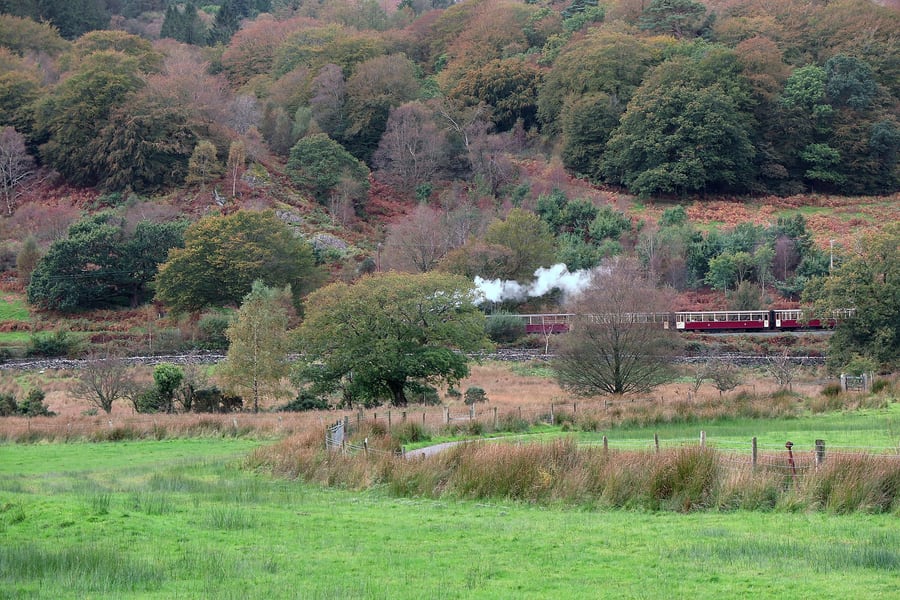
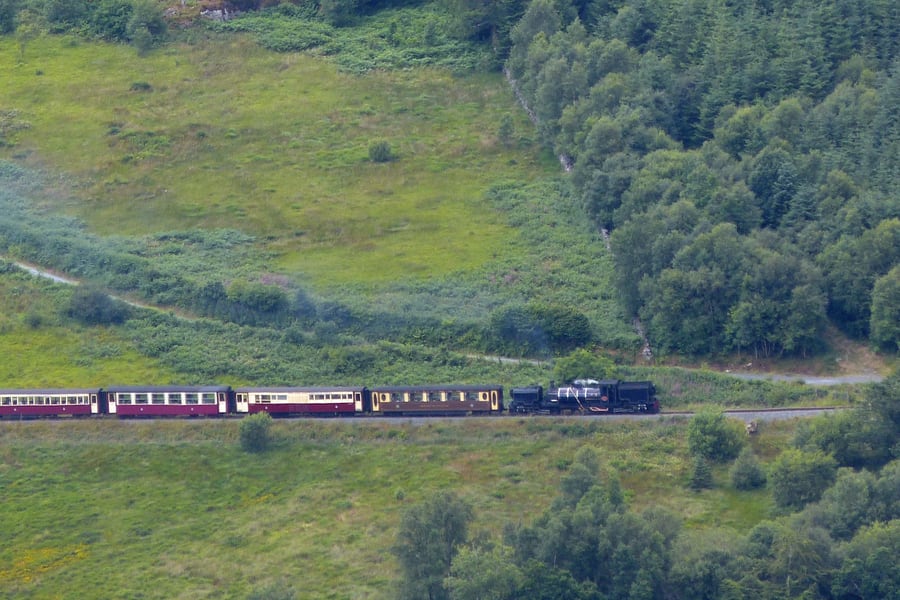
The Welsh Highland leaves in the other direction, across the harbour bridge and along the street, then crosses the Cambrian Coast main line on Cae Pawb, the only flat crossing between two gauges in the United Kingdom. It runs straight across the flat land of Traeth Mawr towards the mountains, ducks into a tunnel at Nantmor and comes out on a ledge high above the river in the Pass of Aberglaslyn. After Beddgelert the train climbs through the forest in a series of tight bends to the summit of the line, calls at Rhyd Ddu with Snowdon above it, and runs beside Llyn Cwellyn and down the valley of the Gwyrfai to the coast. The terminus at Caernarfon, opened in 2019, stands beside the castle.
The trains
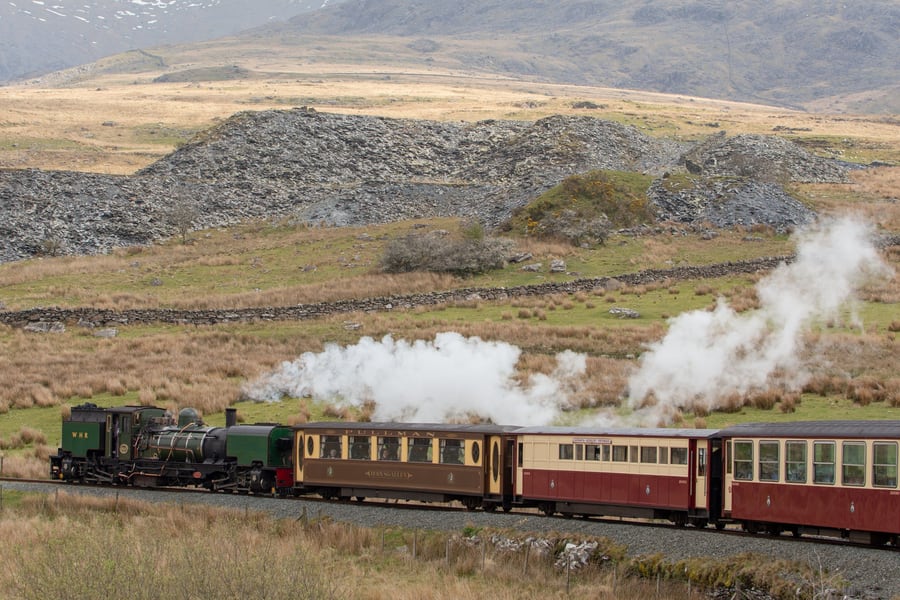
The Ffestiniog is the home of the Double Fairlie, a double-ended engine with a chimney at each end, carried on two power bogies; the first ran here in 1869. Merddin Emrys, the first engine built at Boston Lodge, dates from 1879 and is still in service, and the newest, James Spooner, was completed in 2023. The Welsh Highland's NG/G16 Garratts worked in South Africa before coming to Wales; No. 143 was the last Garratt built by Beyer, Peacock in Manchester. Both lines run modern carriages with large windows, and a Pullman observation car for passengers who pay for Gold service.
Along the route
 Llywelyn2000 / Wikimedia Commons · CC BY-SA 4.0 · cropped
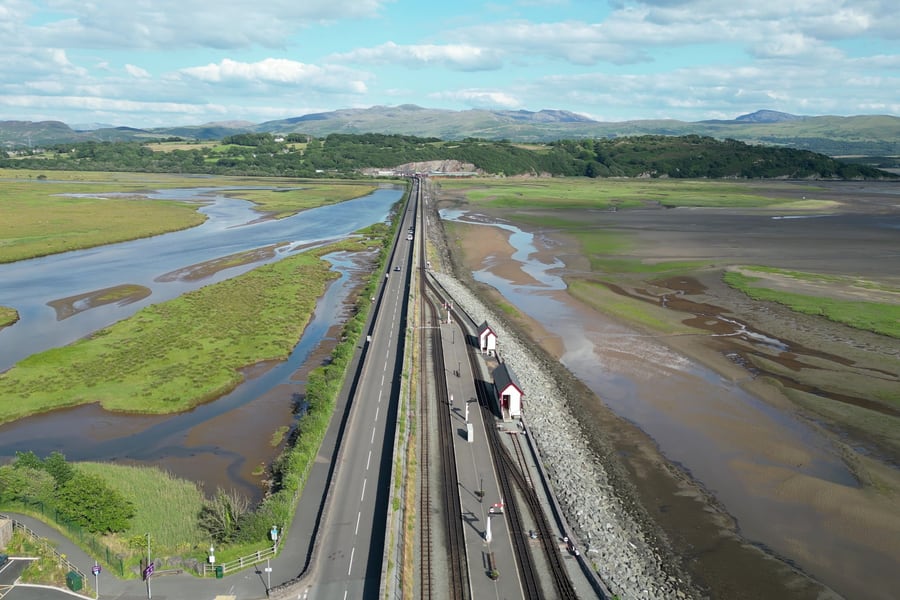
The Cob
The first mile of the Ffestiniog runs along the top of the Cob, the embankment William Madocks finished across the estuary in 1811. Diverting the river scoured out the harbour that Porthmadog grew up around.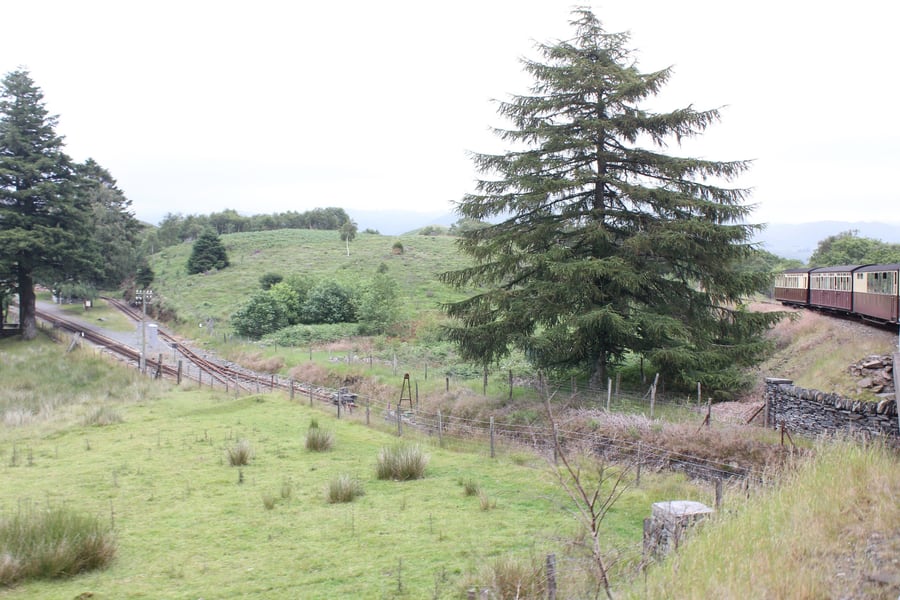 Jo Turner / Wikimedia Commons · CC BY-SA 2.0
The Dduallt spiral
When a reservoir flooded the old line, volunteers built a new one between 1965 and 1978. At Dduallt it climbs a full spiral, crossing over itself, the only one on a public railway in Britain.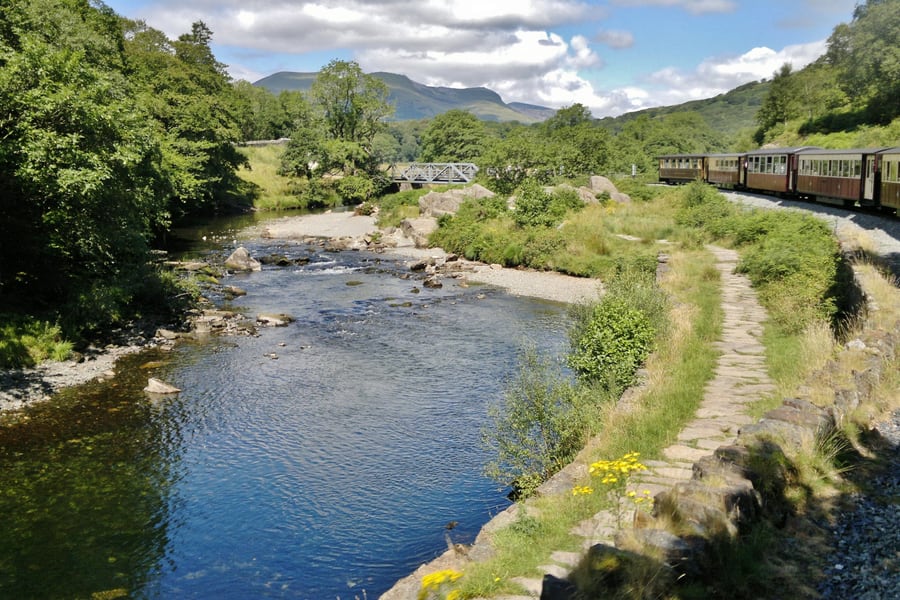 Chris Morgan / Wikimedia Commons · CC BY-SA 2.0 · cropped
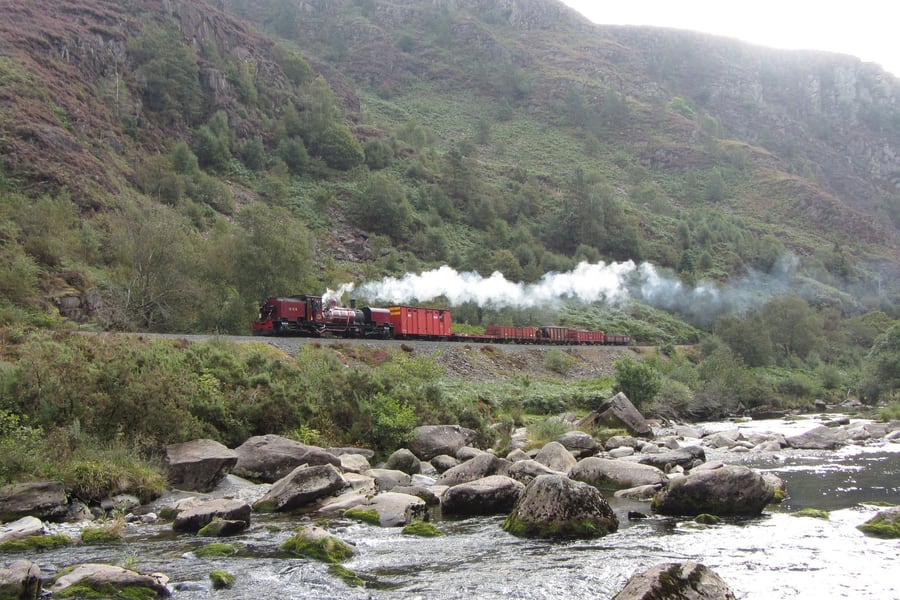
The Pass of Aberglaslyn
South of Beddgelert the Welsh Highland runs beside the Glaslyn, then through a tunnel to a ledge high above the river in the narrow pass. The tunnels were dug before 1914 for a railway that was never finished.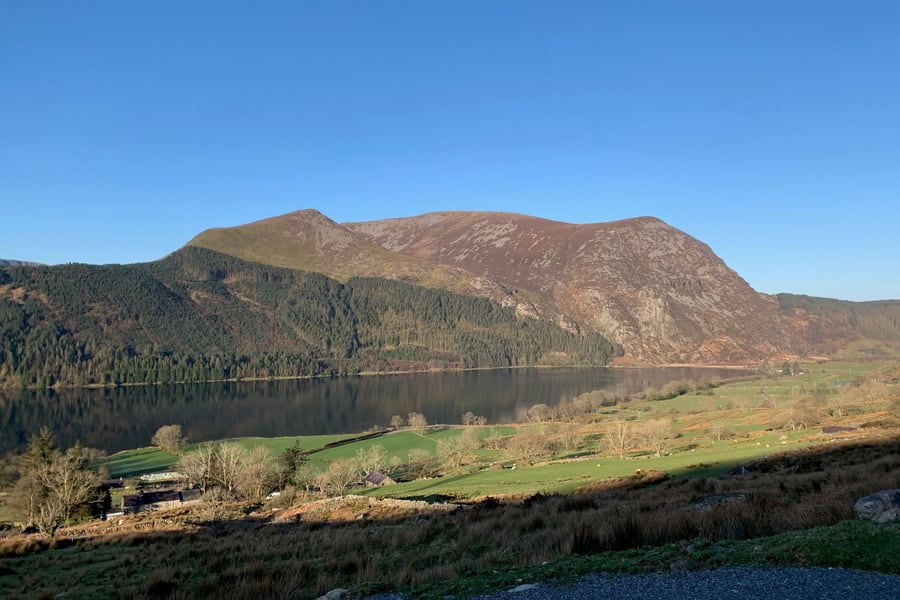 Nia.owain / Wikimedia Commons · CC BY-SA 4.0 · cropped
Llyn Cwellyn
Past the summit of the line and Rhyd Ddu, the train runs along the shore of Llyn Cwellyn, below the slopes of Mynydd Mawr, then follows the river Gwyrfai down towards Caernarfon and the sea.A bit of history
Culture & experiences along the way
 Eheaps / Wikimedia Commons · CC BY 4.0 · cropped
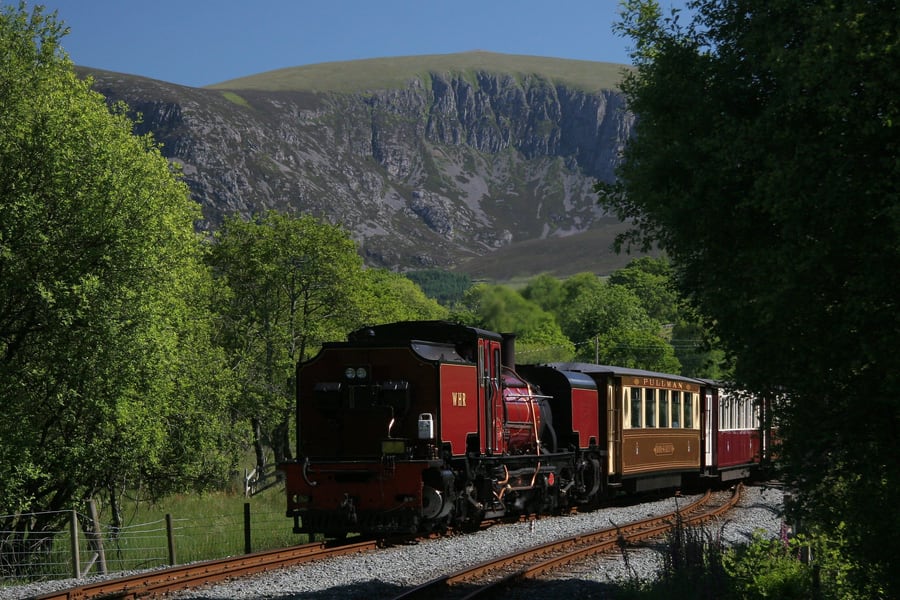
The Double Fairlies
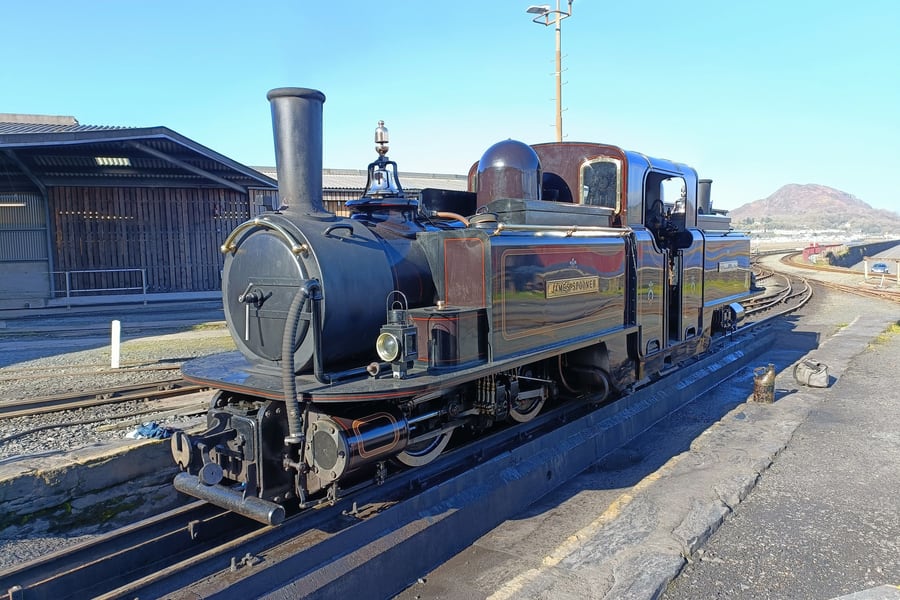
The Ffestiniog's signature engine has a chimney at each end, a shape you will not mistake. The first came in 1869; Merddin Emrys of 1879 is still at work, and James Spooner, completed in 2023, is the newest. All of them were built at the railway's own works.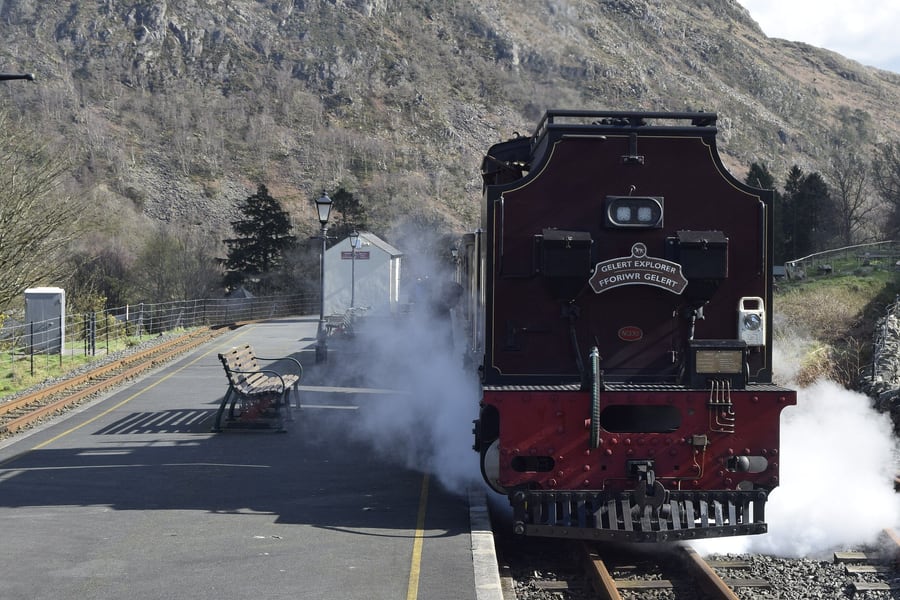 Oliver'sTrains / Wikimedia Commons · CC BY 4.0 · cropped
Garratts from South Africa
The Welsh Highland's NG/G16 Beyer Garratts worked in South Africa before they came to Wales. They are the largest engines on this gauge, and No. 143 was the last Garratt that Beyer, Peacock built in Manchester.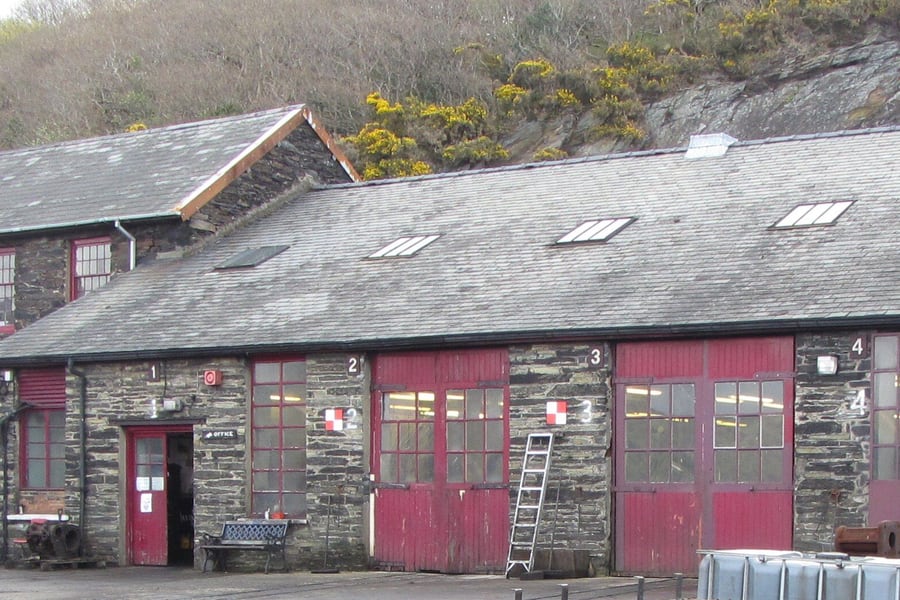 Gareth James / Wikimedia Commons · CC BY-SA 2.0 · cropped
Inside Boston Lodge
The railway's works at the end of the Cob is recognised by Guinness World Records as the oldest railway workshop in the world, and it has built steam engines in three centuries. Two-hour guided tours start at Harbour Station with a train ride across the Cob; they are for ages 10 and over.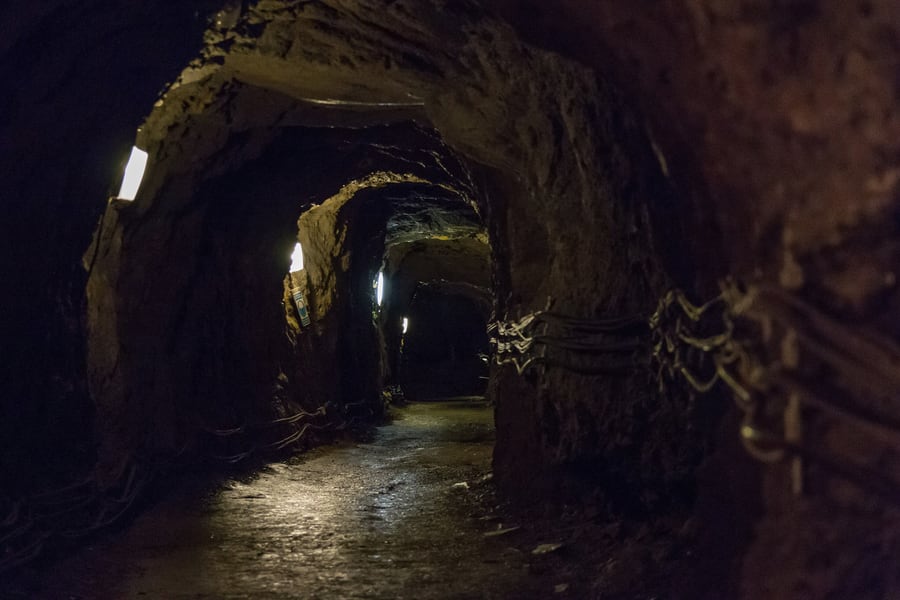 Markus Trienke / Wikimedia Commons · CC BY-SA 2.0
Underground at Llechwedd
Just outside Blaenau Ffestiniog, the Llechwedd Deep Mine Tour takes visitors more than 500 feet down into the old slate caverns, to show how the slate the railway carried was won. The slate here was mined rather than quarried, and the town's Oakeley mine was once the largest in the world.Timetables
The railways run from late March to the end of October, with Santa trains in December. Each service is sold as a return trip with a set train back, so the tables show both legs. The full Ffestiniog runs on most days of the season and daily for the rest of October 2026; the full Welsh Highland runs on selected days, which in October 2026 are Tuesdays, Thursdays and Saturdays.
Ffestiniog Railway — Mountain Spirit
| Porthmadog | Minffordd | Tan-y-Bwlch | Blaenau Ffestiniog | |
|---|---|---|---|---|
| Out | 10:40 | 10:50 | 11:20 | 11:55 |
| Back | 13:55 | 13:40 | 13:15 | 12:45 |
Welsh Highland Railway — The Harbourmaster, from Porthmadog
| Porthmadog | Beddgelert | Rhyd Ddu | Waunfawr | Caernarfon | |
|---|---|---|---|---|---|
| Out | 10:05 | 10:45 | 11:15 | 11:40 | 12:20 |
| Back | 16:25 | 15:40 | 15:15 | 14:45 | 14:15 |
Welsh Highland Railway — Snowdonia Star, from Caernarfon
| Caernarfon | Waunfawr | Rhyd Ddu | Beddgelert | Porthmadog | |
|---|---|---|---|---|---|
| Out | 10:15 | 10:45 | 11:15 | 11:40 | 12:25 |
| Back | 16:20 | 15:40 | 15:15 | 14:45 | 14:05 |
Good to know:
- The Quarryman runs the Ffestiniog the other way, from Blaenau Ffestiniog at 11:40 (Porthmadog 12:50) and back from Porthmadog at 15:25 (Blaenau 16:40). On many summer days the Mountain Spirit makes a second trip at 14:20.
- Shorter trips. The Woodland Wanderer runs Porthmadog to Tan-y-Bwlch in heritage carriages; the Aberglaslyn runs Porthmadog to Beddgelert; the Gelert Explorer runs Caernarfon to Beddgelert at 11:10, returning to Caernarfon at 15:25.
- Request stops. Penrhyn and Tanygrisiau on the Ffestiniog, and several halts on the Welsh Highland, are request stops served by some trains only; check the timetable before planning to use one.
- Both lines in one day does not work in October: the morning trains leave Porthmadog within 35 minutes of each other.
Times as of October 2026, from the operator's 2026 base timetable and its live booking calendar; extra trains may run on busy days. Check your date on festrail.co.uk (opens in a new tab).
Tickets
Tickets are sold by the railway itself, online or at its booking office, and each one is a return on a named train: you cannot come back on a later service unless you book two singles. The Ffestiniog round trip on the Mountain Spirit or the Quarryman costs £49.75; the full Welsh Highland on the Harbourmaster or the Snowdonia Star costs from £72. A child aged 3 to 15 pays £5 on any standard return, and under-3s travel free. Online booking adds 6 % and guarantees your seats; tickets on the day are subject to space.
Single tickets in Standard class are sold on the day. Gold service in the Pullman observation car costs more and adds at-seat service. Dogs travel for £5 in most Standard accommodation. Fares checked October 2026 on festrail.co.uk (opens in a new tab); pounds sterling, one adult.
Book your tickets
Mountain Spirit, Porthmadog to Blaenau Ffestiniog
Standard class · return on a set train
The full Ffestiniog and back behind a Double Fairlie, with about fifty minutes in Blaenau Ffestiniog.
Book Tickets (opens in a new tab, on festrail.co.uk)via festrail.co.ukThe Harbourmaster, Porthmadog to Caernarfon
Standard class · return on a set train
The whole Welsh Highland behind a Garratt, with about an hour and three-quarters in Caernarfon.
Book Tickets (opens in a new tab, on festrail.co.uk)via festrail.co.uk
Woodland Wanderer, Porthmadog to Tan-y-Bwlch
Heritage compartments · half-day return
A shorter trip in restored heritage carriages, with up to an hour at the woodland station.
Book Tickets (opens in a new tab, on festrail.co.uk)via festrail.co.ukRail Passes
No rail pass is valid on either railway. Interrail's table of railway companies for Great Britain does not list the Ffestiniog & Welsh Highland Railways, and BritRail's conditions exclude privately owned, steam, heritage and tourist railways. You buy the railway's own ticket.
A pass can still get you to the ends of the line. Both include Transport for Wales, whose Conwy Valley trains terminate at Blaenau Ffestiniog in the same station as the Ffestiniog, and whose Cambrian Coast trains pass under the narrow gauge at Minffordd. The railway's booking office will hold seats on the narrow gauge for passengers making a through journey by main-line train.
For this journey alone, a pass is not worth buying. It pays only if the narrow gauge is one stop on a longer trip round Wales.
Checked October 2026 against interrail.com (opens in a new tab) and britrail.com (opens in a new tab).
Places to Visit
Most visitors base themselves in Porthmadog, where both railways start, and ride one line a day. The places below run from Porthmadog up the Ffestiniog to Blaenau, then along the Welsh Highland to Caernarfon; each is a stop on the way or a short walk from one.
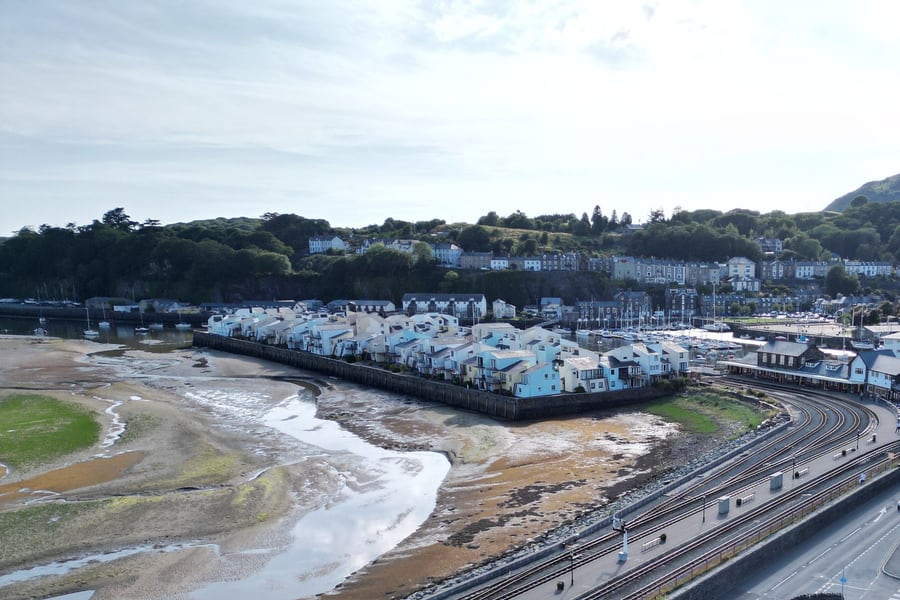 Llywelyn2000 / Wikimedia Commons · CC BY-SA 4.0 · cropped
Porthmadog
The town grew up after William Madocks built the Cob, and the harbour it created shipped the slate of Blaenau Ffestiniog all over the world. The Porthmadog Maritime Museum, in an old slate shed on Oakley Wharf, tells the story of the schooners built here and the men who sailed them. Spooner's café and bar at Harbour Station is the place to watch trains come and go.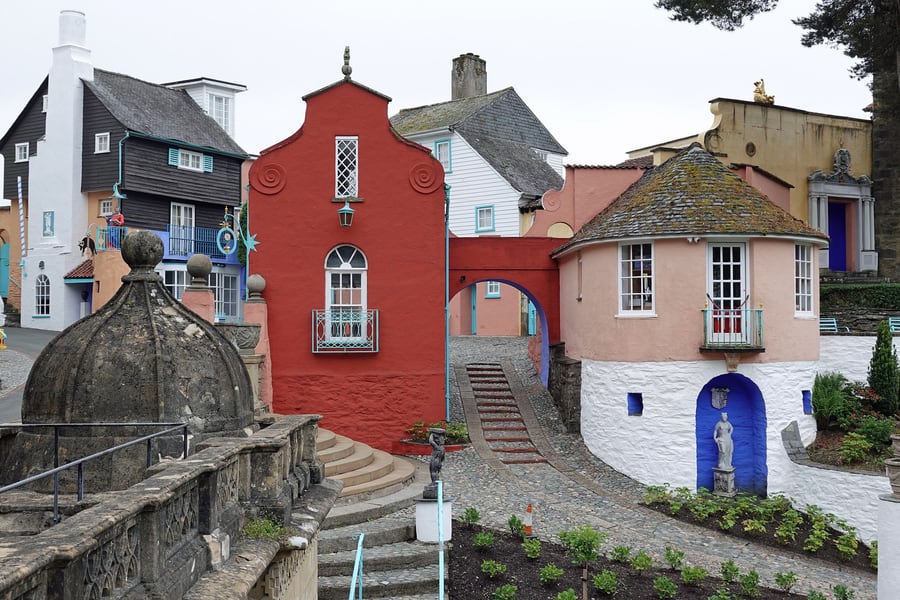 Dylan Moore / Wikimedia Commons · CC BY-SA 2.0 · cropped
Portmeirion
The architect Clough Williams-Ellis built this village on a wooded headland above the Dwyryd estuary between 1925 and 1973. He began by turning the old house on the shore into a hotel, and later rescued buildings from demolition sites, calling the place "a home for fallen buildings". It is a short walk from Minffordd station, and day visitors are welcome.Nilfanion / Wikimedia Commons · CC BY-SA 4.0Tan-y-Bwlch
Halfway up the Ffestiniog, the station sits in the woods of the Vale of Ffestiniog. A trail leads down to Llyn Mair, the small lake in the valley below, and the station tea room is open daily from 10:00 to 17:00, with a playground of miniature trains and signals. The Woodland Wanderer allows about an hour here before it heads back.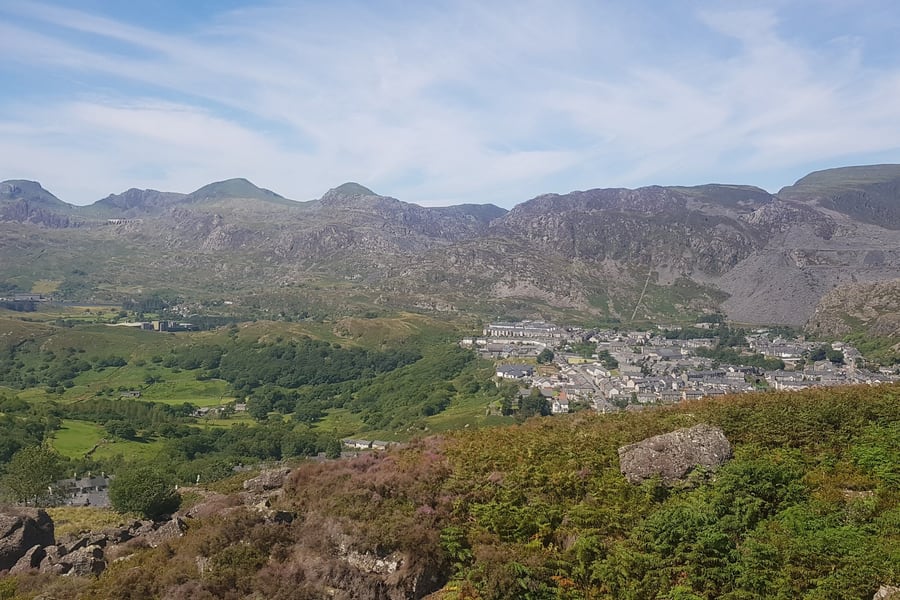 Ffion Parker / Wikimedia Commons · CC BY-SA 4.0 · cropped
Blaenau Ffestiniog
The end of the Ffestiniog is a slate town ringed by mountains and spoil heaps. Its quarries and mines, and the railway that carried their slate to the sea, are part of the Slate Landscape of Northwest Wales, inscribed as a UNESCO World Heritage Site in 2021. Transport for Wales trains run from the same station down the Conwy Valley.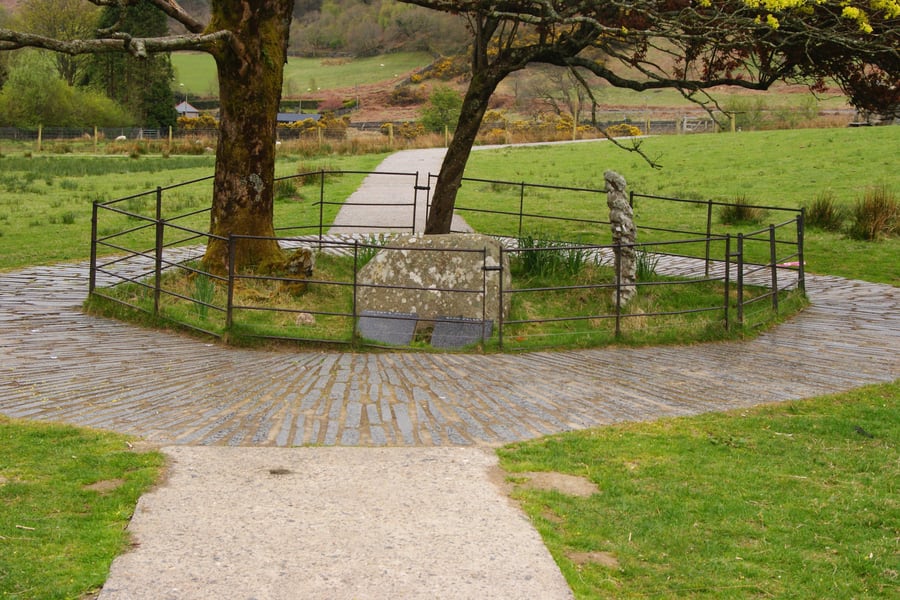 Peter Trimming / Wikimedia Commons · CC BY-SA 2.0
Beddgelert
The village beside the Glaslyn is named after Saint Gelert, an early Christian leader, but visitors come for the legend of Gelert, the faithful hound of Prince Llywelyn. The stone in the field called Gelert's Grave was set up by David Pritchard, landlord of the Goat Hotel in the late 18th century, to bring in visitors. It still does.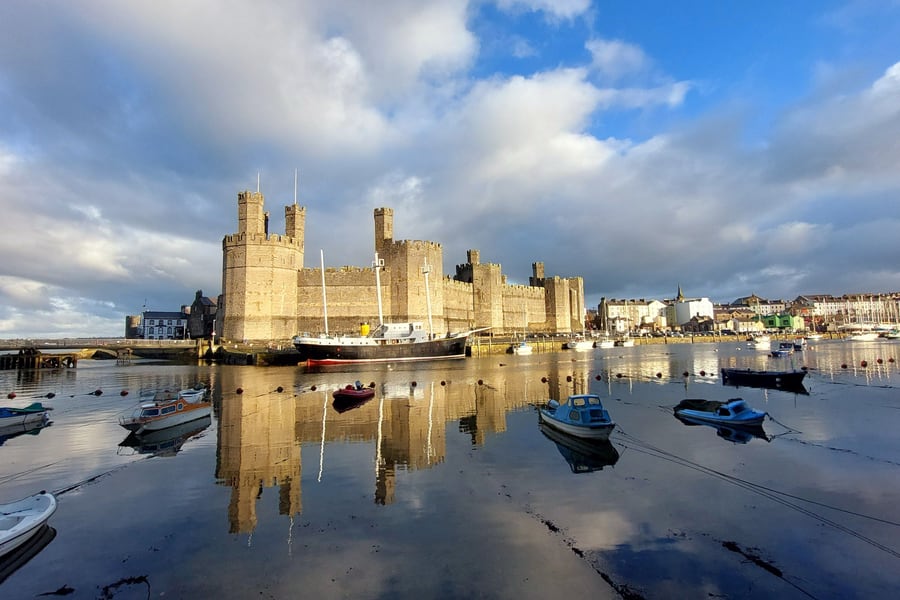 Ilovecolour / Wikimedia Commons · CC BY-SA 4.0 · cropped
Caernarfon
Edward I began Caernarfon Castle in 1283, after his conquest of Wales, and walled the town beside it. Princes of Wales were invested here in 1911 and 1969, and the castle has been a UNESCO World Heritage Site since 1986, with Edward's other castles in Gwynedd. The Harbourmaster allows about an hour and three-quarters to see it.Where to Sleep
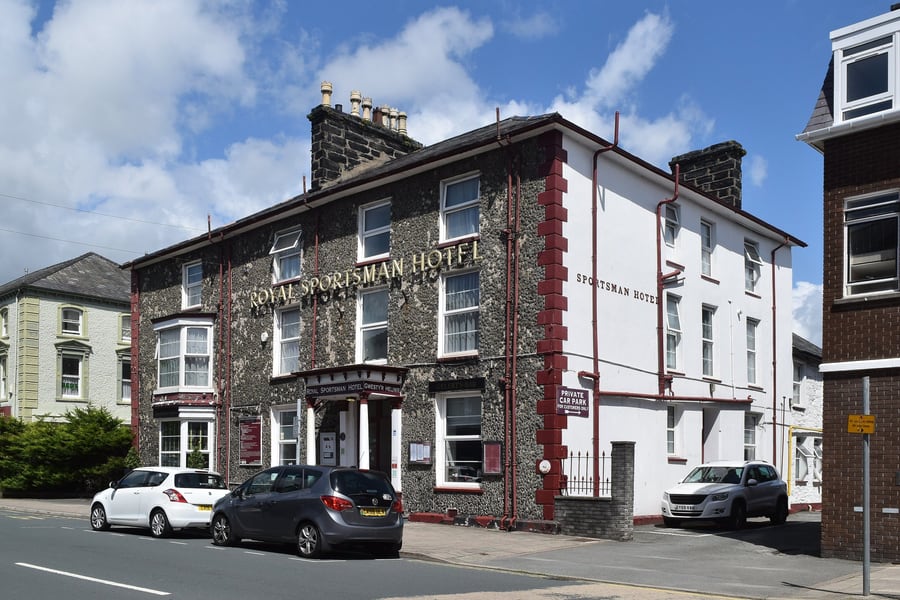
Porthmadog is the practical base, because both railways start there. The Royal Sportsman stands on its High Street. A stop along the Ffestiniog, the Hotel Portmeirion sits on the shore of the Dwyryd estuary below the village, and at the other end of the Welsh Highland the Celtic Royal stands on Bangor Street in Caernarfon.
Where to stay
 Bill Harrison / Wikimedia Commons · CC BY-SA 2.0 · cropped
The Royal Sportsman
Porthmadog · on the High Street
A hotel on Porthmadog's High Street, a short walk from the harbour where both railways start.
Check Availability (opens in a new tab, on royalsportsman.co.uk)via royalsportsman.co.uk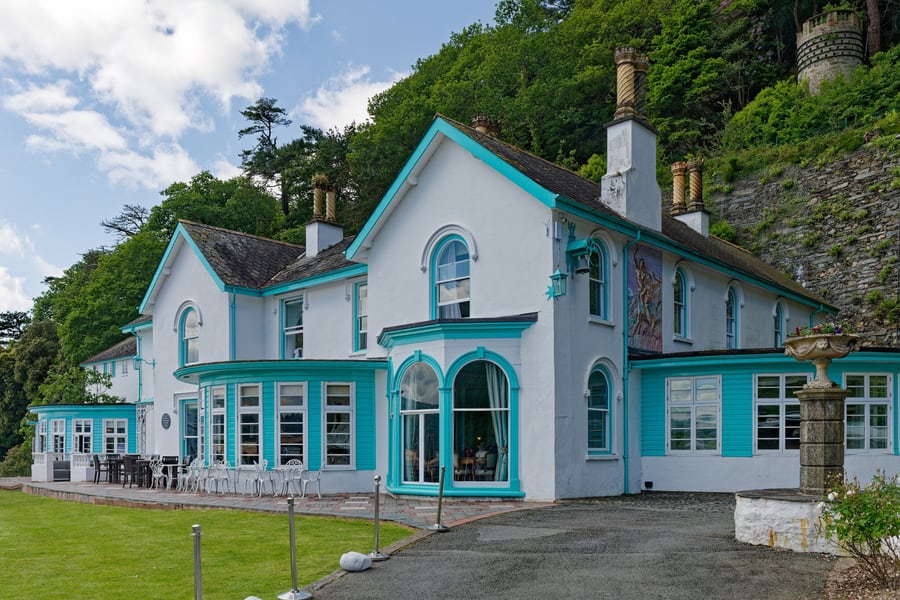 Tilman2007 / Wikimedia Commons · CC BY-SA 4.0
Hotel Portmeirion
Portmeirion · on the estuary shore
The old house on the shore that Clough Williams-Ellis turned into a hotel, now with 14 bedrooms overlooking the Dwyryd estuary.
Check Availability (opens in a new tab, on portmeirion.wales)via portmeirion.wales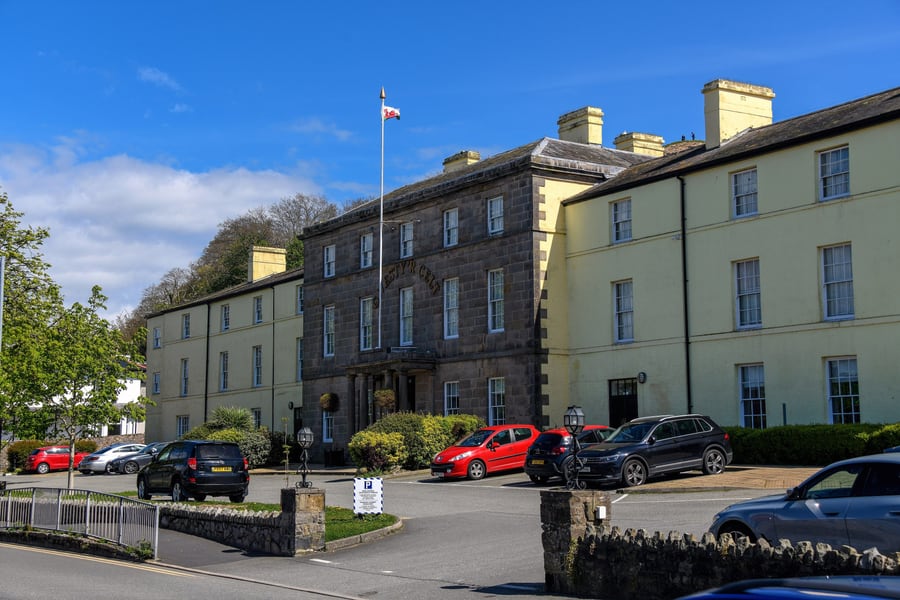 Lewis Clarke / Wikimedia Commons · CC BY-SA 2.0
Celtic Royal Hotel
Caernarfon · on Bangor Street
A hotel whose oldest part dates from 1794, with a spa, pool and gym, at the Caernarfon end of the Welsh Highland.
Check Availability (opens in a new tab, on harbourhotels.co.uk)via harbourhotels.co.ukQuestions or corrections
Planning this trip and stuck on something, or spotted a time, fare or detail that has changed? Send us a message about The Ffestiniog & Welsh Highland Railways. We read every one, and we update this page when something has changed.